How to Build a Knowledge-Driven Culture at Your AEC Firm
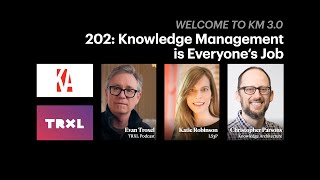
Podcast episode (Troxell Podcast, KM 3.0 series) interviewing Katie Robinson (LS3P CMO) and Christopher Parsons about building a knowledge-driven culture in an AEC firm. The conversation traces LS3P’s multi-year journey: starting with a project-data focus and a Data Manager program (begun around 2008, formalized 2013), scaling to firmwide reporting (Power BI) and an intranet called Frank (launched Jan 2024) that later gained AI search; and lightweight knowledge-capture practices (Expert Hours recorded conversations, transcribed and processed via Copilot) that feed marketing, learning, and project storytelling. The hosts and guest also discuss governance, team structure, strategic planning to 2030, and next steps (automation from Revit, green data managers, LMS).
Chapters
Welcome to the Troxell Podcast. I'm Evan Troxell and in this episode I welcome Katie Robinson, Chief marketing officer at LS3P and Christopher Parsons, CEO at Knowledge Architecture. This is the fourth episode in the Knowledge Management 3.0 series and I've included links in the show notes to the previous episodes. Katie's career journey is an example of how solving one problem, making proposal writing easier, can spark a firm wide transformation. Over time, her role expanded to include knowledge management, leading to innovations that go far Beyond Marketing. Today, LS3P operates with a deeply integrated approach to capturing and leveraging knowledge across their 12 offices and 500 team members. In our conversation, Katie shares how LS3P developed their data manager program, drastically reducing time spent gathering project information while mentoring emerging professionals. Along the way, we discuss how this groundwork enabled the firm to unlock incredible capabilities throughout their intranet, which they call Frank transforms how information flows throughout the practice and gets used in real time. But what really stands out to me is their expert hours initiative because I know that many firms out there think the barrier to capturing knowledge is just too daunting. Katie explains how informal recorded conversations with subject matter experts in have become one of the most powerful ways that LS3P captures tacit knowledge, the kind that usually disappears when someone leaves or retires. By making these sessions searchable and feeding them back into their systems, LS3P has turned everyday storytelling into a knowledge engine, driving better marketing, mentorship and project delivery. This low lift, high impact approach is making hidden expertise accessible to everyone and creating mentorship opportunities and setting the stage for more informed collaborative decision making across the practice. So now, without further ado, I bring you my conversation with Katie Robinson and Christopher Parsons.
Welcome to the podcast. Katie Robinson, great to meet you and I'm happy to have you on the show and talking about knowledge management. Thanks for coming.
Thanks for having me, Chris.
Welcome back.
Thank you.
Love it. If you would set the stage for this conversation.
Yeah, I mean I've had the pleasure of knowing Katie for close to a decade now. We met through, you know, various different industry events and I'd always see her at one of these events and we kind of get nerding out on knowledge management, all things aec. And Katie spoke at. We have an annual conference called K Connect, which is a knowledge management conference for the AEC industry. During the pandemic, we were virtual and so Katie did a great deep dive into their data management program which we're going to actually talk about today, and then became a client of ours in 2023. They launched their synthesis intranet Frank in the January of 2024. They've since moved that into AI search and are doing some learning management stuff in the future. So we'll get into all that as well. But one of the reasons I wanted to bring Katie on, other than that she's an awesome human being, is what we're trying to do in this welcome to KM 3.0 podcast series is look at knowledge management leadership through different lenses of where people sit in the organization. So we started with Alan is the CEO. In the last episode we talked to Corey, who's a Director of sustainability. And now Katie as the Chief Marketing Officer brings yet another lens to knowledge management in aec. I actually think that Katie's title should be Chief Marketing and Knowledge Officer, but that's something we can talk about another time. But we're really excited.
The next board meeting.
Yeah, exactly. So we're really excited, Katie, to have you join and just talk about knowledge management LS3P. Both you kind of personally, but then the organization. So thanks for being here.
My favorite topics, I love it.
Well, let's start there. Why is it one of your favorite topics?
I think the main reason is it combines both sides of your brain. So mine don't have limits. So they like to go and mess with each other a lot. But it takes all of the importance of data and knowledge and facts and it combines them with the creativity of marketing and communications. And it's just, it's such a lovely pairing and such an obvious pairing as well.
I like that. Maybe for the, for the uninitiated, you can kind of talk about, like, how do you, how do you tell other folks when they join LS3P who haven't heard of. Heard of knowledge management? Like, how do you explain it to them? How do you talk About Knowledge Management LS3P? Why are you the Chief Marketing Officer, talking to them about knowledge management? Like, how does that all fit together?
Okay, great questions. Essentially, knowledge management falls under my umbrella at LS3PMarketing and knowledge management are two separate teams, but they both fall under me. And the reason this happened was almost by accident years ago when I was really struggling as a marketing coordinator doing proposals and interviews. I was pulling out my hair trying to find project data like this. Most firms do. And it was kind of an accident that we stumbled into knowledge management. And it, it started with our journey for, for the need of data in order to do marketing proposals. And it just kind of snowballed. So ever since then, it's it's really become, this is going to sound cliche, but part of our culture. So we, we do talk about knowledge management a lot. It's, it's part of our onboarding process with new team members. We celebrate it a lot with all the different initiatives that we do, both from knowledge management and marketing. So really it's just, it's part of how we practice and do business. We don't need to do a whole lot of internal marketing to, to support why we do this.
I'm raising my hand. I have a question. Evan, thank you. First time caller. The idea of your team being excited about this is something that I don't think is kind of across the board in aec. And I think that one thing that I hear when I hear you talk about that is we all recognize that this is something we can leverage and that's where excitement comes from. It's like, oh, there's benefit, there's value to be extracted from this thing that I can actively participate in in my way to make it better. And I think a lot of times though, it's a bit overwhelming for firms to think about oh my gosh, like getting this thing up to speed so that it can be leverageable is one of those things that is overwhelming. And it's like, oh my gosh, we're going to have to just like this is another job. And I'm curious, you know, you said you've been doing this now for a while. Can you just kind of describe what that process was like? Was everybody excited about it from the beginning? Like obviously now it's just like a well oiled machine, right? Let's tell it how it is. Like that, that's really cool that you've got to that point and you can tell that success story. But what was that journey like for the firm?
It was an interesting one. So this, this really gets into the, the creation of our data manager program that we have and we started these talks, gosh, probably about 2008. Knowledge management was kind of a buzzword at LS3P at that point, but we really did not know what it was. But we, we knew we had a problem with not having accessible data from our, our projects. The, the knowledge part of knowledge management came a little bit later, but we started with the data collection because it was in my opinion, in my naive opinion at the time, it was the easiest to tackle. And now as I talk to some firms who are really struggling with project data, I'm like, oh wait, that, that actually probably was hard at the Time. But I was just so invested because we needed it for marketing. So the first thing that I think overwhelms people is the concept that this has to be owned by one group and it's not successful if it's owned by one group. So if I take just our centralized database, we do use Deltec Vantage Point as our centralized database. I am one of the few that actually do really like Deltec and I, I think that if used properly it's a good tool. Sorry Deltec but basically we gathered everyone at on the onset that we thought this data could benefit. And it wasn't just marketing and it wasn't just technology and it wasn't just the practice team members, it was hr, it was finance, it was legal. And we thought about every single way we have to report on our data through industry surveys, marketing proposals, doing recruiting, financial, everything. And we gathered those individuals together and we made sure that we took a look at what are we asking people to collect and if we weren't going to report on it, it didn't matter. So we were really able to streamline the process by having that engagement in the first. It started to create this excitement amongst multiple groups within the firm, not just those of us who are hands in every day trying to make the database work for us. It really.
Katie, can I interrupt you for a second? Just give us a sense of like what kind of data are you talking about? Like what are the data points that matter like for these reporting.
Sure. We started with project data. So think about your typical things that come up in a marketing proposal. You know, construction site size, construction costs, costs for square put the components within a project. Does it have a lead accreditation, anything that you would need to report on from a marketing standpoint, you know, what sector is it in? Which seems pretty easy but sometimes that project, that information was missing as well. Who is the client? How many projects have we done with that client? So really just anything and everything that you can think of in terms of project specifics. We wanted to make sure that we were collecting if we were going to use it. So we had all of our friends in a room. We got. We really started to see some, some interest in this of oh, this can make my life easier. I really like this. And then we, we tested it. See would this be successful? So instead of coming up with a concept and making it totally perfect before we, we rolled it out to the whole firm, we wanted to make sure that we tested it with a small group of folks. At that time we also thought, oh well, project managers Easy. They know all this information. They have tons of time. They'll be able just to throw this in the database. That got some chuckles. But I will actually say for a couple years we operated that way where project managers were ultimately responsible. They put in the project data and we did make progress. It was really slow progress, but we did make some. And we made enough to show what impact having data could have on all of the different areas at the firm. But then we knew we were growing and something needed to change. And that's when we came up with the idea of, let's utilize some of our less seasoned team members, our emerging professionals. We called them interns at the time, we now call them emerging professionals to help gather this data. So that's when we truly rolled out the data manager program. And this was in 2013, where we had these individuals collecting the project data alongside of the project manager. So the cool thing that we saw throughout this process too, is it became the kind of mentorship program as well, because they did have that access to the project manager. They were talking about things like cost per square foot. They were getting to know owner agreements and consultant agreements on a more detailed level than they had access to before. So that was a really cool outcome that we really didn't anticipate when we first thought of tapping these individuals on the shoulder. And we again started small. We started with just one of our sectors. We're in 13 different market sectors at LS3P. Everything but single family. And we started with K12. And we. We went from there and we tested it. We ran reports before and after to show the impact of the data. And we celebrated it. We celebrated what these individuals were doing. We tracked their time separately. It was not charged to the project. So we were able to see how much time is this really taking for individuals to have this type of impact on data collection. And then we provided a lot of training to them just to make sure that was kept in the forefront of their mind, the importance of doing this throughout the life of the project and then the conclusion of the project. And it really, I hate to say it this way because I know so many firms are struggling. It wasn't that hard. It really wasn't to launch and to get people's buy in on it.
The hard part was disassociated, like moving beyond the mental block that this has to be the project manager because they're closest to it and realizing somebody else could do it with help.
Exactly.
Can you talk about a day in the life of a data manager like so I'm an emerging professional. You've asked me to do this thing, like, do I do this check in once a week, do my checking in at project milestones? Like, when am I kind of working with my project manager to capture data?
Sure. It's mostly in project milestones. And it's important to note these individuals are aspiring architects or interior designers or planners. They're not going into data analysis and data science and all of that loveliness. They really are on the path to become licensed or designers within the firm. So this is just a project role on the project. So I think that's important to clarify. It's not an overhead position. So you have your principal in charge, you have your project manager, you have your project architect, you have your data manager. They could be doing other things on the project. Hopefully they are doing other things on the project because we want them knowledgeable about the project and engaged in it. But what we found is it roughly takes our data managers 20 to 30 hours a year to collect all of the data on their projects. So normally that's anywhere from five to 10 projects per. Per data manager. So the lift is really not that large. We do one really big push a year where we take a look at all projects that closed in the previous year and we do an analysis of them. How much project data are we missing that we didn't capture? And we tap the data managers on the shoulder to just review them. Review your projects, make sure we have all the data in them so we can just fully close out those projects. And that time takes a little bit more time, but that's combined in that 20 to 30 hours a year time. So it's really not adding a lot to overhead.
So the benefit to a data manager, I think you said they'll be asked to collect data points perhaps that they don't fully understand. So then they can spend time with the project manager or project architect kind of explaining, like what these data points are, what the ranges are. Like, is this typical, is this atypical, that kind of thing? Right. What's the benefit to. Like, like, let's look at some other people. Like, what's the benefit of the data manager program to project managers or to principals or to marketing or to insurance? Like you said, people benefit. Like how by having better data?
Well, I started out from a selfish standpoint of marketing. So essentially within the first five years of having the data manager program, we saw about an 80% reduction in time to collect information for proposals because we didn't have to track down project data we were able to do project sheets and, you know, government forms like SF330s, much quicker because we had all the information that we needed to put them together. Not perfect. Sometimes we still do have to tap people on the shoulder. But the good thing is it's now a partnership. So if marketing finds data on a project that is not in the database at the conclusion of our proposal that we're doing, one of the things that we do. The task at the end of a proposal is go and look and see if we collected any data, and if so, go put it in the project record. So it's not just solely on the data manager to do this. It's a team effort between multiple groups in the firm. So marketing has definitely benefited. The really cool thing that we have seen in the past, really five years or so, is we have started to really embrace trace power BI for data visualization. And at first we did this just for our monthly financials. We just wanted an easier way to do monthly financials. But then we started to look at all the project data that we had, and we're like, wait a minute, there's something to this. We could do a lot more because we have such substantial project data. So we have a huge strategic reporting app that combines multiple power BI reports, from financials to projections to a list of our projects, who worked on what, how many hours the team has spent on the projects, really being able to dive down into what makes a project successful. And we are able to do that because we can slice and dice our projects a variety of ways because we have that information in the database.
Nice.
How much. What was the. That is nice. I would assume you didn't have that to kind of like, it feels like, correct me if I'm wrong, but, like, when you want to get a change like this made, you have to kind of paint a vision of what the future looks like so you can work backwards to, like, designing the program. And so, like, I'm sure you. What did you show project managers or leadership or whatever? Like, what was the thing that had them say, like, okay, I get it. Let's invest so that we can capture better project data. Like, if you can think back to that.
The main thing was project managers were equally as frustrated as marketing at the onset. Marketing didn't like having to go and ask them the same questions over and over. They didn't like having to answer the same questions over and over. So it was really easy to show. And Again, we use K12 as an example so we could show the difference that. That Even just responding to the amount of experience that would qualify us for this pursuit we were chasing from. You know, we have eight projects that qualify to, oh wait, we actually had 50 that qualified, but we would have only have put eight in our proposal had we not known about these other ones. So just showing that example, it really was easy to get buy in. And again, it's such an easy lift that we're asking of our data managers and they're already on the project and familiar with it, so it really wasn't that difficult to have buy in. It also really helps that the business teams at LS3P are fully collaborative. Together. We, the leaders of those teams, we meet once a month. I can tell you what legal, hr, technology, all of them are working on finance, vice versa. So it was really easy to see the impact that this has on a variety of different levels of the firm and then they could celebrate it as well. So, for example, project managers used to have to look at this huge Excel spreadsheet before professional liability insurance renewal application went out. Huge. They had to go through every single project line item just to make sure we had proper coverage for all of our, all of our, the projects that we were designing. And it was painstaking because it just took them so long. It's now a report and because it's part of the data manager process, we know we're collecting this information.
It's a byproduct now, right? Yeah.
Right, yeah. So because they're supportive of this, they're seeing that, wow, I have a lot more time to invest in project management and being innovative and even design.
I would think too that there would just be lower stress. Like the peace of mind of knowing you're collecting that along the way is incredibly less stressful on somebody's day to day because they know like it's happening in the background. But those workflows, those becoming standards in the process is a huge part of that. To ultimately, I would imagine what feels like a superpower when the report shows up and it's like, oh my gosh, like, because we really can leverage this information that the whole team is making sure happens in the background. And then it's like you get to the point where you have this superpower and you can't imagine not having that superpower. And it frees you up to look at, oh, how else can we leverage this? Where else can we take this? And the value probably gets kind of exponential at some point.
At some point, absolutely. And then taking it a step further into the strategy of your firm you know, think about, I love doing this type of project and that's the only type of project that I want to do. And if you don't have any data behind that project, you may find out that type of project is not profitable. But if I really want to do it, what is it going to take to make it profitable? We use all of this project data to not just put projects into. These are the overarching sectors they're in and subsectors, but this is the individual project type. And if we love doing this project type, I'm able to take a look at the project data and say, okay, when we do this type of building in higher ed, we kill it on profit. We're doing great, we're doing really great design. It's really, really, from a number standpoint, solid. But when we do the same type of project in K12, we're losing money on it. So what are we doing differently? And so that's when you can take the hard and fact data and then combine it with a little bit of the knowledge that doesn't fit into a beautiful field in the database to find out the why behind the data. And that's one thing that we stress a lot at LS3P is that data is not knowledge. Data supports knowledge. So while we do have this wonderful strategic reporting app that provides you with limitless data, there is something behind that data driving it. And that's really important to, to remember as well. So being able to roll out not just these are great reports and this is how you can utilize the data, but we're also focusing on the why it. It just helps everybody truly understand what we're trying to do.
Yeah, just to tag onto that, we had a CFO at our firm who made a really interesting point several times. It wasn't just once. Because you can't just say something once and have it stick. And that was like, okay, there's projects like the ones you just talked about where it's like, okay, we're not profitable, but the why to get into the knowledge versus data. Knowledge, wisdom, like information sits in there somewhere too. Like there's different versions of these things. And he said so poignantly one time, he's like, you don't always do a project only because it makes you profitable. There are other really valuable reasons for a firm to possibly do projects. And it's usually in conversations that happen beyond those data points, but you kind of have to have data points to even have that conversation. So that we can say, well, are there other reasons we might want to do this kind of a project. Right. Maybe you can use it as a stepping stone to get somewhere else. Right. But then you actually have those reasons kind of codified into the system so that when somebody asks that question later, well, here's the. We actually know why. We actually do know why we chose to do it and it led to this. And you can actually point at all of those things because you have a way to track and codify all of those things.
Absolutely.
What, what's next for project data? Katie, you're always, I know, you know, at least as long as I've known you, you're always like three or four steps ahead. So, like, where do you see this all going?
Well, we're, we're at a really Fun time with LS3P right now because we are in the final year of our current strategic plan and we are working on the strategic plan that will launch in January and take us through 2030. So we're kind of like middle ground right now. We still have some initiatives that we're completing and then we're looking ahead. And this isn't a knowledge management strategic plan, this is a firm wide strategic plan. And what's really cool about being on the committee putting this together is every time we're talking about initiatives and things like that, I'm like, oh, yep, my teams, marketing and knowledge management are going to touch that. We're going to be involved in that. So that's really cool to see. We have a big focus on the practice side of our firm in this strategic plan. We have grown considerably over the last five years. We sit at 12 offices right now and about 500 team members. And we've realized that we need to tighten up some of our processes that we have. So we're relying heavily on the data and knowledge that we've collected through that. But we also see the data manager program make it a little bit of a facelift. So we're looking at what other types of project roles could we put into place that can be as successful as the data manager role. For example, a design lead, which seems like we need that, but we really haven't implemented, using fields like that, a green data manager. And so we've really held back of pushing our data managers to collect a lot of sustainability data, because when you start talking to sustainability folks, wow, that is a lot of data that they can collect. And so we didn't want the program to be completely overwhelming. What we do report through the DDX to the AI 2030 challenge, we do all of that reporting. So the green data manager that we hope to roll out with our next strategic plan will be really focused on that. You know, are we going after certification for this project? How can we just have best practices and sustainability? What all data do we need to be collecting? So that's going to be separate from our data managers, but equally as important things like technical leads on projects where we can just establish that more. And then the really exciting thing, not that all of that isn't exciting, is we are really leaning into what can we automate with what we already have. So we have great revit models. There's a lot of data in revit models. So we have just started flirting with how can we harness that data? What does it look like, what type of data lake do we need to store this in? And then once we have all of this data, are we going to be able to utilize Power BI to pull from these huge data sources or are we going to have to develop something in house or look for another application? So looking at what is the capabilities of pulling that data? And yes, there's a lot of AI tools out there as well that we're looking at, but what are those capabilities and does that remove any of the responsibilities of the data manager that we can automate some of that process? So that's the big focus with this next strategic planning process.
Chris, I want to segue back to you with a question because I bet you hear these kinds of things from Katie. They're thinking ahead and you create synthesis, right? You have this Internet platform where they're extracting stuff from. So I mean, and we're going to be talking about AI here. But, but Chris, like what, what's, what kind of things are firing off over the past few years when you're hearing things like what Katie's talking about with where they want to go with their firm in this way and how, how did those things then make their way back into synthesis?
Oh man. I'll try and be concise.
Okay.
I think AI, so we call this KM 3.0 because we think it's a third wave of knowledge management. I think this wave more than any time I've been in working in knowledge management almost 25 years, I have never seen the light bulbs go on as widely distributed and stay on. In terms of why firmwide data and knowledge management, high quality firmwide data and knowledge is really important because I think what AI has done, and I think to some degree, to Katie's point, like Power BI and visualization was maybe like a 0.5. Along that way is we actually, we had a client who would make these fake power BI reports, showing them ways they could slice and dice their firm's project data. And the partners lost their mind, and so did the project manager. Like, this is amazing, right? Like, cool. Now we need to go capture the data to make this real. You know, like. And they pull the rug. You know, it was great and it actually worked. And it like, catalyzed, you know, this change in terms of, like, because people saw the value and then they could work towards it.
And I think like you said earlier, you asked the question about, like, the vision, like, sometimes people need to see where they're going and be like that. Oh, oh, my gosh. Oh, yes, I want to go there.
Right?
It just opened the door.
Yeah, yeah. And I think the same thing. So with AI, and maybe this is a good segue because Katie and I have been working on kind of like thinking about this for marketing, but more broadly, together in a working group, people start doing some queries, whether it's synthesis, AI, search, or another platform, and they see the promise, but then immediately their mind goes to like, yeah, but we don't have the data to back this up. Like, right. I can't. I can ask this question. I'm not going to get good answers. And so. But I think what you've seen is subject matter experts, more senior people, like people who had kind of been on the sidelines a little bit in terms of contributing, seeing the value and like, getting into the conversation. I think that's a kind of general trend we've seen. Okay, that. Does that resonate with you?
Absolutely, absolutely. And I, you know, since we're talking about synthesis, this platform, really, it's. It's almost like we didn't know we needed it until we got it. And then we were like, why didn't we have this before?
What took us so long? Yeah.
And Wesley, there's that whole story. But you know, when you have, when you have a lot of project data. And we also were very fortunate. We had an intranet. It was homegrown, it worked, but it had a lot of great resources on it. So we were in a really good position moving into launching synthesis because we knew that that information was already scrubbed. We made sure that it was very limited of who could put information into our old intranet. So we knew that it was pretty solid going into it. What we hadn't anticipated was the impact that having those resources that were developed over years and years and years, 60 some odd years of the firm coupled with being able to integrate the project data from Deltec as well as the project imagery from Open Asset, which is also controlled by my knowledge management team. Having all of those filter in and then just layering on other technologies that we use as well, like Zendesk for our IT support tickets and seeing it all in a visual format come together was just, it changed how we operate as a firm in terms of being able to share resources and communicate with each other and celebrate one another. It was just really cool to see how all of that came together because we knew about it, we just didn't really knew the impact that having something like that would have on our firm. And then when Synthesis AI was kind of rolled out with a more advanced search summary, that has been just game changer because now individuals are able to just type in a question into synthesis and have a full summary spit out where then they can take a look at where the different items from the summary came from. And from a knowledge management standpoint and marketing standpoint, it's really interesting to look at the ratings that people are giving of those search summaries because it's allowing us to say we missed the mark with this resource. We actually thought that it was, it was pretty, pretty well defined, but maybe we need to tweak it to add this, this and this to it. Or wow, that didn't come up in a search at all. I want, I wonder why we thought it was in there. So it's allowed us to make our resources better and then add new ones. And then from a marketing standpoint it gives us some great ideas of oh, we should really make this an internal marketing piece because everybody in the firm should know about this and this person was searching it. Or wow, our clients would really like to know that. Let's make that into an external marketing piece. So it's really cool how not only synthesis came together to bring all of these resources that we had all in one place, but then also the advanced search makes it easier to find. And then we have those that feedback from our team members of how can we continuously improve what we're doing.
There's like elements of UI UX search training.
There's all of those.
I mean, think back just a few years of what like give, give your data manager who wasn't called a data manager A they need to find something about a project. How difficult was it for them to actually get in to a Deltec system and find information? They probably had to ask someone else to do it who didn't have time to do it and didn't want to train someone to do it. Democratizing access alone is just this crazy ability now that people have. Again, it's a superpower that now that we have it, it's like, okay, table stakes. Okay, everybody's. But getting to that point was a difficult time. Let's just put it that way.
Right, Chris?
Now, with a very simple UI in synthesis, people have access. You've taken all these pieces that Katie just talked about and pulled them together into what a lot of people talk as a single source of truth. Right. And knowing where to go and knowing that it doesn't even take training. You already know how to use it.
You just ask a question.
I think that, that, let's just be honest, that's pretty powerful. And also it's something that we just kind of take for granted.
Yeah.
I think what's really interesting about it, beyond one more layer to that, that I think we've learned by watching Katie and teams in our community, is that by having all that content in one place, you can like imagine I'm a marketer on Katie's team and I'm trying to write a blog post or a social media post about our approach to community engagement or how we're thinking about mass timber or, you know, whatever the topic I want to write about is. If I do a search on Frank, which is what LSRP calls synthesis, of course it's going to search our marketing boilerplate and our proposals and that kind of stuff. But it's also searching like design critiques, you know, and learning and development sessions or, you know, all kinds of a range of areas. So as I'm. It's. You're kind of desiloing everybody in a way. Like I. I'm like trying to accomplish a marketing role, but I'm not limiting myself to like, marketing data in order to answer this question. And that's something that, I'll be honest. Like you can design a system, have all these great ideas, but you don't necessarily see all the things that are going to happen with it. And like, that's one of the things that's been exciting to me is, I mean, I empathize because I do marketing for us. And I sat between marketing and it. I mean, sorry, marketing. The principals in both firms I work with, and it's like, it's hard to get information. As a marketer, people are busy working on projects. Like sometimes they're sharing stuff more outside the company than they're sharing inside the company, you know, because that's where the money comes from. Right. But this opportunity to be able to, like, as a marketer, tap into knowledge from across the org, Like, I don't know, Katie. It's cool, right? Like, it's helpful.
Oh, it's, it's tremendously helpful. And you're right. Before we had a resource like this, we would go to our text library or we would say, okay, well, this person did a presentation on this, so they would probably be a good resource. And then they're busy on, you know, 20 projects. So it really was hard getting information. And I'm not saying this is the magic button. And now, like, marketing never has to go to anybody because part of our job is, you know, our first and foremost clients are the practice team members. We have to make sure that we service them and give them everything that they need. So we're still working out the kinks in this of what other types of AI tool could we bring into the conversations to help capture that knowledge? Especially if we need things for like, a proposal submittal that we're putting together, what else can we use above and beyond what we're able to find in synthesis? And then how do we get it in there once we use it and find it? So it's a great addition to the resource.
One thing, Evan, too, is people. I mean, I don't know that this is true, Katie. You can correct me if I'm wrong, but I think people are either starting new kind of programs or series now that they understand what's possible. And a program I'm looking at at LS3P is expert hours for getting experts interviewing other experts to share knowledge. I think primarily for learning and development and growth, engagement, purpose. But I know you have an ulterior motive, Katie, too. It's like, this is great for marketing to hear, like getting people on tape, recorded, talking about, like, their expertise, like, what better resource could a marketer have? But also what better resource could an emerging professional tap into? So I wonder, I hope I didn't steal all of it, but like, I wonder if you can talk about expert hours, like how it works. It's a really, really, I think, cleverly designed program, especially a good program for this AI era, you know, too, because you're trying to capture knowledge that AI can consume, not just that humans can consume.
Absolutely. So our expert hours, they're very easy to do. I would probably wager a guess that the majority of architecture and engineering firms, as well as other industries do these all the time. You know, you're putting someone in front of a group of people and letting them ask questions to them. And we've done this throughout the history of LS3P, but we've never really formalized the process. So starting this year, we decided, let's really start formalizing this process. And marketing led the initial expert hours, especially honing in on our major sectors like commercial, higher ed, K12, healthcare. How can we have really casual conversations open to anyone in the firm with our subject matter experts in these areas? So they're really easy. They're over lunchtime, so the majority of people are just having their lunch and everybody in the firm is invited to attend. And we have one, maybe two experts in who are just asked questions. Normally we have a 5 to 10 minute conversation prior to the expert hour, with the expert just saying, hey, anything that you hope people ask, we know this about you. Because what we quickly discovered is a lot of people don't know what they know, so they don't have to tell you what they know. So we were trying to like work out, if they could just ask you these things, what do you hope they ask? And then we had a couple of casual conversations with individuals who worked with them saying, what do you consider them an expert on? And it's really interesting that the two lists don't necessarily match, which is really fun. And then we just gather everybody together on a teams call and we hit record and marketing facilitates and we'll ask a couple of primer questions and then we open it up. And it is amazing the type of questions that not only come. We at first thought most of the questions would come from emerging professionals because to be honest, this is kind of our way of doing forced mentorship. But we quickly found that some of the questions were coming from people in senior positions at the firm too. And the questions range from really specific technical questions to questions about where do you find inspiration for your designs? To how do you balance everything you know, you, you're, you're doing all of these projects at home. We know you have four kids too. Like how what's your secret? So. And there's nothing's off limits. You just can ask any question. And so we recorded these. Now in the past, before we had Frank, we would record these and we would store them on our various Internet channels. And it was lovely if people wanted to go back and watch the whole hour long, you know, expert hour. But we really didn't.
Didn't happen, right?
The analytics, knowing people weren't really clicking on those and watch them from years ago. Now all we have to do is Upload that expert hour onto synthesis, and it's searchable. And so what we started to see was we would search things from a marketing perspective in synthesis. And all of a sudden, some of the search results are coming from these expert hours. And we're like, okay, that's. That's pretty cool, because now we can tap that person on the shoulder too, to help contribute to this article we're writing or whatever the piece would be. But we took it one step further as well, because we thought we're asking people to give their time. Putting on the Internet is great, but what else can we really get from these. These conversations? So after the expert hours, marketing takes the transcript and we use Microsoft Copilot and we ask it as many questions about that transcript as we can think. We ask it based on the subject matter expert in this transcript. What internal resources could be developed based on their knowledge? We asked them what conferences in the southeast region that are upcoming would be good for this person to be a presenter at. And it'll spit out the conferences, the upcoming dates, how you become a presenter, all of that loveliness. We ask about podcasts, we ask about, you know, external publications that would be good for this individual to be published in. And then we also ask what targeted marketing campaign could we develop based on this expertise in this transcript, what case studies or research papers could be developed? So we really just think about every single thing we could possibly get from the knowledge that was shared, and then how are we going to put that into action? And it's just really cool to see what some of the results are. And then we get to go back to those experts and engage them in more conversations. So it really has been substantial impact for a really small lift.
That's my favorite kind of knowledge management initiative is the one you do one thing and it has like five different, 10 different impacts. It's, I guess you could say return on knowledge instead of return on investment. Right. So you get like all this, like, this bang for your buck. I'm curious how you think about like, in just like, the logistics of programming this. Like, which expert do you ask next? How do you figure out who to go to? Like, you have a backlog, like, a little bit on the mechanics of, like, how do you. How do you run this program?
Sure. Well, I think it's important to remember that you don't have to be the CEO to be an expert at something. So we're really intentional of making sure that our Expert Hour guests aren't just people in top leadership positions, because everybody has Something to contribute. So really we started with those major sectors of ours and the marketing managers over those sectors kind of identified. These are the key people I want to have first as, as guests in these expert hours. Then we did something a little bit different as well. We have an annual shareholders meeting every year and we collect all of the shareholders in one location and roughly about 100, 120 people. And we talk a lot about the importance of sharing knowledge and making sure that you're, you're passing on, you know, your knowledge to the next generation. And since marketing and knowledge management were both under my umbrella, I took full advantage. I actually have them right here. Full advantage of the name tags that were on our shareholders name tags. And on the back it said just ask me about. And it was 1, 2, 3. So before the shareholders could leave the annual shareholders meeting, they had to take their name tag out, which we recycle anyway. And they had to write three things that they hope that people would ask them about. And we got about 85% of shareholders participate in it. So that's kind of our bank of stuff.
Wow. Yeah.
We're not going to do expert hours individual with all those. Could you just imagine that nobody would have time for lunch anymore because we would have one every single day. But the really cool thing is the knowledge management team is going to take those and say, what groupings could we do on that? Maybe our expert hours turn into panel discussions as well, instead of just one singular expert. So that's another way that we're collecting this and then we just have people volunteer stuff. After an expert hour has, has been done with the firm, we'll have people say, gosh, I wish people would ask me about this. And we're like, okay, we're going to write that down. So it's, it's really become organic of, of who we're bringing in to do these, these conversations.
Very cool. You've knowledge management team several times. I wonder, you know, in my experience in the industry, you've got firms that'll be listening to us who haven't heard of the term knowledge management all the way through firms that have knowledge management teams and everything in between. So what's the structure of your knowledge management team? And maybe as a kind of a second part of that, how did it started with zero. Right. And now you have a team. So like, how did you build it? What role? Like, when did you decide to make it official versus kind of doing it under the radar? I think that'd be kind of helpful.
Yeah, I would love to say that I rolled it out and I had this fantastic team that I have now right from the onset. But that's not realistic I don't think for any firm to do at first. The knowledge management team quite honestly started with myself and the data managers. So it really did start, start with that data collection process. Now they weren't full time team members, I was just borrowing some of their time. But they contributed to us being able to show the importance of a true knowledge management team. We started just using the verbiage of knowledge management when I would give my marketing presentations to the firm or the shareholder groups and things like that. So again, kind of, kind of just.
Organic like maybe how long ago Katie, are we in time?
Gosh, probably about 2015. We would just start dropping the knowledge management word a lot and it kind of just stuck. Whenever we were talking about our intranet that was kind of knowledge management but we would talk about sharing knowledge so we would just make sure that we use that a lot. And then really it was when we really started to embrace power bi, which was about five or six years ago, that's when my team really started to be formed because we knew we needed people full time. This wasn't just a part time, I'm going to come in and do data analysis and visualization 20 hours a week. We needed someone full time to do that. And then we started seeing what all we could do with that type of analysis and then layering on the other aspects of knowledge management. The knowledge management team we do oversee Deltec Vantage Point, we don't own it because no group within the firm owns it but we oversee, you know, which fields are created and you know, what are the options in each field and things like that. And then we also oversee our digital asset management with open asset in knowledge management. So we knew we needed team members to help build that up as well. So my knowledge management team though as a whole I have a fantastic manager who helps run the day to day operations and knowledge management, two data analysts and then a knowledge management coordinator who focuses on open assets. So it's a small team but then we have about 120 data managers throughout the firm helping and pushing that and then also other groups in the firm helping to really push the collection of knowledge through expert hours and things like that. So it's a small team but we're able to make a really big impact and with resources now where it's super visual like synthesis and people can see, oh that's, that's how everything comes together. That's really cool. It helps to set the stage for what's next. You know, if we had a couple more team members, what could we do? Or if we had better processes, maybe we don't need to add more team members. So let's look at what can we automate and, you know, how can we build from there as well? So it's not, it's not exactly the size of your team that's going to make the biggest impact. There's ways to, even with just a singular person focusing on knowledge management, to make a huge impact for a firm.
Just orchestrating other people like you were doing in the beginning. I think what's really important about the, what you just shared, to put a finer point on it, is you have a series of creating value and then asking for resources after creating value versus I can't do anything until I have resources, right? Which sometimes I think firms. And maybe I could say, like, if I'm sitting listening to, watching or listening to this presentation, I'm like, well, I can't do what LS3P is doing until I have a team. And I just wanted people to hear that, like, that's not the way that KM was built at LS3P. It was like, do stuff first, right?
No. And nor is it the way that marketing was built at LS3P. You show the need for something, you show how it could be successful, and then you ask for the resource. It's a lot easier to sell that way.
Can I ask a quick question here? And maybe there's not a quick answer to this, but the, the, the thing that you just described was a process where you took steps over time. And you know, people, I think a lot of times when, when there's a big initiative like this kind of on the table and discussions around it, it's like, well, what's the ROI of that? And I know that's really, really hard to measure. And at the same time it's like, well, it's kind of obvious. So I'm just curious, if you were to do it over again today or give advice to people who don't, to firms that don't have this in place, what would you say to them? Because you did the slow and steady, you showed the value and then you built, you did it that way because that's how you had to do it. But we're talking over 10 years ago that this all kind of started, right? So things are different now, I think. Right? So what would you say to firms who are just starting to understand that like there's this whole world of knowledge management and how it can be leveraged and that there's huge returns on the investment. But again, you have to do the investment. What would you say to them?
I would say you're really lucky to have all the technology that we didn't have back then.
So true. Oh, my gosh.
You waited long enough.
And it's great, Great, Tim.
But really, it's still, I think the same message is there is something you want to make better. It may not be broken completely, but there's something you want to solve. And maybe it's not having the project data. Maybe it's what happens when all these people retire and, you know, how's the firm going to function? We need the knowledge in their heads. It can be anything. But just starting small and understanding that, I still think you have to look at this is where I want to go. And what are the really small steps that I can take to get here? I think a lot of the times we try to perfect something before we launch it, and especially something like knowledge management program in your firm is never going to be perfect because it should continue to evolve and grow. And if you wait for perfection, you're never going to launch it. So what are even just the three smallest things that you feel like you can wrap your hands around? And then the most important thing is it takes everybody in leadership believing in that thing. So if it's project data, you need the CEO to be talking about how important it is to have project data. Every single person in leadership has to talk about how important it is to have project data. And that might take a complete internal rebranding. Because I like most firms, when people thought about our database, it was like, oh, my God, that's where I have to go do my timesheets. And everybody hates doing timesheet. So it took some change management of, no, this is actually a really cool source that could do other things besides just timesheets. But I think if I had to do it all over again, I wouldn't change the fact that you started with, this is my end goal, and this is how I know I need to get to this end goal. And I'm okay if I can just do these three steps right now, knowing that it's going to keep building and then it's just easier to. It's easier to sell that way. And it's also not so overwhelming.
Evan. I think I would. I would kind of point out some things in Katie's story just to. To answer your question, but like on like, if I were thinking about like what did I, what would I advise somebody based on what I've watched Katie do? I think one thing would be that Katie acts as what we call an executive sponsor in knowledge management. So Katie knows she's in the group writing the strategic plan. Like she's involved with the principals. She is a C level person, wasn't always right, but understands what's important to the leadership and tries to solve those problems versus doing something cool with technology or like doing a knowledge management science experiment. Like, I think that's really important for building credibility. And I think to your point, Katie, like, find something that the CEO and the leadership will get behind. You don't always have to. It's even easier if there's something that they're already have said this is important, like go help them solve that problem. You know, like that's, that's a really easy thing. And the other thing I really noticed the two big things we talked about at LS3P today from like a program perspective were the data managers and expert hours. Those are very light technology touch knowledge management projects. Like I always talk about KM being people, process technology and culture. Like that's processy culture, people, heavy stuff, light on technology. And I think the really impactful stuff in KM does that as well.
I think what's super cool about this whole idea of being able to get at all, you know, cut across all of these different pieces that kind of form the puzzle of LS3P and this idea of expert hours. And you mentioned something earlier in your conversation where you mentioned that you still have to go to the project managers or the principals on projects and ask them a few things because the data isn't everything, right? And one of my favorite questions to ask clients when I would go talk to them about on a project was tell me something about you and your organization that's not on the website and that's basically for you that's like, tell me something about the project that's not in the database, right? Something that's not been captured. And those stories can be incredible and those stories now can be captured and people can access that information. And it doesn't, you know, it's like a podcast. It's like, oh, people are going to listen to interesting stories and that's where interesting stories are because you were able to solve a problem for that customer. And that applies to other projects or it will apply to other projects or that thinking can apply or the way we solve that detailing problem or what, you know, there's going to be site context issues, there's going to be money issues, there's going to be client. You know, there's red tape here and there and you got to deal with 30 different people and go through all these different, like those are the kinds of things that actually matter to developing a practice over time. And those younger individuals who haven't been doing it forever and how difficult is it to get them to be able to sit down with somebody and just have a conversation for an hour? Super difficult. So you guys are doing it in public. And I think that's so such an incredible insight to take away from this conversation today. And like you said, the lift is not difficult to do that. You're just facilitating that to actually happen and for everybody's benefit. And I think just asking those kinds of questions, like what else is there that is not in the thing that we already have? And those are the stories I think that just hit harder when it comes down to it.
They, they really are. And then, you know, in terms of looking towards the future too, and really leaning into the, the process that we've taken with expert hours, we want to start looking at, at the project level. So at the onset of a project, could a member of marketing or a member of knowledge management just pop on the phone with the project team and just say, what's the big idea of this project? Is there one nugget of research you hope to do in the life of this project? What innovation do you hope to pull from this project? Just talking through the big idea and then do the same at the conclusion of the project and again, do it on teams and record it and compare the transcripts to be able to not only develop the narrative of the project from a marketing standpoint, but think about how easy, how much easier it'll be to do a design award package and, you know, just so many things could benefit from those stories. But then also you get into the lessons learned.
Absolutely.
Yeah, yeah. And, and those can be positive too. I think a lot of times when we think about lessons learned, it's like, oh, we're never going to do that again. There's a lot of positive lessons that we could share with one another as well. So what if we are able to marry those two conversations that took, you know, maybe a 20 minute phone call, you know, both times at the onset and conclusion of her project and again, throw them onto a platform like synthesis. So when Project Advanced Search is turned on in synthesis, which I'm really excited about, you can pull the project data, but it Also can pull synth from these recordings where it gives you more of the story. So it's going to be so amazing to see how we can continue to evolve these expert hours to also just project team discussion and things like that.
Yeah, asking somebody to write in a structured way for a submittal for an award or something. Oh my God, no. Like I'll avoid that as much as possible, thank you very much and. Oh you mean I can just sit down and have a conversation? Like there's no structure to it. Like what's in there? Let's dig around. Like you said people. And Chris has said this too. People don't know what they know what they don't know what they're. What they're an expert on. And there's a lot of really cool again just going back to the storytelling side of things that just comes out through natural conversation that's so valuable. And now you have access to it later and you can pull those bits of information for like super. You leverage that information like crazy.
Yeah, I'm writing about, I've started a new newsletter. I'm saying this kind of for your audience but also this is for you Katie too, the Smarter by Design newsletter. I started in May kind of profiling some of these great KM programs. The one I'm writing about for mid August is about arup and they have a program called Knowledge Reviews and I don't know Katie, if you've seen Andrew's talk or not but it's this very simple process, a couple touch points to extract positive and negative lessons through the journey of a project. And again it's one of these process low tech, high impact things that I think people. So maybe we can link to it in the show notes Evan, this talk from Andrew.
Absolutely at Eric.
One thing I want to just circle back with expert hours just to underscore something you said. Evan. I was in a presentation several years ago actually I was in multiple presentations where I learned the same lesson. One of them was from like one of the big insurance providers, Excel or someone like that. And they were looking across claims across like dozens or hundreds of AEC firms and like what's at the root of like these claims and it's very rarely technical. Like somebody did the wrong, you know, didn't follow the code right or installed something wrong. It was a design. It is like 98% communications. Somebody didn't say the right thing to the right other party or they misconstrued it or they didn't get back to them or they were ambiguous and I Think when I'm guessing some of these things like you mentioned the thing about like how do you manage life balance with 4 kid but I'm guessing there's like how do you manage difficult conversations with clients? How do you manage and whoever on the party that won't get back to you or is part of this collaborative team. And I think that those deep smarts that like people that have been successful as designers or engineers, they don't even know how they do that. It's just so intuitive for them. And so to hear those stories of like, like this was a really tough project and here's how we got through it. Like it wasn't like how we figured out what material fuser, how to size the beams. It was, oh man, stuff went sideways and here's how we put it back on track.
And to your point, if you asked me how do you have difficult conversations around XYZ subject? I don't know. Well, how did it actually play out.
On this project the last time you.
Had a difficult conversation?
I can tell you all about that, right? Easy, right? And then you can use that information to impact everybody else in the firm. That's fantastic.
Yeah. Well in, in today's world too where you know, some of our team members are remote, some are hybrid, you know, when I was growing up in LS3P I heard those conversations because we all sat together. So I heard project manager talking on the phone to a client. And while it was one sided, although we did have a couple project managers who really liked to use speakerphone but most of it was just one sided. You got that sense of oh, oh wow, they're doing a really great job. And then when they're off the phone I could go over and say just curious but what was that all about? What you can tell me because that was really interesting hearing how you did this. With team members that are remote or even hybrid, they don't have as much as that connectivity to just have that in person learning necessarily. So to be able to ask those questions and post them in an area that people can engage with them is so helpful.
You said the word I wanted to close with. You said learning. And you know, selfishly, people know we're building a learning management system. So that's part of my question. But the majority of my question is how do you see the kind of knowledge management and learning and development world at LS3P coming together? Like what are you, what are your thoughts about like what learning and development looks like for you guys going forward?
That is really Timely to ask that question. We are knee deep in it right now because we are incredibly excited about synthesis rolling out their learning management system. We also just hired an extraordinary individual to lead our learning and development program here at LS3P. And so we are having all of those conversations right now of what does learning look like, how are we going to share, how are we going to create a community of learning instead of just here's a class, go and take it, but a place where people can go, enroll in a course, have dialogue together and learn that way. We're also playing around with a software that creates some learning using avatars, which I have a love hate relationship with right now. But you know, one benefit is helping us to establish curriculum. And how can you say more with less, with less time? Because that's, that's another concern of ours is we, we really want to develop this learning and development program, but we also want the firm to make a commitment to allowing team members time to dive into learning and development. And I'm really pleased that that's also a huge focus of our next strategic plan is being very, very thoughtful of. We're rolling out all of these initiatives that are going to better the firm, but people need time to do them. So we have to make sure that we have that commitment ready. So we've been playing hard in different ways, prepping for this learning management system to roll out, but it is going to be a huge focus of ours, especially throughout the next five year strategic plan.
Can you just talk about why really quick? Because I can think of a lot of reasons why this would be really important. I mean, retention of employees, getting their professional development at the office and not having to find it elsewhere. You know, making it really clear about steps to achieve your next position. I mean there's, there's a lot of reasons. Right. So can you just kind of give some of the whys at LS3P? Why, why you're going again through a big investment to make that happen?
Absolutely. You hit on the major ones. Right? Our, our most important part of our firm is our people. And we don't want people to come and join us for a couple years and then leave. We want them to see that they can spend their entire career at LS3P. So how are we going to make that happen? What resources are we going to put in place in order to be able to let them grow their career within LS3P? But then also it's important for just the evolution of our career. You know, what if we had the Same project management training that we had 10 years ago and we were like, yeah, that's killer. We're just going to keep doing that and we're not going to really invest in updating our project manager training. Well, project management has changed. You know, there's, there's a lot of automation now, a lot of other resources available. So that would fail if we didn't keep that at the forefront. So not only the time to attend these learning sessions, but the time needed for our subject matter experts to contribute to building. That's also a thoughtful process. You, you, you want those subject matter expert leading these training sessions. You don't want, you know, someone who is just from outside of our industry coming and trying to teach you how to do project management necessarily. So that commitment is, is really important. You know, we hope it does help with recruitment and retention, but also at the end of the day, it is the right thing to do for our team members.
One of my favorite sayings was whenever there was pushback against training, it was like, oh no, we can't do that training because what if they take that somewhere else at some other firm and go use it there? Such a naive thing to say. But then the comeback is, well, what if we don't and they stay right? So there's always a double edged sword. And I know we're wrapping up, but Katie, you know, I mentioned to you before we started recording, some of my favorite people work at LS3P. You're now on the list. And I think one of the things that really impresses me about those of you that I know at LS3P is man, like the level of caring about the bigger picture of LS3P. It's not just your role in your slice of what's going on at LS3P. So I mentioned Darrell and Ruth earlier who are in your digital practice technology department. And I love every time I get together with them and it's great to see that it's beyond their department. Right. It's also what I'm seeing here in marketing. So thank you so much for what you brought to the conversation today and your willingness to share it with other firms who are like, how do we do this? I think this is the kind of thing. And Chris, for facilitating all of this to actually make it happen is something that is better for the profession and I hope others are taking notice of that and can also contribute in these ways because it's really impactful overall. Thank you.
Thank you.
I would echo what Evan's saying and go Maybe further. One of my favorite things in the world is the Eisenhower matrix, which basically puts on two axes, important and not important and non urgent and urgent. And a lot of the stuff you talked about today, Katie, falls in the quadrant of important but not urgent. And in my view, that's like where knowledge management lives and thrives. It's. If you think back all the way back to the data manager program, I was thinking while you were talking, it's like we're going to have this conversation about this project data either under duress because the insurance reports due or because the proposal is due or we can have it now, you know, while birds are chirping outside and everybody's like breathing easy and. But it's like, but it's not urgent to have it now. So, you know, it's like that trade off. And I think what Evan was getting at is a word I love for km, which is stewardship. And it feels like the people I've met at LS3P are stewards of the organization. And when you feel invested like that, like knowledge management, I think it directly correlated to a feeling of stewardship because it is that important, non urgent stuff. So I hope people took away that from you in this conversation as well.
That's great. Well, caring and stewardship are two of our core values at LS3P, so.
Are you serious?
They are.
That's so funny.
So hopefully can we lean into that?
Caring is such the other word that like, oh my gosh, if the world, if more people in the world cared more. Well, anyway, I could get all on a, on a sidetrack on that, but like, that's a whole nother episode. Katie, thank you so much. We really appreciate you being here.
Thank you.
More from Christopher

Human in the Loop? Testing Our Assumptions About Where People Add Value in Learning | Todd Henderson

Redesigning Work for the AI Era: How Greenprint Turns Implicit Knowledge into Shared Intelligence

Designing Learning Like a Product: Branding, Culture, and the Unseen Work of Building an LMS

Scaling Design Excellence: How Diamond Schmitt Amplifies Knowledge Through Learning and AI

From Tame to Wicked Problems: Rethinking Learning and Development in a VUCA World | Ellen Bensky

Learning at the Speed of Change: Adapting L&D to Your New AEC Workforce | Kristina Williams

Designing Modern Learning Organizations: Rethinking AEC Learning Development in the Age of AI

The Link Between Learning, Motivation, and Career Fulfillment for AEC Professionals


Why Communication Skills Are Foundational to Teaching, Leading, and Adapting in AEC F

A Framework for Collaboration and Quality: SMMA’s ISO 9001 Journey | Ryan Farias & Jessica Smith