John Clegg & Kelsey Arnold | The Impact of Knowledge Management on a Growing and Evolving Page
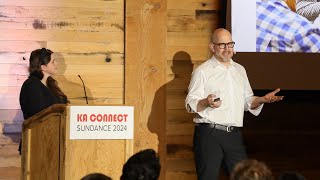
Kelsey Arnold and John Clegg present a case study of knowledge management at Paige, describing the firm’s adoption of a KM framework (Knowledge Architecture), selection of Synthesis (beta of Synthesis 6) for an intranet, and the launch of the intranet named Louis to support integration during rapid growth through mergers (notably a large acquisition that expanded the firm from ~800 to ~1300 employees and 10 to 21 offices). They cover practical steps taken—skills mapping, team restructuring (central services with four sub-studios), communications audits, and local engagement events—and early outcomes, including usage metrics and cultural integration examples.
Questions this video answers
1898.
About 800 employees.
Employees increased to about 1,300; offices increased from 10 to 21.
Nine market sectors.
Synthesis (they started as a beta tester of Synthesis 6).
Chapters
Thanks Susan. Hi. Like Susan mentioned, my name is Kelsey Arnold. I am Paige's marketing operations director. I'm excited to be presenting today with my colleague John Clegg, talking a little bit about the importance of knowledge management and how that has impacted our pages growth through mergers and acquisitions. To give you a little bit of background about me, I started with Paige over 11 years ago. I started as a graphic designer. So I've had a very organic and unique career path. But I am now playing a leadership role. I'm overseeing our marketing and our communications department. And so yes, excited to talk to you guys today, but we'll jump in. Paige is an architecture and engineering firm with roots dating back to 1898. So similar to the story that Jim shared yesterday, Paige has been around a long time. 125 years. And for Paige to be successful, we have had to have a history of reinvention. So you can see here, Paige has come a long way. This is a little bit of our visual identity, our logos through the generations. But not only has our logo and our visual identity need to evolve over time, but our organization has as well. We were starting to realize that we had really talented team members on our teams that were experts in their specialties in their fields. And we were becoming pretty devastated at the idea that when they were moving towards retirement, we would potentially be losing those stories, that history and ultimately that knowledge as they potentially left the firm. We knew that we were a knowledge creating firm. But what we needed to figure out is how we could come up with a knowledge management program. We needed to be able to transfer this knowledge from one generation page to the next. But there are three things that we did understand about knowledge management. One, we knew that we needed to mine information, we needed to consistently create new knowledge and we also needed to figure out ways to disseminate this knowledge across the organization. So we started doing our research. John Gletsner started looking into knowledge management and starting to understand what that was going to be and what that was going to look like at page. Through that research we came across Knowledge Architecture and actually found this really incredible resource. So if you're not familiar with this, this is a table of elements created by Chris Par Parsons. Many of you know him and what is really beautiful about this is it outlines the elements that he believed create a successful knowledge management program specifically to architecture and engineering firms. So John brought this to me one day, really excited and as we started to look through this and start to try to figure out what knowledge management was going to mean for Paige, and we got to use this as a roadmap. This gave us a foundation to understand what were those elements, what were the things that we needed to start focusing on so that we could build this program. As many of you know, starting a knowledge management program can be pretty intimidating. Where do you start? It seems very overwhelming, but with this framework and as we started to dig in, what we realized was we weren't starting from scratch. Paige already had a lot of these elements working for us. We had project and employee databases that our marketing teams were upkeeping. We had a CRM through Deltec Vision. We had a DAM with open asset. And not only did we have some of these elements that our marcom teams were working on, we also had some of these elements that our project and our offices we're working on as well. Things like best practices and client feedback. But we knew that the Internet was an element we really needed to focus on. We knew that this was something that would help us disseminate that information across the organization. But to build this vehicle that would allow us to do that, we needed to look at the parts, we needed to make sure we refined these and we cleaned them up so that the parts were functioning as best that they could so that they could help produce the greater good. The vehicle that we were trying to build through our Internet. So we launched a proof of concept. At the time, we called this our dashboard. That was our intranet. And what this did, it gave the ability for departments across the firm to build resources and a place to put information that others could get to it. This was something that we built internally with our internal resources. But we started to run into some challenges. Some of the challenges were this didn't speak to our other systems. This wasn't connected to Deltec Vision. So we're having things like a lot of duplicate entry or, you know, conflicting information that was maybe happening from page to page or system to system. We also didn't have buy in from the whole firm. So depending on which department page you went to, the amount of content was really inconsistent. You could go to a page with a really robust intranet page, or you could go to one where nothing was really populated. So it wasn't really a reliable source of information. So through our research and coming across knowledge architecture, John and I have been attending the Kaconnect college conferences. We knew about synthesis and we felt that this was going to be a really great tool for us. So our job was to convince our leadership that that was going to be the best thing for us. So we presented this to our board, and we made the recommendation that synthesis was going to be the best tool. And they said yes, and we were allowed to proceed. So, like Susan mentioned, We started with synthesis 6 as a beta tester. Susan and our team really helped us go through this process. They broke it down for us. And one thing that the team really helped us with was identifying Paige's top goals. We thought all of these things were important, but we knew that we needed an intranet and we needed it fast. And so we needed to focus on those top priorities first. Here we were a firm. We had 10 offices, about 800 employees, and we served nine market sectors. Then this happened. So as we were up and running trying to get our intranet live, Page acquires UIP. And we quickly moved from 800 employees to 1300. Overnight, we go from 10 offices to 21 offices. So we needed to take a pause. We knew that we couldn't launch the intranet that we had been developing. That was for Page and. But what do you do? What do you do when a firm makes an acquisition the size of this one? So for us and for marketing and communications, this looks like a few things. We needed to reintroduce our people. We needed to look at our pursuit strategy, which pursuits Paige was pursuing, which pursuits that EYP was pursuing, which of them we had overlap with, and in those cases, what was our strategy? How are we going to move forward? We needed to look at our communications, both internally and externally. Who is Paige now, and what are we telling our employees and our clients. And we also needed to look at our people and our roles and our responsibilities, who's in our team and who is going to be responsible for what. So we did some skills mapping. And what was really helpful about this is it really started to help us identify where maybe our strengths and maybe some of our weaknesses were, were, and where we had room for improvement. And we did this for both our EYP and our Page teams. We did this for our marketing team, our branding and graphics team, as well as our communications team. And I'll make a little note about our communications team. At the time, Paige was running a really lean communications team. And so we were really excited about the potential of EYP bringing a comms team in to help us with this big announcement that was happening. Turns out they're in the same boat as us, also running a very small team of people. And so we immediately were able to identify through the skills mapping that that was an area we needed to focus on as soon as possible. So we restructured Our team and we launched what we call our central services, marketing and Communications team. This is a studio that has four sub studios with Pursuit Development Studio, our Creative Services Studio, our Knowledge Management Studio, and our Communication studio. It was really important to us that we built a structure that not only supported us here in the moment with 1300 employees, 21 offices, and 9 market sectors, but we also needed to make sure that we had the flexibility that this would allow us to grow. As Page continued to grow in the future as well, this also helped us identify, coming back to our intranet, who that team needed to be, who our intranet implementation team needed to be. We had our UX designers, our data management graphic designers. We created a digital platforms coordinator. Shout out to Sarah Vu. She's here this week. IT Marketing and John Clegg was serving as our integration team lead at the time. So we were focused on what the intranet was going to look like moving forward. So we were building a lot of progress here. And we were trying to use this as a tool to kind of get both of these firms engaged in one thing as well. And so we were. It was really important that this intranet was not just the Page intranet. We had a whole other culture that we needed to incorporate here. And so we needed to figure out what that was going to be. So one of the tools that we really used during our launch was, is we did a naming competition and we were blown away by the feedback. We got close to 1,000 entries of what we should potentially name our intranet, and we put that out in a presentation and finally a vote, and the firm decided that we were going to be launching Louis. Louis is named after Lewis Page and Louis Sutherland, who are our founders. So this is a nod to our past, but also giving us a place that we could come together and we could have dialogue and conversations together as one and who we were going to be in the future. So the intranet became our biggest integration tool. This was a place that we could come together as one firm and share ideas and also giving the space for those unique cultures that were coming together as well.
Thanks, Kessie. So to give a little background about myself, I'm your very typical designer, architecture and urban designer. I was one of the architectural design studio leads for about 15 years in our Houston office. And as time went on, I started to work on some firmwide initiatives. I was also working on highly complex projects with diverse client teams. So I spent about five years in the Middle east, for instance, working on projects there. One of the best things ever said from a client was, you only need three things to work in the Middle East. Nothing is what it seems. All your questions will be answered and you're never asking the right question. Right. And so in some ways, those kind of ways of entering spaces and knowing how to engage in those kind of communities or communities with our clients and so forth was helpful also, as I worked in supporting leadership and moving sort of challenging, complex initiatives forward internal to the organization. So at the moment of the press release, I found myself sort of more in that role than I was in an architectural design studio. Lead and was trusted. And I appreciated the trust and the confidence of the leadership team to say, will you step in as sort of the integration lead in doing that? I think they recognized that I wasn't going to be figuring out how our IT systems were going to talk. I wasn't going to figure out HR or anything. But they just wanted someone on the ground who would chase things. And so that was my job for six months to be there. And, hey, I heard this is happening. Go talk to this person. I hear this is a great leader. Connect, understand what they do so we can figure out how we can integrate what was going on and also make sure that nothing was lost through this process because often it's highly complex. So. And really making it much more transformational to the organization moving forward than just feeling like a transaction. And that transactional piece for me is always something that's really hard. Right. I think the M and A piece for me is one. It's complicated, right. Because we want to sort of not be that. And I always sort of. I'm really excited. For instance, if you look at the AIA firm award winners of the last 10 years, you hear celebrations of those transitions. Right. I know Moody Nolan's here, so they're obviously a key example of that. But you see firms that have found ways to navigate those sort of pathways to sort of train new leadership. And this is why last year, yesterday's program about identifying leadership and making that happen, I also really aligned with and think is really, it's great to sort of move forward, but we also understand that sometimes it's market driven, right. Sometimes in office, however strong they might be from a leadership standpoint, might not find themselves in the market situation. And so this article on the left says there are going to be 435m and as in architecture and engineering, just this year alone, which is hard to comprehend. Right. And I've heard through the conversations I had, this is not unfamiliar to many of you who've gone through this process and engaged what that is. But the perception then is, right, you got the big fish firms eating people, right? Which I'm like, I don't think I'm a big fish. I never thought of ourselves as a big fish. But I was at an AI gig. I was a national in D.C. i was at my alumni gathering. I was connecting with people I knew, people I didn't know. And one of my former colleagues from a previous firm was talking to me. And a CEO of a firm I have huge respect for in one office walks up me and the person so he could hear was, are you going to buy them, too? And I'm like, wow. Like, I didn't imagine. Like, that wasn't really what I was looking for. That wasn't what I was expecting. Because again, that's not who I defined who Page was. Historically. Historically, we've talked about growth in this sort of the 15, 16 years and last 18 years, I've been at Page really thinking about where our clients are and trying to serve our clients and be in those spaces to respond to where they want us to be. And also recognizing that when I started at page, we were 400 people, and 16 years later, we were 800 people. And sure, there were moments where there were small acquisitions that took place, but that if you count the number of people that were added to acquisition versus organic growth growth, it was really only 75 people that were added through acquisition. And so we saw offices added and so forth. And also recognizing the value is that if you look at the gray names versus the names in black, the names in black are still individuals who work with us today, who come from those legacy firms, who come from their own histories. And how to celebrate that and bring that thought leadership into the organization and not say, mold to us, but how can we be better because of you being part of us? A larger organization was something that was really important to me. And thinking about what's going on, the other thing is context, right? We talked about the press release, but behind the press release was where EYP was at that current point in time. They were coming out of chapter 11. So this is actually the docket of information, where information was posted. And so from a dynamic standpoint, no one knew two days beforehand whether or not this was actually going to happen. Right? From our senior leadership team, from their senior leadership team, because we were waking it to work through federal bankruptcy court, which meant that this. Sometimes this transition period, this ability to absorb and change wasn't an option for us moving ahead. And also Another dynamic is in the two previous years of EYP, which was the year it happened was at their 50th anniversary. They had just, they had added 150 people through acquisition in the previous two years, just themselves. So you see there was a lot of unlike people not knowing where they were, what was going on and how that was playing out. And so this was us, this was our team, this was how we all showed up and how we engaged in the conversation moving forward. So for a chronology, I'm going to jump around timelines a little bit. But for, for this basically from when the press release happened and what Kelsey talked about to the end of the presentation, we're talking six months basically from a timeline within the first week, we made sure that the leadership teams from both legacy organizations were in a room together. Understanding in the four market sectors where we had overlap, we were aligned to understand what was going on. And we were actually three to find out that we didn't have much overlap. It was really exciting. We had a few clients that we had to sort of talk about, but it made us sort of think about how we were going to pursue what we were going to do. These are the kind of things the conversations are happening in Kelsey's space as well. And so that took place. And so from a leadership team standpoint, another narrative that took place. So where that came out and as Louis became something that we pushed out, you can see that we identified our markets because then we could align where people could say, okay, this is the sector leadership. This is an integrated leadership. I know if I'm supposed to talk to and someone says some random name, I can go find Rohit. And I know where Rohit is and how to get ahold of him. So this was where Louis was really helpful for us over those six months to take that forward. Progress moving ahead from a culture standpoint, what we also saw was that within the first two weeks we made a point of the there were leaders from legacy page who were in every single office within two weeks to have a gathering. And we had five co located offices. In those located offices we had gatherings. We brought everyone together and that was something that was really effective as sort of understanding who everyone was. And often with such a small town, in some cities you just know these individuals like, hey, you were my former student or hey, we used to work in the former office, et cetera. The other variable is home office because they were in the process where they were trying to retain through the Chapter 11 process. None of the EYP team had returned back to the office. And they still heard someone, I can't quote the person I heard it from, about they were working in X, not home, right? Wherever they were working, they were working at home and not had returned the office where, like Z page had come in 3.2. And so this meant that there wasn't an immediate callback to the office. This was something that we were working through in that hybrid work environment. The other piece is there's a whole story behind this that is probably another talk is the work that was happening from our leadership standpoint, which aligns with some of the discussions that we had yesterday about bringing our leadership team to an equal space. And this was happening through yearly retreats where we're bringing everyone together. And in those retreats, this retreat that happened, sort of timeline acquisition was sometime midsummer, in July, in sort of October, we brought everyone together for the first time. And this is where, in my role of integration, I was hearing lots of things. I was hearing on one side, the legacy page going, I don't know what's going on. No one's telling us what's going on. They just seem focused on the UIP people. I trust our leadership. I guess they'll get around to us at some point, right? So that's the legacy page. And Legacy YP is. This is all so crazy. There are all these new things. I don't know what's going on. I can't understand what's going on. I don't know who any of these people are and how are we going to figure this out. So Tim Skaggs, who was our facilitator of the event, put this. And this is the actual graphic, because I wouldn't have picked these colors, but this was the actual graphic he put up in the room. And this was the icebreaker for the tables around the ballroom is like, how do you feel? And for me, and it was pick the wheel, like, it was all over the place. And for me, when I asked the question, I said my answer was, feel calm. Because for me, it was the first time I had seen our two leadership teams coming together. And I knew culturally how aligned they were. They just hadn't gotten to know one another yet. And so part of it was that time of the retreat, that time of being in the room together, that time of engaging. I knew we were going to be in so much of a better place at that end of that retreat than we were at this moment when we were all taking a little sort of a litmus test of how we felt as we went into it. And so we got off the ground running with synthesis and with Louis and with on how we were gonna get this. And some of it was just basic employee directory brand guidelines, how we were moving those forward, and also identifying where our offices were, who were us in different places, how were they located. So who's in Albuquerque? I didn't know we had an Albuquerque office, et cetera. And so being really clear about creating individual spaces in our those local offices and give an opportunity for them to define culture, place and resources there for each of the offices across the 21. And then also, I know this is what I appreciate about sort of we talk about legacy projects and so forth. Everyone was like, I don't know, does that firm actually do good design work? Because I haven't seen it. And you heard that from both sides, right? And so part of it was, how do you make sure everyone knows how amazing our shared portfolio is now and where does it come from? And so in my role from integration standpoint, I would spend every Sunday, I'd sit at my desk and I'd spend two hours and I'd grab a legacy project from either page or a legacy project from eyp and I'd capture it because I felt like. And I'd push it out that week because I felt like it was really important to work. And in some ways this was a stopgap, a band aid, because we hadn't been able to yet integrate our open asset resources where we could link those project data just yet. It came and now we have it now. But this was a stopgap through the integration process. And it also let me use all the tools that are fantastic. I could then go in and say, well, we did this great project at Gettysburg in the Warfield House for the National Park Service. And it was a renovation. National Park Service has great guidelines and its history. Why don't we let them tell the story? Or there's an NPR interview with the project manager for a school, the Rosedale School in Austin. Why don't we just link the NPR story Or there are interviews that we had on YouTube and other locations. What I was just trying to do was trying to give a variety of different ways to give a broader gap or broader range of narratives and stories to what we were doing. The other piece, what we were doing was an internal communications audit. One can imagine that communications was very different at the moment of integration between a firm going through bankruptcy and a firm not going through bankruptcy. So we did a nationwide regional and office level communications audit, and it's all over the place from benefits to health to office news, et cetera. But there are two things I want to talk about and it's these two First Monday meetings and Page One forum. So this was a real critical piece for us. One, a first Monday meeting, which different offices define differently. But I'll just use this as a way of talking about it. A First Monday meeting for Legacy Page was because leadership was scattered across the offices and we only had 10 offices. Typically that meant there was a board member in each office who could lead a monthly meeting. And you had direct download of information from a board member to that community to that regional to that office to tell them what was going on. And you knew the information was right and it was important. And also it was really exciting because each of those offices developed their own thing that grew out of the culture of that place. Right. And so to just be dismissive of local culture wasn't constructive. You wanted to celebrate and let that emerge on the other side. Because Legacy YP was all remote. They were only doing almost monthly or more frequently firm wide meetings where they were in crisis management and crisis communications as it relates to bankruptcy, where they were answering questions. And you know, I have nothing but respect for the leadership team at EYP going through that process because the stories I would hear about. Ask any question you have as an employee and we'll answer it here on the spot because we want to maximize transparency to make this successful and let everyone know what's going on. Because everyone matters that we have transparency of information. So when we joined, you can imagine there's no transparency here, what's going on. Because there was one side of the organization that that was very comfortable with these regional meetings on the other side of the organization. That wasn't necessarily the other issue. That was not, I didn't really expect was going to be as big as it was was the reality of going from Zoom. But when you jump a thousand to Zoom Webinar, and as much as we say we hate the space on the left, there's something comforting about seeing your friends and be able to text them, chat them, hey, how are you doing? What's going on? And making those connections, which I know maybe no one else does, but I do sometimes when I'm saying hi to people online and check on people and see how they're doing in this virtual space at Zoom Webinar, they're gone, everyone's gone. You have the three designated speakers, the four designator speakers, and they're talking and all you have as a way of linking one Another is a list of participants and the chat or the Q and A or whatever functionality you want to have turned on. And so that was. So it meant there was such a delta in some way what was going on. And so while we have continued so probably for the first six to eight months, we decided to maintain the monthly Page One forums. We've moved to a quarterly forum. Also understanding what the spend rate is when you pull 1400 people together for an hour long meeting. Those are things that we're trying to modulate and figure out. But this is where in some ways Louis came to the rescue and sort of understanding how we could happen. So where we saw Page One forum as sort of that top level of communications as we related to the whole firm. And we saw first Monday meetings which were still happening locally and regionally, depending on where those offices were located. Louis was picking up a lot of that weight. And so you have a post, anyone can add a post and what's going on. Two, you have a post pin, right? For us was like, okay, we want people to pay a little attention, so we're going to let it pin. And. And we usually let anyone say reach out, hey, I think this is really cool, could I pin it? And then we usually let it pin. So that's very typical that we let people pin up. And then there's a post email pin. Right. Extra level of we're gonna do a hard push to everyone because we want everyone to make sure that they read this. And then the highest level is a post, video, email pin. And now is this in anywhere? Have I ever documented this before this presentation? No, but this is basically what happens, right. So it's good to know. The other piece in the back of my mind was Jim Martin, who we had a meeting with early on when we were trying to decide the jump, which was set up by Zoltan Carl, our cio. And I referenced that meeting with Jim and we had the conversation, how's it going? I don't know if Jim, if you remember this, but one of the things I had, I had panic. Are we okay with letting everyone say what they want to say? That kind of terrifies me. And in the back of my mind, Jim said, don't worry about your people, just worry about your leadership. Right. At least that's what I heard. And so for the record, we've had about 1200 posts since we've gone live with Louis and it's become a fantastic space. And what I will say is we saw on ramping of the two organizations at different Rates. But now you can't see a difference. Like it's very much equal. And everyone feels very comfortable about this. Going back to Jim, this particular post is folklore, not only for us, but I think also within the Acknowledge Architecture team. We had an individual who made a post right after a shooting in Nashville in March of 2023. And the text is actually very thoughtful. It talks about their personal experience, about being present in Virginia Tech when the shooting, was there, having children himself and understanding what this meant. And we had a responsibility as design professionals to have a positive impact in what was going on. Like I read the text, I'm like, yeah, I'm all in. That's the right kind of message. The stars around the title is. That's not the title we started with. The title we started with was. I can't remember it was. But it was basically Finding solutions for gun Violence. That was the title. And then it started. This is not an appropriate subject, politics, religion for professional. And this was further along in our process of integration that I wasn't checking it regularly. I think Sarah might have gone, hey, have you checked Louie? And we even had conversations with the Knowledge Architecture team. Post processing. Do we need to figure out how to apply alarm triggers when posts go viral? Because this was rapid fire moving forward. And you can see we had 35 posts and most of them were like full paragraph forms as people were engaging across the organization. I picked up the phone to hr. I picked up phone with a board member. Hey, are you aware of what's going on? How do you want to gauge remembering Jim? Right. We're trying to figure out how we engage in the end, the our team, the office, it was self resolved in the chat and someone it was so everyone sort of, they were self resolved in a chat and everyone's figured it out. And they just through the chat they figured out that the person who had the problem in the first, he only had a problem with the title and the title was changed and he said, thank you very much for listening and hearing my perspective. We're all good. And then we moved on. And for me this was really exciting and a real trigger for us about trusting the network, trusting our teams and saying, Jim, you're right, this was the right way to go about it. So talking a little bit also different ways my role has transitioned. My title is different now than it was before. I'm responsible in my role of integration. I found opportunities in sort of bringing teams together. So we had building Sciences, fabrication, Storytelling, Studio X which is our pursuit team. We have and A tech lab. And then we also sort of started a research and innovation team. And that group is about 40 people for the firm. And we recognize that we have a responsibility. And so maintaining that space on Louis, telling that those stories are important. And for that we're building resources. And the thing that I did a check on, sort of before coming here for another meeting was that of the 1400 people that we have at Page, there are 40 people here. And they've handled 40% or 30% of the posts in the last month. And the goal is, our goal is trying to really tell teams that they have to get this information out, because it's about elevating the quality of the teams across the board and also building out resource guides, which in some way. We have already built up 95% of this. We're just now. But it's been scattered. It's all over the place. And so we're just in a consolidation in the next month to do it. And we'll get there. But doing this in plain sight. So the top line, you see this resources in development, we don't see the need to hide the development of it. We're just unrolling it live and we're working through it and then using it because there's such good information already, we would be using the full firm would be getting a disservice by not getting there. And in the end, this is for us about really empowering our team or the people who work at page across all 21 offices. And this is why we're really excited about having gone through this process and understand how LUI and synthesis was really a backbone in sort of achieving some of these goals.
Thanks. All right, so looking ahead, Page is continuing to grow, but we are not anticipating growth like we did with that unique situation with our EYP merger and acquisition, but really going back more to our roots, organically growing, following our clients and what our clients desire of us, where they want to see us, what services they want us to provide. And one example of that is the acquisition we most recently did with Davis Brody Bond. Our clients wanted to see us in New York City. And so we felt this was going to be a really great partnership for that. So we're working through Louis to kind of help announce the acquisition of dbb. We did that top tier that John was talking about. This got a post, it got a video, it got the email blast and was also pinned on our intranet site as well. On the top right, you can see there in the middle, there's a big Jump there in the middle. That was actually the day of the announcement. And so what that was telling us is our employees were interested in. They were engaged and they wanted to know more. There was a lot of work that we wanted to do before we made the announcement. We worked to make sure that every single DBB employee was in our directory. We wanted them to be able to go and find themselves and their coworkers the first day that they logged in. And we also wanted to make sure that they had their New York location posted as well. We needed to make sure that you could find the resources about our New York City office and that they had a space for their unique culture and how that was going to fit into Page.
And so now our family grew, right? The team grew and these different legacies were there and also important to share. And Davis Brody Bond has a rich history. They are 75 years old. In the 1970s, they won the AIA firm award for Davis and Brody doing significant projects in New York City. And the addition of Max Bond, who came when Ryder retired. He joined Davis brody Bond in 1990. Having worked on projects like the Martin Luther King center in Atlanta and other locations empowered that team to do even more work historically, not only being Max Bond was one of the key team members of the African American Museum at the Smithsonian, but also with a lot of the work that happened in 911 where Davis, Brody Bond was doing and leading a lot of that effort from a logistics side and sort of a documentation side, as well as OBO work where it was actually we had shared history from Legacy Page or from Page and also from DBB about having worked together, moving ahead. And so we wanted to celebrate that internally. And so you see a post here from our communications director to the firm about sharing that history, because that history was important for us to share and celebrate in these legacy projects that were important. So we march on. We keep going. What's really exciting for us to see how this carries forward and we see the adoption. We have a lot of work to do. I think when, when Chris reached out, I'm like, we haven't finished anything. What are we going to talk about? But I think really the celebration is how we see people show up. These are individual posts by people in the last three to four months from our office. You can see the way they're engaging and wanting to share their excitement across the organization and celebrating what they're doing, because it's really what we're all doing together. That's it. Thank you.
More from Christopher

Human in the Loop? Testing Our Assumptions About Where People Add Value in Learning | Todd Henderson

Redesigning Work for the AI Era: How Greenprint Turns Implicit Knowledge into Shared Intelligence

Designing Learning Like a Product: Branding, Culture, and the Unseen Work of Building an LMS

Scaling Design Excellence: How Diamond Schmitt Amplifies Knowledge Through Learning and AI

From Tame to Wicked Problems: Rethinking Learning and Development in a VUCA World | Ellen Bensky

Learning at the Speed of Change: Adapting L&D to Your New AEC Workforce | Kristina Williams

Designing Modern Learning Organizations: Rethinking AEC Learning Development in the Age of AI

The Link Between Learning, Motivation, and Career Fulfillment for AEC Professionals


Why Communication Skills Are Foundational to Teaching, Leading, and Adapting in AEC F

A Framework for Collaboration and Quality: SMMA’s ISO 9001 Journey | Ryan Farias & Jessica Smith