Kari Shonblom | Upskilling the Next Generation: A Targeted Knowledge Management Strategy
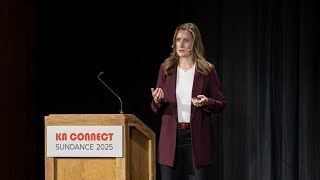
Transcript of a conference talk by Kari Shonblom, knowledge manager at architecture firm BWBR. She describes the firm (three Midwest offices; ~200 employees after rapid growth from ~140–150 in 2021), longstanding KM program and assets (intranet ‘Beehive’/Synthesis, Landmark Learning video cohort, Elevate mentorship, communities of practice, QA/design-technology teams), onboarding challenges for emerging professionals (knowledge gaps, expert overload), and pilots to add explicit context via AI-enhanced search, project lifecycle pages, project leveling, knowledge maps, Design Connect recordings, Deltek/VantagePoint integration, and a private LMS—reporting early improvements in search results when contextual content is added.
Chapters
As he mentioned, my name is Carrie, I'm a knowledge manager. I have plenty of experience in the knowledge management role. But to give you some background about our firm bwbr, we've got three offices all in the Midwest, in Nebraska, Wisconsin, and our largest office is in Minnesota. We've been in business for more than 100 years and I call this out to say we've had time to figure some things out in order to be successful for that long to you have to learn how to codify things and create some rigor so that you can continue to build on success. We specialize in specific market sectors that are typically technically complex or largest. And main focus are things like healthcare, behavioral health, education, science and tech. We have a high average number of years of experience in our staff. We've got a lot of people with long tenure with lots and lots of experience. And you'll see that we're hovering right around 200 employees. But not that long ago, 2021, we were hovering around 140, 150 number of employees. And in the course of two years we had some very large projects come online. So we added approximately 70 people within that two year time frame. And for a firm our size, that's about a 44% growth, which is very significant. And I'll add that I was part of this group. I was brought in in December of 2022. So I saw in what it's like firsthand to come on board when there are so many new faces and what happens when you add 70 new people in a short amount of time. Naturally there are a lot of questions of those newcomers. And I should mention that this group was not just all emerging professionals. We had some experienced professionals, we had some contract workers, we brought in a couple of folks from outside the industry. We created some new project coordinator roles, for example, and hired some really great folks, but they had no AEC experience. But for the sake of this talk, I'll keep referring back to the emerging professional group because they're the group that needs typically the most help. And like I said, this is a lot to learn. You're trying to understand our processes, how we work, what templates and resources we have available to do that work. If you've never done some of our technically complex project types before, you're learning that and you're trying to understand the network of people who can you go to to ask questions and understand what's going on in the firm. But with this there's lots of questions. There's two sides of the equation. Here you've got all these new folks asking questions, but you need your existing staff to be able to answer those questions and provide direction. And it's unfortunately not like it's evenly distributed across all of those existing staff members. Typically, the questions are getting directed more towards the experts. And we have wonderful experts that are very generous with their time, love to help folks, love to be engaged with staff members that are asking questions and dive deep into topics. But it can be overloading when it's just at that scale, that volume of new people coming on board. Because this is all a lot to teach. And in the absence of things being easy to find and navigate, our emerging professionals in particular, we want to come on board and provide value to the teams right away. So they're trying to be self sufficient. It's coming from a really great place of intention, but they're trying to potentially create process where they perceive that there is none. They're trying to create templates and generate resources and things that may already exist, but they just couldn't find. If they don't know about our project types, there may be nuance that they're not understanding and they're missing some opportunities and then they're not quite sure who to ask or they just don't want to overburden. Those experts that they see are very busy and they don't want to be that extra burden. So like I said, it's coming from a great place of intention, but can have some negative consequences. And this was reflected in our employee engagement survey results. We've been doing an annual survey to all staff and on both sides of the equation, it showed that one in three said that they could not effectively manage their workload. That was their perception. So it begs the question, can this be easier? Can we find a way to onboard people and upskill people in a more efficient way? And even though we're not currently in that same growth mode, we do have firm goals and priorities that although it's not explicitly stated that we're trying to grow, I think that's sort of an implied outcome. If you are successful in achieving your goals, there's some sort of growth that will happen. So this is still really valuable and worthwhile to invest our time and effort into this to make upskilling and bringing people on board easier. Let's first take a look at what we're doing really well. And I do have one of the shiny objects that Chris mentioned of the periodic table here. And I encourage you to go back and watch that talk from 2016 that was my first year at K Connect and it was such a formative year for me specifically seeing that talk, I said, yes, this is what I want to do. This is awesome. So I recommend still has value. Go back and check it out. And specifically I'll dive deeper into each one of these elements that we're doing well. But I'll pause for a second and just let you know that we've had a knowledge management program for a long time, started in about 2007. We had a very forward thinking principal that was sort of the executive sponsor of this. We had the exact right person to help shepherd this and take it and grow it to what it is today. And like I said, I've been with the firm only two and a half years now. So I got to step into a very mature KM program which was such a treat for me. And I say all this just to let you know, if you don't have all of these great things. It takes time and a lot of focused strategy and effort. So first up, we have our intranet. We were one of the early clients of Synthesis. We call ours Beehive. We've had this since about 2012. And when I first came on board I was so impressed with the amount of content that is on here. And I'm happy to say this is already built into our culture that on an average basis I know we're reaching monthly, at least 99% of our employees are coming here to view content. So I know we're hitting everyone in the firm. It's part of our communication strategy. If we're launching something new in our staff meetings and things you will consistently hear, you can find it on Beehive. We have, in my opinion, some pretty good internal communications to keep everyone informed to know what's going on. The column on the right are meetings that we have to keep business unit directors and leadership on the same page where we're connecting to make sure that nothing is happening in a vacuum or in isolation. And then we're trying to communicate the same messages about why things are important, why we're investing efforts where we are. The left hand column are meetings that happen on a regular basis to keep staff informed. And one that I'll call out that's maybe unique to us and I'll mention this later in the talk, is our design connect. This happens once a month and this is a day where we have three meetings in the day. Morning break, lunch and afternoon break. And it's been a great opportunity for project teams to do some informal presentation about what's going on with their project could be something interesting from a design perspective, some unique challenge that we solved. We often get into like some client history and some really interesting, rich and robust things that you don't just get in like a standard marketing description, but from the emerging professional standpoint, it helps to connect faces to names so you start to see the experts and what they're talking about. It also helps build awareness to the things that are happening in the firm. The projects that you may not see, particularly for our operational, like practice management side of the firm, that doesn't work directly on projects. It helps connect to the business and what we're doing. We have communities of practice that are formalized. We, like I said, have these special market sectors that we focus in, but we do not have studios, formalized studios. We certainly have staff that specialize, but there are a lot of folks who work across all project types. A lot of people really like that. So the charge of our cops is to help build the knowledge base for that market sector. And it could be things like templates, it's beehive content in some cases. We're working on new tools. We're trying to figure out, like some benchmarking projects from programming tools, things like that. It varies from sector to sector. But really the purpose is to help us build the knowledge base. We do mentorship fairly well. I think. We've got a program called Elevate that is a combination of annual review plus coaching. So each employee has an assigned reviewer that will do their annual review and the employee can opt into the coaching program. And we've organized this in a way where the employee can identify their top four people. I think that they would like to be their coach. And then we try our best to match appropriately so the employee has some say of who they're paired with. And that coach really becomes a great conduit for that emerging professional. In particular, they have a person now that they can ask questions of, and that coach can help connect them to other people within the organization, help build those bridges and make those connections. And we use a term internally, I like the way this is phrased, that we're building scaffolding around the employee to help them be successful. We also have pretty rich learning and development culture, even though we don't have a formal learning and development leader and we don't have an LMS yet. But a lot of our programs are geared towards cohort groups that need some sort of upskilling. So project management, upskilling, healthcare upskilling, behavioral health, et cetera but there's one program in particular that I'll talk about. It's landmark Learning. And going back to the Ka Connect talk archive, there's a talk from 2017 that was from my firm. I was in the audience at this, and this was before I ever had the glimmer in my eye of joining bwbr. But the folks here talk about the inception of this landmark learning program. We're entering our 10th year of this program, and I still remember sitting in the audience, the line that resonated the most with me is when Dan, the guy on the left, he's our business unit director for professional services, he said, we don't have 20 years to train the quote, unquote, 20 year architect. How can we do this faster? The entire point of this, this group, this cohort, is to target folks who are less than five years in the industry and less than five years at our firm. It's helping to try to accelerate their understanding for emerging professionals, really how buildings come together, how the project teams work together, and helping people understand how we specifically do it. At our firm, we also do a pretty good job with best practices. So we have a design technology team, we have a QA team, We've got a couple of committees that bring in people from both of those teams, plus some other folks that come from like architecture and interior design backgrounds, for example. And I think we've had success because we have a very robust QA program. So our QA folks are very good at spotting things that could use improvement. And through these groups, we're able to build things into our tools and into our families and things like that and then communicate about it. To say, this is how we use this tool, this is why we use it that way. This is a change to something from before, or this is something new. This is all posted on our intranet so that people have awareness about this. I think this is working pretty well for us. But let's throw in the scenario of this emerging professional new to the firm. Like I said, we're busy, we're growing, things are happening really quickly. We have a senior PM that says welcome aboard, excited to have you here. I'll add you to the PIM meeting And the emerging professional, this is just lingo that we have internally, right? That if you've been here, you know what this means. But the emerging professional says, what? What is that? I have no idea. And they have a couple of options here. They can stop and ask that person in the moment, they could go find somebody else that they'll feel comfortable with internally and ask them the question. But a couple of reasons that they might hesitate is they don't want to look incompetent. Like I said, these emerging professionals we've seen want to come on board and add value really quickly. They don't necessarily want to seem incompetent. Or maybe they're just not comfortable enough with the people yet to feel like they have that relationship to interrupt. Or maybe they feel like the person that they would be asking is too busy and they don't want to be a burden. So we have seen, especially with emerging professionals, they tend to be Google natives so they are taking to synthesis and they would search first in this example. Let's search pimmeeting Our current search results are a smattering of items that at surface value. I have no idea what value these have. I'd have to dig a little bit deeper. I do see that I have a best bet. So if I click that now I can see at the top I finally get the explanation of what PIM meeting stands for. Project Information Meeting. And now I'm seeing some checklisty type things about tools and a BIM execution plan. So I can glean some context about what this meeting is. But this doesn't give me as the emerging professional, any sort of idea of what specifically I'm supposed to prepare for this, what I'm supposed to expect, or how I'm going to contribute in the meeting. When does this happen? So it begs the question, can this be better? And last year on this stage, Chris got up here and announced AI plus KM equals fire. So that got me thinking and it introduced a new success metric for me. Fire. If we work backwards, how do we get fhir search results? First, we need content. And I think I've established that we have a lot of content, but you also need context. And currently we are relying on our experts, our people to provide a lot of that context. We have folks who have been here a long time, maybe somebody who hosted a landmark learning session, telling the emerging professional, oh, we have something about that. Go watch it. Or this is the template you should use. Here's why you should use it, here's why we do it that way. But if we can be more explicit with our context, it not only helps the AI, it's just good for our people. It helps the emerging professional. Here's why it matters. This is something that's been rolling around in my head, so I took a pass at illustrating this for you all. If we have our emerging professional starting a new Task first they need to get to a draft and then they need to get to the completed product of that task. So they need some context in order to get to that first draft. And then they need some calibration to get to the final product, some refinement. And currently, like I said, we're relying on our people to provide the context. So our expert is helping this emerging professional at the beginning of this task, they're helping to provide the context and walk with that emerging professional to the draft and then to completion. But if we flip this a little bit and we are more explicit with our context, we have more of this built into synthesis. Beehive now the emerging professional can get to that first draft on their own. So we're supporting the behavior that we already see where the emerging professional wants to be self sufficient so they can get to that first draft and now we can engage with the expert to help provide the calibration and help that person get to the finish line. And you'll see this is a much shorter path now for that expert and arguably a bit more engaging for the expert because the person already has some sort of foundational knowledge. So now when I'm engaging as an expert, we can be more productive to dive deeper into the specifics of this client, this project, this task. If we go back to our scenario of the senior PM saying I'll add you to the PIM meeting, the emerging professional saying, what if they take to beehive and search? PIM meeting. This is just from turning on the AI. We are part of the beta group. We have not launched this to the rest of our firm yet. This is just me testing some things out as we prepare to launch. And now I see a much better search result. Where in the first line it tells me what the PIM meeting is without me needing to click on any documents. But in the third paragraph down, you can't read it, but it says specific detailed agendas or participant lists for PM meetings or for PIM meetings, excuse me, are not provided in the retrieved content. So that's a miss. Begs the question again, can this be better? So one way we're doing this is adding context via the project life cycle. And that's where we're documenting what do we do on a project? When do we typically do it? Who's involved? Who needs to sign off? What roles are they playing or what are they producing? How do we get that thing done in this specific moment on the project? And then why do we do it this way? Or why is it important that we Take this step. And this has been a helpful tool to share internally to get people on board with this idea. This is a precedent example that I encourage everyone to check out. It's totally free. It's called Menoro. So if you go to monoro.org this is through the lens of sustainability. So it's got the project typical phases at the top, and then there's all these activities that happen in those phases. And at the bottom there are filters where you can help to drill down to specific content. So if I were to select the architect, lead designer now, it's going to show me exactly where that role engages in different activities. And if I click on any one of those activities, I get a lot more context. What's happening? Why is it happening? Links to other resources, et cetera. This has been a really helpful model to kind of show, not that we can design something quite this nice, but shows the end goal of how this all ties together and the value that it might have. So how did we start this process? We took to Miro and it was myself and our business unit directors for design and professional services, Dan, who you saw in the picture earlier. And we started with basic project process, but very quickly we shifted to this thought that a small project doesn't need as many checkpoints. We've been told we've articulated some of the standard, like QA checkpoints, and we've been told it's too cumbersome for small projects. So people are struggling to understand what do we need to do when. And now we're at a point where we are going to roll out a project leveling system, where we are going to categorize our projects in terms of three levels, an escalating scale of complexity, not value or importance to the firm, just complexity. And I argue this is important for emerging professionals in particular, because like I said, we don't have standard studios where it's repeatable and you're working with the same people in the same projects over and over. We have a lot of staff who are crossing different project types. They're working with a lot of different principals, a lot of different project managers. And anytime that you talk about standardization for the sake of communicating in the same way, because you could ask a similar question to all of those different project managers or principals and get a slightly different answer. And I've been told you immediately get pushback, that you can't create a standard process because every client is different, every product is different. So with the help of our business unit directors, we're thinking that if we at least create three versions of a standard project process that helps us to get to some sort of alignment on how we're speaking and what we're communicating needs to happen. So obviously helpful for an emerging professional to understand what happens when and have a resource to reference. I'll say this also, we see value in this in terms of projecting staffing and resources that are needed. We can use this for client analysis to say, do we have a client where we're only ever doing level one projects? Do we ever get a shot at a higher level project? We can also use it for marketing and things like that to figure out what projects and resources need a bit more context. Maybe something that's, that's level three has more potential for being considered for a design award. So we're going to invest more time and effort into developing renderings and things like that that document the design process. So a variety of ways that we think that this could be useful. And I'm in the process. This is all very much a work in process of trying to figure out how to translate this to synthesis. I can't quite make it look like that monoro example, but we can start to document it. And I'm playing around with the best way to navigate and tie this sort of web of information together. But I've gotten to a point where I can test did we get fire? And if I go back to my example of the PIM meeting, if I search that now because I created a page for it, I see what the meeting is, I see the checkpoints of what typically happens. But I'm also getting a bit of context that wasn't in the previous AI search result that I know from my institutional knowledge that the PIM meeting doesn't happen on every project. Now I see the context in the third line there, that this only happens on projects that are typically 20,000 square feet or larger. So much more helpful answer to somebody who's trying to understand just the basics of what's happening, why it's happening, when it's happening. Another way that we are adding context is via knowledge maps. And if you've never done a knowledge map before, think of it just as a mind mapping exercise. Take the pressure off. It can be just a simple exercise and have some use. But I'll admit I did get pushback from senior leaders about why we were going to engage in this exercise. It was perceived that it was just one extra thing. They didn't understand how we were going to use it or the value that it would have. And from My standpoint, I'm using this as an outline to identify content that we can build out and by putting it in a knowledge map in this format. It's been a very engaging process to bring visual folks into this with me versus me trying to create, just in a word, document, a point list of the items that might be important and asking for feedback. This is a nice visual way to see how it all connects and the way that we started doing these. Again, very much work in progress. I went to our cops and I took over one of their monthly meetings. I gave a little bit of background and context about what a knowledge map is, how we were going to be creating it. And I posed this question, if we didn't have this practice, this market sector, what would we need to know in order to start, maintain and grow it? So this can be things that we're currently doing and it's everything from our project types to the conferences and professional development things, things specific to clients like in our education practice, funding cycles, things like that that you need to be aware of. And it can have aspirational things that maybe we're not doing, but we hope to do because that would help us grow the business. And we've done three so far. And it's interesting, one of the principals in our education group said, wow, that was really cathartic to put this down in some sort of visual manner and just see this come to life in the span of an hour with just our cops participating. So if I were to look at our healthcare knowledge map and zoom in on a portion of this, here's how I'm starting to utilize it for myself and helping to identify with the other people that need it, the areas of priority for developing content. So these are elements of healthcare projects. And I just created a red, yellow, green metric where I was just kind of searching on synthesis to see what resources we had available and giving a very high level overview of the quality of that content. Another section of this is looking at more specific project types. And this is something that happened organically. Our marketing, excuse me, our planning key manager added the names of the planners, typically the people that have a lot of expertise in these specific project types. And I can see immediately at the bottom there's only one person's name next to neuroscience. So immediately I could say, if that person's nearing retirement and that's a project type that we want to continue to pursue, that's an area where we could focus some effort and try to shore that up and build some expertise and some additional folks. I'VE also added to this just from some quick Google searches, trying to find some reputable sources, a quick test, a litmus test of the projected growth for each of these project types. And this is just to provide some external validation for what our marketing principles already sort of innately know from being involved in the market sector. But it's just a quick visualization to say is this project type sort of growing or is it falling flat? So for example, critical access not growing as much. We already have some resources, so not an area of priority for us right now. If we look at ambulatory healthcare, adding in the knowledge from our marketing principles, that's an area of great interest for our clients right now. You'll see the red dot, meaning we don't have good resources for this and it's an area of growth. So that's a great area to focus some effort. Part of our AI pilot is Ryan, our healthcare practice leader. He took to Beehive synthesis and searched ambulatory surgery. He submitted. This is a real search rating. He gave it one star. Not surprising because it gives a very basic sort of non answer that says the intranet contains multiple documents related to ambulatory surgery centers, which is a lie. We have two that showed up. And to give context, these are example QA sets. Our QA team uploads example sets so people can see the types of comments that are being made on projects, the types of revisions that are typically needed for these types of projects. Arguably also very helpful for emerging professionals. But the rest of this that you see is just fluff. I would equate that to a high schooler trying to pad their paper with extra words to meet a page limit. So one of the things that we've done, I mentioned the Design Connect and our healthcare practice leader and COP decided to take over one of these Design Connect days. And the entire day was focused on ambulatory surgery centers. So we leveraged an activity that we were already doing. We've built in the culture that people attend these things. We've got the process for recording these. We now upload them to Beehive. My effort here is pretty minimal. Me and somebody else who edits our videos just does some light editing to make sure that the transcript is correct. And now we can test did we get fired? Did this just the simple act of doing this with really no other investment get us to a better search result? And arguably yes it does, because now I'm seeing much more robust information about the project type in the body of this. It lists some specific examples of projects to reference. And importantly, now I see over on the right hand column the names of three people that if I were an emerging professional, you would hope that if somebody's new to this project type, they're not just going to sit back and wait to be told exactly what to do. They're going to be a bit more proactive, hopefully, and trying to learn a little bit more about the project type. And now I see three people that I could go ask questions. So I don't necessarily need to rely on my project manager or my principal to answer all my questions. I now can see a wider network of folks that I can tap into. So next steps. I mentioned all of this is very much a work in progress. We're getting closer to being able to launch all of this stuff internally. So these next things are things that we are really just dipping our toes into. We're starting to try this. One of the things we're doing is trying to build out what's in Deltec. We're in Vantage point and similar to Katie's problem, we are trying to translate Word documents from our marketing team into Deltec. We are also hoping to bring some of this project lifecycle work also into Deltec. So theoretically a principal could select this is a level three project. It's going to spit out all of the typical checkpoints and then we can build in some automation. So if something needs to happen at 50% of the way through DD, you could track either by days in the schedule or hours spent to send a reminder at 40% you should schedule this meeting. Here's who you should involve. Here are the things that you would discuss. So it's helping to support that process. But tying this back to the emerging professional, specifically with project data. We very recently tested this, just got this mapped a couple of days ago, but adding a marketing project description. So this is our long form description about projects. And from the emerging professional standpoint, how often do they hear, oh, it's just like this past project that we did, I didn't work on that project. I don't know specifically what happened. I would like to go learn more about it. And now we have more information. They know where to search. And from the AI standpoint, on this particular project, I asked the question of synthesis, what types of labs does this project have? Because this is a higher education project that has a lot of different types of labs. And now I see a very nice summary. I didn't necessarily need to go to the project directory and navigate and then read through the long form project Description. This is a much more easily digestible format and I would hope as the AI project search becomes more developed, we would be able to ask questions like which education projects or which projects have we done that? Have a robotics lab or a high bay structural testing lab, things like that that are very hard to code in terms of a standard database. If you're thinking of all the project elements and having to select all that apply. If we can find ways to pull this out of the natural narrative. And like I said, some of those design Connect things is just starting to tell a much more robust story and help point people to resources and things that could be helpful. Another thing that we're doing, another one of the shiny objects. We are part of the private LMS beta and we're trying to figure out how to translate all of these videos that we have. For example, landmark learning has 170 videos. Like I said, we've been doing this for 10 years. We have hundreds of videos available and really trying to figure out how to organize all of this stuff. There's an emerging professional that recently said he's a big proponent of Landmark Learning in particular, and he's still in school and he has been able to have conversations with some of his fellow students and they're like, how do you know this? He's like, well, it's really great. We have this thing. It's kind of like an internal YouTube where I can just go search stuff and find some answers. So I'm kind of thinking through it, that lens. But having a formal LMS will help us to better direct training to specific individuals, create packages saying, watch this video first, then this one second, then this one third. Our CEO even asked our professional services director, what are the top 10 landmark learning sessions that somebody straight out of school should watch as part of their onboarding. So all of this will help facilitate and enable that. And we can have a bit more rigor in terms of not just adding a video, but now we can add, maybe there's additional lessons, there's a quiz, there's an interactive exercise, we can link additional resources, things like that, and we'll just continue stoking the fire. Thank you.
More from Christopher

Human in the Loop? Testing Our Assumptions About Where People Add Value in Learning | Todd Henderson

Redesigning Work for the AI Era: How Greenprint Turns Implicit Knowledge into Shared Intelligence

Designing Learning Like a Product: Branding, Culture, and the Unseen Work of Building an LMS

Scaling Design Excellence: How Diamond Schmitt Amplifies Knowledge Through Learning and AI

From Tame to Wicked Problems: Rethinking Learning and Development in a VUCA World | Ellen Bensky

Learning at the Speed of Change: Adapting L&D to Your New AEC Workforce | Kristina Williams

Designing Modern Learning Organizations: Rethinking AEC Learning Development in the Age of AI

The Link Between Learning, Motivation, and Career Fulfillment for AEC Professionals


Why Communication Skills Are Foundational to Teaching, Leading, and Adapting in AEC F

A Framework for Collaboration and Quality: SMMA’s ISO 9001 Journey | Ryan Farias & Jessica Smith