Katie Robinson | Connecting the Dots: How LS3P Aligns Knowledge Management, Marketing, and AI
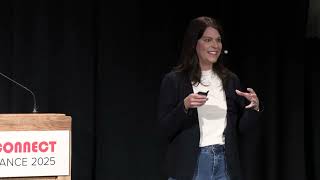
Katie Robinson (LS3P) describes the firm’s journey tying knowledge management and marketing together through a single-source project data strategy and a distributed data manager program. She explains practical steps (VantagePoint/Deltek as the project SSoT, OpenAsset, Power BI, and a synthesis platform named Frank), outcomes from a 2014 data manager pilot through firm-wide rollout (data coverage rising from ~5% to ~85–90%), and current AI-enabled workflows (expert hours, Copilot prompts, Advanced Search) plus near-term plans (Green Data Manager, harvesting Revit data). The talk emphasizes starting small, measuring impact, and iterating rather than waiting for perfection.
Chapters
You. I'm going to start my talk today with a disclaimer. We're not perfect. We're still trying to figure this out, both from a marketing standpoint and a knowledge management standpoint. So just a disclaimer if you ever think that any one of those systems is perfect, your firm's not going to move forward anymore because you have to continue to change. And so what I'm going to say today works for us at LS3P today. It's going to look different in the future. So just a disclaimer. So I'm going to set the stage. LS3P is an architecture, interiors and planning firm. Typically in venues like this, I say we're a knowledge management firm and we also happen to do architecture, interiors and planning. But truly we are an architect, interiors and planning firm. We have 12 offices and we represent 12 different market sectors all within the Southeast, although we do work a little bit outside the Southeast to set the stage further. We use Deltec, for better or worse, we use Power bi and we also use Open Asset. And as Chris said, our synthesis platform is lovingly named Frank and it stands for firm wide resource, all news and knowledge. And it's also a nod to our founder, Mr. Frank Lucas at LS3P. Knowledge Management and marketing fall under my umbrella, which is kind of, kind of weird, but if you think about makes perfect sense. All of the things that we produce in marketing, from responsive marketing, like proposals to proactive marketing, is built on knowledge. It's built on data. I can also flip the script because without marketing and internal communications, all of that knowledge that we collect, all of that data we collect is essentially useless if it's just on a shelf. So the marriage of those two actually makes perfect sense. I can also argue that marketing also touches every single element of this table. Obviously knowledge management does, but marketing does as well, even if it's just to internally communicate how these systems are used. So again, a really great pairing. We have a C Suite at LS3P and I'm honored to sit on on that C suite. And we are really connected. And the beauty in this is we have a direct line to practice. We have a direct line to business development, a direct line to operations. Likewise, we also have an amazing business team leaders group. And again, we have a lot of connectivity, right? I meet monthly, I talk probably daily with HR, technology, even legal. And then of course we have the two groups in the firm that keep everything together, right? Marketing and knowledge management. I have some of my colleagues here today and without these Two groups. Truly, our firm would not be where it is today. Also, we have a huge culture of knowledge management at LS3P, which we're very fortunate to have. It truly is the responsibility of every single team member at a certain level. So I'm going to go back in time, I'm going to talk to you about this journey of where KM started at LS3P. And it started with me as a marketing coordinator 21 years ago. And this is literally what I looked at when I was trying to do proposals. I would sit in the marketing closet and go through binders of information. I would go through files of imagery because we didn't have it all digitalized at the time, and it was so frustrating. And then I would go up to project managers and ask them questions about projects they did over a decade ago. And it was met with a tremendous source of frustration from project managers. You know, they've answered it before, they don't know where to find it. How am I supposed to remember that? Or they would go through all, all of the binders in their office to try to find the information. So I started thinking, if only there was a place that we could collect all of this data, like a database, wouldn't that be great? We had Deltec Vision at the time. We're now on vantage point. And the only thing I really knew about this was I have to do my timesheets every week in it. So I didn't really love it, but I knew there was something else that could be done. But I also knew if I brought this to the table, somebody had to lead this effort. So almost begrudgingly, and also to save myself from having to go through binders, I raised my hand. So the first thing that I did was I gathered my friends. I went to the practice team members, I went to finance, I went to hr, I went to everybody that I thought would use this data that I'm having to use. And I wanted to make sure that they were all on board with us trying to do something more with vision. Then we took a look at what are we really going to use? Because if we weren't going to use it, we weren't going to collect it. So we started thinking about how would we analyze our projects? What kind of questions are we being asked in proposals that we're having trouble answering right now? What industry surveys do we do? And then we have professional liabilities, something all firms need. That application is huge, and it relies on project data. So it was really cool to start seeing how all of these Things came together and everybody started getting a little excited of, wait, okay, if we could make this easier, this would be really tremendous. So then we took to vision again at the time and we made the decision at LS3P that every single team member and at about that time we were close to about 150 people. We sit at about 500 now. Every single team member was going to have full access to the project's info center and Vision, which is huge. It's an investment, but it's a decision that we made. That doesn't mean that everybody has the rights to edit every project record. Some of you are probably like, wait, no, no, it's not like that. We have field based security in place where only certain individuals can edit the records. But everybody in the firm can see the majority of information within the NOW Project hub in Vantage point. And when I say this a lot, some people are like, that's never going to happen in my firm. And you kind of tune out. So some of you may have already fallen asleep. There's other ways to do this as well. You could create a shared Excel spreadsheet. At the time when we were starting to talk about this, there wasn't something as an Excel spreadsheet that could be shared and collaborated with multiple people. But now there is. If you set this up correctly, you can have it where you can bulk import into your database. If you don't have a centralized database, a shared spreadsheet is a great place to start because then at least you can identify. If we collected nothing else but like five things, what would those five things be on all of our projects? So you could start anywhere. We then wanted to make sure we were going to track to see if this is going to be successful. So we ran a lot of reports on the data that we currently had in Deltec and we did have some because accounting obviously used it. So we knew who our clients were, we knew what our projects were, but above and beyond how much money they made, we didn't have a whole lot of information in there. Then we thought, who's going to collect this data? We know we want to use it, but who's really going to collect it? So of course we went back to our project managers because they had nothing else to do. And for a few years from about 2008 to 2013, this was fairly successful. We went from having maybe about 5% of project data to having about 10% of project data, which is better than nothing. The good thing is, throughout this period, our project managers started to see the Possibilities. What if we had more data in here? This could be kind of cool. I could do a lot more analytics that I'm not able to do right now. Marketing would stop coming to me and asking questions, and it would be easier for us to answer all of the proposal questions that we have. Then we had another idea. What if we tapped another group of the firm on the shoulder, our emerging professionals. These individuals are hungry for data. So we started thinking about, what would this look like? What would this look like if we partnered an emerging professional fresh out of school with our project managers to help start collecting this data? So that was kind of the onset of the idea behind our data manager program. Again, we started small. So we started with a test in January of 2014. We took our K12 market, which was at the time our biggest market, and we asked a question. We asked, how many elementary school additions over 30,000 square feet have we done in the past five years? We got six. This was our biggest market, and it came up with six. So we knew that's not right. So we took a group of emerging professionals and we said, go find data. Take a look at the past five years of projects only. We ran a report. Find as much as you can. From January to April, six went to 30. And we were like, whoa, okay, this definitely has legs. So we knew we were onto something here. And we had only collected about maybe 30% of the data over the past five years. So that's really how our data manager role was born. And that's an important thing at LS3P. It's not an overhead position. It's a role on a project. So you have a project manager, you have a principal in charge, you have a data manager. They are an active participant in the project. If they roll off of the project, the project manager simply assigns another data manager. But they are working hand in hand with the project managers throughout the entire life of the project, collecting the data. Then we had to train them. We didn't have Frank at the time, but this is what it looks like now. So we use our Internet at the time, Internet at the time, and we provided resources and training. We did a lot of zoom meetings at the time to roll this out. And then we celebrated them. We celebrated individuals. We thank them. We still do this because it's really important for them to know how their data collection is an impact. And it did make an impact. It made a huge impact. So within really the first five years of our data manager program, we saw that there was about an 85 to 90% of data on a project was collected when the project was closed out. So again, we started at 5%. We went to 10%. Now we found we were really 85 to 90%, which was huge. We saw roughly a 20% reduction in the time it took us to generate our proposals. Not the amount of proposals we were doing that probably went up at least 20%, but the time in which it took to produce them went down. We saw an 80% reduction in professional liability insurance renewal application process. That's a mouthful. Which made our legal department really happy because that was their primary job of going through and trying to collect all of that data. And then about a 90% reduction in survey time, doing all of the industry surveys. But the big question that a lot of people have whenever I talk about this is these are billable people. What about billings? What's happening to billings? Because you're taking these billable people and you're making them overhead doing this. We created a project number. It was really just mind blowing numbers. LS3P vision at the time. So we really went out on a limb for naming that. And the data managers charged all of their time to that when they were collecting the data. What we see even today is we have about 120 data managers in the firm. They could have one project that they're a data manager on. They could have five projects that they're a data manager on. We try not to get it any higher than 5 to 7, but we saw that it was only taking them about 20 to 30 hours a year to collect this data. So about 1% of their utilization. So at the end of the day, it really wasn't having a huge pact on utilization. What it was having a huge impact on is knowledge. Because the individuals that are serving as data managers started to learn things that they didn't learn before. At that stage in their career. They got to see owner agreements, they got to see consultant agreements. They were learning cost per square foot. They were learning all of the data that goes behind the design. So we really started to see this knowledge building earlier and earlier. Definitely worth the 1% of utilization. We also stressed to everybody in the firm that Deltec is our single source of truth for all project data. Then it trickles down into all of these different applications. That's why it's so important for having that data. It goes into our strategic reports. We use Power BI for data visualization. It goes into open asset. So all of that project data is now making open asset really searchable. We use it to really build brand trust. Not just brand awareness. With our proactive marketing materials, we use it as well for determining our go no go, which is really important. Do we even want to chase this project all the way through the proposal process? All of the responsive marketing efforts to the interview, it's all based on this project data and the knowledge in our firm. So what's next with our data manager program? We have recently almost launched a new Power BI report for our data managers that will actually allow them to click on fields where data is missing from vantage point and it'll open the record in vantage point to the field that they need to update. So making it a lot more interactive project. So they go to the Power bi, they can filter by their name and they can quickly find what information is missing and update that information. We're also going to be launching in January our Green Data Manager. Our sustainability team saw what we were able to do with data collection with our data managers and they got a little jealous. So they're like, what about us? So right now our data managers don't collect information on sustainability for the most part. And so we're going to bring in a new concept with Green Data Manager. This individual will also be responsible for making sure that all of our models are ready for AIA 2030 reporting. And then the big one, we're going to start tinkering with our technology team of harvesting data directly from things like Revit Models and utilizing Microsoft Fabric and OneLake to store this to see what can we do with this information. It's going to take a little bit of cleanup to some of our models, but we're really interested in seeing the what's next? What could we do if we could really extract this data? Will it pull some things off of the plate of our data managers? Probably. So we're really excited to jump into that as well. And then of course we are going to celebrate the rollout. Chris of Advanced Project Search. We have really been waiting for this and we're really excited of since we have all of this information about our projects, what are we going to be able to do in the synthesis platform when that is opened up and released? So we're super excited about that. So we've collected all this project data. We see how having this single source of truth of data kind of expands into all of these different aspects of the firm. But what about the information that doesn't fit neatly into a field? What about the knowledge? So starting this year we really kind of honed in on how can we get the knowledge out of the heads of our team members and really put it to use. So we started doing formalized expert hours. This isn't new for us though. Years ago, our quality leader at the time started these CA roundtables and they were just informal discussions over zoom and they would record them. Anybody could ask a question. Normally there was a topic. And at first, I have to admit, when I heard about these, I was like, oh my gosh, that sounds so dull. They were amazing. The type of questions that our team members were asking was just amazing. And it was all about, you know, the construction process. So not new to us. We actually have saved all of those recordings and have put them on Frank in our expert library in Frank. But today we use teams. These are facilitated by the marketing team and they're an easy lift. We tap one of the experts on the shoulder and we say, hey, we want to do an expert hour with you. What do you want to talk about? Sometimes they tell us or sometimes we go to people who work with them and say what should they talk about? And it's really easy Prep, maybe a 15 minute conversation. And then we hold an hour long expert hour over lunch, Again facilitated by marketing. We record it on teams and people can ask any question they want. They can ask specific questions about their expertise. They can ask how the heck do you balance everything? You have like 12 kits. I don't think we have anybody with 12 kids. But it's really an open forum, so really great. Then we take that. And in the past we were going to have to take that video and slice and dice it and make all these individual little questions and then post the videos. Now we can just upload the entire video on Frank and it does all the work for us, which is amazing. So we started seeing some of our. Our videos appear in the advanced search results in Frank, which was a really cool thing to see. Then we decided, let's take it a step further. Let's bring in AI. We are a Microsoft organization, so we have access to Microsoft Copilot. And so we decided let's take these expert hours and let's see what we can do with them. So the first thing that we did is we created a prompt library on our private marketing community on Frank. For what all do we want to ask every single one of these expert hour transcripts. So we developed that first. So some of the things that we asked was things like suggest a targeted marketing campaign that could be developed based on this expertise. And the results were amazing. And we were able to really take those results and capitalize on them. In proactive marketing draft a LinkedIn article. Because one of the things that we are really stressing at LS3P is we have a great marketing team. Our firm LinkedIn channel is outstanding. We want all of the team members feeds to be outstanding as well. So what can we throw through copilot to develop that we can then hand off and say, here's a draft for your LinkedIn post. Look at it, make it your own post it tag LS3P. Do the work for us. Research. What research could come from these transcripts that maybe we haven't thought about yet? So we really wanted to try to see research topics, white papers, things like that. And then everybody loves public speaking, right? Because it's not uncomfortable at all. So what conferences could this expertise be a good presenter at? Not only did it tell us, oh well, you should probably look at this type of conference, it actually told us the conference, the dates, how to get registered as a speaker, all the information that we needed. Podcast huge. So what podcast could people the presenters be good guests on? Sometimes it's a little bit easier because people can kind of hide behind the microphone. They don't have to be up on a stage having people stare at them. So we have found that podcasts are kind of the comfort zone for a lot of our experts. And then we looked internally what internal resources could be developed that maybe we haven't thought of yet based on this transcript of the expert hours. So this seems like it would be kind of easier than it is. But a lot of people don't know what they know, so you have to really figure out what else do they know. These expert hours are helping a little bit, but we wanted to make sure that we took this a step further. We had our annual shareholders meeting earlier this year and they all had name tags. And at the end of the conference I asked everybody, take your name tag out. On the back of the name tag was just three things ask me about and that's it. And before they left, they had to write three things. And I really thought we would get about 25% of people participate in these. We had about 85% of our shareholders write three things that they wanted to talk about, which was huge. It's a great starting point. So now the knowledge management team, later on this month we're going to sit down with all of these things and try to find out, okay, are these panel discussions, how are we going to go about really capturing this knowledge that people want to share? So really easy. Cool place to start. So now we have all of the project data in Deltec, it's filtering out to all of these things. We have the knowledge that's building on the data, and then we're filtering out through AI to see how we can capitalize on it. But how do we connect everything and how do we take it to the next level? We use Frank. So Frank is the platform that everything filters into. So all of that great project data, all of the imagery from Open Asset Focus folds right into Frank. And we're able to really capitalize on from a marketing standpoint, especially on things like Advanced Search, especially the Advanced Employee search right now. So marketing is able to go in and ask questions like which team members are registered in Tennessee? And it's going to spit out a list. We then verify the list just to make sure that our data is correct. That's coming in through Vantage Point. But it's a great starting point for us, for marketing. So what's next with Advanced Employee Search? It's led us to take a look at the employee Hub in Vantage Point. You know, we spend a lot of time on the Project Hub. We have that pretty solid. We know which fields we want, we know we're going to have know how we're going to use them, but what about employees? So now we're taking a step back and thinking, okay, what if. What if we could really, truly build out skills, technical skills, skills, expertise in the employee record and capitalize on that with the advanced Employee Search in synthesis. So we're really excited to kind of take this to the next level. We also integrated our text library. I know a lot of firms have done this as well. So we're still in the process because we have this enormous text library on our marketing drive. It may sound familiar, it was really technical. It was a folder with subfolders, with subfolders, with Word documents. So super easy to search. Right? You just sat there and waited forever for it to search. So not the easiest way to find text that was approved for us to use as a starting point in proposals. So by pulling this all into a library in synthesis, we're able to really ask questions using Advanced search, like, you know, a brief overview of LS3P with a focus on healthcare. Whereas before, we would have to kind of try to find where that was in the text library. So what's next with this? We're really going to monitor the search results. We're really hoping that when people get the search results, they'll rate them and they'll put, why it was good, or maybe it was missing the mark a little bit. So we know how to tailor the information a little bit more that's in our text library. And then I'm also really curious about proposal libraries. I know some firms are already doing this where they take PDFs of their final proposals and they put them into a library and then ask questions based on that library. So that's something that I think we're going to play with just to see if it's something that we want to move forward. And because my marketing team are overachievers, every single one of them, I had a marketing team member decide to take one of these expert hour transcripts that we had and run it through Copilot and ask a very long question regarding some observations about physical environments impacting student well being in the higher ed market, yada, yada yada. It was a very long prompt. So we took that prompt through copilot. It spit out a really great suggestion that was then put into a draft of a booklet that we were getting ready to produce for higher ed. And then the higher education practice leader simply had to modify that copy a little bit. So I was curious. So I asked Morgan, our marketing specialist, what prompt did you use? And I took that exact same prompt and I asked Frank the same question that I asked Copilot just because I wanted to see how does it really compare. The results were almost identical, which was really amazing. So things that we were going to Copilot for, I was finding very similar results in just using the advanced search in Frank because I was also saying use this expert hour video from that. So it was really cool to see how that was kind of all coming together. We also are using this a lot from not only marketing, but for our practice team members of what are some external resources that we can gather and store in Frank based on these expert hours. And so a lot of times a question will be asked of how do you keep up with the latest trends in healthcare or higher ed? And boy, our experts have a list that's from podcasts to publications to conferences that they go to. And we're able to utilize that information to create external resources as well as for our team members to help stay on top of these trends. So what's next for the expert hours? First of all, we have to consolidate 255 ask me about this items from our shareholders. Super easy. We are probably going to use copilot to help us do this, but that's the first thing that's next. As you can imagine, we would have to have one a day if we were going to try to do this all in one year. So again, thinking about, could we partner these? Could they be panels? Could some of these just be a call from knowledge management and say, hey, you want to just. Can I record this real quick? You have this one thing on your shareholder name tag. Can I just ask you about it? And then how do we take that and develop it into a resource and share it with the firm? And then what about everybody else that we work with? What about our consultants? What about our clients? What if we partner with another architecture firm? Could we have expert hours with them? We do this every once in a while where we'll bring in a collection of folks for a panel discussion. But normally it's really tailored to a particular thing, like just our K12 and maybe even just a K12 project. But what if we can just have open forum questions and answers with these external experts as well? How could we capitalize on that? So that's kind of what's next on that front. And then did I mention we're really, really excited for Project Advanced Search to be launched? Because we want to see how far can we push this? What type of information are we actually going to be able to ask? Frank that. We're now having to kind of piecemeal together with different things once Advanced Search is launched for projects. So we're really still super excited about that as well. So now we have the project data, single source of truth. It goes into all of these different elements. We have our expert hours where we get to the nitty gritty of knowledge. What is the knowledge behind how the data works? Then we filter that through AI, we capitalize on that, we find where can we plug these experts in to again help marketing build that brand trust externally, not just brand awareness. So how can we capitalize on all of that? Using AI to not do the process entirely for us, because that's on our experts to take what we generate and make it their own, but to give them a starting point. And then how are we bringing this all together in the end into one single resource for the entire firm to use, utilizing the synthesis platform. So it's really beautiful to see how something that started with me literally sitting on the floor of the marketing closet trying to find project Data over the 21 years has cultivated into now this amazing strong resource that the entire firm has access to. So not only is marketing able to be more effective, we're able to create really compelling marketing materials that help to elevate the firm. It's really cool to see how it all came together. And again, don't wait for perfect. Your system is never going to be perfect. Our system doesn't work perfectly. Every time we had one expert hour, that didn't really record very well. That didn't work very well. But we were able to kind of piecemeal some things together. But the main thing is, if you wait and if you think, I have to get this perfect before I launch it, then it's never going to be perfect, and you're never going to be able to launch it. So you can start small, start with something that's maybe a pain point even for you. And if I could just do this one thing, how would it be better? And then that is going to shape this entire path like it did for us. And then you have to just be ready to pivot because it's going to change. Thank you.
More from Christopher

Human in the Loop? Testing Our Assumptions About Where People Add Value in Learning | Todd Henderson

Redesigning Work for the AI Era: How Greenprint Turns Implicit Knowledge into Shared Intelligence

Designing Learning Like a Product: Branding, Culture, and the Unseen Work of Building an LMS

Scaling Design Excellence: How Diamond Schmitt Amplifies Knowledge Through Learning and AI

From Tame to Wicked Problems: Rethinking Learning and Development in a VUCA World | Ellen Bensky

Learning at the Speed of Change: Adapting L&D to Your New AEC Workforce | Kristina Williams

Designing Modern Learning Organizations: Rethinking AEC Learning Development in the Age of AI

The Link Between Learning, Motivation, and Career Fulfillment for AEC Professionals


Why Communication Skills Are Foundational to Teaching, Leading, and Adapting in AEC F

A Framework for Collaboration and Quality: SMMA’s ISO 9001 Journey | Ryan Farias & Jessica Smith