Learning as a Strategic Priority at Turner Fleischer Architects | Ellen Bensky
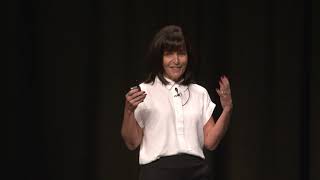
Ellen Bensky (partner/CEO/CFO) presents Turner Fleischer’s deliberate strategy to make learning a firm-wide priority as the practice scaled from a small, family-style office to ~150 staff. Key drivers: rapid growth since 2014, a largely young workforce (93 staff under 34), fast-changing technology and retiring senior staff. Responses include the TF Academy (semestered courses, electives, workshops — active learning with VR, Photoshop, laser scanning, BIM/Dynamo), walking tours, a work-shadowing program (3-month shadow cycles, 8 hours/month, 3 cohorts/year → 24 people annually), practice advisors and site visits, and a Conversations with Claudio video series to capture retiring knowledge. The talk emphasizes active, hands-on formats, cross-generational learning ("greens teaching grays" and vice versa), high internal engagement, and platforms used to continue learning (intranet "Newton"). Challenges (time, cost, scaling) and next steps (a dedicated learning space called the Visionarium) are noted elsewhere in the talk.
Chapters
Thank you. Hope everybody had a nice lunch. And thank you for joining me, the first speaker after lunch. When I was looking at my presentation yesterday, I realized that part of we just rebranded and so you'll see a lot of bright colors and I think maybe it'll help keep everybody awake after a long day and a long day of yesterday. So Turner Fleischer, a little bit of stats on who we are as a company. We are 44 years old. This says we have 143 people, but as of next week it will be back up to 150. We welcome back a lot of students every summer. So we've got a lot of people starting in the next week or two. And we're architecture based, we do have interior design, but we cross a lot of different areas of the architectural spectrum in our office, commercial, hospitality, industrial institution and everything else that you see there. So why do we have a culture of learning? What was sort of the impetus for the beginnings of a culture of learning? And this is just sort of a really quick snapshot of myself. This really isn't about me, but my story. I'm a lifelong learner, very much so. When I came in 1990 to Turner Fleischer, I got a job from an ad in a newspaper for somebody in accounting. I come with a degree in psychology, so I really didn't know anything about accounting. I knew nothing about architecture. So my journey over 38 years has been 28 years has been always learning whatever is new about whatever I can, which has brought me to my position today, which is a partner and cfo, CEO, whatever other role they want to kind of give me. So why did we need a culture of learning? And in putting this talk together, it really was, it required some self reflection. How did we get to this crazy point that we are today in our growth and learning? And the first really big factor for us is over the last decade we've gone from a 61 person firm now up to 143 and 150 and a lot of the growth really as you see on this slide is from 2014 and on. And that's really impactful. We were very much a family based firm. We learned from each other, we walked around the office, we talked to each other. There was no formal learning program. But as we got bigger there definitely became more of a need to have something that was focused and how do we share knowledge. And specifically in the last five years that became much, much greater. And this slide will tell you more about the story than you want to know. And I know I've talked to a few of you over the last day and a half about this slide. But as you can see, we've got 93 of our staff are under the age of 34. And that says just volumes about running the company today. But also about the real necessity for learning is the serious diversity in age that we have. We've got a big reason for a lot of the younger staff is technology. So they're graduating, they've got the software skills, they can come in, they can hit the ground running, we're fully revit based, bim, all that stuff. And then the older generation is starting to transition out. So somebody told me this at a conference I was at and I really love it. And it's the greens and the grays and we have so many more greens than we have grays. So we really had to amplify our learning programs in our firm in order to share that knowledge in a really fast paced way. And then this is one of my favorite slides. It's just the pace of change. And this is what I feel like constantly. It's no matter what we put in, no matter which new software, which new process, whatever we're doing, we're never going fast enough. We think, oh yeah, we've got this, we're using it, it's great. And then the next day it's like, yeah, did you hear what just came out? So when the pace of change is going that fast, you've got to put things in place in order to allow staff to learn. Because you can't just bring in something new and assume everyone's going to wake up the next day and just know how to use it. So one of the things that we put in place about three years ago in our firm is our TF Academy. So it's our university program. So I just wanted to tell you a little bit about what this looks like for our firm. It's semestered. And so this is a snapshot of 2017 for our academy. So you can see the number of applicants ranging from 108 down to 89. And then individual course applications from those applicants are some pretty staggering numbers. So we've got really high engagement in the university in the academy program. And we do a number of different types of learning in the university. And this has really come and developed over time. We didn't start out with this sort of grouping. It's evolved. But this shows you our spring summer program, just so you can see the impact on the organization in many, many ways. So we've got six full time courses which translates into 28 sessions. Two workshops which are 14 sessions. We have 11 electives, 11 sessions, they're one at a time. So we've got total of 53 academy based learning opportunities coming up in the next four months. On the right hand side of the screen is a view from our intranet platform, Newton and that's our learning calendar. So it just gives you a quick snapshot as how busy that that calendar is. Just wanted to give you an idea of some of the courses and electives and workshops, some of the topics that we find relevant in this current semester. So the courses, they'll have 10 to 12 students and they're really more fundamental knowledge base. So field review and construction administration, understanding risk management is a huge one specific. Especially when you've got all of these young people coming right out of school, they have no idea what is risk, what is risk management? Why do I have to care? Life cycle of a project. Again, how does a project go from start to finish? I might have learned that in school, but what does that look like in practice Design through our eyes. We added that a couple of semesters ago to get my partner, who's the design partner in front of more people and sharing his design style with more people than just are in his design area of the practice. Obc, we're in Canada, Ontario, building code. But I'm sure you have your own codes out there. That's a whole crazy topic. We always have a course focused on that and we do walking tours. So Peter Turner, who's a founding partner, really wanted to have a space in the academy, but didn't really want to teach about design, which was his area of focus. But he, he loves cities, he loves looking around at the cities and so he organizes the various walking tours. Electives are a way for us to really target whether it be a new technology or a process that we're doing in a really small way to 15 people. It's a one off shot. Like for instance with laser scanning and you'll see this later on in the presentation. You can hold the scanner, figure out how to use the scanner, just kind of give that hands on learning. And then the electives are for a larger group of people. So building code again, we come back to the code. We can't talk about the code enough. And bim, we also can't talk about BIM enough. So those are larger spaces where more people can come together and learn and then workshops. So we go to the other spectrum. How small do we need to get to get that learning. Really impactful. So we created these workshops and that's only six students with one instructor. And it's twice as many times during the session as regular courses are. Which brings me to my next topic. As we've developed our academy and all of our learning, we really realize that for this young cohort of our staff, that passive learning, where the teacher is standing in front of the students and just kind of speaking at them, just wasn't working, it wasn't sticking. And we've really, over the last little while, adopted much more of an active learning approach to give them experience at the same time that they're getting the knowledge so that when they leave one of these sessions, the knowledge will hopefully stick a little bit better. So I'll give you some examples from our academy of what we feel is effective active learning. So we had a lot of staff asking our Photoshop experts, you know, how do you do that? And I want to know how to change this and how to do that. And so Kitty is one of our resident Photoshop experts and so she teaches Photoshop course. So everybody, pairs of two work together on a laptop. So she's telling them how to do something and then they're doing it right away. And this has been a really popular course. Virtual reality. We're really big into virtual reality at Turner Fleischer and we just kind of assumed that everybody would have put on a headset at some point. And I know a lot of the younger people have, but surprisingly a lot haven't. And so if you want them to look at their projects or talk to their clients about, oh, let me show you this, put on the headset and let's, well, if they've never put it on themselves, how are they going to then go and sell the experience to your clients? So our virtual reality elective is a really popular addition to our academy. And it's a one time thing. And you get to come in, you learn all about how to use it, and then you get to put it on and walk through one of your own projects. And again, as I mentioned before, laser scanning. We do a lot of laser scanning. We have two laser scanning units in our office. One is the larger unit that you see there, and one is a handheld unit. And this elective really gives people the opportunity to hold it, to look at it, to see it, to understand what is a point cloud. What do you do with a point cloud? How do you then translate a point cloud into a model working on a project that has laser scanning as a part of the Scope, they have a lot more of an understanding of what that means and the impact to their own project. I'm going to come back to the building code. Interesting visual on the left. That's our Ontario building code book, which everybody loves to go home at night and read in their spare time. We used to have our guest lecturers, so we invite a lot of guest lecturers in areas of expertise that we don't have in the firm. So we have a gentleman, David Hein, come in and he used to stand up in front of everybody and lecture on the building code. And that was super dry. So now we do it in. He gives a little scenario. So if you were building a restaurant of this or an office of this, what would you need for this and that and the other? And we divide people up into smaller groups and they go through the exercise and they look through the code and find the sections and find the answers. And then after everybody does the exercise, they all talk about it together. And that's been a much more effective way of teaching code, for sure. And this video doesn't have sound, so don't think something's not working. But I just wanted to give you a visual of what this looks like. So this is Kojo, who is our absolute resident condo designer. And we struggled with how do we teach people how to design units? We do a lot of high rise residential projects, so we came up with this workshop. So six people are in there with Kojo, and it's eight sessions. And as you can see on the right, how many different ways can you put together a unit of X size? And so they get to go through and they get to design a unit. And then what they're doing here is they're critiquing it in front of everybody and they're working through it that way. And this is a hugely popular workshop. There's usually about 30 people that sign up for six spots. Construction trial coordination is another one that we really decided, you know what, this could use a lot of more focused attention. How many different people are you coordinating with during the life cycle of a project? It's really incredible to think about. And again, you can see the demographic around the table. These are young people who haven't had a chance to work through a whole project, might not understand all of the different people that you're coordinating with while you do a project. So they can take this workshop, go back to their desk, and even if they're not working on a full scope of a project, they've got an understanding which helps them do their work much better. So these are our walking tours and they'll just give you sort of an idea of where we go. We go locally, but we also go to Buffalo, we go to Montreal, we've been to Detroit. And a little funny thing that we learned about this, so it's really active learning. It's not just you're walking, you're being active, you're learning while you're walking. And when my partner Peter, who's in the front of the first photograph when he started these, he used to do it with a bullhorn. And so he would have 15 people following behind him and he would be yelling at them on the streets of Toronto. It really wasn't effective learning, especially when we started inviting all these guest guest speakers to come on the walks with us. So we have urban planners and historians and heritage preservation specialists that will come and join the tour. So we definitely invested in headsets and that's changed the whole dynamic of the tour. People can ask questions while they're going and then we continue it on. So every walking tour ends with dinner and the guest experts stay for dinner. So the conversation continues through the dinner as well. So that really sort of is an encapsulation of our academy and specifically our active learning within our academy and how do we share knowledge throughout the firm in an active way. This is one of my favorite programs that we have. It's called work shadowing. And we've been running this program for about five years. And it came up. One of our staff actually came to me with the idea because he had said, you know, I'm in your site development department and I would really like to work in working drawings. And so he asked for a transfer and we gave him the transfer and he got into working drawings. And he had no idea what he had just asked for at all. He was overwhelmed with the different way that they worked and what the responsibilities were. And so we came up with the work shadowing program. And it's in its fifth year. And this is our current shadows. So it's a three month duration. It's eight hours a month. We run three of these a year. So we have 24 people going through this program on an annual basis. And I think that this current group of payers really shows how integrated into our firm this program has become. So we've got Justin, who's a job captain in site development, and he's shadowing Nick, who's a project manager in our commercial and industrial department. And that came to be because they do a lot of Collaborative work together. So something will go from the site plan department into cni. So Justin wanted to understand how could he do his job better? To help set Nick up for success, we have Calvin, who's a job captain in our residential mixed use department. And he really wanted to know what do they do in creative communications? This is a brand new department in our firm and what are they doing there? Are they just playing with fun colors and fonts and things all day? Or how do you do an rfp? How do you prepare it? How do you even start to put together all the information? So he's shadowing our manager of creative communications. My partner Jeremy is shadowing Thomas, who's a job caption in our residential mixed use department. And this is a really interesting one. It's the first time a partner has participated in this program. And you'll see in a later slide why Jeremy's doing this. So I'll tell you about that then. And we have Jeff, who's an associate in our commercial industrial department. He's shadowing Jennifer, who's a project accountant in my finance department. And each of our practice areas has a dedicated project accountant. And so that person is the one that does all of the invoicing for their project. So they work really closely together, reviewing the hours, the budget, the scope, all of that on a monthly basis. And Jeff wanted to understand more about what Jennifer's job was. And I can tell you that from my perspective, this one is the best that's happening because what he's learning about, what she actually does is incredible. So the other part of the work shadowing program is something that was touched upon yesterday, I think, Andy, in your talk, you talked about presentation. So everybody always asks, I want to learn how to be a better presenter. And that could be standing up here in a room like this or in a meeting with 10 people, five people. How do I ask a question? How do I say anything? So the end of the work shadowing program is a presentation to the office. So you present sort of what your initial goal was in joining the program, and then what did you learn along the way? And this has been and amazing for both people because everybody's learning. It's not just the person who signed up for the program that's learning, but it's the person that's being shadowed that's learning as well. And so they share this. And I just wanted to give you a little taste of sort of how this goes. Hi, everyone.
Thank you for coming for our Word Shining presentation. So this is Mike.
I'm Esther.
I work in the interior fitout department, Mice and Graph Solutions. I'm Jessica and I'm shadowing Marta in the digital practice department.
I'm therapy in site development and I'm shadowing Brie, she's in CNIT practice from Residential and Ms. So they really get a bit of everything by doing this and we don't make it. We help them along. Like we have somebody this time who absolutely did not want to present. And I said, don't let that stop you from joining this. We'll figure it out. We'll figure out another way somebody else will talk for you. I think he's doing a stop motion video of everything that they're doing during their experience and he's just going to kind of get up there and play it, which is fine. So another area that we share knowledge is with practice advisors. So about three years ago, we decided that with this young cohort, we really needed to get them some coaching. Somebody that they can go to and ask their questions that might not be their project manager or their department manager, but just like that, that wealth of knowledge that they can just ask anything of. And so we have two practice advisors and it's been incredibly successful. And we wonder really why we didn't think about this sooner. So one of the things that they do is coaching. Anybody can sign up. You can just go up and ask them for a coaching session. They've got a little coaching scheduling log and they'll sit down and they'll coach you on any topic related to architecture that you would like. And it's been a really successful addition to our firm. The other thing that they do, Kojo runs practice advisor site visits. And these have nothing to do with a project. They're not, they're just to take a group of people to a site to actually look at what construction looks like. And again, going back to the young cohort, they've never been on a construction site. Most of them, they have no idea. They're doing these drawings, they're making these details and what does that really look like? So Kojo takes them to all different types of buildings. So they'll go to residential, they'll go to commercial, mixed use, whatever, and they just learn while they're walking around. And the really cool thing that happens from these site visits is that the learning doesn't stop there. So the learning comes back. And through our Internet platform, which we call Newton, somebody will post typically the pictures of the site visit. We were on this site and these are the things that we saw and they'll point out a couple of really cool things that they learned that they didn't know before. And then as you can see in this slide, people in the firm will start answering questions that people might have. So the learning goes beyond just the site visit. It comes back into the office and continues through Newton, through the conversation stream. So this is what I was talking about, about the work shadowing and my partner shadowing a job captain. So we've got not only the grays teaching the greens, but we've got the greens teaching the grays. And we're a very top down organization. I don't want to tell anybody to do anything that I'm not necessarily willing to do myself, especially when it comes to learning. And so three of my partners and one of our senior associates really didn't know Revit. And it was really starting to feel inauthentic that they didn't know Revit. And so now Christian, who is one of our digital practice department leads every Monday for an hour and a half. They're sitting there and they're learning Revit and they've all got their little laptops and it's been amazing. It's been going on for about two months. And so Jeremy decided, okay, I've got my base Revit knowledge now. I want to join the work shadowing program and I want to shadow Thomas and I want to see how Thomas actually does his work. And we had a work shadowing check in last week and it was absolutely incredible. Jeremy is sitting there and he's going like, you know, and I learned how to do a wall today and I did it like this and then I pulled it over here and it was incredible. I was able to make it do that. And there's all these people sitting at the table that do this for a living and they were very respectful. Nobody was like, yeah, that's what we do. But it was really, really funny. So I don't know about in your firms, but I tend to think, you know, every firm at some point is going to become a software developing firm in some aspects. So we've become like Dynamo experts, API coding, you name it. We've got people doing it full time and people want to know about it. They don't have to know the details of how to write code, but they definitely have to know enough about it and how to use these scripts in their projects. So they do need some kind of a base learning of it. And so, Maya, they call themselves Automation Nation. They run every Friday at lunch, Dynamo coding hands on sessions so you can just come and sit down in front of a computer and they'll take you through writing a basic script. So conversations with Claudio is something that we're super proud of and we can give really all the credit for this idea to Chris, to KA Connect, because we came last year and we saw this idea and Sherry and Stephanie, who are right here, came back and said, we need to do this. Claudio's retiring and we absolutely need to capture his knowledge, the critical knowledge that he has in his head before he walks out the door. So we embarked on this Conversations with Claudio project. So there's topics of interest, Some of the topics we provide, some of the topics, the people that are doing the conversations provide. Anybody can sit and do one. They're an hour long and there's questions that are designed beforehand by the participants. And Sherry and Stephanie produce the situation. And we get an hour of footage that Sherry then diligently edits down to 15 minute increments because nobody's going to pay attention for longer than 15 minutes. So then these go up on Newton and long after he's gone, it will be an archive of the knowledge that we've managed to grab from Claudio. So I'm just going to play you just to show you the diversity of people and the diversity of topics. So I guess how would you define coordination in terms of our work?
What do you think makes a good architect?
So I've never fully hand drafted a full set of anything or even sketched, as you'd say, because I went to the technologist route. So it's less the sketching, more of the drafting. But I don't draft with. I don't draft with a scale or anything like that. I use a computer. So what can you tell about that process?
So obviously I know you and Kojo, when you guys first started working, one of the things that you guys used to do is you would start the project from the beginning and move it all the way through the process and so on. I think there's numerous reasons and I have my opinions as to why things have to be on occasion subdivided and so on. But what are some of the challenges you feel come up from that, where projects are being handed over from one team team to another or one department to another.
So that's a common mistake that people make when preparing details. So where do you feel that in these details that most detail. Where do you feel most details fail?
I think some of them are just.
Too complicated to start off with.
There's too much. So that's just a Little snippet of the conversations with Claudio. So what have we learned in this process? We've definitely learned a lot. Learning needs to be supported from the top down, but it also needs to be taught from the bottom up. So it really has to be bi directional. Everybody has to be participating in it and feeling like they're getting something from it and they're giving something to it. You definitely need a strong corporate culture to drive growth and engagement. Everybody has to believe in a growth based culture. Everybody has to want to learn. And as I was saying before, it can't be, you know, the partners saying, you need to learn. We need to be learning too and we need to be learning together. It can also be a strategic priority and leveraged as a marketable differentiator. It's really hard to find good staff these days. So what you see on the right side are snippets from our new branding and our new website. And we put it out there all over everything, wherever we can say it. We're a learning based organization and if you want to learn, come work for us. And if you don't want to learn, we're probably not the place for you because we're going to be pushing you and it's going to be in your face. And if you just want to sit and do your thing the way you've always done it, we're probably not the right place. And something that people don't like to talk about, but it's really real, is embracing the, that staff education. There's a lot of ramifications, cost. I mean you can imagine running this academy. We've got people, like a whole team of people running the academy. And I was thinking this morning, you know, we do it a lot like Chris and Zuku and Susan, how you've done this, preparing these presentations. It's a process. So the teachers have to give a rough draft to their presentations. We get together as a committee and we review the presentations and there's a whole schedule of all of that before it even gets to day one on learning. And then there's the whole registration and how do we do that and how do we manage those 588 wants and get them into the right courses and you know, oh, and can we put that all on Newton and can we make it all interactive and can we make it happen automatically? And that's not free because that's all unbillable time that somebody in the office is putting into all these things, things. So you really have to embrace the time and cost to it. And then the last one is really the continuous struggle. And some of the other speakers have talked about this, and this is real. We're project based. We have a lot of deadlines and deliverables. We've got to get out there. So how do you make sure that everybody has the available time to focus on learning and doing all of this? So it's a constant struggle to get that right. Next steps. So for us, I thought I would focus on a really exciting next step that we've got. Aside from always thinking about what more could we be teaching and how could we be teaching it and how can we make it more interesting, we really realized that we need a dedicated learning space. We've got our classes happening in our boardrooms, but our boardrooms are really for client meetings mostly. And so we're building what we call our Visionarium. And it's going to have movable tables that we can seat 16 people at once with laptops so that we can do learning easily. And at any point during the day, not just when a boardroom is free or I don't know if any of you noticed, but our Dynamo sessions happen in our kitchen. And so it's really a little difficult during lunchtime. People want to talk while they have lunch, and then you're trying to teach scripting at the table next to them. It's really hard to do that together. So our Visionarium will be dedicated to learning, and it will also give us a space to be able to. A whole different topic of what we do is teaching. So we teach our clients about all of the things that we're doing. Technology based, BIM based, VR based. We're located in Canada and I'm American, so I feel like I can say this, but Canadians are slower to adopt things than other parts of the world. So we do a lot of teaching, a lot of teaching to our clients. Why should you want this in bim? Why should you look at this in VR? What difference does efficiency with coding make to you? And no, we're not charging you more for that. So this space will allow us to move these tables away and do the VR in a space that isn't a boardroom, that has boardroom tables with sharp corners, that I have to worry about injuries when clients put these goggles on. So that's our exciting 2018 next step. Thank you.
More from Christopher

Human in the Loop? Testing Our Assumptions About Where People Add Value in Learning | Todd Henderson

Redesigning Work for the AI Era: How Greenprint Turns Implicit Knowledge into Shared Intelligence

Designing Learning Like a Product: Branding, Culture, and the Unseen Work of Building an LMS

Scaling Design Excellence: How Diamond Schmitt Amplifies Knowledge Through Learning and AI

From Tame to Wicked Problems: Rethinking Learning and Development in a VUCA World | Ellen Bensky

Learning at the Speed of Change: Adapting L&D to Your New AEC Workforce | Kristina Williams

Designing Modern Learning Organizations: Rethinking AEC Learning Development in the Age of AI

The Link Between Learning, Motivation, and Career Fulfillment for AEC Professionals


Why Communication Skills Are Foundational to Teaching, Leading, and Adapting in AEC F

A Framework for Collaboration and Quality: SMMA’s ISO 9001 Journey | Ryan Farias & Jessica Smith