Marlene Chen | Lessons in Growth: Maintaining Authenticity in Design & Culture at Olson Kundig
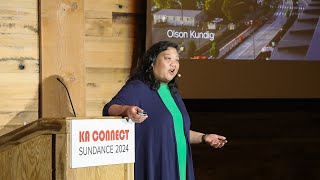
Marlene Chen (Olson Kundig) presents a first-person account of the firm’s current moment: expanding from its residential roots into diverse sectors (commercial towers, hospitality, exhibit design, a human-composting facility, prefabrication) while scaling to multiple offices and 365 employees. She outlines leadership and ownership, shares firm statistics and case studies, and describes many internal initiatives to preserve design authenticity and transfer knowledge—programs like OKipedia, OKU, homeroom, navigators, town halls, and DEI/mentorship pilots—aimed at onboarding, culture, and workplace equity as the firm grows.
Chapters
You. It's such an honor to be here on behalf of my colleagues, my business partner, and the entire firm of Olsen Kundig to share the story of where we're at right now. It's, you know, evolve and grow is really what we're talking about right now. As we've going, as we're going on our sixth decade, we're kind of approaching 60 years in practice. And so I'm here to just share a little bit about kind of what we're going through right now, some of the things that we're trying. And I like to think that it could be in six months you could contact me and be like, yeah, we dumped like four of those things, and we're trying these other things. A lot of it is just a real molten moment in our time. So I'm glad to share. I'll just share a little bit about me. I'm a practitioner. I studied at the University of Washington, have been practicing for 20 years. And I was always that person who said, is there a reason we have to do it this way? Could I make a better suggestion? And that at some point they finally said, do you just want to do this? And so I love coming to this conference. I was here last in 2019. It feels very much wonderful to be amongst kind of my people in the industry. So I've really enjoyed speaking to many of you today. So we'll be going through kind of a few things. But for many of you who may or may not know Olson Kundig, there's kind of the perception versus the reality. And I wanted to talk through a little bit of that. And so this is where we talk a little bit about the work, because Olsen Kundig is often we show up in places and they said, oh, we thought you only did houses. That's true. We're well known for doing beautiful houses that have a tremendous sense of craft, of integration of art and architecture and landscape and interiors. We also have these beautiful scrappy cabins in majestic landscapes that often incorporate kinetic elements. A lot of these elements, parts of buildings that open and close to allow for the building to transform itself. However, that's about 60% of our work right now. And so we're also doing work like this, such as the Fourth Ward here in Atlanta. So this is a commercial office building at about 1.1 million square feet, where we collaborated and then sort of created the central courtyard, worked with our building performance team, which is our sustainability team, on a lot of the strategies to be able to deliver this building with a facade and all the systems, and then incorporate a lot of those kinetic elements that we sort of R and D on our research on our residential side into the commercial spaces and sort of integrate that to allow for sort of that inside, outside relationship that we work with in a lot of our work we're also doing. So I'll go through probably maybe six or seven different types of projects. We're also really proud to work on the Bob Dylan Center. This is one of the last projects I worked on before I shifted over to the operational side. This is a project that's near and dear to my heart, where we worked with tremendous archivists and curators to focus on the archives and the objects that Bob Dylan said saved himself. And so with that, we also did exhibit design on this. We worked on the Sentry project at the Space Needle. So this is a pretty iconic building which gets about a million visitors a year. And so with that worked a lot with some tremendous collaborators to look at how we could rethink the experience. It was kind of cluttered and really worked with some wonderful facade consultants to work through the glass details and then create different kinds of experiences. So incorporating that kinetic element. The Space Mill had always had this rotating glass floor or rotating floor, but we turned it into a glass floor, allowing for people to experience a different view from 500ft. Most recently, we did a collaboration with Arrow Homes. So this is Olson Konnig's first prefabricated resonance. And so it was one in which we learned a tremendous amount about prefabrication. But we worked. You can see it's really kind of a kit of parts that is located and it's intended on going on pretty sort of suburban lots here. Fairly standard lots. Nothing that's kind of enormous. But really they worked in terms of finding the efficiencies of building, but also the efficiency of material. And we worked again with our building performance team here to look at the foundation. So they had kind of come in with a mat slab foundation and really worked to say, like, how can we make this more efficient? And they reduced that by about 58% using tools that our team, similar to what Corey does, We have a team in house that develops tremendous tools for us. So this is our zero carbon dashboard, where we can look at the kind of the regions and the areas and then kind of play with the different factors to get to sort of that zero carbon performance. We've completed our first international office tower in Seoul, Korea. So this was a project that we worked with for a fashion house, Shinsegae and so with that incorporating some kinetic elements, we worked with the local architect there, but being able to translate our design to a different scale, incorporating sort of place making and workspace design as well. This is a really interesting project that we recently completed called Recompose. This is, I believe, the nation's first human composting facility, which sounds really shocking because it can really be a difficult thing to talk about, which is the act of death, really rethinking what that process is, because the process is tremendously energy intensive, quite toxic. Working with a release client who was an innovative thinker, who was working at the policy level, working with states, working with governments to change the laws that would allow for this. And so now I think we're seeing this in New York and in Washington as well. And so it goes not only with the vessels in which the bodies are composting, but also the idea of ceremony and celebration as well. So those were. That's a really exciting project. That was. It was a. It's not something that we thought we would be doing, but it's kind of emphasizes kind of the idea of, yes, why not? We've been working a bit more in the multifamily mixed use space. This is a 8899 Beverly in West Hollywood. And with that, it was a renovation of an existing 1960s building into a space that allowed for a bit more activation at the street and then created kind of that idea of being able to open up to the inside and outside of Los Angeles. And then lastly, one of the major areas that we're working on is hospitality. So this is Moonlight Basin, which will be in Big Sky, Montana. And so very similar to this region, Park City. All this lodge, amenity buildings, residences, things like that, bringing that forward. And then also sort of doing the interiors and the experience. You know, there was a little bit of like, well, do we need to talk about all these different kinds of projects? And I think that's really what we're demonstrating here is when we were a firm of a certain size and did a certain kind of work, it was a little easier to sort of share. This is what we do. But when we're talking about a high rise that's in Korea or a, you know, that the composting facility is actually, you know, uncomplicated. These things can only be zoned in a certain district of certain cities. So those that's in a warehouse, all of these things are. How are we sharing knowledge across these things when we're growing and when we're starting to be multiple locations. So we work around the country and we also work around the world. So that's really where we're learning how to. Initially, when Olson Konig started, we were often doing all of the work from concept all the way through construction. We still do that on a lot of our residential work and much of our other work. But we're learning how to work with local architects like we did in Korea and elsewhere in other countries. We had two locations. Seattle is where we're headquartered and New York City. And most recently, just in June, we opened an office in Chicago. So this is one where all of a sudden going from one location where we're the headquarters and everybody's all in one space, to being in Seattle, New York and Chicago. The there's a lot of learning lessons that we're going through just right now. Chicago is so new that we actually don't have any photography of the space. So this is the building. Every time I see this, oftentimes I think people think that Olson Kundig is like, maybe like 30, 75 people. The firm, and I'll show you some statistics, is 365. And I've been chatting with a lot of folks and it's been really interesting to hear. I'm like, oh, we're bigger than them too. So this is our Seattle studio. And every time I see that, I'm a little bit like, wow. Because because we're divided up amongst multiple floors, it doesn't always feel that big. But what we know is that we have a tremendous resource, a lot of really, really strong thinkers and minds and people who have knowledge to share. So with that, we are led by Jim Olson, who's kind of there in the center, and then five majority shareholders, and I just wanted to stop and talk a little bit about each of them. Kevin Kudo King on the left, his practice really focuses on kind of experiential design and merging that with a sustainability within sort of a hospitality practice as well as other work. Alan Maskin, who's right next to Jim, he focuses a lot on collaborations. And so that's a real aspect of our practice, where his practice often asks, what can we do together that we can't do apart? And so with that, he often is finding really interesting thinkers. He's the one who worked on the Recompose project and really kind of bringing a lot of sort of interesting thoughts and projects to the office. Jim, who is probably in his sixth or seventh decade practicing, is continuing to practice. He works full time. He's a tremendous mentor to Everybody in the office and he's still practicing kind of merging that art and architecture together. Tom Kundig, right next to Jim, is a force in the design field. He works across multiple sectors, but is really focuses on blending that kind of poetic and rational work. Kirsten Murray works kind of at the urban context and really thinks about sort of experience and places. And on the right is HP Parwani. He is our CEO and so the other five are all practitioners and HP is focused a bit more on the business. So he and I work together and I joined him two years ago to kind of bridge that practitioner and the business office. Because as you know, when the business office tries to tell practitioners what to do, there's a little friction there. And so I find my role is often to sit there and explain to those managers and say, here's why we're asking you to do this, here's how you're at work, if impacts this group and this group and this group and why we're asking you to do this. So HP has really brought some focus to the business office and expanded that in quite a bit. So recently we were joined by seven new owners. So there's a generational change that's happening at Olsen Konrig right now that have different perspectives, different practices, different interests. And so how we're bringing that all along is a tremendous change. I think one of us is missing in this photo. In house capabilities with Olson Kundig has grown tremendously. So we have architecture, interior design, exhibit design, recently landscape and planning. We've had an art practice, we do some hardware and product design. Building performance is a tremendous portion of our work. Kinetics, as you, as we, as I mentioned, we have a small in house visualization team and they're wonderful in terms of being able to upskill all of the staff. And then they also help us find out of house renders as well. Cause sometimes that can be really confusing. And then a design technology team which is only maybe a year, year and a half in existence. And so that's really been transformational in us being able to work with other practitioners. So with those in house specialties, these are specialists that really know their stuff. But it can sometimes be difficult for your average architect, project manager to understand how to weave these people in and when and how to factor them into your budget, how to factor into their schedule and things like that. So we've had to learn how to use our Internet to be able to explain how do you work with this department, what do I need to do to get started? And so that's been a real portion of our work. But I wanted to share kind of a little bit of where we're at. And this is an expression that we talk a lot in at Olson Kundig. So here we are in Utah at Sundance, and for those of you who ski, when you're going down the hill, you're trying to avoid the trees. So what we talk about is skiing the trees, because that can be really daring to kind of go in the trees. Those people who are really skilled skiers love to go in there. But we want to focus on is like, if you only focus on the trees, you will run into the trees, so you focus on the gaps. And so that really is where we talk a lot about. The gaps are our opportunities. Those are areas where it's like, well, we can't do it because of this, or we can't do it because of that. Well, how can we think about that? And so we could balance that relative to being completely blind to the situation. But ski the trees is something that we talk about, and it's an expression that we hear a lot in the office. And so for us right now, we talk about growth, and a lot of our leaders are feeling like growth is the problem. Well, growth is an opportunity. But we can share a little bit of our statistics right here on the screen. So you're seeing our employee count, our total employee count from 2016 to 2024. And you can see generally between 2016 and 2019, we were kind of hovering at that 175 anywhere in. And we had a contraction during the pandemic. And similar to what we've heard others, we've seen growth happen since then, and it's at pretty alarming numbers. And so what you can see is the architects are kind of in the golden color, Interiors are yellow. Planning and landscape has grown in the green. Design adjacent is kind of all of the sort of design services like visualization, our building performance team, the team that works on the kinetics, and then project delivery as well. And then you can see our business offices had to grown as well, because as we all know, right. Volume and size matter. And so when we're this big, our HR department needs to grow. There's a lot more issues that we're dealing with. But with this kind of growth, it really becomes kind of the next part, which is how are we sharing knowledge when 66% of our office has only been here three years or less? That is a lot. That's not very much time, especially when a lot of us Know that it takes 3, 4, 5, 10 years to get a project built. So with that, how can we upscale people faster? Or how can we make them feel a part of this company in different ways? And how can they understand our traditional. So these were some of the statistics that I wanted to sort of share with the group because this is really what we're facing. So one of the things we talk about, Olsen Kundig as our DNA, our residential work remains our foundation. And I'll share this from the perspective of a quote recently from Tom. The residential, the house, the shelter, it's the core of architecture. That is where we learn what it means to be human, what it means to be intimate, what it means to be safe, and how to flow through spaces. To lose that DNA is devastating for larger projects in terms of how it flows and how it feels at that human scales. It is our R and D, and we really treat it that way because there are several times in which our residential work has led to other practice sectors, other project types, and then allowed us to experiment and bring things forward. There's three examples I'll give you. The first is the Rolling Huts, which many of you may have seen. It was fairly well published, but it was the idea of a client had this piece of property in a floodplain that was zoned for mobile home parks. And so what the group looked at, and this is one of those areas where I just love kind of that, well, why not? Could we try it this other way? So Tom sketches this idea. He's like, can we put some goofy wheels on the bottom? And you kind of think, really, well, it got through the zoning code, and it kind of became this idea of this herd of cabins that you could go and visit. And so now this is this great property that you can go and rent one of the cabins and stay in the Methow Valley. But somebody who stayed there was a decision maker for another project. And that led us to a project at Nike. And so this is like kind of the complete opposite scale. This is 700,000 square feet of office and innovation space at Nike. And so this center has. Was the first time that all of the innovators, research scientists, and folks working kind of on Nike Innovation were brought under one roof together. And so it was really at a completely different scale. And to deliver the first project and to deliver the second project meant that we needed to learn how to deliver those projects differently. And trust me, there was a lot of, like, there's a lot of blood set and sweat and tears in this project. We're very proud of it, that it's out there and that it brings us kind of into another realm. But those are areas. Those are our lessons learned. Those are our growing pains that we're dealing with in terms of being able to deliver a different type of project. Similarly, this Mexico residence that Jim completed, it was a beautiful residence that Jim had worked on with a longtime client of his. But really those principles of framing, the view, looking out, kind of that sense of proportion, the horizontal elements that lead you out to the skyline, that sense of comfort in that residential feel, led itself to our first hospitality project, which was the JW Marriott at Los Cabos. Very similar. You'll see a lot of the similar elements, that horizontal element, the framing of the view, the seating, but just at a different scale and a different perspective. Then lastly, this is one that a lot of folks know. This is one of our first kinetic elements. And so it's a fairly. What I love is that it has really simple materials. It's a CMU block cabin. But it has one big move. And that's often what we talk about where Tom will practice and say, what's the big idea? It's not meant to be extravagant everywhere. But he said, well, what happens if we just opened it up? Because there's a beautiful lake on the outside? So he sketches this idea, and really this is kind of that seminal sketch that says if we could open it this way, it would allow for us to open this entire view out to the lake. And it really kind of became this moment. And we've studied this particular motion and movement in a building several times that it allowed us to incorporate it into the Burke Museum at the University of Washington. So this is a state project, public. And so in that we were allowed to. To open the cafe up to the outside because we live in the Pacific Northwest, and so it's fairly temperate. And so oftentimes the cafe will open itself up to allow for that natural ventilation and fresh breeze and connection to the outdoors. But when we do this, we were really realizing that all of these ways of working is very different than when we deliver our residential work, which we know very well with that we talk about often evolution and not revolution. And oftentimes people want this magic piece of software that's going to fix everything, system or person or individual. And it isn't until times and conversations like this that it. That have us look at all the things that we're trying and all the things that we're doing. And this isn't even all of them. And when you look at it, it's like all these little moves that, that happen when you have that big ship and you resteer it. All of a sudden you end up in a different direction because it doesn't take much to resteer the direction when it's that big. So I just thought I would. I jotted down Chris, had me sort of look through this and say, just write down the things that you guys are trying. And so with this, I'll just go through a whole slew of some of the initiatives that we're working on. First is really breaking down the size and scale of the firm. So with multiple offices and 365 people, people are coming in and feeling a little bit, a little bit worried. I was just reflecting on last Monday we had employee 1,250 hired at our Chicago office. And I want to clarify, we don't have 1,250 employees. We've just had 1,250 employees. Each person is assigned an employee number since the inception of the firm. Jim Olson's number one. And so now we're at 1,250. And so what does that feel like for that person to come into this firm with this history and this and for them to feel a part of it sooner? I was employee number 321. And I joined when it was a firm of 75 and 75. We were only one and a half stories in one building in Seattle. And even then I felt like, oh, it's me versus one versus 75. And now it's like 365. So how do we continue to do that? So one area that we started or reinviged was the idea of homeroom. So every Monday we do have an all hands meeting and it's a hybrid meeting. But we really focused and said this year we want to actually have it and break it down. So it's not just limited to who you're working with on that project for the last two years, or it's not limited to who you sit next to on what floor. And it's not limited to what department you sit in. So this is. There was some crazy formula that a group created that allowed for this to have a mixture of leadership, a mixture of departments, people from finance, people from marketing, people from legal. Being able to sit around for an hour and just connect, sort of share some of those moments. Sometimes the conversations are facilitated with a thought starter. But some of it is just really nice to catch up and say, hey, I heard you were. I remember you were moving last Month, how did that go? Or you were planning your kid's birthday party, how did that go? And so that's been an experiment that we've been trying, and it's really. It's one of those areas where we'll assess it and see how we feel about it. Do people still want to do that? Do people not want to do it? But we were also finding that it was just an opportunity to break down some of those internal barriers that can happen between the business office as well as the design teams. We talk about giving people a friendly landing spot during the pandemic. As we were coming out of it, we were hiring at a pace that was challenging, but we were still at home. A group of people said, would it be okay if we just did like, like a zoom happy hour? And of course, I think no one ever wants to do another zoom happy hour again. But that really came back as we came into practice, because you could see that, that growth chart. We were coming, we were in office. And so when that we've created this, we call it the okay, Navigators program. So this is really about the first three months when you're here, and it has very little to do about your career, your progression. It's just about like, hey, I'm going to tap you on the shoulder and bring you to this other event. You should come to CRIT today, or you should understand what CRIT is, or come to happy hour, or come to this lunch thing, or let me take you out to coffee and see how if you have any questions about the firm. And then every quarter, we scoop them all up together and have a larger happy hour at the office. And it's been really popular. And so the navigators are kind of that first line of friendliness and connection to actual people. I like this one, because making everything and everyone clear and easier to find is a really important thing. It sounds so basic, but to what we just learned from Corey, write it down. It makes a difference. Being clear is kind. And if we're vague, you get away with a lot of things, but it's really unsatisfying. And so I think we're working really hard to write more things down. Processes, operating procedures, what to do if this happens, things like that. So because you used to be able to rely and say, oh, I know that Kirsten knows that. Well, somebody might not know Kirsten at that point. And so it's really about finding things and making them easier to find. So a couple great examples that we have recently on our Internet. So our Internet is called okipedia. And so this is our visualization team who created a guide that just said, are you new to Olsen Kindig? Do you need a refresher? Do you know how to work with us? Because there's a lot of things where it's like, people would be working on projects and they just kind of get different things to put into the model or to put into renderings. And so they've really kind of worked through Revit Material, Library, Rhino and Enscape, custom 3D assets, things like that. So with that, it's a great place. But the best thing is the fact is that our director, Greg, he follows it up. He follows it up with a, hey, I'm going to meet all of you. I'm going to invite all of you to a meeting. So I'm going to walk you through this so that you can actually see who I am, so that you can actually find me. And then if you have more questions, this is my team. So it's always, like, nice to have it somewhere to find, but also back it up with a person. And so that's been really kind of one of our main things, which is you can't just rely on the Internet. It's got to come with another message as well. Similarly, our graphics team on our marketing department, over 60 years, you can imagine there's 400 different ways of presenting our information. They finally went through a major visual identity exercise, and I'm really proud to say that they won a merit award for the SMPS group, but they created templates, but they did a massive amount of stakeholder engagement to find. What are the forms that you need? Oh, you need one for change orders or you need one for additional service requests. So they work through that with all the fonts and all the work that they've done. And they created a beautiful guide that allows us to kind of work that I frankly allowed me to do a PowerPoint without too much of their help. So that's the kind of thing where it allows for the group, to Corey's point, a group doesn't have to rethink about how to present it. Here are the tools, here are the colors, here are the fonts, here's the template so that you can focus on the content. And so that's really. Those are areas that I'm really deeply appreciative of. Our business office working through a lot of these things to allow for the designers to design design. We talk about this legacy of 60 years at the firm. So with that, it's really important for people to understand the work that preceded the work that we're doing now. Because the work that we're doing now is both. Some of it is the same and some of it's quite different. And so we created these town halls. This is the poster for the town halls focusing on the senior leadership at the office so that they were facilitated conversations. People could. People could submit questions. People could submit questions live also during the session. But we were asked to share their origin story. What are the things that they're caring about right now? How do they feel about the company right now? How do they feel about the work that they're doing? Those have been quite popular and we have those all recorded so that people who join new can go and listen to that. Because there's always that element of, were you here at the time or were you not here at the time? And so with these kind of elements, we really like to record them and then use our Internet to host them. Those areas. Similarly, I was just telling Ellen this morning that I had that moment at K Connect 2019 when she talked about TF Academy. And I thought in that audience and I thought, we can do this. We can figure out how to do this. Then the pandemic hit. Then we figured out how to do it. And so ours is called oku, so Osunkundu University. And it's probably perhaps less structured, but it was like we had to launch it and then now it's kind of running on its own and it's beautiful. And one of the things that they do is they love doing OK Classics. So let's pull a old project out of the archives. This project probably predates me and I've been at olson Good for 19 years. So this is one where it's just like, let's get Allan and Kirsten to come and talk about what this project was. It was all about reusing the material, this warehouse and this ad agency. But for people to be able to hear the leaders and the people who worked on the project talk through this. We have kind of all of our. Our information on our Internet organized by these different series. We have OK Classics, Building, technology, sustainability, all that stuff. People can find the information faster. We talk about making the best use of our knowledge. One area, and I always like hearing how other people are using their intranets, is our office tends to use our Internet for almost like a hive mind. Like, can I ask the hive what they think about this? And so do you have any MEP engineers in Florida? We were your favorite lighting designers. And so oftentimes we struggle right now between having that happen over email or having that happen over teams and having that happen on our intranet. And so we keep trying to get people over. We. We've heard a little bit in some of the Internet tours around some of the conversations still happening on Slack. A lot of people are over in teams. And I think this is one area where going to the. Some of the other points of like, do you mandate it? Or how do you allow this to grow organically? Or how do you get people to understand this? Because certainly for those of you who don't know, Sarah Burns is here and she's my colleague and she is. She was instrumental in delivering us into Synthesis six. And we're constantly shocked at how many times people will ask something and we're like, it's on the Internet. Do you not. Do not even open it? And so that's one of those areas that we're still working because it's a tremendous hive mind to tap into. And so I worry when people aren't looking at it because there's people with great knowledge that should be sharing that knowledge. This is an area where evolving traditions is very important to us because being 60 years old, Jim's still practicing as well. The idea of doing it always the same way is going to hamper us where it's like, well, this is how we've always done it, but we're not the firm that we were 60 years ago. So I'll just share an example. We love rolling this photo out of a crit. There's Jim Olson over on the left. You can tell it's sometime, sometime in the early 80s with the wine and the box of cigarettes. But what we love is like, it's that in person gathering. And so as it's gotten larger. So this is back in 2018 when we were still one office, that that sense of still coming together. You can still see Jim over on the far right a little bit past the column where we're critiquing an idea. And we do this every Thursday in Seattle at 4:30. Well, what happens is when we have our office in New York, they're all wondering and being like, do we have to log in at 7:30 to join this? Or now? So the same individual, this is now our director of our New York office. That's Lindsey. She's leading critiques in New York. And so we have to figure out ways in which when we say firm, this is all one firm, or here it's okay for us to be in different offices because our New York office is now large enough that they can actually sustain their own culture in a way that recognizes their own, but also tied together because all of these individuals in New York are working on projects with colleagues in Seattle. I really appreciated the gym's sketch of the view of the multiple time zones and the lunch. And I think I'm going to go take that one back to the office and say, start respecting some of some of these boundaries because that will also allow people to have some of that quiet time that they're asking for. Our crit has evolved as well because sometimes it can be very intimidating to present to 175 people. So we often will do this, like just what's on your desk, Grab whatever's on your desk and just meet with your the people that are sitting around you and just have a small group of peers and just chat. And so we try to incor incorporate ones where it's larger and smaller. And so some of our larger ones we will use that crit time to do. Most recently we did an art show where people were able to bring kind of the art that they do, the photography, sculpture, painting, things like that. And then another one where we focused a bit on making. And so I love this poster that they did of one day of Not Revit. And it was focused on wood shop resin casting, 3D printing, metal blackening, and all under the guise of a pinewood derby. And so that was really a lovely day. And then the day of the art show, it was really wonderful because it actually looked kind of like a studio where there was a gallery and the person's artwork was explained there. And people were there to talk about their work. And what it allowed for is, you know, this over on the right in New York, we have this little circular stair that ties our two floors together. And it was always this pass through space. And they created it and it became the gallery and it will stay the gallery. So all of these little things will kind of have their own legs. And what's nice is that it shows up in other places. This is one of our favorites. This is called OK Cribs. This was one of those ski the tree moments where during the pandemic, under lockdown, there was a deep desire to just connect with each other. People started creating these videos of tours of their homes. Architects have all sorts of funky interesting things, but people would take a really interesting perspective where one person actually followed their dog around their home and narrated it that way. And it just became such a popular way because we were all home, we couldn't go visit each other. We couldn't see each other. But it was a way to connect with each other in a way that gave us sort of sense of creativity. And so everybody participates, people from our business, office people, also the designers as well. And it actually has sort of still come through and is probably one of our most popular gatherings in second to our pechacuchas. So I don't know if any of you know this kind of storytelling technique, which is 20 slides, 20 seconds. And so with that, we usually try to curate the group of people. And we're probably. I think we're at our 29th right now. And so with that, you know, there's been some great moments where all of a sudden you just realize this person has this amazing interest and passion on something. You get to know somebody in a different way. And one of my favorites was, I think, one of our employees. This is back during lockdown when we did one of these. She revealed that she was pregnant. It's just a really lovely way to break up and bring people's personalities into the office more. We have a Monday meeting, and so you can see that the slide says Monday morning meeting. But what we realized, and we're still evolving, there's people that still call it Monday morning meeting is that in New York, it's not Monday. It's not morning. Sorry. It's still Monday, but it's not morning. We're really trying to transition that to respect the time zone that they're dealing with. In Chicago, it's lunchtime because we meet at 10 o' clock in Seattle. But what this tradition has always had has been both in internal speakers as well as invited external speakers. And then it evolved when we went during the pandemic because it allowed us to realize that we could reach across the globe. And so now it's much more of a hybrid meeting since we have multiple offices. And it allows sort of those invited speakers who are usually not in the AEC industry, but just. Just other creatives that allow for us to have a lot of different individual interests and just give more inspiration to our staff. One area that the program itself hasn't changed, but how people find information has been really helpful, is our traveling fellowship. So there's twice a year we award a fellowship for someone to travel to research whatever they're interested in. There's some paid time, there's a stipend. But one of the things that we never really had anywhere was how do you know? How do you find out more about this program? So our Internet and our relaunch was really critical to sort of explaining what is it, what are the details, how do you apply, what's the criteria that we're looking at? And one thing that we were really proud to be able to do is share people's past applications. It shows people like, oh, that's what they talked about. That's how they presented it. And then we showed their presentations. Oh, that's what's expected out of me coming out of this. And you can see they've gone to some amazing places. Namibia, Sri Lanka, Japan. I think most recently, our award winner went to Bahrain. So it's been a really successful program. But having people be able to find that information is really important. This is an area where we're needing to address our workforce interests. And there's a generational shift happening. The practice of architecture and design has often been a lot of blood, sweat and tears. And so we are looking at working at integrating a lot of DEI into all of our practices. With that, we have several work streams that we're working on in 2024. We work with an external consultant and so they host quarterly trainings. This is paid time that we provide to the office to come and learn. We have affinity groups. So these are employee resource groups that I'll have a little bit more about that. We have a pilot mentorship program. We have tried many, many times to have a mentorship program. And we realized maybe we need to go smaller to just start something. And once you start something, people see the success and they're like, can I get involved in that? And that kind of snowballs on itself and then it becomes something more. But when we try to go for perfection over progress, it takes a very long time. And so that's why we think a little bit about like, let's try the pilot and go from there. We're doing a lot of vendor quality index tracking related to our just certification. There's a lot of hiring improvements in terms of maybe perhaps where we might have some implicit bias in our hiring practices. Developing an equity statement. The equity statement is something that for a firm that doesn't always really like writing down a lot of things, this is hard to work through, but it is something where I think there is buy in and there's forward progress. And then lastly, we're working through our paid transparency journey. Everybody wants it now, but you have to recognize that it takes a long time to develop that work. And I'm really finding the value of internal communications about this because it's somewhere we need some real Strong improvements. So by embedding all those things, some of these are quarterly trainings. This is our most recent one. And so sometimes our facilitator will say, well, based on what I'm seeing, maybe we'll do some caucusing this time. And then at other times it'll be a little bit more about change management. And so it's been really helpful to partner with her. And then also she supports our affinity groups as with our HR department. And so we have six right now. What's been really fortunate is that there are maybe 65, 70 people participating in all of these groups. It means that 6570 people have a safe space or a place for them to feel heard or seen, or a community that they've been connected to that might not have existed before. Those are areas that there's still lots of work. They're bringing forward things that we probably need to address. But first it's really just a matter of giving them some space. They get to invite speakers in to come and speak to the office as well. So like I mentioned, that pilot mentorship program, we used a lot of the data from our employee survey where we were realizing that we were kind of seeing a little bit more of that seven to nine years of experience in the, in the profession and one to two years at the firm. They're all feeling a little like, I don't know, I might stay, I might not. And so that's the group that seven to nine, like those are going to be your job captains. Those are people who, that every manager wants somebody who can come in and say they just know how to do the drawing set right. And it's like you got to still teach them how to do these things. But that core group is where we were trying to target. And so that's what our pilot team is working at. And what was important to note was that we incorporated all of the departments. And so oftentimes at a design firm it can feel very much like, well, it's only this is just for the designers and this is one where we've incorporated a lot of our business office as well. Job description. So I loved how Ellen mentioned put it in the job description because we are. It can feels sometimes very subjective as to what success looks like. So we started writing down job descriptions, posting them on our intranet and then providing a side by side. If you are an ARC1 and you want to be an ARC2, understand that this is what we're going to be looking for. So those side by side job descriptions have been really Helpful. So when somebody raises their hand and says, hey, I think I might be promote, could be an arc 2, we'll hand them back to this and say, can you do a self assessment? And then we'll go check in with your manager and we'll come back together. So those have been helpful, but we only have them for the design side right now. So we're working very hard on the business office side to understand what are the career paths for our marketing department, our legal department, things like that. Our workforce really cares about community engagement. And so through our just label certification, it allowed us to kind of think through here. We want to actually provide paid time for doing volunteer work. So people are allowed eight hours to either volunteer on their own for something that they feel passionate about, or through group activities that the office organizes. And so as New York and Chicago develop kind of a bit more connections on the ground, they will sort of have their own organizations in their own cities because there's just a different culture. And on the things that that group feels passionate about. This is my favorite expression, which is stop admiring the problem. So I don't know how many of you, and I'm guessing all of you, sit through meetings where you come out and you're like, did we just get here to just come together to complain or are we actually going to do something? And so that is one area where I'm constantly asking that question, is like, so what's the outcome? Right? Or what's going to happen based on this particular meeting, this recognition that there's a gap here. And so we've recently, one of the challenges was there's so many things going on and I don't know who to talk to. Well, so Sarah was really instrumental in helping our team find like every single group, every single cohort, every single person that was kind of charging non billable time to something and understanding like, what are we doing, what are they supposed to be getting done and who's who, who's in charge of this? So we held kind of this internal job fair, not only to kind of assess, like, is anything happening in this? Should we just shut this committee down? Or who's the person who's in charge? So they developed this worksheet for us to work through. So this would be our mentorship 1. What is the purpose of this? We should be able to state it in one sentence and it shouldn't change. Like, this is our goal, this is what we're trying to do. But in 2024, we expect to achieve these things. And so that has been. That's something that we're working on. I think I'm working on it next week to really try to identify what's the measurement of success. It could be a qualitative thing, it could be a quantitative thing, but who's in the group? Who's the champion? So that's kind of like the executive sponsor who's like, yes, this is an endorsed thing. We care about this. It's worth putting time into who's the captain, who's going to manage how much time this is going to take, how much money this is going to cost, and then how often are they meeting? So just even filling out that information hadn't been happening for several years. And, you know, the irony is I just got a email from the person who kind of looks at staffing and who says, marlene, can you tell me who is the person who's in charge of all these things so we can develop a project plan so that we can understand how much time it's going to take. Because it's starting to impact us, right? We talk about whether or not we charge. We look at chargeability and utilization. This is something that is starting to impact. You saw all of the wonderful things that we're doing. But a lot of it is, is this paid time or is this not paid time? And so that's one area where we have to be clearer and say, this is what it is and this is what it not isn't. And so this effort of this kind of. We talk about this job fair is really important for us to then go into 2025 with eyes wide open that says we're going to follow this, we're going to push forward these things, and we should see those results by the end of 2025. So in terms of what's next, it could be that you could see me in six months and you'd be like, so how'd this go? Or how's that going? And some things may be going really swimmingly, and some things we may say it didn't work so well. It wasn't kind of a good use of our time. And that's really where we are right now, which is we're trying all of these different things. But I really am so thankful to this community for some of the great ideas, the great resources, the sharing. If there's anything that we can do to help share kind of our knowledge. Sarah and I are here today and hope that you found some of these things interesting and could bring them back to your organizations as well. So thank you. Very much for giving me your time and interesting.
More from Christopher

Human in the Loop? Testing Our Assumptions About Where People Add Value in Learning | Todd Henderson

Redesigning Work for the AI Era: How Greenprint Turns Implicit Knowledge into Shared Intelligence

Designing Learning Like a Product: Branding, Culture, and the Unseen Work of Building an LMS

Scaling Design Excellence: How Diamond Schmitt Amplifies Knowledge Through Learning and AI

From Tame to Wicked Problems: Rethinking Learning and Development in a VUCA World | Ellen Bensky

Learning at the Speed of Change: Adapting L&D to Your New AEC Workforce | Kristina Williams

Designing Modern Learning Organizations: Rethinking AEC Learning Development in the Age of AI

The Link Between Learning, Motivation, and Career Fulfillment for AEC Professionals


Why Communication Skills Are Foundational to Teaching, Leading, and Adapting in AEC F

A Framework for Collaboration and Quality: SMMA’s ISO 9001 Journey | Ryan Farias & Jessica Smith