Orchestrating Cultural Transformation through Communications and Collaboration | Karen Robichaud
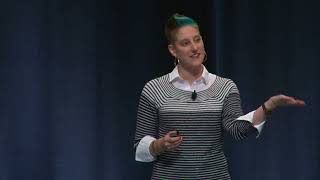
Karen Robichaud (non-architect background in English/theater) describes her seven-year journey at architecture firm Payette, explaining how storytelling, digital communications, and collaborative internal initiatives drove cultural change, staff engagement, and national recognition. She details tactics (daily blog posts, editorial calendar, social media coaching, workshops, hackathons, research competitions, core hours, improved parental leave, EDI task force) and collaboration with building scientist Andrea Love to build energy literacy and pursue CODE/AIA awards; outcomes include expanded staff voice, improved recruitment, four Code awards in four years and the 2019 AIA Architecture Firm Award. The talk emphasizes persistence, leadership buy-in, and the interplay between communications, equity work, and design/performance commitments.
Chapters
Hello. So I'm not an architect. I don't play one on tv. I majored in English and I minored in theater. So for me, I come from a storytelling narrative background. Everything that I'm interested in is about how do we tell the stories of who we are. So what I want to share with you today is a little bit about my journey at the firm and a little bit about points of intervention. We've talked a lot about culture on a big scale today and yesterday, and a lot of times what we've been talking about is change at the top level. You need a lot of buy in from the top, and that's true. But what I want to share with you today are moments of change and commitment that occurred at different levels. That often occurred from an individual, sometimes it's me and how that actually influenced the firm. So I've been with the firm for seven years. Before I was there, I worked at Boston Lyric Opera, which is the largest opera company in New England. So I have a nonprofit performing arts background. So this is Payette, or at least this was a photo of us two years ago. We hired 40 people last year, so the picture's starting to look different and bigger. We're going to take another one in June. As Susan mentioned, Payette is the 2019 AIA Architecture Firm of the Year, which is the highest honor the Institute can bestow on a firm like ours. So we're a collective of 170 people. We specialize in buildings for science and healthcare. So super complex energy hog buildings. And when we went through this effort of thinking about who we are and were we worthy of recognition, like the firm award, we came up with this statement. Payet shows that through the fusion of design and performance, so beautiful buildings that perform beautifully, grounded in research. So we don't design by the numbers, but with the numbers energized by equity and inclusion, we can transform architectural practice and transform the world. And we really believe that. And so I'm going to talk to you a little bit about how these values came to manifest themselves through particular actions. What you're starting to see here is this is a real team. We didn't stage this. We have a lot of teams that just meet in these alcoves. We're in a big open studio. You can stand up and look either way and see almost everyone. And we have these alcoves that line the perimeter. And this is where all the work is happening on display. So you can pop by and hear what's going on. So it's very Very open, and it really promotes collaboration. So when I joined the firm in 2012, the firm had a different website than we have right now, but it was new at the time. And that was the firm's first dip in the social media blogosphere. They had a blog on the homepage, but they weren't really updating it. And they had signed up for Twitter and they didn't really know what they were doing. And I had this background in that type of stuff, even though I was hired as a graphic designer to support the marketing department. And so I said, can we do something with this? It seems kind of silly to have it on your homepage, which is your front door, and not do anything. And I had a really powerful conversation with our president at the time, Jim Collins. He said to me, I don't really know what you're talking about, but it seems like this is where things are going. So I'm going to write you a blank check to do whatever you want until someone says no. And when they say no, ask them what to do instead. That was really empowering and important, and I still carry that with me today. So in 2012, my goal that I set as an individual, no one gave me this goal, was I looked at the firm and I said, you know what? I bet we can have a post every day we're open for business on our blog. And that can be our main knowledge sharing, brand identity, a place to develop the voice of the firm. And it took about 18 months. And there were some times in the beginning where I definitely thought I was failing. But that first year, we had 115 posts, 41 individual contributors, and now, just counting in 2018, 214 posts, 91 individual contributors. So that's one story I'm going to tell you today. Another is about our equity diversity and inclusion journey. And I remember being at this conference in 2017 and saying to my colleague, why aren't we talking about EDI here? Because we should be talking about it everywhere. It should be in the DNA of all of our firms. So I'm really excited to see how many firms are talking about it on this stage today or are excited to get started. And this was a long journey. A lot of firms like ours maybe had a Women in Design group who've been agitating for different policies over the years. And this past fall, I got our president, who is a man in his 50s, to come to the Equity by Design symposium with me. And when he returned, we had our annual meeting. And he said, I want our firm to be a Model firm. That was pretty powerful because those were conversations we were hardly having a couple years ago. And finally, as Susan alluded to, the kind of third track of how we saw some real change in our firm has to do with national recognition. When I joined the firm in 2012, you know, the firm had some national recognition, but they had these big goals of, you know, we'd like to win some AIA Coat Awards. The Coat Top 10 Committee on Environment, they award the top 10 most sustainable and beautiful buildings every year. That was a big goal. The architecture firm award was certainly a goal. And now here we are, and we have four awards from the Coat Group in under four years, and we're the 2019 recipient of the Architecture from the year. So how did we get here? So this is what our website looked like when I joined the firm in 2012. Pretty good for the time, but a little restrained, quiet. Again, you see that blog on the homepage? Those four posts at the bottom? Those were meant to be the freshest, newest content. But again, when I joined, it was maybe three, four, maybe five posts a month. And I was brand new to architecture, so really finding my way for what made sense. What should we be talking about? I remember when I wrote this piece about this lab at Harvard that received LEED Platinum and the highest score that a lab had ever received. And I emailed the project manager to ask him some questions, and he said, who is this person? What does she want? I don't understand. And my team was like, no, no, no, she works here. It's okay. You can answer her questions. And I realized that I had to do a lot of bringing people along because, you know, maybe we needed to rethink the strategy of hoping the Internet would go away. This is a New Yorker cartoon. And so I did a lot of hand holding and some of the things we've talked about here. I did a lot of teaching. I held workshops on, okay, what makes a good blog post, how to set up a Twitter account. I would do challenges at our annual meeting saying, feed the blog. Give us something about what you're doing. I would do social media checkups with our principals and say, if I Google you, what am I going to find? Do I find out that you were a principal at this firm? Are you a creep in another state? I don't know. A really important moment in all of that for me was we have a series called the Architecture Forum, and that's where we provoke discussion about something in the industry, specifically, not our projects. And so I talked about the connection economy and that's the idea that the more trust you build, the more you influence and the more relationships you have. And that that was really the foundation of what I was trying to do, because the more we had people participating, the more they felt engaged with the firm, the more they felt ownership of their work. And I started hosting different workshops, not just inside our firm, but for the AIA and the bsa, on social media for architects. So then I was becoming an expert in the industry and sort of leading the way for my firm. So I was able to say, walk with me in this goal, and I'll help you get there. And my approach was I never said no. If someone had an idea, stop me on the way to the bathroom, I always listened. I might redirect. But I wanted to cultivate as much yeses as I could. And so this is a quote from Seth Godin's book, the Icarus Deception. The value we create is directly related to how much valuable information we can produce, how much trust we can earn, and how often we innovate. And that was really the underpinning of my idea, is that the firm had a lot to say. Our firm has been around for 85 years. We have so much expertise that wasn't out there. We were a firm that was flying under the radar. And then this. When I was putting together that ARC forum, I found this article with this quote. Social media is the whole world's public square. And sometimes it can seem like a babble of pointless chatter, but if you listen closely, you'll hear smart people having serious conversations too. And this was in a landscape architecture magazine. And so I started talking to this journalist myself on Twitter. And then I started connecting her to my colleagues. And she would ask different questions. What she asks here is, have you ever used the word intervention to describe your work? Do you like the term loathe it? And she's looking to get information from architects. And so I started to build up a network of journalists and writers and critics that the firm wanted to write about them, that I was getting to know online and then could introduce to my firm. And then sometimes my colleagues, who I'd encouraged to set up their own Twitter accounts and develop their own voices. And then staff really started to find their voices. This is a colleague who since left and is now a leader in another firm. You know, and this is writing about BIM across multiple offices. This is a colleague who you saw quoted in that little Twitter feed. She's talking about architect as a quiet leader inspired by an AIA prompt. And here a More recent post from a very new principal to our firm who's writing during Gay History Month about health, safety and welfare for everyone and designing universal access bathrooms at colleges. And so now we're running the gamut. We're not just talking about your nitty gritty details in a lab or showing off the star building. We're talking about everything that impacts our lives as architects. And it's a great place for breaking news. Naming five new principles. So how do we do it? I have an editorial calendar. It's not fancy. I use Outlook and we source from our Internet. And long before we were using synthesis, we were on a homegrown platform that was not super user friendly, but it was another place for me to look because people were sharing what was going on. From the I had a baby, I got married to. Hey, I'm thinking about this thing. We had a whole debate about work life balance and flexibility. And did you need to be grinding it out in the office 20 hours a day versus can you do it at home later? And that helped really guide who were the emerging voices? Who could we ask? And what I've seen over the last several years is you'll have a young designer that you'll tap during a building tour to say, hey, why don't you write something about this? A principal will read it over the weekend when they're catching up on everything, and then on Monday you hear them say, hey, that was really interesting. Or three weeks later they'll say, hey, that person's actually a really good writer. Can they help me with my proposal writing? So these are connections that just weren't happening. And now that we have this amazing archive, this is actually where a lot of our marketing team will go when they're starting a new proposal. If they're like, hey, what did we write about makerspaces? What are some of the projects we used? Yeah, you can have as many folders and databases in house, but this is a searchable live tool that connects it back to the person who wrote it. So we work really hard to not have marketing write most of the posts. We write the news and it's really very democratic. It's all voices welcome. And it's become a recruiting tool. We've heard different feedback over the years from new employees who say, one of the reasons I wanted to come to Payette, you have the great work. I'm excited about where you're going, but I could see a place for myself immediately. Yeah, you have to have something to say, but we're not going to make you wait a year to be here. We've had interns who reflect on their own experience just spending six months with us. And so I talked about at the beginning that when I joined the firm, their website was new. And we relaunched and redesigned our site just this past December, so six months ago. And this is what it looks like now. And this is also a reflection of this evolution that we've been through, being so much more dynamic and open, and we're even, you know, bringing a pop of color into it. The principal I worked with said, I want to shock ourselves with color. We're still a little, you know, traditional at the top, shall we say. And so magenta, yellow, charcoal. The fact that it has so much more of these tactile things that happen when you roll over things. We're embedding a lot more video. And this is a snapshot of some of the homepage where you can see some projects and blog posts mixed in together. And when you click on the menu, this charcoal bar comes in on the side and past the kind of top headline navigation items we have kind of these are the top 10 headlines. If you haven't seen them in the grid below or seen them on social media, these are the main things we want you to know that are going on. And again, we're putting people's name right on it. It's not that it has to come from the firm. It's also become a really great place for us to be good partners to our clients. So this is an example of a significant project in our office at Northeastern University. There's this amazing pedestrian bridge that's going to cross five rail lines. And that bridge got lifted into place in the middle of the night in October. And we filmed it, and I worked with Architectural Record, and they had a journalist watching it. And we had a live feed of a master class at midnight that people went to, and we had like, 400 people watch this thing get lifted into place overnight. And that's the kind of event that wouldn't have happened five years ago, because that project architect has to know that I want those things to happen. We have to have a good partnership. And I've had to cultivate that with him over the last several years. And so now anytime something's going on with his project or a pro bono thing he's doing, he's always checking in with me, and I'm that conduit in the firm that can help those things happen. And then it's not just about us. It's about the industry. We want to make the industry better. So there's also some signal boosting that we can do as we've developed our voice and presence over the last several years. So these are just a couple of examples. We have a colleague who's on the editorial board of the Young Architects Forum magazine Connection. I'm going to talk a little bit more about our connection to Equity By Design. These are things that we want to share and boost in the industry. So we've made a lot of progress in those six, seven years and seen a real transformation in how we use our communication. And that is then a feedback loop to internal communication. There's an expectation that you're going to see things on the homepage and then you'll see them on our intranet and vice versa. So that's one piece. The other big piece for me has been our commitment to equity, diversity and inclusion. And this is a challenge. When you have a leadership that's been the same for a very long time, you're asking them to think a lot about their privilege and their position in not just the firm, but in our greater culture. But Equity by Design started to develop a national presence maybe four, five, six years ago, and I was dutifully on Twitter paying attention. Who's getting different press? Where's the conversation going for me? Because I'm not an architect, I've benefited from different promotions in the firm, but I'm not on the same track as a lot of my other peers. And so I can agitate in a different way, and I take advantage of that. And we'll try to provoke different kinds of conversations so we can go through a similar timeline that I talked about on my journey with some of our communication. Equity By Design is getting some national press. So when it's my responsibility to come to the principals and say, here's some national trends that I think we should pay attention to, this is one of them. Rosa Shang, who many of you may know, she came to speak at the Boston Society of Architects, and we're just three stories up from that organization. So we invited her up to our firm to have a conversation. And again, that's just. It's another place. A lot of these things for me are about persistence and a lot of visibility. So that you're getting that repetition. It may not be that they get it on the first try, but maybe on the 5th. I've had principals who were some of my biggest resisters and then became some of my greatest advocates. And I don't know what the exact thing is that I did that made that change, but I have seen it. I had a principal who couldn't, for the life of him, understand why you would ever write a blog post. And before he retired, he'd written 45 blog posts. We actually made a book for him when he retired. I attended the Equity by Design hackathon at the AIA conference, which impacted me not just in how I was thinking about how to introduce topics of equity and diversity in our firm, but I was also really inspired by the Hackathon format. Again, I did an AHRQ forum. It's a really helpful platform for me. This one was about implicit bias. And again, you know, trying not to talk about us and our work, but to really introduce the topic to build literacy in the firm and to kind of level the playing field. And I've since given that talk at the bsa at other firms, I've given it at just a principals meeting. So we've used it as a tool to have a lot of conversations and provoke some of that discussion. I said I was inspired by the hackathon. I worked with one of our principals to design one on what is the lab of the future? And I had this ulterior motive where I was like, let's break up our teams. Let's mix up who's working together. Let's really challenge how we approach a design problem, because it's not a project, so you don't have to have the perfect team the way you do when millions of dollars are on the line. This is one afternoon, and we've since used it for different design competitions with some of our pro bono clients. And the feedback I continually get when we do these is like, colleagues are like, we got to do more of these. It feels good. It mixes it up. And then I went to speak at the Equity by Design Symposium in 2016 and was able to bring back more and more of that energy. And then that led to us forming. That was one of the things that led to us forming an Equity by Design task force within our firm. And, you know, here, just thinking about bias, it's. It's so much about how we're not aware of it. And so I felt like the more we could talk about it and daylight it, it would make it easier. So there are times where I will say to colleagues, did you realize that there were all men in that room? Did you realize that this happened? Do you think there's bias going on? Do you think this is happening? And sometimes they'll be like, oh, I didn't think about it. And I'm like, I know that's the point. So we're going to keep talking about it. So when we formed our task force, we developed an action plan. That's what you do. And some of the main things that were really important is to have that visibility within the firm to show that commitment. So we had a mission statement. We did things like set some core work hours. So the idea being that your team meetings occur between 9:30 and 4:30. You're going to do work outside of those hours. But those are the ones when you're kind of expected to be in the office and with your team. We heard some talk yesterday and today about staff recognition. So we implemented shout outs because we definitely had that dichotomy of like, well, it feels like people who do design are always getting all the credit or it's always the team that's like winning, you know, the work that's getting credit. But there are all these other people who are kind of slogging it out and doing amazing things in their day to day work. Can we daylight that? And so we started doing that and we had a day of service and all that good stuff. And then, you know, again, bringing Kevin to the Equity by Design symposium in November. And for me, what was really powerful, I didn't know what it would feel like or what he would think. Men are a little bit more in the minority at that conference. But he said to me, at the end of the day, I would come to this again, but who do you think should come next year? And I was like, well, what do you mean? And he was like, well, I assume like you or, you know, some of your peers in the task force would go, but, you know, basically which male principal needs to be here? And that was really cool because that meant that he got a lot out of it and that he knew that, that maybe some of our other colleagues needed to be in the room to hear that. And then that he made this statement to our firm during our annual meeting that he really wanted to be a model firm. And that was a big commitment. So national recognition. So this is hard, right? How do you change the course of how the firm is being recognized? First you need good work, right? But for me, it's all about what are the stories you're telling about it and how do you discover those? So when I joined in 2012, the firm had different lab of the Year scup awards, but really the one main AIA award, if we're kind of looking at that as the pinnacle of national recognition, they had one AIA Honor Award for interior architecture in the recent history. And that was from 2006. And it's this lab at the Scape and Zei Institute. So some of the different things that happened. The Firm signed the 2030 commitment in 2011, and they joined and they instituted a building science group. They hired Andrea Love, who's now a principal and director of building science. And one of her goals was, we needed some energy literacy. People didn't know what energy use intensity meant. They didn't know what a good EUI was or a bad one. And now in 2018, everyone knows what a good EUI is. And we actually post them in our project alcoves that I showed you at the beginning. You can see it a little bit peeking out in the corner here. And that breeds some accountability. It breeds a little bit of competition. We have a project opening this fall that will be one of the lowest EUIs coming out of our office. And we're actually doing pretty well for considering our building types, how we're tracking with the 2030 commitment. And so this is important in our journey to national recognition, because one of Andrea's other goals was to win a CODE Award. And her goal, at least when she started, was, I just want to win one. No, I told you, we have four. So that's a big deal. And so these were some of the things that the firm was reassessing our values and recommitting to things. And with someone like Andrea making certain commitments to her own work and to how her group is going to work with the office, it has this later trajectory, that long tail. But it starts with that one commitment of one person saying, hey, I want to try to win a CODE Award, and I want to build energy literacy. And so then through that, you. You start to see longer change. And so we even put it right on our website when we designed our new website, because that is how important it is to us. I said to you earlier, we care about the fusion of design and performance. If it's not performing, it's not beautiful. So Andrea and I started within a year of each other. So we've actually been really great collaborators in the firm. This is a photo of us from last year's AIA conference. We were writing down our commitments to equity and diversity. So we're both on our task force. We started within a year of each other. She was identifying, what is building science, what is the voice of that going to be in the firm. I was trying to build our voice of the firm. So she and I have been really great Collaborators and partners. And it's been really fun as two younger women in the firm to really rise up and to take help lead those things. And we've actually worked really closely together on something like the firm award pursuit and all these code awards. So that's one piece. The other piece is how we build teams. And the firm has started to think a little bit differently about that. In 2012, we pursued a design competition for this building I mentioned at Northeastern University, and we put two principals in charge on it. And it's not that we'd never done that before, but those were two principals in charge who had not collaborated together. They'd been principals of the firm together for several decades. But they had their own figuring out to do how are they going to lead this project together. And this was really important because it's in an important site in the city. The university president was pushing for iconic design, more so than many other clients we've encountered. And now in 2018, that bridge is going to open later this year. But more importantly, that building won a Harleston Parker award, which recognizes the most beautiful building in Boston. That's pretty cool. That's pretty dramatic. And this is what the jury had to say. The facade is a standout, making an unexpected, unconventional design statement with organic shape and vertical fins that seems almost undoable. In Boston, we actually hosted a think tank with Metropolis about why is architecture in Boston so ugly? Because one of the, Especially in the seaport, if you know it, some of the more boxy buildings. One of the editors of Boston magazine had written this article about why is this architecture so boring? And when metropolis reached out to us and Northeastern was getting close to opening, it was like this perfect confluence of things, right? You're getting that national recognition. You're getting some press. You're building up the voice of the firm. And it was a great opportunity to take the bull by the horns and say, hey, we think this building is going to be revolutionary, not just because of its form, but because of that pedestrian bridge. It's going to cross those two sides of the tracks. So you have some things going on in the firm that we weren't necessarily totally orchestrated in thinking about them all at exactly the same time. But when you look back and see, like, okay, you have someone who's really driving what is the voice of the firm, and then you have this desire for equity and inclusion. You're thinking differently about how you build the firm, and. And then you have this desire for national recognition. But underpinning it is some real radical change. About how we think about our work, what we hold ourselves accountable to. You get to this place where now we can look back and say, wow, this is really great. And this is not the end. This is the perfect next jumping off point. Because I mentioned earlier, we have five new principles. We're still going. We still have this great regeneration happening. And so what does underpin all these things? You have messages from leadership that are showing up in our synthesis feed. You know, when we developed our manifesto that really distilled those core values. Because I mentioned to you, our firm is over 85 years old. We're not like a fresh face. And so you got to step back and think, what are we really doing? What's been true for us always, what's new now? And I mentioned our Equity Diversity and Inclusion task force. We just in April ran a survey trying to ask the staff, tell us what you think. What are those pain points? We need to know so that we can pinpoint more of what we're going to change. We've done some kind of low hanging fruit. We have the core hours. We changed our parental leave policy. But what are those other areas where people had a lot of questions? And again, this is coming from a principal, very tenured, more senior in the firm, saying, hey, we really want to know. We are committed to hearing from you. And then I mentioned Andrea. This is another way where we're really looking for engagement from the employees in many, many different ways. And here we, we do a lot of research in our firm and we host a research voice competition where you can pitch your idea for what kind of research you want to do. And here Andrea's giving credit and acknowledging some of the people who contributed to that. And finally, when we put our portfolio together for that firmware process, we made that a document that we wanted to share with the staff. So that's actually something we point you to on your very first day because you've got this great 60 page document that tells you all about who we are right now, some of our best projects, and gives you a little bio on all the principles. So like I said, four and four years. That's a really big deal with the KoT top 10. And one of the main tools we used to kind of assess where we were and what we needed to do differently for these things was we studied the High Performing Firms report, which was written by Lance Hosey for Coat. And when the COAT award announcement came out just last week, he said, With four wins in four years, 2019 AIA firm award winner Payet is late to the game but absolutely killing it these days. And so that report really looked at what are firms that had won multiple code awards. Many of them are firm award recipients. So that was exactly the space we wanted to be in. And so you can see we've had this really long journey where we've come so far, and we're really proud of where we are. And we see this as that jumping off point when we had that annual meeting in November and I said we'd hired 40 people last year, so many of them came up to me and principals in the firm and said, I'm so glad I picked Payette. I feel like I'm in the right place. I'm really excited about where we are right now. So this is us. And what really grounds us are values that Tom Payette, our namesake, talked about for decades. Have fun. Do great architecture, make a difference. Thank you.
More from Christopher

Human in the Loop? Testing Our Assumptions About Where People Add Value in Learning | Todd Henderson

Redesigning Work for the AI Era: How Greenprint Turns Implicit Knowledge into Shared Intelligence

Designing Learning Like a Product: Branding, Culture, and the Unseen Work of Building an LMS

Scaling Design Excellence: How Diamond Schmitt Amplifies Knowledge Through Learning and AI

From Tame to Wicked Problems: Rethinking Learning and Development in a VUCA World | Ellen Bensky

Learning at the Speed of Change: Adapting L&D to Your New AEC Workforce | Kristina Williams

Designing Modern Learning Organizations: Rethinking AEC Learning Development in the Age of AI

The Link Between Learning, Motivation, and Career Fulfillment for AEC Professionals


Why Communication Skills Are Foundational to Teaching, Leading, and Adapting in AEC F

A Framework for Collaboration and Quality: SMMA’s ISO 9001 Journey | Ryan Farias & Jessica Smith