Organizational Listening at HGA | Tim Carl of HGA
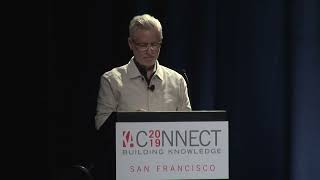
Tim Carl (CEO of HGA) presents a talk titled 'Organizational Listening' describing his personal journey from designer to firm leader and how HGA cultivated organizational listening and knowledge strategy. He credits partnership with Knowledge Architecture and outlines programs—graduate-student research placements, hiring full-time researchers and a design anthropologist, a micro-grant program (25–30 grants/year, >200 total), and a community action program—used to surface diverse perspectives and drive innovation across disciplines. He emphasizes building an equitable culture through training and office-level equity task forces, and illustrates impacts in healthcare (patient journeys, VR empathy lenses, process engineering), campus design (student food/housing insecurity), mass timber research, and community redevelopment (Sherman Phoenix). The talk references colleagues Anita Barnett, Carol Wedge, and Erica Eklund and is aimed at professional audiences.
Chapters
I want to thank Chris tremendously. I want to thank Knowledge Architecture for really helping all the firms you touch evolve as learning organizations. Our relationship with them has been so profound. After hearing my first pass at a topic for today, Chris actually suggested the title you see here, Organizational Listening. So Chris is way smarter than me, and I went with it. And I think it's going to work. You can tell me later. If I boil down how I think I'm going to describe organizational listening in a couple of sentences, it sounds something like this. I believe our industries, our design professions need to change. I really, really believe we need to change. At the core of that change is how well we listen and how well we understand the needs of those we're serving. And to do that, I think the only way to do that is that we must learn how to listen better internally to our own people, to our own organization, and connect those ideas much more effectively. One way to understand this, I'm using this as kind of a lens, is to think about how your own personal journey meshes with and eventually supports your organization's journey, and vice versa. Really important. Your organization has to support your personal journey as well. And if we do this work well, you should be able to measure success at the end. So with that, I'm going to start with my personal journey. It's depressing to realize you're not the next generation anymore. So, long story short, I have loved to draw since I was very, very young. My art teacher desperately wanted me to go to art school. My science teacher said I should be an engineer. I guessed at architecture. I really did not know what an architect did in school. This is me in 1986. My success in school was primarily driven by. Actually, I was good at math, but I was better at drawing, primarily driven by my ability to draw. I had amazing architects. I admired Aldo Rossi, Michael Graves. I loved them because I loved how they drew. And through college, my ideas were well received by the juries because my drawings were beautiful. Throughout the first 11 years of my career. My success really was primarily driven by my ability to. To draw something beautiful that clients wanted to build. It really was the defining feature of my success in the first 11 years. Fast forward to 1997 and I joined HGA. And my first boss at HGA, working in their corporate group at the time, was an interior designer named Anita Barnett. Anita was an incredible influence on me. She basically, for the first time in my career, gave me direct access to the clients with a caveat. I had to show them. I was listening, prove to them that in my drawings and in my words, I was listening to what they told me. This is the very first project I did with her for General Mills. This had probably the biggest impact on my career at the time. And what I learned pretty quickly was that if you want to execute a good idea technically on budget, within fee, you also have to listen to your team. And you have to listen to them across disciplines and across roles. This really defined the next 16 years of my career. I really spent that time, and in hindsight, this is how I view it now. I wasn't thinking of it this way at the time, but I was perfecting, listening both internally and externally at the scale of a project. This is a recent project that I helped lead. It's a new concert hall for the St. Paul Chamber Orchestra. This is a musician, Kyu Young Kim, who, after the first rehearsal in the new space, literally gave me an emotional hug. I love him. And said, oh, my God, Tim, this is what we talked about. This is what we talked about. But I could never have imagined it. So this is what has driven me. Fast forward again. 2015. Actually, Chris, it was 15, not 13. That maybe against their best judgment, the board of directors elected me chief executive officer. The former CEO, who was a great mentor of mine, had been there for 18 years. So this was a big, big change. We had eight offices at the time. We were not broken. We were successful, but we knew we needed to evolve. And I made this statement in transition. So as the part of taking on this role, I said this at the time, in 2015, in hindsight, it was a brave but naive statement. I said, I'm going to apply my talent as a project designer to the scale of the firm. Had no idea what I was talking about. Very naive in terms of really understanding the translation of that concept to the scale which I was about to take on. Our work at the time I took on this role was beautiful. Across markets, across a diversity of scales. I will tell you, as a designer, I love the beauty of our work. It's very important to me. I'm not going to talk as much about that today, but it is core to my beliefs. At the time I took over in 2015, we had a sort of interesting moment as well. We had a number of next generation really kind of just out of school employees discover a video of two of our founders talking to the firm. And they rolled the video out. We showed it to the firm. It really was an interesting moment because the next generation was celebrating the founders from the 1950s and 60s and 70s. Long story short, they were trained in the Bauhaus. If you're not familiar with the Bauhaus, it's a school of thought that sees great design rooted in a process that really leverages a collective and diverse mindset. And to have the next generation celebrating that was a very interesting moment. The other interesting moment, I had just been asked, prior to taking on the role of CEO, to lead a new strategic plan. I'm not going to bore you with that, but we did something for the first time that we'd never done, and that was we identified a diverse group of next generation leaders from across markets, across offices, across the country to join the executive team and the board at the table and help design the strategic plan. It was the first strategic plan that really resonated across the firm because we empowered these people to be at the table and designing it. And we had never done that. It was always in a closed room with the leaders. And this was a big change. Again, I'm not going to explain it. They brought so many great ideas to the table. Just one example began to have us look at structure in more creative ways. Lots of research out there. Innovation comes from a more diverse, often more serendipitous, dynamic network of connections that has to exist within a more traditional firm structure. You need the traditional structure, or what we call the traditional structure, to execute. How do you bring those two things together again? Chris? I don't remember the exact date we first met, but we've been working with Knowledge Architecture for at least six or seven years. They have had a tremendous impact. I can express how they have influenced kind of our evolution, their ideas about people, process, and technologies. To create a culture around knowledge sharing is foundational to our work. In 2015, we had a task force, a brilliant task force, identify all of the knowledge communities within HGA and then show the connections, or more importantly, the lack of connections. In a board meeting, I asked the board of directors to guess how many knowledge communities we had as a firm. First board member says, 11:12. Next board member, the chair says, oh, my God, no, of course not. It's 25 or 30, at least 65. We learned so much in this process working with Knowledge Architecture. So what I want to do now is transition. Basically, over the last several years, leadership has been overseeing an incredible evolution in terms of how we listen to ourselves and how we harness that, how we take advantage of that. I'm just going to share some examples that seem small, they seem individual, but together they've had a tremendous influence on the firm. This first One. About eight years ago, we actually piloted a program bringing graduate students from the University of Minnesota, this is in our Minneapolis office, to do research projects on topics of interest. This program has evolved to work with about 12 or more firms across the country. It has had an incredible impact. Long story short, it really helped us listen to the next generation across markets and across disciplines to incubate really important research. At the same time, about seven years ago, we hired our first full time researcher. She began to work with thought leaders across practices to think about how to further incubate research. So building on our work with the university, we created over the last number of years a micro grant program. And it's had a profound impact on the firm. Basically, interdisciplinary teams submit ideas. We fund about 25 to 30 micro grants a year. And again, incredible impact on the work we do as a firm in VR, in ar, resilient design, energy modeling, mass timber, workplace materials exploration, prefab, you name it. The there have been over 200 microgrants that have had impact on the firm. One of those microgrants actually grew out. Here's another slide with more micro grants. I'm not going to go into detail. One of those microgrants grew out of our work with the University of Minnesota. We had a full time student, Jessica, do a research project on community engagement. She ended up working for us full time. She teamed with another leader in our Milwaukee office and began to lead an effort, built a task force around the two of them to help structure and design our community Action program. And I cannot express how profound this has been. So we are five years into our community Action program and every office is doing one of three areas of community service. And it's very, very linked to the work we do as professionals. And I'll talk more about that. So with that, I want to step back just for a second. This work has had a more powerful and meaningful impact because it has brought such a diversity of mindsets together. We often talk about ourselves as an AE firm. That's unfair. We have to figure out how to do a better job. It's much more beautifully complex than that. HGA is architects, engineers, interior designers, landscape architects and more. There are amazing people at the table helping steer where we're going. In operations, in finance, in communications, marketing, it, hr, quality, the librarians, business development, digital practice. Like, it's incredible if you understand how to connect and leverage the diversity of thought across all those areas. And it's been a big part of our success. Okay, I want to thank Carol Wedge for leading the AIA large firm Roundtable. Where is Carol? There she is. She has had an amazing impact on the effectiveness of that organization, that group, those conferences. This is just a snapshot. This year there was a focus on disruption. I will tell you, the best firms in this country are talking about our need to redefine our value proposition. And I would say also the firms I talk to and the firms that were resonating the most with me in terms of their work were talking very specifically about how they were discovering the real needs of their clients. I think this is a big part of how we are evolving. I also want to thank our director of communications, Erica Eklund, who's been very engaged with Knowledge Architecture, our whole communications group. In 2016, we actually saw a need to further clarify our purpose. Several of the speakers today have talked about this. We actually hired a consultant from outside our industry. It was fascinating. I highly recommend trying something like this. It was risky, but he did this really effective research where he looked very closely at how. And this is really more about architects, how architects talk about themselves. How we like to in our proposals, in our social media, in our websites, say this is what we do, look at our buildings. And then he talked to our clients and asked, what do you want to hear? And they pretty much told him, we want to hear the architects talk about us. This had a big, big impact on how we talk about what we do, how we think about what we do. I'm not going to go into the detail, but it really did help us define our purpose. The two. Oops, wrong way. The two values that I want to highlight that came out of this are curiosity and empathy. I can't tell you how important it is. I was so glad to see Carol had empathy in her values. To have empathy for our clients again means also having to have empathy for your staff and for your employees. So these values have really resonated across the firm and have been very important. They've also, again, shout out to Knowledge Architecture helped us further define our knowledge strategy. You know, if you want to do knowledge management, well, you need a strategy. This work really helped us define that strategy and begin to kind of harness structure, kind of organize the diversity of mindsets internally to figure out how we connect externally. I want to give one important example of an evolution that has really become more structured in our health care practice. About nine years ago, we hired our first process engineers. About seven years ago, our first full time researchers. And what we've discovered in our healthcare practice was over time, through practice, this amazing intersection of practice based research of process Improvements and human centered design. If you look at this diagram in those intersections, that's where the secrets are. That's where we have discovered things we could have never have imagined and found insights into our clients that really our competitors had not seen yet. We have seen the effectiveness of those intersections and I am now leading an effort to figure out how to apply those intersections to all of our markets. It's hard work. We are in the middle of it. Hopefully you'll see more soon. At the core of our knowledge strategy is, as I mentioned, leveraging diverse thinking. At the core of leveraging diverse thinking is having, I'm sorry, is having an equitable culture. So I wanted to spend a moment here. This is a very, very important priority for the firm right now. We had a grassroots movement in 2014, 15, 16, inspired by the equity design movement in San Francisco that led us to hiring a consultant, an amazing consultant in 2017 to help us become a leader in building an equitable culture. So there's three things I want to point out. First of all, you have to understand in your organization, where you're at. So with our consultant, we did intense internal surveys to help identify themes to help specifically understand the differences between offices and really prioritize this work. You have to really understand how to apply this specifically to yourself. Any grassroots organization needs top down support. I can't tell you how many firms I've seen have been celebrating these grassroots movements. But you didn't really have the leaders aligned, you didn't have them supporting it in an overt way. In 2017 and 18, we put 80 leaders through intense two day training with our consultant. And then this year we are training all of our employees over the course of the next three or four months through five hour sessions in each office. The third thing that's really important to understand in terms of how we are guiding this. So many firms, organizations are talking about diversity and inclusion and that's important. But you cannot talk about diversity, inclusion without talking about equity. If you really want to have a sustainable, diverse work environment workforce, you have to truly build an equitable culture. You can't get there. It won't be sustainable. No matter how much diversity you hire. If you don't have an equitable culture, it won't last. To understand equity, how to build an equitable culture, you have to understand the history and the systems of how organizations have gotten to a less equitable place and then address those. We're creating some amazing dialogues across staff and leadership in each office. Right now, each office is building an equity Task force. Our Minneapolis office has a book club, which is fantastic. And I'm reading the first book. I highly recommend it. It's called Culture Code by Daniel Coyle and it talks specifically about creating safe environments for all employees to contribute. So flash forward now to today. We have 10 offices. With the great additions of Madison and Boston. We have approaching 900 people. It's been a great four and a half almost years. I'm loving it. I want to just share a few quick stories. I'm almost done. That sort of are examples of how we're measuring our success, how we're applying, our listening to our clients. This is actually. My team is going to be so mad at me for sharing this. But it's a project we're in the early stages of design on for a college in the Northeast. This is a good example of kind of the early stage process in physical model and drawing. But we have gained so much from some of the research I shared with you earlier that's applying to this project specifically. Our clients interested in mass timber. Thank God. I'm so excited we are able to apply some ideas about mass timber in such a more effective and efficient way because of the research we've done. I do a lot of work on college campuses. We're changing the way we start those projects in terms of understanding how those campuses work, what they're experiencing. We do a lot of work in the California State University system. We're doing a student center there now. The research we did with them early on in the project discovered that 1 in 5 students in their system are food insecure and 1 in 12 are housing displaced. I can't tell you how often architects are coming in and saying, oh look, design this beautiful, expensive looking space for students to hang out. And they're not really understanding what the students are experiencing. The other thing we're doing on campuses are drawings like you see on the right. We're actually mapping the paths, the journeys that students, faculty leadership, visitors are taking and seeing where those intersections are. And it's changing. Even if we're hired to do one project, it's changing where that project is cited, how that project is designed. So we have a digital practice group. Obviously technology is a huge part of this work. That group has been working really hard to listening to the needs in each market. In our work in Environments for the Aging, we actually invented a lens for the VR goggles that helps you see what it's like to have cataracts in macular degeneration. This is me and quite frankly, I'M tearing up to understand what these people have really been experiencing and then to be able to figure out how to design these spaces in a way that's going to make that a much better experience for them is a big part of this work. So in our healthcare practice, again, those intersections of research have been really important. Helping us design places for respite for patients, families and staff. That's much more understanding of their experience. It's helping us better connect patients and families and doctors and nurses through technology. And then part of that work that I referenced in terms of those intersections, we just hired our first design anthropologist and she is helping us really understand how to meet with the right cross section of people at the right depth to truly understand their experience, understand what physicians and staff are thinking. Here are some examples of patient journeys. On the left is what the physicians and staff think the patient's journey is like. And on the right is what the actual patients think. And the overlap is shocking, in fact. And this has been consistent. And I will tell you, the doctors and nurses are really happy to have discovered this. And so these deeper dives in terms of spending real quality time with patients, we actually followed a patient through their journey in the hospital. We got permission to sort of spend time with them. It's been very important to spend that time understanding real experience. Recent project A lot of hospitals have been designing really beautiful retail spaces and food service. And what we discovered in one project in particular was that the patient's families were spending all their money on their patients care. They didn't have the money for these expensive restaurants and retail places. And we were not designing places to reflect places to rest for the patients and their families. In fact, the spaces that were there, some families using restrooms. Right. Frankly to kind of have some time alone because there was no place for them to be. Again, this research has really helped us get to that depth. So I have one last story to share with you that speaks to the importance of finding that intersection of the passion for your employees with the passion of the communities that you serve. This is a building in the Sherman park neighborhood outside of Milwaukee was damaged by fire that was caused by the riots in 2016 right after the shooting of a black man by police. This project has an incredible intersection of our community action work with that neighborhood and then being hired by these two developers on the upper left to rebuild this historic bank as an entrepreneurial hub that would provide opportunities for people of color and create jobs. The project's called Sherman Phoenix. It's meant to rise from the ashes. Deep, deep community engagement. In fact, the community engagement changed the developer's idea about what the project should be. In the end, it became a community market that houses up to 29 tenants. From food to yoga to counseling to a barbershop. The team here, you see on the bottom left, created a very inclusive space. They actually helped build the space. It was incredible. Here you see some examples of the after in terms of the spaces. And finally, I love it when people cry tears of joy about a space. And that's what happened at this grand opening. People were very emotional. This has had such an impact on this community and the joy that this project has brought to the lives of our employees and is what keeps me going. So thank you.
More from Christopher

Human in the Loop? Testing Our Assumptions About Where People Add Value in Learning | Todd Henderson

Redesigning Work for the AI Era: How Greenprint Turns Implicit Knowledge into Shared Intelligence

Designing Learning Like a Product: Branding, Culture, and the Unseen Work of Building an LMS

Scaling Design Excellence: How Diamond Schmitt Amplifies Knowledge Through Learning and AI

From Tame to Wicked Problems: Rethinking Learning and Development in a VUCA World | Ellen Bensky

Learning at the Speed of Change: Adapting L&D to Your New AEC Workforce | Kristina Williams

Designing Modern Learning Organizations: Rethinking AEC Learning Development in the Age of AI

The Link Between Learning, Motivation, and Career Fulfillment for AEC Professionals


Why Communication Skills Are Foundational to Teaching, Leading, and Adapting in AEC F

A Framework for Collaboration and Quality: SMMA’s ISO 9001 Journey | Ryan Farias & Jessica Smith