Q+A with Corey Squire | Knowledge Management: The Secret to Unlocking Sustainable Design at Bora
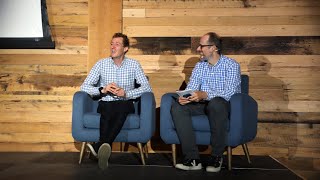
This Q&A (YouTube) between Christopher Parsons and Corey Squire covers how Bora captures and applies sustainable-design best practices through knowledge management. Core claims: using settled technical defaults (e.g., a 30% window-to-wall ratio) narrows choice and frees creative energy for design features; most documented best-practice guidance is stable while roughly 20% (mechanical systems, materials, chemicals) changes rapidly and requires designated experts to maintain pages; culture is as important as documentation—Corey participates in pinups/design reviews to ensure sustainability topics are discussed; wellness principles align with energy strategies, but Corey is skeptical of formal rating systems (LEED, WELL) and prefers firm-driven standards; climate change is shifting design toward hotter-climate strategies and some convergence of climate-zone guidance; long feedback loops make sustainability a low priority unless knowledge management frees designers from administrative search so they can focus on applying best practices.
Questions this video answers
30% window-to-wall ratio.
About 20%.
Approximately 60–80% (hydropower share).
LEED, WELL Building Standard, Living Building (he expressed skepticism and preference not to use them).
Chapters
Thank you so much. That's wonderful. I want to start with kind of the thought around working with creative designers and saying, this is a perfect project. We've already specified a bunch of stuff. Do you get pushback? Do people want, like, take me through that?
Yeah. No, that's a good question. So I'm not trying to be a design buzzkill, right? We, we don't want crazy swirls, we don't want weird stuff. And the truth is we do public projects and our budgets don't allow for weird stuff. We're going to have a two story building. It's going to be basically stacked. We're going to have limited ability to influence the floor plan so much, the section so much, but by taking a lot of potential decisions off the table, because we've already decided that these selections are the good ones, it actually provides more time for creativity in the areas where you still have ability to influence. So, for instance, I didn't mention this, but if you notice the floor plan, there was kind of these kinks, like a little bow tie shape in the floor plan of that library. It was inspired by the idea of a butterfly because it was going to be a pollinator for the neighborhood. So there's lots of opportunities for creative design. But we don't need to reinvent the stage structural system. We don't need to reinvent the glazing ratio. Right. We've already established those. That's great.
When you think about those best practices then, because there's a lot, right. It's wide and deep. The amount of knowledge you've captured. There's a lot. How do you keep that relevant and up to date? I know some of the things you've said are like, these are constants, they're never going to change. But some things.
No, that's a good question. I would say most of them are not going to change. Right. So we're very focused on our 30% window wall ratio. And that is not new. That's not going to change. There's no future scenario where 40% is suddenly better or 20% is suddenly better, because that's just the geometry that provides the best daylighting. And if you look at buildings that were designed before electric lighting, they all basically had the same window wall ratio. Now there's other things that are going to change. Mechanical systems do change. So we want to make sure that we're keeping track with the mechanical systems that we want to use. Materials change a lot. We know what chemicals we don't want to include in our building, but it's a constant struggle to update the materials that either have those. Those chemicals or don't have those chemicals. So I would say out of this huge body of knowledge, I don't know, maybe only 20% is rapidly changing.
And then how do you. For that 20%? What does that look like? Like keeping on. Keeping tabs on the mechanical systems. Like, what is that? Is that you? Is that.
Yeah.
How does that work?
So it's really based on experts. In our office, we have experts in different categories. So I tend to know a lot of. About mechanical systems. I keep those sections up to date. I don't know a lot about interior finishes. And we have really, we really great knowledge and a lot of sophistication around material selection in my office. So there are individuals who are kind of. Kind of in that world and constantly updating that page. On each of our pages, we have kind of a responsible party, and that person is responsible for making sure that the information is up to date.
Got it. And so that might be conferences and literature and all the things.
Yeah.
Okay, cool. Do we have questions out there? Got one in the front and one in the back. So bring back throwing today. Oh, throw it, Chad. Yes. One of the feedback for us from yesterday is there wasn't enough throwing, so mine.
Sometimes I feel like when we encourage people to document knowledge, there's this concern from some of our more senior experts that, like. But if we just hand it to them, maybe being like the younger associates, then they won't build this deep fundamental understanding of the why that we have. And I know this is a question that probably many of us get, but because you've done such a robust job of collecting and putting together this knowledge, so much knowledge. I'm curious, like, if you get that question and how you respond to it to, I guess, continue to make the case.
Yeah. I mean, it's a funny question or a funny concept because there's a lot of things that we understand to be the right way of doing things without a deep understanding of why. And individuals who are curious are more than welcome to go out and explore those. Those. Those questions. Right. Like Chris, for instance, mentioned that he only recently learned the root word of the word conference yesterday. Right. We've all been using the word conference for a long time. And if we're curious, we can learn kind of the root term and the fundamental reasoning, but we don't have to know the fundamental. We don't have to know the history of the word to be able to use it effectively. And I think that that's the case. I don't think we need to. Like when I started architecture school I had one semester of hand drafting before we shifted to the computer. I'm not sure that, I mean it was fun, I'm not sure how necessary that was. But there's a lot of kind of nostalgia and you really need to understand why things are the way they are before you can apply them. And I think that we can just kind of move forward, we can make these assumptions. If somebody wants to know why 30% win to Wall ratio is the right number, then I'm available to answer that question and I'm personally curious about it and maybe I'll even just tell people without asking. But I don't think it's fundamentally important.
Well, building seems to be growing and getting a lot more, a lot more jobs wanting to do that. Do you see that becoming. I know LEED in the past and other green building type requirements have been on jobs, but you see well building growing and becoming more and more on our projects going forward.
Yeah. So the concept of wellness and health is incredibly important and I think that that is increasing in prominence within the, within the field both in terms of architecture broadly and more narrow field of sustainable design. Personally I'm super skeptical about rating systems. My preference is to not do leed, not do well building standard, not do living building like any of those. I just think that they amount to some, somebody else setting, setting the standards I think we can do a better job on and I think it amounts to a distraction a lot of the time. But the principles of designing for health and wellness are, are super, super important. And what I found in my own practice is a lot of the strategies for wellness and for energy conservation align really well. So go back to window wall ratio. Right. If you have an all glass building, you're going to be thermally uncomfortable, you're going to be using too much energy, you're going to have a lot of glare. If you have the appropriate glazing, appropriate orientation, appropriate shading, you're going to have better daylighting which benefits the people. You're going to have better thermal comfort because you don't have this very cold or hot wall next to you. So people are going to be benefited from that and it's useless energy. So how do you sell that strategy to a client? You sell it through the, through the health, through the wellness standpoint and then you just get to take the benefit of, of, of the energy conservation without even mentioning it. So yeah, incredibly important. And there's best practices around building for health, building, for. For wellness that you can apply the same way you would apply building science strategies.
Great.
Jennifer.
I think I'm answering my question as I'm sitting here thinking about it, but.
I'll ask it anyways.
So I'm not an architect, not a designer, communications work for a very large firm that does everything from buildings to transportation. And we've tried to make sustainability a focus for us for a long time. We've done task forces, committees. It sounds like if you work in one region, there's best practices that work maybe for that climate. But if you work across the globe, you might have to develop different best practices and also different best practices for markets. So how would you recommend a company like that to really get things moving? Is it just start small in one area or.
Yeah, I think you can start small in one area. I think that it's true 100%. The example that I gave about the best window, that's the best window in the. In our climate in the Pacific Northwest. And we do work in other climates. And there are different windows. One, one thing to think about is at least for strategies around energy conservation, enclosure windows, insulation, we're kind of moving towards a consolidation of the climate zones. Part of that is because of climate change. Right. It's getting warmer further north, which means that regardless of where you are, if you're in the United States or southern Canada, you're suddenly going to be in a zone that requires cooling, where that might not have been in the past, which means that we really need to cut out solar heat gain. So maybe 15 years ago or maybe in the 70s, when the books on when the light was read in, you really want to capture that winter heat to offset cooling. We don't want to do that anymore. We want to do everything we can to cut out summer heat. And what that means is that buildings are looking more similar across climate zones than they did in the past. Right. We're designing as if we're designing for hot climates, whether or not we live in a hot climate, which is the right way to design today. But even that point aside, there are going to be different strategies in different regions. Right? Right. If you're going to work in New Orleans, you have a lot of rain. If you're going to work in Phoenix, you have very little rain. And that is going to impact your design strategies. And then there are different best practices from building type to building type. Right. Multifamily is going to. Kind of the number one energy use in multifamily is going to be hot Water. Right. The number one energy use in an office is going to be cooling. And you want to design for those differences. But I don't think it's that broad or that complicated. If you took, let's say that you worked in, I don't know, six different regions and did six different building types, there's a lot of similarities between that. And you can start documenting for this climate, for this building type. We generally want to do this. And maybe you start with the climate and building type that you work the most in and then you move backwards to where you have fewer and fewer examples. But one of the things about best practices is the assumption is that the outcome is going to get you. You'll get a pretty good outcome the vast majority of the time, which means you might not get 100% the best outcome every time. And that's okay because the alternative is just spending so much research and so much effort and so much time optimizing every single thing beyond the point where it really matters.
Is your argument, Corey, there, that, like when you showed the chart that had the one. The Green Hero project and then all the ones that were kind of in and around typical.
Yeah.
You'd rather have that maybe that one green project come down a little bit.
Sure.
And then see all the other ones be at 80% versus having one at 100%.
I would be perfectly happy with that. Right. Because that's gonna have the biggest impact on the planet. 100% we don't need. So one project that I showed, a living building challenge project, it was an open air pavilion that I worked at at Lake Flato. It was a really involved project. We spent. We documented every single material that went into that building. I spent a year monitoring every system almost day by day. It's a lot of effort for an open air pavilion. And if that project performed a little bit worse, but every project else, like big schools or university buildings or housing projects performed a little bit better. Yes, 100%. That would be the ultimate. That would be the goal. We don't want to kind of idolize the sustainability project. We want to have a really great portfolio. That's great.
How did writing your book, or that's a. How presuming did writing your book change your perspective on sustainability or design or knowledge management? Like, what did you learn through writing?
What I learned through writing is that I had to get my ideas aligned. So it's totally. You can. You can think a lot of different things. You can think different things at different times when you formally write it down, especially if you think other people are going to read and reference the material. I needed to kind of really organize what I was trying to get across, which means that some ideas that might have been in conflict, which I didn't understand to be in conflict. I really had to figure out what my goal was.
Like, what's an example of stuff that was in conflict.
So an example is we talk about net zero energy buildings, for instance, like net zero energy building. It's a good thing. It's a goal that we should strive for. In the Pacific Northwest, the grid is so clean. Right. Something like 60 to 80% of the electricity is going to be is generated by hydropower. And there's goals in California and Washington, Oregon to phase out fossil fuels, basically have a clean grid by 2040 or 2045, like and design a building today. The vast majority of the lifespan of that building is going to be in this green grid period in the future. Right. Maybe the beginning, 15 years might have some fossil fuels. So what do we do? Is net zero energy building? Is that a reasonable goal when using clean grid energy? Seems completely reasonable. So that was the challenge that I had to figure out while I was writing the book. How should we think about energy performance? And how do we think about kind of anything from solar panels, anything to. From how far do you go on energy conservation strategies when the consequence is you're using a little more grid generated or wind generated grid power. And I would say the conclusion that I came to on that is it's actually not so important to have. We don't, we don't really need to have net zero energy buildings. We want energy efficient buildings. But to a point, right? We don't want to go all in on this topic just for the sake of the next 15 years.
In your presentation you had a two by two that I loved. The one with the culture and knowledge. Right. And so we've established at Bora that you've done the knowledge piece of it. What about the other piece? Getting people at Bora on projects to use those best practices in their work.
Yeah. So the culture piece is really important and I think in many ways getting the knowledge across is easier. You just have to learn the knowledge and you have to share it. In my own work, I gave the quick story at Lake Flato where I was able to document my knowledge and then I it freed up my time. I didn't have to ask questions anymore. So now I could focus on culture. I could focus on everything else. And when I talk about culture, I'm doing education in the firm. I'm sitting in on, on pinups, and I'm making sure that conversations are going the way that I want. Right. An example is if you have a pinup and the design principle only talks about the aesthetics of the building and doesn't mention air quality or the energy, performance, or human comfort, that designer is going to go back to their desk and focus only on that topic, regardless of what the website says is the.
Goal of the firm.
So part of my effort around culture is I sit in on those design reviews. I make sure we're having conversations around topics that we said were important, not just the topic that the design principal is interested in in that moment. And again, I couldn't have done that when my time was bogged down, answering the same question about wall installation over and over again. So it's almost like just by myself, I could be a technical expert, but with Chaco or with an intranet, I could be both. I can lead culture and I could be a technical expert because I'm not spending all my time and effort doing that. There's a chapter on culture in the book. I talk a lot about culture, kind of sending signals around, incentives, what people believe, how to influence behavior. It's all very social science, and social science turns out to be incredibly important for sustainable design. Just knowing the right strategy is not enough to get it into the project.
That's great. Any final questions? I've got one more. Okay, so what's next for you and your knowledge management plus sustainability kind of journey?
So, yeah, I mean, there's so much more. There's so much more that I want to do. Yeah, yeah. There's more content, there's more research that I want to do. Again, not that the firm needs to do, just that I want to do it to make sure that our strategy is the right ones that we mentioned. A lot of things are fairly, fairly standardized. We can continue to tweak, we continue to improve. A major goal for me moving forward is using knowledge management to relieve administrative tasks. And we've spoken about this in other sessions as well. So it's not sustainability specific, but the more accessible, essential knowledge is, the more time people spend designing and the less time people have to spend searching for information or doing research or seeking people out or whatever else. And sustainability is always going to fall to the lowest priority. Right. And the reason for that is because the feedback loop is long. So aesthetic design is a very high priority. It's immediately evident, right? Getting a project in on budget or on schedule, immediate priority. Everybody knows there are consequences of doing really well or doing really poorly. But if your project uses, I don't know, more energy, if the project doesn't have great air quality and people don't perform as well over a period of 10 years, nobody knows. Nobody's going to get that call. So if we want sustainability to be a priority, we need to make as much time as possible to make sure it doesn't fall off the bottom. So I think that would be my goal moving forward is just finding more efficiencies within our practice and the way that we work and seeing how we can continue to save time so that designers are designing and focusing on all the best practices that we've provided them.
Amazing. Corey, thank you so much. I appreciate it. That was great.
More from Christopher

Human in the Loop? Testing Our Assumptions About Where People Add Value in Learning | Todd Henderson

Redesigning Work for the AI Era: How Greenprint Turns Implicit Knowledge into Shared Intelligence

Designing Learning Like a Product: Branding, Culture, and the Unseen Work of Building an LMS

Scaling Design Excellence: How Diamond Schmitt Amplifies Knowledge Through Learning and AI

From Tame to Wicked Problems: Rethinking Learning and Development in a VUCA World | Ellen Bensky

Learning at the Speed of Change: Adapting L&D to Your New AEC Workforce | Kristina Williams

Designing Modern Learning Organizations: Rethinking AEC Learning Development in the Age of AI

The Link Between Learning, Motivation, and Career Fulfillment for AEC Professionals


Why Communication Skills Are Foundational to Teaching, Leading, and Adapting in AEC F

A Framework for Collaboration and Quality: SMMA’s ISO 9001 Journey | Ryan Farias & Jessica Smith