Q+A with Ellen Bensky | The Revolution of Knowledge Management at Turner Fleischer
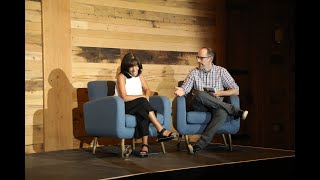
This content was created by Christopher Parsons. This content was uploaded by Christopher Parsons. This is a YouTube video titled "Q+A with Ellen Bensky | The Revolution of Knowledge Management at Turner Fleischer" created on January 20, 2025. It features a conversation between Christopher Parsons and Ellen Bensky, discussing the profitability, operational efficiencies, and knowledge management strategies at Turner Fleischer, with additional input from other participants like Donovan and Todd.
Chapters
I want to start. Thank you again. You're welcome. You mentioned the profitability piece, because that sounds like there's a lot of investment in the company, so I'm not going to ask you to give any numbers specifically, but do you feel like the company is average profitability above average lower, when you can kind of benchmark and. Yeah. What's the.
Well, that's why I showed the slide about circle of excellence.
Right.
Because circle of excellence, you. I mean, you can go online and find it, but you have to be upwards of 30.
Okay, got it. And so how, with all that investment, are you upwards of 30 in terms of profitability?
Because of all of the workflow efficiencies and the way that these departments actually come together and support our designers, to allow our designers to really focus on what they're doing and to be able to create great work in the ever constricting budgets and time that our clients are giving us, which as time passes now, everybody wants more for less. And so if they don't have to worry about admin things, or they don't have to click and click and click and click, or constantly be bothered by emails and remembering where their emails are and sorting them and getting back to them, they can focus on what they do.
Do you use this in recruiting?
100%, yeah. Yeah. And it's interesting because I was just in a meeting yesterday about LinkedIn life and the LinkedIn people were saying you have a lot of operational roles at out there and they don't usually see that in our industry. And so I think the cool thing is that there's opportunity across the studio in practice, but also in operations.
Cool. I want to open this. I'm going to ask some questions of Alan, but does anyone have anything that they want to ask that's kind of burning up? You raise your hand and we'll throw you a box. Okay. Donovan.
I had a couple of questions, but.
I'll start with one.
So five versus Build, because you talked about having programmers build out some of.
The things you did.
So how did you decide on what you build in house versus what? You know there's a product out there.
That may have done that for you.
Absolutely. So our digital team really sources and looks at what's out there on the market. And some of this, to be honest, I would love if Uninet did it. Project planning isn't something that's great in the system scheduling. We weren't able to make that work based on some of the things that Uninet had going. So that was an obvious one that we needed to do. It's really just what's out there then. It was always a dream of mine to have software developers on staff. Now that we have software developers, it's really, really so much easier to say, okay, what kind of a lift is this? Is it a big lift? Is it an easy lift? And once we started getting the Microsoft forms going and we started realizing then it was like a game. It was like, oh, every time you're doing something, wait, can this be a form? Can this be made easier? So it's sort of that cost benefit analysis against what's out there.
How do you decide? I'm sure you have more ideas for improvements than, than you can do all at once. So how do you all prioritize improvements?
Sometimes not well. Cause we tend to want to do everything all at once. But what we knew for sure was that the scheduler and the Excel spreadsheets for project tracking were huge. It was just causing too much discord across the studio, too many silos. And again, time to get into a project to know what's going on is, is huge. So we knew that needed to be a focus and we just knew that defining a single source of truth for data entry, until we could nail that one, everything else that we did was really not going to work efficiently. And so putting it in people's roles was critical because everybody knows that accountability piece to making sure that that data is entered and is good. Because everything is only as good as the data is. No matter what you create, your data has to be good. So putting it in the role descriptions was big. And so that project, we're excited for that project to finish because suddenly then we can start dreaming about what's next.
It's going to sound wild, but were there any project managers or designers who kind of fought getting that admin taken away from them?
Of course. I mean, I was saying this to somebody yesterday. Our industry is, I always told people, oh, it's not unique. It's not unique. It's just like any other business. But, you know, 34 years later, it's unique. People are resistant to change. And so we still have people who are like, no, I prefer to do it this way. So change management is a huge part of all of this.
What's Ellen's secret? To change management with PMs who don't want to stop doing administrative work.
No choice, High expectations.
Okay, there is no alternative.
There is no alternative. And some people don't like that. But really to get it done, it has to be this or not.
Okay, cool. Todd. Hey.
So we all feel like we live and die by our utilization rates. And the fiction is that just because someone was billing their time to a project, it wasn't like they were adding value or being effective. But what you can measure is what goes on a timesheet. So you've. I'm sure, right. And your bottom line shows you've made those utilized hours effective. Utilized hours. Do you have a different. Do you have a way of measuring that directly? Have you been able to sort of, other than just profit at the end of the quarter?
No. And we don't. We don't talk about utilization at all. Like. Like if you ask anybody in my studio, they have no idea what that is. Nobody has a rate. Nobody has a target. We were talking about this yesterday, Marco and Kayla and I. It's measured for sure in profitability. And because of the profitability, we can reinvest and keep doing all of these things. Right. It all has to work. And it's not a secret in our industry, our hourly rates are not high. So a lot of these processes and procedures and things that we have have to be that way in order for us to be profitable. But it's also in the experience people have working for us and watching people that come to us having come from other studios. And at first it's a lot. Not going to lie. It's like, wait, we have to do this, we have to do this, and here's a form and here's an app. But then it's like, oh, wait a minute, I don't have to think about all of this. And so it's an experiential thing as well. But it's really hard to measure. And I think, you know, I've always said, and I'm really lucky, I wear both hats, you know, CEO and cfo. So I kind of can ask myself if we can do it, because a lot of these things are really hard to sell to upper management who want to see. Like, this is, you know, you're going to save this many dollars by investing in this. And sometimes that's hard.
When the CFO Ellen and the CEO Ellen talk, who wins?
Oh, CEO.
Yeah.
But I have a director of finance who's like, like even more crazy than I am about. She keeps me in check.
Okay, that's good. So there is a balance.
There is a balance.
When you talk about looking at profit, are you talking about Turner Fleischer as a whole? Are you talking about different studios? Are you talking about per project, per employee? Like at what level are you saying? Like this is all working as designed Studio. At the studio level.
Studio. And that's another thing that's really hard to do because some sectors are more profitable than others, but it doesn't mean we're not going to work in them. And some projects are more profitable than others and it doesn't mean that it's our fault. So it's really, really hard to tie profitability to project managers or projects because you can't know what's going to come, what contractor is going to be a total pain and cost you extra money. And that's not always somebody's fault. So we really are looking at the totality of the studio.
If someone in the audience is thinking, that's cool, Ellen, but we don't have software developers. Anybody? Okay, a couple. Yeah. One of the things you shared with me is like software developer is a sliding scale. Right. And you've got some people who are pretty junior at building stuff for TF and they're starting with taking like Microsoft forms and connecting to Power bi, not actually writing code. Can maybe you talk about that so people can kind of understand Onramps is starting to build things?
Yeah, I mean, I think it's the same thing that I always say about everything that I've started that you, you don't need to start with what I've done here. You just start with one. Right. And I was having a conversation just yesterday again about people that are in projects but have to spend 10% of their time doing BIM or people who are in projects. So if you just take all of those people and you take those 10 percents and you start with one full time person and just do it that way. And so in terms of software developers, our software developers aren't super experienced with years and years of experience. Like you said, they start with creating simple things and then they move up. And so hiring a software developer out of school to come and do some of this, it's not as big of a lift as you may think.
Do you remember the first thing that you guys built that you would consider a custom app?
Marco?
Revit Add Ins.
It probably started with Revit Add Ins.
Okay. Yeah, we have anything out here.
So your Power BI dashboards that you utilize, have you all been able to automate the updating of those and how often are they getting updated? They're getting updated as many times a day as they possibly can. Marco, do you know what that number is? Yeah. So there are moments where it's not, but we push it to as often as we possibly can.
Great. Got a question up front.
Hi.
You talked about learning and development being part of the knowledge management function. So just this whole construct in a lot of industries has that as a, as a human resources function. So from the standpoint of change management, not that structure is everything. Any guidance for the audience?
Well, like I said, we really debated that a lot. So our people and culture is our hr and we thought it should sit there because it's so integrally tied to hr, growth, development, careers, all of that, but it's really tied to knowledge management as well. And the synergy between our knowledge management team and our learning and development team turned out to be the stronger synergy. So they still work with people in culture. So it's not like two separate things, but what they can do together. Knowledge management and learning and development is just, is just different. And that's how, that's why we made the choice to put it there.
Can you give an example of what that synergy looks like between Cam and Ellendee?
Oh, gosh. In terms of wiki pages and Newton and retrospectives and lessons learned and you know, it's all learning and it's all, you know, our academy and how we administer our academy and what we're doing there, it's just all so tied together. There's learning in everything. And to be able to have them sit with knowledge management, whose expertise is taking that learning and sharing it back out to the whole studio just made sense.
Got it. So what's the expertise of your learning and development people versus your knowledge management? Then how do you know who's which?
Well, learning and development, they have masters in adult education. Okay, so that's the difference.
That's the difference.
Yeah.
Yeah. Great. Okay.
You showed you guys were able to get 450 wiki pages created in eight months, which is really impressive. And you said, well, we're done, and then jokingly, and then you went down the path. So it's a lot of work potentially to keep those all updated and then keep adding to that. Can you describe, you know, a big milestone to get those 450 pages? But then what, what happened? What's happened since?
So that's really interesting because I took that slide out of the presentation because I was so nervous about my timing. So I'll share it with you. We now have.
Oh, can we get version five?
Yeah, yeah. We now have Marco, Kayla. How many wiki pages? 1500. But now what we do is the role of a community manager. We used to have multiple community Managers for each community. And now we have one community manager. And again, it's written into their role description that being a community manager on Newton and updating the wiki pages and making sure that the community stays fresh and relevant is part of somebody's job. And that was what we learned, that until you make it part of somebody's job, it's always going to be a secondary thing that might not have enough precedence over other tasks that they may have to do. And the last thing you really want to do is have your knowledge on your intranet become dated. Right.
Do those community managers volunteer or are they voluntold?
Well, now that it's a part of a role, it's not. It used to be a volunteer, slash, Mollen told.
Yeah, yeah.
Now it's part of a role. So if you're our marketing coordinator, when you come into the role, it's right there in the role description.
Makes sense.
Yeah.
Back here, Chris.
Okay.
Hi. So you talk about the community managers and it being a part of their role. So that, that. Does that mean that those community managers are not just part of, like the knowledge management team, like, they're designers, they're in marketing, they're people like that. So how do you. I say people like that, being one of those people like that, how do you manage, like, the same training and that everybody is doing it, like, at the same level? Because being part of the role is great, but that doesn't mean that everybody's going to be as dedicated as everybody else.
Absolutely. Great question. So our. Our knowledge management department leads the core team, we call it, and the core team is all of those community managers. And so Kayla and Marco and Tara have regular meetings with them. They set expectations. They ensure that everybody is doing what they're supposed to be doing. So they're part of that core team. And it's part of Kayla and Marco's roles to ensure that their community managers are doing what they should be doing and that there's consistency and understanding across all the community.
Chad. Oh, five minutes. Okay. If you could go back to talk to Ellen in 2015 and give advice on this journey, like, what would you do differently?
Oh, I would talk to Ellen in 2015 and 2014 and 2013 and say, you should have done this sooner.
Okay.
So to think that myself and my finance and admin team was really thin. So for years I did it by myself. And then I had some people on the team, but not nearly the people that I should. We could be doing. We could have gotten here so much quicker. Quicker. If I had created these teams sooner.
What held you back from creating them sooner?
Myself, just. I was in it. We were growing. I was doing it, and it was just like, okay, we can do it. I can do it. We can do it.
Hard to step outside of the work.
And. And. And we were growing really fast.
Yeah.
Right. And so as that growth occurred and then before the pandemic, you know, 2017, 2018, as you saw, that's where it started to get overwhelming, and that's where I started to break them off. And then the pandemic hit, and we doubled in size during the pandemic, and So I brought HR in in 2020. So, I mean, I just would have done those things sooner than later, and that would be my advice to anybody. And again, don't be scared to start and start small. Better than not starting at all.
One more. I'll take it. Yeah, one more.
Good morning.
I'm wondering what percentage of your firm is operational team members versus design professionals? Because some of those teams are quite large, and I'm curious how the overall.
Breakdown of the firm. That's a really good question that I should know.
CFO would know.
CEO doesn't know. Yeah, I'm not sure, but I would say, you know, probably there's about 30 out of 250 that are in Ops, give or take, so it's a pretty high ratio at this point. And growing. So our OPS teams are growing to this day. We're hiring another learning and development specialist. Right now. Our people and culture is up to nine people, and we're hiring. So the more you realize what they can do, the more people you realize you need and can help you become really, again, truly effective in building that foundation so that the designers can focus on their area of expertise, which often is clearly not operations.
So if we're here in K Connect 2029 and you're telling us about what's going on at Turner Fleischer, what's next? What do you see the future?
Oh, God. I see the future as just so many possibilities because I still feel in a way that we're building the infrastructure with what we're doing, and then we can start to really do blue sky thinking of what can we do and how can we leverage this? And what. How can we then support our designers to diversify and focus on really, how do we want the growth of the studio to really look like?
Amazing. Ellen, thank you so much. I appreciate it.
Thank you.
More from Christopher

Human in the Loop? Testing Our Assumptions About Where People Add Value in Learning | Todd Henderson

Redesigning Work for the AI Era: How Greenprint Turns Implicit Knowledge into Shared Intelligence

Designing Learning Like a Product: Branding, Culture, and the Unseen Work of Building an LMS

Scaling Design Excellence: How Diamond Schmitt Amplifies Knowledge Through Learning and AI

From Tame to Wicked Problems: Rethinking Learning and Development in a VUCA World | Ellen Bensky

Learning at the Speed of Change: Adapting L&D to Your New AEC Workforce | Kristina Williams

Designing Modern Learning Organizations: Rethinking AEC Learning Development in the Age of AI

The Link Between Learning, Motivation, and Career Fulfillment for AEC Professionals


Why Communication Skills Are Foundational to Teaching, Leading, and Adapting in AEC F

A Framework for Collaboration and Quality: SMMA’s ISO 9001 Journey | Ryan Farias & Jessica Smith