Q+A with John Clegg & Kelsey Arnold | The Impact of Knowledge Management on Growing + Evolving Page
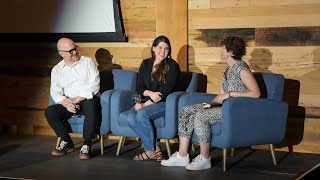
Panel Q+A (moderated by Susan) with John Clegg and Kelsey Arnold about Page’s knowledge management and organizational integration after growth and an acquisition. Key points: Page categorizes offices as established, emerging, or early and allocates different supports (e.g., design exchange prioritizes early/emerging offices for high-level resources); the intranet launch required merging two Deltec Vision instances and OpenAsset, cleaning classification tags and prioritizing top projects per market sector to present unified portfolios; during M&A they emphasized rapid leadership alignment, communications audits, and relationship-building (rumor-catching, listening) to reduce overwhelm for acquired teams; they intentionally preserved valuable legacy practices from both firms and used the merger as an opportunity to restructure marketing/communications; KM work included data management roles to clean Deltec/OpenAsset fields and implementing platforms (Louis) and will focus next on supporting early/emerging offices with shared marketing resources and regional/sector strategy alignment. The transcript also includes discussion of a sensitive social post (gun violence) and how the organization handled engagement without formal platform rules in place, and John’s use of internal content/pages as proactive change-agent resources (example: building a fabrication benchmarking/resource guide).
Chapters
You have a lot of offices and they're at like various levels of development, formalization. One of the things that I learned when we were preparing for this is that you kind of. You have a bit of a categorization method to help you figure out which ones are more emergent, which ones are more established. So there's anything to tell us about that. And then the second part of that is like, then what does that mean? Like, do they get different resources? Do you have different expectations of offices based on their level of maturity?
Yes. No. I think so. I will add that yes, this is recent for us. As we've seen. We have what we call established offices emerging in early offices. And they range in scale from 3, 300 to 5. And so we all know that an office of 5 has different sets of needs. They have different needs from a marketing and communications needs. They have different needs as it relates to the ability to have resources support them immediately. So for instance, the team I lead, the design exchange that I shared, we have been designated to throw our primary support not around the established offices, but more too early in emerging because we can provide resources that are at the highest level to let them win additional work from a pursuit side that some of the established offices already have those resources embedded within them. And so those are the kind of balances that we're doing. And also understanding that the established offices actually have more responsibility from a mentorship, leadership and all these sorts of things and also providing that support as well. So yes, there are different pieces to it in that way. It plays out.
Yeah, we see that in marketing and communications as well. The level of not effort, but the level of help that an earlier and emerging office might need looks really different from an established office. It's maybe guiding them through what our systems and what our resources are there because there could be tools that are there that they just don't know to utilize quite yet. So making sure that we really have boots on the ground to help those offices until they learn all of the systems and what's available to them.
Cool. One of the things that I found really interesting during your intranet launch and the merger and figuring out how to navigate all of that was when you, Kelsey, prioritized the project. Directory integration, everyone knows Deltec and systems and unet, whatever you have, you have your project history and you join another firm and they have their project history. And integrating those two is not an easy task. But you really prioritized it because of what John was talking about. It's like we both have good portfolios. And that's really important for everyone to see. So I was wondering if you could talk to us a little bit about how you went about doing that, how, how the projects got chosen, what was the process for that? Cause you did it a lot faster than most firms do.
It was a challenge. I'll start with that. But it was really important to us. We knew that we couldn't launch an intranet that only told part of the story. And so we needed to figure out how to get these systems merged. But we had big hurdles to jump to get there. We one of them. Deltec Vision. We had two very robust Deltec visions that we were needing to merge into one. And there was a lot of technical pieces going into that. The other one was Open Asset, being able to pull the project imagery. You have customization in both Deltec and Open Asset and how you can set up those systems. So it is not just, hey, we're going to take this system and merge it into the other. We had to look at things like ranking and classification tags and really come up with what that structure was going to be moving forward, which was actually really great. We needed to be cleaning up Deltec Vision. We needed to be doing some cleanup to Open Asset as we were growing. And maybe that wasn't as big of a focus on the day to day. And so I think those were the two big components that we looked at for that. And then we went through and we just started to prioritize. We kind of did top projects per market sector, and that's where we focused, making sure that there was representation of each market sector on Louis and what those images were going to be. And then we just kept chipping away at it. We have some graphic designers and some other UX designers that were helping us just kind of on the back end clean everything up. It was a lot of work, but I think in the end it was.
Work that was needed. Mm. Yeah. Thanks.
Yeah, we have Donovan back here.
All right. Could you stand up when you ask your questions? We can see you better. Hey.
Hi.
So kind of going through the M and A acquisition part of it. How did you keep it? The ones that are being acquired make it feel like they're not drinking from a fire hose right away and getting overwhelmed. Can you talk a little bit about what maybe your process was around that? And, you know, there's a lot of information. You guys went really fast, but how did you keep it from, like, running?
Yeah, I mean, I think it was about getting leadership alignment quickly. So there was a lot of communications and making sure that the. Our principal leadership team understood what the goals and where we were moving. And then it was trying to take advantage of all the communications we tool, which is why that audit process was really important previous, you know, previous to Louis launching. And then my role was very much just chasing. Like I'd hear rumor, I was rumor catching, right? I'd hear someone say, hey, over there, there's a. There's noise in X City. Because people were saying this or people were saying that or this person's a thought leader. It might be good for you to get to know them. And it was building about relationships. And so in some ways my job was to build those relationships and be sort of a someone who could hear and absorb sort of some of those that stress that comes inevitably being in that. In that. From that space and hear them and absorb it and sometimes just do that and absorb it because they just wanted someone to listen. And I was often, I would say probably 30 to 50% of the conversations I had, I never transferred those through. I just. They died with me. We moved on because that was a space that they needed moving forward.
I think we have a question.
Are there any silos or sacred cows you guys have run into trying to merge a firm as big as EYP into what you guys are doing? Anything you guys embraced from their history that you didn't want to maybe change the way Paige does things going forward?
Why not? Why wouldn't you? I mean, this is the thing for me is like we often throughout the whole process and we have. Even now you can't use the word legacy anymore, right? Or page. And it's true, right? We have to hold ourselves accountable that we have two years. I appreciate the data of hiring, right? We have two years of hiring of Paige in the last two years. And these people have. And those individuals who brought in have no understanding of this history that we all bring to this process. So that part one, part two, there was a lot of great things that we were all doing. And so we were very clear about what a Legacy PAGE initiative was versus the Legacy EYP initiative was and how to celebrate that and emerging. And so, for instance, as example, the design exchange, there are pieces of that that come from both legacy organizations. And for me, it was an opportunity to say this is amazing. Like the Studio X team was an amazing idea or the storytelling team had huge traction and not only celebrate what they would bring, but actually grow it and make it more to grow it to be able to accommodate and support a larger organization. Even took place as well, so we really wanted to celebrate those things and identify where those things were moving forward for the. For the new page.
And I'll just add, it took a lot of work sessions to get there. We were meeting a lot to understand what the procedures were on both sides. And it felt like a really unique opportunity and time to pause and say, okay, we've been doing something, but could we be doing it better? And this is a natural time to do that. That's why we chose to restructure our marketing and communications team. At the time at Page Marketing, Communications were kind of sister studios. They were not under one umbrella. But we fel. We were sharing so much information that we really needed to be. So it's just kind of a natural time to make change as well.
We have a question in front. Hi. You talked a little bit about evaluating people's needs and allocating resources, depending on that. How do you keep a pulse on the needs now? And do you rely on the leads of the different studios or geographic locations? Are you surveying people? How do you keep a pulse check on those things?
I think there were some, you know, I think one of the things I saw is that for Legacy yp, everything seemed new. Everything seemed like we're just getting forced into the page system. And from legacy page side, everyone was like, well, that's changing because we're having to figure out who we are as a new organization. And through some of those organizational design, there were structures put in place for better accountability through regions and individual offices and sort of managing directors for each of those offices to have a clearer conduit by which to share what those needs might be internally for what was going on. But also trying to think really careful, carefully, that sometimes back in my mind is what is a need? Right? Or how do we define need? Sometimes needs come through a managing director of an office, but sometimes needs come through other ways as well. And trying to maximize the ways that we all have responsibilities to keep our ears open for what those are so that we can be responsive.
I just had a follow up question to the post about gun violence and kind of how that worked itself out. But I was wondering if you put together any kind of policy level or kind of rules of engagement for how people interact on your Internet after that incident?
No, I mean, we had conversations about it and we had a whole conversation with Susan about here are some best practices about how codes of contact or how do you. What's your sort of Louis 101. I think this whole conversation about how do we show up? And honestly we were moving so fast just trying to get basic information on some of that stuff just fell to the wayside because it was more important for us to get it up and going because that was more critical. But in the end, I think that post at least gave me trust in the organization and like, let's just trust our people. We're going to be fine. Sure, there could be another post that comes up today or a year from now or two years from now that might be challenging. What might need a different way of engaging. But we have some great people and so we can work it out and sort of figure out the best path forward, which was exemplified by that engagement.
His ad. I like, I parked. I was riding alongside you in that journey. And one of the things that really struck me in the conversation on that post was people in the organization like, clearly have been participating in their personal life in how to have difficult conversations. And I think lots of us have. Right. It's part of growing up. They were willing to bring that part of themselves to the conversation and say like they brought their practice with them, which was beautiful. But it can only happen if it's called upon to happen. Right. You need the difficult conversation to be able to create that kind of space where someone can then show up in this beautiful whole self way, which it's rare. We don't want a ton of that. It can be disruptive and scary. But it was wonderful.
No, I appreciate that lens because it's true. I mean, it was definitely. It was nice to see the conversation play out that way and resolve that self that way.
Is there a chat box out? I mean, that's a good question. Different topic. Through this preparation process, I discovered, John, that you've been making pages, you've been building content as a change agent. That in my mind, it's like you're building this content in anticipation of someone's objection, in anticipation of a question you're going to get. And then you just have the content ready. It's all here. I wrote it down already. It's beautiful. Yeah, Here you go. I was wondering if you could speak more to how you're using that method out in the wild. I know the fabrication page was one that you shared as an example. You could give us an example of how you're really leveraging basically knowledge management for like change agent.
No, I appreciate that. I think that. So, yes. Most people don't even know this is on our Internet. Like I'm just building quietly things that are scattered nuggets for like, hey, by the way, did you know this set of resources were here? And what's. So I had this happen recently. We were having an issue where someone was claiming like, I don't like the way this is happening. There's no clarity about X, Y or Z. Oh, by the way, did you know that we had this resource section here and I sent it to them and they're like, this is so amazing. I love. I saw this person at the conference. This is exactly what I thought. Yes, this is what we're doing. Done fine. It was all resolved. And as it relates to fabrication I'm currently building out, it's honestly a peer firms across the country in the space where. Our aspirational space of where we want to be. And what are those firms doing in an aspirational place of where we need to be? Because if we want to have a top five fabrication shop and we're going to have the foundation and build the resources by which to sort of head that direction and we've done a lot of research then benchmarking such to know where we need to be going, what kind of teams we need to have, who do we need to hire. In February ish, March of 25, there's going to be enough momentum that people are going to start asking questions or we're going to be positioned that we can apply full pressure on the organization to utilize those facilities and those resources in ways they haven't in the past. And so to build out a resource guide from my perspective of peer benchmarking, to point to going, why aren't we doing this? This is everything that. This is the same process that we go through at. The only difference is you're not calling us, you're not including this. You're not thinking about how we can add us to the fee because you didn't include us to the fee. So you can't include us. Like, how are those kind of conversations taking place? And so those are the ways I'm sort of trying to think through it about how to do that. And it just. It's more just, okay, I'm gonna go do this and just have it and we'll save it for a future date.
I also wonder if, you know, Corey mentioned that writing the book helped him like, clarify his perspective and resolve conflicts you didn't realize were out there wondering if writing those things down is helping you also. This is a very leading question. Is helping you clarify your thinking?
Well, sure. I mean, I think what we've seen in specifically to fabrication discussions, we see the best shops in the country are doing work that's supporting the work at the highest level. And they're also engaging community and for nonprofits and engaging school groups and all these other sort of access issues that are facilitating that. And so I knew in the back of my mind this is where we want to be headed. But I'm finding as I'm going through, I'm purposely separating those projects by here is pursuit and here is that service work we're doing or here are relationships with manufacturers that you might like. What could it mean if we help someone design a product? And why wouldn't we do something like that? And could this be an arrangement? And here's an example how a firm is doing that. So those for me are about future proofing those different pathways. So allow for that to occur. And yeah, I know it helps clarify because then you can point to a sequence of things or ways that manifests itself in different ways at different scales.
Yeah, sounds like there's a question in the back. Could you stand up?
Hey.
Hey guys. I just want to say thank you. So real time feedback. The idea about sharing project highlights between different companies already teams chatted that back to our team. They said that was a great idea. We're going to be implementing that and we're also. We do employee stories and highlights for our company values. We're also going to be including folks in those employee values to show how we work together and more similar than different. So I just want to say thank you.
Appreciate it. Glad we could help you. That's what we're all together for. So. Right. Is for sharing these things and these help support one another.
Well, I think we have time for one more question. You want to sneak in? All right, I will take it. You have really grown like formal KM at page since this acquisition. So specifically in marketing is where I'm most familiar with it. I was wondering if you could share kind of like how the KM organization is going to growing and like what's next for kind of the KM organization at page. Sure.
So yes, we've been building as we are running here a little bit. Like I mentioned, we knew that we needed something. That's why we were starting to look at tools like the intranet and synthesis. And I think we were really excited about the potential of knowledge management in a studio. But I think for John and I a few years ago, that was like a. A distant dream that, you know, we were talking about. And so with this quick jump in scale, we are also realizing we really needed those resources. And there was a few key players so UIP did have a data management role, someone that was really focused on Deltec vision. So as we were going through the cleanup of the merge, making sure that fields were merging and things like that, we were utilizing her. But I think moving forward the focus. Oh, sorry, I'll go back a little bit too. So also implementing digital platforms. So Louis. But also incorporating open asset and other things that we needed to focus on that was data that we needed to be maintaining, knowing that we couldn't go back to where we weren't really fixing it because, you know, we were just busy doing all of the other things. But that that was the foundation and we needed to get that cleaned up for everything else to run seamlessly. So then I think into the future, knowledge management is really going to be focusing on early and emerging offices and how we're sharing knowledge specific to marketing and communications. Again, what those resources are going to be, how we can be supporting them and then also sharing what are, what are those strategies. Looking at strategy from both a market sector perspective, a local office perspective, a regional perspective, those all have to come together to be successful. And so there is a lot of connecting the dots that needs to be happening as well. So that's really kind of our next step within knowledge management and we're excited about it. We're going to see where that takes us. Awesome.
Well, thank you both so much.
Well, and Susan, I want to just say before we leave is that we wouldn't be here be able to have this conversation without you and Greg's support. Right. I think that that that six months journey that we all shared together sort of through this process was really critical in moving that forward. So I thank you and the whole team and supporting us through that. So thank you.
It's been a pleasure. Thank you both.
More from Christopher

Human in the Loop? Testing Our Assumptions About Where People Add Value in Learning | Todd Henderson

Redesigning Work for the AI Era: How Greenprint Turns Implicit Knowledge into Shared Intelligence

Designing Learning Like a Product: Branding, Culture, and the Unseen Work of Building an LMS

Scaling Design Excellence: How Diamond Schmitt Amplifies Knowledge Through Learning and AI

From Tame to Wicked Problems: Rethinking Learning and Development in a VUCA World | Ellen Bensky

Learning at the Speed of Change: Adapting L&D to Your New AEC Workforce | Kristina Williams

Designing Modern Learning Organizations: Rethinking AEC Learning Development in the Age of AI

The Link Between Learning, Motivation, and Career Fulfillment for AEC Professionals


Why Communication Skills Are Foundational to Teaching, Leading, and Adapting in AEC F

A Framework for Collaboration and Quality: SMMA’s ISO 9001 Journey | Ryan Farias & Jessica Smith