Q+A with John Robison | Behind the Scenes of ELEVATE: KTGY’s Professional Development Program
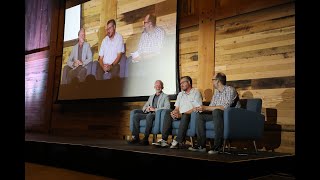
Transcript of a live Q+A (moderated by Christopher Parsons) with John Robison and participant Donovan Helmanak about KTGY’s ELEVATE professional development suite. Speakers describe three linked programs—Elevate Leadership, Elevate Essentials (on-demand knowledge sessions), and Elevate Talent Management (cohort-based, six-month “leadership light” program)—how participants are invited and selected, how time/chargeability is handled, and tangible outcomes (alternative work week policy, parental leave on-ramp). Participants report stronger peer networks, improved difficult-conversation/toolkit skills, and personal leadership growth.
Chapters
Maybe we can just pick up where you left off with the two other programs that you're pursuing. I'd love to hear more about that.
So the first one, and if you got any of you who know Danny on Donovan's team, he's involved in this one too. The first one we called Elevate Essentials. So that was sort of after we did Elevate Leadership. We said, we have a lot of new people coming into the organization or just starting their career, and there are some things we want them to learn, so let's create a program for that. So we did that one. And then there's the in between. Right. We have a lot of people who are terrific. They're just now learning about managing a team. Maybe they've never done that before. So we have that one. So that's Elevate Talent Management and then Elevate Essentials.
And is that all the same kind of immersive, cohort based approach, or are you using different kind of modalities for that?
Well, so I'll tell you, Elevate Talent Management is a cohort. It's a larger cohort. It's about twice the size. Very similar. I call it like Leadership Light. Okay. Essentials like Donovan and Danny have had a lot to do with that.
Yeah. So with Essentials, we started off with just a cadence of just a leader or someone that had the knowledge that we were trying to obtain for whatever it was like for, you know, here's how you do, you know, risk management in the firm and all that. They would do their session live. We're now converting that over into an on demand sessions because we found that naturally those leaders are very busy and we're finding that they only did it once a year and somebody had to wait a whole year rotation to hear them again. So we thought we should probably do this on demand. So now we're converting all those.
And those are open to anybody.
Yes.
Okay, Got it. And Donovan just. There are some people that don't know you.
Yes.
Who are you and why are you here?
Hi. Donovan Helmanak. I am the director of Knowledge Management.
At kggy and he's up here because he participated in the program. So I thought it would be cool if you have that question for participants. Is it all I said it would be?
It looks like we do have a question in the back.
So we, like you, do have to worry about chargeability. And I'm wondering if you could speak to how that's handled because it's a big commitment. Are you asking people Are you giving them a chargeability goal that's different that year? Are you asking them to find the time? Is it different for your different programs at different levels? Like, how do you navigate that?
There's no, like, concession made if you're in the program. Right. You still are. If you're running a studio, you're. You're still running that studio's KPIs. The buy in was from the board. Right. This was pitched to the board and the board said, we fully support this. If somebody's less chargeable, they're less chargeable. I mean, we all know how architects are going to work. They're going to get the job done. Right. So this is where the commitment is. It is implicit. I guess we don't say it. It's implicit that you're going to, like, maintain your studio performance and you're in this program for a year. They do have a time code to track for the program, but that's just for our accounting purposes. Cool.
And we got. I think Wendy up front's getting the.
I was just wondering if people are selected for the program or they apply or is it a combination?
Yeah. And I want Donovan to speak to that process. You are invited to apply. So you're not. So there's a group of people who are invited, and then from that invitation list, you are selected from your application.
Yeah. That was probably one of the coolest kind of moments getting. It was on very formal, like letterhead. It was hand, you know, signed and everything like that. So it felt very personal, which I really appreciated and very stressful on. Like, what do I say? Oh, oh. And they limit it to one page. So that's a hard part. Yeah, that was really hard part for me. So, yeah, it was, you know, for me, it was very. A wonderful challenge to kind of articulate why I wanted to be in the program, what I saw of it. And the kind of side note on this, I sat kind of outside Tricia's office at one period of time. And when I was. I saw all these stickies on the wall when they were designing this. And I was like, what's going on in there? I really want to know. I was like a fanboy before it even started.
So why did you want to join the opportunity?
I mean, learning from the leaders of the firm itself, having that moment, connecting with others, with the cohort. I can't speak more enough about. They did an amazing job of picking who should be in that cohort. Us connecting. I mean, to this day, they're one of my Best friends in the firm kind of people. So it's like they became the leaning support. When stuff is hard, we celebrate together. When there's things that are happening, how.
Is it different than you expected?
So I kind of hoped that it was going to be a little easier. It was grueling. I'll admit. It was a tough year. It was a tough year. I mean, as John mentioned, we had our day jobs as well. But I would never replace it in a million years. It was worth it 100%.
Got it.
Hi. I'm interested in the team management piece. Specifically the effect of how people changed having difficult conversations or you said productive confrontations. You alluded to that a little bit, I think in the one on ones and kind of all of the feedback there. But basically, did you see a significant change in how the folks who participated led their teams or even kind of taught their teams on how to have more productive confrontations?
Yeah. And as a participant, Donovan, I'm sure has a perspective on it in many cases. All you're really looking for is just give me a framework to work with it. Right. Like, I don't even know how to go into this discussion. I don't know what I should. What I'm trying to achieve coming out of it. If I could just have a framework. That's why I mentioned like a toolkit. And one of those tools in your toolkit in when it comes to productive confrontation is this framework for having the conversation. Right. The things to try to steer it toward the outcomes you're trying to achieve. So there was a tremendous amount of thanks for. We like, in fact, the last one we did, we do evaluations of every session. The feedback was we need another hour of that. Has that changed your.
Oh, 100%. Yeah. I mean, yeah, you have somebody in your team or you have to have those one on ones and there may not be as pleasant as you hope to be and having those moments or even with other people in the firm. And actually I wrote this in one of my evals was actually I had a personal conversation that was good. I knew it was going to be hard for myself and it gave me the tools to have that conversation as well. So it was invaluable in that. And the tools that we did receive and putting them actually in practice and we got to do that in our sessions. That's one of the things that I really enjoyed about the cohorts as we're going through this. And I don't know if it was deliberate in timing, but we had enough trust with each other. By that time we were talking about this, it was second nature to us. We didn't feel like oh I can't say something or you know, we were very open, very vulnerable with each other already. So having. We were practicing on ourselves and that's. We had that opportunity to do that.
The. The feedback on has been so good that now sort of trying to figure out how to do managing up productive conversations because we haven't touched on that one yet. It's really been about managing your team.
Are you happy with the. It seems like it's every one cohort every two to three years is what your kind of pace.
So our pace now you saw a big gap during the black period. But our pace right now is because we've introduced elevate. I should start elevate essentials that Donna will talk about since it's on demand. That's just whenever y elevate talent management. It. That happens once a year and these are year. It's also. Well that one's a six month program. But it you. We couldn't do leadership in that year. So then we alternate. Okay. I'm not what I'm. What's a bummer about it? This is. This is a compromise, right. This is a trade off that we can't put everybody through it. Right.
Because 30% of 400 people, it takes a long. It's like 12 takes 220 time.
Right? Right.
Yeah.
But it's a trade off because it's so effective. Right. I'd rather. I guess. I guess that's the compromise trade off we want to make.
What's the conversation with folks who get invited? Well, don't get invited and then get invited and don't get accepted. Like how does that go?
It's. It's. You're looking for, you know, productive confrontation in that one as well. It's hard for some of them to understand why them not me. I've reached out personally to them to say I am here all year long. I'm not going anywhere. And I will talk with their leaders about very openly about why and what we think we need to see if they're going to get into the next one. Right. And all of these people are superstar people. Right. So there's not much. Right. It could be it wasn't the right fit for the cohort for whatever reason. And it could be there's just another thing. Right. We just want to see it. So it's. To me I like that because I like those opportunities. I love opportunities to talk about what Change do we need to see? They're hard. They're hard conversations, but I like that. And so I reach out to their leaders and have that conversation so that their leaders now know over the next year, what do I need to be looking at. Right. For their own development. And then I'd reach out to them individually and say, I'm here. And they've come back to me and said, I'd like to go to coffee and talk about it more. And I'm here. I'm here anytime you want to.
Are there, like, some common patterns that show up of, like, why somebody's not ready or is it super individual?
No, it's. I mean, I'm going to. I'm going to reduce it to say it's one of three things that are within John Robinson's leadership framework. But it's never. It's. It's not a common theme. I'd say there are things I can see and identify within my framework of leadership, but it's not. No, there's not a trend that emerges from there. Yep.
I had two questions. The first one I think will be pretty quick to answer. I'm just curious how broad a net you cast when you are inviting people. So are you looking across organizational structures? Are you looking across age ranges? Or are you really looking for a certain kind of tier of where someone is in their career? And then my other question was, I'm just interested to hear if you've had any, like, things that have helped you and leadership within the firm progress the firm forward from. From feedback. So are there any things that you're getting out of the cohorts that's really helping you evolve the firm.
To the first question. So Tricia and I are pretty. I'm going to say we really have our finger on the pulse of what's happening across the company. We are meeting with. I'm visiting. I just came back from Oakland. I was in Denver. In a couple of weeks, I'm heading to D.C. meeting with a lot of the leaders there, meeting with a lot of the new folks there, and trying to get a sense for who is really standing out as. As future leaders in this company. And that's who we kind of have our eyes on. Right. These are the people who we think are going to be leading this company in the future. It's very subjective. And then we have a lot of conversations with their principals, with the leaders of their studios to talk about what Chris was alluding to. Are there things that you see common in them that are keeping people out of the program. So we'll have those conversations with their leaders. Say, who do you think is ready? But honestly, Tricia and I and some of the people on the board already have a pretty good sense of who we think that should be. And it's a big. It's a big list, right. That the first list is, you know, it's a couple dozen. I know. I mean, 400 people doesn't sound big. It's a big list to choose from. So your next question was about has, if I. If I heard it correctly, what has. What's come out of it that has moved the company forward? Something along those lines. I can think of a couple things that are very sort of operational. Anything like jump out to you immediately?
I think the. Because my job is to break down silos, and I think this has created that easy breaking down of the silos, especially between different departments and different teams. And because of that, the conversations are a lot easier to have. And like, oh, yeah, I remember someone talked about that or whatever, or we're working together to solve a problem. So I have seen that come out of.
There are a couple of, like, not really, like, really move the business strategy forward kind of things, but two things that jump out to me immediately that would not have happened if not for elevate leadership is we have an alternative work week schedule that you can choose Friday off, half Friday, whatever. That didn't exist until one of the cohorts pitched it to the organization. It was. They had to do a pitch of how to change business. It sounds like in hindsight, like, really, that's what. But that's actually. That's what it took, and that's what got us there. And then the other one is we now have this program for. It's called. It's an on ramp for people returning from paternal leave. How to get them back into work is sort of at a gradual pace. That came out, actually out of Donovan's cohort, and that absolutely would not have happened without that. So I know they're not like, super, like, business strategy kind of epiphanies, but they wouldn't have happened. They're pretty cool.
Everyone on the side.
Yep. I'm curious if you have put any thought into how to sustain the program after you and Tricia either get tired of doing it or move on to do something else. And if you don't want to answer that question, I'm curious how Donovan has improved as a leader based on his time. Jim has not even been discussed, and I'm actually choking up a Little bit thinking about not doing it. That's a pointed question. That's. Now I have to think about that. Sorry. I mean, we have terrific leaders. During Ellen's talk, somebody talked about hr, the role of HR in training and development. We have a terrific HR leader and a very good team that works with her who I think will help us figure that out. And we have outstanding leaders in the company who have gone through the program who I wouldn't even hesitate to say you could do this too. But it has to be. They have to want to do it. Well, I don't know. I didn't want to. Maybe not.
I don't know.
Maybe not.
Last question. Do you want to take to Jim's how you've changed the leader?
Yeah. So kind of like what John said. And you know, in my own opinion, I do think I became a better leader for my team. I do have direct reports. You can talk to Danny on the side and he's here. But for me personally, I think the growth was amazing. I mean the opportunity of, you know, when I was going in, I thought, okay, I know what I'm doing. You know, I've already been. I was a director already. But then coming out of that I was like, oh, yeah, no, I had a lot to learn and I absolutely feel like now like from the candid conversations I can have with my team to just setting goals. And I will say this.
Goals.
He kind of made it like that sounds so important. There was crying because we were happening with our goals, like we were actually like being challenged. That's not a good goal. No, no. You need to make this a better goal for your, for you or for your team or whatever. So yeah, that was, you know, a very eye opening thing about how do we really set goals, how do we make sure we're being successful. What is that? And I'll use Jim. How do we measure that? But you know, that kind of thing.
So tears are indeed shed. They will be more than once in the year. Donovan is a very different. He's the same Donovan I've known for a long time. He's found his voice as a leader. His amount of leadership confidence is on the surface now. It's always been there. Now it's right on the surface. It's pretty great.
I will say this because nobody wanted to answer this question, but I'm going to. Yes, you became a better leaders.
Wow, man.
That's a good way to end up John and Donovan.
Thank you guys so much. Appreciate it. Thank you.
More from Christopher

Human in the Loop? Testing Our Assumptions About Where People Add Value in Learning | Todd Henderson

Redesigning Work for the AI Era: How Greenprint Turns Implicit Knowledge into Shared Intelligence

Designing Learning Like a Product: Branding, Culture, and the Unseen Work of Building an LMS

Scaling Design Excellence: How Diamond Schmitt Amplifies Knowledge Through Learning and AI

From Tame to Wicked Problems: Rethinking Learning and Development in a VUCA World | Ellen Bensky

Learning at the Speed of Change: Adapting L&D to Your New AEC Workforce | Kristina Williams

Designing Modern Learning Organizations: Rethinking AEC Learning Development in the Age of AI

The Link Between Learning, Motivation, and Career Fulfillment for AEC Professionals


Why Communication Skills Are Foundational to Teaching, Leading, and Adapting in AEC F

A Framework for Collaboration and Quality: SMMA’s ISO 9001 Journey | Ryan Farias & Jessica Smith