Rethinking SOPs in AEC Delivering the Right Process at the Right Time with AI Search
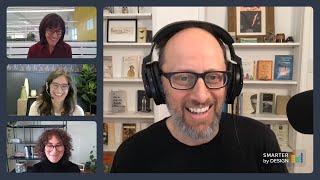
In this panel discussion, the participants argue that standard operating procedures (SOPs) are not obsolete; instead, AI‑driven search tools are giving SOPs new life by making detailed process knowledge instantly retrievable. Speaker A describes a shift in training philosophy: rather than walking new hires through every procedural step, trainers can now focus on the strategic "why" and rely on AI search to surface specific SOP details on demand. Christopher Parsons adds that as workplaces adopt increasingly autonomous AI agents, those agents must also be taught the SOPs, making SOP documentation a shared reference for both humans and machines. Speaker C expands the view to an integrated knowledge ecosystem—learning management systems (LMS), wikis, and AI search together provide a layered information architecture that supports rapid onboarding and continuous learning. Using Greenprint as a case study, the conversation illustrates how curated learning paths combined with searchable SOPs enable new employees to grasp unique organizational processes quickly, while even long‑tenured staff can refresh their knowledge efficiently. The overall narrative positions AI search as the catalyst that transforms SOPs from static manuals into dynamic, searchable assets that enhance training, standardization, and future AI‑agent collaboration.
Chapters
More from Christopher

Human in the Loop? Testing Our Assumptions About Where People Add Value in Learning | Todd Henderson

Redesigning Work for the AI Era: How Greenprint Turns Implicit Knowledge into Shared Intelligence

Designing Learning Like a Product: Branding, Culture, and the Unseen Work of Building an LMS

Scaling Design Excellence: How Diamond Schmitt Amplifies Knowledge Through Learning and AI

From Tame to Wicked Problems: Rethinking Learning and Development in a VUCA World | Ellen Bensky

Learning at the Speed of Change: Adapting L&D to Your New AEC Workforce | Kristina Williams

Designing Modern Learning Organizations: Rethinking AEC Learning Development in the Age of AI

The Link Between Learning, Motivation, and Career Fulfillment for AEC Professionals


Why Communication Skills Are Foundational to Teaching, Leading, and Adapting in AEC F

A Framework for Collaboration and Quality: SMMA’s ISO 9001 Journey | Ryan Farias & Jessica Smith