Smarter by Design: A Knowledge Management Manifesto for the AEC Industry | Christopher Parsons
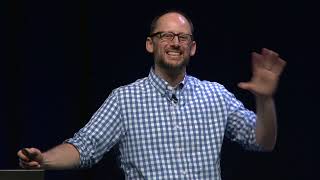
Christopher Parsons presents 'Smarter by Design', a five-point knowledge management manifesto for architecture/engineering/construction (AEC) firms. He argues KM is essential for firm survival and long-term competitiveness, outlines the knowledge lifecycle (identify → capture → develop → share/transfer → apply), and introduces a 'periodic table' of KM activities: information systems, information management, knowledge sharing/transfer, research & development, and KM program management. He describes team roles and archetypes (KM specialists, KM leaders ranging from accidental to team leaders, and sponsors—often CEOs) and emphasizes communities of practice as central. The talk closes by stressing the people/process/technology foundation (especially that technology alone is insufficient) and pragmatic advice on starting, prioritizing, and staffing KM efforts.
Chapters
Now I get a chance to share.
Some things I've been working on since K Connect last year. And so I've been working on this manifesto. Don't worry, it's not as scary as it sounds. A manifesto called Smarter by Design. And so wanted to share, as I mentioned before, this is our seventh conference, so hopefully by now we've picked up a couple tricks and ideas along the way and wanted to share some of those with you. So why did I choose Smarter by Design as the name of the manifesto? So already, twice already, guys, has been referenced in this conference. So this is kind of the pull quote that you see the most from the book the Living Company about the ability to learn faster than your competitors may be your only sustainable competitive advantage. What's interesting about this book is the backstory to it. So Ari worked at Royal Dutch Shell, which is a very old company, plus or minus 400 years. Someone can fact check me if you want. It's good and directionally accurate for this talk.
And so they commissioned a study to.
Look and see what is it that makes really old companies successful and able to thrive. So they went and did. They looked at a bunch of hundred plus year old companies and even found some that were over 1000 years old. There's some very old Japanese companies that have been around for a long time and this is kind of at the end of their learning. The quote that came out of that is that they adapt more quickly and it's because they're able to learn faster. Right? And so when I kind of look at why Smarter by Design, I look at the ways that our companies can do that. A lot of us have learning programs, a lot of us have knowledge management programs. We have a lot of the things in our organizations that our speakers talked about earlier today, but a lot of it's been ad hoc. And so if we can do this by design, we can become much more competitive firms. And it says good things about our rate of survival. So why knowledge management?
So for me, some of the things.
That attracted me to knowledge management and wanting to start knowledge Architecture and get into this work in the first place is thinking about the basics.
So when you think about living things, you think about the four things they need.
They need food, they need water, they need air, and they need shelter.
And so when you think about AEC.
Firms, they have some basic needs as well. So they need clients, you guys all need clients, and you have them, you need employees, right? You need money, right? And so you also need knowledge, right?
So these are kind of the basics These are the things that we have.
To have to run our firms.
So we've thought about systems to help.
Us steward those things, right? So for clients, we've built marketing and business development, right? We know how to build a marketing and business development department in this industry. We know generally what the roles are. We kind of know how to measure them. And so we know how to build marketing and BD with employees. We have human resources.
We know who the people are that help us steward our employees. We know what the systems look like.
We know how to compensate and review. We have got systems and frameworks and people to do this with money.
Same thing.
We have accounting and finance to help us invoice, to help us collect, to help us get paid.
So those are three basic things. So what about the fourth basic need.
That we all know is super important? How are we doing this? Right?
And so for a lot of companies.
I think the answer is meh, right? Kind of half bad hoc like we do it, we think. And so that's why I thought bringing knowledge management and working to help spread the good word within the industry was so important back in 2010. And it's what keeps us fueled. And I'll be honest with you, if there's one thing that I could see happen by the time it's my turn to retire, it would be that architecture, engineering, construction firms know how to do this right? They understand what the teams look like, they understand what the structures look like. They know how to move knowledge through the organization to steward one of their basic needs. So something that wasn't done in the past, I think we're well on our way there as a community, but we have a long way to go.
And so that's what gets me out.
Of bed in the morning, gets me motivated, is to deliver on this promise so that when we're done as knowledge architecture, at least when I'm done at my turn at knowledge architecture, I hope it lives on for 1,000 years. That would be awesome that we've done this right? So let's talk about that a little bit.
So there are if any of you ever.
How many people have googled the definition of knowledge management in the past? Show of hands. Awesome. Was there one singular definition that everyone found and you kinda like. No, right? There's a bunch of them.
I'm gonna give you an admittedly somewhat long one just because it lets me speak to a couple of the things.
That I think are important to recognize about knowledge management if you're coming new to it. The first is that it's cross functional by nature. Right. Knowledge lives across every different piece of your organization.
So even if you have a km.
A knowledge manager, or you have a director of knowledge management with a team, or you have a knowledge management department, they're not going to manage all your knowledge for you. Right? That's not how it works. They'll orchestrate knowledge flow within your organization. They'll help you think about capture and search and all of these things that are important. But by nature it's going to cut across the whole organization. So it's cross functional.
What I wanted to show you here.
Is the idea about the lifecycle of knowledge. So.
So from identifying it to capturing it.
To developing it by improving it.
Right? Sharing it, getting it out, transferring it.
So kind of intentionally moving it between folks and then putting it into practice by using it. So it's a kind of a life cycle thing. And Carlos spoke well to that this morning.
What I think is important also is.
That knowledge management matters because of survival. Right.
And this is something that took me.
A while to see.
I was very much focused on all.
The fun side of the knowledge management piece. Right. We're gonna innovate, we're gonna, we're going to do thought leadership, we're going to.
Compete on what we know.
We're going to differentiate our companies.
But there's a piece of this that has to be.
Element Architects is here.
So they are very good at doing.
Convention centers, performing arts centers. They've got a couple areas where they're really strong.
So how is Element Architects going to.
Know how to do that work five years from now, 10 years from now, 25 years from now as an organization, when people are going to retire, they're going to move on, or how does the organization retain its knowledge to do basic things? How are you going to know how to go out and get new work and get new clients when the people that go out and get new work and get new clients today won't be here 10 years from now or 15 years from now?
So stewarding your basic mechanics of the.
Company is, I think, a good part of what knowledge management can help you do.
But it should also do the fun stuff, right? It should help you grow.
A lot of you are adding new employees and offices and getting into new sectors.
So when you do that, when you start scaling up, how are you doing.
That without compromising quality? How are you transferring what you know as you're evolving and you're starting to innovate and you're starting to do new things? How are you Helping the innovations that are happening on a single project scale.
Across your local organization so people are aware of them. And I believe knowledge management should help.
You thrive, even financially. Right.
So can we save you money with.
Knowledge management by not reinventing the wheel, by improving productivity so that people can find what they need, but can you charge more through innovative services?
So admittedly it's a long definition, there.
Are shorter ones available, but I wanted to kind of talk through some of the basic moving parts.
Okay, so there's five points in the manifesto.
I'm sure one day there will be more than five, but I thought for today five was probably good enough for this audience.
So I believe that every AEC firm.
Should eventually have a formal knowledge management program.
We heard a lot of good reasons.
This morning why you might not want to start grassroots and under the radar.
So let me kind of break down.
How I see knowledge management playing out. So the core activities of what firms are doing with knowledge management and what.
You'Ll see, and you've probably seen today.
Already, is it's pretty broad, right?
So from information systems and information management to knowledge sharing and knowledge transfer to.
R and D and then into the program management of knowledge itself. So I built something. You're welcome.
So these are the things that we see across our clients across the last 6k connects, before this going out into the industry. These are the most common things in.
Each of those areas that we see folks doing.
Right?
So we'll come back to it.
But I think this is. I just wanted to get the landscape.
Out on one slide.
So let me take you through each.
Of them in a little bit of detail.
This is where I think most KM.
Programs start, is it starts with information systems, right?
People say, we've got all this stuff.
I need somewhere to put it. So we get a project database, or we get an image database, or we get an intranet or we get a CRM.
People are looking for technology, for a.
Place to put their stuff. And this is where a lot of KM starts.
Unfortunately, in many cases, this is where.
A lot of KM stops. And so this stuff is important. Information systems are foundational to a good KM program, but it's just a piece of the puzzle.
So information management. So I would kind of separate information.
Systems and information management from being systems.
Or the actual technology.
The databases, the software applications you use.
You get into information management when you.
Start having sprawl of information systems.
So how many of you have more.
Than one of those information systems? I just mentioned before, Right. So how do we do systems integration?
How do we think about taxonomy? So if you bring a library scientist or an information scientist into your organization, these are the kind of words that.
You'Re gonna hear them using. So for those of you that are.
Seeing some of this for the first.
Time, you'll see them again and your journey.
So taxonomy, how do we agree on.
What we're gonna call things?
And call them the same things everywhere.
We use them from our website to our CRM to our image database. For example, we just saw a presentation on business intelligence. We'll hear more about findability tomorrow.
So these, the information management elements are about process, right?
Where the information system elements are about technology.
So switching when you. All the way to the other end of the spectrum, a lot of people, when they hear knowledge management, this is.
What they hear in their head.
And that's what you'll find out is you go out in your organizations and you're talking about knowledge management with someone.
And you think you're having the same conversation. Oftentimes you're not, because they're hearing something totally different is what they imagine.
So a lot of times what they're thinking is, yeah, how are we doing.
What Gil was talking about earlier?
How are we moving knowledge around novices.
All the way to experts or across our offices and geographies? Right.
How are we identifying the knowledge brokers, right, who have a lot of the.
Information in your company and they're the.
People that your folks go to, they're like, does anyone know this? Or have we ever worked with this client? Or do you see any problems with this idea?
There are those kind of hubs of knowledge, those brokers within your company.
So a lot of what knowledge management looks at is how do we identify.
Who those knowledge brokers are and then help accelerate them and make them more effective?
A lot of you are thinking potentially in your organization when you hear knowledge.
Management, this is what you're thinking, right? You're thinking mentorship, learning and development, corporate.
Universities, kind of more of the standard approaches of moving knowledge between people. Knowledge sharing is getting a lot of attention these days and with good reason.
A lot of knowledge is moving really fast. A lot of knowledge, the half life is getting shorter, so by the time you capture it, it's already out of date.
So there's been a lot of emphasis.
On knowledge sharing because of the pace of business. But knowledge transfer is still super important, especially for some of that critical knowledge we've been talking about all day, things that are more evergreen in nature and more likely to live longer. So knowledge transfer is Alive and well. When you think about creating new knowledge.
This is an area.
How many of your firms are thinking about R and D right now or talking about getting into R and D and doing more of it? Right?
That number of hands that just went.
Up goes up every year that I ask that question. So more and more firms are looking at research and development.
You're trying to differentiate yourself.
And in a commodity market, you're looking.
At your thought leadership programs, right? You want to have a thought leadership. You want to have people out at conferences talking. You want to have really compelling blog posts. But you work backwards and you say.
Well, where are those big ideas going to come from in a sustainable way? And a lot of those roads lead back to research and development. So we've been seeing an increased focus on R and D lately.
And finally, the last piece of the periodic table is looking at the actual.
Knowledge management program itself. So looking at having a formalized knowledge.
Strategy, being able to identify your critical knowledge, doing some of the knowledge mapping.
That we were talking about earlier today.
Tying your knowledge management efforts to process.
Improvement and orchestrating the whole program across functions.
So these are things that we think.
Are really important that AEC firms need.
To keep an eye on.
And as they start thinking about their knowledge management programs, these are some of the elements you're going to be able to draw off of.
Okay, so by this point in the presentation, most of you are depressed. Am I right? So you're thinking. I was thinking we're doing all right.
With our knowledge management program. Like, you know, we're not amazing, but, like, we're not terrible. And then you're like, oh, my God.
We'Re so far behind.
We have a big hill to climb. So I'm gonna help you out of that little bit of depression that you're feeling right now.
So, okay, so all AEC firms.
This is part number two of the manifesto.
All AEC firms, right, are already doing.
Knowledge management informally, but they may not just call it knowledge management. Right? And I'm gonna prove it to you.
Okay, so first question.
Does your firm use the term knowledge management today? Okay, like 10% of you said yes. Okay, question two.
Does your firm have more than one.
Of the elements I just listed on the periodic table of elements? Show of hands.
Okay, so we've established my point.
That is science. You just saw it in action. Proven. All right, that's all I have to say on number two. So number three, I'm not kidding. That's all I have to say on number two.
Number three, every AEC knowledge management program is different.
And man, did I learn this one the hard way.
So I wasted. Maybe not wasted, but I spent a lot of time banging my head against.
The wall when I first got into knowledge management, especially when I first started knowledge architecture, trying to come up with some kind of grand unifying theory for how all firms should do knowledge management. And I mean, a lot of time, and it didn't work. It was broken.
And so I gave it up and.
I honestly just put it away for a year, year and a half, and I just didn't want to look at it anymore because it was driving me insane. I'm like, I'll never crack the nut. And then eventually it started becoming clear to me that every program is different, right? Because all of you have different strategies, you have different capabilities, you have different clients, different priorities. And so you're gonna design your programs differently.
So, for example, let's say that we took the periodic table, looked at your organization today, and you guys looked at it, and here's what you're doing well, right? You're doing these elements well today.
This is an example firm.
So there's no one path on what.
Do you do next from here. That's obvious. It totally depends, right, on, again, what your strategy is, what your capabilities are, what your culture dictates, right?
So one way to think about this.
Is like a set of Legos, right? The periodic table.
You're gonna be able to pick and pull the parts that you need to.
Build a knowledge management program, right? Think about it as a shopping list, not a to do list. It's less depressing when you think about it that way, right? You can go shopping versus have a big checklist that you have to knock off.
So you're not necessarily gonna knock off.
Every single element on this chart. You're certainly not gonna do it by the end of the year, you know, or by the end of three years. So you're gonna be selective. And so how you're gonna be selective.
Right, is you're gonna go back and.
Try and understand what really matters to your company, right?
So if the most important desired outcome for your company, the big juicy problem.
You'Re wrestling with is differentiating through innovation, you might pick these elements and put them together, right?
So you might recognize that we need to start with strategy, right? And to figure out how to differentiate.
Us, we have to do some market sector research that will help us do service innovation and come up with some new services or different ways of delivering our existing services.
But now you've got those New services.
How are you gonna scale them out?
So you might use your communities of.
Practice to help diffuse those new services and those new ideas through your company, which you can then turn into thought leadership. So you can go out and then speak about that at conferences, you can write blog posts, you can write books.
You can do all those things that.
We all wanna do, which should connect.
To what you're using to drive your.
Blog and what you're out using social media for. Right.
So what we see is a lot of companies are doing several of these.
Elements, but they're not connected under one big banner. Right?
So what you're doing in research may be totally disconnected from what's happening in your communities and may have nothing to.
Do with going up on your website or on your company Twitter account.
So the opportunity is to be more.
Efficient by connecting a lot of these activities together. Again, if the big driving goal is, we want to differentiate through innovation. So I've got three of these.
Company B, the biggest, most important thing.
To company B is to capture knowledge from departing experts. 30% of the folks are going to retire within five years in this fictitious company, which is a lot of your companies. Right. So are we identifying critical knowledge?
Are we teasing it out by doing.
Expert interviews over time? Not in the last two weeks as we've been talking about today. Right.
Are we building lessons learned?
Are we turning those into best practices?
Do we have corporate universities that are.
Being fed by this process? Right. And again, connected back to your communities of practice.
So the final one, if the biggest problem in your company is project quality and consistency, so the design in Seattle.
Isn'T living up to the standards of Chicago, or you've got a bunch of defects happening in projects across some parts.
Of your office, you might start ramping.
Up post occupancy evaluations and client feedback. Right.
Again, did you notice that communities of practice is in every one of these?
There's a theme there. Right.
So as Carla likes to say, communities.
To practice are the killer app for knowledge management.
So this is the one thing I.
Think that if you do take back to your organization, if you're not doing communities today, it's something you should be doing.
So then how do those communities of practice help work to improve process?
Right.
Improve standards, improve the way that design.
Gets done, improve quality assurance that then become your best practices.
Right. So every knowledge management program is different.
And you're going to implement things differently, you know, over the years. Right. For a roadmap.
So some questions I get a lot.
Right are, you know, do we need a knowledge manager. We get this question at least once a week, if not more than once a week.
Right.
Or what does a knowledge manager in an AEC firm do? Or what kind of background and education do knowledge managers have? Or do we need a department?
Right. Does anyone know the answer to this question?
There's only one answer to this question, right?
Of course it depends.
Why does it depend?
Because 4 follows 3. But because every AEC knowledge management program is different, every AEC knowledge management team.
Is going to be different. You're gonna have different people with a different set of skills that you're gonna use to help you achieve your objectives.
So I built a model knowledge management.
Team structure that, that kind of follows off the periodic table.
Right.
And so there's a couple different groups of folks that are important.
So the first are the KM specialists. So these folks don't necessarily work on.
A knowledge management team. They don't necessarily report to knowledge management, they don't self identify as knowledge managers.
But they're critical to the success of.
Knowledge management in any company. So the folks doing research or building your corporate universities or working on formal knowledge transfer or running information systems.
If you're a knowledge manager or if you're a sponsor of knowledge management and.
You want to be effective, you have to be able to pull these people into your fold and you have to be able to have success through others.
So a key role here is a KM leader. This may be multiple, you know, this may be one person, but I kept.
It simple and just left it to one person.
So a KM leader is someone that.
Cuts across all of those different specialists. Right. They keep the big picture in mind.
And so I want to talk about kind of who these folks are and.
Where they come from.
So I laid out some fictitious people.
These are all stock photos, these aren't real people of people that we see kind of across the spectrum of AAC knowledge management leaders.
So the first one is George. We call George the accidental knowledge manager.
Right. Accidental KM leader.
So unconscious means he doesn't even know.
He'S doing knowledge management. Right.
It's informal.
So nobody else in the company knows he's doing knowledge management either.
It's part time, it's something he does. And the reason he does it isn't.
Because he thinks he's going to manage knowledge, it's because he wants to make his company better.
Right. He's just trying to improve the business. So he's gotten, he's found himself in all these weird pockets of the company because no one's Taken care of it. No one's making sure that the lunch.
And learns are getting recorded so that.
The people that didn't see it could.
Watch them later, Right?
He doesn't see that as knowledge management.
It's just, oh my God, what a waste. Somebody just shared a bunch of ideas. Other people should see this.
If you find yourself feeling that way.
You'Re probably a knowledge manager, right? They get itchy when they're in a presentation and they don't know how it's getting captured and it's going to move around the company. These are signs that you're on the spectrum somewhere. The knowledge management spectrum. I don't know if you're on the other spectrum.
So from George to Tina, we move.
To the undercover agent, right? So Tina knows she's doing knowledge management, right? But nobody else in the company knows it. So she's kind of a subversive.
It's part time, it's part of her role. She might be a marketing director, a.
Research person, or an IT director, but.
She'S kind of hiding out, building KM quietly. And she might be doing this for.
A variety of reasons.
It could be she likes being a.
Marketing director or likes being a CIO and doesn't want to become a knowledge manager, but she's doing it because somebody needs to and she wants to improve the company.
It could be like I talked about with Ed this morning, she's trying to establish a bunch of quick wins first.
Before going big and asking for budget and having to prove that it's effective, right? So slowly building a case.
She might be waiting for the business.
To come to her and say, hey.
You know what happened, Tina? I went to this fancy conference and.
They kept talking about knowledge management and.
And you know what, I think we.
Should do some of that stuff. And she can say, ha ha, I've been building it all along. There it is.
Pay me. Right? So some of you I know are.
Exactly in this boat right now. So you know who you are, right?
So then this is the chasm, right? This is where it switches. So from Tina, you move up to M. Some of you know M. She's a switch hitter, right? And so the switch hitters. So for those of you that don't.
Know baseball, the simple version is they.
Can bat from the right hand, they.
Can bat right handed or left handed, depending on the pitches they're seeing.
So we see a lot of switch.
Hitters out there in the industry.
So someone that runs marketing but also.
Stewards KM or someone that does design research but also stewards KM or someone.
That runs it, but also stewards km.
But the organization knows about it, so it's conscious. Em knows she's doing it. It's formal, other folks know she's doing it, but it's part time and part of her job.
So from there we move on to Steve.
So Steve is the jack of all trades. He's the guy doing KM for the whole organization.
And the reason I call him the Jack of all trades is he's doing some of this orchestration work, right? He's helping connect people, he's helping knowledge move across the organization. He's full time doing it, but he's.
Probably also doing some of those specialist roles as well.
That's what we see usually in a.
Steve kind of situation.
If he's come out of library science or has an information management background, he's probably looking over is but then also.
Doing some of the program management work. If he's come through community management or.
Come up through some other marketing or communications, maybe he's doing more of the.
Knowledge sharing piece, partnering with other folks and also doing program management.
So that's Steve, the jack of all trades. And then we have Ada, who is the team leader who has built a.
Team of one or more knowledge managers who usually specialize.
Right. So maybe there's someone that's doing research.
To support ADA and then somebody that's doing information systems for example. You can see it in a variety of different ways.
So there's one more role that's here.
That'S super important and that's sponsors.
So for us I will kind of.
Tell you a little bit about what we see good sponsors do.
So it's a person at the highest levels of the organization.
It's oftentimes a shareholder. And according to our research we did.
Last year, it's most often the CEO.
Or president that's sponsoring knowledge management in an AAC firm.
They help the knowledge management leader get.
The resources they need. Financial people's time, people's energy, technology. They can help you acquire what you need as a KM leader to be successful.
They take the long view on knowledge management.
So they're going to be around in the company for a little while.
There's this funny correlation. If you think about firms that are.
Good at getting knowledge management programs running, a lot of them, they're not all ESOPs or employee owned, but a good chunk of them are.
But generally they're all good places to work. And so you think about it, if.
You'Re going to take your time to improve your company.
Sometimes it's out of the passion budget.
Sometimes it's out of a real budget to help improve your company, you probably are only going to take that time if it's a company that you want to work at for a longer period of time to really help your colleagues out and help the company do better.
So a KM sponsor has that long.
View and they can help you ride out dips and bumps in the economy. Right. And they can serve as a role model for the KM leader.
But what I think is perhaps the.
Most important thing that KM sponsors do is help connect KM to the firm's strategy. They know where the ship is going.
Even if it's not in a formal strategy. How many of you guys have formal.
Strategy documents for the company, like a business strategy? So maybe half.
So for the half of you that don't, and you hear this all the time, right?
And some of you get annoyed. I've heard you get annoyed because someone will say, it's super easy. You take your knowledge management strategy, you connect it to your business strategy. The answer's like, what if we don't have a business strategy? Like, thanks a lot, professor.
So what you can do is use your KM sponsor because they can help.
You understand what's important and what's not.
Even if it's tax, they can even judge and say like, yeah, that's not.
Really what we're headed.
It's not written down, but I know.
We'Re gonna move into this area, so that's more important. Right? So CAM sponsors are super important to help guide your work.
Okay, so just a quick exercise. So if this is your team, right?
So this is a like perfectly filled out team and it looks great. But if this is your existing conditions, right.
What do you notice about this team?
They don't have a KM leader, Right. And they're weak on information management information systems, and they're not kind of managing the program overall.
So what's the next move?
Right. Would be a question.
Let's say that the next move is you decide what you need to do.
Is hire a CAM leader. So what's their background?
It may be obvious to say we're.
Gonna hire someone with an information systems or information management background. Right?
Two birds with one stone. CAM leader, solve the problem.
That may be the right answer.
There are pros and cons and we will maybe get into it in hangouts.
And later in the conference about bringing.
Someone in from the outside. Right.
That brings a new set of skills to knowledge management that you don't have.
Versus taking Somebody who may be one.
Of your specialists already and elevating them, who has a lot of the relationships and the network already built within the company. Again, there's no one right answer to that, but that is definitely like one of those kind of age old questions is from the outside or inside to lead a knowledge management program.
So if this is your setup where.
You'Ve got great systems and you've got great information, but, but knowledge isn't moving within the company, right? People aren't sharing with each other, you don't have formal transfer programs, where do you get started?
Here you may look for someone with.
A learning and development background or a community management background.
Cause what you're really needing here is.
Someone that can facilitate and move knowledge between people.
So those may be some of the.
Backgrounds that you'd look for. And then there's team C which is like hard choices, right? So they've got some systems and they've got training, but there's a bunch of holes here.
So if it were me, I think there's two things. First we have to understand obviously what.
Matters to the organization to be able to solve this problem.
But I think we'd need a sponsor first. Cause a sponsor's gonna help identify who the roles are in what order, what matters.
Cause you're not gonna fix this overnight. This is gonna be a roadmap to help this company become more mature. So getting the strategy together and figuring out who your sponsor's gonna be is probably, probably move one.
Okay, so we've got four of them.
I'm not gonna make you repeat them back to me cause they're too long. Carla does a better job of keeping them short.
So number five. So the foundation of a successful AEC.
Knowledge management program is people, process and technology. So we've talked about people here in.
This presentation, we've talked about process and so tech. Obviously at Knowledge Architecture we think a.
Lot about how technology can help.
But when we go into a company that's struggling, usually one of these three.
If not two of these three are missing, right?
So they've got the shiniest new technology.
But it's under Resourced. There's no sponsor, there's no KM leader or even Internet leader, right? So the people are missing or the process isn't there.
You've got a person there that's kind of stewarding things, but they just don't.
Have the mechanics down yet of how to be a good community manager, how to be a good Internet champion.
So these three things all have to.
Fire on all Cylinders, Right?
So three things about technology, we do believe it matters.
Right.
And so how many.
All right, how many of you have been in the situation where you've been in some kind of knowledge management meeting and you realize that knowledge management's a synonym for SharePoint, like, right?
It's just like this is a. I mean, I know some of you have.
Told me stories about going to a meetup in your hometown and like, I'm so excited I found a local knowledge management meetup. And it's just like SharePoint document library niner, you know, the whole time and you know, you didn't get into anything meatier. So intranets are integral to knowledge management. We believe that. Obviously we wouldn't do what we do if we didn't.
But they're the digital hub of your.
System, but they're not the whole picture. Right.
We think that technology can be great.
To support communities of practice. Right. But it's not all that communities of practice need to do. So you're still gonna have your flocking events, you're still gonna have your monthly community calls, you're still gonna do all.
This stuff that happens outside of technology.
To help connect your communities. But what's great about new digital technology is they can help that move faster and connect more people from further away.
And finally, this is for me. So how many of you guys have.
Heard, we want our search to work like Google ever?
Like, has anyone ever heard that? Oh, it's not just me.
Ok, great. I do a reference check.
So here's the answer. Then you should work like Google. And by that I mean Google has 10,000 people analyzing search logs, improving terms.
Improving content to make things more findable.
They're going through and tuning search. So yes, Google has amazing search technology, but there's all this other stuff that they do around people and process to make search awesome, that if you guys want search to be awesome in your organization, client of ours or not, you're.
Going to have to do the work too. Search isn't magical, especially. And here's the thing that's really important to understand, it's harder to do inside a company than it is to do on the web. And you may be saying, that's crazy.
How is that possible? There's so much more information on the web. So has anyone heard search engine optimization as a term? Here's what Google has going for it. Everybody wants their stuff to be found on Google.
So they're optimizing the titles of their pages, they're optimizing the metadata of their pages. They're optimizing the content to make things as findable as possible. Now we go inside the company, right?
So you don't have those people who.
Are doing the same thing, at least not today.
So in order for people to get.
The search that everyone wants, it's going to have to be a team sport, right? So that's the important thing to take away is it's people, process and technology a sport, especially for search.
So those are my five manifesto points as of now and I appreciate you.
Guys sharing them, sharing them with me. I appreciate you guys letting me share.
Them with you and I hope that.
We'Re on the way towards this journey.
Right where you came into this conference, not maybe necessarily knowing what knowledge management.
Was and how it could work in your firm. And over today, and then tomorrow we get you closer so that you have some better ideas around the teams, the structures and the approaches that will work. So thank you.
So I've got about five or 10 minutes for questions, but if you don't.
Have any, it's like, it's not awkward, it's cool, we can, you know, I know I'm standing between you and cocktails, so my feelings won't be hurt, but seriously, there are mics right there.
Okay, I see a hand back against the scrims.
Hi. So I have a question. I'm from Sasaki Associates. I have a question about those different roles and would it be wise if you're trying to build up this team, to start thinking about who could possibly be those and then let them know that you identify them as such? So, so like when I go up to somebody like you're a George, just so you know, or like with or.
Without showing them the slide?
Yeah, yeah, no, no, of course. But do you recommend doing that? Is that something that, as you've consulted with other people, it helps them to start identifying people or is it better to have the sponsor identify, like have the sponsor and have them say, I want these people involved or.
Yeah, I think so. I think one of the ways that either the sponsor would do it or.
You would do it to kind of approach those folks is we talked about calpaths earlier today.
So a lot of these people are already doing.
They're not that hard to spot a lot of times because again, they may not know they're doing knowledge management. They're just trying to make the company better.
So I think personally, I mean, again.
It depends, but without know.
So as long as it's not. As long as it's cool to approach.
These people and have these conversations, like, you're not going to, like, past their manager or their sponsor or their supervisor or something like that.
Yeah, I mean, I think engaging them in a conversation, saying, like, look, this.
Is a thing like, we think that you're doing this work. We see it. And a lot of people will be flattered. They're like, wow, nobody else noticed. You're right. I was doing all this stuff. Like, thank you for noticing that I was doing all this stuff.
And then you can start a conversation with them and they may tell you.
It'S like, yeah, I'm willing to go up to that line, you know, of being under the radar, but I don't want that in my job title. Like, I don't want all that extra stuff.
But you may be surprised. Some people may be just done with.
Doing whatever it is that they're doing, and they're ready for something new. And they've always. They've been waiting to be asked. Right? So that could be a range. Gil.
So I was talking to. He was actually a reformed architect, so he knows something about our industry, but he's moved on to things like, you know, management training. And I was telling him that we were thinking about hiring a knowledge manager, and he said, I wouldn't call it a knowledge manager. I would call it a director of learning. Now, I don't necessarily agree with that, but maybe it begs the question for me. When does knowledge sharing end and where does learning begin? Because we've been talking mostly about the push knowledge sharing. But you could flip it around and say, I want a director of learning to orchestrate the pull side of learning. And I'm imagining in my mind there's a Venn diagram of two overlapping circles, and there is a lot of overlap, and there's a few things that are unique to the director of learning, which somebody mentioned earlier. They have, and knowledge manager. But can you speak to that a little bit?
Yeah, sure.
So, first of all, it's not religious thing for me. So I think call it whatever is gonna make the most sense within your company. Here's an example. I was actually talking to an engineering firm in California a couple weeks ago, and they had had a knowledge management initiative six or seven years ago that crashed and burned hard. Right. And you can't use that word inside that organization now because it got associated with this person they hired from the outside who wasn't good. And with a big expensive technology thing and everyone being told what to do. So there's no way they could use that word.
So they're gonna use learning.
Actually, it's funny you bring that up. That's how they're gonna frame it, right? Cause learning is a better thing. Some of it will be under the banner of continuous improvement. You know, some of it will be under the banner of thought leadership. Some will use knowledge sharing, not knowledge management. I mean, there's a variety of different terms that we see people use, and I don't care, as long as you're making progress personally. And just doing the work like that, to me, is what's important. So I think learning. And if that's the kind of the Uber, the banner that you want to hang over this initiative, it's about learning from each other. Do it, I think.
I don't know.
Does anyone else want to weigh in on that or have a different point of view? Raise your hand if you think that sounds reasonable. All right. I love data science.
Any other questions? Carla, say your name and where you're from.
My name is Carla Odell and I'm from Texas. I just wanted to embarrass you.
Oh.
Ever since you kind of came on our radar and Knowledge Architecture did, and this conference, I went, oh, my gosh. And I just thought, you know, what you've created here out of just sheer passion and because it was the right thing to do is very inspiring. So I looked up the Margaret Mead quote. You guys all know that quote. I wanted to get it right, which is never doubt that a few caring people can change the world. For indeed, that's all who ever have. Congratulations, Chris.
Thank you. I think it's clear there's no way in hell I'm taking another question. So thank you, Carla. I appreciate it very much. That means a lot. Great.
So we're done here.
There are like, actually, we're done here. Like, done here. Like, don't come tomorrow.
We have cocktails outside.
We're running till seven. So thanks, everyone, for all your energy today. Thank you to our speakers from today.
And we'll see you all at 8.
O' clock tomorrow morning. Thanks.
More from Christopher

Human in the Loop? Testing Our Assumptions About Where People Add Value in Learning | Todd Henderson

Redesigning Work for the AI Era: How Greenprint Turns Implicit Knowledge into Shared Intelligence

Designing Learning Like a Product: Branding, Culture, and the Unseen Work of Building an LMS

Scaling Design Excellence: How Diamond Schmitt Amplifies Knowledge Through Learning and AI

From Tame to Wicked Problems: Rethinking Learning and Development in a VUCA World | Ellen Bensky

Learning at the Speed of Change: Adapting L&D to Your New AEC Workforce | Kristina Williams

Designing Modern Learning Organizations: Rethinking AEC Learning Development in the Age of AI

The Link Between Learning, Motivation, and Career Fulfillment for AEC Professionals


Why Communication Skills Are Foundational to Teaching, Leading, and Adapting in AEC F

A Framework for Collaboration and Quality: SMMA’s ISO 9001 Journey | Ryan Farias & Jessica Smith