The Hidden Benefits of Developing a Teaching Organization | Ellen Bensky of Turner Fleischer
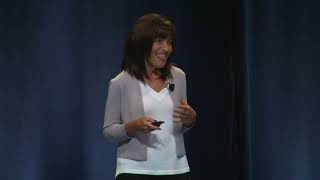
Ellen Bensky (CEO, Turner Fleischer) presents at KA Connect about creating a teaching organization inside her Toronto-based architecture firm (Turner Fleischer). She describes why the firm needed structured internal teaching (rapid growth from ~61 to 151 staff, a young workforce, diverse international hires, and fast software/technology change) and details the TF Academy and allied programs: three four-month semesters, ~60 sessions per semester (summer example), course types (monthly courses for 10–12 staff, 6-week workshops, lab classes, electives, walking tours), a new health & wellness stream, software "drop-ins" (e.g., Dynamo), work‑shadowing (three terms/year, 8 hours/month), departmental teaching, external experts, and college/university outreach. She outlines the teacher support workflow (pitch by email → core team review → class description form → content prep & review using templates → scheduling → launch/promotion via internal platform Newton → registration → in-class teaching → immediate paper feedback). Testimonial clips from partners and staff (Russell Fleischer, Raza, Matt, Reagan, Kelsey, Nick Bowker, John, others) illustrate outcomes: knowledge transfer from senior to junior staff, increased confidence and engagement of teachers, stronger interpersonal connections, improved workflow and quality, and recruitment/outreach benefits.
Chapters
Hi everybody. Thank you, Chris. And it's amazing to be back on the stage at KA Connect and see so many familiar faces and some people that I haven't met yet. So I'm here to tell you a little bit about our story at Turner Fleischer and the hidden benefits of developing a teaching organization. And this is really something that I really started to think about over the last six months or so. And Chris and I were talking and this whole story came to me that I'm going to share with you now. But before I share that with you, I'll share a little bit about my personal story at Turner Fleischer. And I've been there 29 years, which is still really weird for me to say out loud. Similarly to Carol, yesterday I didn't start in the mail room, but I did start in a very teeny, tiny little accounting room, just myself. There were 20 people in the firm and I answered an ad in the newspaper, I guess that dates me that there were newspapers and the ad was that big. And I went in on a Saturday morning and the founding partner, Peter Turner, handed me a box of software and said, can you computerize us? And I knew nothing about architecture and frankly not a lot about computerized software, but I thought, sure, why not? And I started on Monday and fast forward 29 years, here I am. And it's been quite a journey went through being the office manager, senior associate director of finance, blah blah blah, CFO. But in 2012 I became the CEO and that is really when the fun began for me. So who are we? I'll tell you a little bit about Turner Fleischer before I get into the details of our story. So we're from Canada. Canada. We're located in Toronto and we do all of our work in Canada. And this year we're celebrating 45 years in business, which for us is a really big deal. It's an awesome accomplishment that we're really proud of. And we've got 151 talented, amazing people working for us at this point in time with a focus on architecture, interior design, branding across a variety of sectors. Commercial, industrial, institutional, mixed use residential, and a bunch of others. Here's just some visuals because we're architects, we like to show our projects. So some of our mixed use residential projects that we're pretty proud of right now, some of our commercial work, we do a lot of work across Canada with brands McDonald's and Home Depot and Canadian Tire and a lot of others. But really what I'm most proud of is our culture and we like to do a lot of things together. You'll hear about how we like to learn together, but we also like to party together. We like to go to conferences and outreach such as this together. And really, we like to give back to our community together. So we do a lot of work with organizations within the Toronto area so that we can give back to the communities that we're building in. 40 of us every year ride our bikes from Toronto to Niagara Falls over the course of a weekend, which is coming up in about five weeks. And that's a really good activity that we share together. So I want to tell you a little bit about our culture of learning and some of the reasons why, aside from just my lifelong passion of learning, why did my firm need to be a learning organization? And so some of the reasons in the last number of years that have really become important to us are our growth. So. So in 2008, we were about 61 people, and that was kind of manageable. And you could teach just by talking to each other when we were that size. But you can see over the last number of years, we've grown to where we're now 151 people, and that makes it really hard to teach across that many people in some type of random way. Our demographics. I talked about this last year, and I think that it's actually gotten more intense for my company. I don't know about your companies, but we've got a real big disparity between the greens and the grays. And those colors are intentional. So my greens are my young staff. 55% of my firm is under the age of 34. And that could be a whole nother topic that we could discuss together. But there's a real need when you have a young workforce to. To do a lot of learning, especially to get them up and running quickly so that they can be impactful in their projects in your firm, for your clients, in a really great way. And we've got the Grays, who have a lot of the institutional knowledge, a lot of the knowledge in architecture. How do we get their knowledge over to those greens? We also have an extremely diverse staff base, especially in the recent years. I believe in giving everybody an opportunity. So if you move to Canada and you don't have any Canadian experience, I really don't care. Because if you are an architect and a successful architect, whatever country you are from, you should be able to have an opportunity to work in the new country that you've chosen to call your home. And so you can see here we have people from all over the world that work for us, but one of the problems that we face there is they don't know anything about Canadian building code. They've worked with different construction typologies than the ones that we have in Canada. So there's a lot of learning that they need in order to get up to speed working in our environment. And the last one is definitely one that I'm sure everybody in this room can understand is the pain of industry disruptions and the pace of innovation. You can see really here since 2012, the addition of so many different softwares and technologies and ways that we do our architecture now is they're all completely different. And how do you get your staff to be able to understand how to use some of these new softwares and get up and running efficiently in your firm? So this started me thinking about a culture of teaching, because when you have a culture of learning, you gotta have people that are actually doing the teaching. And how does that intersection happen? And how do you find and develop people to teach your staff? So when I thought about doing this presentation, I thought I could stand up here and I could tell you what my staff have told me when I've asked them over the course of the last little while, how do they feel about teaching in our firm. But then I thought, well, wouldn't it be better if you could hear it directly from them? And as my team knows who are sitting over here, when I get ideas, I don't really think about how that can actually happen, that we're not really a video production company, we're an architecture firm. But I happen to have amazing people that tolerate my ideas and support in making it a reality. So I want you to first hear from my partner, Russell Fleischer, who's been with the firm for 31 years, has. He's the main business developer. He's great with clients, he's got a ton of knowledge. And I just want you to hear what he thought when I said, would you like to teach a course in the academy?
It's something that I've never done. And I thought I actually might like to learn how to teach. I guess my job and my daily workflow is somehow teaching everybody. But if you don't put two things together, you don't realize it. So I thought, why not let me give it a shot? But the problem is I've never taught. So how do you start teaching and what do you teach? And I found the easiest way is just thinking about the knowledge that I've had over all these years and how much I've learned myself over all these years, I must admit I was a little bit nervous because teachers to me always had so much knowledge and so much expertise. And I don't see myself having all this knowledge and expertise. But what I do see myself is being able to tell a good story, making it interesting and exciting. And by telling stories about the project, telling stories about the process and telling stories how we got to the final design and how we got there enabled me to teach, I guess. And I found that made me comfortable.
So aside from Russell, who in our organization is teaching. So here's our org chart and you can see we've got a lot of different levels in our firm like most of your firms have. We got leadership at the bottom there, associates, managers, project managers, job captains, and then just everybody that's on the teams. So this gives you a good idea who has and is currently teaching in the many opportunities that there are within the firm. And so all of the leadership are teaching. Most of my managers are teaching. But then I've got a lot of people at many different levels of the firm that are also teaching. We also bring in a wide variety of external teachers into the firm to teach. And we were talking about this yesterday at the roundtable that we know architecture, or we think we know architecture, but we don't know structural engineering, we don't know building science. There's a lot of areas that we don't know, but that if we knew them better, we could definitely do our jobs better. So where are they teaching in the firm? So the first place that they're definitely teaching is in my TF Academy. Sortief Academy has three semesters and each semester is four months long. This will give you a snapshot of our summer semester which is starting next week. So we've got a total of 60 sessions occurring over a four month period of time, which I think we might have been a little overzealous in this semester because that's a lot of learning. But you'll understand where we got a little overzealous in the summertime here. So we have courses which have about 10 to 12 staff and it's once a month and it's an hour and a half each session. And so we have topics like advanced field review, risk management, design. We also have what we're calling lab classes now because we're about to open our first learning lab. We're doing a complete renovation of our whole office, which is definitely a topic for another conversation. But we will have a learning lab where 16 people can sit individually with laptops and learn with all types of technology in the room and on the walls. And to help make that bigger, so we've got some lab classes, Photoshop, Revit content, we have workshops that are smaller, six staff and they have six classes over the semester and they're an hour and a half each. And that really gives you a chance to take a deep dive with some of our subject matter experts. So condo suite design and construction detailing so you can really get hands on in those experiences. And then we have electives and those are open to basically anybody usually. And it's a one time thing for an hour and a half and it's on a variety of different topics. So in the summertime we always have walking tours. So you'll see the first four here are walking around different parts of the city. And the founding partner, Peter Turner, runs these walking tours. It's something that he's really passionate about and he invites experts from the areas, from city planners, heritage consultants to go on these walking tours with him and the staff to really learn about the architecture in these neighborhoods. We have building code sessions and I'll give a little shout out to KA Connect and the hidden benefits of coming to KA Connect. So where's Ariel? Where are you? There's Ariel. So Ariel and I met last year at KA Connect and his company RDH are awesome building science experts and he connected me with his Toronto office. And not only are we doing projects together, but members of his firm now come and teach in the academy and they've been doing it ever since we met at Kaconnect last year. So that's really a cool side. And we also introduced a new theme stream to our academy this year, which is a health and wellness stream. And that really gets back to the whole topic of employee engagement and what do people want and what do they want to be learning about? And health and wellness is a huge topic, so we thought why not bring that into the academy? So you'll see Introduction to Chinese Medicine, life Coaching, one that I really wanted to see. They're managing your personal finances because I think that they don't do such a great job of teaching young people that in school these days. So we're going to bring it to them and let them teach it. And a really cool side note about the health and wellness, we found the teachers for the health and wellness by simply reaching out into our Turner Fleischer Facility family and asking if people had, you know, wives, sisters, cousins, brothers, anybody that happened to be experts in any of these areas. So everybody that's teaching in the health and wellness thus far has been related to somebody in the firm, which has been really cool. So how do you support people to become teachers? So a number of people asked me yesterday, oh, yeah, we'd like to have this in my company, but we just can't get people to teach. And they say that they want to teach, but then they don't actually, you know, they can't put together the curriculum and then they don't follow through on it. And so we've developed a pretty robust way to support people teaching at our company. So I'm just going to walk you through how we do that. So the first part is, simply send me an email, tell me what you want to teach, tell me why you want to teach it, why you think it's a relevant topic to our company at this time. So then I take that back to my Core Academy team. So on my Core Academy team, I've got two of our administrative professionals, Jessica and Esther, and they're responsible for the entire back end of running this whole thing. Myself and my partner, John Chow. So we talk about it and we think about, does this course seem relevant? Have we had something like this before? What course are we going to retire for a semester so that we can bring a new course in and we have all of that dialogue. So then if we decide, okay, we want to bring that course into the Academy, the next thing that we ask people to do is to write a class description form. And aside from the top of the form, which gives, you know when it's going to happen and who's going to teach it, and are you going to bring in guest lectures or all of that stuff, It's a description of your course, and then a little bit of a deeper dive into the topics that you're going to cover in the course, and then at the end, you want to talk about the outcome. So what are the students going to leave knowing so that they can understand the tangible knowledge that they're going to get if they attend this course and how it's going to help them in their daily work? So then we have a content preparation and review process, and we take our core team and we walk people through. We have a template for what their core course content should go into. They put together what they think they want to teach, and then they sit with the Academy team and we review it with them. And I promise you, for every new teacher, they come in and they're all psyched and they've made like 100 slides. And they've filled all of these hundred slides with words like top to bottom. And so hear from Raza, who is in the process of creating a new course for this.
The way the questions that were brought up during the review session forced me to look at things from a different perspective. It's really beneficial was having it like if I was to have this conversation, which I have with members of my team and I had them review things, they didn't flag certain things because there's knowledge that they have, which they're just assuming everyone also has. So being able to sit down with you guys and the core team and go over the course outlined in the very beginning, the slideshows as they're being formulated and have essentially you guys, I don't want to say polls, but almost scratch the surface. Okay, does everyone know that asking those questions? And it then forced me to start looking at things a little bit differently.
And that's a really good point. We have a variety of people in the room when we're going through these courses. So my administrative team really doesn't know a heck of a lot about architecture at all. But can they, you know, can they learn from what is being shown? And then I have my partner John in there because he's got 40 years of architecture experience so he can look at the slides and he can say, well, wait a minute, I'm not sure, how about add this to make it more clear, things like that. Then we go through the scheduling process and the teachers all get together in a room with my core team and everybody fights for Tuesdays at 9 or Wednesdays at 5 or Thursday at lunch. And that's always a fun, really lively meeting to try and figure out how to get 60 sessions scheduled within a four month period of time where every teacher can actually, to the best of their ability, know that they can show up. So then we promote the heck out of the whole thing before to get everybody excited about what's going to be happening in the coming semester. And this is where we bring our synthesis platform Newton into the game here. So we're big on posters at our company. Everything we do internally has, has a poster. So we throw them up on the top right of our homepage all the time. So, you know, if you look there, you can see what's happening. So there's our TF Academy launch poster. So everybody knows it was happening on April 4th and it's at noon and it's in the lunchroom and there will be food. So they will come. Then we Post it on the stream. So we talk about it on the stream, telling people again when it is, what they're going to hear. And we do those posts throughout the lead up to the launch. And then we have the launch. And the launch is an opportunity. And I think you can sort of see on the back wall where that graffiti wall is. We've got the teachers are there and they're sitting in the chairs and that kind of wraps all the way around the back of the room. But every teacher gets an opportunity to stand up in front of the whole company and introduce their course and it becomes a little bit of a fun sales pitch. Take my course. And this is why you should take my course. But everybody can hear from the teacher's perspective themselves what the differentiator is in their course and what it is that they actually want to teach you during the semester. So as soon as the launch is over, we go right into registration. And registration lasts for about a week to a week and a half. And again, this is where we pull our Newton platform back in. So here's Raza. He's working on his new class and so he's doing a post and he's telling you, hey, with so many great classes being offered, I know it can be hard picking one, but this is why you should pick mine. And then we teach the classes, and then at the end of the classes, we gather feedback from all of the students that attend all of the courses. And over the five years that we've been running the academy, we've really tried a number of different ways to gather this feedback. And at first it was a survey on Newton. Press this button, take this survey. And that really didn't work well. So then we decided we were going to have little focus groups and we were going to gather all the students together and we were going to ask them how their experience was. And that didn't work well. And what we started doing a couple of semesters ago really works great. At the end of the last class, they take 10 minutes, the instructor passes out the feedback form and you have to fill it out and give it to the instructor before you leave the room. And the feedback, really you're rating, how engaging was this, how inspirational was this, how educational was this? Can I go back to my desk and do something differently because of what I learned, what went well in the class, what could be done better? And then we always ask, what academy classes would you like to see for next semester? And my admin team gathers all of the feedback for each instructor together. And then we meet with the instructors and we review the feedback and it's proven to work out really great. So if they're going to teach the class in the next semester coming up, they know what they keep and they know what they need to change in order to make it a better experience for the students. So you're going to hear from a number of the teachers in the academy and it was really hard to pick these. We probably had, I don't know, 25 videos and they were all really amazing. But I wanted to give you a bit of a snapshot of different people at different times in the organization in different roles and what their experience was teaching. So my partner, John, 40 years, never taught a class in his life. Nick Alexis, who's a project manager, I think, pretty much lives on an airplane. And so he's never in the office. And so how did teaching a course change his experience in the office? David Howe is our lead designer, is absolutely a phenomenal designer. But he comes and he sits and he puts his head down and he gets into his design world and he doesn't really talk to many people. And so getting him to teach a course has been life changing for him in terms of his experience in the firm. Peter Frost, who is sitting right over there at table number one, my marketing and communications manager, which 43 years old, we never had a marketing department, so we started a marketing department. Peter leads it. And so he leads a course telling people, what does marketing do? Because when you're a firm that never had marketing, you have what's an rfp? We never did those. So he tells people all about his world. Michele is our new design director. He came to us six months ago and right away when he came to us, I said to him, you're teaching a class in the academy and he's taught in universities, he's done a lot of teaching. And so it's interesting to hear what McKelly says about his experience.
I think the thing that has helped the most is to be able to share with staff real life experiences. Experiences that you can't get from a book, you can't get from reading about it. You can only get from experience, share with them stuff that has taken us many, many, many years to acquire. To teach people, you have to sort out your thoughts. You have to tell them what actually honestly truth, like how you do things, right? Things like people don't think you're good, like why you are good. You have to look yourself behind yourself to shoulder and watch how you do things. Actually, you will figure out A lot of things that you don't even know yourself, you find that there is a kind of sort of like a theory sort of thought, right? And use this. You re inject into ourselves a lot of the students. They're from different departments. They come from different areas of field. So I get a white, right? And then I get to go. And then even, like, just walking by some when I work here, I'm like.
Hey, how's it going? Hey, good to see you.
And it's just. It's just more social, I find that's kind of been. It's been neat. When I was teaching university, people that students that were coming in after three months, you know, they would practically disappear from my life. But here at tf, I get to have that daily relationship with people that become my students. The impact of what you share is something that it's very tangible. And I've seen how things are starting to change with those people that have taken the class, because when I do mention certain things, they know exactly what I'm talking about. So it's very satisfying that way. And by getting to know each other, there's all kinds of barriers or kind of demolished. And then the workflow and the quality of the work as well, improves. I came on board about a year and a half ago as a new manager at Turner Fleischer. So one of the big advantages that the TF Academy gave me was an opportunity to go beyond my corner here and really have outreach to students that wouldn't typically be exposed to my work. They were learning about what I was doing, and the contributions of my team was doing to the firm. But the reverse of that was I was getting introduced to the architectural side of the practice, which typically I wouldn't work with. And through that kind of symbiotic connection, I really felt I got a deeper rooting in the firm as a new employee.
So we do the same support process for our external teachers that we do for our internal teachers. The only step that we take out is we don't review their content. We kind of feel like they know what they're talking about and they can put it together. Sometimes we'll talk if there's a specific area that I really want them to focus on. Had a lot of conversations with the managing your personal finance person, but other than that, we support them all the way through the exact same process. So I just wanted to play you a clip of Ellen Kowalchuk, who's a Heritage specialist who led a roundtable last semester about her experience, actually, in attending the launch before, I was really impressed with the whole process, really, from beginning, working with the staff as soon as they contacted me to develop the course description, sort of learning objectives, the format for the course, and then I think for the launch of the Academy, it was really great to have an opportunity to engage with everybody who actually works here and have an opportunity to describe to them in person what it's about, as opposed to just reading a piece of paper. And I think that that actually really helped establish a relationship with people who came to sign up for the course, so that they had some experience engaging with me, and I think that really helped with them. Also have a level of engagement when we got to the course itself, to the roundtable, to be able to really participate. So aside from the Academy, we have a program in our firm called Workshadowing. So work shadowing allows you to shadow anybody else in the firm in any role. It started out when somebody wanted to switch departments to a different role. And after they got there, they said to me, wow, I really wish I had learned more about this role before I asked for it. And so we thought, okay, let's start this program. You can shadow anybody. So you can shadow a partner, you can shadow an accounting person. You can literally shadow anybody. You have to put together an application, and you have to say what it is that you want to learn from this person. You can't just be like, I want to shadow Steve because he's cool. And then your manager needs to approve it. And then the work shadowing committee, we look at it and pick the pairs for the term. And so it's three months, and I give them eight hours a month to learn from each other. And this happens three times a year. So Reagan had just such an incredible experience when he was teaching in the workshadowing program this year that I really wanted you to hear his story. And he's a senior designer, and he's been with us for four years. And Michelle, who's been with us for 10 years and works in the construction Administration department, realized that site development where Reagan works, is something that she knows nothing about, and she really wanted to learn more about it.
Michelle has been at the office, I can't remember how many years, but I'm easily out of that. And the fact that she's reaching out to, I guess, me to teach her what I know is very different. I took a step back and basically wanted to teach her everything I knew. And how did I learn what I knew today? And what I really did was go back to the basics, teaching her step by step what I do and kind of helped her think the way that I think when I approach designing a site and stuff like that. So it really goes back to basically saying that you don't really know what you know until you teach it.
So. Software drop ins. We started doing software drop ins when we started using Dynamo. And I don't know how many of you are knowledgeable of Dynamo, but you can script workflows and it's an incredibly powerful tool and has actually made a really large impact in our workflow in the past year, year and a half. But even if you don't want to know how to write a script, you do still need to know enough about Dynamo in order to run a script. So how did we get all of this information into our staff's heads in a really fast way? So we came up with Dynamo drop ins. Actually this young man came up with Dynamo drop ins. I had nothing to do with it. And Matt was the real inspiration for me in thinking that this would be an interesting talk to give because he came up to me earlier in the year and he said, you know, I've been running these Dynamo drop ins now for a while and I really like teaching and I'd like to teach a full course in the Academy. And Matt's a really quiet guy. So when he said that to me, I thought, okay, I think we might have something here.
We wanted to bring in this software to help automate our workflows and to get staff more involved. We started doing these drop in sessions to introduce it. And what I learned from that, from starting it out, is that I didn't remember the process of learning it myself, like what I. The steps that I had to go.
Through to learn this.
So sort of had to rethink how we were doing that, being in this position where I had to get staff interested in this thing. So that was my goal. It wasn't so much the teaching them how to use it or, or anything like that, the exposure to it. I was sort of directed into this teaching role and found out that I kind of enjoyed it. I just found it really enjoyable. It's fun watching someone get it. It's like, oh, this is working. Even though it was outside of my work hours and I either had to come in early or stay late to do this, it became something that I look forward to, enjoyed doing and sort of went off on my own to set up that kind of built into its own or what will be its own Academy class.
So departmental teaching. So we have a department in Our firm that we call Graphic Solutions, and Graphic Solutions does a whole lot of stuff. They do wayfinding, they do signage, branding, and so they spend a lot of their life in the Adobe suite. But they do need to use Revit on some of their work, and they do need to understand Revit. And so Kelsey, who's been with us for four years, and I can say this to you, and he'll see it when he sees the video, but Kelsey is a real introvert. And when Kelsey came up and Kelsey said, I know a lot of Revit, and I really think that I can help my team get better if I teach them Revit, it just about blew my mind.
Watching other people in the firm teach people who, again, also, you look at them and you go, that person, you wouldn't expect them to teach. Like, they're not a partner, they're not a manager, they're not an associate. They're just a person who you see works hard every day in their various departments. And then you realize, like, yeah, they have a lot of knowledge on something particular that maybe you don't work on, but you're really interested in. And when you see other people getting the opportunity to teach, you go, I could probably do that. This is what I do every day. Why can't I do that kind of thing? So, yeah, I think working here, where there is such a culture for learning and there's such a. Like, there's opportunities to teach and learn, gave me the confidence to be like, I can do this.
So colleges and universities, we do a lot of outreach. We go into colleges and universities and we teach in their architectural program. So we'll take one of their classes a semester each year, and we do this. So we do this all over Toronto. We even did it in Copenhagen once, and that was really awesome. We actually got our first intern from Copenhagen that came into our office last year from doing that. But so we'll go in and teach them what it's going to be like when they get out into the workforce, what they can expect and what they can expect if they work at a firm that has really taken the initiative to adopt technology. So we're not just talking about it. We're not just saying we do BIM or saying we do laser scanning or saying we do VR. We go in and we show them exactly how we're doing it, how we're working it into our projects, so that when they sit in their courses and they're learning about these things and they have some type of context to, oh, yeah, when I get out there in a job, in the real world, I get that connection. So Nick Bowker started teaching in universities and colleges with us way back when we first started doing it. And his story I needed to include here because his story is one that I'm really, really proud of.
Obviously the first time you get an opportunity to get up in front of a large group of people like that, it's nerve wracking for sure. I remember the very first one we did at George Brown. I think it was. I was super nervous. The talk was full of ums and ahs and all that kind of stuff. It was almost a bit relieving after having done it and just seeing that, you know, really they just want to understand a little bit more about what it's like to be working and what you actually are working on. That really helps me to get a lot more comfortable out there and speaking and helping me realize that I do really enjoy teaching people. Getting a whole bunch of extra experience. That really pushed me along into realizing that that was something that I would like kind of in addition to my regular 9 to 5 job. It's really enjoyable to get up there and connect with people in a different way than you do when you're, when you're working in an office and in kind of a more professional setting. I'm teaching at Humber College now in a part time capacity. It's been fantastic. I really enjoy it.
So what are the benefits, the hidden benefits of developing a teaching organization? They really help you strengthen connections, personal connections in the workplace. You realize who your internal subject matter experts are that you might not know. It increases the self confidence of your staff in a huge way and it instills a really good sense of pride in where they work because they've been given an opportunity to really expand and go beyond what they do from nine to five. And as you heard from them when you're teaching something, you discover how much you actually know. Like I remember Reagan in the workshadowing program said, I can't believe in four years how much I've actually learned. And he just didn't think about it because he just does it every day. And last, which I think is just really important. I know it's a belief of mine and I think it should be something that everybody wants to do all the time. But.
More from Christopher

Human in the Loop? Testing Our Assumptions About Where People Add Value in Learning | Todd Henderson

Redesigning Work for the AI Era: How Greenprint Turns Implicit Knowledge into Shared Intelligence

Designing Learning Like a Product: Branding, Culture, and the Unseen Work of Building an LMS

Scaling Design Excellence: How Diamond Schmitt Amplifies Knowledge Through Learning and AI

From Tame to Wicked Problems: Rethinking Learning and Development in a VUCA World | Ellen Bensky

Learning at the Speed of Change: Adapting L&D to Your New AEC Workforce | Kristina Williams

Designing Modern Learning Organizations: Rethinking AEC Learning Development in the Age of AI

The Link Between Learning, Motivation, and Career Fulfillment for AEC Professionals


Why Communication Skills Are Foundational to Teaching, Leading, and Adapting in AEC F

A Framework for Collaboration and Quality: SMMA’s ISO 9001 Journey | Ryan Farias & Jessica Smith