The Power of Knowledge and Effective Management in AEC
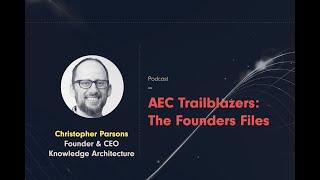
A Trade Basis podcast interview (YouTube) with Christopher Parsons, CEO of Knowledge Architecture, discussing his path into the AEC industry, the founding and evolution of Knowledge Architecture (Synthesis intranet), and practical AI adoption for knowledge management. Parsons describes graduating in 1999, moving into AEC around 2002, founding Knowledge Architecture in 2009, and serving ~140 AEC firms with Synthesis. Key themes: intranet→community-driven knowledge management, phased AI adoption (AEC-specific video transcription and conversational/AI search), data governance/opt‑in Community AI, analytics-driven content prioritization, and company culture (employee ownership, remote work, transparency). Product roadmap focuses on AI search and integrated LMS over the next 1–2 years; target customers ~50–500 staff firms.
Questions this video answers
1999, history degree (Wake Forest University).
About 2002 (after working in tech consulting).
2009.
About 140 firms.
Well over 99.5% accurate ("199 out of 200 words plus it gets right").
Chapters
Buckle up for AEC Trailblazers, the Founder's Files, where we crack open the stories of the brightest minds in the AEC startup scene. Forget institutional pitches. We're diving deep into the real personal journeys of these industry disruptors. Get ready for some casual chats firsthand.
Hello and welcome, everybody, to another episode of the Trade Basis podcast where we interview the most amazing founders of the AC today. With us, we have Chris Parsons. Chris is known for being the CEO of Knowledge Architecture. He's responsible for product development and organizational health. He's also been a technology leader in the AC industry since 2002, including serving as a Chief Information Officer for Steinberg Architects and the Information Technology Director for smwm now Perkins and Wheel. Chris has also a degree in history from Wake Forest University. He's an avid reader, trail runner, bird watcher, loves to cook. Chris, welcome.
Thank you. It's great to be here.
Did I miss something on the bio?
I don't think so. Maybe we'll cover it if you did.
I'm just curious. What. What type of food do you cook?
Oh, my goodness. Well, my wife and I are both vegan, and we have been for about nine years. And so one way to answer your question is, is vegan. We try and focus on, like, really healthy, natural. We live in San Francisco, and so we're just spoiled by all the produce here. And so just whatever's at the market, that's our starting point, is we just get the best products and then we just kind of invent. Like, we've been cooking for so long, we don't usually use recipes. We just kind of like, we see what's fresh, we see what we have and we just invent and it's, you know, we. We usually make lunch and dinner together. So it's one of the. One of the joys of my life is cooking with my wife.
So nice. I do feel this might be controversial. I feel that is the marketing for vegan food is really unfair because typically when you think on a vegan food, it's just something that tries to imitate meat. Like, I don't know, like, you know, a burger or not burger or something like that, which I feel I love vegan food. That's why I'm saying. And there is so much. It can be coke and not try to imitate all the foods. So I feel it's. It's not fair. Typically the. The mark.
I think you're right. I think those products are helpful. Like, for somebody that's becoming vegan, they can help transition You. But I think if you're doing it, I mean, people usually do it for three reasons. One of them is health, one of them is the environment, and the third one is, you know, kind of animal rights and ethics and depending on why you're becoming vegan. But if you're interested in the health piece of it, like it's, it's very easy to be a very unhealthy vegan person. So especially like a lot of the products, like you said. So I think what we try and do is have the majority of the food that we're eating be actual like whole foods that we're, that we're cooking. And then, you know, we'll use one of those products for fun every once in a while. But that's been our approach.
Nice. It's so fun when you have markets around the area where you live and you can get fresh products. So I can see that happening in San Francisco. But, but enough about, enough about food because we, we could do an entire episode about that. Oh yeah. How, how do you end up where you are? Chris, I know you didn't start on, on the ac, so how was your journey from, from being outside the the industry to. In 2002, I think getting to the AC?
Yeah. So I graduated in 1999 with a history degree which my assumption through college is I was gonna become a lawyer. And but the timing of when I graduated and I just, I had happened to pick up some technology kind of in high school and you know, I had some internships where I got to do it and I worked in the language lab helping faculty with tech and in college, but because I graduated in 1999 and I was reasonably good with technology like you could. The job market was amazing, like all the dot com stuff going on. So I got a job in tech consulting and I said, you know, I can go back to law school later, you know, like, let's go try this tech thing and see what it's like. So I got a job in LA doing tech consulting. Did that for about two and a half years. A year into that job in la, I realized where I really wanted to be with San Francisco, because I had been on a project up here and just fell in love with the city immediately. So we transferred up here and then in kind of get the time frame of the 2002, like 911 happened in 2001, the dot com, you know, bubble like completely burst. And for folks that are listening that weren't around for that or don't know about it, like it was A really, really bad recession in technology. Like, all this hype around building the Internet had just collapsed. And so in the city, like, for someone with me with two years of experience and there was like, no tech hiring, like, I wanted to stay in the city. I wanted. I sold my car when I moved up to San Francisco, and I wanted to be able to walk everywhere. And so, like, my kind of constraint on finding a new job is I had to be walkable from my home. And so what that left me with was, like, there were a few law firms hiring insurance companies, and then this architecture firm that I found. And to be honest, like, obviously I knew architecture existed, but I didn't know that. Like, companies of like a hundred people or five hundred people or a thousand people. Like, I didn't know, like, architecture firms at that size, you know, existed. And so I took a job at this architecture firm, smwm, to write out that recession, that dot com boom, thinking I would go right back into tech in like a year or two once it kind of started coming back. But I turned out I fell in love with architecture and also technology and architecture and, you know, just the kind of combination of art and science and history. And, you know, we were working on a lot of projects in San Francisco that impacted the way people live. Like, the Ferry Building has the biggest farmers market in San Francisco. And we worked on that Ferry Building project. And so I ended up staying there for five years and then went to a larger architecture firm for another three years. So kind of like eight years in two architecture firms. And just it was my place. Like, that's where I wanted to be was technology and architecture. So that got me to like 2009. And I kind of along the way had figured out this knowledge management thing I was interested in. So, you know, the way I structured the two IT departments at the firms I worked in was kind of core infrastructure is one pillar. So that's servers and networks. And like, you could take that out of an architecture firm and put it in a law firm and it would be the same thing. The design technology stuff, which I don't have to tell you about, right? So all the. At the time, it was CAD transitioning to Revit, but, like, new 3D tools were starting to come in. Like, it was a really exciting time in design technology. But the part that really captured my heart was knowledge management, which was, you know, intranets and learning and development and mentorship and CRM and like, all the information management. Like, they're just, how do we manage information and knowledge to do the best we can with it and become, do better, design better outcomes, et cetera. So that's what I wanted to do full time. So my two choices were either go to like a really large architecture firm and be the chief knowledge officer or director of knowledge management, something like that, or start a company and do it for kind of like mid sized firms. Like I had grown up in like an 80 person firm and like 130 person firm and you know, could I build knowledge management solutions or consulting? I didn't know what the actual business would be but like can I do something around knowledge management for these firms? And I thought I'd get like four clients, you know, one for every day of the week. And then on Friday I'd like send bills and then go fishing or whatever, swimming. I don't fish. I don't know why I said that. Like go, go out and do something fun on Friday. Metaphor fishing. Yeah, yeah. So it turned out that like the software was going to be our business. I figured that out through the first year of like doing some different consulting projects and pieces and part. And I had built intranets at both companies that I worked at and it was a lot harder than it should have been. Like technology was very, very basic in the 2000s, 2000, you know, odds and so I had shown some of the stuff I'd built around. I was part of a AEC IT Leaders Roundtable and people had seen what I'd done and they're like, hey, that's really cool. If you ever started something, I'd love to kind of have you help us build an intranet here. And so, you know, I heard that enough times that it's like, okay, I think there's, I think there's something here. And so that's what we did. So Knowledge architecture started in 2009. It's been a 15 year journey. We've got about 140 AEC firms running synthesis, which is our intranet software. And yeah, we're doing cool stuff. So that's the kind of high level sketch of like graduation to 2024.
I really like when I hear stories like this where the founder like yourself speaks about, yeah, I wanted to do this thing. And now it might sound obvious with the amount of information that companies are producing and the speed of Internet and everything, right? Like everything that we know, the importance of having an intranet and to keep the knowledge and even more with AI right in place, that can help you to even exploit more of that knowledge. But I bet that 20 or 15 years ago it was not as CC and as it is nowadays or as obvious as it is nowadays. I don't know if you feel that way as well.
Yeah, I mean, I think, you know, I think I think about knowledge management as kind of like these three phases that we've gone through in aec and so the. I kind of grew up in Knowledge Management 1.0. Like that's when I was at those firms which was, you know, can we capture our standards and our processes and our policies and like some precedence and some, you know, whatever it is, like just kind of can we capture that stuff and put it somewhere to make it easy to, for people to find? And like that wasn't controversial. The technology wasn't great for it, but like people wanted to get that done. What was controversial that I experienced and we kind of rode the social media wave into the industry was, you know, Twitter and Facebook and all these companies kind of got started in the late 2000 era. And like, what I saw right away is like, I want to bring that software, that kind of approach inside the company. Like I want us to be able to, anyone to be able to share, comment, like connect with people, answer questions. Like that just seems so obvious to me. And I started building into the product and there was definitely like, it was hard at first. I think there was so much fear around what if somebody says the wrong thing? You know, what if they answer a question and then somebody goes and builds something? We get sued. What happens if someone disparages the company or God forbid, says something like racist or sexist on the Internet? Like people were very nervous about letting an open ended democratic sharing community thing happen. Right now that seems insane, right? Like we're so used to, that's the normal way we work now, but this was only 15 years ago that people were very afraid of and, but you know, now with teams and slack and tools like synthesis like that is, you can't put that genie back in the bottle. Like we are now sharing like communities inside our company. So yeah, you're right. I mean there's been, there's been some, some friction. And what's interesting about the AI wave is there is excitement about it and there's fear about it, like any kind of technology transition. But the fear, the fear doesn't seem to be as real this time. And I don't know if that's coming. You know, like I, I don't know if we're so early in the hype cycle that people haven't really started getting as worried, but it seems like it's It's a higher excitement to fear ratio than I experienced with the social media transition. I don't, I don't know if you have any thoughts on that, but that's something.
No, yeah, no, I agree. But I also get surprised by the numbers. Like we are in tech and for us is like you must use AI, right? Like you need to use it no matter what. But I've seen like numbers of the industry that more than like 90% or 85% don't use or have never used even ChatGPT in their life.
Wow. Okay.
It's insane. But the industry is so, so large and we always end up, when we develop products and everything, we always end up speaking to the same people, right? CTOs or CEOs or PMs and those are the guys leading and pushing for the implementation of AI. But I also do feel that the excitement now is as big because there's also a fact that most people have not try it. And, and I feel that typically the people that is more afraid of it is people that don't have a deep connection with, with technology. Right? It's like you trying to teach your grandma use a cell phone, right? She's, she's going to be like, no, this is going to control my life and we will not use it. And contrary, you show it to a kid or something was born with it is like, I don't care, I would just use it. So I don't know that that's my thought. What, what do you feel about it?
Yeah, it's interesting actually. What concerns me, just having been around technology for a while is almost, I'm not really worried about people who either haven't tried it yet or, I mean, there are, to be fair, there are legitimate concerns about AI. I think it's the people who are super excited about it but don't understand the technology and how it works. And I think they're making a lot of assumptions that it's going to do things maybe more quickly or even just at all that it's not really set up to be able to do. And it's kind of like enthusiasm without having done the homework to understand the art of the possible. And I think that's, and I think the reason that's a little concerning is I think they're set up for a. There's going to be a reality check at some point that some of this stuff is going to take longer. And I think there's a lot of people investing in stuff like right now that I don't know that they can sustain that investment, you know, for a number of years. And so, yeah, that's kind of like I've been around it enough that I'm kind of like trying to just look out two or three years and build towards where we think this thing is going and not get too caught up in the, the, the debate and just focus on building, I think.
Yeah. And just use it. Well, that's really valid point. I think it happens with all the new technology like blockchain or Internet or. Every time it happened it was like this, this is going to change the world now. And then two years later it's like everything is almost the same. So it's going to change the world, but it's not going to be now. It's going to take time like any other technology. And I do feel the same about AI. It's true also that for certain specific actions it's really useful. Like, hey, I want to use it for, I don't know, finding doors on a blueprint, amazing. But if you want to use it and just think that in two or three years they're not going to be architects and everything is going to be done 100% by AI, well, for me I don't think that's going to happen. I think it's a useful technology and you shouldn't be using it for everything. A lot of people I feel are saying like AI to everything, especially VCs. Right. Like, I will best you if you're using AI and sometimes you can have an amazing technology and there is no need for AI.
I don't know. Yeah, I mean we've got two main use cases that we're pursuing. And the first one, and this is out in public beta with our clients now, is we do AEC specific video transcription on our intranet. And so by AEC specific I mean we're getting the, the jargon and the acronyms and the technology names. And you know, we built that, you know, the transcriptions are like well over 99.5% accurate, which is, you know, basically said another way, it's 199 out of 200 words plus it gets right, which is really powerful. And so that like the baseline model from Microsoft was already quite good. And as we trained it with AEC data through the machine learning, like it's really amazing what it's been able to do. And so that was a really good application of it. Right now we're building search, you know, kind of conversational AI search within the platform and, and that's seeming really promising too. So I am very bullish on AI being able to do some things really, really well and it is, can deliver value obviously right now. Yeah, it's more the like this is going to replace all of our jobs or it's going to make project managers unnecessary or whatever the some of the wild takes are. But you know, that's also a way about getting clicks to some degree.
Yeah, true, true. It's so interesting what you were saying about you actually implementing AI. Like a lot of companies are saying they're implementing AI and they' actually not doing anything. But it's also for me interesting, like are you doing something on using the data and how you deal with that? Because the data you have is like each client has their own internal data. Can you use that? Can you use that? We can get a little.
Yeah, yeah, no, it's obvious a topical question because there's a lot of people looking at their terms of use agreements very carefully these days. On a cross of. I actually saw a really good piece in the New York Times this week where they actually just broke out contract language and the changes that have been made over the last couple of years. And there's some pretty notable example, Adobe being one of one of them. Yeah, so we saw like. So to build this video transcription model, for example, we saw this opportunity to do something really cool. But the way we were going to be able to do it is by using client data. And so we made it an opt in program we're calling Community AI. And so if you opt into the program, we're able to use your data de identified, we like mask, you know, we don't do any personal identify, we do all the scrubbing and kind of keeping it safe. But basically we, what we're after is like terms and phrases. So we want to know, you know, the technology names, we want to know acronyms, we want to know these kind of terms of art and how they're spelled and all those kind of things and what they basically mean. And so we're basically building a dictionary essentially that knows the vernacular, the lexicon of aec. And we're, we're kind of fine tuning a transcription model on that. And so for firms that don't want to participate, they don't have to. We'll use a generic video transcription model for them. And so it's, it's opt in by default, you know. Well, opt out by default. You have to opt in, you know, and then it's used for a very, very narrow case. We ask for permission to do it to just train a video transcription model. So if you had something super important or controversial or confidential on your web, on your intranet, like, the worst thing that's going to happen is if somebody else says that in the video, we're going to transcribe it correctly. So some of that is asking for permission and some of it is being very, very targeted in our use of that information and being very, very transparent. Like, I put out multiple long videos talking step by step how we extract the data, how we train the model, how it works. You can always opt out later. Like, we've just been trying to build trust and move slowly, but also towards things that matter. So I think that's like, I know that other companies are doing different things, but for us, that felt like the right thing with our kind of values and the relationship we have with our clients is like, and for folks that don't want to opt in, we're going to provide them a really good alternative.
No, it makes sense. And I feel it's, it's really fair. Like, hey, you, you want to opt in, we're going to use the data and then you get an extra bonus on a little bit better on the NDI model that we are using. So for me, it's really fair. And I also do feel that it's kind of like, I remember like 20 years ago or 25 years ago, that's when I started coding. And I remember that at the beginning, when you created a database, you even hashed the database, it was not encrypted. Like, there was no need for it. Nobody was worrying about SOC2 or GDPR. It was not a thing. It was a bad thing. Yes, but it was how it was. Nowadays there are other procedures on how to encrypt your database and there is no way, even if you're putting data on a software, that people can read that specific data if you don't want to as a user. And I do feel the same is going to happen with AI. Like, there are going to be standard procedures in the future that we all are going to follow on how to train models or different ways to use data. And then you're going to, Everybody's going to know, like, yeah, you know what? I'm only good up to level one, where they are not even mostly used certain specific parts of data. And it could be maybe level five, where they actually understand the context of what you're doing there. And you could be also fine with, with training it or not, depending on the importance of the data for you.
Yeah, I think the choice in that is important. For sure.
Yeah, absolutely, absolutely. But it's interesting and I do feel that as long as you're putting an effort on making the data not accessible to everybody and just using it in the right way, people shouldn't be worried about. That's. That's why it's important to understand how the software you're purchasing uses the data is like, I remember, I think it was slack that in their terms, you cannot opt out. And it's like they're taking all your conversations and using it to train models. And it's like, that's insane. How on earth.
Yeah, yeah, yeah, it was. And so here's what's interesting is we've got. Right. About half of our clients have opted in already, and we just opened this program up three months ago. We've had, I don't know, I think it's 10, like, hard opt out and say, like, we can't do this for whatever reason. The kind of work we do, the most of the people, like, the most common response for the people who haven't opted in is we are so swamped, like, trying to just get our arms around AI and what all this means. It's like, I don't even have time. Like, your program might actually be really good. It might be beneficial. You might be doing all the right things, but I don't have the bandwidth to process it right now, you know, or we're getting some kind of a governance plan together for the whole company and then before we do anything, we have to understand that plan. And so I think there's kind of like a collective, like some, some people's reaction right now is putting the brakes on and just making sure that they can do this thoughtfully. And because the fire hose is like on and like right now, you know, and I, I feel very empathetic towards anyone in technology or design technology inside an AEC firm with the. I mean, it's got to be. There's got to be over a hundred companies saying they're doing something with AI for AEC right now. Like, maybe it's a couple hundred and just like the volume of like, people trying to get your attention and tell you how their thing can help you. Like, I can't imagine trying to sort through. I mean, when I was a cio, you know, the number of companies that were making stuff specifically for AEC was like a dozen, I don't know, 20, like, you know what I mean? It was like there was Autodesk and there was Deltec and there was Bentley. And like, I don't know, there weren't that many companies doing this. And now it's just exploded. And just trying to keep up with that is just sounds kind of wild to be in that, to be in that seat.
But that's also something that for me, it's really interesting. And I think the bar now it's lower for you to. You can be just a single developer and start creating a really cool tool and start selling it out there. Compared to like 10 years ago when it was really hard to do it, or there was not, you needed like a 3D engine and there was no 3D engines or you didn't have the bandwidth to create something, how to process data. And I don't know, for me, it's really interesting. And I bet that also on the product you have now more than ever, it's more important to have a centralized place where you have all your knowledge base on all the different programs, software that you have tested. And some might be a good fit, some might not be a good fit.
And.
And I bet you see that and I'm just curious, like, do your clients test a lot of different programs and then they add it to your system or in general, AC companies, they don't test many different tools out there. What have you seen?
I mean, it's such a range. Like, there are some companies who, you know, and this isn't even just companies. This gets down to individuals and companies. You know, there are people who just like playing with new stuff just because it's new and they want to see how it works and somebody did something cool, like maybe it doesn't even add value, you know, like the very classic Crossing the Chasm, which was built on the diffusion of innovation. So Crossing the Chasm is that book by Jeffrey Moore where he talks about this kind of idea of innovators, you know, and then you get kind of to like, early adopters. You get to the early majority, late majority and laggards. And like the innovators, they just want to be in the new stuff. The second it gets out, they want to be there working with the product team, helping to influence it, you know, and then you get into like early majority who are like, okay, it's cool what you're doing, but like, is this actually making my business better? You know, like, it's got to actually add some value, right? And you get into like the kind of like late majority was like, I know, not only need to see it adds value, but I need to see a bunch of firms that I'VE heard of using your software before, I'll even consider this, you know, and then the laggards do it when they have no other choice. So I think it's all over the map, like with the AI stuff, it's fitting into those patterns, you know, pretty well. And I think, you know, there is something sounds a little like a little controversial take, but I could understand a scenario where you're kind of like I'm just gonna sit and do nothing for a year and a lot of this dust is gonna settle and it'll become much obvious, much more obvious what to do, you know. And I mean I do that in my own life. Sometimes it seems like this, this new space is so choppy, like it's really hard to understand what's going on. Like maybe it just needs to rationalize a little bit first, then it'll become more clear. So yeah, I think people are trying to do a, you know, and then AI isn't the only thing going on in the world right now too. And so I think they're also trying to run businesses and yeah, it's, it's, it's, it's a chaotic time.
Oh yeah, no, no, I, I agree on that and I, I, I do feel that it's a really great point what you bring about. Sometimes it's better just to wait. Like I think it was this year in Dallas on a conference on the advanced Construction technology Construction conference or something like that. I don't know if you were there.
I wasn't there. No, but I know what you're talking.
About and remember there were two big companies, I think one was Gensler and the other one was, I don't remember which one it was, was a mid sized company and Gensler was saying like where we're creating our own tools and we're pushing forward on this and, and the midsize company was, we're doing nothing. We're just waiting for all the companies to actually product, product produce Probus products that we can use and we can actually test and, and we're not going to use anything that is not robust out there. And, and for me that's really valid. Like if, if you go now, there is so much effort they need to put to be the, the innovator. So you cannot be the innovator on everything. There is no way. It's like when you're putting together a product, right, you focus on a single problem. You cannot be trying to solve trend problems at the same time or you go bankrupt. So I think that's A really valid point. And I'm just curious, with knowledge base or synthesis, you can actually measure how people are using the data. Like, I mean, I have my own firm and I love to be, to know, hey, who's using all the data and how he's using it to actually empower the guy who is like looking at new information or new ways to improve the company and then the one that is not doing anything or is not using it at all, go to the guy and say, you know what? How can I help you to be more curious about new stuff?
Yeah, yeah, we have the detailed analytics on that front and that's been a. Been a really helpful thing. We are, it's funny, in our previous version of the product, in synthesis 5, we kind of rewrote the product to move it to the cloud and offshore and we did a bunch of stuff to get the synthesis 6, which is what we run now. We had a product, a feature, an analytics feature called search optimization, which was pretty cool. Like it would show you what people are, it would anonymize the search results. So we, we show who's, like if who's clicking on content, we show that stuff. But search results, we felt like we had to anonymize and what people are searching for and what the most useful thing there is. Like when people are searching and they're getting zero results because that's a really clear signal. It's like, that's probably something we should add to our knowledge base, you know, and we've instrumented our public website with this similar technology. And so I think the really. So we're going to build search optimization in the new product once we have our AI search out. And that seems like it's going to be really, really helpful. It's like, what questions are people asking that they. Because we're, we're constraining our AI search to content that's on your intranet or that we integrate with. Right. We have a bunch of connectors into other software. But like, if it doesn't know the answer, it's not going to hallucinate. It's grounded in your results. And so if it can't answer a question, it means you haven't captured that knowledge that's important to somebody. So it's going to help you figure out, okay, what knowledge do we need to go acquire and capture and make that available to people. So yeah, I think analytics is a huge part of this.
That sounds so much of. Have you seen the analogy of, I think it was World War II when the planes returned and the holes on the planes. Have you seen that? Oh yeah.
And they figured that's where to put the armor. Is that the kind of the.
Yeah, yeah. So it's about the same. You don't hit on where people are searching, you just go on when they get zero results. So it's pretty much the same logic for you here.
Yeah. Or people are searching a lot for this thing and it turns out you've actually buried it pretty far in the navigation. So maybe you should make it more prominent so people don't have to always search for it. Maybe they can find it another way. So yeah, a lot of insights from, I mean I read a book, I've read multiple books on kind of search analytics and like one of the quotes that stuck with me is like, very rarely do you in software get to have as clear a conversation for what a user is trying to do or what they're looking for than through search. Because they're literally telling you what they're looking for. And if you're paying attention, that's like really good information to figure out how to respond. And so you know, in pre, pre AI search that we're building, we did keyword search, which is helpful, like through keywords you can kind of decipher what somebody's looking for. But it's pretty like sometimes it's a little opaque. Like if somebody starts showing a revit standards, like my guess is they're not just looking to find the revit standards, they're wanting something specific in the revit standards to help them do whatever it is they're doing. And so with being able to ask more open ended questions through conversation, I think we'll get much more precision on what people are actually looking for versus trying to infer from keywords and you know, kind of make some, some guesses. So yeah, I'm pretty excited about that. You're. I'd forgotten about that plain analogy, but that's exactly it. People are telling you. Well, at least they're not shooting at you. They're telling you like, here's what I want to find. Like now it's your job as a knowledge manager to make this available.
Oh that, that, that, that makes so much sense. And the idea in, in the future is actually to provide data from outside. Like let's say I search something on, on, on synthesis and I don't find it because our company have never produced it. Like I don't know how to automate something or how to, I don't know, do a simulation of a Solar analysis or something like that that architects do a lot and we have never done it in the company that I'm working on, for example. So is there a plan on or is maybe it's already implemented that if I don't find it there it will bring me information from the outside or it's just focus on internal information?
It's a good question. It's not implemented.
It.
I don't know. We're going to find out through talking to users if that's something that we should prioritize. My kind of, my first question is that sounds like one thing we've looked at is you know, could you pick some sites that we like? Part of it is like what's trusted information? So like maybe we index the Autodesk help center or the Open Asset help center or something like that so that you can get kind of trusted answers on how to use those products. Yeah, but if we go outside, like what are we asking? Are we asking ChatGPT? Are we trying to do an Internet search like, or is it just like, hey, here are some trusted buckets of external knowledge that you can draw upon when there's not something internal? Like I don't know how this is going to shake out. Like I think it's an interesting question.
Yeah. Or maybe you can do what? I don't know. It was like Instacart. I think Instacart did it Instacart or any of these apps that you can ask for food that they, they, once they started finding patterns or what people were searching like hey, I want, I don't know, sushi in my neighborhood and there was no sushi in their neighborhood, they started creating their own sushi. Great. Well that's interesting. I don't know like if you, if you, you can just partner with companies that have really good content on things that, you know, people need and it could be a win, win situation where you can actually sell extra content. I don't know why I'm brainstorming and yeah, you ideas and getting in the middle of your product but it's fun. Yeah.
It could be some integration with LinkedIn learning or something like that. Right. Where they've got just so much content that's kind of more business related but they have a lot of good technology content, architecture, content too. So who knows? Yeah, yeah, yeah. Maybe it's people like you know, bimpure, like maybe we find a way to part like who knows? Like really it's an exciting new era because we're also, I mean we're Building a learning management system in a synthesis. At the same time we're building this AI stuff. And so one of it's the same question, right. It's like the main reason people want us to build this is for their own content. But then there's gonna be topics and you know, whether it's revit basics or whether it's some advanced topic, like is there a way to get external courses or content, you know, into the product as well? And so is that integrations? Is that partnerships with content creators? Like I don't know yet. It won't be in version one. So that's what we need to get to, is get to version one and then listen to users and find out what we should be doing.
Maybe it could even be like the AI thing that there could be a way you can actually share your training with other companies and then if you opt in, you see the other company's training files and then they see yours and it can be a win, win situation. I don't know.
Yeah, no, I think that, I mean that has come. A couple clients have asked us for that. Like it seems interesting. Yeah. And if I'm a structural engineer and I can put a course together on the best ways to do something and I can get that into my architects clients learning management system. Now all of a sudden it's got a whole nother angle to it. Yeah.
You're going to certify there for sure between.
Exactly. Yeah. Come get your continuing education units via our content. Yeah, exactly. So. Yeah.
Hi, man. I shouldn't be. Yeah. And what about what's coming in besides all the fun stuff that you're telling me, you told me that you're working on right now? Um, what, what, what, what is your, I don't know, midterm or long term strategy for the next, next five or ten years.
That's great. We, we have been an intranet platform for 15 years. We will be kind of an integrated intranet learning management system and enterprise search platform, you know, over the next two years. And so it's kind of, you know, whether we position that as this is now what an intranet is and it has these features or whether we talk about it as more of an integrated knowledge management platform. Like I don't know how to talk about it yet, but I think it's getting beyond just the traditional confines of the intranet and really tapping into much more high quality sources of knowledge within a company, you know, and that's going to take us in a, in a variety of different directions. We typically have focused on kind of. Delivering something really valuable. And then so we don't roadmap out like five years. Like we really like right now, our roadmap goes out as far as AI search and the learning management stuff, because we want to get first versions of those out and then we're going to iterate very quickly on them. But kind of like directionally, you know, we see this as just like the knowledge management hub for AEC firms. And, you know, we typically today work with firms between, you know, like 50 and 500. But we've got, we've got number of clients under that size, we've got a significant number above that size. And so I don't know if that exactly will be true. Like that's something we're going to need to kind of focus on and understand. Is that still kind of where we're working? And we've also historically worked with AE firms and we're starting to talk to a couple construction firms to understand if what we're doing translates to construction. I don't know for sure that it does. We'll find out through talking to them. So those are kind of some of the bets. Like there's kind of the technology vision for it. There's kind of who our customers are piece of it too. It's just exciting. It's exciting to like, know what. To just know that there's so much opportunity to do cool stuff. And I'm, I'm blessed. We have a really great team that I've worked with. Some of them have been here 14, 13, 12 years. My brother's in the company, my wife is my design partner. And so I get to work with a really lovely group of people internally. And then our clients, we've got clients that are there from day one. And so it's a, you know, it's, it's a really privileged, blessed position. So I'm mostly, when I look forward, I'm just hoping, you know, to keep doing it. You know that Simon Sinek had a book around the infinite games, right? And the infinite game is the one you just get to keep playing just for the sake of playing it. And I feel like that a lot of that about ka. It's like it's just a game I want to keep playing.
That sounds really fun, but also, what would you say is the key? Besides your wife and your brother? That's easier. I don't think they're going to abandon you, but maybe for the rest of the team. But what did you do? What are the key factors that you do to actually make people want to stay for more than a decade on a company. What would you say were the key factors that are the actions that you specifically feel you took and were important to actually maintain a team for that much time?
Yeah, I mean, you have to ask them. But I think there are a few things that come to mind. I think one is, I think that we've been pretty clear about why we exist as a company. And the kind of the core of it is that we're a platform to help our employees build the lives they want. And that is really the highest purpose for our company. And that translates to a variety of things that could be flexibility that could, you know, we were. We're a remote company. We have been since we got started. And so one of our core values, you know, it's about the work, not the hours worked. Like we really have tried to be a place like for, for adults without a lot of rules and a lot of trust that like if we work on interesting problems with people we care about, like we trust that the right people will do their work and we just don't need a lot of, I don't know, like a lot of systems and bureaucracy there. We are an employee owned company. So after you've been at Knowledge Architecture for two years, you're granted options as well as a what's called an RSU grant. It's a little tiny technical, I won't get into that. But basically our goal is for everyone at the company to be an owner and be a shareholder after they've been here for two years. And you know, we have completely open books at the company. We do really robust and I'd say kind of beyond normal profit sharing within the company. So I think there's the finance piece and the equity piece is part of it. But I really feel like, you know, the, if you read the literature on employee owned businesses like you want to do, you want to reward owners who already act like owners, you want to treat people like owners. The money doesn't. The money's important, but it is symbolic of the kind of like the trust and the respect that exists within the company. And, and I hope that's how people see it and they feel like we live our values and we treat our clients well and each other well and we try and be like kind of a model little business. So I don't know, I think that's what keeps people.
That's a lot. That's a lot. It's not. And I do agree that something you said about Treating them as adults without many rules. In typically companies, we do the same. We have open books, salaries, everything. You can know the salary of anybody. Me, myself, or it doesn't even matter. And I feel that's what you do with adults like you. You. Why are you gonna hide certain information? You do that with kids because they are not able to comprehend because they're, you know, they're kids. You're not gonna explain them how a rocket is built. You're just gonna tell them, like, you know what, it's just a tube and you switch a match and then goes up and you do it. Simple, right? But being the fact that you have adults, I feel it's really important to actually be transparent and explain everything to them and make them part because they're adults, there are enough kids. And I feel that's a really good way of describing a healthy environment on a company.
One of the key moments that got me to want to start the company. There's a really cool place about an hour north of San Francisco, hour and a half north of San Francisco, called Point Reyes National Seashore. And my wife and I moved up there to live for a year in 2008, but I was still working in San Francisco, and so. And they had an office down in San Jose. And so I had to come back, you know, to the city, you know, kind of midweek, and then I could go up there for long weekends. And as the housing crisis kind of got started, you know, like, when these things, when these kind of like tough times get started, people start tightening up on stuff and they're kind of like, we're going to need you in the office more. You know, the remote work isn't really going to work. We need in a certain hours so that we know that people are working. And I don't know, I was 32 at the time. And I'm kind of like. I think I'm at the point in my life where if I can't, you know, like, where I can't be told what. What time I have to show up and start working because I'm actually a person. Like, I start early, like I. In the morning, and then I'll knock off for a big break in the middle of the day. And like, as long as I get my work done, I think that's the most important thing. So to me, it's like being in control of what that looks like and like, giving other people autonomy for making smart choices like that, that was rooted. I'd worked at Multi. I don't want to Put it all on that one company. Most companies that, that especially back then, like there was a lot more. You're going to be in this seat from this time, this many days a week, you get this much vacation. It's just like, I don't know, you only get one life. Like it just to, to live under that kind of strict, you know, kind of control, like just didn't seem right for me personally.
I agree on that completely. All right, this has been really, really fun. But before we wrap up, can I ask you a couple of ping pong questions?
Let's do it right.
Can you tell me which is your favorite building in the world and if you have ever visited.
Yeah, I have visited. It's the Art Institute in Chicago, which, right on the lake. It's beautiful Beaux Art building. It has these really cool lions out front. It's got a Chagall stained glass window. It's, it's both. I love it architecturally, I love the art. But like my wife, my, I went, my, I met my wife in Chicago. That's where she's from. And so I also have like just a lot of like nostalgic memories of spending time with her there. And then now there's Lorenzo Piano edition on the side of it. So it's just a really special place. Anytime I'm in Chicago, it's like one of the first things I want to go see. It's, it was very hard. At a close second would be the New York Main Public Library at Bryant Park. Like just awesome. The Rose Reading Room and again lions out front, like just. Yeah. So to me, to me, those two buildings, like I just are really special.
True. That's a really nice place in New York. True. A great AC software.
Yeah, I, I actually would say a company and maybe even more specifically a founder. I'm thinking about McNeil and Robert McNeil and obviously grasshopper and Rhino and among number of other things. Like his deal is he wasn't an architect, he was an accountant slash kind of business person who ended up I think buying an Autodesk reseller from one of his company, from one of his clients and then realized as a reseller that like there weren't really a lot of margins there and Autodesk was going to tell him what to do all the time. And so he started making software, listening to his community and building software that people really love. And I just have liked the way he built the company. And when I was first getting started, he was gracious enough to spend an hour with me giving me advice and Telling me about his journey and. Yeah, so I'm a fan of Santa McNeil.
Many of us are. They have a great community by also, so.
Yep, exactly.
If you could collaborate with any person in history, which person would you choose?
I have to say my wife, to be honest. Like, I've been lucky. You know, not just work, like I mentioned, we cook before at the very beginning of the podcast, but just even designing a life together. Like, I feel like when you find somebody that you fully trust and you share vision and values with and to be able to then get older and wiser and learn some lessons on how to be a better collaborator, like, I, I couldn't ask for more there. So, you know, we just, we're both very curious people. We like questioning the status quo. We were initially attracted to each other by that. It's just we had so many questions about why things were the way they were. And so I've just really enjoyed. Enjoyed that. So that's my person in history. Her name's Denise.
Nice. Nice. I can relate to that. My, My. My girlfriend is the, the. The one leading accountant and finance in our company, so she has been with us since the beginning. So I can relate to the feeling.
There you go.
Great feeling. Hopefully. Hopefully we can spend as many years as you, as you have.
Yeah, yeah, yeah. We're going to be at 2021 this, this fall, so it's been good.
Congrats. And finally, any book that you recommend.
Yeah, I could give you maybe one business, one kind of fiction. On the business side, there's a book called the Advantage by Patrick Lencioni, and it talks about organizational health and this. It was really, really good for thinking about how to set up very good clarity on why the company exists, kind of like the core values and what we believe and understand, how to get everyone aligned and on the same piece of paper. And it really pushes you to write values that are beyond the kind of innovation, trust, respect, you know, like, really just like clear things that get at like, for example, one of ours is we work on the most important thing, no matter how hard it is. Right. And that was just born out of, like, having to climb a couple mountains that were pretty hard, but, like, getting on the other side of it, realizing we should always. We shouldn't be afraid of problems. We should go right at them, the most important ones. And so that book was fantastic. On the fiction side, I'd say anything by an author named Howard Norman. He wrote a book called the Bird Artist, which I love. He wrote a book called I Hate to leave this beautiful place, which I love. And he's just got this very thoughtful way of looking at life in the world. And he. He has a quote that has shown up in multiple books from different characters, which is basically like, I spent my time doing the things I liked most, most of the time, which has always been just kind of like a mantra for me, is to, like, make sure not only for me, that I'm doing that, but that our team is too. It's like we look at everyone's job and be like, is this something that we would. That I would do that. That you would do? Like, is this something that seems repeatable and sustainable? And I think it encourages us constantly to look at that kind of quality of life as the number one thing, like, that's more important than profit and growth. And that kind of stuff for us is just creating quality of life for employees. And so that really helps when difficult decisions come up. To know that and to say, well, we're optimizing for quality of life first. And that's been. Maybe that's part of your answer to how we keep people is like, I think that's a. I don't know. It's not. It's not what you find in every company, I suppose.
No, no, no, I don't think so. All right, Chris, thank. Thanks so much for your time. Thank you.
Thank you.
Entertaining. Before we say goodbye to each other, can you tell everybody where they can know more about Knowledge architecture and yourself?
Sure. So, Knowledge architecture dot com. Lots of good stuff on our website. I am the most active. I do have a Twitter account, sorry, X account. I am the Most active on LinkedIn. So find me on LinkedIn. That's the best place. Um, yeah. And yeah. Sign up for our email newsletter. We put out all kinds of interesting stuff on knowledge management in general. We do a lot of tours of people's intranets. We do kind of some fun stuff in our. We have a very active community and so love to have people be part of that, whether they end up buying our software or not. There's a lot that we have to share.
All right, thanks for everything and I promise when I'm in San Francisco, I will let you know. So you can cook or we can go to a nice restaurant and actually you can give feedback based on your talents.
Sounds great. Appreciate that. Thanks for having me.
All right, bye. Bye.
Thanks to our listeners. If you like this content, you can.
Find fast and upcoming episodes in asuworx.evers.com and on all of our Everest social media.
We'd love to hear from you. And recommendations for new content. So leave us a DM and we'll make sure to catch you.
More from Christopher

Human in the Loop? Testing Our Assumptions About Where People Add Value in Learning | Todd Henderson

Redesigning Work for the AI Era: How Greenprint Turns Implicit Knowledge into Shared Intelligence

Designing Learning Like a Product: Branding, Culture, and the Unseen Work of Building an LMS

Scaling Design Excellence: How Diamond Schmitt Amplifies Knowledge Through Learning and AI

From Tame to Wicked Problems: Rethinking Learning and Development in a VUCA World | Ellen Bensky

Learning at the Speed of Change: Adapting L&D to Your New AEC Workforce | Kristina Williams

Designing Modern Learning Organizations: Rethinking AEC Learning Development in the Age of AI

The Link Between Learning, Motivation, and Career Fulfillment for AEC Professionals


Why Communication Skills Are Foundational to Teaching, Leading, and Adapting in AEC F

A Framework for Collaboration and Quality: SMMA’s ISO 9001 Journey | Ryan Farias & Jessica Smith