Todd Henderson | Rethinking KM Teams: When Your Newest Teammate Is AI
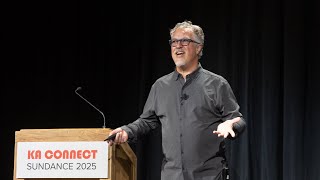
Todd Henderson (Director of Practice Improvement at Boulder Associates) reports on an experiment using AI as a force-multiplier for knowledge management and practice improvement. Working as a one-person KM lead in a ~250-person, 40+-year firm, he built AI-based tools (a running-thought organizer, a multi-persona "Brain Trust" in ChatGPT, interview pipelines, and roleplay simulations) to accelerate a strategic initiative called the Medical Planning Accelerator. He uses AI for ideation, interview design and synthesis (collecting transcripts, extracting quotes, and producing findings/recommendations), and content production (templates, intranet pages, role descriptions), while emphasizing augmentation, quality, transparency, and human-centered values (illustrated by an "orange tree" reflection).
Chapters
I love this because Chris got my title wrong. Not in a way that matters. Practice Improvement, Director of Practice Improvement. Nobody knows what this means. It is super vague. I'll come back to that in a moment. First, just very briefly, Boulder Associates, for context, were mid sized firm, 250ish people. We've been around for 40 plus years, spread out across the country, right? Like a lot of you, our struggles are like a lot of yours. Our successes I think are like a lot of yours. So I hope this feels relevant. I'm talking today about an experiment I've been doing with AI and also I'm going to talk about this orange tree. Yeah, the orange tree taught me a big lesson about why we're doing all this other stuff. We'll talk about the AI first. We'll come back to the orange tree later. Thank you. Orange tree people struggle to get my title right. People at Boulder Associates kind of aren't totally sure what I do naturally ask. Our synthesis is biscuitnet. Hey, explain what the heck I do. Oh man. Now I got to say, this is on me. This is the guy that runs it. I could have fixed that. So there's that. But it points to the problem. So let me just super fast explain, what is it that I do? As far as I can tell, there's a bunch of stuff that is classic knowledge management L and D stuff, right? There's a bunch of stuff that I'd probably call kind of like operations, right? And these aren't really firm distinctions, right? These overlap in my mind. These are plates that I have to keep spinning. A lot of plates I keep spinning. More recently, I'm starting to pick up, to my delight, some strategic initiatives. Things that are timely, urgent, core to our business. Cool challenges, right? The one on the bottom is what I'll talk about today. My personal code name for it is the Medical Planning Accelerator. What is that? What is that? Well, my partner Kate came to me, right? Like seriously, A week before it was time to like try to sell Chris on an idea for a talk. She said, todd, we have this problem. She's our head lead of medical planning. And if you don't know, medical planners are like specialist architects that really dive into the early stage of healthcare design projects. Takes too long to develop them. We need more of these people. We gotta get the pipeline going faster. The ones we have don't have the support that they need. Can you help me fix that? And we're not being utilized. We're not being inter, you know, interfacing with project teams very well. Is this something you can help with? Are you kidding me? This is. This is what we train for, right? This is what we live for as knowledge managers. But we have a problem. There's an obstacle. Insufficient Todd. Did you see all those plates that I got to keep spinning? All these pies? I have my fingers in just. It is just a fact about the current state that I don't have a team. I am a one man band for all of that stuff, right? So there's not enough Todd. You're going to hear me reference a few times the fact that when I go running in the mornings, my mind just starts coming up with stuff for good or ill. One of those was sort of I was lamenting one morning. Grumble, grumble, grumble. Hey, wait a minute. I'm also the guy that's pushing AI. What if I just lean into it and I say, well, AI, you're my team. What could happen? What could happen? Ladies and gentlemen, we could move from an era of Todd scarcity to something that I would propose to call Infinite Todd. If this was a movie trailer, this is where they drop in that like sound that signifies something with real gravitas has just happened. What might Infinite Todd look like? First, no half measures, right? This is a time bound thing. It's urgent, it's pressing. There's a talk in August that I want to be ready for. So got to go. So that means I'm going to be, I'm going to just give myself permission to be an AI maximalist. If I can do it with AI, I'm going to do it with AI, See what happens, right? No breaks. At this point, there's a problem. I'm going to bring you with me into sort of AI maximalism. And I don't know if you know of it, but like black text on a white background does not pair well. Let me just, let me just fix that real fast because we gotta, we gotta do better, right? If we're turning it up to 11, we gotta go all the way. No half measures, folks. Dark mode is mandatory for what we're doing. Let's go. So I set some other intentions to kind of, you know, give parameters about my, my, this, this experiment. I'm gonna have it, you know, by definition it has to augment me. It's my team. It has to bring me skills that I don't have, right? Not to just get stuff done faster, but better. It has to strengthen me. That was a design choice, right? I don't want to be downskilled, deskilled as A result to this. I want to emerge better and stronger myself. I mentioned quality. Nothing matters if the quality is not there. I don't want anyone coming to me and saying, sure looks like AI wrote this, right? No slop. At the same time, I'm not going to be bashful or secretive about using AI. I'm trying to promote this. Right. So full transparency. That's also ethical. So what have I done? By the way, if you haven't picked up, this is going to be a pretty gritty, hands on, tactical in the weeds thing. You are kind of. Like it or not, you're sort of in my head now. Welcome. I picked up a phrase somewhere that the way I do anything is the way I do everything and never truer. Here's how I do everything and anything for the Medical Planning accelerator. This is what I've been doing. It's also the outline of my presentation. Let's start at the start with ideation. Where do ideas come from? Blue sky stuff and just want to share like tactically a few things I've come up with that I found really helpful. One is a thing I call my running thought organizer. Actually Chris, I actually think I got this idea from you. I asked it to make a picture of what it is with me and this is what it came up with and I thought that's actually pretty good. Let me explain what it is and what it does. It's dead simple. I tend to use ChatGPT. I just like it. I'm used to knows a lot about me at this point for good or for ill. It's a very simple project in chat GPT so I can bring so it has standing instructions. I can bring it a new chat and it knows what to do. So in this case I use the mobile app on my phone while I'm walking back from running. While I'm running. Like I said, this little valve opens between my, I don't know, subconscious mind and just stuff starts coming and I've learned if I don't catch flies away by the time I've had a shower and breakfast and walked the dogs, I was like oh, I had a really important thought this morning. Wonder what it was. Dead simple. Way to catch them in the fly. Then when I get back to my desk, it's there and it's neatly organized and I can do something with it. So simple and yet probably every idea I'm talking about today has some piece of it or the whole thing flowed through this. This has for me been game changing. Here's an example. Maybe not the best example. Not everything is the best, right? So one morning I'm running along, I'm like, you know, it'd be cool. Virtual Chris Parsons. Because it's awesome. If you're a speaker, you get to. He curates this, he coaches, he kind of, you know, like, make sure you're online. It's fantastic. I was like, what if I had that on tap? This is objectively a terrible idea, right? So of course I did it. Chris GPT was born, I think later that morning. And you know, last week, for fun, I asked it this facetious question. Hey, Chris, what if I give this presentation in iambic pentameter, like Shakespeare, are you down? And look what it does. First it says, well, it depends if you know, you know. And it gives a very, I have to say, a pretty Chris Parsons esque response, which is kind and also tough. Todd, this is not a good idea. I'm not going to just categorically say, absolutely not. But remember to focus on the task at hand and the mission. And if you think this will actually further your ability to transmit knowledge, well, okay, so anyway, if you're interested, there's a QR code at the end where you can access Chris GPT if you dare. Here's a. Here's a better idea. More seriously. And this is really. And again, I'm running along and I'm like, this metaphor about making AI my team. What if that's not a metaphor? What if I literally say, hey, AI be my team? It named itself the Brain Trust. So I go with that. And I asked it to make a picture of what we do. And this is what it came up with. And it's a little like, chilling. It's like, yeah, that's kind of what it's like. Let me explain what it is. It's a council of experts. So it's another project in ChatGPT, so standing instructions. And I can bring new chats to it all the time. I started with the ones in bold, about eight personae that's like, hey, I want a KM expert. I want to, you know, org dev expert on tap all the time, wrote a query, you know, wrote the instructions. My first request was, hey, you guys, who else needs to come to this party? And it invited all the rest. Then I asked, give yourselves names, write yourself a little job description. Of course it did all that, took all that, put that back in my instructions, right? And now it's this amazing resource and I see folks taking pictures. So at the end, there's another QR code that Links to a document where I will just give you all of the queries. All of this stuff I'm talking about, working with this has been kind of interesting, fascinating. So I described to it, hey, my partner Kate came to me and I tell it about the challenge and it's like, what might we do? What could this be? Blue sky, big picture thinking. Just I don't know. And have this long, wonderful conversation. I'll just give you guys read fast. I'll just give two tiny snippets, right. To give just a taste. It's hard to give the experience of this in a PowerPoint, but. But the L and D person is of course talking about declarative knowledge. That's really great to get into templates and job aids, get that down, versus procedural knowledge. That's more like shadowing and learning on the go. Every meeting has to have one, right? Blair. Blair shows up and lets the air out of the balloon. And I put. He was one of the eight Personas I defined to begin with because you just sort of have to have someone that doesn't let you get too far off into the clouds. And Blair solves that. My original goal was that these different Personas would kind of debate like they would actually be like real human beings where they would disagree. Oh, you know, actually it's like the Play Doh Fun Factory. It's the same chatgpt squeezing itself out of different holes, different shapes. Right. So it can't really disagree with itself. That's fine. That's fine. Because what it is, is it's this thing that I can give it an idea or a question or a concern or whatever. And it helps look at it from every facet and it picks up things that I'm going to miss and it surfaces stuff much of which is not useful. And every once in a while you're like, oh, that is gold. Or should I say fire? Fire. Okay, switching gears to another one. This is just sort of like personal care. I notice sometimes there's like a thing I'm going to do. And man, every day it seems to move on to my. From last yesterday's to do list to tomorrow's to do list. I never seem to quite do it. LLMs are amazing at kind of coaching. And I just, I built one that just like I can just say, hey, I'm just. I gotta do this LinkedIn learning post. And I don't know why, but I'm just not getting to it. And it is fantastic for helping me get unstuck. Kind of weird, but it Works. So ideation, what does AI bring to this? It's bringing more ideas, it's bringing better ideas. And I think a deeper inspection of ideas early on. That has been fantastic. Let's move on to research. And I'm going to use this word in a particular sense. I'm a big fan of lean. And in lean, we are fond of Japanese terms and there's one genchi, genbutsu, which we sometimes will semi translate into go to Gemba. What does go to Gemba mean? Gemba is the place where work is done. So if you're designing a thing for those people, you should go talk to them. Right? There's two reasons you go to Gemba. One, you want to find out what is actually going on. Right, Duh. The other one is to show respect. These are both incredibly important. You got to find out what's going on. That data is amazing. Showing respect builds bridges, builds connections. It helps the next steps tremendously. People like to be listened to. I've found. I've developed this very simple pipeline based on interviewing the person who has the knowledge that I want to get at. It's dead simple. I design the interview in ChatGPT in, you know, a minute and then spend five minutes editing it. We do the interview. I take that transcript from the interview, which is. I'm starting to think of a precious business asset. There's so much richness buried in there. Send that back to the same chat where I designed the interview and say, okay, because it's already got the context right. We talked about context. Now I can make whatever I need out of it. And it might be content for biscuitnet and it might be a research report on some of these big hairy ideas. It might be anything. And what's beautiful about this is the expert is only touching this process for sitting down for the interview, which I kind of have to say they enjoy. People like to be listened to. Experts enjoy talking about their expertise. It's not hard to draw them out, especially if they have some reason to think that you're going to do something that's going to further their own needs and goals. I always have them check what I produce. Again, no slop, no crap. I want to make sure that they were heard in the the way they want to be heard. I do this. This has become muscle memory now. I am doing this all the time. Developing the interview plan is as simple as asking for it, right? Sometimes I'll give. Well, not sometimes. I generally always give context. Hey, I want to talk to this person about this. I Want to surface the mental models about this, whatever it may be. For the medical planning accelerator. I interviewed 10 people, sort of some like really, you know, aspirants we call them, like kind of, they're sort of entering it and are trying to find their way and the sort of an expert level. And this was cool. After the first couple interviews, I recycled the transcript back into the chat and I said, hey, here's the first interview I did on this. How did it go? Are the questions working? Are we getting what we thought we needed? How am I doing as an interviewer? Again, I want to upskill as a result of this. No shock. It was like talk less. Thanks. Thanks. Message received. What AI is bringing to this stage of things is the ability to with ease develop and just capture a breadth of data, a breadth of evidence of what is really going on. That serves the next steps. I could do all of this, we all do all of this on our own. But our cognitive bandwidth, we can't inhale 10 half hour interviews and hold that in mind at once. AI can do that, no problem. So then we need to cook it down. Here is a chat, the whole chat of taking those 10 interviews and going back and forth to kind of what I was actually doing in this case as I wrote like a two page little research paper. Here are my findings, here's what I learned and here are my recommendations. Here's what I think we should do about it. And I thought it would be interesting to show the context that it's not. Hey, I write my homework paper for me. Thanks, bye. Right. It is an investigation, much like you would do with a person. What patterns are we seeing? What do we think is going on? Let's dig into that. That's boring. Let's move on, that kind of thing. The red boxes I'm going to show, but I wanted to just show the context that these are little snippets within a conversation. The initial query. All I wanted to say about this is a lesson I've learned working with AI is that last bit where I say, back up your answers. When I ask you a question, back up your answers with a quote from a person who said it. Tell me who they are telling you me when in the transcript I will find what they said. If you don't do this, our AI friend will happily make up quotes that sound right that are kind of aligned with what someone might have said. That's not what I want. I need the receipts. And I think telling it that I'm going to go look somehow seems to Tell it like, okay, but those quotes come in handy. So here's just again, a little snippet of something that was like, oh, cool. I was asking you, what patterns are you seeing? What's important about medical planning? Medical planning as an interpersonal art? I've done medical planning. Not at the level these folks do. In my mind, it's all about healthcare processes and patient flow and adjacencies. You know, a whole lot of it is about listening, is about running a meeting full of real alpha dog personalities. It's about the soft skills. That was such a key thing that I think I would have missed if I was just doing this on my own. And I got the quotes to back it up as part of my ongoing dialogue. It blithely mentioned the Cate effect. Oh, yeah, the Cate effect is mentioned. And I like, whoa, whoa, whoa. That is not a term anyone at Boulder Associates has ever uttered. We don't talk about that. AI made that up. The interviews didn't even ask about Kate. So AI was seeing something. So I was like, well, that's interesting. The heck is the Kate effect? And I'm glad I asked. It came back and it described at this system level, right? What does this mean? And the third point was the one where I was like, oh, that's the diamond. Kate is, honest to God, amazing. And there isn't really a vice Kate. And we venerate how great Kate is. And also while that's true, that is also a huge vulnerability that is a source of tremendous fragility in our system. And if I go in there and I start trying to, like, move things around and I'm not aware that there is this intense bottleneck around this one key resource. A, I'm not doing my job, B, it ain't going to work. Thank you, AI. So here's a little snip of, like my report out that I gave to Kate. She got kind of quiet when she saw the piece about the Kate effect. But. And again, I just wanted to show those quotes actually are fantastic. Because what happens is this turns the conversation from, hi, I'm Todd. My head's all in the clouds about systems thinking and lean and knowledge management, and I'm making an assertion turns it from that to, I've studied the situation. Here is what the people involved say. Here are the patterns that we have found from talking to the people who are in this. Therefore, here are the solutions that seem like they would make this better. It moves it from, I'm asserting something, and please believe me, because I'm infamous to this is what your colleagues say. Right? When our medical planners are saying, I don't even really know what medical planning is, that lands. So what are we doing? What mostly? What have we done? Duh. I've talked about templates eight times. We're going to do templates. Fine, Fine. But what AI brought to the party was. Well, and what the interviews that whole process brought was, it's not just the templates that people were asking for to begin with around standardized meeting minute or agendas. It's also equipment information. It's also benchmarking information. There's these other resources that our planners are just dying to get. And that hadn't come up yet, of course. Knowledge managers. We're going to make learning flows. Am I right? And now I know to do it without bottlenecking on Kate. I need teachers to be teaching, but I need those teachers not to be Kate. Whenever possible, I can design around that. Right. Naturally elevate the community of practice, generate a role description. We don't have a role description for medical planners. You think that's part of why they're confused? Could be. AI is bringing to this again, just that ability to comprehend all this evidence and then follow it through into proposals for action. It's like evidence based medicine. You're seeing evidence based X in a lot of things. And this is sort of evidence based Cam. Now we get to the doing stuff phase. Fine. Let's get these templates done. Right. A colleague had given me, here's my master list of all the things we need to do. And she broke it out by like meeting one, meeting two, meeting six. I'm like, okay, hey, AI friend, Take that. Take our blank meeting agenda template and just do the copy paste for me. Really? Right. That'll be quick. That'll be easy. No, that for some reason belly flopped. I spent more time trying to make it do it than it would have taken to just do it. So that's an odd fail. Not everything work. Need to make more content for biscuitnet. For our intranet, of course. Here's a little snippet from one of the interviews where I was asking, like, what do people think medical planners do? But actually that's not really what you do. Right. What are some misapprehensions? Paula was like, equipment, medical equipment. We do not do medical equipment. Okay, good. Got it. So back in ChatGPT, I'm saying, yeah, yeah. So in my head I'm like, how do I. Man, how do I say that on biscuit. Net in a way that's gonna like, I don't know, just not sound wrong. ChatGPT is like, Todd, I got this. Hold my beer. You don't wanna sound defensive or territorial. I'm like, that's exactly what I don't wanna sound. Thank you. I didn't have quite the words, but how are we gonna do that? It wrote a lovely little section that is now on the page about medical planning. And it's like role boundaries. Here's what we're focusing on. You know how like flight attendants are saying our first job is to make sure you're safe. As a way of saying that eighth drink you want, it's probably not our big priority. Right? This is a little bit like that. And I thought it was just very smooth how it worded that. I don't think I could have quite landed that as nicely developed a role description. We're up to work that I did this last weekend just for the timeline here. So this is being reviewed right now. And I just love, I kind of call out advise on equipment. Right. That note that's in the data about we don't do medical equipment. We have a role, but we're not doing the planning. I love that. Effortlessly it just flowed right into the role description. That's nice. I would have put it there if I didn't have AI but it's nice that just these threads can kind of connect. The last thing I'll share is one of the first things I thought of running down the sidewalk one morning be like, man, the whole thing around these interpersonal skills and running a meeting, those are really high stakes moments that can be kind of scary. Be nice if there was some way to practice this where it was safe to fail. Right. I wonder if AI could do that, you know, And I was starting to go down the path of, oh man, I'm going to have to learn how to make my own AI contraption. And maybe someday. And then about two weeks ago, LinkedIn Learning who has had these roleplay things like predefined ones, they came out with one where it's like you can just choose your own adventure. You can define the Persona, you know, of the, of the agent and what the scenario is and what the grading criteria are. Kind of, kind of cool. So again, I think I did this on Sunday. So no one at BA has seen it yet. So we'll, we'll play with it and see if there's value. But I'll tell you what, talking to this urgent, it was stressing me out. So there's something there. She was kind of mean. Bonk. That smacks us into today. That is where I've gotten like. Like a lot of the presentations. This is work in progress. The note on what AI brought to sort of the getting it done phase is more tactical, right? It's less strategic and blue sky and ideation, it's more like, let's get it done fast. Let's get it done with consistency and thoroughness, right? Let's get the value out the door so people can use it. What have I learned? How am I on time? I'm okay. What have I learned? First of all, now we need to drop out of dark mode. Let's go back. AI Maximus mode off. Not. No regrets. Few regrets. I'd be lying if I didn't say there's a little thing that sits on my shoulder. It's like, do you have any idea how much water has flowed through data centers to cool them down after your crazy queries? I will just have to sit with that. Honestly, other than. Other than the sort of the environmental impact of AI, which is a thing I think A, architecture firms can't really influence, and B, will get better over time, this has been awesome. This has been fun. This has been invigorating and challenging. And I also got cool stuff done, right? So the no regrets is pretty close to true. Interestingly, the throughput of this effort didn't. It's not like I got this whole thing done in a week, right? The throughput didn't really speed up that that much. And it's for a very understandable reason. So in Lean, we talk about. The goal is to optimize the whole. If you optimize the parts, you get a local efficiency, but the whole kind of keeps doing what it was doing. Well, I optimized my part in this whole contraption, right? All of the other steps, these incredibly busy people, they're doing what they're doing so I can get my stuff done in instead of in a week, in an hour. And then it still takes two weeks to get a meeting, talk about next steps or get feedback on something. And so that cadence kind of dominates. It's not a bad thing, really, because I've got these other pipelines, I've got all these plates. I'm spinning right in my role. I've got this other thing that I picked up a week or two after this. This one showed up about, hey, let's totally tear down and rethink project management, which is, honest to God, way higher stakes. It's right at the core of our Revenue, it's right. It's the core of, like, people's identities. I've been doing almost the same process on that at the same time, because I can go push some stuff into one pipe, come back, push stuff in the next pipe, keep the plate spinning. So it's okay. Best parts. I started to notice there's a saying that a problem well stated is half solved. And I've started to say that a query well written is half answered. I think writers know this, that the act of writing something down is the act of understanding it and of clarifying your thoughts. And so, to an interesting degree, I found that that has been. Even if the AI just didn't do anything, I generally know more about what I'm up to just by the time I hit enter on the query. It is hard for human cognition to see our own blind spots. That's why they're called blind spots. And it is hard to see voids. It's hard to see a pattern that exists in the absence of something. AI is not encumbered with those limitations. And that is amazing. That is an amazing, amazing thing. And weirdly, weirdly, in hindsight, doing all this with all this tech and typing to bots and pretending that this robot is Chris Parsons and stuff actually has made me. I am actually wholly human, but it has brought out my humanity in ways that I've enjoyed and appreciated. Two examples, and we've all had this one. I got an email from HR about an email that I had sent, and I was starting to bang out the response of, whoa. And I was like, you know, Todd, maybe just hang on. And I gave my email that I had sent before and the response from HR ChatGPT, and I gave it no context. I said, what do you think? Right? Because if you tell it, tell me that I'm right, it will. And if you tell it, tell me that I'm wrong, it will. So I just said, what do you think? And it brought to that moment the empathy that I wasn't summoning. And I could see it was right. I was like, ah, okay, I see this perspective. It brought a perspective, a blind spot that I wasn't seeing. And that was really good. And so that turned what was probably not going to be a great back and forth into. And yep, I see what you're saying. I'm sorry. I will reach out to this person and we'll smooth it out. And we did. The other example is a bit more subtle. So I'm a director of something, but I have no one to direct, right? If there's a link broken on biscuitnet, I go fix it. On a certain level that's a little crazy because I'm a principal, an architecture firm that's kind of nuts. Just background AI has been like a hovercraft. It's lifted me up to where for a lot of these things I'm not as in the weeds, I'm not doing the writing, I'm directing the writing. I'm actually starting to use it to be able to hover at a higher level above the tactical work, which is frankly where my value is so good. Also in so doing what I'm bringing, I noticed only in hindsight is what the AI can't bring to the party. I am bringing the empathy, I am bringing the care and the admiration for my colleagues and all of that stuff because I'm not worried about sentence structure and verb tense. I mentioned we'd go back to the, the orange tree. And so this is, this is straight from the running thought organizer. I was out one morning, spring head is absolutely full of AI this and query that and what you know, I don't have a team and oh my God, I have to have something to say in August and all of these things. And then I crash into this plume of fragrance from that orange tree. I showed. I don't know if any of you know what an orange tree in bloom smells like. It is a transcendent fragrance and it absolutely crashed me back into my body, into this beautiful morning doing something that was good for me. The sun is shining, trees are blooming. And it reminded me, it just viscerally brought to me like technology is cool and great and there are some things about being human that are cool and great. The ability to experience beauty is wonderful. Let's hang on to that. The ability to revel in community and like minded folks who are wonderful is wonderful. And let's hang on to that. Why are we using all this technology? What's it for? It's for this. It's to live a better life, it's to do better work, it's to have more fun. And so that is my talk. Thank you. Thank you, todd.
More from Christopher

Human in the Loop? Testing Our Assumptions About Where People Add Value in Learning | Todd Henderson

Redesigning Work for the AI Era: How Greenprint Turns Implicit Knowledge into Shared Intelligence

Designing Learning Like a Product: Branding, Culture, and the Unseen Work of Building an LMS

Scaling Design Excellence: How Diamond Schmitt Amplifies Knowledge Through Learning and AI

From Tame to Wicked Problems: Rethinking Learning and Development in a VUCA World | Ellen Bensky

Learning at the Speed of Change: Adapting L&D to Your New AEC Workforce | Kristina Williams

Designing Modern Learning Organizations: Rethinking AEC Learning Development in the Age of AI

The Link Between Learning, Motivation, and Career Fulfillment for AEC Professionals


Why Communication Skills Are Foundational to Teaching, Leading, and Adapting in AEC F

A Framework for Collaboration and Quality: SMMA’s ISO 9001 Journey | Ryan Farias & Jessica Smith