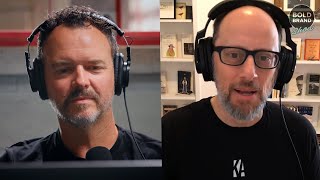
A short excerpt from a YouTube interview between Josh and Christopher Parsons (recorded Oct 6, 2025). The speakers introduce the topic of knowledge management, contrasting personal, anecdotal memory (Josh’s self-described “wealth of useless information”) with organizational knowledge sharing. The conversation is framed as exploratory and aimed at AEC (architecture, engineering, construction) firms that may be unfamiliar with formal knowledge management practices.
Chapters
I love technology. I love kind of geeking out on all things future and what the future holds. And I think even though there are a lot of firms who are maybe unfamiliar broadly with the topic or the term of knowledge management or they wouldn't call it that, I think there's a lot in this conversation that could really blow some. Some ferns minds. So I'm excited about that. You know, as I always say, as I'm telling my kids, I joke with my kids that I have a wealth of useless information in my head. Actors, names, obscure 90s grunge song lyrics. And sometimes when I'm like trying to remember a thing, it almost feels like if you can picture when you're waiting on your luggage at the airport to come around the turnstile, like you can see it. It's not here yet, but it's getting there. And I feel like knowledge management maybe is similar or different from that idea.
That's interesting.
Pillow said Chris.
Yeah, no, I mean, I think that's a really evocative, like, kind of metaphor to start with because it, I mean, I can think of three things that it. That it. That opens the door to talk about one, this idea between personal knowledge management and organizational knowledge management. So you gave a personal example. I think two is kind of like what knowledge matters and what knowledge doesn't. And then third would be what knowledge is kind of tacit or like deep in your kind of your being and what knowledge you can write down and like, make what we would call explicit in the field of km. So from a personal, like, I think I like that you started personally because, like, everybody manages their own knowledge, whether, again, whether they use the term knowledge management or not. I assume most human beings do not think I am managing my knowledge right now. But, you know, we have a variety of tools and methods for doing that. People write in journals, you know, people build calendars, people build little applications to track all kinds of things in their life. Maybe they track their mileage if they're a runner or whatever it is. So like, people have ways to kind of like manage all that information and to get it out of their head and get it somewhere accessible. So that's kind of taking tacit knowledge, which is knowledge that like, lives kind of within you. Tacit knowledge is the same root word as taciturn. So like silent. So you're taking silent knowledge and you're making it explicit, so you're making it visible. And that can be something as prosaic as what's the Weezer album that blah, blah, blah, like you were saying? Or it could be something deeper. Like, for what you do is, like, what makes for a good podcast interview, what makes for a good guest? How do I figure out what the next question I'm going to ask, when do I follow up versus moving to the next question? When, like, that gets to, like, deep areas of expertise which most experts have, they just don't know why they have it. Right? They learn this thing over time. It's intuit, it's intuitive. And if you ask Josh to, like, off the cuff, answer those questions I just gave you, you'd probably struggle at first for a while. Better if I could, like, play back a podcast interview you had done last week and say, like, right here, stop, like, why did you follow up there? And then stop again, like, why did you not follow up here? Why did you just let that go and move on to the next question. So experts and all humans have a ton of knowledge in their head. Some of it they're aware of, some of it they're not. Some of it write down, some of it they don't. And so I think taking that from the individual to the collective, we work inside firms with 30 people, 100 people, 500 people, a thousand people, like, whatever it is in AEC. And so all of these little organisms running around have all of their kind of personal knowledge. But then kind of the reason we work together in companies is to have, you know, knowledge add up to more, to be more than the sum of its parts, right? So if my AEC firm does sustainable consulting, you know, or we do healthcare architecture, we do bridge design, like, what does it mean to say my firm knows how to do this? Well, it basically means we have experts that know how to do this. And hopefully it means they've written some things down, they've turned things into training courses or best practices or manuals or videos on their intranet that they can use to transfer that knowledge and share that knowledge within the company so that when new people come on board, they can learn about sustainable consulting or healthcare architecture or bridge design. And so this whole idea of knowledge management is around managing your own expertise, but then also the collective expertise of your organization. And as things change like crazy, right? So new technologies come out, new regulations come out, new materials come out, everything's changing. So to say you're an expert in 2025 in sustainable design in July doesn't guarantee you'll be an expert in 2028 in July. So expertise is fragile, it's organic, and it moves around. And so the whole idea of knowledge management, right, is managing individual's knowledge, but then also the organization's knowledge in the face of change and continuing to learn new things, grow new things, and then forget things that are outdated and don't matter anymore. So I don't know. How's that for a beginning 101 into knowledge management?