Why AEC Firms Are Evolving Beyond the Hour Long Lunch and Learn
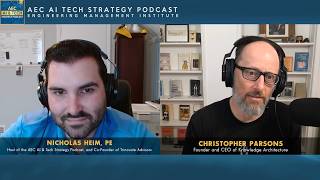
In this interview, Christopher Parsons critiques the traditional hour‑long “lunch and learn” sessions that dominate training in architecture, engineering, and construction (AEC) firms. He notes that these sessions are often recorded for credit but rarely watched, partly because they are mandated by licensure bodies rather than learner needs. Parsons argues that the hour‑long format is outdated, suggesting that learning should be broken into on‑demand micro‑content (10‑20 minutes) that can be accessed at the point of need. He proposes a tiered learning path where users can stop at an awareness level or dive deeper through successive levels, mirroring the short‑form consumption habits shaped by platforms like TikTok, YouTube, and podcasts. He also highlights hybrid models that combine brief on‑demand modules with live expert Q&A sessions, and emphasizes the role of AI‑driven search that can surface specific minutes of a longer session to answer a learner’s immediate question. Overall, Parsons envisions a shift from a one‑size‑fits‑all, schedule‑driven training model to a flexible, learner‑centric ecosystem that leverages microlearning, multi‑level pathways, hybrid delivery, and AI retrieval to improve engagement and efficiency.
More from Christopher

Human in the Loop? Testing Our Assumptions About Where People Add Value in Learning | Todd Henderson

Redesigning Work for the AI Era: How Greenprint Turns Implicit Knowledge into Shared Intelligence

Designing Learning Like a Product: Branding, Culture, and the Unseen Work of Building an LMS

Scaling Design Excellence: How Diamond Schmitt Amplifies Knowledge Through Learning and AI

From Tame to Wicked Problems: Rethinking Learning and Development in a VUCA World | Ellen Bensky

Learning at the Speed of Change: Adapting L&D to Your New AEC Workforce | Kristina Williams

Designing Modern Learning Organizations: Rethinking AEC Learning Development in the Age of AI

The Link Between Learning, Motivation, and Career Fulfillment for AEC Professionals


Why Communication Skills Are Foundational to Teaching, Leading, and Adapting in AEC F

A Framework for Collaboration and Quality: SMMA’s ISO 9001 Journey | Ryan Farias & Jessica Smith