Why AEC Firms Are Leveling Up as Learning Organizations Now | Turner Fleischer and Greenprint
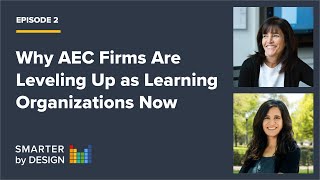
In this episode of the Smarter by Design podcast, host Christopher Parsons (Knowledge Architecture) is joined by co‑host Susan Strom, Ellen Bensky (CEO, Turner Fleischer) and Nicole Chavez (COO, Greenprint Partners) to explore why architecture, engineering and construction (AEC) firms are rapidly investing in learning and development (L&D) in 2026. The conversation frames the shift as a response to three converging forces: AI‑driven technology that makes knowledge searchable and automatable; a new generation of employees accustomed to on‑demand, flow‑of‑work learning; and a business environment where talent pipelines are changing (boom‑er retirements, fast‑tracked millennials). Both firms have recently adopted the Synthesis LMS, moving from ad‑hoc “air‑traffic‑control” knowledge routing (manual meetings, lunch‑and‑learns, scattered Google‑Drive files) to systematic, intentional learning pathways. They discuss how to balance on‑demand video lessons with synchronous, hybrid experiences, the role of adult‑learning principles, and the need for multi‑modal learning paths (videos, mentorship, live workshops, reflection activities). Ellen describes how Turner Fleischer is redesigning its wiki, creating concise SOPs, and integrating AI search to surface the right content at the right time. Nicole shares Greenprint’s rapid LMS rollout, the pain of information overload, and the strategy of consolidating tools into a single intranet (the Commons) to reduce friction. Throughout, the hosts stress that learning must be designed like any other AEC project—user‑centered, iterative, and adaptable—while acknowledging the lack of industry best practices and the importance of community collaboration (KA Connect talks, Smarter by Design newsletter) to co‑create standards. The episode ends with a call to view the firm as a “teaching organization” where every employee, not just L&D staff, contributes to knowledge sharing.
Chapters
Hello and welcome to the Smarter by Design podcast. I'm your host, Christopher Parsons, founder and CEO at Knowledge Architecture. My guests today are Ellen Bensky, the CEO at Turner Fleischer, and Nicole Chavez, COO at Greenprint Partners. Susan Strom, the Chief Client Officer at Knowledge Architecture, also joins this episode as a co-host, and our topic is why AEC firms are leveling up as learning organizations now. So Ellen leads an architecture firm. Nicole leads an engineering firm. Ellen's firm, Turner Fleischer, has been around for about 50 years, and Greenprint Partners has been around for just over a decade. Turner Fleischer has a formal learning and development program that's been evolving for a long, long time, and Greenprint Partners is much earlier in that journey. And yet both firms are investing in leveling up their firm's approach to learning and development and taking a serious rethink of the way they do it going into 2026.
So why?
And this is what we want to talk about on this episode.
Obviously AI is a big factor.
The expectations also of newer generations entering the workforce who are used to on-demand knowledge, right? They grew up with Google and YouTube and TikTok, and they want knowledge when they need it in the flow of work. And so a lot of our conversation was kind of finding the balance between creating on-demand knowledge and on-demand training opportunities versus the time when you want to go live and in-depth and have more human conversations, mentoring, shared reflection.
Right?
This isn't an either-or problem. It's a both-and problem. It's a yes-and opportunity. And so a large part of our conversation is about how you know when to lean into each one. So we also explored putting new learning experiences into the mix. So moving beyond the traditional 60-minute recorded lunch and learn and into new learning experiences designed with adult learning principles in mind. One of the things we talked about is how administratively heavy learning and development is right now. There's almost an air traffic control aspect to it where you're trying to route the right knowledge to the right person at the right time. And that's heavily manual and dependent dependent on a couple people that make the whole thing go. And both firms are looking at building much smarter approaches and systems to maybe automate a lot of that and take the burden off of individuals and let them spend a lot more time crafting those modern learning experiences in the first place. And more than anything, what I really love about this conversation, it feels like we're at the beginning of something. You know, in some ways it feels like learning and development in our industry has only really incrementally changed over the last 25 years. and it feels like we're on the beginning of something that's gonna radically change the way we do learning and development in AEC. And both Ellen and Nicole are right there leading their firms in the thick of thinking about what these new modern learning experiences look like. So it's a thoughtful, ambitious conversation with two leaders who are trying to get this right. And if you're wrestling with similar questions in your own organization, I think you're really gonna enjoy this episode. Okay, so Ellen Bensky of Turner Fleischer, Nicole Chavez of Greenprint Partners. On why AEC firms are leveling up as learning organizations now.
Here we go.
So Chris, you recently wrote the Smarter by Design issue on leveling up as a learning organization, and I'd love to know what feels so different and timely about that conversation right now in the AEC industry.
Yeah, so the background to this, for folks in our community who don't know, we've been running a private beta of our Synthesis LMS, you know, since, uh, late June, early July, and we're in 3 cohorts now. And one of the things that's been really interesting in those betas is that the conversation has been 20% about technology. Technology, and it's been 80% about learning strategy, philosophy, process, team structure, like all that non-technology stuff. That's been the majority of the conversations. And what most of the firms in the beta have kind of— they've all been doing learning and development. Like, you can't be an AEC firm and have evolved longer than 5 years and grown and added people without being a learning organization of some sort. So as you bring new people on, they have to learn to do their work. And as people move to new levels or you take on new building types, like, all that stuff happens. But what I think is true for most firms is that they were doing knowledge sharing, lots of lunch and learns or informal mentoring, learning on the project, which are all great things. Firms should continue doing that. But what I think that the LMS unlocked for them was a broader picture. It's like, well, we're not really doing systematic knowledge transfer. We're not understanding a system of how people learn the way that we do things in our company. If they want to become a project manager, do we have a systematic way of helping them go through that journey? If they want to start working on retail projects, as they worked on commercial projects, do We know how to do that. So it's raised all these questions about can we be more intentional? Can we do it more by design rather than being kind of serendipitous? So much learning and development is, at least according to the folks in our kind of cohorts, was X person is interested in this topic and they're available next Thursday, so they'd love to talk about it. And so it's a lot of catch-as-catch-can and we kind of go with what we have. And I think what has come out of this in order to like have a good learning management system and a good delivery, The bigger picture question is how do we get more intentional about being a learning organization? And they take a step back from actually creating content and they're having these much bigger conversations. So what I try to do in this issue is reflect back, you know, what I'm hearing in the community that they feel like this is a really great time to level up because the business is changing super fast. Baby boomers are retiring. There aren't that many Gen Xers just demographically. So millennials are getting put into these leadership positions. And management positions faster than ever before. And so like, how do we upskill them more quickly? You've got all this technology change with AI, with video tools becoming more accessible. You've got this expectation out of your workforce that I want to get stuff on demand. I want it to be quick. I want it to be to the point. I don't want to sit in an hour-long course 6 weeks from now. Like, just like, help me get the knowledge I need to keep making progress now. So like, I think that business driver, technology driver, workforce driver, like, it just feels like this is a moment for AEC firms to really rethink how they're doing learning and development.
Yeah, that makes sense. I'm feeling the same thing. I'm in the same sessions with you with our LMS beta firms, and this is so clear. Ellen and Nicole, you are not in all those rooms with Chris and I. You are in different rooms in your firms, and you came up to us at PSMJ Thrive like 2 weeks ago after this article was out and said like, this really resonates with me. So I'd love to hear what feels so timely and urgent about this leveling up learning in your organizations right now from your perspective. And I'd like to hear from both of you. Let's go Ellen and then Nicole.
Absolutely. And our story is so funny with this because we spent so much time thinking, oh, we have TF Academy, we don't need an LMS, and we do this all. And it's like, what I love about this is what I love about so much about new technology, whether it's AI search, like anything, it makes you reflect back. And suddenly we have so many applications for an LMS that are existing in our organization. And it's almost like every day we're thinking about a different use case for it. And now it's almost like, okay, slow it down. Let's try it out in one area. So for example, people and culture onboarding, we're doing this, but are we doing it great? No, we're not doing it great because it's a bunch of meetings set up and it's one at a time and it takes two people's time and it's not that efficient. And there's only so many hours in a day and in a week. And it's like, wait a minute, if we can put this up on an LMS and we can have it be a learning path that somebody comes into the organization and really goes through, we've just become so much more efficient. Efficient, and I'm sure in the end of the day, so much more effective. And now we're just looking across our studio and thinking, what else are we doing that we could be doing better if we leveraged the LMS? And that's across current workflows, that's across learning training that we're not doing, that's across tacit knowledge transfer of people. I feel like we're in front of that fire hose thing, right? With the LMS, it's like it's all coming at us now. We've unlocked all of the different ways to dream about this, and now it's sort of like, okay, let's try and let's get a system in place so then we can start codifying more of this within the system. So I'm just super grateful to be in this space where we can take that look across everything that we've got going in our studio and determine how many paths are we gonna have and how are we gonna implement this and how are we gonna use it.
I'd like to stay with that for just a moment before we go to you, Nicole. What is different about using the LMS for something like onboarding that for you seems like it unlocks all this other potential? What's the— and I know the technology difference, but I'm curious about the opportunity that you're seeing, if you could describe it more.
Yeah, yeah, no, that's a great question. So for us, and I'm grateful we've got a deep learning and development team, so we can take they're adult learning principles and we can leverage it into how we're creating content to have the best impact as opposed to the person who has the time meeting with the person. And sometimes those conversations don't necessarily go where you want them to go, right? We can be more intentional with what we want to learn when we get it up in the LMS. And so while sometimes it's good to have a free-flowing conversation, Sometimes you really wanna make sure that the information you're presenting and how you're presenting it is going to actually impact somebody's ability to take it in and learn while the other person isn't in the room.
So like quality, consistency, these kind of things.
Yeah. And so I think there's a space for everything, but I think what we're doing and we're looking at, okay, what is the design of our courses gonna be? And we're working with our L&D team to intentionally figure that out to try and achieve the best outcome, right? So then when we think about it across many things that we do, we'll be able to replicate a lot of the same theory behind it faster and get more out. Because once you open that mindset, everybody wants everything. It's like, oh my God, I want learning, not technical learning. I want this kind of learning. I want all the knowledge from this partner's head. All of a sudden I want it in here.
Yeah, that's really interesting. Thank you so much for sharing that context. All right, Nicole, I'd like to hear what resonated for you.
Yeah.
So, so we're small, we're 38 people, and we're just starting to dip our toes into learning management. Our world has very much been what Chris talked about, where it was just sort of serendipitous opportunities, lunch and learns, a monthly staff meeting where you hope you can get some information out that everyone can absorb, and then a lot of content sitting out on drives that no one ever really read. And one of the messages that I've been hearing from our team this year has been one of information overload. There is just, there's so much information, whether it's trying to get them up to speed on HR practices, new project management processes, new skills they're supposed to be developing to grow. And it's too much information. They don't know how to get when they actually need it. It comes to them when they're not in the space to really take it in. And then when they actually need it, they don't remember what it was. And I've been feeling a little bit paralyzed about like, how do I address this for my team? Other than just keep trying to get information to them constantly. And so one, just seeing that this is a problem for everybody, but then two, seeing that there's actually conversations happening and a path forward to try to address that was just really exciting for me. How can I create a learning management system that can help make that information available to them when they need it so that there's paths ready for them to go and I don't need to be the one kind of hovering over them? Oh, are you, do you need this information now? Are you ready for it? How can I get it for you? And I can focus focus more on building amazing content and having it be at their fingertips. And then the other thing that's, I think, a little bit unique to us is we're very multidisciplinary. So we have urban planners, civil engineers, and landscape architects, and we also very much have a learning culture. It's something we screen for. We look for all of our team members to be intellectually curious, and they love to learn from each other. So we not only need them to learn their own discipline, their own skills, but they benefit from learning— the engineers benefit from learning how planners think and how landscape architects think, and it makes them better engineers. And they are just crying out for ways to learn from each other. And it also is just, it's happening on projects where they're working together, or maybe they get to see it on a staff meeting, but to have more opportunities and for everybody to get to learn together is also something that people really, really want. And so seeing this learning management system as a way to try to actually better curate that and capture that and have it accessible at any time for everybody, I can just really see elevating our ability to truly be a learning organization.
It seems like Nicole, I'm playing back what, what I think I heard you say. Like on one hand you have a strategy, which I wouldn't even call it a strategy. You have an approach, which is we're just gonna broadcast. So we have this new thing, we're gonna tell everybody all at the same time because that's efficient. Or you do the thing, I like the word you use, hovering, where you're constantly having to figure out, well, I'm not gonna broadcast it. I'm just gonna hold onto this thing and I'm gonna move this thing to that person and this thing to that person. And we've been using this metaphor of air traffic control. What have we been talking about? Learning and development is trying to land the right plane at the right time and get people safely to their gate. We don't have to torture the metaphor too much, but I feel like that seems like the middle ground is, is really the alternative, the great one, right? Like not the crazy labor that you have to do hovering as a learning person, but then the broadcasting thing's not great for your people. So the sweet spot is just getting people what they need at the right time. Is that kind of where you're going?
Exactly right.
And, and I think a lot of it has been overly reliant on me to be in the right room to hear the need and make the connection.
Oh, did—
I hear you're wanting to learn about this. Let me connect you to so-and-so. So, and that is not a sustainable path. I need to take my brain, you know, as a founder and the COO and help get that out there so people can make those connections themselves. And I can remove myself from being that air traffic control and I can focus on building the content.
Yeah.
Which is something I'm really excited to kind of shift to.
So you are the LMS right now and you don't want to be the LMS anymore.
So true. Yes.
Right. I mean, I think actually one of the reasons I wanted to bring the two of you together, besides the reason of what Susan said about you both being in Chicago at PSMJ, is that you're both very senior in your organizations who led and drove the implementation of Synthesis as a knowledge base. And now, you know, your organizations are doing the learning management stuff. Ellen has a great story of them building something like 700 wiki pages in 6 months or whatever you guys did during implementation. And Nicole, similarly, over Christmas break, you basically built your intranet while watching TV. Like, do I have that? Is that kind of what happened?
That's, that's right.
Very talented.
I'm kind of curious, and maybe we can start with Nicole, why now in this journey for Greenprint, going back to maybe intranet and knowledge management, but as you look forward to learning and development, like why did that become an important thing for you to invest in at this point in your journey as a company?
Yeah, so we grew a lot in the last couple years. You know, we were like 10 people in 2020, and then it started in 2020, business really started booming. We grew to 20. Last year we acquired a landscape architecture firm, so we added a whole new discipline to our business, and then we hired 7 more people this year. So with that growth came a lot more people who needed to get up to speed, more processes I needed to institutionalize a bit to take us to the next level. You know, when you start hitting that 20, 30, 40, you really have to get a little bit more institutional in how you run the business. And my little system of an employee resources Google Drive that had all our policies and procedures was starting to falter. And I was, I was getting into that air traffic control, trying to connect older employees with new people. Catch older employees up to what we've been doing. And that's when the stress really started to build. And I was like, this is not working. And then I just saw, it was Susan, you did a webinar on something and presented Synthesis. And I was just like, this is, this exists. I didn't know this was an option. I thought I was gonna have to keep building things myself. This is made for me, for my industry. And I would like to just hire the people who know what they're doing instead of try to build things myself. I'm trying to make that my mantra. Hire people who know what they're doing and stop trying to build things myself so I can, you know, elevate. So I was like, this is it. This is what I've been looking for. And I was so eager because it solved such a huge problem of mine of maintaining this awful Google Drive and feeling like nobody knew where to get information that we signed up. When you are the decision maker, you can make a decision immediately. I had the problem, I had the budget, so sold. And then I was so eager to get the team on it that we decided to focus on getting our HR policies and procedures as what would help make it live. and I just spent Christmas break, I was just home with my parents watching TV. We'd put the kids to bed and we would just watch TV and I would just sit on the couch and I would just copy paste everything from that Google Drive into our LMS. It just felt like it, one, it was very therapeutic, but it just, I could just feel that burden lifting.
You're getting out of debt. Every, everything you move off, you're paying down a credit card. Yeah.
And yeah, it was therapeutic. It helped me move things forward and it got us off to just a really great start this year with. Really centralizing that information and then gave us a foundation to build on from there.
I think you signed in like December and Sarah Davies on our client success team who's running your project, I think post we got back from the holiday break, she goes, oh my gosh, y'all, Nicole built her internet over the holidays and it's like done. So yeah, it was funny. It's funny.
Yeah.
It's so interesting having both of you on because it's such a different level of resource. In your organizations. Nicole, you're kind of doing all of this now. You're at 38 people. And Ellen, you have a full L&D team and a KM team. So I just think it's, it's fascinating. I'm curious about kind of Ellen, for you, you've built all this stuff and you continue to be involved, right? You are at this table having this conversation and you have not let go of—
Nope.
Of this priority for the firm. And so I'm curious, like, being at this point where you have leaders, you could choose to step away a little bit if, if you decided that was like the strategic choice for the firm, but you don't. What keeps you in the seat with L&D pushing forward? I guess I'll also call out that you've spoken at K Connect on this topic multiple times. I've recently talked to someone who wants to work with Synthesis and One of the reasons why is I want to be like Ellen Bensky.
Right.
But then your view is we need to go to the next level. So internally you guys are like, but we're not— we're not where we need to go.
And it's so fascinating because I'm listening to Nicole speak and I feel like I'm in part in the same place Nicole is at because I'm looking at what we built and I'm looking at the pace of change and I'm looking at the need to take what we built, but But the needs of people are totally different now. And so we've talked about this, about like our project of redoing our wiki pages. And I need to stay in it because to me it's all part of driving the company forward because I can't drive the company forward to where it wants to go if I don't take everybody with me on this knowledge and learning journey. And so what I'm seeing and what I want to be creating so much of it comes back to KM and L&D. And so the whole concept of a new clarity and simplicity and having really concise wiki pages that explain why is something that, you know, I'm bringing across the organization and how we work and everything we do, how we work with our clients. Everybody in the world wants these things differently. So it's not just internal. It's also how we're dealing with people externally. So from my perspective of what the responsibilities of my role are, to look at all of those things and ensure we're moving forward as an organization. And knowledge management and learning are part of the foundation of it for me, for sure. And, and I think that, you know, Nicole, you said something that really resonated with me in terms of project management or like, how do people know what they're supposed to know of how to do things. And so one of the areas that I'm excited to be able to leverage the LMS in is those exact workflows. And so we've written a lot of wiki pages describing workflows, but, you know, I'm thinking if we can get them in learning paths and we can have people talking about them, that I think it'll make a huge difference. I know when I go into a room and I explain a workflow to people and they've got the wiki as a reference, having both of those together is really powerful. And so if we can leverage the LMS in Financial Project Management and I can walk them through, this is when you're doing this data review, this is why. And when you hit this moment, this is what you're looking for. I think that having the video and the explanation from whomever is the subject matter expert is going to be an incredible combination to get that why to people, which no matter how clearly we write the wiki pages and we're writing this paragraph of why do we do this this way at Turner Fleischer, there's something when you hear it from somebody themselves to be able to go through it in parallel. And so for me, Susan, I couldn't be the leader that I want to be if I wasn't constantly bringing all of this together and having it all be important and all make sense to the overall strategy of where we want to go as we continue down this journey. And I'm so grateful for two things. I'm so grateful for AI Search because not only is it a great tool and we can get knowledge, but it's showed us where we needed to get better. And I think the LQS is doing the same thing from a learning perspective. And so we knew, we knew technical training, we don't have enough Revit training, we don't have enough really technical training. We've got a big digital department. We're like, oh yeah, go talk to Artem. But this is giving us the impetus and sort of that push to actually get something done. Because before we had the ability to leverage an LMS, again, to your point, Nicole, it might have lived on Newton, but how were we going to get people access to it and know that they looked at it and could then see if it made an impact? So I think it's really important to keep sight of everything, and that's what I am privileged to be able to do. But I'm also privileged to have people that are experts in L&D and in KM really putting all of this together for us.
Yeah, I want to build on something you were talking about, Ellen, on the SOPs. PSMJ just recently had some bold statement that the SOP is dead. And I actually, I disagree. I think AI search is bringing back the SOP and I'm actually seeing the value. I'm just, I'm starting to see how it all fits together where you need these detailed processes. They're essential and I do not expect anyone to ever read them. But AI search makes whatever you need from them accessible at any time, and you can just focus on what you need. And then that also has been influencing how I'm thinking about doing trainings, because I think in the past I would have done a training like, okay, here I'm, I'm just basically reading you the SOP because I— this is my moment to get you to understand the SOP. And now I can give a training that's a little bit higher level, a little bit more about the why. Why is this important? Here's an overview of how it all works. And now that you've got that in your brain, you have the SOPs, you have the toolkit, and you can now dig deeper in that if you want, cuz you're so pumped up about this, or, you know, you can use AI search to get to the specifics when you're ready for it. Yeah. And I see it as this whole bigger picture of the detailed SOPs, the AI search, and then higher quality, higher level trainings that focus on the why instead of the how.
And that person, if they're not applying that SOP today, What's the point in teaching the detail of it anyway? Like, it's just gonna, it's just a waste of energy. Absolutely. I, I couldn't agree more with you that the SOP is alive and well for another reason that you didn't bring up. As we start having more agentic employees in our workspace, like if we ever want agents to be able to help us do work, you've gotta teach the agent the SOP, like even more important than an employee. In order for agents to work, they have the context, they have to know what good looks like. You have to teach them the way you want to work. And so you get this double benefit of really explaining how your firm works and standardizing. It helps employees have more clarity, but it also helps the AI agents of the future have more clarity.
And to that, Chris, if you've got an AI on top of it all, and you've got the subject matter experts talking about the why in the LMS and people, you know, and then you've got the wikis that are getting into the details of it, you've got everything that you need. Right, for people to get the, the knowledge that they need. And Nicole, for you as a growing organization, as you continue to add people and you continue to have more complex processes, what better way to onboard them to what's unique about Greenprint than be like, hey, you know, take these 3 learning paths over here and then take a look at these documents over here, and boom, you've got about somebody who's got both and can hit the ground running way faster. And that's where, you know, it, it never ends. Like even at the size I am, every time we onboard somebody, you can just imagine we have a lot of processes and there's a lot of whys. Why do we do things in this unique way? And I am so excited to be able to have all of that and to be able to have people and even people that have been here a long time. So I have the reverse problem because we've been around for so long. That I have people that, you know, these people exist and we know them, right? Like, I'm good. I'm going to just keep doing the thing that I was doing and I'm going to keep doing it the way that I'm doing. And then 6 months later, 10 things have changed and they're way behind, right? And they don't have time and they don't. But if they could go into an LMS and they could say, oh, let me understand why did they do this so I can bring people who have been here a long time with us as we continue this rapid pace of change.
But I think, Ellen, to your point, for that person, having videos that are succinct and on point and are done with adult learning principles, if it's 5 to 8 minutes of a video versus like, hey, it's in a staff meeting and we're going to ramble on. I mean, I don't mean to say that everyone rambles in staff meetings, but you know how it is. There's a way to be much more efficient and to the point in this scenario that connects with them. And I think the other piece of it I'm imagining this new world that you're both kind of describing. Like if I'm a new employee at Greenprint, I get some stuff from Nicole, I get some stuff from Aya, I get some stuff from April, and you guys are multi-office. So like I'm also getting to connect with these personalities really early and start figuring out who they are. And when you're telling them the why, you're also communicating with the nonverbal, like you're also able to communicate this is serious and we're passionate about this and this is beyond just text. You know, which doesn't—
I think that's a really good point. And even though we just have one office, we don't have people that know each other because of hybrid and because of things, or they're worried they don't want to go up and talk to Russell because he's like, you know, his name is on the door. But if Russell was describing something through a video and then they had a wiki and they could put all that together, they will feel automatically an easier connection to be like, hi, because they've gotten to know who he is as a person by listening to him share something.
Hmm.
Hmm.
We've mentioned a few times, and for anyone who's like not super familiar with at least the Synthesis LMS, it's on-demand learning. So videos, lessons that you can interact with on demand. So asynchronous. You're not in the room with Russell. You're watching a video of Russell, which extends Russell's reach and allows him to be Russell with 100 people a year without totally depleting him. And giving everyone the same high-quality experience, but not actually being able to ask Russell a question in the moment, which is also really valuable. And so one of the things that I've been thinking about and we've been navigating is when do we do synchronous moments and when do we do asynchronous moments and when do we really intentionally build some moments for hybrid learning where you do something asynchronous, you watch the video with Russell, But then you sit down and you talk with your PM about project finance, or you have 30 minutes with Russell and all the other new hires on a Friday to ask questions in a synchronous moment. Because we don't want to lose that, you know, we want to build relationships and connections. And I, I don't think having videos breaks relationships and connections at all. But I also know that there's this other part of it too. So I'm, I'm curious what you both think about that and if this is something that you're starting to form an idea on today. And it's also okay if that's not the case. It might be something that we'll be figuring out over the next couple of years and like, no doubt that will be true as well.
We're thinking about that as we speak. So redoing our whole learning community on Newton, our synthesis platform, to have it be across typologies of learning and not just focused on programs that learning and development may be offering. So right now it's heavy TF Academy focused. And so we're literally having an on-demand learning section in the community. We're having a program-based learning in the community. We're having mentorship as a path. We're having learning events as a different section to actually do all of that and have people understand we have all of these different ways of learning. And so if you wanna learn in an asynchronous manner, you go into the on-demand section and these are the tools that you have. And that's where, for example, the LMS will live. But if you really want a synchronous experience, look at the Academy and see all of the scheduled and planned opportunities that you can do that in-person or hybrid. And so it's caused us to really accelerate getting this way of thinking and getting this out to the studio sooner. Because we didn't have all of these different types of learning before. So it's, it's really pushing us to create our framework, whereas we always, we were, you know, typically too busy. We didn't have a framework. We were just doing, let's do this and let's do this. And now we're thinking in a framework methodology of, okay, if we're bringing this new program on or making it, what type of learning do we want to make it? So it's allowing us to be intentional. To make sure we've got balance across all of those.
Yeah, this is very top of mind for me right now because we actually just, just this week we did a live training on performance management. We have a new performance management process. And because of the sensitivity of performance management, we thought it would be better to do that, have an in-person one, get all the managers together and have it be a little bit of a moment. And also you can do a little bit more of that. Now we're going to take time for reflection. Now we're going to do a Slido and get your answers to these questions and see what everyone thinks, that, that interactive this really adds a lot of value. And then we're gonna follow up with, we're gonna record a recorded version that's just for reference, and then all the P's and toolkits will be on the Commons for follow-up. And so I'm trying to learn from that. It was really successful and it made me think like, when do we do this? Because I can also see myself being like, these videos are so great. I'm just gonna do videos from now on. So I think there's something about when it's really something new, something that's really new and changing the way we do business, like we gotta get people together to talk about it and learn about it together. And then we can have recordings in the future, whereas I don't need to get everyone together to talk about how to do Deltek VantagePoint stuff. No need for me to live present on Deltek. We can have office hours and we can have the videos about how to do things. And so, mm-hmm.
Yeah.
Just really thinking about when the value of getting people to spend an hour and a half of their time with us can really have a multiplier effect. That's when we should do it. But it's, it's a balance cuz it is taking people's time. And getting a bunch of people together at one moment.
That's an interesting lens, Nicole. Like the idea that if it's a big change and something new that you would do it that way. And I like— but then, you know, you're going to have a new employee join you 4 months from now who wasn't part of that and 2 more 6 months from now. And so they can do a purpose-built on-demand thing. But I'm wondering if you end up still doing like a flipped classroom type thing a little bit where here's the kind of content around how we're doing performance. But then I still wanna meet with you one-on-one afterwards to kind of talk through questions or do some role-playing or scenarios or whatever that might be. So you don't have to deliver the basics over and over again, but like you can have a higher level conversation about what it means.
That's a great point. And that's something I'm wondering too, is how to get those pause for reflection, write things down, talk with your partner, or the more interactive elements of it into the video-based learning is, is something I'll be kind of exploring as we move forward with this.
Well, one thing I should say just about the platform is for those that aren't in it, including you, Nicole, like your, your team is, you can have different lesson types. So you can have a video, but then the next lesson could be book a meeting with Nicole for 30 minutes to kind of talk through this. And then you mark that as complete. Then you go to the next thing or go read these SOPs, mark that as complete, then go to the next thing. So video is going to be one of the core technologies, but you could involve people in that flow that somebody could have an assignment that they have to go complete and then come back. So there's ways to have a more hybrid, um, kind of multimodal.
And I was I was going to bring that up, Chris, because we've been really thinking a lot about this, that learning isn't just one modality. If you really want people to learn something, it's not just hearing it once. And so that's what I'm really excited about, is creating these multifaceted learning paths that are interactive and that do have a few different ways of getting the same information. And then what I'm excited about is let's try that with this and see how it goes and get feedback. Back, right? Let's try it with just this. But because the LMS gives us the ability to leverage all different types of ways to learn, we're going to be able to really find out. And maybe it's, you know, people and culture things work better as this combination, and technical training works better as just this. But with the flexibility to create different types of paths, we're going to be able to really hone in on, on what works best and where. Right. And for whom.
Yeah. One of the things I've— we've been experiencing is that even within the folks working on LMS right now, week to week, folks are changing their approach because it's all new and we're figuring it out. And a lesson I'm taking away from that is like, it's just going to keep changing. We should not be too attached to any of our ideas about how it's going to land or how we're going to do things, what goes on demand and what goes asynchronous. Like, we have to be pretty fluid to evolve with our learners and to hear our learners. But that— I'm realizing that there's a flip side to that, which is our learners have to be okay with the learning methods changing. And we've heard a lot since the pandemic in particular that, like, people are exhausted with change. And so I'm curious if this is an area where we have to manage the learner's experience and give them a lot of maybe, I don't know, prep or warning or like not, not change the learning methods too fast because that is stressful. Or do we, is this okay? Is this okay? Is this an area where it's okay to change pretty rapidly because every change is in response to their feedback and we're taking a step forward for them each time?
Yeah, we think about that all the time and I think that there's no way to get away from the pace of change and that we just have to be sharing what our perspective on the pace of change for us is and help people through it. And even in the redesign of our wiki pages, we've changed changes already. You have to kind of be that way living in the world that we're living in. And so if we can create really agile change-based organizations, that's going to be— and this can be part of it. Then that's super exciting. The one thing that I will say that we're experiencing is when there's so many different options, we have to be able to say, okay, we're gonna go in this direction for now because there's so many different, even with our wiki pages, well, it could be a guide or this could look like this or this could be like that. And it's like, mm-hmm, let's pick a lane and let's do a few things in it and then let's see what happens. And let's get some feedback. And I even see that with our own team with the LMS. Oh, we could do this or we could do this. And I think that as an organization, like I said, being able to navigate change and know sort of when to go, when to stop, it's going to be one of the top differentiators in successful companies moving forward.
Yeah.
And one of the ways I'm trying to support our team through that change is by reducing the number of tools they have to use to do the things. They've got tool overload. And so Yes, we're gonna roll out a new way of learning, but it's gonna be all in the Commons, which is our Synthesis intranet. It's a tool they already know. It's a platform they're familiar with. The more we can centralize things, the fact that they can find things in the Commons now instead of having to go into Deltek. I think by giving them less friction for how to get the information and then showing that the change is in the context of the tools they know and love as opposed to here's another tool. Oh look, we have a new LMS. That's a different tool in a different system in a different entry point. I think that's what I can do to help support them with that is just give them fewer tools and fewer entry points to get everything that they need and do their daily processes.
So the reason we started a newsletter called Smarter by Design, and now the podcast, goes back to this idea that AEC firms should spend as much time designing their businesses as they just spend designing buildings or bridges or roads or whatever they're working on. And what I love about this conversation is it's been very much a design conversation. It's how can we create a better experience? And, and the users are, are, it's user-centered design, right? At the heart of building a really good learning organization. It's informed by adult learning principles, but it's done with empathy. It's not just the most efficient way to get content out if people feel like it. It's really like, how do we design ourselves as a learning organization? And it reminds me, there's a book called The Living Company by Ari De Geist. And in that book, he studied the companies in the world that had lasted the longest. He's got some 300 or 400 or 500-year-old companies in that book. And the famous line in it was, the only long-term sustainable competitive advantage is learning faster than your competitors, right? And learning, you could substitute the word adapting. It's all in there around evolution. And I think what you're both talking about is this thoughtful, not science project kind of chaos, but we have to keep changing. We have to keep moving quickly, but you want to do it in an intentional calm, strategic, thoughtful, user-centric way. That's what I'm hearing from both of you.
Yeah.
I also feel like I'm constantly redesigning my role in that speed. A year and a half ago, I did not know the word knowledge management until I saw your article. I did not know the word adult learning principles. And now just in the last few weeks, I have this whole new vision about learning at our organization. And I'm like, do I need to become an instructional designer now? Like, you know, I, it's just, and, and this is what I love about I love about my job, I love about being a CEO, is to continually reinvent, but how I choose to reinvent my role has implications for the business because it's all in service of that business. So that, that's, yeah, part of the fun. I personally do well with that change, but my job is then to minimize, to create positive change for the team so that they can do their job better. You, you use the term like the half-life of knowledge I think is shrinking and that I feel that so deeply, just how quickly things change so much faster than before. And how can I keep up with it and keep my team up with it in a way that's not overwhelming and is maybe energizing as much as possible.
Yeah, I had a really interesting experience today where somebody couldn't understand the process of how to develop a new guide on Newton, and they dove in and they just threw a bunch of information up and it wasn't thought out and it wasn't organized. And then they were frustrated because they got feedback that, that, now did you think about this? And, and so I was like, wait a minute, let's just think about it. If you were in a project, you start with schematic design. You have to design how this thing is going to look. What is your intention for this? And then you get into design development where you then codify that and you start creating. Okay, that's what I thought, but now what does it look like and how does it work together? And then you move into construction documents and you're like, okay, 'Now I'm gonna add the heavy details and how is this thing gonna actually be built?' And I was like, 'That's all we're doing when we're creating and codifying knowledge, right? You have to have your idea and your design and then you gotta put it together.' And they were like, 'Wow, I get it now.' And it's like, it, it is all design and it's all design. I mean, our, our purpose for our company is we make lives better by design and I use it in conversation 10 times a day. I'm like, look what we're doing. We're creating something new and we're doing it by design. We're thinking about it. We're intentionally thinking about how this thing is going to happen. And to your point, Nicole, and that's why I love my role, and what I can say is you'll get to a point where it's like, no, you don't need to become an adult learning expert. You just need to hire one. And when you get to that moment, that's going to be an excellent moment, right? And that's how you have the ability to scale and continue to make these things truly important.
Until you do, though, and maybe I'll just kind of close this out here, you know, there's, there's change, there's design, there's learning, there's adaptation happening at the firm level. But then, as Nicole kind of pointed out, it's happening down at the individual level. And as you said, Ellen, with this person kind of having some light bulb bulbs turned on for them. We're also thinking about this at the community level too. So we're all in this knowledge architecture community in the position of uncharted waters. Nobody has tried to build knowledge management, learning management, AI in the middle of this. There's, there's no best practice. There's nowhere to go find out how to do this. We are inventing this together as a community, and we're going to go faster and get smarter as we evolve. And so part of what I hope comes out of that is I think Nicole could learn a lot about, well, first of all, she has Google, so can go learn some things there and watch some YouTube videos. There could be a consultant, but I also think that the community, we're gonna try as a group and show how, what good looks like.
Yeah.
And not even just like generally adult learning principles, but like what good looks like in an AEC firm, maybe of different scales for different learning content types. We'll do what we've always done in this community and try and connect people to the best ideas in the community so we can all move faster and better down the road.
I can build on that. Yeah, that an LMS team that I'm thinking about on Newton are the KA Connect talks. It's like, okay, interesting. You wanna learn about— I just have a new marketing manager start. I've already given her 3 talks to listen to because I want her to understand how others in the industry are doing this. And we've never had a person like her start before with her background and her caliber. And right off the bat, first day, it's like, okay, listen to this one, then this one, then this one. And then we're going to talk about it and what resonates with you, what resonated with me. So leveraging the KA community to actually in my studio teach is something that I'm truly excited about. And I think this community is awesome.
I love hearing that. I thought you were going to say something different. I thought you were going to say, because I have heard from your team that they're building a course on how to teach.
Yes.
Using adult learning principles. So I think there's that whole, there's a lot of kind of imposter syndrome that people are feeling. I'm not an instructor, I'm a project architect. What do I know about teaching somebody about how to do this thing? And I think all of us are gonna level up as orgs, as a community, but then as individuals, not even in the COO or the learning development role, but all of your people can get better at teaching, which I think will make them better leaders within their teams. They'll make them better going out in marketing and chasing work. I think just getting better at these things We'll just level everybody up and we're excited to do this.
We, I was just gonna add one more thing to that. We do that with TF Academy. So when we teach our instructors how to teach in the academy and my, uh, learning, you know, specialist does it, I can absolutely see a difference in their client presentations and in the way that they're interacting with clients. So we see that on a daily basis. It all interacts with everything.
Parting thoughts, Susan Strong?
It reminds—
I'm thinking about— I think this is Ellen, one of your K Connect talks, I can't remember which one, that we need to become a teaching organization.
Yeah.
And that's really resonating for me right now as we think about this leveling up.
Great. Well, thank you two for being here and joining us. We appreciate all of your insights. Lots of good ground covered here. And we're more importantly looking forward to going on this new journey of learning how to design modern, AEC learning organizations with both of you and your firms.
Awesome.
So thanks, and thanks for everyone in the community for listening.
Thank you. Wonderful. Thank you so much.
Hey, thanks for listening. If you like what you heard, you can subscribe for new episodes on YouTube, Spotify, Apple Podcasts, really anywhere you get your podcasts. And if you've got comments, feedback, or ideas for future shows or guests, you can email us at smarter@knowledge-architecture.com. Thanks for listening, and we'll catch you next time.
[MUSIC] From Dublin to Millbrae, Orinda, San Bruno, Ashby to Concord, our Delhi City, my favorite transportation. No matter what your station, wherever I need to be, I taste the air, our tea. Wind of the park, wind of the park, wind of the park, it becomes whatever
More from Christopher

Human in the Loop? Testing Our Assumptions About Where People Add Value in Learning | Todd Henderson

Redesigning Work for the AI Era: How Greenprint Turns Implicit Knowledge into Shared Intelligence

Designing Learning Like a Product: Branding, Culture, and the Unseen Work of Building an LMS

Scaling Design Excellence: How Diamond Schmitt Amplifies Knowledge Through Learning and AI

From Tame to Wicked Problems: Rethinking Learning and Development in a VUCA World | Ellen Bensky

Learning at the Speed of Change: Adapting L&D to Your New AEC Workforce | Kristina Williams

Designing Modern Learning Organizations: Rethinking AEC Learning Development in the Age of AI

The Link Between Learning, Motivation, and Career Fulfillment for AEC Professionals


Why Communication Skills Are Foundational to Teaching, Leading, and Adapting in AEC F

A Framework for Collaboration and Quality: SMMA’s ISO 9001 Journey | Ryan Farias & Jessica Smith