Lance's July 4th Broadcast
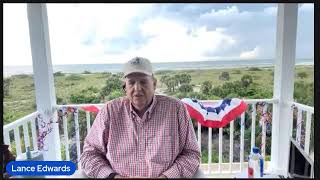
Lance Edwards marks 20 years in real estate by launching the Wealth Mastermind Network, a platform using AI to find and optimize small apartment deals (2-100 doors). He's selling a $1,500 course for $1 and giving away a free book, plus hosting buying tours and masterminds. He's also raising money for Fairmont Village after a June storm.
Questions this video answers
July 4 (20 years prior to 2025 — i.e., last day as an engineer was July 4, 2005 as stated).
Anywhere from 2 doors to 100 doors.
$1 (regularly $1,500) via wealthmastermindnetwork.com mfs1buck.
Donate at fairmontvillagerelief.com; minimum $25 donation. Email the GoFundMe receipt to clientcarecgllc.com to receive the Black Book PDF.
June 15 (Father's Day), year implied 2025 from context.
Chapters
Sa.
Well, hello everyone. Happy Independence Day. Happy fourth of July.
Welcome to this beachside broadcast where we've got some beautiful weather behind me. I can tell you, two hours ago that was pitch black.
Everything was up in doubt. But welcome to our anniversary celebration, 249th birthday of our nation's founding. July 4, of course, 1776. Of course. A little bit of a trivia for you. The Declaration. Despite what the photos show, there was everybody signed or the paintings show, everybody lined up on July 4th to sign the Declaration of Independence. Didn't happen that way. They actually signed it over months. But that's the official declaration date. And here's another little bit of history trivia for you is that 50 years later to the day, July 4th, 1826, Thomas Jefferson died. 50 year anniversary. And on the same day John Adams died. Second and third presidents, they, they were, if you know this history, they were good friends and they became political rivals. And late life, they became good friends again. So just a little bit of history trivia. But welcome. And this is an anniversary date for me.
And that is 20 years ago. Today was my last day of employment as an engineer. We talk about that little story a little bit here. We get a little bit later into our presentation. So I thought this would be an appropriate opportunity to.
Not so much to celebrate, you don't care about my 20 year anniversary, but to talk about what I've learned over the last 20 years and how we're going to impact you and me over the next 20 years. And so that's what we're talking about today is looking back, lessons learned and then more importantly, looking forward with what we're doing with our wealth, Mastermind, network and small apartments. I've been very anxious and excited to speak to you guys about this. This is something that's been, well actually say it's been 20 years in the making, but it's been concentrated effort, activity in the last two years that I'll be sharing with you. If you have followed me for any period of time at all, then what you're going to be seeing here is totally new. Brand new, brand new. And so I'm very excited and very honored that you're joining me here today. And with that now I'm joined with my colleague Larry. And Larry, you know, let me tell you, this is a very high production show we're doing here. This is the marvels of technology and software. What we're doing. It's just amazing. Larry is in Colorado, he's controlling the scene. So if anything goes wrong, it's Larry's fault. It can't possibly be mine though. I was just sitting here fumbling around just moments before we went live, trying to figure something out. So if we do have some hiccups, blame me, but I think it's more important. I just wanted to be able to come share with you guys what's new with small apartments and how it's going to benefit you. So Larry, if you'll, he's gonna be prompting me with my slides as well. And welcome for all of you that are watching me on Facebook. Welcome all of you that are watching on YouTube live. And there you go. Voila. Look at there. And so this.
If you saw leading up to today, the, this is, we call it from seminar to platform because the reason for that and this is from my business standpoint, we are no longer a seminar company. We are a platform company. And many of you know me or knew me as a, as a seminar company. We used to run monthly three day seminars around the country. This is before Pandemic. We traveled different cities around the country, put on three day seminars, fabulous content. The Pandemic hit, we had exactly 72 hour notice to pivot from all in person to all virtual, which we did successfully. Very proud of the team for pulling that off. And we did virtual monthly all through the Pandemic. Some of you were there and then we went at post Pandemic, we went to hybrid both with a combination of some people in person, some people are virtual. But we are now a platform business and I'm going to be giving you examples of the platform throughout this presentation or our time together. I should say that it's not a presentation. I'm going to be doing some recounting, going to be answering questions, having some fun, doing some giveaways.
But we have shifted to a platform company and it's my intent to show you what that means to you and how that's going to benefit you. And part of that is a label called Smart Real Estate. I'll be defining, I'll be defining that for you. But today is officially the launch, the official launch of the new platform Wealth Mastermind Network. And just very excited and honored that, that you're joining us, are joining me here.
Today. And Larry, if you bring up next slide please.
So the way I've laid out the presentation, again, I keep calling it a presentation. I do have some remarks with photos and stuff. There's 12 segments now. I realize not everybody's going to be here for a three hour session. This is one to four central this is an open house. People are going to be coming and going and we're going to. It's going to be like we're sitting here on the deck. This is my home here in southwest Florida, place called Palm Island. And I'll talk about Palm island here a little bit more and what significance of this is. But we're on my deck and we're just gonna imagine we're on the deck here having a chat and we're gonna be chatting about. I'm gonna be just recollecting, sharing some photos. I promise you I will not pull out the old family home videos and bore you with that. But I do want to use some lessons learned along the way and have some conversations around that. So I've broken it up, 12, 15 minute segments.
Talking about some aspect of the platform, talking some aspect of what I think is important. We will, with every 15 minutes we'll have a Q and A session live. Of course, we are live. At any time. At any time, you can type your questions and answers into your comment box. Whatever platform you're on, put the questions and comments. And Larry will be, through the power of Technology, there'll be a banner coming up. He'll put your question and your name, your first name, to recognize, acknowledge you. And I'll be answering the questions live. So every 15 minutes. But anytime you can submit your questions, we'll just be pausing on these 15 minute breaks. Also, do me a big favor. If you enjoy what you're hearing here, then like it, Share it. If you're on Facebook, share what you do. If you like what you're hearing, share it right now. Because I want to, I want to tell you part of what makes this platform work is what I call strength in numbers. Strength in numbers and means not being alone. And that's a big theme. We're moving away from the solopreneur model to this model where it's collaborative model. All the pieces are in place. There's benefits to collaboration, there's benefits to strengths and numbers, all of which I'll be revealing. So I'm going to ask you if you like what you're hearing. Share. Maybe you'll do it right now. Share this post or however, this broadcast on Facebook. If you're on YouTube, hit the subscribe button. That makes sure you continue to get all the content that we're putting out here. And if you're not following me on Facebook, go ahead and do that now. You can, I guess, find that at the top of the screen. So that's my Request. And I'll be reminding you of that throughout today's broadcast. All right, Larry, if you would, next slide. So what can you expect today? Well, I'm going to give you a summary. I'm going to give you a preview, what to expect today.
We've already announced this is anniversary of my independence from employment. The anniversary of the country's independence from England.
And recognizing. Honoring them and all the sacrifices they made. Which, by the way, if you've ever read a book, read any book about the American Revolution and how close it came that we would not be here as Americans right now. I mean, many times it was. It really came down to George Washington. If you know the story of George Washington, that man's.
Willpower just wouldn't give up. He held the army together. There's another gentleman that basically bankrolled the United States. I mean, for one of a few people, things would be very different right now. So we're celebrating that. This is the 249th anniversary. Next year, we'll be celebrating 250 years as a nation. I can remember the 200th anniversary. I was in my teens, I think around 13 years old at the time. Remember, that was a big celebration. And so this is. And this is also a launch celebration. I'm going to be sharing with you what's new. I'm going to be explaining to you why we've made these pivots, why this is important for you, why this is going to benefit you again. I'll be telling stories along the way of my. What, you know, the 20 years that led me here. I believe everything that we do in our past prepared us for today. Every experience we've had in our past, good or bad, prepared us for today. And I believe if we adopt that mindset, everything happens for a reason that serves me, then we can always draw value out of our history. And you can be like me. You got a longer history, you have more value to pull out of it. So I'll be sharing my lessons learned from that. I do have some guest interviews for today, both human and AI I'm gonna be interviewing. We'll be doing an AI interview how I. I wanted. This may be the first. I'm gonna at least take credit for it. I'm gonna be interviewing AI about small apartments. And I'll be making my case for you. If you're not involved with AI now, you absolutely need to get involved. I'll make that case today. I've got a bunch of giveaways, bunch of stuff. We're gonna be Giving away. I mean, you're gonna love this. Of course we answering questions we took at any time. Again, reminder, type them into your comment box, wherever field you have on your platform. And I want us to have some fun. This is a fun day for me. I always love fourth of July. I always love fourth of July at the beach. I was raised in Florida. We were always at the beach. And, and so it just, let's just have some fun today. Thank you for being here. Next slide please, Larry. So, you know, I've been the small apartments guy since, well, I got started in 2002, over 20 years. And so why do I stick to small apartments? I might have some folks here. By the way, we have in the audience, we have in the audience, some of you, many of you been following me over the years. Thank you, welcome. Some of you, first time, first time you've heard of my voice, first time you've seen me. And for everybody's benefit, why small apartments? And.
If I was doing a webinar, and we're not, I'd give you a whole list of reasons I'm going to tell you right now. This is the last overlooked frontier in real estate. Nobody focuses on this space. Everybody focuses on single family. The institutions and the hedge funds focus on the large apartments. Nobody's going after the small apartments. This is the world of mom and pop owners, mom and pop landlords. And that is the opportunity right there is to be able to acquire these assets, take control of them and enhance the experience for the residents. Put professional third party management in place and do I call potentialize, take them to their true potential, create more value for our residents. In return, they give us more value back. That is the opportunity it has. Every single project I've ever done have played out that way. And it's cookie cut. Someone I was given this, I was discussing this with a developer one time that developed apartments from ground up. He says, oh well, you're getting like development roi, but you get it up front. Exactly. That's what we do. And, and it's also a place where you can scale, you can rapidly scale up through leapfrogging. You can start small, you can do bigger and bigger deals. You can do be at 100 doors within four moves through the leapfrog effect. So all that's why small apartments is so good as a vehicle, whether you're already in it, whether you're getting started, because you can scale so fast now financially, I'm just going to give you the rule there at the bottom of that slide here's four ways we profit with small apartments for as long as we own them. We. We get cash flow. We put a management team in place, we get mailbox money. Second way is we get something called forced appreciation. Every time I raise the rents, every time I raise the occupancy, it forces the value up predictably. Absolutely instantaneously. Absolutely predictably. So I get cash flow, I get forced appreciation. And as my renters are paying down my mortgage.
You know, this house I'm in, to pay my mortgage, I have to go to work. I got to go do something to pay the bank on my apartments. My residents go to work to pay the bank. And so that's what the rental property is all about. And over five years, this mortgage pay down could be substantial. And then the fourth way we had cash flow, we had forced appreciation, mortgage pay down. The fourth way is the tax deductions being signed today, if not already signed by the president. The new tax bill is in effect whether you're for it or against it. What's in it is the reinstatement of something called 100% bonus depreciation, which is a gigantic, huge tax benefit that when you buy an apartment in the same year that you buy, you could buy it on December 31st. If you close on December 31st, you get 100% bonus depreciation credit, which basically wipes out your tax bill in gobs. Okay, that's being signed, if it hasn't already been signed today. So that's why small apartments. That's why I stayed in small apartments all these couple of decades. Next one, please, Larry. So we're celebrating 20 years.
Since I left corporate America. I spent 20 years, you know, as an engineer. I was trained as an engineer. I was trained as a chemical engineer. I got entered the workforce in 1985 as a chemical engineer. I was a professional engineer. There's my. That's actually a photo of the certificate. Professional engineer means you take state exams and you recognize professional engineer. You can hang your shingle if you're so inclined. I never did that as an engineer. I always worked for someone else. But I came out as an engineer in 1985. Now, 1985, for those of you that weren't around in 1985, was a time when computers were first coming out.
I mean, they were just coming out. They were mainframes. There were no. Forget about personal computers. They didn't exist. They were mainframes, big computers. And I remember when I was in college and I was studying computer science, and you would submit a deck of cards. They were punch cards. That's how your code was written. This punch machine would have a big deck of cards and you'd put it in a box and you'd hand it over to a guy through the door and he'd take your deck of cards, put it in an IBM 360 machine, and it would read all those cards, load it into the computer, and it would run these very simple programs. And that was the best practice in computer science. That's 1985. Think. I think by.
Well, that was when I first got started in 1979, by 1985, started having monitors, started having rudimentary computers, starting to get into the 90s, late 80s 90s, started having actually notebook computers. They were like $3,500 a piece and $1990, I mean, they were big as a brick and totally different world at that time. And when I came out as an engineer in 1985, I, you know, it was pretty clear, the writing on the wall, that computers were going to be a big deal. Nobody realized how big a deal everybody thought of in terms of. Everybody thought it was going to be more office applications. Nobody really realized the personal computer impact that came later with, with Steve Jobs and Bill Gates. And so when I was studying, I was studying computer science and I said, well, I want to find some good application of computer science. So I got into engineering, chemical eng. And I had a master's degree that I studied how to apply computers to chemical engineering. That was my specialty because I could see what was happening, just like we can see what's happening with AI right now. And so that led me. When I came out in 1985, my specialty was computers and chemical engineering. And I had a subspecialty under that I would design computer control systems. I'll talk to you more about that in a moment. But I was there at the forefront of this. How to apply computers in an area that had never been done before. Chemical engineering, literally at the forefront. And that's where we are now today with AI. Matter of fact, I'll give you a statistic.
There's something called Moore's law with computers. When the computer chips, the power of computers used to double every two years, the chips got smarter and smarter. They'd put more and more stuff on a chip so the computer power would double every two years. And that transformed the planet. You don't even people if you didn't go through that era. When I grew up, there was no email, there was no Internet, there were no cell phones, there were no voicemail. This, they were figuring it out on the fly. AI. That's where we are with AI right now, except AI Whereas computers doubled in power every two years, AI Is doubling in power every six months. It's growing four times. If the power is growing four times as fast, it's changing weekly. So I'm saying this, you're going to see AI through everything we talk about today. This is not a question of if you get involved with AI you will get involved with AI because otherwise you're going to find yourself obsolete. I hate to break this to you on Independence Day, but AI is just moving that fast. And I'll be giving you examples. We're gonna be, I'm gonna be interviewing it. I'm gonna be showing a new tool, a new product, just released my product. And so that's, that's where we are right now. Next slide, please, Larry. All right, so let me tell you where we're broadcasting to from today. This is my home. This is.
That'S my home. That's. We're on an island called Palm Island. We're in southwest Florida. If you see the house with the gray roof, that's a metal roof. That's old Florida style. Old Florida style roof. All the, all the homes out here are old Florida style. And if you look at the back edge of that house with the gray roof, I see at the upper, at the top, there's a little portico out there. That's the deck I'm on right now. This is the Gulf of Mexico, Gulf of America, whatever you want to call it. I've known it for the Gulf of Mexico my entire life. But that's the Gulf behind us. And this strip of island, this island is called a barrier island.
These islands go all the way up and down the Gulf, and they are a barrier between the Gulf and the mainland. They were part of God's plan. They designed these strips of land, these little islands, and they are designed to be the brunt, to take the brunt of hurricanes and bad storms. We, we're the, I guess, I don't know, we're the first line of defense when the, the Gulf gets churned up. And this island does a very good job of being that front line of defense. Let me show you a photo, Larry, if you bring up the next one. This is the front of my house. This is September 2022. On the left hand side, I took a, I took a picture of this, of the house as Kim, Kim's my wife. As Kim and I were evacuating the island for Hurricane Ian.
Hurricane Ian and we evacuated. Hurricane Ian was making a beadway straight at us. We evacuated to Miami because it was forecasted to go hit southwest Florida and then roll up north, which it did. The right hand side is the house. After the boxing match with hurricane Ian. That's what the house looked like when we came back. We got back in there about three weeks later. Now, thank goodness and I'll give credit to American engineering, that house survived. They had 150 mile per hour hurricane winds and the house was standing. And if you saw Fort Myers, we have any folks from Fort Myers, they got even heavier hit with Ian and they had a wall of water come in and devastate their barrier islands and their beaches down there. I mean like a 10ft wall of water. So if you look at the house there, that's 2022, that's Hurricane Ian. It displaced us. We didn't have power, we didn't have water. If you look on the, if you're looking at the house like you are, look at the right hand side up at the eaves and you can see it's black up there. That's because the soffits have been blown out. This area right here, I'm pointing to it right here, the soffits were blown out, the winds blew it out. The whole whole house stood. But the weak point was those soffits. It blew the soffits out and those 150 mile an hour winds blew water up into the attic by the bucket loads. And what happens, what do you think happens when you put a bunch of water in your attic? Well, nothing good. You have a giant petri dish, it comes down in the ceiling, it comes down into the walls and your house just became a black mold petri dish. And so it had to be remediated, had to rip out a lot of sheetrock in the house and the ceiling and the walls and dry the place out. It was.
Ongoing endeavor. Let me put this. And so that was hurricane Ian. And then we got things back. We ultimately moved back in the house probably about eight months later. And then this last year, 2024 in September and October, two hurricanes hit us two weeks apart. Hurricane Helene. Hurricane Helene rolled in here similar path to Ian. And for the first time ever on this island there was five feet of water. The island disappeared for a while. The gulf claim took it back. And the gulf went from uninterrupted from out there to the mainland, there was five feet. Now this house is on stilts. You can maybe you can see there, I'm 16ft above the house. The first floor of the house, the living room is 16ft above the grade, and the grade is 5ft above sea level. So that's 21ft above sea level. But we had 5ft under the house. That was Hurricane Helene, you know, made a mess, you know, didn't really. Things were still livable. Two weeks later, two weeks later, Hurricane Milton comes through, says, hold my beer and put 8ft of water under this house. And came through with a vengeance. It tore out. It didn't tear out the pilings, but it tore out any structure we had underneath. We had stuff scattered all over the island. Golf carts, people drive golf carts out. Golf carts were physically moved all across this island. We found furniture all over the island. And it tore the roads out. It dumped three to four feet of sand in the road, or it left big potholes. It tore water lines up. It tore electrical transformers out of the ground. That was Milton two weeks apart. And that was a big cleanup. And we're just now getting back from that. I actually had, you know, move to, to Houston for a while because Ken was dealing with contractors. I didn't come back until February. So that's where I'm speaking to you right now. That's testament. Testament to American engineering. These structures still stand. So that's what we're speaking to you today. Next one, please. Okay, so let's get into. Let's get into what we'll be talking about the topics today.
We talked about why small apartments. Now we talked about that up front. We're also going to. From seminar to platform. I mentioned that we're no longer a seminar business, we're a platform business. Platform means all the pieces are in place.
All the pieces are in place. You do small apartments. I'll be explaining all those pieces to you. Smart real estate. This is a new category that we've made possible through the platform, through collaborations, and it's amplified by AI. Now, let's be clear about this. AI is not replacing what we do, but it's amplifying what we do. We're using it to do things faster, better, and automating, doing automation. I'll be giving examples that today. Next one, please, Larry.
And I've got to get these up here so I can see. Also what we've done with the Wealth Mastermind network is there's three stages on the journey to small apartments. If you've ever heard me speak before, you've always heard this. There's first of all, there's first deal. That's the Launch stage. And for those of you that are looking to get your first deal, that's. There's no scarier deal than the first deal. Why? Because we've never been, you know, we have no framework for this. We weren't taught this stuff in school. But it's most important deals, the first deal, that first check. And the quicker you get the first check, the quicker you get your confidence and you're rolling along. And then there's the growth stage. Once you have your first deal done, then it's rinse and repeat. How do I scale up? That's the growth stage. Many of you are in the growth stage right now. And then the third stage is when you get into thinking about your legacy, your generational wealth. That's the legacy stage. And there you're thinking about how are you going to pass it on to your heirs or to your favorite cause. And that's the stage there. All three stages exist.
Each of you are in one of those three stages. But there's a different mindset to each of the three stages. Well, we've designed the platform to accommodate the launch stage, the growth stage, and the legacy stage. We meet you where you are and take you forward. Everything's ready, all the pieces are in place. You just plug it in. That's the power of the platform. I'm going to give you examples of that. And of course, all of this is done without landlording. It's also done without workload. Now, I know a number of you are small apartment owners or you own small rental properties and you're doing the landlording yourself. And I'm telling you what I'm preaching and what I'm espousing is no landlording. It's not the highest and best use of your time. It has a tremendous toll on your opportunity cost and many times a tremendous toll on your health. And it's unscalable. It's unscalable. So what we're talking about is wealth creation without landlording and without workload. Next slide, please, Larry. And the other thing I'll be talking about what we do now, if you've. Here's what's different than the seminar mod. The seminar model is very much a lecture model. And I get it. Did that for. By the way, this month is the 18th anniversary of my first seminar. I'll show you some pictures, what those used to look like. So but in the seminar, and I used to do monthly seminars for a very long, long time. It's a lecture model. Everybody's familiar with the seminar Model.
What I've done to change that is provide experiences, experiential.
Training, experiential proof, I call it. See results in advance. We do live demonstrations in person. We do live demonstrations virtually to show how it's done, to see it done, and to give proof of how it works. You'll be here. We talk about buying tours. This is a great example of a live demonstration of seeing the results in advance. Where we're actually touring properties, walking these properties, making offers. We'll talk about that. We're doing it virtually now too. Our green light AI, where we actually greenlight deals now is AI amplified. I'm going to do a demonstration of apartment AI here today while we're together here on the beach. This is the new product I have right now. We have a certified deal finder program. There's dashboards that people are finding the deals for us. And we're building authority sites using all these tools. And I'll talk about these authority sites later, that even you have no experience. This puts you into the game immediately. And then the next thing we'll be talking about is the ecosystem of partners. This is a people business, right? Real estate is a people business. We talk about collaboration. This is not solopreneurship. You do not go out and do this alone. If you are alone, that's when you get stuck. That's one of the main lessons I realized over 20 years it got kept me stuck. And it's really, if you're alone, you're going to get stuck. And so we bring in all the people. There's deal partnerships I'll be talking about today. Done with you, deal partnerships. Done for you, deal partnerships. Something called the Mastermind Marketplace, where I have certified deal finders who are certified to find these qualified deals, bring them into the Mastermind network, put them into the marketplace, and you can team up and get your deal flow. That way it's being done for you. And those certified deal finders are getting or profiting by bringing it to the marketplace. We're bringing you the lenders, we're bringing you the collaborative brokers, the collaborative property managers, the capital partners are being provided. And we're doing business in something we call market clusters and wealth leagues. I'll give you an example of that, where we're creating economies of scale. All this is part of the platform and new for you, if you've ever listened to me before. Next one, please, Larry. And of course, as I mentioned, it's all amplified by AI. There's just AI is here.
And I'll tell you right now.
A lot of the functions we did the old way are gone. They're just obsolete. Not people not aware of it yet. So we're amplifying everything with AI, but we're unified by collaboration. There is the human element of collaboration that AI cannot replace. If you and if you rely solely upon AI, everything's gonna that commodity, it's gonna commoditize everything.
You can always tell an AI image, you can always tell an AI post. Now that probably gonna be a time soon we won't be able to because it's getting smarter every week. But right now that's the situation. And so but we're using AI to supercharge deal, finding deals, evaluating deals, potentializing these properties, making improvements. I have a potentializer team in my organization and what their job is. They're the ones that run the properties. They potentialize them. We're using AIs to amplify what we're doing. I mean we have a project right now the property is running at 95 plus percent occupancy. And I've challenged them to get 25% more revenue out of that property. 25% more. They're already at 95%. How do you do that? You potentialize it. And that's what we're doing right now. That's the world you're entering. That's the world that's happening and very much being amplified by AI. And the final thing I want to talk about here, we've taken it that's well structured to a next level. You're gonna hear me talk about roll ups. Roll up is a way to really, you can do either formally or informally create economies of scale and boost the value of your individual asset through collaboration in a roll up model. And when it comes time to exit, you get a higher multiple. It's a wealth creating strategy. Small apartments lends itself to that. And then family office light. When I get into the legacy section, I'll talk some about this that's now possible as well. And I'll even speak to AI about it. And so these are all things we talked about today. Next slide please, Larry.
So as we come towards the end of this segment one and segment one is the lengthiest segment because I want to kind of set the stage here, set what's coming.
I got a no brainer for you. I have a home study system called the apartment home study system, actually called multifamily success. And it's a fifteen hundred dollar program. Fifteen hundred dollars today for being here today and in celebration of my 20 year anniversary. Celebration of 249th anniversary of our nation. Celebration of this launch of Wealth Mastermind network. You can get it for a buck $1. $1. There's the link there. Okay, you see there Larry's putting down, he's put the banner, he'll keep that up. So you know that. And you want to get it for a dollar, go there to wealthmastermindnetwork.com mfs1buck $1,500 system will send you all the goodies. You can have it now. So that's my giveaway here for this. If we wind down this segment, number one and let's check in Larry on the next slide please. Do we have any questions or comments?
Larry will put them up. You can share while you're at it if you're liking what you're hearing. Like share, share what we're doing here. Ellis can join us. Hit the follow button on Facebook or hit subscribe on YouTube.
Just type them into your, whatever your question box is. Larry will relay them through the banner here.
Does this work for large apartments? Absolutely.
That's the beauty of apartments. You can start small, you can scale as high as you want to go.
And by the way, my definition of small apartments, those of you haven't heard before is anywhere from two doors to 100 doors. So thank you for the question. Absolutely. The thing about.
Large apartments, you're not going to find as much low hanging fruit initially as you fool the small apartments. There's always this low hanging fruit there.
Who else has a question?
Why did I choose engineering? Thank you, Dwayne, great question. I.
I started off in computer science. This is 1979. I got out of high school in 1970. I was a freshman 1979 in North Carolina at Duke University. And I got involved in computer science because it was new, it was novel, it was give us the future.
And then after I did two years of that and I realized I really didn't want to do pure computer science. I want to do the application of computers to real problems. And I have a grandfather, step grandfather who was a chemical engineer. And I was kind of had a tendency to chemical engineering. So I, I moved into chemical engineering, actually changed schools to do that and then realized my real calling was to apply computers to chemical engineering. And so out of that came my bent for computers, problem solving systems. Think that's how engineers are trained. And you'll see, you're going to see a lot of that in the products where we've done the products we have now.
Wayne hey Wayne, will this new platform help, hey Wayne. Help with finding private money? Absolutely. Because many times it's right there in the mastermind and it's also with your authority. And we're gonna be building funnels, presentations. Let's say, for example, you're trying to raise money for your project. We're doing this right now with one of our members putting together her authority site, her sizzle reel, her credentials, and then with her projects. When she has a project to present, she'll be able to send that.
Site out, another site with a sizzle reel on the property and use that to excite people at the properties. They can opt in, they'll get some, they'll get the information, there'll be the follow up. Absolutely. And that's of course one of the top questions we always hear about. Where's the money going to come from? It's going to come from, it comes from inside the mastermind, it comes from people associated with the mastermind and it comes from the authority we're presenting for you through the new tools. So great question. Thank you for that question, Wayne.
Let's see. All right, let's go to segment two. That's my cue. So.
This, this, this segment is, I call it why Real Estate the Old Way doesn't work anymore, if it ever did. And let's talk about this and let's go to the next slide. Larry, please. And I gotta, first of all, let me pull out. I do have some cheat sheet here. I'll make sure I'm covering all the points I wanted to share.
See.
But what we're going to talk about here in segment two.
Is, remember I said a moment ago, wealth without landlording, wealth without workload. Well, forget about tenants toilets and the 2am calls.
Which is the world of Lent. That is the world of landlording. That's why nobody should be doing landlord. By the way, I've never done landlording. I'll explain how that is. But.
First of all, I didn't have the time and neither do you. I don't care what you're doing right now. And for those of you that think you're somehow saving yourself the management fee, you're not saving anything. You're costing yourself multiples, multiples, multiples of the pennies that's going to charge you to put a third party management team in place. So we're talking about that again. Wealth without landlording, wealth without the workload is the byline around here. And then you're going to be. What your focus is, is rather than Being a landlord, I want you to be an asset manager. An asset manager makes the decisions on your small apartment business. Because after all, they are businesses. Our client, we have they have clients, those are our residents. They have revenue, that's the rents, they have expenses, that's what we pay. And what's left over is the cash flow. So we are the asset manager, the general manager of our small apartment business. And we put a third party property manager handle the day to day. Our job is to potentialize. And the value creation is through potentializing. You're seeing I'm wearing a hat. I'll be talking about this later. It's called. You can see that. You probably can't see the logo. It says Operation True Potential. I'll give you the story behind that.
Another few segments. But the way that I see it with small apartments, we go in and take them to their true potential.
I want to take them to their true potential. And we can. In the process of doing that, we are going to enhance the experience for our residents. Whether it's updating the interiors, providing dog park, becoming dog friendly, covered parking. There's over 50 ways to do this to enhance the experience for our residents. But that's what I mean by potentializing. We're taking the properties to the potential. And if you remember about one of the reasons we get involved with small apartments is because of something called forced appreciation. Well, every time we collect an extra dollar in rent or we raise extra occupancy, the value goes up. And that ratio is for every $100 rent increase, the value of the apartment goes up $15,000 per door. Let me say that again. For every $100 rent increase, the Value of the property goes up $15,000 per Door. That's called forced depreciation. And it's instant, it's predictable. That's why small apartments are so great. It's just predictability of your wealth creation. So the job of us as asset managers in small apartments is we deliver more value to our residents.
In exchange, they give us more value back. Rent premiums or other fees are going to charge it. It's no different than any other business. The job of an entrepreneur, the job of a business owner is to figure out how do I deliver greater value to my client so I get extra fees. That's what a business does. That's the American way. What better time to talk about the American way than today, July 4th. Which by the way, is another little bit of history trivia for you. George Washington laid the foundation for much of the entrepreneurship we enjoy today patent law, intellectual property law. He was an entrepreneur himself. It's just that foundation. So much happened on July 4th that we can celebrate today. We're simply applying it here. So let's talk about this more. Larry, if you go to the next slide, please.
Now that's yours truly. That's in 2003. That's the first small apartment I ever bought. That's a fourplex. I'm standing in front of it. That's me about 40 pounds ago in Houston, Texas. I bought this project. And I will tell you, this is when I was in the launch phase, remember the first deal phase? That was my launch phase. Scared to death, scared to make a phone call, scared to do any marketing for fear that somebody might figure out. Never done this before.
It's known as the imposter syndrome. We feel like we're impostures. How can I, how can I call myself a real estate investor? I've never done a deal before. And what changed for me, what finally got me to do something is I stopped being alone. When I was alone, I just, I don't know, it just didn't feel right. But I came across an experienced person. He became my partner. We were, you know, legal partnership, 50, 50 partnership, which never do a 50, 50 partnership, but we were legal partners. But he, I could borrow my authority from him because he had the 20 years of experience and I had someone to turn to with a question. And that borrowed authority is what gave me the confidence to actually start doing the things I've been taught to do. And it led to me acquiring that first fourplex. I acquired that fourplex.
You heard about this before. No money down, no banks were involved. I bought it on 100% seller financing and no cash out of pocket. And it was 100% occupied. And that's just how I got my start. And that confidence that I gained, remember I talked about the first check is the most important one, the first deal, the most important one from that deal over the next two years. And by the way, at the time I was a full time engineer working 60 hours a week trying to get from being laid off because the engineering company was going through hard times then. And once I had that first deal under my belt, I did 50 deals over the next two years. 5, 0. Because my confidence, that's the. I've quickly shifted from the launch stage into the growth stage. We had 50 deals. And after those 50 deals, after two years of that, that's led to July 4, 2005, when I said I'm done. And I left engineering at that point I'd been 20 years as an engineer. So I seem to operate in 20 year cycles. I had 20 years as an engineer, I had 20 years as a seminar guy. Now my next 20 years are gonna be as a platform guy. So that's, I've kind of wired this way, but the old way, if you're all alone, I was stuck all alone. I had to, I had to hide it, find someone. I had to have someone to collaborate with. I had to have someone to borrow authority from. And that made all the difference and gave me the confidence. And so that's what we're doing now with the platform, with the Wealth Mastermind network platform. As a member, you can borrow the authority, not only of me, you can borrow the authority of the membership.
Remember I said there's strength in numbers. You can talk in terms of the deals the group is doing, you can talk in terms of the deals that we reviewed last week on a mastermind session. Your whole language changes. And so that's how you can have authority before experience, because you can borrow the experience, you can borrow the authority of the mastermind. And that's what the platform provides. And what I did there was like a microcosm. I didn't realize it at the time. Now I can hindsight, I can see I was borrowing the authority. And so we have, we have institutionalized that with the platform we're building. And so going back to Wayne's question, how do you raise money? Because now you're not alone. You can, you can talk about how you have a mastermind to turn to. That's always helping you create better opportunities for the properties that they are investing in so they're not alone with you. There's a mastermind that helping you potentialize these assets. And so I hope you start to see this rugged individualism that we were raised on is not the path to success in real estate. All right? It's just not. I've made the journey, I'm come back to tell you what works. And it's all these things of collaboration, collaboration. And collaboration is even more important in the AI world because we have to out human it. And that out human is going to come from ecosystems and human authority. That's the part that we're contributing as human beings over AI. I'll talk about that more later. Next slide please, Larry.
So today that, that slide I just showed you is 2003. Today in the, in the mastermind world, this is what it looks like. And if you look at that photo, you can see that. That's a group that's in the Houston office. And that's Shelly Shilson. That's the lady to my right, that's Tim Bold. To my left, that's Jason Sourd in the blue shirt. We're actually gonna be interviewing Jason here a little bit. And that's a Mastermind session. And if you look over my screen, there's a big, over my, excuse me, look over my shoulder on the wall, there's a big screen tv. Those are virtual attendees that are participating via zoom. And the technology, microphones are all set up so everybody can hear each other. This is how, you know, this is post pandemic. This is how the technology has evolved. But anyway, we hold Mastermind sessions in person. We hold them in virtual. We do hybrids like this. And that's where we talk about your business, your challenges, how to potentialize. We bring in guest experts. And that's what I mean by collaboration right there. You're no longer alone in that session right there. I think it was that session in that session right there, that was a different session. But Jason had a deal and he had a challenge that came up. He was a week away from closing. He had a challenge that came up. It was something I'd never seen heard before. And he presented it to the group, the Mastermind group. And David Thomas, who was in the group, Dr. Dave said, I've had that situation before. Here's how you do it. Boom. Got an answer just like that. And the closing point, I went ahead. So that's the power of the Mastermind. I didn't invent the Mastermind. Napoleon Hill created the idea of the Mastermind. But this is the foundation of what we're doing with our platform. It's these collaborative effects. Next slide please, Larry.
So if you look at a side by side comparison, if you're all alone, which is the rugged individual model, that's the landlord model, by the way, all the decisions are yours. You got to do all the deal flow. You got to negotiate everything you got. You got to use your money and it's how much time you have. Well, on the collaborative model, it's all about other people's experience, other people's time, other people's money. Other people are getting on three way calls and doing negotiations with you. And so that's the collaborative model that we've, you know, the alone model is very much the old seminar model is teach. It gives you 162 steps to do, which nobody has the time to do. And I can tell, I Taught that model for a long time and then realized people don't have enough time to do that. I was given that model when I started. So now it's about the collaborative model. It's all about collaboration, leveraging other people's activities. That's what we're doing differently. Next slide please, Larry.
So.
Here for this segment, we've got the same offer. $1 get you my $1,500 apartment home study system.
From soup to nuts. How to find deals, how to evaluate deals, how to fund deals. One of the questions Wayne was asking about how to choose your management company, how to asset manage, how to manage the managers, how to exit these deals, all the different ways to make money with these projects. You know, I've made money on small apartments every way that I've ever was taught to do. But I'm going to tell you right now, nothing is a higher and better use of your time than owning these vehicles. Owning small apartments and potentializing them. Enhance the experience for your residents and get. Get rewarded back. Get rewarded back. So let's take some questions here, Larry, for this session.
Okay, let's see what prompted you to create the green light software?
Thank you, Eric, Great question. I'll be going over the Greenlight software in a little bit, but the Greenlight software, if you're not familiar, is a software platform that we use.
We'Re using extensively and it's being morphed with the AI age. But it was you would fill in the numbers for a property, the number of units, the rents, the expenses, the vacancy, what the ask price was. And it would run behind the scenes, math models and come back and tell you red light, it's not a deal yet or green light, it is a deal. So we call it a doable deal. So we're looking for green light deals. And so the math is. Actually.
I'll share something with you.
The math is in this book. It's called my black book. Now this is. I've never sold this. You can't get this anywhere else. I've sold it one time before. We had a fifteen hundred dollar course. It was built upon this. So this explains what the doable deal system is. But I created the software, remember I was a software guy as an engineer. And by the way, later I'm gonna show you how to get this. I'll get this book, book to you for free. I'll show you this in a moment. You're help out a lot of people doing it. But I created the Greenlight software. I came up with the doable deal system.
Which is a series of math evaluations. You know, apartments are just a math puzzle. That's all they are. It's just a math puzzle, an ROI math puzzle. So I created the software because you have to do it by hand. There's a big chance you're going to make a mistake. I mean it's just. So I created the software I created for myself and.
I found that the software put me into projects that I otherwise would have passed upon prior to creating it because the old method I was using was a simpler method of evaluating properties. So I created this green light software for my own purposes. It put me in, it got me more deals and so then I released it to my clients and that's what is used now. So I created it so that you know with absolute certainty. What's the maximum offer you can make? The software will tell you and the software will also tell you how to make full price offers and still have a green light deal. I'm going to share something with you. Price is not the most important variable in these projects. It is not. What's most important is what can you do with it. What potentializer opportunities are available to you. That's what's most important. Let's see. Larry, we got any other questions that came up. If any comments, if you have any comments, share those with us as well.
Did you travel to other countries as an engineer? Yes.
First when I was engineer I joined the engineering company in 1985. It was a company called Setpoint. It was an Inc 500 company. Inc 500 means they were one of the 500 fastest growing companies in the nation by Inc. Magazine and their space was they design computer systems for chemical engineering. Specifically they would design computer control systems for refineries and chemical plants. Again remember at 1985.
The computer just coming on board. So this was a huge opportunity. I joined that I had had my master's degree. My master's degree was in computer process control of refineries and chemical plants. And I joined them. First project they sent me to this was in Japan and they. I flew to Japan by myself.
Had no idea what to expect.
I had an address for a refinery in Japan. Of course I didn't speak Japanese at the time. I learned it eventually.
And they kind of dropped me off and so that's where I started.
I ended up making 50 trips to Japan. I met my wife, my late wife, where I met in Japan, did projects in Finland, made trips to Hong Kong, did presentations in China on these projects. So did a lot of foreign Work and gain a great, great kind of universal outlook from that. Thank you for that question.
Here's a comment from Wayne. Hey, Wayne. I love the book who Not How Being Alone Doesn't Work. And it's so stressful. Such a great principle. Love it. All right, let's give a plug for where that comes. That's Dan Sullivan, one of my mentors and he's the entrepreneur's mentor.
He's 80 years old and he's going strong. He's going strong. So his principle and the book, which I highly recommend, who not how. What's more important is not how to do something, but who is going to do it for you. The how. You know, we are raised talk about rugged individualism.
We are raised so that we're given a task. We think about how am I going to do this? Or how can I possibly get this done? And that's a very limiting mindset. That's a very limiting question. The better question is, who can I get to do this for me? And that is the basis for the platform for collaboration for the Wealth Mastermind Network. Dan's my mentor. He is. My thinking has been heavily influenced by Dan Sullivan. And so that whole who Not How? If you don't have that book, I highly encourage you get it and change your mindset and start asking yourself. I have a, I have a, like a nameplate on my, on my desk that I keep here that says.
How can I achieve something by doing nothing? And then who is the question mark? That's the way I want you thinking. That's what the platform remember. How do I get the result without the workload? That's the principle here. And that drives from Dan's who not How. All right, very good. Let's go to this. Oh, next up, before I get, I got some events coming up. I'm gonna be announcing some of these. We've got a buying tour coming up next. Well, this month, now, July 25th to 26th, it's gonna be Oklahoma City for the first time. It's gonna be virtual. This is where you can walk properties with us over two days and see offers being made. This is an example of a live demonstration. I'll talk about this a little bit later. I have a brand new event, Wealth Leverage Experience. I'm announcing it for the first time here today. It's also going Oklahoma City a month later, August 21 through 23. And that's where you're going to be able to experience everything. I'm talking about live and in person before your eyes. And you're actually going to walk my property in Oklahoma City and you're going to see how we're doing it. Remember what I said? Live demonstrations, it's experiential. That's why we're doing it now. And so that's a brand new event. Give you an opportunity to sign up for that as an early bird. And then September 12th to 13th, our next quarterly Mastermind. That photo I showed you with us in Houston, the next one's coming up here in September. All right, let's get to segment three. And I'm gonna.
I'm gonna try to speed this up a little bit here. This is not a rehearsed production. Let me warn you. This is not a rehearsed production. And it's Larry and I. Hey, what do you want? We're here at the beach, man. This is 4th of July. I shouldn't be working today. I'm here. This isn't work. This is celebrating. Hope you guys having some fun. And so this category, let me check my notes here. Smart real estate.
Here's the debt. It's a new category. It's AI powered partner supported and systematized real estate that removes the overwhelm of ownership and removes the overwhelm of workload. And removes workload. And it's all powered by the Wealth Mastermind network. So that's the category that I want you to think about what we're talking about here. Smart, smart real estate. But it's not, it's AI is partnerships. It's the right people. It's the platform, it's the collaboration, it's all these pieces that we've now wrapped around the Wealth Mastermind network. Go to the next slide, please, Larry. And so what's new here?
AI powered tools apartment AI, this is the new product just been released and I'm going to be putting it on, putting it out as early as next week. I'm going to show you how to get wait listed on it so you get it first. I'll be doing demonstration of it here today.
Deal, partnerships. This is done with you. Deal partnerships. And done for you. Partnerships. These are all available to you now through the platform.
And then within the platform, all the pieces are in place. In the old seminar model, you're given, you know, this list of 162 things to do that you have to go do. That's the how model, the who model. No, everything's in place. You just got to go pick them. It's plug and play.
And also Wayne was asking about financing. I'm now doing co sponsoring of financing. There's something called agency financing. Which agency financing is where you get the lowest multifamily rates, interest rates. On these deals you get 30 year amortizations. You can get it with no balloons, you can put it, set it and forget it type of thing. They're assumable loans, they're non recourse and obviously you know it's got to be million dollar deals and above. I mean million dollar loans and above. We have the contacts for that. To get into those loans you need certain level of experience, you need a certain level of net worth, certain level of liquidity, you need a certain credit score. But what you can do, you can borrow that from somebody else. Talk about borrowed authority. You can borrow experience so you can borrow my experience. We can part together on these agency loans. That's another way of getting financing. That's another thing. We're doing new and then the authority building, as I mentioned earlier, we're building the websites to express people's authority, putting sizzle reels on it. We're creating the connection with the wealth match my network so members can borrow the authority of the, of the mastermind. These are all what I put on the category of smart, smart real estate. Next slide please. Larry.
Now I mentioned to you, someone asked a moment ago, what countries have you been to? Well the first, I told you the first project I was in was Japan. Now that's not me. And I couldn't find, I was trying to find a picture of me in a control room in refinery in Japan. I couldn't find any so I had chat. I asked chat GPT I said create a picture of young Lance Edwards in a Japanese control room before computers. And it came up with this. Now that's not Lance Edwards, but that's a young guy. But it actually has Japanese characters on the controls. That's the world that I was entering in 1985. That's how control rooms look like controlling heavy, you know, big equipment, high pressure equipment, high temperature equipment, hundred million hundreds of millions of dollars of capital goes to the to create these assets. And that was the world pre computer. And I was, as I was entering that world, we were replacing all those dials, see all those dials and those switches, those were replaced by computer screens. And that's the world that I was entering in 1985 as a young, I guess at the time I was 24, 25 years old first I was in the control room in 1986. So I'm 25 years old. They dropped me off alone. And that's how my world began. And that's at that time we were making the refinery smarter. We were literally on the cutting edge of doing things. The computer not only ran the refinery better than a human being could do because it would look at a thousand things at one time, make decisions. We actually designed systems that would optimize the performance. We would determine what was the optimum pressure, what was the optimum temperature, what was the optimum flow rate. And the computer would make those decisions and pass the instructions all the way down to the valves that were making the adjustments. That's where I entered at that time. What a fabulous time. What a fabulous time. I'm here to tell you this is the way I feel today with AI. This is just a fabulous time. I mean, it's just, it's happening even faster now. And so that's, that's the mindset that I come from. And you see how I've evolved over that. You'll see it in the tools. Go to the next slide, if you would, Larry. Because, you know, I was slinging code back in 1985. Those of you that have been around, I started with assembly language. I did basic, did Fortran, Pascal. Those codes are probably. I don't know, they're even around, probably gone. But I'm a programmer at heart. My foundations. And so when I came out, I had my seminar business. I'm going to show you kind of the different. We're into our fourth generation of tools now. The first thing I used to create, I had a deal sheet. It was a piece of paper. There's one right there, it says first generation.
And you would write in the rents and you write in the units. And then you would do. You take out a calculator and you'd calculate some numbers and that's how you would evaluate deals. That deal sheet, the second generation, I took it and put it on Excel.
Okay, so now it's on Excel. It does the math for you. You just type it in all the yellow boxes where the manually entered stuff go to the next slide. Third generation is the green light software. Someone was asking a moment ago, why did I create the green light software. Now you enter the information, but if you see it, you see at the top, you see that red, That's a red light deal. It's not doable yet, which we. It does tests behind the scenes and we can play what if scenarios to make it change from red to green. And what we're looking for is green light deals. Green light means it's Good to go.
We have people now that find these for the Mastermind. They're certified to find these for the Mastermind. They put them on the Mastermind marketplace and make available to the members. That's the third generation. The fourth generation that we're into now is my product called Apartment AI. Apartment AI, which goes beyond.
What we're doing with the third generation stuff. I'll give you a demonstration of that. But so you can see.
I naturally follow this sequence. This is my training, this is my training as an engineer. This is my. Which is all about systems, it's all about automation, it's all about optimization.
And so you see how that's being applied now to real estate. We're just riding the wave of the latest capability, which is, which is AI. Next slide please, Larry. And so what I want to do now, this is my first time ever done this. I get the technology to cooperate. We're gonna, we're gonna do an interview of Chat GPT and I've got.
My computer here and I'm going to talk to it, by the way. Well, I'll come. If you have not yet gotten plugged into Chat GPT, at minimum, you've got to start using it today.
Today. Now, let me do this demo, then I'll explain how you're going to do it. To get started, you have to get started. This is not optional. This is, this is as essential to whatever you're doing right now as your cell phone and your computer is. It's that important. It's that important. So I'm going to bring, I've got. Now I'm going to do this because it's, I'm gonna, I'm gonna Talk to Chat GPT and I've been working with Chat GPT, I don't know, over 90 days, talking about, I talk, I just, I talk about my business with it. I talk about small apartments with it. I brainstorm with it. I, I get its input. I tell it where I want things to correct. It learns, it learns from talking to me, it learns about me. Matter of fact, I'll tell you right now, if you've been working with the Chat GPT for a while, here's something I want. I want to challenge you to do this. Go to Chat GPT and say this to it. Type it in as a prompt. Based upon all of our conversations, identify what my blind spots are and tell me how to correct them.
Identify what my blind spots are and tell me how to correct them. Now, when you do that, I'm going to warn you right now, it will nail you.
I did it and it was spot on. It was spot on. So but I'm do.
I'm gonna bring it up here. First of all, now I have the version of chat GPT. There's a free version. Then you pay like 20 bucks and you can talk to it a little bit for a limited time. And there's 200 bucks a month and you can talk to it unlimited. I've gotten hooked on this thing. When I'm driving in the car, I can have conversation. I can be brainstorming, having ideas and developing ideas right there in the car. Just talking to, talking to Chat GPT. So let's bring this up.
Let's do it. To make sure you guys can hear that, I'm gonna hold this because I got my microphone here.
Hey, are you there?
Yep, I can hear you loud and clear. Sounds like your mic is working. Well, let me know if there's anything.
Else you want to test out. Okay.
So I'm here with our, with our group at the Freedom Through Apartments launch here on the deck and I want to, we're going to do an interview and one of the questions, I'm going to ask you a number of questions, but I'm the first one to lead off with is how will AI amplify small apartment investing?
AI can really transform small apartment investing in a bunch of ways. For example, it can help analyze data much faster, identify potential deals, and even find hidden opportunities that might not be obvious at first glance. It can also streamline property management and help with things like optimizing rent prices or improving tenant retention. So overall it just makes the whole process more efficient and effective.
Okay, and define for everyone, what does potentializing mean? That's my phrase. But what does potentializing mean and how does it benefit anybody that's involved with small apartments?
Absolutely. Potentializing is all about unlocking hidden value and maximizing the opportunities that a property holds. When it comes to small apartments, potentializing means taking a property and finding ways to improve its revenue, reduce expenses, and ultimately increase its overall value. This could be through renovations, better management practices, or even leveraging technology like AI. It benefits everyone involved because it turns a good investment into a great one, creating more income and long term wealth.
Now let me pause this for a second. I hope that's coming through and I hope apologize for the awkwardness. I just want to get it, make sure it's being broadcast and I think Larry would have told me we're having any problems. So who has some? Let's go. I'M gonna hold back. I'm doing some more interviewing. So I want to. We're going to pause the interview right now because I'm going to other. I'm gonna use it for another segments here. Let's go to the next slide, please. Larry.
Now I've got a new product coming out. It's not chatgpt.
It'S apartment AI. And remember, I was in the seminar business for 18 years and here's my offer. We have now released a product. It's not, it's not yet out. It is. I'm going to be demonstrating it to you a little bit later today.
But we have trained it. Take all of my seminar recordings, all of my books, all of my newsletters, all of my Mastermind sessions, all of my round tables, all the content on our vault resource on how to raise money, the multifamily success, home studies. It's all been. The AI has been trained.
On 15 plus years.
Of evolution of what we're doing in small apartments. And it's being trained over and over as we do our Mastermind roundtables. It is now available. It's now called Apartment A.I. you want to get on the wait list, you can do it for free. Go to that web page right now. You get first crack at it. It's basically, it's Lance in a box. Think of it that way. So imagine you now have, you can have expert access to the expertise, your device. You have a question about what to do on anything. Here's your, here's your online coach right here. So it's, it's Lance coaching you in a box. And that's how, that's where we are today with the technology. And so we're just gonna be having it released no later than June, excuse me, July 15th. But get on the waitlist right now and get first crack at it. And, and so this is, this is, you can see that kind of the seminar model has really to some extent been replaced by this capability. Is that because the information is there? Just how do we gather it? How do we, how do we collect it? So wealthmastermindnetwork.com AI do that right now and get on the apartment AI wait list. Larry, next slide, please. So who has some questions or comments?
Who has some questions?
Mary asked Can I still get into small apartments without using AI? Great question, Mary. Yes, yes. I mean I will. Here's. I've been attending a lot of AI conferences. I think. Of course you can do it right now without, without AI I am, I am the. What am I? I'M the canary in the, in the mine shaft here, telling you what's coming. What's coming. It is coming faster and faster and faster. I'm telling you now because I want you to start preparing now. I don't want anybody to be made obsolete. And functions are, you know, people are always worried about job functions going to be made obsolete. Nobody's going to be replaced by AI, but you might be replaced by somebody who's using AI. That's, that's what, that's what I want to make everybody sensitive to. So going back a moment ago, and I'm gonna come back, take some more questions here. Remember I said, if you are not, let's say so you say, well, I'm not doing anything in AI. And this is, you know, I've been into now for maybe, well, this year, 20, 25. Let me tell you how I started by playing around with it. I was in my recliner at home downstairs and I was typing. I said, you know, I had heard about Chat GPT. I found it. I downloaded it on my iPhone. It's free. It's got one box. It's like, it's like talking to Google. And I just, you know, I had a search inquiry to do and I typed in a certain. Instead of going to Google, I typed in my question to Chat GPT. It gave me this very much more elaborate answer. And at the end, it asked me, would you like to know about blank? It was taking me to the next step. Google doesn't do that. And so that was my interest in the Chat GPT. And so from there I started, I started challenging it. I tried to break it. Okay, you don't know this. I tried to break it. It would, it, it would come back with these fabulous answers, and then it would start asking me really provocative questions. If you haven't start with AI, that's where I want you to start. Immediately, immediately. Because it's changing that fast. It's changing. It's changing that fast. Use it instead of Google. All right.
Let'S see. Thomas, can AI help negotiate with apartment owners and brokers? Absolutely. Let me give you, let me give you a real time example. Let me give you a real time example, Tom. So we had a mastermind in Houston, the group.
It was early June, early June.
And one of our members, Emory, I don't know. Emory, are you here? Emory was in there with the group, and he had a project, a 14 unit property in Oklahoma. And we were going, we were running the green light software on it and the price they wanted didn't match up with the financials of the property. And the broker had pretty much volunteered that the financials didn't look very pretty. And so the way we typically approach those type of projects is.
One of the ways we'll do. We will go in and want to operate the property first before we buy it. It's called a master lease option. And we have full control of the property. We make the improvements, we make the repairs. And then at some time in the future when the property's more improved, we're able to give the owner a higher price that they're more happy with. And it's very much a win win model. So we were discussing this in the Mastermind. Everybody could see that's the model to go by. And so we crafted an email to the broker and asked her to allow us to speak to the owner directly. Of course, she could be on the phone and.
And we sent the email out right there from the Mastermind. It came back, no, my owner won't do that. No. Well, how do you know? We haven't asked her. So what we did, we took out CHAT GPT and I spoke to it just like I did right there. You saw me do I speak it to my phone? I wouldn't hold the computer up to my head that time. And I gave it the situation. I said, please craft a nice response that will, you know, indicate that we're serious and why it'd be a good idea for allow us speak to the owner. And so we let ChatGPT create the email. That's the second email that we got. We just gotten a no. Emory sent out the second email, and later the afternoon we got a yes. That made the difference. So that's an example of AI didn't replace us. AI amplified what we were doing. It gave us some. Some phraseology to use to indicate we're not trying to undercut you on the deal, etc. And so then last this week, I think it was Tuesday, we had a conversation with the owner, with the broker on the conference line. And I think we're moving forward on a deal exactly like we had talked about we wanted to do. But we. We had used AI to amplify the experience and put the right language in place to make the correct human connection, because that's what is. That cannot be replaced as a human connection, but how we get there can be amplified by AI. So there's a great. Tom, Hope that was a good example for you because that's a. I think I really like that one. Thank you. For asking that question. Okay, let's move on to segment number four. Larry's gonna keep me on time here, Larry. All right, so segment number four.
This is the reinvention. Remember I said I spent 20 years as an engineer. I spent 20 years as a seminar guy. So now I've reinvented the business to a platform business. I've pivoted. Let's talk about what that means. Next slide, please. So what's new here is all about the platform. Platform is what allows us to scale and not be a side hustle, which, by the way, I hate that word you always talk about if you need more money. Here's, here's side hustles. You can do that? God, that's just, that's a job. That's it. Who is this who wants to, who wants to hustle? Hustle. So the platform is about scaling, it's about scaling without the workload. It's about collaboration, it's about AI amplification, it's about having all the pieces in place. It's about having the right people on your team. That's, that's the reinvention we've, we've accomplished now that we're officially launching here today. And the Mastermind.
Is what, you know, when I did the mastermind, it has morphed into. It's a mastermind and a network. The network means the ecosystem of people, of players we put into it. And now it's even a marketplace because we're taking some of the, some of the members of the mastermind are qualified to submit deals to the marketplace, certified green light deals that the other members can pick up on. And these are how the deals are getting done. And there's fees being paid, there's equity being paid to those certified deal finders for bringing them to the Mastermind. So it's all, it's all the ecosystem, which. There's a network of players and the marketplace where the deals are coming in and people are finding deals. And that's what we mean by platform. And you've already heard me talk about collaboration. Now what you haven't heard me talk about, let's define this is being. There's two models you've heard me talk about, the landlord model and the asset manager model. Well, the landlord model. Here's an analogy. Imagine that you want to make a living by making music.
You have a, you know, you want to be a musician, we'll make money at it. Well, one model, you could be the one man band. You know, the one man band, they strap the Drum to their back. They got the cymbal, they got a harmonica in their mouth and they got, I guess, cymbals behind their teeth. And they're just working their heart out on the side, side of the sidewalk. And they're working for loose change. That's the landlord model. They're doing everything. So let me.
Here's my little. Here's my little one man band. Here's my little landlord. This is the prop I always use.
Let's let him chime in. You know, today is 20 years since I left engineering. What do you think about that? Give us, give us some music. Let's give us some music.
There he goes.
Working his little heart out.
Working his little heart out for loose change. That's the one man band. That's the landlord model. No, if we stick with this music analogy, the model that I'm espousing for you is be the conductor. We've already assembled the symphony of all the players. People who spent their adult lives becoming experts in different areas. The collaborative brokers, the collaborative property managers, the lenders, the capital partners, the insurers, the cost segregation consultants, the financial advisors. All the players are there. They think like we think. Otherwise they wouldn't be in the symphony. And so your job is not to be out there changing the light bulbs like the one man band or taking the 2am calls like that landlord. That's not the job. Your job is to be the conductor. And if you can see this, this is my little stick figure conductor. That's what we are doing.
We make the decision and they play to our sheet music. We just direct them and they busily doing what they know best is playing that one particular instrument. They've dedicated their adult lives to that particular skill set. But we make the decisions, we're conductors. And that's the difference between the seminar model. The seminar model teaches us how to be one man bands. How do I know? I taught this for 15 years. So I realized that's not serving anybody. This is the all alone model. This is the all alone model. This is the collaboration model. It's who not how.
Who not how, which Wayne brought up earlier. So this is what's new with the platform model. Next slide please, Larry.
So speaking of seminars, that's what my early seminars. That must be around.
2008. My first seminar was July of 2007. That must be around, let's see, the late 2007 or 2008. If you see that easel pad, that flip chart, that was my business. It was me and a flip chart And a marker set. And I would stand up in front of a room like that and it's probably maybe 15 people in there. And I would write on the flip chart. And that was it, that was the seminar business. That's how I got started. I mean that if you notice there's a mustache there as well, that, that fell later. There's the, there's one of the early classes right there. How many people are in there? 2, 5, 7, 9, 11, 13, 16 people.
16 people. That was my seminar business. All right. Did that for, for years. So now let's go to the next slide, please.
Let's talk about something more with. And that's what I don't do anymore. We don't do seminars. We don't do seminars. We may hold events, but those are see a result events. They're experiential events like my buying tours. See a result, we're going to make offers. I don't put people into deals. The new wealth leverage experience. You're going to see how we do it on the property. You're going to get the blueprint on how we did it. You're going to get the playbook, you're going to get the 12 month plan on how you can do it. You're going to get access to all the same resources, all the capabilities. That's, that's the type of events we do now. They're experiential live demonstrations. See a result. All right, so I want to shift gears here. I got to take out my part, my chat GPT again because I want to address something I think is on people's minds. It should be is, am I going to be made obsolete with AI Now Mary asked a moment ago, do I have to use AI to make new apartments? No, you don't have to. But it's going to come to that point where you need to, to compete.
Because you're going to lose to one of my mastermind members is what's going to happen. So how do we isolate ourselves? So if you're starting.
A business or if you have a business right now, how do you keep from being commoditized by AI? Because that is a risk if you, if you ignore this stuff, you will be commoditized. Matter of fact, I will tell you right now, the small apartment industry is very much a commoditized industry. Meaning these one, these little one man band, landlord, mom and pop owners, they're all doing the same thing, the same way as brown carpet, white walls. They never raise the rents because they're scared they're going to lose. Mildred. It's a commoditized industry. We're coming in and potentializing it completely changing the rules, creating insulate competitive insulation just by the fact that we potentialize just by the fact that we focus on the experience for our residents. But now there's other ways. We are creating a moat around our business. Think of a moat. If we have a castle. The moat was always around the castle. That was to help defend against the the attackers. So you will find this conversation going on right now is how do we build a moat around my business or around my job to keep from being commoditized? I want to ask chat GPT right here. All right, so I got to bring the. Sorry for the awkwardness of this, but I gotta. Let's go back to voice mode.
Let's do it like this. Are you.
Yes, I'm right here. Let me know what you need and.
I'll be happy to help. All right. I'm still here with our viewers watchers of the Freedom through Apartments July 4th launch. I've got a question for you. How do we build a moat around any business or job to keep from being commoditized by AI?
Building a moat to avoid being commoditized by AI really comes down to focusing on what makes you unique. That could be the relationships you build, the trust you establish with clients, or the specialized knowledge and personal touch you bring to the table. Essentially, it's about adding value that technology alone can't replicate. This might mean focusing on creative problem solving, offering a unique perspective, or building a strong community around your business. It's all about those human elements that AI just can't replace.
Got it. So how does the Wealth Mastermind Network accomplish that? How does the Wealth Mastermind Network help build a moat around the members of it? Elaborate on that.
The Wealth Mastermind Network helps build that moat by creating a strong community and support system for its members. It connects them with like minded investors, mentors and industry experts, fostering relationships that go beyond just business transactions. The network also offers exclusive access to resources, training and tools that are designed to elevate their skills and knowledge. This combination of community education and ongoing support ensures that members are always ahead of the curve, making them more resilient to changes and keeping them from being commoditized.
All right, very good. Thank you.
You're welcome. I'm glad I could help. If you have any more questions or need anything else, just let me know.
By the way, AI never says no. Never says no. All right, so that's what we're doing. We're building a moat. It's about the human connections, the human relationships, the trust, the authority that is truly human and the creative solutions. The creative solutions. And it's about, he heard him say, the community, the ecosystem. That's why this platform is important. If you're out there solo, if you're all alone doing it all alone, you're going to get commoditized, you're going to be, you're going to be overrun by the ecosystems. What I'm sharing with you. Okay, let's go to the next slide please. Larry, let's.
We've got a new event, New event. It's called the, the Wealth Leverage Experience. This is one of these live demonstration events, experiential events you've hear me talk about. It's coming up in August. Coming Oklahoma City. Oklahoma City is one of our market cluster markets. I own a project, a 56 unit project there. I'll explain a little bit later why it's why we are choosing or what's the benefits of having members buy in the same markets if they're so inclined. But we're hosting the experience there. And this is where there's gonna be a demonstration of how everything works. How you can build your 12 month plan, how you can have your next 90 day plan. You get the blueprint for building your own platform for creating small apartment wealth without the workload. We give you the tools, we show you the tools we're using access to the same people I'm using. We lay it all out there before you and we're actually going to do a tour of my 56 unit property. Where we are doing it. We took that Property, was at 80% occupancy. It was just a mess and is at 95% plus. We're going to, we're going to keep going. And potentializing. And potentializing. So you'll get to see that this is a new event and it's $2495 for being here today. We knock 1000 bucks off 1495 you do three payments of 599 go to Lance leverage.com.
Here'S a question from TJ. How is this different from your old three day boot camp? By the way, if you have any questions, put them in the chat boxes. How's it different all the three day boot camp? So there's no comparison. Three day. A lot of you probably were in my three day boot camp. Every month I would do these. Whether you attended in person or virtual, it was three days of lot of instruction, a lot of Q and A. It was very, very proud of the feedback we received for that event. It was very rich in content. It was very rich in data. What we have shifted to when I stopped doing that and I literally made that decision June was one year ago. Our last event was in August last year. We don't do the seminars and we shifted to the platform for all the reasons I'm talking about here. And we still provide the training. We have different venues for doing that. A lot of the training is done online now. What events we do are experiential events. They see a result, they're live demonstrations. It's to literally put you into the result called results in advance. We put you into the result on these experiential events because that's where the confidence comes in. So that's the distinction what we're doing these days.
Let's see. Any other questions? Larry.
Jay, I was a past coaching client. Do I get a credit to upgrade? Absolutely. So of course, been doing this for over 15 years. A lot of clients you get lifetime upgrade credit to take from where you are into the platform that we're talking now. In a moment here, I'll be giving you a place where you can schedule an appointment to speak to someone and talk to you about how you can do that and what all your different options are, etc. But 100%, you get 100% lifetime upgrade credit from whatever you did in the past to the new platform.
All right, let's move into segment five. So.
Let'S talk about smart real estate for aspiring owners. These are for those of you that are in the launch stage. You maybe, or maybe you own some rental, some rental houses, but you want to get into small apartments. Remember, you never done a deal. Let's talk about what it means to you if you're getting into your first small apartment deal.
So what's new here? Well, you're going to hear me talk about making the impossible real. I'm going to explain that in a moment. This is another example. What's different between the seminar model and the experiential model, the seer result model. I'm going to explain where that came from. And that actually, I will tell you, was a byproduct of a hurricane, believe it or not.
Buying tours. When I disc when I figured out the making the impossible real model, buying tours followed. We've done two buying tours now, one in December, one in December was in Oklahoma City. We did one, I think April was in Tulsa and they have surpassed my expectations of demonstrating how it's done. People get to see the result, they get to experience it, and they literally are making offers. It is a confidence booster like nothing else. Buying tours. I'll talk about that. We also have something new called the Certified Deal Finder system. I referenced this a little bit earlier. You've maybe seen some conversations, some emails about this is that you can become certified to how to find green light deals.
And because you're certified, you are eligible to submit greenlight deals to the Mastermind Marketplace, where Mastermind members can pick them up and pay you cash and or equity. Matter of fact, if I pick it up, I give you 10% equity, but I'm also paying certified deal finders. They get paid before the deal closes and get paid in the first 30 days. And so there's a really cool way I've set that up. I've really set it up for the certified deal finders. They get a quick win. They get a quick win. And that first check even before the deal closes by your end buyer instills confidence. So we've designed it that way. And then the Mastermind members get access to green light deals through the efforts of others. Again, it's the ecosystem effect here. The Quick win program is part of the Certified Deal Finder. I want to get you those quick wins, get you your first checks and the marketplace and exchange. The marketplace is an exchange where you can put the deals up and people get access to it. Well, so that's how we've made it even more powerful for the aspiring small apartment owner. Next slide, please, Larry. So I mentioned making the impossible real. Let me tell you where it came from.
Remember I told you we had Hurricane Hilton, Hurricane, Hurricane Helene hit here in late September. We couldn't live here. Hurricane Milton was two weeks later. We couldn't live here for weeks. And Kim and I were living in Sarasota. This is an hour away hotel for gosh, at least eight weeks. At least eight weeks, probably longer. And we were there living in the hotel. And.
It was my birthday. This is early October. And Kim said, what do you want to do for your birthday? Well, Sarasota, may or may not be aware, is Ringling Brothers headquarters. It's a circus capital of the world. Used to be circus capital of the world. Ringling Brothers has their headquarters, had their headquarters there. The Ringling Mansion is there and the Ringling Museum is there. And so I had been there as a kid, having grown up in Florida, and I said, I want to go to the circus Museum. She kind of, you know, cringed, but she's a good sport. After all, it's my birthday. We went to the circus museum. At the circus museum. For those of you that ever went to a live Ringling Brothers circus.
Inside where they had the three rings and the elephants and the lions and the bears. Well, they had, of course, clown acts. And there was a clown that was famous. He'd drive out in this little tiny car, little tiny car. He'd come, drive out to the middle ring, the center ring of the circus and his long legs would come out and this 6 foot 7 inch clown would pour out of the small car. It was like, how did he do that? That's impossible. And it was just a great. I remember this as a kid. Well, that picture, that is, that clown's name was Lou Jacobs. The actual name Lou Jacobs. That was Lou Jacobs clown car. That's the actual car that he used in his act. And at the circus museum they have it opened up and you're, you're welcome to get inside of it. So Kim and I are standing there looking at this little car.
And, and I said to Kim, I said, I bet I can get inside that car. She said, that's impossible. Said, that's impossible. There's no way you can get inside in car. That's impossible. Well, you know, if I had used my old seminar training, I would have given her a lecture of how I could do it. I would have gotten my flip chart and drawn the sketch of how I was going to do it. But instead of doing that, that wouldn't have worked. So what did I do? I demonstrated it. I put myself inside of that car. She took the photo. There was no denying it. I did a live demonstration. I showed her the results. She saw the result. It was no longer impossible because I did it. What did I do? I made the impossible real. And that happened on October 2 last year. And.
That'S when it occurred to me, I'm making the impossible real. And that's what's important for us as humans. The way that we learn is we have to see it. We have to see it done. We have to have live demonstrations. And from that point, everything that I did was I call it See a result. See a result. Whether it's our virtual group coaching sessions, whether it's our experiential events, we have to make the impossible real. And so go to the next slide if you would. Larry. One of the ways we did that is I announced the buying tours that we were going to conduct. Buying tours, never done it before and we announced the first one was going to be in December, early first weekend of December last year, Oklahoma City and that we were going to bring people in. We were going to line up, it's going to be a two day event. We're going to line up the properties to go look at. We're going to contact the brokers, have them meet us at the properties. We're going to bring in a collaborative broker that could bring us off market deals. We brought in the collaborative property management team. We're going to allow them to meet them in person. We're going to put them on a bus and we're going to drive around. We're going to let them walk properties with me and they're going to be able to hear me talking to the brokers and we're going to greenlight deals in the room and we're going to talk about the deals in between the stops on the bus. It was a total designed to be a total immersion in the process of evaluating projects, green lighting them, walking them, speaking with the brokers and making offers. Now I had no expectation everybody's going to make offers but I want everybody to see an offer being made and I wanted everybody through the team, the collaboration to participate in that project process. So this was really my showcase see a result event buying tour. So we hosted it. That's go back to one slide, Larry. That's actually us getting on the bus that's had the chamber of commerce out there. We took that photo of us getting on the bus. Let me go back. Go next slide too please Larry. I'm sorry. So this is the way it worked out. If you see on upper left hand corner, we were in a conference room. We spent the first on day one in the morning we introduced the team.
The collaborative broker, the collaborative property management. They talked about Oklahoma City, where the good areas are, the not so good areas. We handed out a packet. I think we looked at 11 properties. There was a packet with information, all 11 properties that we were going to go the tour order we were going to go into. We got on that bus, we started walking and you can see.
Up there at the top, I think that was like 132 unit property. The one down below, that's like a triplex to the Left, that's a 60 unit property. And then every on the bus on the right, between every stop we're collaborating, we're talking. What'd you like about this? What was the opportunity? How would you potentialize it? Next slide please, Larry. And then after the Tour on the end of. So we came back probably 4 o' clock in the afternoon on day one. We went back in to the conference room at the end of day one and through all of day two, we talked about the properties and we made offers. We also did this. That picture in the upper left hand corner is one of my property managers. She came in and spoke about how they potentialize the properties. And so everyone got to hear what a collaborative property manager sounds like. So that's a part of the experience. They're living it, they're hearing it. People that I actually work with and then I put them into groups. That group on the right, they're making offers, that's Andrew. There's a team right there in the foreground. They're making an offer on a 20 unit property. The group in the back is making an offer also the same 20 unit property. They're doing it, you know, blind, blindfold. I don't know if they're doing, but they're collaborating to do it. And so they saw the offers being made. If they're not actually making the offers themselves, go to the next slide.
And here's the result. Now we had, I think there were 10 participants and some of them came with business partners and spouses and four people made offers. Actually, we had five offers go out. Four people made offers, and.
You can see them right there. That's Jason Sauer. He's going to come up here in a little while for an interview. We're going to interview Jason. That's Prudence Howard at the top side slide. That's Andrew and Stephanie Shields down there at the bottom. And that's Chris Bodine. They made the offers. No event I have ever done in 18 years of education ever had the impact as a confidence builder as that demonstration event. So when I talk about making the impossible real from that, everything became making the impossible real. Every event, virtual or in person, is designed to demonstrate the result, to get a result, to get a result. And that's what came, you know, out of that experience on that clown car. Next slide please, Larry. So we got a buying Tour coming up July 25th and 26th this month. And it's also now we've structured it. When you join the buying tour, you're also going to be become eligible, become a certified deal finder because you got to know how to green light these deals. Whether you do it for yourself, this is an intense. We work with you closely so you can submit these green light deals. You know how to green light deals. And then the buying Tour, you get to evaluate them in person. You walk the properties with me, my collaborative broker, my collaborative property management team. Go to lancelonchpad.com lancelonchpad.com and you can get enrolled there. And that's limited to 15 people. Now, we're also doing a virtual. In person is limited to 15 seats on that bus. For the first time, we're doing it virtual. You can watch it virtual now. Lance launchpad.com. all right, what questions do we have? Larry.
How did you get into that clown car? Okay, so.
Just, I guess it's through the exercise I do in the workout routines and the morning routines. I just got. First of all, Kim's there telling me I can't do it. That helped a lot. It helped a lot. So then it was just then. Now I'm. Now I'm determined. That's. That's how I did it. Plus, it was my birthday, and I was determined to show that, hey, I still can. I can still can do this kind of stuff. So that was a big part of it. Great question, Great question. But it inspired a lot of what you're seeing right now. Shelly asked, how many properties do you visit on a buying tour? Between 10 and 12.
And the one we did, the last one we did In Tulsa, 100% of them were off market. 100% were off market. They're not Internet listings. There's no competition. But it's between 10 and 12. And so it's a, It's a full. Well, it's really. We do it about four hours, and we, of course, we put out, we design the milk route and make it logical so we can get high coverage of these properties. And we'll do everything from. Usually from a duplex up to about 130 doors, all different kind of conditions, all different classes. And it's just phenomenal. I just, I'm so proud of that event, of the impact it has. At the last one we did in Tulsa, at the first one in Oklahoma City, December, we had four, five offers. Four people making offers. At Tulsa, we had 10 people making offers. 10 people. So the confidence is building. Confidence is building.
Okay, I just got a message here. Jason's with us. Let's go ahead and connect him in now because I want to be respectful of his time and be a good time talking about the buying tour because he was in the photos there. This is Jason Sowards, one of our Mastermind members. We're going to be interviewing him about.
Project. Hey, Jason. Happy, happy fourth of July.
Oh, you're muted. I Think, Jason.
There we go. Rule number one, turn on the mic.
Well, happy fourth of July.
Hey, you too.
Hey, thanks for joining us here Beachside. And I was just talking about you, so this is perfect timing actually. I showed a photo, I don't know if you were in the green room. Did you see the photo I had of you with the red banner from the buying tour back in Oklahoma City in December?
I did.
So I know you have that, you know, frame by now hanging up in, you know, proudly framed your office.
So, so I've invited for everyone, I've invited Jason here to talk about his experience with small apartments and do a short interview with him. And so thank you for taking time away from your fourth of July, Jason. First of all, tell everybody, where are you, where are you broadcasting from? Right now I'm in Hollister, California.
California. All right, so you are the proud owner of an 11 unit property. And before we go there, tell, tell everybody your background. What is your background professionally? What do you, what do you do for a living?
Well, my jobs have been many and varied. I was in the financial industry for a while as a financial Planner, working with one. So I had a Series 6, a Series 63, a Series 7 license, got a life license. Eventually I went and went on and got a real estate license. So people asked me what I did. I said, I collect licenses.
And what are you doing these days?
I've been past 25 years or so. I've been in commercial real estate. We will service brokerage, but mainly we do management and leasing of shopping centers, office buildings, industrial parks.
All right, and, but no small apartments as I recall, right?
No, no residential.
Okay. So what prompted you to, I don't know, to decide you wanted to get involved with small apartments on your own, Small apartment ownership?
I'd been since about 2016. I was, I was getting into the real estate business for just my own portfolio. Started with some different programs. I was doing fix and flips.
Did you lose me?
Am I broadcasting now?
I can hear you.
Hang on one second. Larry, take us off screen here. Let me figure something out here. If you can hear me.
Testing, 1, 2, 3.
Am I back? We're back live.
Was it something I said?
I guess so. I, I guess so. It's. Larry said, yes, all good. This, I, this is a, I told everybody this is absolute professional production. You know, you can't see the string between the cans that are being stretched right now. So, so Jason let me go back before I got Technology Disrupt. So I had asked what prompted you to get involved with small apartment investing and ownership.
Right. So I'd start out in 2016 doing some, some residential. I did some fix and flips, did some gap lending, did buy and hold of a single family. And then I was watching a Ron Legrand, one of his big events, and you were actually a presenter there and you talked about small apartments and I decided I'd give that a go. So that was about 2020. That's when I started dipping my toe into the multifamily market.
And so you're now you own an 11 unit property. Talk about that project, if you would.
Sure. So that one, I actually found that on Crexi. I know Crexi and LoopNet aren't the best ways to find properties necessarily, but usually if a deal doesn't work, you know, they'll have to back off the pricing or whatever. So just happened to find one that worked.
The deal. Had, you know, it got it inspected, came back to him. There was, even though it was, it had been recently rehabbed, it was kind of one of those, you know, lipstick on a pig kind of things. Did a lot of cosmetic things, but there were some other issues with the property that we had to deal with, including the roof and some other items. And so when I came back with this litany of things that were wrong with it, you know, they, they played ball a little bit and I got a big price deduction that when I purchased it and made it work out.
And you're still in the process potentializing it, Correct?
I am different. I had some different ideas for it going in. One was covered parking. The property is in Council Bluffs, Iowa, which is in the Omaha msa, just right across the river from Omaha. And they get a lot of crazy hail out there, so I thought that might be a good thing to do. And covered parking, they might be able to get some reduction on their car insurance or something. Benefit in other ways. So that was one of the plans I had. Another one was putting in a washer and dryer inside there. And then another one was to put in some storage units in the basement. I did get about eight storage units inside there. So far I haven't rented any of them out. I think they, they like the idea of having storage. I don't know if they like the idea of having to pay for it. So we're still, still working on that one. I might have to maybe have a special or something, try to get something out of it, but they're, they're there now. I didn't put in the washer and Dryer yet there was some certain interior modifications had to take place to make it, you know, legal as far as the city was concerned. And so I did do a lot of them, but I'm just waiting to see if that's the direction I want to go. I mean, you get 150, 200amonth maybe on a property that size off a washer and dryer. And then you got to do all the maintenance, everything else. And so we're trying to figure out how to best set that up if it's going to be coin op or using a card or just charge everyone a flat fee and give them free reign to the washer and dryer. So, yeah, some other options. And then the turns out that not a lot of the people that live in that property have cars. And so we decided not to do the covered parking either. But we'll see how it goes.
So you're. By the way, I would probably. I would lump the storage. I just raised the rents and just advertise the storage as part of the experience instead of. We're doing that right now too, by the way. We're doing the same thing.
But you're sitting there in California, you got a property you own in Iowa. You know, my gosh, how do you manage a property in Iowa from California? Jason? I hear people asking that question right now.
I tell them not to call me after midnight, their time. No, I'm just kidding. Yeah, I got property managers there locally. I vetted probably four or five companies, narrowed it down to two, and I just kind of went with my gut and picked one. They've been really good so far and just stay in contact with them. I haven't been perfect at it, but I've been trying to do those weekly huddles, you know, every week, you know, once a week and just check in and see how things are going and have been. Did pretty good for a while and then kind of slack up the last month or so, but still checking in.
So. And one of the questions I need to ask, we had this question earlier is to extent you're willing to. You're comfortable talking about or you don't have to is how did you. How did you fund this deal? How did it get funded?
So I.
Sure you remember those books from late 70s, whatever I think is Robert Allen, the nothing down, you know, so I wanted to see if I can get a property with nothing down. So I did get, you know, the third, third party financing. Of course I went through Kyle Nation, someone you recommended, and, and got the loan There. And then for the. The money, for the potentializing and. And the new roof and everything else, we had to raise some more money. So I went to. Well, I looked for private money sources. I got a family member to put up a good chunk of that, and then I got somebody else from inside one of the coaching groups to put up the balance of it. And so I have two private money lenders on the property.
So mission accomplished.
Right.
So when's the book. When's your book coming out, Jason? Nothing down small, nothing down 11 units.
That's right. Yeah. So I did have. I cheated a little bit because I did put up the EMD myself. There's my deposit. But I paid myself back when I got it through the. From the private money. I didn't want to go through the hassle of trying to round that up. You know, I only had a few days to put it out there, so I did do that myself, but I paid myself back. So I have nothing out of my pocket into that deal.
Excellent. Outstanding. Outstanding. So we have people that are viewing that are probably. Well, I know we are. That are still looking to get their first deal done, or we have folks that maybe own some rental houses looking to make the step into small apartments.
What is this? What's the single most important thing you think that you learned or that you would share with them that are, you know, they want to. They want to go. They want to be the next Jason or they want to get that first small apartment deal. What would, what would you say to them is most important thing?
There's a lot of things, but probably an extended answer would probably be to don't fall in love with the property.
If you get too attached to a deal and don't try to force a deal to make it work. There's other deals out there. Like you said, it's a math puzzle and the numbers have to work, and if they don't work, move on.
If you try to make it work, it's not going to bode well for you. I mean, there's.
You have to leave a cushion because things rarely, if ever, go exactly as planned. And so you need to make sure that you have the finances in there to cover everything and leave a lot of wiggle room for yourself.
In other words, you have to have a Mr. Murphy factor when Murphy shows up of Murphy's Law. Exactly. Yeah.
Like all my potentializing, I kind of counted on that in planning out the numbers and everything, and none of it really worked out, but I was able to. The areas in housing shortage A lot of people want to live there. And I was able to bump the rents up, you know, 10% in the first year instead of like, you know, the 3% that you figure. So I said, well, I'm like already two to three years ahead of schedule on the rent increases. And so that's kind of saved my bacon a little bit on some things.
All right, well, it just. Congratulations, Jason. And it was, it was fun being there alongside of you when we did that.
Inspection.
When it was. I remember being very cold.
January in Omaha, right? Yeah, yeah, that's. And no, you just done a super job and continue doing what you do. Wish you all the best. And, and again, thank you so much for sharing your time and your experience, everybody here on your, on your, your Fourth of July. You bet.
Thank you.
All right, take care, Jason.
See you.
All right, Larry. So let's get us, let's check in here.
Let me check our clock.
So we're going to.
That was. He was. I'm running behind on my, on the official scorecard here. And I'm just gonna keep on going, everybody. And we may go beyond the time frame because I've got a lot of stuff I want to share, but that was important. That's a. Jason's one of our mastermind members. So here he is, lives in California, San Francisco area. He's doing a project in Iowa. So the wealth without landlording proof.
Is right there. Is right there. All right, let's go back to where we were starting. Me, Larry, on segment six. Let's talk about Fairmont. So this is important, important topic this is. I have to give this project. I need to tell the story. This is the property that launched this platform we're talking about. So go to the next slide. And this.
We'Re going to talk about Fairmont Village Apartments, which is a property, a 44 unit property in Fairmont, West Virginia that led to something called Operation True Potential.
Which led to Ridgewood Village Apartments where we kind of fine tuned the model was now leading us into multi property roll ups. And so this Fairmont is the property that launches platform. Next slide please, Larry.
So during the pandemic, one of our members found or referred me to the 44 unit property in Fairmont, West Virginia. Fairmont, West Virginia, by the way, is 15,000 population, very small town. It had good math. It was a very distressed property. Had the economic occupation was 22% and it had a mortgage payment that had to be paid on it. And the current owners were coming out of pocket. They were having to sell other pieces of real estate to pay the mortgage. And that's just a bad, that's just a bad situation. They had some, some life changes, some health challenges and it was a family run business. And, and so I connected with them, I guess in.
Fourth quarter of this 2020, right in the middle of the pandemic, remember masks, social distancing. And what I ended up doing is acquiring it, taking over the property in the last few days of 2020 on something called a master lease option, which means I took over the operations and I was going to improve the property, put my money into the property, run it, improve it and then have an option to acquire it sometime over a five year period. In other words, I was, if they would allow me to run the property and to buy me time to improve the property, I'd give them a higher price in the future than I would be able to give them today. And this is very common with master lease options projects. And so we took over the property, like I say, last days of 2020, and had a number of challenges on the property. One of the first challenges we had was that it had such a bad reputation at that time because of the, it was kind of a drug haven, petty drug haven. That when we would advertise the property and we'd say, okay, this, we're the property across from the college. People would hang up on us, couldn't get anybody to come, just terrible reputation. So that prompted a creative solution, is that we decided to host a grand opening and to show the people in the community, the influencers, all the good work we were doing on the property. And they would, you know, share our plan with those influencers. And the influencers would take the message back into the community and that would pave the way for people, you know, say, hey, there's something new happening over there at the apartments. And we'd never done one before. And so this idea of a grand opening, we'd never done one before. And so we put it together and we decided to do one, call it a 90 day grand opening. It'd be a soft grand opening. 90 days after we took over, we scheduled it for March, put together my team and we invited the governor, the mayor, the city council, people from the va because we had veterans living there. No, they weren't, they weren't a problem. A couple vice presidents from the college. It's across the street from a beautiful college, Fairmont State University. And we of course invited the chamber of commerce and the chamber of commerce was going to bring the media and we hosted the grand opening. And at that grand opening.
Everyone came. People said they're going to come. The mayor showed up, the mayor came, the media came, the Chamber of Commerce came, the vice presidents from the college came. All these people came, and we showed them. At the grand opening, as I was talking to the mayor, I said I would hand out one piece of paper. Here's our plan. And. And they were kind of blown away that we had a plan for the property. The lady from the VA literally told me, you've brought hope back to this community. You're exactly what this community needed. And it just really impressed me, this impact we were going to be able to have on this small property in the small community by the plan we had in place. And basically, it was a potentializing plan. And so at the grand opening, that's the media coverage I had. There was a news crew there. I made the evening news that day. We'll talk about the progress we were making. There was a tv, Excuse me, there was a newspaper journalist there. I made the. It was in the. The newspaper that day. And this was. It just kind of blew me away. The impact that us having this soft grand opening would have and the attention it would get in that we were going to be able to improve the situation. Go to the next slide, Larry. And in preparation. In preparation for that grand opening, I had to. What's my message going to be? You know, what, what, what. What can I talk about? Well, I had. I had from my engineering days, we would talk about taking a refinery to its true potential. That's what we did with the computer. We would optimize these operations, and we would take a refinery to its true potential, and we would get a greater value out of it by. By transforming how things were done. And so I. I had this idea of true potential. And I felt like what we were doing at this Fairmont property is we were taking it back to its true potential. We could see it. Nobody else could see it, but we could see it. So we're gonna take it back to its true potential. And I. I created a logo going into the grand opening, I have a graphic designer, and I said, and I need to come up with a name for what we're doing. And we had veterans, great gentlemen, these veterans living in the property. And of course, you know, you've heard of Operation Desert Shield, Operation Desert Storm. And so I decided we're gonna name what we're doing here Operation True Potential. And I had a logo made. And you see the logo on your screen, you see the logo on my Hat. And we were giving these hats away at the grand opening and had, you know, the mayor was wearing a hat, people wearing hats. And so through that effort, and once we had the grand opening, it had the desired effect because they were so impressed. We were in the media. We could. We could share that on social media. The news coverage, the influencers were carrying it back, and people start talking. There was a little buzz created. Are you seeing what's happening on those apartments across from the college? And so now, when we were doing our advertising, people would come to see what we were doing. And we quickly took that property ultimately to 92%. So we took it from 92% to 92%, 22% to 92%, converted it from drug haven to workforce housing, families living there, completely transformed that property, and it had a ripple effect and transformed the whole community around it. I mean, it was very much a blight on that little community, and it completely transformed. So that.
I say that's the property that launched the platform. Because when we did that, I had the training business. I saw what we could do in the most challenging of conditions. We're in the middle of the pandemic. We're 1300 miles away. We're starting with a really very challenging property. And by the way, I'm not suggesting anybody cut your teeth on a property like this or even necessarily do a property like this. I took it on in the middle of the pandemic because I was frankly bored, and I wanted to see what we could do. By this time, I was 20 years into apartments. And so I was so blown away by what we did, the impact we had. I came out as we were in the early days. I could see the transformation. I said, you know, I need to leverage my training business and what we're doing there to go empower more people to go out and do this across the country, create workforce housing, and transform these small, multifamily communities for the better. So that's what we did. And so that's when I created the beginnings of the Wealth Mastermind Network. It was out of this little project. This was our pet project. This was our baby. Just the lives we impacted, the transformations we made. And so this is. I want to share. It's called. We renamed it to Fairmont Village Apartments, and it was our baby. And it was just a great success story that launched where we are today. But I need your help here, because I want to share something that happened recently. Bring up the next slide, please.
Father's Day, June 15th. You probably saw this in the News or you've been seeing it in things. I've been sending out torrential rains in West Virginia, in Marion. This is in Marion county, particular Marion county, torrential rains, tremendous damage that happened in that area. And our baby, our pet project had this on the large. The. There's the largest building. This is the 28 unit property of the 44 units. The 28 unit building. The wall collapsed from. From the water. From the water. And.
I think it was 24. 24 units or 25, 25 units occupied in that 28 unit property. Everybody got displaced. I mean, this happened all of a sudden. Everyone got displaced. Everyone had to be moved to a shelter on Father's Day in the afternoon amid torrential rain from this. You just see there so you can see the damage. And.
Then the city condemned the building and we've had to put a fence around it. No one is allowed in there. They're not allowed to go back inside for safety reasons. So their belongings, their medications, their photo albums, you know, they were completely displaced. And so this happened. I've never had anything happen like this before on a property project. This happened Father's Day, June 15. We jumped in the same thing we've always done, take care of the residents, how to help them with their experience, helped with the fire department, the police department. They ultimately found them shelter at the college across the street for a few days. We helped quickly get them cash. We sent them their, you know, refunded their unused June rent, refunded their security deposits because they're not able to go back to get them cash in their hands. Help some of them get access to apartments, cut a deal with a management company that had some apartments. They were going to give them.
First month free. And so the whole team, my team has been just, you know, been doing everything they can to help our residents and their lives been totally disrupted to this water event through this water event. And so I put out, we created a GoFundMe on the morning of the day after. And so I'm going to ask. I've got an offer for everybody right now. Go to the next slide, if you would, Larry. Oh, by the way, before I go make the offer, we're working a lot with the Red Cross. This is Zachary Byers. Great to work with. They were there on the scene as well. He sent us. This is the next day after the thing happened. And this is, you know, we're just trying to sort stuff out. Everybody's trying to figure things out. Very kind comments he gave to us. Thank you for your Prompt response and the comprehensive assistance that your company has provided in this matter. And I felt what my message to the team was, we have to just keep focus, you know, a lot of questions. What do we do? What do we do? And well, we focus on the residents. What can we do to guide them to more resources? What can we do to get them what they need next? And that's what we were doing. Especially my team had already been, had come to know them from, you know, from the time they moved in to, you know, all the time they were in the property. And so for me, the project.
The things that happened to it was. You hear me talk about focus on the resident experience. That doesn't change. That was the, that was the marching rules here. Even in this time of crisis and tragedy, we still focus on the resident experience. And that's what we continue to do. We continue to do. We continue to do.
On that project. So this is where we could use your help. We set up a GoFundMe and it's for Fairmont Relief. It's for those residents who are affected. I mean, they lost all their belongings. They've. They're finding places to live. And so every little bit counts. So I'm going to. I've got a special offer for you. First of all, we have to go fund me. And some of you have already contributed. Thank you so much. It's@fairmontvillagerelief.com and it's a video. You can know it's the real deal because I'm running a video on it. It's me talking. All right, so you know, it's the real deal. This money is 100% going to the affected residents. So I was thinking about this.
For everybody who donates at least $25 today, everybody donates. Or anytime for that matter after this, but everybody donates at least $25. I'd like for you to do it today. I have a book. It's called the Black Book, the Doable Deal System. Can you see this? The Black Book. Now this book is not available publicly. I've never made it available publicly. I sold it with a fifteen hundred dollar course which explains every. Everything behind the Greenlight software. Okay, there you go. Explains everything behind the doable deal system. And this is my little black book. This is literally the math puzzle solved for small apartments and for everybody that donates minimum of $25.
And you send us the receipt to clientcarecgllc.com Put that up there too, if you would, if that's possible. Larry, if you can put. If you'll email your receipt to Client Care, I'll send you the PDF of this book. I call it a fifteen hundred dollar book. That's what that was what I was paid to teach this. So go to fairmontvillagerelief.com.
You'Ll minimum 25 bucks. I'll tell you the leader in the house right now is $1,000 thousand dollars.
Investment. But if you do minimum $25, these residents could really use the help right now. All the assistance, all the assistance you can help right now. And I will use just you email your receipt which will go fund me. We'll send you a receipt, email it to clientcarecgllc.com I'll send you this book, the PDF form. All right. So that's. I just want to want to help them. Want to help them. And you saw the photo, you'll see the vid. When you go to fairmontvillagerelief.com you'll hear me telling the story I just shared with you, you'll see that photo, etc. And this is yet a way we can help, you know, with our residents as they move on to the next part of their lives with regards to regards to housing. So fairmontvillagerelief.com that's the webpage. Do a minimum $25 donation. Email the receipt to Client Care. That goes to our office clientcarecgllc.com and we'll send you the PDF to this book, the Doable Deal System 1500 Dollar Book. All right. And okay Larry, I'm gonna, let's do this. I'm gonna in the interest of time, I'm gonna jump into the next section, next segment.
And you can catch me up on Q&As at the next one. Let's do that. I'm looking at my time here.
Let's see, we're on segment seven. We're going to talk about.
Wealth, leagues and local power. This is also what we're doing now. This is new. Please let's bring up next slide on this one, Larry. So what's new here? Well, we've already talked about potentializing. You've heard me speak about it. You heard Jason speak about it. Potentializing is getting the true potential out of these assets, which I think is the whole name of the game, enhancing the experience for our residents. But we're also going to talk in this segment about collaborating with other owners in a local market and the reasons you'll do that. And I'll tell you right now.
What you're going to do. Imagine in Oklahoma City. So I own a 56 unit property in Oklahoma City and I have a management team and I have vendors. Well, imagine if you owned a 10 unit property in Oklahoma City all by your loan. Some of you are all alone. You can't afford to have an on site management person. You can't afford to have an on site maintenance person because you're too small. But imagine that you were part of a wealth league or part of a network in Oklahoma City that included my property and some other 10 unit property owners and maybe a 20 unit property owner. And combined we have 150 doors combined. We are a cluster of independent owners who are choosing to collaborate with each other. And we're going to share an on site manager who visits from property to property who's on call all the time for the needs of our property. We're going to share a maintenance man who goes from property to property, kind of a handyman type. And he, you know, we're gonna, we're gonna collaborate to make his full time salary, but we only pay for the portion we use at his rate. So we're getting dedicated staff at the lowest possible rate and we're saving ourselves money and we're creating basically a fractional staff. We're getting economy of scale savings. We can leverage our buying power. We can take our 150 doors and use that for buying power to get discounts on pay paint and carpet and all the materials we need. And that also saves us money. That's more economies of scale. And then we can collaborate on local knowledge about how to raise the bar in comparison to all the other commodity owners around us. And so this is what we're doing in Oklahoma City. It's what we're doing in Tulsa.
I call them wealth leagues where you're alongside like minded people who are in the game and you're collaborating to figure out ways to outshine the commoditized rest of the world out there. And it creates advantages. Now the other advantage it creates when it comes time to exit, if you so choose. If you sell the 150 doors as one portfolio, even though there may be four or five owners, if you sell as one portfolio, the more doors you put in that portfolio, the higher price per door. You get a multiple as you get bigger and bigger, get bigger and bigger. So you can create value just by the collaboration. If you all choose, everybody chooses to exit together. And so this is why we're, you hear me talk about buying tours Oklahoma City and Tulsa, because we are starting these These clusters, these wealth leagues in those, in those markets. Now you can do that informally, those collaborations, if you do it formally and put the properties into a common llc, that's called a roll up. That's called a roll up. And that's another way to scale that we're doing with each other is rolling properties up under this roll up. And everybody participates in the equity share. So let's go to the next slide here, please. Larry. So we talked about potentializing. I want to give a quick example. This is my property in.
Oklahoma City. There's a before and after. That's the kitchen. So the before, that's what, when I bought the property, that's exactly what they were renting. Just like that. Stick down tiles, old formica countertops, white plywood doors. On the right hand side is the same floor plan on the SE after picture that's been potentialized. It's got luxury vinyl planking. It's got handles on the doors, it's got updated faucets, it's got agreeable gray walls. And which would you rather live in, the before or the after? Well, the after. Which one would you pay more for? The after. And so we get a 100 rent premium on the after. And it takes $5,000 to go from before to after. That's an example of potentializing. Now we just make that, we just make the decision what we want to do. The property management company, they, they coordinate the contractors, they raise the rents, they handle all of that. But we are raising the experience for our resident did the same thing at Fairmont. Fairmont was worse shape. We put in luxury vinyl planking. It's the same model over and over. So this is an example of potentializing. Potentializing on your individual properties. Next slide please. Larry. Now one of the other things we did on that property, that's my wife Kim and that's our dog Riley. Really her dog Riley. He followed us home one Saturday.
This is, we're living in Houston and he was a street dog. Somebody had dropped him off the neighborhood. Kim fell in love with that little guy and I, that dog became her baby. Matter of fact, he eats better than I do. And so I quickly saw the power of dog ownership and how dog owners love their dogs. I was introduced at Ridgewood. They were, at the time we took over, they were pet friendly. And we have now since standardized upon dog friendly as a means to potentialize. Because it turns out 2/3 of Americans own a dog, only one third of apartments allow dogs. And so I saw it as a business opportunity and so now we cater, make our dogs dog friendly. We put in dog parks. Now we look at putting mobile dog groomers. We have events for the dogs. All because that's a way to enhance the experience. I'm readily accepting dogs. Of course we get dog rent for that. We get dog deposits. There's fees that come with that. That's another example of potentializing we did. Based upon what I saw Ridgewood was doing and I saw the effect this little guy had on my wife. We did the same thing at Fairmont. And so this is an example of potentializing. Potentializing. Next slide please, Larry.
And then just like we learned to do at Fairmont, this is one year later, I acquired this property. After Fairmont, we did another 90 day grand opening. Got the Chamber of commerce involved. We had in 90 days we had completely transformed the exterior. We had run off some bad element there. We'd gotten positive feedback from the neighbors who said they haven't seen as much activity in the 25 years they lived there. The police said all the call traffic was, was dramatically down. And we hosted the grand opening and again got the scissors. That's Kim and I cutting the ribbon. Because we do this to share. This is what's different about what we do, right. We are here to potentialize. We're not. This is not a commoditized industry. This is enhancing the experience for the residents. We're here to say there's our plan. Here's what we're doing differently and that's what we're doing through the Wealth Mastermind network. And this how a movement that I'm looking to create of small apartment owners who are simply doing it better. Doing it differently. Doing it better because it's better for the residents and it's better for the these small apartment businesses. It started with Fairmont, but it carries over to everything we do now. We do the grand openings because they're just good business and it gives us a presence in these wealth leagues. Next slide please, Larry. So I've got an offer here in this segment, Apartment alchemy. This is 50 Ways Small Apartment owners can boost their cash flow and their wealth. This has over 50 ways to potentialize. Now I call it Alchemy because I had one of my mastermind members one time, said Lance, it seems like you're making money out of thin air. In effect, that's what forced appreciation is. We enhance the experience we get. We deliver more value, we get more value back. Alchemy is the old experience. In the Middle Ages, they were trying to convert lead into gold we're doing with small apartments there's 50 ways. These 50 ways were developed in a mastermind session. That's how powerful this collaboration effort is. It took all of 20 minutes to come up with 50 ideas. So this explains the apartment alchemy method.
Get the book for free. Just pay shipping and handling. I'll send this to you and this will. If you are a small apartment owner right now, if you're looking to, if you just got maybe hit hard with your insurance bill and you need to raise your revenue in order to cover your insurance bill, go pick just one idea out of here. This will do it for you. Right now if you're looking to evaluate properties evaluated against the possibilities that exist in the 50 Ways list that you're getting here. Free freealchemybook.com Larry, let's catch up on some Q&As. What Q&As do we have?
Can you give another example of a wealth league? Yeah, certainly. So.
I think of it in terms of doors. You know, really to have a full time on site manager and a full time maintenance man, you need a minimum of 100 doors. Probably like 120.
So if you don't have 120, you're going to gather up a total of 120 through other like minded owners. And we do this through the mastermind model because everybody's on the same page and then encourage them to share resources amongst each other because you'll get much better staff at much lower cost and much better impact for your property. And so it's like.
I don't know, it's collaborating with other owners is what it is. Now you own your own property, it's voluntary collaboration. But if you can lower the expenses and give a better result, this is a way to do it. So you can. And then if you really build up to about 500 doors, you definitely can get a different multiplier when you go to exit. And then the group of you can decide you want to sell at one time. But it is a, it's kind of like a consortium effect. How can we help each other in these particular markets? And sometimes people ask me, well aren't I creating my own competition? No, your competition is all everybody else out there, the people that are running the commodities. What you're going to do because you're, you're like minded with the other owners as part of this, this, this wealth league you're going to, together you guys are going to raise the experience. So you are the premier offering in that wealth league market. That's what you're doing through the collaboration. You're competing with the commoditized owners.
All right, let's see.
Keith asks, how often do you come across difficult properties like Fairmont to be able to make money on them? Well, I just shared with one with you that we have this week. It's a.
14 unit. 14 unit. And by the way, I'm not suggesting Fairmont you cut your teeth on, let's be clear about that was a very, very challenging property. But the 14 unit we're looking at, I think it's around low 70% occupancy. It needs some capital put into it and just a lot of things to be done to it. And frankly.
I'll share this with you. You hear people talk about distressed properties. Properties are rarely distressed. The ownership is what gets distressed. The owners are not sure what to do or they don't have the time to do it, or they don't have the capital to do it. They're over leveraged by time or they're over leveraged by capital considerations. They're just, they start for a lot of reasons. And so you can find these properties all over the place. And they're operating their properties like a commodity. And so that makes them even more susceptible to competitive pressures. I feel like we are a category of one because we don't do it the way anybody else does. We do all these creative ways to create a category of one product. But anyway, go back to your question. Those projects are all over the place once you start looking for them and realize the ways that you can collaborate with the owner to improve the property and give them a better price in the future, which is basically what we're doing. It's a win, win. All right, let's go to. Oh, reminder of the coming events. Got a buying tour July 25th and 26th.
That's going to be in Oklahoma City. And we're doing virtual for the first time. Got the wealth leverage experience. This is a new experiential event, August 21st through 23rd. The next quarterly mastermind is going to be September 12th and 13th. That'll be in my Houston headquarters office. Next slide. And I'm looking behind me.
So.
You see that black behind us. Welcome to life on the Gulf. That's what it was this morning, so. All right, don't worry. I got a backup plan. I got a backup plan. Let's go to segment eight, the Legacy Track. Larry asks, is that a hurricane coming? No, that's just a bad afternoon storm here in Florida. So.
The legacy track, now this is new. This is certainly new. Everything we've done, remember there's three tracks. There's the launch phase, that's where people are looking to get their first small apartment deal done. There's the growth phase, that's where you're scaling up. Then there's the legacy stage of the legacy track. And when you're thinking about generational wealth, how do I have this survive me? How does it go on to benefit my heirs? How's it going to benefit my favorite cause? And one of these ways is I mentioned the roll up in the last segment. A rollup is a way of legacy planning. Because if you, when I do, if I offer you to join my roll up, then what I'm going to do is you're going to contribute your property into my roll up and I'm going to give you shares in my LLC in exchange for your equity. I'll take over the operations and you'll get dividend, you know, a passive distribution from the llc. You'll get. Anytime some properties are sold out of the llc, you get, you get a distribution there. And so it is it. That is a way of a legacy planning. And if you pass away, your shares pass on to your heirs and it does it in a tax less transfer. So that's just one way of doing it. Another way of doing it is what I call family office light. And this is an offering we have called Wealth Legacy Engine where we put in place the machine, we put in place the business that continues after you do to keep acquiring deals, to keep potentializing the assets that you started. In other words, we're going to build you your own platform. So now we're taking the platform model. You can join my platform or you can, if you already have the properties. We can build you your platform that will outlive you and that becomes the wealth engine for your legacy. So that's one of our newest offerings addressing the legacy stage for those of our members there. Next, next stage, next slide please. Now speaking of legacy.
I've got a character here that is Orange Bird from Disney. Now what does that have to do with real estate? Well, let me make a connection here for you. Orange Bird is the only character in Disney on a Disney property that was never in a Disney movie.
Okay. If you've been to Disney World lately, you would have seen Orange Bird. Orange Bird was created late 60s. So what's the significance of this? Well, the Orange Bird character was created by. Go to the next slide. Or was a, I should say the orange bird character was a byproduct of what this gentleman right here did with Disney and the Florida citrus industry. His name is Tillis Edwards. That's my grandfather. And he. We're talking about collaboration and I believe everything happens for a reason. So I was, I wrote a book about Florida.
When I moved here to this island called as it Should Be. There you go. As it Should Be. And it was inspired by living on this island. It's about old Florida. It's called Tales of Old Florida. The land, the people, the times. And I wrote about growing up in Florida and what old Florida, what happened to old Florida and how this is one of the last places for old Florida. But in it I did all kind of recollections of growing up here. Of course, growing up in Florida, the citrus industry is very, one of the very strong industries it used to be. And my grandfather.
Was one of the gentlemen who helped to build that industry.
And what did they do to. How to. These were a bunch somebody asked about roll up. These men. From the late 1800s through the 1900s, the men that built the Florida citrus industry were all self made men. They were entrepreneurs, they were business growers. I mean they were entrepreneurs. They buy these groves, they were creating Florida concentrate orange juice. And they built the industry. Literally in collaboration. They built the industry because what was best for Florida citrus, not, not California citrus, but Florida citrus. And men like my grandfather built the industry and they, as a result, the Florida Citrus Commission, which my grandfather was a member of, pointed by the governor. When Disney announced they were going to build Disney World in 1967, they did an alliance between the Florida Citrus Commission and Disney World to have an orange juice pavilion inside of Disney. And Disney created the orange bird character to support that alliance. Now the reason I'm sharing this story because as I was learning about this as an adult telling these stories and writing the book, it struck me how can we do the same thing in small apartments? And that's what wealth leagues do. It's individual entrepreneurs coming together to collaborate for the benefit of their cluster of properties, for their small little boutique industry in these markets. And so it really comes down to collaboration. That's what made Florida Orange Juice the most widely known brand across the world when it comes to orange juice. Most widely known, most widely known is because of the efforts of those individual entrepreneurs in collaboration and doing what was best for the group. Now they each had their individual groves, they had their individual businesses, but they collaborated, they collaborated and you never know what's going to happen when you Stop being all alone. If they'd all been individual farmers out doing their own little thing, you would never heard about Florida Orange Juice because it was a Florida Citrus commission that started marketing Florida Orange Juice. Just like we're pushing the movement of how we're potentializing these assets. That's why we're doing the grand openings. We're creating that presence of what we're doing to improve the entire process, the entire industry of small apartments. So I want to share that with you, that legacy that ultimately I connected the dots how it's benefiting us in small apartments. By the way, you want to get this book. I don't have an offer here for this, but you can get this on Amazon. Get us on Amazon. Read more about it. Florida citrus industry. There's. All right, next, let's. So in the interest of time, Larry, I'm going to go to the next segment because I'm, I can feel the breeze. You can see the banners picking up here. Let's do check in on any questions or comments.
I do want to get to my demonstration. What type of deals do you partner on? Great question, Bonnie. It's green light deals, small apartments. And currently what I'm doing, it's got to be in one of the markets that I want to work in because I'm building up the wealth league. I'm very much wanting to create that presence of my properties clustered alongside with the members. So we're sharing the resources. So wherever you see me doing the buying tours where I'm buying properties and you can partner there or you can be a certified deal finder and bring me the property. I pay 10% equity. Just bring me the property and I gave you a $25,000 mastermind credit. But that's, that's we're doing. I want to, I want to see that built out.
All right, Larry, let's go on to this next segment. Smart real estate for busy business owners. So the last segment was about those of you aspiring to own rental properties. Many of you I know a lot of are small business owners.
And you want to own real estate. But you know, time is one of the elements for you not having the time or not wanting to have the workload. Well, that's the old model. Remember, this is wealth without the workload. So what's new? We're doing now we're doing partnerships. Bonnie just asked about partnerships. I do done with you partnerships called the apartment ownership accelerator where I will work with you on your own deal to put you into a property and I get piece of the action. So that's a partnership there, there's done for you partnerships. Well, we'll do it for you. That's called acquired wealth concierge service. It's a white glove service that we're offering. But there are more partnership offerings that we're doing because that's what oftentimes many people need either to get started or to expand or to scale.
And so all kind of different partnership flavors that we're doing now. And agency financing, talk about this real quick. Agency financing is Fannie Mae and Freddie Mac financing. It's called small balance loans for multifamily. These are the best loans there are in multifamily. The best. They have the lowest interest rates, they have the longest amortization schedules, they're non recourse. You don't personally guarantee it. You can do interest only for extended periods of times. You have no balloons. It's a set it or forget it. These are the best loans. And it's called known as agency financing. And.
To get, and to get agency financing you need minimum of a one million dollar loan. You'd have a certain level of, minimum level of expense experience. With multifamily, you have a certain net worth, a certain liquidity, certain credit score. Well, if you're just getting started, if you're a busy business owner looking to get your first deal done, or if you're just an aspiring owner looking at your first deal done, you say I don't have the experience. But what agency financing allows you to do is you can borrow the experience, you can borrow my experience to get yourself qualified, you can borrow my financials to get yourself qualified, you can borrow my credit score and we become partners in the deal and that's the way the agency financing is done. And so I am co sponsoring the deal. I'm on the LLC with you.
Co sponsoring. This is what we're also doing new. This is a way to get you into absolutely the best loans.
And non recourse. And even when you have no prior experience because you're going to borrow my authority to borrow my experience. Remember we talked about borrowed authority earlier? That's what we're doing here. Okay, I'm going to skip this interview because I want to get to. And I'm checking. Let's see, let me. Hold on. I got to check the weather. It's windy, but maybe it's going to blow over.
This is hurricane Ally. We are hurricane magnet here. So listen, you want to learn more about partnerships, book a planning session. Go to the page here. Wealthmastermindnetwork.com plan. There's a calendar there. Book account, book an appointment and have a strategist speak to you about all these different things I'm giving you here. And they can send you information, but let's get a conversation started and we'll do a planning session and tell you what your options are. Be everything things for all different budgets. I just want to get you into the game and I want you to be. Remember I said strength in numbers. Get the content, collaboration. Let's go. Let's go. And go to the next slide. We're going to skip the Q and A because I want to get into.
Let me check one thing here, Larry. This is funny.
Okay, just checking. Speaking of authority and borrowed authority. This is what's also new, creating authority without experience. Everybody thinks you have to have experience to have the authority. No, you don't. Thanks for the platform. We'll create your authority by letting you borrow ours. Let's go to the next slide here, Larry.
So this is what's new here. We are taking an active role in building your web presence.
As a small apartment entrepreneur. We evaluate your web presence. We're going to build your web presence for you. We build authority sites. Authority site is like your credentials in a website. You have your own website. Your credentials include. You're a member of the Wealth Mastermind network. You can borrow the authority. You can use our language. You can present yourself as such. We can put sizzle reels that really jumps out as what we're doing in small apartments and shows what you're doing. For example, for those of you that attend the buying tour, we will have a crew there, a camera crew and a video crew taking pictures of all the people there. Because we will use that in the sizzle reel. We'll use that on your authority Site that use you, shows you walking properties. It shows you being involved. And that is a way to differentiate yourself over the masses, basically. So we're taking, creating, doing that for you and even doing things where put you on my podcast, interview members on my podcast so you get a web presence there. Put you in a. In a chapter in my next book. So you have a book you can point to. Imagine that you are in. I don't know. Imagine you're in the apartment alchemy book and there's a chapter. That's what I'm doing now with the members to help boost the authority. I interview you for your podcast and we do an interview for you of the book. And your story is told in the book. This is one of the ways. Remember we asked, I asked Chat GPT, how do we keep from being commoditized by AI, by being human, by telling our story. Every, all of us have a story that led to us why we're in small apartments, that led us to why we're inspired to do small apartments. You've been hearing me tell stories all day today, over and over because that's what led me to where we are today. And so we need to get your story out. So we're doing that now and let you borrow the authority of my wealth Mastermind network, not just of Lance Edwards, but of the group. You can use language like, yeah, we're buying properties in Oklahoma City. We have a group coming to Oklahoma City to buy properties. When we are lining up brokers to find the best deals for the buying tour, it's not tough. When we call up and say we're coming to Oklahoma City with a busload of buyers looking to buy. Do you have some property to show us? Preferably some off market property to show us. They line up because we're not Joe Blow showing up here. We're coming up with a busload. And so we talk about strength in numbers, borrowed authority. These are all the things that's possible, what we're doing now with the platform and then also provide the certification paths. We have certified deal finders, we have certified potentializer advisors. Those are all credentials that help establish your bona fide as you're going out, even if you have no experience. The certifications are things that go on your authority site that you can use to establish your authority before you have the experience. Because the authority comes before the experience. Let's go to this next slide. I'm gonna give an example here.
This is, this is from one of my past clients, gentleman named Peter Ariannas. When I met Peter Ariannas, he was a, this is years ago, a window installer in New York. And he had been following me, following my webinars. And I was doing a workshop, a two hour free workshop in Houston as a way to draw attention to small apartments. And he saw me advertising it through email. And he wanted to fly from New York to Houston. He just knew he had to get in front of me. He wanted to meet me and things were kind of tough at the time. Peter had to borrow the money for the airfare and he wanted to bring his wife so it'd be two of them. He borrowed the airfare from his mother, flew to Houston, was in the room at the workshop when I spoke, came up, introduced himself, told me this story. I said, that's phenomenal. He says, I just, I need to get involved with you. And he ended up joining a program. The very first deal. And he did it by borrowing my authority. The very first deal he wholesaled. That means he sold his contract. He put a property under contract. He wholesaled a small apartment building, I think it was a 30 unit building. He wholesaled in Ohio from New York. He made $60,000 on that first deal. $60,000. And you see me giving him his plaque. This was at an award recognition ceremony. Look at the smile on him. Remember I said the first check, most important, that first deal is most important. That was his first deal. From there.
Now he built upon his own authority and other people's authority. He became actually he was people, he was giving people advice on apartments. I mean, he kind of created another industry business for himself until I caught up with him a couple years ago. He was running for the US House of Representatives here and he'd moved to Florida. Here for Florida. So you never know where this is going to take you. He had zero experience to start. I had zero experience to start. Look, if you look where I have taken it, it's taken it through where this platform we've built, the books we've released, it starts with no experience for those of you that don't have the experience. So we're going to help you establish your authority without the experience. Because I saw through coaching so many years, that's a big part of what we're doing and that's why we're. This is part of the programs now. When you become a certified deal finder, you're going to be able to have that certification with your authority building as well. All right, all right, next slide. Larry, please. Okay, we did the interview with Jason, so we're good on that. So I've got, somebody was asking about raising private money.
I got a one dollar offer on this. I have a fifteen hundred dollar raising private money system.
Fifteen hundred raising private money system. You get it for a dollar today. One buck when delivered to you digitally automatically. Wealthmastermindnetwork.com RPM.
RPM. All right, one buck raising private money. Raising private money. All right, let's go to the next slide. And I'm going to skip this because I want to get into this demonstration. Larry.
All right, AI and I'm going to do it. I have to borrow a different computer. Now, this next segment, AI is the multiplier, not the threat. Now, I've been using the word amplify and AI is going to change. The old ways are going away, I'll tell you that right now. And hang on, I gotta anchor stuff down that's trying to blow away here as.
Where is that storm now?
It's way out there in the, out there in the west. So you've heard me talk about if you, if you hadn't gotten involved with Chat GPT, you start using it today because it's just going to, it is going to be a disruptor. But I want you to think of it as your multiplier, not your threat. That's a mindset focus. If you insist on hanging on to the old ways, you will be disrupted. But if you start now by becoming yourself, very proficient AI, thinking how you do things better with AI, then you'll be able to ride the wave with it. So adopting that mindset, that's what we've done within my company. I've everyone, everyone in the organization, I've announced you all have to learn AI. We've got the training tools, we're going to give you projects that you're going to learn on. We're going to give you get, kind of give you the seed to get started. But everybody has to be AI proficient. Everybody has to be AI proficient in applying to small apartments. And that's how I leverage my organization for us to keep multiplying, multiplying what we're doing by tapping their human brain into what they're expert at with the small apartments into how to get it done faster, simpler, automated, with aoi. So what's new with us in the platform? There's a new product called Apartment AI. I'm getting ready to demonstrate it to you. That's why I'm kind of rushing us here before the. This catches up with us.
AI accelerates your role. It doesn't replace it. If you're riding the wave, if you stick your head in the sand, I'm dare say you will be many people, many of you will be replaced. You'll become obsolete.
And. But what trumps AI? Remember the interview I asked Chat GPT is human connections. You can't make that with AI. The authority, your authority, your credibility, your reputation, that's what we are promoting for you. AI can't do that. AI can't do that. And so that's how part of how you build the moat, that's what we're doing with the platform, these ecosystems. You get to borrow the authority of the entire ecosystem to have yourself stand out above those who are out there on their own. And certainly you're Above AI AI just amplifies everything we're doing. Just like I did in that 14 unit property I talked about. We use AI to help craft some language to give us a better human connection. I think that's a great example. But all these. All these things, the way you build your moat, that's how you defend your positioning. So let's go to the next slide. So this is where the demonstration I want to give you. And I'm going to.
This is a different computer we're going to use here.
Now.
Apartment AI is my newest product.
Has not officially been released. I'm gonna give you an opportunity to wait, list it here in a moment. And I'm going to bring up.
Make sure I get this to work. We're going to give you a demonstration.
Hang on one second.
Where did it go?
All right, bear with me one minute.
Okay, so I'm going to.
Bring this up on the screen. If I do this right.
It.
Bear with me.
Larry, am I still with you? This thing's. This computer's going funky on me.
Larry, you still with me? Looks like I'm broadcasting.
One minute.
Larry, can you hear what I'm saying? Give me some feedback. Come online. Tell me you can hear me.
Yes, I can. Okay. All right, this. This computer's bonkers. So I gotta. Did you reconnect. Reconnect that one? Yeah, I'm having to. It dropped me off of this server, so I'm having to reconnect real quick. And then I'll do the demo. So everyone just stand tight. Take another bite of watermelon, whatever you're doing, and.
Okay, let's see here. I'm close. Had.
The.
Internet rebooted on me.
But I promise you like it. When I get this to work, you're going to be blown away by this. And this is. I can. This is not part of the anticipation that was planned.
All right, so.
Where is. I'm gonna get my back first. I'll get myself back on the system here. Larry, I'm coming up now.
All right, I'm in the studio now. Let me bring up Apartment AI.
All right, let's see if it's going to work here.
So I'm going to present.
Screen.
Voila. Larry should be able to share me now. Are you.
Are you seeing it?
You should be seeing.
Apartment A.I. my tool.
Are you seeing it, Larry? Give me some feedback. Talk to me.
Yes.
Just trying to connect it. Okay.
All right, it's coming up.
Voila. Okay, put that on full screen if you can. There you go. Perfect. So I made this large so you guys can see it. This is apartment AI. Now the best way that I can explain, explain this to you is what I've always called it.
Is Lance in a box. So if you could take, which we have all of my experience.
Over a couple of decades and train AI on it, that's what we've done here. So, you know, through the virtue of the fact that I was a seminar business.
For couple of decades, all those seminars were recorded. The coaching sessions are recorded. You look at in all of my books recorded, all my newsletters are recorded, Everything that's on the vault is recorded. The raising private money system, you're getting multifamily system, it's all recorded. And of course the roundtables that we do, the mastermind sessions, the potentializing sessions, all the AI can be trained. AI is simply a neural network that learns from all the material and has access from the material we give it access to. It learns, it establishes connections. It establish connections. And so that's what has been created here. And so of course, when you get the tool, and I'm going to be putting you on a wait list here, I'll show you in a moment down here, here's the prompt. It's like every AI tool you see, there's always one line prompt. That's it. It's like a Google. So we're going to ask it a question and.
I'm gonna, I'm gonna make up some questions and then.
I'm going to ask for some questions. So if you have a question you want me to ask this AI tool.
Then go ahead and send it, put it, put it in your comment field and after I do my thing.
We'Ll fit your questions. Okay, so let's start off with something.
Simple. What are small apartments? I'm just typing it in, making sure. Yep, you're seeing it there. You hit return. Now you can either talk to this thing or you can text it. Because I got it in my lap here, I got to type it in. I'm going to do texting. What are small apartments? Enter.
Oh gosh, don't do this.
I gotta go find my code to put in here.
Hang on, Lee, I'll be right back. I stopped sharing to go get my code.
Okay, I'm go back to sharing it now.
Okay, Larry, it should be there, back to be reshared.
And it gives it. Here's the answer. Small apartments, multifamily properties typically range from 2 to 30 units. Now let me break this down for you because there's a bit of nuance here. If we're talking about two to four unit properties, duplexes, triplexes and fourplexes. These are considered residential properties. Why? Because they're valued based upon comparable sales. Just like single family homes. It's just going on and on. Here's what. Look down here. Here's why I love small apartments. They're the sweet spot for investors. They're big enough to generate meaningful cash flow, but small enough to avoid the intense competition you'd face with larger apartment complexes. Remember I said this earlier, this is, it's learned from me.
Plus they're often owned by mom and pop landlords who may not be managing them efficiently. That's. Remember the low hanging fruit we talked about. And let's not forget small apartments are easier to finance and close faster than larger deals. True, you can often fund them with a single private investor or even owner financing. We've given those examples today. That's why I always recommend starting with small apartments. They're the perfect entry point into multifamily real estate. All right, let's try another one. And.
Let'S get tougher. Let's get tougher.
How can I potentialize.
Small apartments?
And what are the most common ways?
Potentializing small apartments is all about unlocking their hidden potential. Treating them like small business businesses rather than just pieces of real estate. The goal is to increase the noi, which boosts directly the property's value and then it goes into raising occupancy.
Increasing rents. Let's talk about this one Often small apartment owners haven't raised rents in years. That's directly come out of Lance Edwards mouth right there. That is the fact. I have not bought a property yet that didn't have at least a hundred dollar rent bump immediately. Now I don't just go in and change the rents. I go in first and provide them extra service, make sure all the requests are being taken care of, develop goodwill and then explain that we're gonna have to raise the rents because these, you know, things, costs go up all the time. By simply bringing rents up to market levels, you can significantly increase revenue.
For instance, raising rents by just $20 per unit can add thousands to the property's annual income and tens of thousands to its value.
But look over here. Here's. This is, this is landscape. But don't just hike rents, improve the resident experience first. More on that below. See I just.
I'm seeing this for the first time with you on that question. Cut operating expenses, add revenue streams. Can you add coin operated laundry machines? Rent out parking spaces or storage units, Charge pet fees. You heard me tell the story about the dog fees.
Rehab and turnaround. If the property is distressed or re outdated, invest in strategic updates. Fresh paint, updated kitchens or better landscaping. These updates not only attract higher paying residents, but they also justify rent increases. Improve the resident experience. That's the core of everything here. Master lease options.
I've given you two examples. Fairmont was one of these. The project we're talking about, the 14 unit with Emory, is one of these. If the property is underperforming and the owner doesn't have the time, time or resources to fix it, you can step in with a master lease option. You take over operations, potentialize the property and agree to buy it at a higher price in the future. It's a win win. Leverage professional management. Don't try to do everything yourself. Forced appreciation. This is the big one.
Real example. Here's telling a story about West Virginia, the Fairmont property right here.
So deep in depth answers, Larry. Let's see. Do we have any answers coming in for people? Want me to submit anything on coming in that are watching online? If you do, put it up there. If not, I'm gonna feed one more. They want to get in to show everybody how they can get on the wait list for this which is coming out.
Oh, can I see if I can read that?
Are small apartments still a good investment in 2025 and beyond? Okay, let's ask this question. Are small apartments.
Still a good investment.
In 2025 and beyond?
We seeing my broad. Yeah, okay, we're broadcasting that.
Absolutely. Small apartments are still a fantastic investment in 2025 and beyond. Let me explain why. Because this just just isn't about trends. It's about fundamentals that don't go out of style. Demand for affordable housing is growing.
That demand continues to rise. With rising home prices and interest rates, more people are renting instead of buying. Small apartments, especially Those in the 22 to 30 unit range, cater perfectly to this demographic. There are four. Affordable for residents and manageable for investors. Forced appreciation is timeless.
The beauty of small apartments. You control their value through forced appreciation.
Recession resilient asset. Small apartments are more recession resistant than other types of real estate. Why? Because people always need a place to live. Even in economic downturns. Demand for affordable housing rates remains strong.
Financing is still accessible.
Still remains one of the easiest asset classes to finance. Opportunities mom and pop owners. Most small apartments are still owned by mom and pop landlords who aren't running them efficiently. They're often under rented Poorly managed or in need of updates. That's low hanging fruit for investors like you to step in, make improvements, unlock value.
Tax benefits are still huge.
One of the most tax advantaged investments out there. And as of today, top of the stack, 100% bonus depreciation scalabilities, perfect entry point for new investors, but they're also scalable for experienced ones.
Here's a 12 unit property example of mine.
Final thought, talk about the fundamentals.
So here's your coach in a box right here. Last in a box. Larry, bring up the offer.
Bring up the offer if you would for this and give me some comments on this guys. If you have some comments or feedback, I'd love to see it.
Okay, if you want to get on the waiting list.
For free, go to wealthmastermindnetwork.com AI this will be out no later than the 15th.
It will be a paid product, it will be a subscription based product at a very low reasonable cost. And you see the offer I make on it. When it comes out, they're going to be blown away. But right now, if you just want to get on the wait list, get you first crack at it, we'll send you this first go to wealthmastermindnetwork.com AI.
All right, let's go.
To our final segment. Larry.
Watching the weather. Final segment number 12.
Declaring your financial independence. And.
First of all, we go into this final segment. I want to tell you guys thank you again for sharing your day with me or whatever portion you were here. I really was, I'm very humbled by that. This is kind of a, this has been a good day for me all day long just celebrating a 20 year anniversary of the decision I made. And it was, you know.
My wife, my late wife was a little nervous about it jumping, you know, jumping from security into entrepreneurship, jumping in small apartments, kind of the best, could be the best thing I could have ever done. And it was nervous time for me and to be able to look back and be able to share some of these stories of what I've learned along the way, but also for you to be here as we go into the next 20 years, the reinvention. I'm very excited to have you here. Many of you have been with me for years, some of you are just joining with me. But I've just been very honored. So thank you for honoring me with your time, your time today. So this last segment, let's declare your financial independence, let's talk about your future and, and how to get you that financial independence. Next slide please. Larry.
So what's new here. Well.
The old way is not here anymore. The old way with regards to real estate, as far as I'm concerned, it's not here anymore. And the old way and AI is going to disrupt everything. That's another thing. There's so there's two aspects here. Real estate the way people used to do it, at least under this model I'm espousing to you, the collaborative model is the superior model. You get access to the resources you need. You get, it's without workload, it's without landlording. You can scale faster, you can provide a better experience for your residents. We are decommoditizing an industry. And remember I started off the day by saying this with this small apartment to the last frontier of real estate. It's been overlooked. Everybody's either going for the large properties or they're going for the single family. This is the overlooked space. It's very much commoditized. It's mom and pop landlords and it's just begging to be put under professional management and take advantage of all these opportunities, all these capabilities we now have through collaboration to create a total different experience. And when you start adding in the financial structure of things like the wealth leagues or roll ups to boost everything we're doing here and then you amplify it by AI. This is why I'm so excited about the future. This is why I hope you see what I've been able to excite you about it as well. Because the old way is done, this is a new. The new and better way. There's different ways that people are going to participate here. You can participate certainly as an owner in small apartments. You can participate as a certified deal finder. You can get certified and you can be feeding deals to my mastermind members and earning equity doing that and earning cash doing that. And then work your way up into the mastermind. If you so choose, you can become a certified potentializer advisor. I haven't talked about much about this today, but this are, you know, taking the capabilities that we're now arming people with with AI tools and this potentializer and showing you how to potentialize these properties. You can go out to the commoditized industry with existing owners and help them quickly potentialize their properties and do that in exchange for a piece of the action in helping them get tremendous value out of their properties. And then partners, the partnership programs we're talking about here, there's done with you partnerships done for you partnerships. I will co sponsor your projects to get you access to the agency financing. That's the absolute best interest rates there are. There's partnerships, of course, with the capital partners that are within the network, the capital partners that we're going to be unleashing through your authority sites. These are the different roles and you play multiple roles. You might be the financial, you might be use your IRA and somebody else's deal and you might be the owner on this other deal over here. You might be a certified potentializer advisor with your own business you're setting up over here. That's what we've equipped. That's what I've been focusing myself and my team on for the past two years, trying it out, doing things, working with it. And then now we add, we add AI to it. And so I'm glad to officially announce the platform is now open. It's 100% open. It's available to you right now to participate in. Next slide, please, Larry.
So given that, let me ask you, what will your next 20 years look like? I've shared with you my vision for my next 20 years. Now what do you want your next 20 years to look like I will share with you? 20 years ago, if you asked me to picture where we are now, I never would have been able to do it. Never would have been able to do it. I can look backwards and see the connections that got me here. I can look backwards and see the connections that got us to this new platform reveal. But backwards I can't. I couldn't have predicted it going forward.
But where do you want to be 20 years from now? Where do you want to be two years from now? Now you can take control. The things that help people back, the lack of time. I don't want to get involved in the workload. We've addressed those. The platform is your scale. It's not rugged individualism. It's not standing all alone. That's the old model. This is collaboration. It's who not how as I think Wayne offered that early on we put all the pieces in place, focused on one industry. It's small apartments with the objective of enhancing the experience for the residents. So in return you get greater value back in your life as well. So I want to have you thinking about that as we wind down here today. Larry, let's go to the next slide. So I made a lot of offers to you today and I've put a webpage with all of them on here. I'm going to go over them again real quick. But if you go to wealthmastermindnetwork.com July 4th you can see all the offers summarized and let's go to the next slide. Let me just remind you, and at the top of the list.
Please, please donate. Please go to my gofundme fairmontvillagerelief.com just to help out our residents at Fairmont. Remember the offer I made you? This was.
Do it minimum 25. Do more, but do minimum 25. Email me the receipt@clientcarecgllc.com Put that on, put that email up there, if you would, Larry. You're going to email the receipt to clientcarecgllc.com when you minimum, minimum $25 donation and I will send you this book. This book, the little black book. This is literally what launched the Green Light software. This is literally the method. And by the way, that software has a patent on it that just got amplified by the AI addition to it. So this is what launched the methodology is in here. It's never been.
Given out before except people that join me in a fifteen hundred dollar program where I show them the means of evaluating these deals. Take small apartments and how to make them doable deals and all the different variables have into effect. So I want to do when you invest minimum $25 or donate minimum $25, that's tax deductible on itself. Plus I'm going to send you, I'll put a value of this at 1500 bucks. We're going to send you the PDF. So right now go to Fairmont Village relief. It's a GoFundMe page. You'll recognize me, you'll see me talk in this video. You know it's real. 100% of every dollar goes to benefit our effective residents at the Fairmont Village property. Fairmont, that property launched. We would not be having this conversation right now if it wasn't for that property presented before me back during the pandemic. It's a very big challenge. We did it from 1300 miles away. Through all the principles we're talking here. We've now added more capabilities to the platform to fill in all the needs that you get to create real estate wealth without a workload, without landlording. And you can use other people's expertise, other people's capabilities, other people's time, other people's capital. So fairmontvillagerelief.com as another reminder, these are upcoming events. Got a buying tour July 25th and 26th. So we are three weeks away.
So Friday, Saturday, three weeks away. Buying tour in Oklahoma City. We've got limited seats on the bus. You saw there's only like 15 seats on the bus that's in person for the first time. I'm doing it virtually, we're going to broadcast it virtually.
So we can open up to more people given a choice. I really want you there in person because you, you're, you know, physically you're there, you're walking the whole situation and you seeing the deal, offers being made. But you can join virtually as well if you want to be part of that. Join The Launchpad program August 21 through 23. Brand new experiential event. Wealth, leverage, experience, everything I just talked about. We're going to show you the blueprint, how we do it. Here are the players, here are the tools we use. You can go build your own platform using those capabilities. We're going to give you in the blueprint and I'm going to show you, we're going to demonstrate it to you live. Remember all my events are now live demonstrations. See your result. See your result. That's going to also be in Oklahoma City. And while you're there as part of that three days, you're going to walk my property, the Ridgewood property, Ridgewood building village, the 56 unit property which is you're seeing, you're going to see us how we're doing it. Everything is going to be demonstrated to you in the conference room. You're going to see it, walk it on the property. You're going to meet the team that's doing it. And that's our showcase. We'll give you the showcase. It's totally experiential process.
When you go to the webpage there, July 4th, you will get the links to go to there. And then our next quarterly Mastermind. You join the mastermind or my current members. My next quarterly event is going to be in Houston in my office there. Be in person with me September 12th and 13th. Those are two day events as well. Next slide please. Larry. Here's the offers I made. The apartment AI wait list. That's free. Just give us your information and we'll get you contact when the property is available.
My apartment home study system. A buck $1 two day independent special. Go get it right now. I mean I don't know how to make it more no brainer than that. And then the same thing with the raising private money. These another buck Raising private money Home study system and get both of them. Get both of them. I used to do these as seminars, used to do these as three day seminars and people would do both of them. And I mean get it. You can listen to it. You can read it as a transcript. You can watch it. Just. Just get this information right now. If you don't have this, get, it's $1. And then my apartment alchemy book.
50 Ways Small Apartment can boost their cash flow and wealth. Remember, that's what we're doing. We're doing alchemy. We're taking lead a higher, lower level and creating it gold. That's what entrepreneurship is all about. Taking something from a lower state to a higher state. That's what I mean by enhancing the experience for our residents. And in return, we get value back. We deliver more value to get more value back. That's the American way. And what better way to appreciate that than on in our independence day. Like I said at the start, George Washington set in place the foundation for everything we're doing with entrepreneurship. He set it in place. He was an entrepreneur himself. I'll physically send this book to you. Just pay the shipping and handling $6.77. I'll send you other goodies with it as well. But get this. Get this book. This will open your mind to the possibilities. And if you want to speak to a strategist, of course, have a complimentary phone strategy session. Go to the webpage there. There's a link there. You can get access to our calendar. Schedule an appointment. You want to talk about partnerships with me, partnerships with the network, whether it's a done with you partnership, a done for you partnership. You want to become a certified. Learn how to become a certified deal finder and how to get paid to submit deals into my mastermind network. Because when you're a certified deal finder, they're going into the network. So if I'm not the only one buying it. We have members buying properties all over the place. You got Jason buying them in Iowa. You got members buying them all over the country. So not everybody's buying them in the same place I am. So we've opened all that up. And as a certified deal finder, you're going to get paid even before the deal closes. That's the Quick Win program. I want to give you that Quick win. That's an important part of the, of the launch stage. So all that's there, go to that page right now. There's a summary of all the offers and all the links. Larry, let's go to one more slide I think we've got here.
All right, so if you would.
Jay says I've joined late. Will there be a replay? Yes, Jay.
There it is. Give the answer. It'll be on the Facebook page and my YouTube channel. That's a beautiful part of this. It'll be there. It'll be there. Now, these offers will be coming down, but.
Except the Fairmont Village Relief. But you're gonna do that today. I want you go to Fairmont village relief.
Minimum 25 bucks. Email in the receipt. I'll send you this book. 1500 book. All right. What final questions? Because I had to skip through some of the queue. Do we have any questions? Questions or comments? Give me some feedback, folks. We're here at the end of the our beachside time went a little bit long and I'm watching the weather here. We held it off.
Alex says love the new stuff. Lance, how can I talk with someone about all of this? Go to that wealthmastermindnetwork.com July 4th. There you go, right there. And you'll see. Look for the complimentary phone strategy. So session. I think it's wealthmastermindnetwork.com plan. There's a calendar there.
You can book yourself a time to speak to someone, one of my strategists. And you'll speak with Monique, who you'll love. She's been with me for a number of years.
Great, great lady there. There's a planning session. Here's Mary. Hey, Mary.
Lance, it's been one of the best uses of my time off work and I appreciate your honesty and all that you do for the Mastermind group, Mary Owens from Kentucky. Hey, Mary. What a kind come. There's one of our Mastermind members right there. Thank you so much, Mary. And these are the great people I get to work with. I mean, how cool is this? How cool is this? I really appreciate your time here on your 4th of July.
All right, so if you go to that paid wealthmastermindnetwork.com July 4th and let me tell you.
While the weather's blowing in here, you can see the wind picking up. I'm like the, I'm like the weatherman, you know, every time I hurt you guys ever notice every time a hurricane comes to Florida on the Weather Channel, they've always got some guy standing in a pool of water. And always he's standing out in the middle of the road with the road, the wind bearing him down. He would just step to the right a little bit, he'd be out of the window. Well, I guess I'm like that Weather Channel guy. I'm sitting here out in the, out here. I think the, I think the rain's going around me. If I look around.
This is Florida afternoon weather in the summer these things sneak up on us. These summer showers. We've had. We've had these for the past three days.
My yard down below is. Got a little bit of a lake. I think it's all ground saturated. Saturated. But this is life on a barrier island. This is life on old Florida. Now let me tell you what old Florida means as we're winding down here.
If you've ever been to Florida.
You'Ve probably been to places like Miami or Longboat Key.
Condo, high rises, right? Condo, high rises. A lot of development. A lot of development.
I'm a seventh generation Floridian. Matter of fact, my great, great, great great grandparents were one of the pioneer settlers here. About one hour north of me, there's actually a park named after them. Came here in 1848. And so I grew up in central Florida and I've seen all the changes that have occurred across the state.
Especially beachfront property where the high rises, condos go in. And as far as I'm concerned, it destroys the natural beauty. And so in Florida, they refer to old Florida. Old Florida is the good old days. This book that I wrote.
As it should be, where is that? Tales of Old Florida. I wrote it to commemorate the old Florida that was largely gone and. Except right here on this island and, and these islands up and down here. There's a next island south of here is called Gasparilla Island. There's something called Boca Grande there. You may have heard of Boca Grande. You go north, there's Minnesota Key. These are a string of barrier islands that are largely undeveloped here on this island there's no. Well, there's two story condos, but there's no high rise condos.
The architecture here has to subscribe to old Florida standards, which means metal roofs, these type of things. And so this is kind of a special place. This is quickly going away.
Because through development. But you know, very pleased to be able to share it here with you today. I mean, it. Talk about remote. We just got a Starbucks like two years ago. It was. No, this was not Starbucks country. It's remote, it's off the island. It's kind of rural. It's. So anyway, this is old Florida. This, this is why we love it here. It just reminds me of growing up when all this was more commonplace back in the 60s and 70s. So anyway, thank you for, thank you for spending your fourth of July.
With me and.
Enjoy the rest of your fourth. Have a safe weekend. Have fun, watch the fireworks. You know, hey, by the way, I bought some sparklers. I did have sparklers where are they? Upside down. I had sparklers.
And I tested one of these today. This morning. As a test. You want to talk about pathetic? They don't make sparklers, apparently, like they used to. Man, when I was a kid. Oh, you could. You could melt iron with the heat off of a sparkler. I lit one of these things up. You could barely even see it. I don't know. These are made in Thailand, so I didn't. I didn't want to waste time. You would have laughed at me if I lit one of these things up. Because they don't make them like they used to. They don't make any old Florida sparklers. I guess that's what I'm trying to say. Otherwise, we'd have some fireworks going up here. But anyway, if you're doing your own fireworks, be careful with that. Be safe. Have a great, great weekend. And I look forward to seeing the future through our platform, through one of our events. Take care, everybody. Bye. Bye.
More from Lance
Episode 8: From Medicine to Multifamily — How One Entrepreneur Is Building Legacy Through...
Episode 7: From Data to Deals — How “Jack & Jill” Built a Land Empire from the Back of a...
Episode 5: Designing Freedom: From Corporate Career to Strategic Private Investing with Bryan...
Episode 5: Designing Freedom: From Corporate Career to Strategic Private Investing with Bryan...
Episode 4: From Breakdown to Breakthrough — How Shelly Schilson Turned Adversity into...
Episode 4: From Breakdown to Breakthrough — How Shelly Schilson Turned Adversity into...
From Property to Platform: How to Stop Doing Deals and Start Building a Scalable Business
From Greenlight REI to The Potentializer – Why The Real Estate Industry Needs a New Model