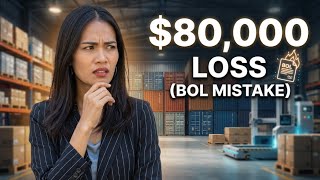
Lara Guevara explains why a bill of lading can freeze your supply chain. A mismatched BOL cost one apparel importer $18k in demurrage; a lost negotiable BOL locked up $250k in furniture. Validate BOL against your invoice and packing list, confirm HS codes, and make sure you're named consignee.
Questions this video answers
$150,000
21 days; $18,000 in demurrage
$250,000
$20,000 per year
$8,000
Chapters
Let me tell you a quick story. A founder I know imported 150,000 worth of apparel from China. Everything was smooth until customs flagged their segment. The problem is the bill of lading didn't match the commercial invoice. And their Cargo sat for 21 days and they paid 18k in demarrage fees before it was released. And here's another problem. The bill of lading is just one piece of paper. But in supply chain, that piece of paper is everything. It's your proof of ownership, it's your receipt. It's your ticket to move goods across borders. And if you don't understand it, it can cost you tens of thousands. So in this video, I'm going to explain exactly what a bill of lading is, why it matters, the mistakes founders make with it, and how to use it as a tool to protect your brand. First, let's define it clearly. A bill of lading or bol is a legal document between the shipper and carrier that details what's being shipped, where it's going and who owns it at every stage. Think of it like a boarding pass of your cargo. And there are three main purposes. It's the contract of carriage agreement between supplier and carrier. It's also a receipt proof that goods were handed over. Then lastly, it's a document of title. Whoever holds it, owns the goods. That last one is where things really get interesting and really dangerous. If mishandled a home goods brands shift 250k worth of furniture and their freight forwarder used a negotiable bill of lading. The original copy got lost in transit between China and the US and without it they couldn't claim their cargo. Their goods sat at port and demurrage fees piled up. So we taught them the difference. A straight BOL is non negotiable. It goes directly to the named consignee. Safer if you don't need to transfer ownership. A negotiated bol, also known as order bol, can be endorsed and transferred. Useful for financing, but riskier if misplaced. And for this brand, we switched them to a straight BOL for future shipments. Then no more delays. They save 20k a year in unnecessary demurrage just by choosing the right type of BOL. Another scenario is an apparel brand, imported 100% cotton T shirts. The bill of lading listed the HS code incorrectly and customs applied a higher tariff bracket. They paid an extra 8k in duties. Why? Because customs treat the BOL as gospel. If it's wrong, you pay. Now we created a BOL validation process. We first cross check BOL data with commercial invoice and packing list. We confirm HS codes and the product descriptions are accurate and have a trade lawyer or license broker review before filing next shipment. Everything is aligned, no more duty overcharges and they avoided 8k in losses and their clearance time dropped by 3 days. There's another situation where a DTC furniture Brand was charged 3,000 more than quoted for Ocean Freight. The courier claimed additional service were included, but when we pulled the bill of lading, the terms were vague and the founder had no leverage. We solve it by helping them ensure their BOL terms match the sales contract. Carrier charges clearly listed incoterms like fob, CIF or DDP spelled out no blank fields that can be exploited later. And then they disputed a charge and then won. Over a year they saved more than 50k in avoiding over billing. There's this experience that an electronic brands bought goods through a trading company. The bill of lading was made out to the trader, not the brand. When payment disputes arose, the trader held the BOL hostage and the brand had no legal right to claim their own goods. We always confirm who is named consignee on the bol. If you're the buyer, make sure it's you, not the middleman. If financing is involved, quote coordinate with your bank to ensure they get a correct copy. The brand learned to secure ownership from day one and they never lost control of their cargo again. So let's recap what a bill of lading really means. It's your contract, it's your receipt and your title. Choose the right type, straight versus Negotiable. Validate data to avoid duty overcharges. Then align terms to prevent further freight disputes. Lastly, control consignee details so you never lose ownership. A single piece of paper can decide whether your goods flow smoothly or whether you believe thousands in delays, duties and disputes. If you found this helpful, make sure you join my upcoming live workshops we're running.1 on November 13 about customer service and supply chain for BFCM and another on December 11 about maximizing Chinese New Year. In those sessions I'll go even deeper with templates and step by step projects you can run to protect your supply chain and margins. And if you want more YouTube content like this, where I break down supply chain concepts in plain English for DTC founders. Make sure you hit the subscribe button and share this with your team because knowledge is power in supply chain and the bill of lading is the best example of that.