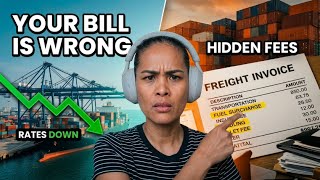
Lara Guevara breaks down why shipping costs stay high despite softer base rates from China to the US. Carriers pile on surcharges for fuel, peak season, equipment imbalance, and emergency disruption that individually seem small but collectively crush margins. Pull your last invoices, tally every surcharge, and use that data to renegotiate.
Chapters
Everyone is saying freight rates are dropping, so shipping should be cheaper now, right? Not exactly, because the number most founders look at is the container rate, but that's not actually the number you're paying. Now, let me explain. Right now, ocean freight from China to the US has softened compared to the spikes we saw over the past few years. Demand cooled down, new ships entered the market, carriers started competing for cargo again. So yes, base freight rates did drop. If you compare today to the peak years, containers are definitely cheaper than they were. But here's what the headlines missed. Ocean freight doesn't move in a straight line. It moves in waves. When rates fall too much, carriers start canceling sailings. In the shipping industry, we call this blank sailings, which basically means the ship that was supposed to sail doesn't. Less ships less capacity, and when capacity drops, rates bounce back up again. So the freight market right now is not exactly cheap. It's volatile. Rates soften, then they spike, then they soften again, which makes the planning harder for brands. But here's another reason why shipping still feels expensive, and this is the part a lot of founders don't see. The container rate is no longer the full freight invoice. Open a freight invoice today and you'll notice something interesting. The list of surcharges has grown a lot. You'll see things like fuel surcharges, peak season surcharges, equipment imbalance fees, emergency disruption charges, sometimes even risk premiums depending on the route. Individually, each one doesn't look dramatic, maybe a few hundred dollars, but together they can significantly change your landed cost. I've seen this happen many times. A brand gets a freight quote, they celebrate because the base rate is lower, then the final invoice arrives and they will ask why Does this still feel expensive? Because the base rate is only part of the story. The real cost is everything combined. And this matters a lot for DTC brands because freight is part of your landed cost. The landed cost affects your margins, your pricing, and sometimes whether your product is even profitable. This is why supply chain decisions can quietly change the entire business. Here's something simple you can do this week. Pull the last 2 or 3 freight invoices. So open them up, look at every single line item, not just the container rate. Add up all the surcharges, then compare that number to the base freight. For many brands, this is the first time they see their real shipping cost clearly. And once you see that number, you can make better decisions. The good news is the freight market right now is softer than previous peaks. The bad news is the Middle East wars is making it more complicated. Which means this can actually be a very good moment to review your logistics strategy, negotiate rates while you still can, review contracts, or rethink your shipping setup. If you want more breakdowns like this, subscribe to the channel. I share what we're seeing inside real TTC supply chains every day. See you on the next video.