Developing A Right Supply Chain Mindset for DTC
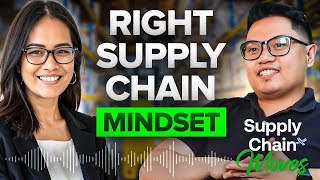
Omar shares how his background in construction and café management prepared him for supply chain work at DTC brands. He emphasizes problem-solving, end-to-end thinking, and staying ahead of disruptions like tariffs by shifting suppliers before they hit.
Chapters
Foreign.
Welcome to Supply Chain Moves. I'm Lara, your host for today and we will be interviewing a very special guest. I worked with Omar in sales for I think a year already and fresh from Davao, another island here in the Philippines. He just arrived this morning, can be with us here in Rizal, Luzon in the Philippines. So Omar, welcome to the podcast. You've had such an interesting career journey and before this recording I was interviewing Omar about his career experience. But I will let him share more a little bit about himself and work background.
Thank you so much Lara for having me in this episode. And I think just a quick background. I think I've had a really colorful background knowing that I've come from overseas and I've studied in the uk. I'm a UK graduate and I've worked in different fields, not just, I mean supply chain is something new to me. So coming from construction, having a business, even working DPO and at the same time being a general manager for a food and beverage company with all that experience here I am coming into Move with not a lot of experience in supply chain especially having basically almost close to zero knowledge in supply chain.
Your experience diverse, very diverse experience in finance, occupational health and you had other experiences even of your own business. But what made you decide to join us and learn supply chain?
I think, I think that the challenge sort of started from, from owning a business especially everything has its own little supply chain. It may not be a sort of direct or consumer type of deal, but there's always some sort of supply chain in having your own business working in construction, there was a large part of logistics which is still part of supply chain and sort of the challenge and it makes you think that okay, this is what operations is built off of is supply chain and me wanting to shift to let's say more work from home startup. I fortunately found MOO and they've taken me in and I've learned a lot when coming in from MOO supply chain experience to working with experts like Lara and others, Prisoner Spy.
I think our biggest advantage, you and I because we are the one doing discovery falls with our clients. I think that your biggest advantage is your experience in the business. You said that during your cafe start start out. So he has a building of with overlooking cafe and and he was the founder, he is the owner and he. You're also acting as the purchasing inventory planning of that. Right. So having that experience to be doing everything is the same case of all our clients. So Omar be having that experience can relate to our clients pain points wherein you started the work, you're the first supply chain marketing finance of your business and then eventually it do grow and you get tired and you wanted to focus on the road and then you will hire people exactly what you've done in your cafe. So in that ship, what was the biggest learning curve when you made that trip?
I think the biggest learning curve would definitely have to be the technicalities. Just because operating let's say a cafe restaurant has a lot of has its own own technicalities compared to let's say a direct consumer brand which has a lot of moving parts. Of course you're having vendors from China or faraway places. You're having to place purchase orders and you having to calculate let's say lead time compared to let's say cafe where it's a perishable good. So you would need to do it 8 ASAP. I need this to be sold in this specific pan. So I think learning curve, why technicality is coming into supply chain. Supply chain is really broad. Coming into inventory planning, there's a lot of nuances coming into it. Same with logistics. There's a lot of moving parts sourcing as well. There's a lot of things to cover such as what are the type of qualities, raw materials you're getting. And I think that's something that you learn and you get that mindset working with a lot of these brands and giving a lot of the things Actually.
Your experience in your cafe is far harder than because my first work is also feud so purchasing for kfc. So the sharp knife adds complexity to them and you can't overstock not because you have, not just because you you will pay for extra warehouse cost but because it will spoil. So given your very diverse skill, what were your strength that or your your skills from your past laws that translated surprisingly you into the Sukai table.
Yeah, that's a very good question. I. I think, I think a lot of the skills skill set would, would have to be TEPA data coming in Data is everywhere coming into business. So I think skill set wise, knowing how a business works, how you want to calculate revenue and understanding how business owners play. I think that's the largest skill that I managed to carry over. Of course technicalities not being there because I don't have much experience in equipment. I think that's the skill set that I could bring.
I think one of the best decisions we've done in the past four is when we hired you, you joined different trainings in supply stream so you're part of the first or second batch of sourcing, trailing that I conducted and you actually immersed yourself as a talent while being the admin in sales at that time. So being immersed, working with clients, doing the actual job was really helpful for you to be to experience the real work in supply chain. And I know that you're also interested joining other trainings in the future like inventory planning, logistics and warehousing. So continuous learning. Many DTC founders think that about supply chain only when something goes wrong like stuck outs, delays and rising costs. But the best brands are the ones that treat supply chain as a strategic advantage. However, for DTC and SMD or small to medium sized businesses, they would really start with marketing like getting your product, being their supply chain talent and then, and then doing the work, getting the PO and then when it's depleted or sold out, that's the time that they will realize I need more expertise in this part. So based on your experience, what have you observed about founders who nurtured supplied saved from the beginning?
Based on experience, I think founders need to have some sort of core activity and hack the supply chain. Not being proactive in tackling the supply chain issues before the actual issues come in. Let's say coming in from the tariff issue which was what, two months? We're coming into the third month of the falls. We've had clients that had that proactivist active resource, let's say Vietnam, before it even kicked in. So I think a large, large part of the supply chain is don't be spared to invest in your ops in your supply chain because at the end of the day that's once you have a resilient supply chain, it's very hard for your business to couple down, let's say.
I just wanted to dive in a little bit about your experience in the Captain E. What was your greatest challenge when you did the supply? Seeing yourself?
I think a lot of owners at some point will either experience a spock out or an overspock. So for me that was a large challenge. Just because once you open a cafe and let's say at the beginning, there's a lot of customers, of course, so bullion is big, you're ordering a lot. So how would you need, how would you forecast knowing that when is my sales going to plateau to a certain degree and when should I stop stocking a lot? Right. So I think that's a large part of experience that I learned. And of course coming into indenture planning, that is a really important thing, especially with pleasurable goods, as we mentioned earlier, because you can't overstock it just because what if you don't have enough storage space? Because what if your refrigerator isn't big enough? So there's a lot of things that you have to take into account freshness of food that you're serving. So knowing into that I think that always comes to the experience or if you have people that have more experience to salt rich is to get advice on what they did. I think that's what really helped at that time.
Did you enjoy supply chain?
Yeah, yeah I think, I think no. When, when you're an independent, when you're an owner and you're doing everything ops wise you're doing all the sourcing, all the in build for your management whatever business it is and the logistics part, it's really difficult for you to grow the business just because you're so hands on at operation. Yeah. And I think 100% a lot of DDC owners and these e commerce businesses have definitely caught something like that.
So I just wanted to share a case study or an example of our actual client who made a move and was proactive even before the tide hits as if he saw what's coming. But at that time this is me at that time nobody knows that the Tariq issue is coming. And this specific client maybe four months before Tariq did, he already decided that he will transfer from China to Vietnam. And on that goal he did not stop until we found vendors or alternative vetters from Vietnam. And it's very fortunate for him that when the Tariq starts starts being when they when us was affected by Tariq, he's already prepared for Vietnam. So we've also experienced a lot of sourcing work after the Tyranno.
Yeah.
So most of our clients cook the sourcing sourcing package because they really wanted to chef from China.
Just to add to that, a couple of them actually benefited because the moment that we managed to help them find the vendors or alternative vendors, the 90 day pauses there so very fortunate. During that time span the 90 day pause happened and they kicked in. So within 30 days we managed to help them with that.
So let's discuss what supply chain mindset is especially in the TTC world. I love that we will get to discuss this together because we will offer two very important perspectives. Mine is and coming from more than 15 years actually of experience in supply state and you're someone who just transformed last year, although you have experience in your business formally last year. So I'd love to combine the deep expertise with fresh perspective. I'll share some of my thoughts about what I believe a supplied same mindset is. And I invite you to elaborate on this and see if you can give examples of some things that you've seen in Nashville. So for me, number one is being a problem solver. When I hire talents in supply chain, when I hire my team members, I always look out for the soft skill problem solving because supply chain is full of surprises, challenges, and when there's no challenges, it doesn't feel like supply chain. So yeah, if you can share, if you can share more about that mindset. Team problem solver.
Okay. I think coming in with no experience, but if you're a really good problem solver, you'll find a way. Like you're not going to stop up until you find a way. Yeah, this, there's going to be a lot of trial and error, of course, learning a lot of, a lot of things into the, in the DTC world and then, and starting, let's say you're a new DTC band that wants to launch, you have a lot of ideas and perhaps there's times where you don't know that it's going to be a problem until you get to that point. So I think like best practice when you're starting off is to consult with experts. I think learning supply chain is easy, but once you have experts to consult with, that's when the speed hunt, because it will be direct, we can decate. Let's start with this, let's start with that. We can better optimize it. So we did it like this just because you think that maybe there's a lot of great ideas, of course, but it's always sometimes better to have a second opinion on ideas.
So we have interns, sourcing specialists that graduated from our trimme. And my experience with them, they're all very talented, but my experience is they easily get what you call this, a little bit anxious when they're not getting with the results that they want. And in supply chain, it's rarely that your plan is being followed for like 100%. There are so many factors that your plan can be disrupted. So my guidance to the team is always, have we done everything we could to fix this? Did we provide recommendations instead, options? Because at this point that's the only thing we can do. Like we need to lower down our, our expectations or like if we've done everything, then that's it. We can't do anything more. Like we're not musicians and although we wanted to support our clients to launch after one month, you wanted that. But definitely if you want to launch A product that is of high quality standard, we will guide them how to do it right. So end to end thinking as well is number two. See supply chain as more than just logistics. It's about customer experience, controls, scalability, quality. So I think before, as for my personal experience, when, when you're dealing with end to end supply chain, you'll have problems with sourcing your vendor. Recall that you have a delay in production, the next day your logistics, your freight forwarder will say that you have a port conjecture. And the next day you have missing products in your warehouse. So having thinking about it in a bigger way and solving it like as one is also a very important part in supply chain because they're all connected. So if you focus in one aspect and you forgot about the others, eventually you'll in you, you'll feel the, the problems of yours. So did you have any similar experience with our clients or their talents?
Yeah, I think with, with a lot of VPC owners it varies of course this having different types of pain points and knowing how to properly solve those the pain points. And I think with a lot of DTC owners making a lot of decisions, maybe a lot of them would decide on something reactively especially now with a lot of applied issues. So those are kind of things that maybe we want to stay away from and think forward. Like let's say what's the best you can do after six, six months. So maybe supply chain is a little bit more what we plant now is we will sow it in let's say six months.
So the third mindset is the data driven decision making knowing key supply chain numbers so you're not making blind guess. If you wanted to have like a 12 month forecast of your products, you need to look back with your previous sales and then add all your plans in the future like marketing, ads, campaign growth factor. So if I am working with someone who doesn't use data, it's a red flag that they won't be able to make use of the best decisions of supply chain because guard cleaning is not enough. Although we use it sometimes because of the because of a lot of decision making that we have to do. Sometimes there is a data and there's a cut cleaning, but data driven is what makes us have a better decision. Fourth is resilience and agility. This is one of my favorite because having contingency plans, ABCDE and doz, backup suppliers, backup freight forwarders, warehouses, statistics and risk mitigation strategies. And we both know how our clients have suffered in having just one supplier at storen do you have any like recollection on?
Yeah, actually a lot of maybe smaller bands that we work with only rely on one. They be looking at getting away from pirates. But there's always a better alternative. Let's say if you wanted to save on cost, that could be a main reason why you'd want to switch vendors. So if you think that you have the best vendor, you don't know. You don't know what you don't know. You could, you could potentially find a better vendor if you look. So there could be a large discrepancy when it comes to your hogs. Perhaps after let's say 30 days you find a better vendor then at the end of the day you might not want to switch everything to that. But at least if anything happens we can dual source and do different vendors.
A lot of our experience our clients will say no. We have a very good relationship with our existing vendors. We don't want to let list but we keep saying that we don't need to order to the alternative from the alternative vendor just yet. We will only order when, when there's a problem with your current supplier. But what's important is you have an approved sampling from an operant. So last mindset that we would like to discuss with you is the customer centric mindset. Our understanding that a delayed or damaged product is a Y customer. So it's not just speed, it's not just cost but also the quality of the products. The total experience that we're giving to the customers that our brands or our clients giving to our postgamers. Correct. So Omar, before we wrap up, I'd love to learn more about your journey in learning supply chain. You share so many good insights, but have you gone through a major learning curve in supply chain and if yes, what kept you the most?
I think what helped me the most is one learning from industry experts and another being deep diving and being thrown into the deep part of the pool. Working with clients, even NPD and sort of that, that type of exposure and experience, it plays a big, it makes you learn quickly and on your feet just because if you don't, you're gonna fall behind because number one, maybe you won't meet your client's expectations or I think that's where a lot of our interns have had the frustration of feeling that, oh, I might not be able to catch this, this launch date or that launch date. But at the end of the day if you, if you set proper expectations then it should be, it should be fine because you're playing your best right. And like learning curve wise continuous learning for me would definitely be right now we're working with a lot of logistics offering a lot of logistics just because a lot of, a lot of DTC brands are looking to carry it engineer we're looking to somehow find some cost saving in the logistics part. So for me right now I think that's what I'm currently deep diving into. Actively working with a lot of clients that are sort of looking at that.
Part of brickettide and how important is mentorship or structured training for professionals transitioning into supply chain? So basically your experience.
Yeah so I think mentorship and learning from more experienced supply chain experts or ops expert or they may not even just be a supply chain expert, they may just be very knowledgeable in a certain field in the DEC business or the CC world or E commerce because they can give you insights that maybe they have best practices that you can apply to whatever project you're working on. So I think that's a really good source of knowledge that a lot of people can get in there.
So in MOOC supply chain we have consistent training so we have sourcing new product development training so our talents and then now we will have inventory demand forecasting trainings as well. We make sure that you support our talents to that. What advice would you give to someone considering to learn more in supply chain?
So I think number one, the number one best piece of advice is keep an open mind. It may seem really complicated at first but it's not. When you actually do the actual work, maybe sourcing, maybe inventory planning, maybe logistics, when you actually get to do the work you can learn relatively quickly and it's a skill that you pick up by actually doing.
Yeah, actually that's a message to our listeners as well our clients who's not ready to take on team members yet. If you wanted to do it yourself, there's a stage stage in your business where you can still really do it. But if you did decide to do it yourself, do it the the best way you can. Like there are so many references now online people to follow. You can join our Slack community that you'll be launching maybe when this is posted. It's already launched so look for that. What's her name? What's the name of our community? Black Community Supply chain Loun. So look for that and join us in supply chain lounge because even just asking questions or listening to experts will definitely give you a lot of learning. So if you're a DPC founder, mastering supply chain isn't just about avoiding problems. It's about creating a competitive advant groups. A supply chain, Mike said, helps you optimize operations, cut costs, improve customer experience, and scale sustainability. And this conversation got you thinking about how to upgrade your supply chain strategy. Connect with us in mood Supply Chain, you will be seeing us at Discovery. To us. Omar, when can people reach out to you if they want to learn more?
Yeah. So you guys can go on our website, moocsupplychain.com feel free to book a call. We're usually free whenever we can and we'll definitely be giving you a lot of insights.
Thanks for listening and we'll talk to you in the next episodes of Supply Chain. Yi thank you.
Thank you.
More from Lara

Your Best Seller Sells Out on Day One of BFCM. What’s the Plan? #bfcm #inventorysystems #ecommerce



Your Best Seller Sells Out on Day One of BFCM. Then What? #bfcm #inventorytracking

Don't Know Where Your Raw Materials Come From? Start Here #sourcingagent #supplychainplanning




Moved Production Out of China? Documentation Is the Real Fix #sourcingchina #supplychainsolutions

Sourcing From China, Vietnam or India? The Fix Isn't a Fourth Country #sourcingchina #supplychain

Moving Production Out of China Didn't Fix Your Tariff Exposure #sourcingtips #supplychainmanagement