Breaking Into Tech Without a CS Degree: The Hidden Playbook That Works
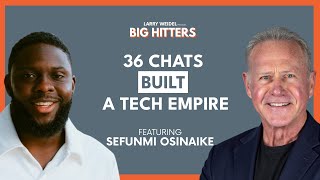
Shifumiya Shinaike grew up in Nigeria, moved to Canada for university, and broke into tech at Microsoft and Apple without a CS degree. He did 36 coffee chats in one year, wrote a free book called How to Product, then founded Colab, which has trained over 1,500 people across 60 countries to land tech jobs.
Questions this video answers
How to Product (free book)
2018 (decision to write)
April 2020
August 2020 (company launch a few months after the book)
Over 1,500 professionals
Hello everyone. Let's have some fun. And we're talking to Shifumi Oceanike and he is in Lagos, Nigeria, visiting the family and having a good time, I'm sure. I want to get you to tell everybody, you know, the highlights for you of the quickest way for them to understand your background and the context in which we're going to be talking, which you've got tremendous achievements. And we go on for 30 minutes going through them all. But from your viewpoint, you know what's important. Yeah.
First of all, thank you so much for having me, Larry. I really appreciate it and good to be here. So, a little bit about me. So I had my own share of struggles whenever I wanted to break into the tech industry. So I. I was born and raised in Nigeria, like where I am right now. And I immigrated to Canada to study and I wanted to break into tech and I had no idea how to because I didn't study computer science or computer engineering. And so I had to kind of like make my own way by just like hustling, trying to figure it out, just like being very scrappy, like learning from the things that I could. And I saw how difficult it was for myself and eventually like I was able to land jobs at companies like Microsoft and Apple, you know, sort of like the big tech giants. Also like interviewed for like Google, Meta, Facebook, like so going from the point where, like where I grew up to what I was able to like achieve, I felt like that was very inspiring, even just for me. And I wanted to make it easy for other people as well because I found that there were so many other people who were like me but didn't have access, didn't know what to do. They didn't know where to go, didn't have access to resources and skills. And so the first thing that I actually did was I wrote a book. I wrote a book back in 2020 called how to Product. And it was a free book. I didn't intend to make any money from it. I was like, let me put all the things that I have learned over the years into this book and I'll release it to this community for free. That's when I started learning how to build community. So that was like my first for into community. And it was just like, here, here we go. And when I did that again, and this was a big lesson of like, whenever you do something just out of pure joy and out of just pure love and good, good is always going to come back to you. So what happened? When I released the book, I had Several people in my DMs reach out and they were like, hey, we need more, we need more. I want you to hold my hand, I want you to help me. And that is when I then started my company Colab. And essentially what we then did was we gave people the hands on skills, the hands on knowledge that they needed and the hands on experience to be able to land jobs. So that's what I've been doing for the past five years. I'm the co founder and the CEO and we've trained now over 1500 professionals in 60 different countries, although majority of our customers are in Canada and the U.S. and we have people who have landed jobs at the top tech companies of the world like Google, Microsoft, Amazon, Apple, you know, Goldman Sachs, JP Morgan, you name it. We have people in huge companies and also fast growing startups. And yeah, so by doing that we grew a huge community where we constantly still give a lot of free resources to. And yeah, so that's just like a little bit about like what we do, how we do things. Just a little bit of context of what led me to where I am today.
Joe, the producer was, you know, giving me some background. Sid, you built communities up to about 50,000, you know, so you got a lot of experience with communities and training and so let's go, let me dial it back for a minute. Why? Because the starting point is where a lot of people stay, you know, and they stay miserable and frustrated and going around, around. I don't know how to do it, I don't know how to do it. I don't have the. And then they get, the longer you drag it out folks, the bigger, you know, any, anything you do, you take forever to do. The objections become bigger, bigger, bigger, bigger, bigger where it's like you thought about it so much, you've, you know, you, you, you stretch them out and then when you actually step forward, a lot of times you find out your first step is like a pin popping a bloom and it's like boom. Like oh, that's all it was, that's all I had to do, you know, and I was kept in this, you know, lockbox. And so what attracted you? You know, your instincts kicked in on the tech world? Why, what, what was that? You just figured the bigger opportunity. I, you know, you know, were you after freedom? Were you after income? Were you after impact? You just have to try it. I want to make some money.
That's a very good question. So I think, for me, I think I've told this story before online and I Can't remember where, but there was one time while I was in college, I saw a demo of Dropbox. So, you know, the app Dropbox, it had been out for a couple years, but they came to our school and they gave a demo and they gave like a tech technical talk, and they showed Dropbox Box. And it felt like magic to me. It was very simple. And if you think about how technology has. Technology has grown so much since then, but it was like I put a file on my phone and I see it on my computer, and I was like, whoa, how did that happen? And I think I didn't really grow around a lot of technology. I was exposed to the Internet much later in my life, in my teens. So I don't have the similar stories as a lot of the technology CEOs that, you know, they were coding since they were six or they were playing with all, like, I didn't have that experience. So seeing that, I was like, I. I want to do. I want to do something like that. I want to build something like that. And so I was like, I want to learn the skills that would get me there. And I think that's. That was like the light bulb moments that went off, and I was like, yeah, let's see what happens when I. When I wasn't even familiar with, like, the tech salaries or, like, how much people were making, it was just more of, like, I wanted to be the kind of person that builds something so fascinating, that has a wow moment because it felt like play. So that's. That was the biggest inspiration for me to even want to get into tech. And then later on, I didn't realize that, oh, wait, tech people make a lot of money and you have great careers. And now a lot of people can work from home, and I can, like, just like, travel the world and, like, work from anywhere. So I think that part came later. It wasn't like, I saw that and I was like, well, I want that life. It was like there was this magical moment that I felt, and I was like, oh, I want to do this. And then I went from there.
I want to emphasize the wow, because I'm big on wow. Why Dillon winning? And I go, I do a lot of different things, but I pretty much follow the things that I see. I hear that jump out to me is like, wow, you know, wow, you know, and, you know, you should look for wow. You should look for things in life if you wonder what I'm going to be good at. And again, this is real basic. I mean, we talk about all Kinds of thousand things. But folks, if you don't get this right, if you're not pursuing something that's intriguing enough to you, and it's like, wow, you know? You know what? Because what happens is with the wow is that the initial buzz of Dropbox and that technology, that simple thing come to you. But correct me if I'm wrong, as you went into layers and layers and layers, deeper into the community, into education, about it, meeting the people in it, it was like, wow, wow, wow, wow, wow. I mean, the wow never ended, right? Is that, you know, and that's why they'll say about people like us, Shafu Ming, let me give you, if you live, okay, 60 years, you're going to be in tech, okay, you're going to be doing the same thing. Because that's where you see the wow. That's like me. And that's why people look at people who are successful and they say, why are you still doing what you're doing? Because to me, it is. I had the guy who trained me a long time ago, he said, the thing about great people is I won't get all of it. But the last thing he told me about it, they just love it a little bit more. Whatever it is they're doing, they love it a little bit more than anybody else. It's like Tiger Woods. I got a nephew that, a nephew that did club fitting for Tiger Woods. So he spent about a week with it, just one on one. And he said, tiger woods could talk to you for all day long about shoes, just shoes on the golf. And he said he had Nike make all kinds of shoes for him that nobody else could get because he was looking, you know, like Lance Armstrong with the mics and things like that. They just love it more. And so what happens is your attention's on it and you discover things that are useful to other people, but they won't, you know, they've got other things they're interested in. They're not going to look at it as hard as you stay with it as long. But then you could share. You got something to share. It comes from that initial infatuation. So how did you. How did you finagle getting out of Nigeria and get over to North America?
Yeah. So the story was, my mom gave me this. My mom attended a convention, right? And I think it still happens to this day where a bunch of universities from across the world, a bunch of colleges will come and give presentations to different countries and just tell them about their program. So my, my university, the college that I Went to University of Waterloo. They were also part of that, that whole, like, that whole convention. And then she gave me a pamphlet or like a leaflet or a flyer, and I went through it and I saw University of Waterloo. And specifically they had this cooperative education program. That program was like, hey, you can learn and you can, you can go to school and you can work, like, at the same time, like you. It will be one off, like one semester you go to school, the other semester, yeah, work study. And I found that very fascinating. I was like, why don't all colleges do that? And so my goal was to get into that college.
Students that are listening right now, I hate to interrupt you, but the thing is, that's another phenomenal point that people that are young people that are listening right now, you do well, because when I came up, I thought, oh, that's terrible. You know, you want to go to college and uninterrupted. But it's so much smarter to have that every other quarter or semester. Time out to digest what the experience you're having, reorganize yourself to go back. And so I just thought that was a great point we needed to emphasize for people on the way. So many of these things are simple stuff that people just gloss over that. You did right. You did right. And that's what I like to point out here.
Yeah, thank you. Well, I'll say shout out to my mom. My mom did right because she had the foresight to give me that, that, that flyer. But, yeah, I think all colleges should do that. Like, it makes so much sense. And. And I guarantee I don't think I'll be the person that I am today. I didn't go to that college. Like, I almost know it and feel it because it just completely changed my life. So I felt like I needed to do everything I wanted to to get into that college. And so, you know, I think I was still in grade 10, maybe grade 11 at that time. So, like I said, worked hard, got my grades up, wrote my essays up until I could get into. And that was the college I got into, University of Waterloo. And then. So that was legal. I'd never been to Canada before in my life. I'd never been to Canada. So the first time I went into the country was like, for that goal of going to the college, I didn't have any idea how cold it was. Honestly, if I had known, I probably wouldn't have gone there.
Compress the time for us, because I want to talk about after, but compress the timeframe and like, what did you go through from the time, okay, you're over there, you're getting oriented, and then sooner or later you get this idea, I need to write this book and compress that timeframe for us. What did you go through to get to that point where the idea came to you? Knew enough that you said, I want to write this book.
Yeah. So in terms of the timeline for the book, I would say the timeline started in 2018. 2018 was the first time where I was like, hey, we're going to write this book. And that happened because I'd already graduated from college, so I'd left college, I was working. I was working in the industry. And several people kept on reaching out to me, asking me the same three questions. They're like, how do you break into tech? What can I do to break in? What is my day in life? So it was. I had about probably 36 coffee chats in, like, that year alone about people asking me the same question over and over again. And then. So that's when. So, like, the idea to write the book came and to answer your first question is like, when do you know enough to write a book? I actually feel, and I've spoken to other writers, I don't think any writer ever feels maybe except specific people. When you're writing autobiography side, I never. I don't really think you feel good enough to, or you know enough to be able to write. I feel like you or you don't know it all, you just feel like you have some experience that you want to share, you have a story to share. Because there's always still going to be some doubts that creeps in that you don't know enough the people that have more experience, which is always true. So because I don't think I'm an expert, I'm learning every day. So I. I just felt like I had some experience that I could share. So in 2018, I decided that I wanted to write the book. And then we launched a book in 2020. So I was writing the book on and off. It wasn't just one long stretch, like, I'll write it and then I'll stop and I'll write it and I'll stop. But then April 2020 is when we launched the book, and that's when we started building community. So once we launched that book and then after the book launched, then there was a realization that we could do more from the book. Right. People kept on reaching out the community, which is why having is great, because your community members will tell you what they need they'll keep telling you, you'll give you ideas, they'll tell you their problems. And then around August of 2020, so a couple months after the book launch, that's when we started the company Colab. And then we've been working on that ever since. So it's been like five years, almost five years now, that we've been working on that same company based off of where we were at and based off of the book. So that's kind of like the compressed timeline.
Well, you were smarter than me and you realized the need for community earlier than I did. The fact that you heard of it September, like you. If we were to hear you in September of last year compared to now.
Yeah, different. Yeah, definitely different.
And we learn from each other as much as from one person, because it's a matter a lot of this stuff. It's a matter of batting ideas around out loud to people, you know, that are on the same wavelength and kind of the same experience as you and are taking whatever the subject is as seriously as you. And so that's where the community comes in. So you learn that quicker than me. But how did you get into the thing where you said, people are asking me, you know what, what had you done that caused people to be asking you, how do I get into tech? How can I do this? How can I do that? And use. What did you say you did? Like, how many chats you were doing? Chats? What was that you said you did?
I was doing coffee shots.
I feel ignorant here. What's a coffee chat?
No, it literally is going to the nearest coffee shop across the corner and having coffee with them. Like actual coffee? Yeah, so that, that was. I had a specific. So I was working at this Canadian company called Ecobee, and there was a coffee shop right opposite our office. And I would always go to that same coffee shop because I'll tell. Meet me there. So how people found me was through LinkedIn. So LinkedIn is such a great platform because, like, people could just like search for different terms and find you. And I think at that time I wasn't super active, but I was still like, post occasionally, like the things that I was doing. And then so somehow people found me or friends of friends. They're like, oh, you should reach out to Shifurumi. He. He knows the stuff. Or like, I'll hear from someone who had heard from somebody else. And so people message me and ask me these questions and be like, hey, I'm also in Toronto, Please can I come on a coffee chat with you? And I'll literally, like, tell them, hey, meet me at this coffee shop, and I'll order coffee. Typically, I used to order like a juice, more like a juice, because I'm not a big coffee person. But when I order like a juice or something, they'll order like a tea or coffee, and we'll talk for like an hour and I'll just, like, tell them my story and just tell them the story over and over again. So that. That was. That was what I was doing when I was like, I think there is a better way to do this. There's a. You can scale yourself. And so that's when I was like, hey, let's write the book. Because the book can reach a lot of people. And, you know, because with the coffee chart, you can only have. You can only realistically have 24 coffee charts in a day. Because there's only 24 hours in a day if you know, so you could meet. You can reach a lot more people that way. So with the book, so I was like, hey, let's write the book. If I can't meet for coffee, I can just send someone the link to the book and they're able to read it and experience it and hopefully get insights from it that turns into action so that they can, you know, accomplish their dreams.
What were you doing that you were, you know, in your business that you were posting about occasionally that attracted so much attention, that caused people to say, shifumi is further down the road I want to be on, and so maybe he can help me. And so what were you doing at that point that was so fascinating to all these other people in the tech world?
Well, that's a very interesting question, because I don't know, I always find that. I think it just helps. It just helps to be authentic. So I think for me, like, anytime I write online, I just talk about, like, I just stories. I'm like, hey, I went through this process and I did this. This is what I did. I did that. Why I attended this conference. Here's what I learned. Or I've read this book. Here's what I've learned. So I think I tried to just tell stories and just share learnings. Hey, this is what I'm reading. This is what I learned this week. This is what inspired me. This is a video that I watched. This is what I learned from the Grammys I've written about. I watched the Grammys. Here's what I learned. I watched the Oscars. Here's what I learned, you know, and I think that, like, maybe that authenticity can attract people and. Because if they have similar thoughts, like I write about sports. Right. You know, I read about a bunch of different things. So I think that authenticity and I also talk about, like, highs and lows. I'm like, hey, we're trying to hire someone. It worked out or it didn't work out. And some people might have similar experiences. So I think that's, that's what maybe even till today attracts people to reach out and maybe ask questions or want to connect. It's just like maybe they, they see themselves in some of the stories that I share, some of the struggles that I share and whatnot. Yeah.
Particular idea of how to product and, you know, talking to product managers and aspiring, you know, product managers. How did that formulate in your head that like, this is a niche that people would be interested in, the actual narrowing it, you know, because I believe, you know, one of the things that gave me success it all my life is like, you gotta be specific to be dynamic. And so what happened is in your mind, your, the specificity, specificity came in on. Wait a minute. You know, you gotta make something, you gotta have a result, you gotta have a product. Now how do you make. You get an idea? How do you turn that into a product? How do people do that? And who are the people that are doing this? And let's find out for this, a very fascinating idea that you came up with. And otherwise you wouldn't have talked to 40 of them.
Yes, yes, that's true. Yes. So to 40. Yeah. So I think first of all, I'm very fascinated by product managers because I was also a product manager as well. So intech the role that I eventually landed in, tech, I. I was a product manager and I enjoyed being a product manager, so I loved it. So I also understood what it felt like to be a product manager. So there was that connection because I had been there, I'd done that, I had lived the life, I had experienced it. And so it, it just made sense to write about something that I was comfortable with. Like, I don't think I would have been comfortable writing about like cybersecurity or either like medicine or plumbing. So it's important for people to stay in their lane or. I don't know if that's good advice because sometimes it's nice to go out of your comfort zone and out of your lane. But in this case, I wanted to stay in the world that I understood, and that world was product managers. And I also felt like that could also be a great learning experience for Me by talking to so many other people who I felt were way ahead of me, were way more experienced than me. So I was like, I could also learn from these conversations. And so I was very targeted in, like, reaching out to people who I felt like had stories that I could learn from. So I would reach out to look at their LinkedIn, try and learn from them as much as possible, try and see patterns, reach out to them for chats, and then see which, which one of the stories I could put into the book. So that's kind of like how I thought about the system of, you know, putting the book together. I felt like I didn't think I had all the answers. And I felt like I could get the answers from a lot more people. And it's like crowdsourcing. I wanted to crowdsource the knowledge from all these other people. And so that starts, like, why I was like, oh, let's, let's reach out to as many people as possible. Let's pick some of the great stories and let's share.
You mentioned this. How does, how did it feel being a product manager? How does it feel? You know, what is the feelings that you get from that? Because that relates to the kind of feelings we all should be getting from what we're doing. And so how did that make you feel? What was, you know, because you've come, you had this journey, you know, it started with a Dropbox, you know, presentation in high school. You went through all this stuff and now you're in the role, you're experiencing it, and so, you know, like the fruits of all of your. You're climbing the tree and you're there. How did it feel to be in there? And it must have felt like it was worth it.
Yeah, it was. It was definitely worth it. I don't, like, trust me, I think about it all the time. And I felt very grateful because I was one of those people who genuinely loved their jobs. Like, I loved what I was doing. And I know there's a lot of people who don't like their jobs or who hate their jobs, and I feel for them because it's a very difficult place to, to be in because your job takes eight plus hours of your day, a good chunk of your day. So to spend time doing things you don't like seems like very painful. And I pray for those who are going through that to be able to find careers that they're interested in. So for me, it felt like I was going to work to learn to have fun and work with a lot of cool and smart people. That's honestly how my career felt before I went to do my startup. I think startup comes with a whole different set of challenges. I think my career was always something that I enjoyed because I was learning, I was building. Like we talked about wow and talked about winning. I had wow moments almost every day while, while working as a product manager. And I believe that that kept me going, that motivated me to come into work every day because there was something new I was learning, I was winning, I was experiencing that wow moments in different moments and different things that I was a part of different projects I was a part of different people that I was meeting. So it felt really worth it that like, wow. I felt very lucky because went to a procedure school, graduated, got great experience, was also getting well, well compensated. So yeah, I was very grateful. Even now reflecting on it, I was like, wow, I've had, I've had a good life so I shouldn't really complain much about things that I come, I've been through.
Well, when you're writing your things on LinkedIn and you're sharing honestly with people, you had to have some negative experiences to share with them. Some bumps in the road or some holes you fell into. And we do that in life. Some are self inflicted and some are, you know, we just happen to be in the wrong place. You know, somebody, a meteor fell out of the sky and it fell on our head and we just got blown up. You know, our company got bought out by a company on the other side of the world and they, you know, they dismantled my department or something. What kind of experiences where, you know, fear came over, you know, where, you know, you know, where you were threatened or where you got yourself behind the eight ball and all of this, it looked like it might be taken away from you or, you know, what kind of unpleasantness have you had to deal with? Or are you just a Pollyanna guy who's just had everything easy?
Definitely. I love that question. It's a hard one. I think I'm the kind of person that even after any form of hardship, there's always ease and there's always a lesson there. And I think with any, any challenge I faced, I've always thought about it as a learning experience, even whether it's self inflicted or not. I think that there was a time, I'll give you a very simple example with business, with my business, there was a time where we're trying to grow, we're trying to get more customers and grow our student base. We spent over $30,000 on advertising and we made, I kid you not, $0 back, like $0 back after spending 30 grand, which no one will tell you. Burning 30 grand is a fun thing to do. It's not. And no one wants to ever have a $30,000 lesson. But you know, in that moment you feel like, wow, that was a lot like, this is money that you could have spent somewhere else. But I think it was a very experienced lesson, it was very expensive lesson, but you learned from it, right? And I think that was kind of like the first time where we realized that like, oh, there was a shift in market and we're experiencing a downturn and how do we navigate that? And then so you have to like put on a different set of hats and use a different set of skills to navigate things like that. So I have different examples of like stories like that whereby, you know, we tried something, it didn't quite work out and you still like, learn from it. Even with. There's been job opportunities that I've had that haven't even worked out like in my career. Those times that I took a bet and joined a startup. And after one month at the startup I realized it was like a big mistake, but I'd already left my previous job and there was nothing I could do now. And now you have to learn from that and you have to figure out, okay, how do you get out and how do you still maintain these relationships? So there's been a number of things that have happened, but I tend to take whatever negative as what can I learn from this? What is this teaching me? How can I be better for it moving forward? So it turns out the weight on my chest, like when people ask me do I have any regrets? And I tell them, no, I don't have any regrets because every single thing that I've done has led me to where I'm here. And if I didn't go through those things or make those mistakes, self inflicted or not, I wouldn't have learned and grown from those experiences. So that's kind of like how I just think about life, if that makes sense.
You might speak to this about how you handle that. Because the truth of it is either you're going to let it kill you or you're going to learn from it and keep moving. You know, it's just like, it's like, why, you know, how, how do you find the strength is like, well, I didn't want to quit, I got to keep doing something. You know, it's like if there's an accident on the highway and it stops me from missing my appointment and I'm very frustrated. I've got to sit out there for three or four hours. You know, they, you know, the chemical truck blew up and everything shut down for three hours while the Hazmat team cleans everything out. I've had that actually happen. And it's like, well, when the three hours is over, you say, okay, now what? You know, let's. What can we do now? And so, you know, I've, I've had, the longer you go, the more weird things happen to you. I mean, I've been embezzled for over a million dollars and had the person in charge of my taxes steal all the tax money and give me a two and a half million dollar tax thing for my IRS because I thought all the taxes were paid. And I looked at that and I said, you know what, that's my fault. I let that happen somehow. And I'm going to take that, you know, two, $3 million lesson and make it save me 30 or $40 million down the road going forward, you know, and so, yeah, that's because what else are you going to do? You know, what else are you going to do? And so as you have moved through this thing, you have a, what would you say the 1, 2, 3 things people that you remember, questions people had for you?
Question. Oh, like the three questions, I think it was more of like, how did I get into my, my position? Like, how did I get into, how did I become a product manager? Like, what did I do? So that was number one. Number two was like, what was my day in the life? Like, what were my day to day tasks? What were my day to day activities? I actually worked through my day. And number three, they were asking for like any tips, advice or strategies that I had for them. And I always told them the same thing. And my biggest tip or strategy for anyone then and even now is just go ahead and build something if you're trying to learn how to do something. If you want to learn how to start a podcast, go start a podcast. You make some mistakes, you try out some tools that wouldn't work for you, but that is the best way to learn. If you want to learn how to code, go and start code. So I always tell people, build is one of the best things that they can, they can, they can do as the best learning experience.
And how, if people, why did you ask them out? How did you get into your job? How did, how did you answer that?
I just told them what I did. I think it's a valid, valid thing to ask someone that you're sitting in front of, because, like, when they know that if you're in the position that you want to be there, ask them, like, how did you get there? You know, because they seem they can ask you questions about it. They're not interested in how did Bill Gates get there? Because they kind of have a conversation. Bill Gates, they can't dive into his experience. So that was a very common question because it also humanizes the person because you're. You're there in front of them, and, like, if you feel like this could be somebody that you could be one day, then it allows you to be like, okay, I can, like, copy their path. So I think how I got there, I just explained, like, I took bets and I took risks. Like some of the internships that I was supposed to do. I. Then, for example, I spent the summer working with a bunch of friends trying to build an app, even though I had no idea how to build an app. And that was my way of learning a lot of the tech skills. And so I told them that I forced myself and I put myself in positions to learn, to fail, to make mistakes, and to build myself in different ways. And I learned from those experiences, even though I was like, yeah, I could have gotten a fancy internship somewhere, but I was like, you know what? I'm going to take the software camera off. I'm gonna build an idea that I had with a bunch of friends and see if it works out. So that was kind of like, I just walked them through the different bits of the different things that I've done to try and learn the books that I was reading, the articles and blog posts that I found most helpful, the podcast. So I just walked them through a lot of those experiences.
Well, you know, the thing is that's, again, to beat the same issue. That's the thing about a community. You can go. You can talk to people that are going through the same road that you're going through and ask questions you would never ask the guru. You just gotta dive in, don't you?
You have to dive in. Yeah, dive in and then you figure it out after. That's my philosophy.
And so what I see that you have done is that that was your approach. That's paid off for you all the way through. And that's why it's gonna be exciting to see how your career continues to develop. Because because of where you are, you are in the business world, you're able to stand on mountain mountaintops that most people are not able to stand on. And you're able to see opportunities many people get to see. And so, and you're the kind of person, when you see that you're going to go do it. And so it's going to be fun to see what's in your future moving forward. But because a lot of people are going to be positively impacted because let me go back to the thing is, you're all excited about getting this information in the hands of people on the way up who want to be a part of the future. And when you started the. It's CO lab. Is that right? CO lab. You started that. How long did it take you before you started to have success and you were starting, you know, the training started to fill up. You had your instructors, you had your, your programs, you had. How long did it take to get that operational, proper, proper operation?
I'll say maybe like eight months for, for it to start feeling like, okay, we're starting to make some traction, we're starting to make some good money. We're short where we had like a lot of instructors, like banging on our door saying, hey, they want to help out. We had a lot of students who are like, they want to go through our program. I'll say it took us about a, like six to eight months to be able to get to that place. And that's a, that's very short for some people. I think for us that was very lucky. We were very lucky. Even though six months sounds like a long time, I felt like that was very lucky for us to be able to get to that stage in six months where we felt like, oh, there's a lot of confidence. We feel great and we feel like we want to keep doing this for as long as possible.
You got up, you've already trained 1500 plus professionals in across 60 plus countries.
60 countries? Yeah. Yeah. It's crazy.
You're. This young guy, comes from Nigeria, he goes to Canada, and now you're training people in 60 countries. What kind of world are we in here?
Yeah, I try to think about it sometimes because I don't want it to get to my head. I never wanted to get to my head because it still feels like day one for me. Still feels like we have so much work to do. But I think it's inspiring to some people that, to think that, like, wow, like I can do that. And I want people to do more than that. Like actually, like we haven't even scratched the surface. And I want any kid to be able to realize that, hey, they can, they can do whatever they set their mind to. Because I. I don't even think I'm. I'm performing to my optimal ability. I feel like I could. I could definitely do more. I could. I could spend my time more wisely, you know, and I could be a lot more disciplined. But, you know, I'm thankful for what we've been able to accomplish so far and looking forward to the future.
It always seems, you know, I don't know about you, but it always seems like I'm not get. I'm never getting anything done. You know what I'm saying? It's like, you know, like God Almighty, you know, I just wasted the day and screwed around there and this. And then I added all up, you know, my journal, I always journal and it's like, oh, well, I guess I did get a lot. But in the moments, in the moment, because nothing ever goes, you know, it's never like. It's never like launching one rocket right after another off of the platform into outer space. I mean, it's a lot of running around conversations here, this, that, the other, where it doesn't feel like you get anything done, but that's part of getting things done. So thanks so much, Shifumi. We've got to do this again. You're going to have so many adventures and you're going to be helping so many people and you're going to have so many more things to pass on that we're just going to have to do this again.
I hope so. I certainly hope so.
We can't get it done in one podcast, so this is fantastic. I'm excited for you. I appreciate you taking the time. And is there any final word you'd like to give to people? Maybe tell them how I think they're interested in this or want to follow up with you, where to go or some partying advice?
Yeah. So I'd say, again, thank you so much, Lara, for having me. Really appreciate it. Enjoyed the conversation. In terms of lasting advice, I think my biggest thing, I always tell everyone, I'll say Nike said it best, which is just do it. I'm a big fan of just like doing the work, doing the hard work. Like things are going to be hard. Pick your heart, pick the hard thing you want to do and do it. So that's the biggest advice that I get, give people. And it seems like simple, but it's actually quite hard. But once you start and you gain momentum, I think it becomes easy from there. If you'd like to connect with me, I'm very active on LinkedIn, so connect with me on LinkedIn. I love to write and I write every day. I post every day on LinkedIn, and I'm trying to even be better with my writing. So just connect with me on LinkedIn. My LinkedIn is my full name, Shifumiya Shinaike. And yeah, and feel free to, like, send me a dm. I'm quite responsive on there. So.
Yeah, all right. That's quite an offer. And so I'm sure you're going to have a ton of people take you up on that. Thanks so much, Shifumi.
More from Larry







Rick Jordan on Self-Engineered Proximity, Cyber Security Moats, and Truth-Based Leadership

Fire Fast or Fail Slow: Kevin Brittingham Reveals the One Rule That Built a $100M Empire


