Episode #591 - What Is the Kolbe Assessment? with Justin Breen, Founder and CEO of BrEpic Network
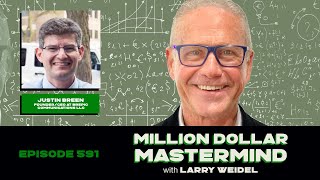
Justin Breen explains the Kolbe A Index, which measures how people take action. He uses it to make better introductions, pick business partners, and build teams by matching Quick Starts with Follow Throughs, and shares how it changed his approach to family and work.
Welcome to this edition of the million Dollar Mastermind podcast. This is where we pick the brains of high achievers from all walks of life and get their hard earned real world insights on winning. I'm your host, Larry Wydell.
Talk about the fact that you don't need to see people.
I can see you right now. I've never seen you in price. Totally. See, we see each other just fine. Yeah, right.
Yeah. Well, even without that, even with the audio, where I've got, I've got. I've had people in the past, we've talked on conference calls, right. For years, like once a week.
And.
Where their income has gone from 100,000 to over a million.
Right.
And one time we were, they were here in Palm beach, we went out to dinner and he said, you know, this is only the second time I've ever seen you in person.
Right.
But he's, he's like a brother to me, you know, 100%.
I would say most of my best friends, most, most of my best friends I've never met in person because they're top performing entrepreneurs that would never destroy their family life for entrepreneur life. And then I've met most of them post Covid. So when Covid started. So most of them, I've never, I mean, and that doesn't, you know, like again, winning conquers doubt. So like most people are doubting they can make friendships in a virtual world. I. You just ignore. I just ignore that world. I was talking to one of my buddies, one of my Buddies who's a 153 IQ again, 140s genius. He's a true genius. He's a war hero, does like high level CIA stuff. So these were his words, not mine, but it made sense. So he's like, most people are sheep and then entrepreneurs are sheepdogs. So I'm a high fact finder. And I looked it up and so they're still. Science Daily did a big article. Two primary roles of sheepdogs. Only two. There's only two. So replace the word sheepdog with entrepreneur. Okay. Just replace sheep dog. Okay. So sheepdogs, only two roles scientifically proven that they do. One, keep the sheep in line. Two, push them forward. You don't talk to the sheep. You don't hang out with the sheep. You ignore. Now usually you do marry a sheep. Usually. Usually marry a stabilizing human. Thank God. But no, no, no. And then my wife tells me three words, only three words before every parent teacher conference. Our sons are 10 and 8 and they're half Me, half, my wife. So they're definitely entrepreneurial, thinking with her warmth. So my wife only tells me three words, don't say anything. So I keep my mouth shut the entire parent teacher conference because anything I say in that will not go. It will not be perceived. Well, yeah.
Now, now when you, how do you find you. How do you find these people that you're talking to? Their clients, their friends from these entrepreneurial groups talk about that, you know, and how do you select them? Obviously you're not green.
I love it.
Yeah.
And.
And so anyway, that's a launch point.
I love it. You would like the Epic life book because it's like answer, answer, answer, answer. And then the chapter two is the perfection of pattern. So if you really want answers. Okay. So my favorite pattern in my strange alien brain is having the right mindset creates the right network and creates right opportunities. So right mindset creates right network, creates right opportunities. So I haven't done anything outbound in years. I'm very grateful your team reached out to me. I'm very thankful for that. And then hosts want to interview me first and then they want to interview all PR partners because only partner with people like us. Otherwise I get bored. Okay. So it never stop. It just keeps creating on those abundance. But so what does the right mindset mean to attract the right network? We only partner with visionaries who live in abundance and who look at things as investments, not costs. So only visionaries, not business owners, not consultants, not human employees. Visionaries who live in abundance. There's no scarcity. No, no, no. Only abundance. And there's no what do you cost or charge? There's no nickel and diming that. No, no, no. Anyone who asks what do you cost or charge? I'll never talk to that person again because they're living in scarcity and they're living in cost world and cost world hang out with cost world people and then abundance, visionary investment people hang out with abundance, visionary investment. Okay, so that's the background with that. And then so I do probably 10 intros a day between visionary to visionary. Many through are through pr.
Describe that now describe that.
Yeah, you're an. You have a really interesting strategy brain and you want the very simplified answer, which I appreciate that. So I like. I always think it's funny with people have very long intros about how great this person is. Some my intros are I asked your team for if. If you had taken the Colby K O L B E that test. They didn't send me your score. But so my intros are like 3,393 meets 3,393. So you know, it's a visionary who. Meeting a visionary. And then if they're in like strategic culture, Abundance360 or Genius Network or entrepreneurs organization, I'll probably put a line of that about that as well. But like my intros are like eight words and then, and then they, people do what they want with it, but it's a lot of fun. So I did, you know, like 10 intros a day and then I get, I don't know, two or three. So it's, it's like endlessly fascinating to do that because like there's nothing outbound, there's no marketing. I mean, I guess there is, but.
You do an intro. Is this an intro for a podcast, for a show? Are you getting people together and you know, you know, getting them connected are what. That's a lot of intros.
Oh no. Well, it's the purpose of my life. So for me.
But you got it down to, you got it down to a science is what I'm saying.
And so if that's, if that's. I appreciate you saying that. I don't look at it like that. I just, I'm just doing what I'm supposed to be doing. I was meant to be this person. But the, I guess it's from like a logical approach, but many are, many are to media opportunities. Many are just like, oh, hey, this person. What happens? Oh yeah, yeah. So I was talking to basically someone today that has one of the largest companies in Pakistan and he's looking to bring more companies into Pakistan. And so I have a good friend and I was on his show who's a very high, quick start in Colby and he knows probably a thousand high performing Pakistanis. So I just introduced them and it all it said was greatness awaits. That's literally, that's. And then they take it from there because they're visionaries, they'll know what to say from there. So there's no real context. That's interesting that you bring it up. You must be high on context in strength finders, whether or not you've taken them. I'm very low in it, very low and very low in input. I'm like, just, here's the intro. Do what you want do. Go figure it out, figure it out. I don't need any context, don't need to learn like in terms of that, like I want to just like, here's the answer, go ahead, go ahead and do it. And the simplest way, the Very simplest way that I know how to do that is someone's Colby score. K, O, L B E. It's not your personality. I don't care what your personality is. I want to know if you're actually going to do something, how your brain takes action. It's called the A index. It takes 20 minutes. It's been around for 40 years. In six years, as an entrepreneur, almost. My firms have partnered with one person that I know of, one under a seven quick start. Only one ten is the highest. So I've essentially just stopped talking to lower quick starts. Um, I'll talk to him once, but. But I'm all action. Um, and then it's high quick start meets high quick start. That's basically the simplest way.
But now, now, in. In the. Here's. Okay, you could. You can enlighten me.
Okay.
I have always had a bad result from scoring things, trying, like, you know, take a test for this, take a test for that. It's kind of like, you know, what I found is life is so complex and mine, you know, and to. Well, yes, yours too. I mean, like, life is going to throw things at you all the time, and you have to think in your feet and. Right. You know, and conversations, you know, just to get through a conversation. But and dealing with your kids, you know, they complicate your life tremendously. So the thing is that to get the outcome you want for you to stay on track, you know, it's like driving down the highway, and there's always something going on on the road, an accident or construction or emergency or something. And so usually not that overwhelming, but sometimes it is overwhelming. You have to think. And so what would you tell me? Tell me what you've got, how you got onto these scorings. I don't know of anyone who's talked about the iq, other people's IQ as much and this Colby score as much as you. And so talk about how you got on that and why you found that to be reliable and a great guide.
Yes, because I talk to low quick starts that don't do anything, and then I talk to high quickstarts that do. So I don't. I mean, most of my days talking to high quickstart, low follow through people, and when you talk to them over and over, and they're the ones that actually do something then, and then I just want the answer. And one of the chapters in the book is clear the mechanism. It's from a Kevin Costner movie, and he's a pitcher for the Detroit Tigers. And before every Game at the first inning, before the inning, he says, clear the mechanism and everything except the catcher's mitt. And the batter goes dark, totally opaque. And so he's totally focused on the glove and the batter. So I'm totally focused on the glove and the batter, which is my family and network. So again, most of the people I talk to, they're all over the place. I am not that I'm not. I'm ultra focused. And what I have found is from talking to people over and over and over and over is the simplest way of identifying that is the core, Colby. I mean, that's just what it is.
Do you send people out? How would someone implement that into their life, into their business?
Everything, everything 100 everything. So again, literally, you would like the book Answer, answer, answer, answer. Yeah, it's just answers. But like, this is literally why I wrote it, because people want this. They don't know how to do it. So there's.
Right.
There's 30 answers. But yeah. So usually people like us marry stabilizing humans. Not always. So, like, think in Colby world, the typical visionary, high, quick start, low follow through person, they would marry typically. Not always, but typically they would marry a low, quick start, high follow through person. So like, think social workers, school teacher. My wife's a pediatrician, an engineer, a lawyer. You know, someone who can like, make sure you pick your kids up at school. Okay. So that, you know, something like that. And then in work, visionary, they just, they want to be idea, idea, idea, idea. And if they don't have a team of low, quick start, high follow through people, nothing will get done. Imagine if the world was all visionaries. It'd be complete anarchy and chaos. Very few people are visionaries on a, on a global scale. They're just not. That's why they're. Most people are sheep. Entrepreneurs are sheepdogs.
And in terms of, let's just say working with your kids. Working with your kids and helping them.
Yeah, they've already. Colby, they're both nine quick start, two follow throughs. So they're 10 and eight. And all we do is talk about people's. Colby. And the joys of being an entrepreneur so they can, you know, and then again, I don't say anything at parent teacher conferences because that would go horribly wrong. So they learn to read and write and all that stuff. And, you know, my wife's a doctor. She's very smart. I did well in college, relatively well. So I, I guess that type of brain. And I'm guessing the kids will go to college and if they don't, I don't care. It doesn't matter to me. And the greatest joy of being an entrepreneur is that the kids get to see this world even exists. Most people don't have cousins like yours, but you got to see that this world exists. Most people don't have that. So that's the greatest joy of being an entrepreneur, is that they see that this exists and then they can do whatever they want with it.
Yeah. And talking to people who can explain things in the positive light, you know, look, you get people who can look at the same situation and it's all doom and gloom or. I used to say about. I had two uplines in my company. One I used to, when I came to a fork in the road, I would call and get their opinion. I described the situation completely similarly to both of them. And if one of them was for it and the other one was against it, I knew it. And if I was for it, I knew I was on the right track because one of the guys could always see what was going to go wrong.
Yeah, I ignore those people.
And you know, the other guy could always see the positive. Like, one guy could say, you won the lottery, but congratulations, Larry. But you know, you're going to have a lot of people coming after you now, and you got to be careful for this.
That's a low, quick start, high follow through. That's what they are. Right. I ignore those people. That's what I'm. That's what I'm saying.
Why has this been approach. Why is it so rewarding for you from a family standpoint?
Oh, well, that's everything. So. So I talk to one to two entrepreneurs every single week that have let entrepreneur life destroy their family life. That's a bad idea. Activate, maximize, achieve. Not doing that. My father died when I was 13. I know what it's like not to have a dad around. I would never do that to my, ever to my children. They're 8 and 10 and I see them more than before. COVID I saw my children more than any dad I've ever met. Now I spend more time with them. So, I mean, I like, there's no. I don't even understand why you would have children. Like, people always ask, they're like, oh, what advice do you have? I'm like, well, in terms of entrepreneurship, I'm like, well, if you're a dad, be a dad. And they're like, what do you mean? I go, well, if you're a parent, be a parent. Actually be in your children's lives. And I just don't understand why you would let entrepreneur life destroy your family life. It makes no sense to me. So I have two offices. This is my living room office. And then when it's nice, I have a backyard office. Rather be in my house with my children than anywhere else.
How does the. Does the idea of traveling and seeing the world in person and meeting some of these people, like you said, there's people in Pakistan. You know, you're talking to people around the world. Any of that, any appeal to you?
No.
And why would you say that?
Because I'd rather be at home with my family.
No, but take your family with, you know, Take your family with, you know, you got people who could take you around, introduce you, take you to some of the best places in the world. And as a broadening type thing, I.
Would rather just go with my family. We go on family trips all the time.
Okay, so talk about that and what's the purpose of that? To give them the exposures. The kids the exposures.
Yes, people. So, you know, I'm in these entrepreneur groups. I'm very thankful for that. And a lot of folks like, oh, hey, I had a nine figure exit and all that and that's fine. That's made the Inc. 5000 list. Okay, great, I'm thankful. And then they're like, well, what was the best part of last year for you? I'm like, well, I took my sons on a baseball trip around the Midwest. We went to five baseball games in five different cities in five days. That was by far the best part of last year for me. Again, this is being a journalist. You're not. You don't become a journalist for all that material stuff. That is not why you do it. And so having that foundation and again, losing my dad when, when I was 13, I understand how important that is. And we have boys, so it's important for a boy to have their dad around. And so that's everything to me. All this other stuff is fine, but without that, it's. People are like, oh, what do you, what do you worry about with your business? I go, nothing. And they're like, well, what do you worry about? I go, anything happened to my wife, Anything happening to her? That's what I actually worry about.
Thanks for listening to the Million Dollar Mastermind. If you felt there were any valuable takeaways from this episode, please take a minute and leave us a five star review. Your feedback is important and really helps us get the word out to a wider audience. Remember, we have a valuable webinar that is absolutely, absolutely free. Register for it right now@whitealawnwinning.com thanks for listening.
More from Larry







Rick Jordan on Self-Engineered Proximity, Cyber Security Moats, and Truth-Based Leadership

Fire Fast or Fail Slow: Kevin Brittingham Reveals the One Rule That Built a $100M Empire


