Episode #622 - Focus: The Undisputed Key To Entrepreneurship with Tom Hunt, Founder and CEO at Fame
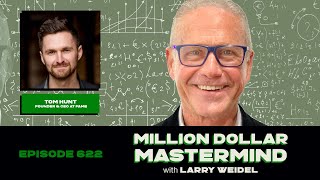
Tom Hunt built Fame, a podcast production service, by staying intensely focused: 90-95% of his time for three years. He also created BCast for podcast hosting and Abney for audio transcription, but Fame hit sustainable success about two years ago when it started paying him roughly £100,000 annually.
Questions this video answers
About £17,000 per month.
saasmarketer.io
He said about 90% (later described as 95% focus over three years).
About one to two years ago.
Approximately £100,000 per year.
Welcome to this edition of the Million Dollar Mastermind podcast. This is where we pick the brains of high achievers from all walks of life and get their hard earned real world insights on winning. I'm your host, Larry Wydell.
And for me, I never, you know, looking at occupations and all, I kind of had the conceited idea that, you know, I could do anything if I really wanted to do it, but I really didn't want to do anything that I saw people doing. And my mother would tell me in high school, like, you got to stop criticizing all these people and what they do because sooner or later you're going to have to decide what you're going to do with your life. And I'm like, well, okay. But the main thing I wanted to was to be my own boss. I didn't want to be like my father who got moved around by the military constantly and he had no say in the matter. And we had to go along for the ride and went to the great places. But I got sick of being jerked around like that. And then I wanted to make above average income mainly because I saw the people in the bottom income scale got treated like dirt. And so everybody's got 24 hours in the day. I realized that early on, but I really didn't care so much what I did, but I did care that I made above average income and I was my own boss. So I. Those were my kind of drivers, you know, when I looked at opportunities and evaluated. But you coming out of the uk, you know, seeing these things that you've done. We were in the UK trying to start a sales force in financial services in 2003, and it was like, the only people we could find to work were the immigrants, you know, and to find a Brit who would actually work, you know, good luck. And so, in fact, I know a lot of Brits in the United States that have expressed that frustration to me and they've moved to the United States, you know, so, you know, they just can't take that, that kind of passive type approach. But you're clearly different. So describe. Explain to me how in the world you happen, you know.
Yeah, it's a good question. I'm not really sure I've definitely heard this before. And I've had friends that moved to the US because it's more like, I don't know if more. I don't. Maybe a commercial isn't the right word, but people will like, take chances on people in the business world. And so I've had friends move over for like, I don't have a good answer to why England is not like that in terms of how I became like this. I think I'm pro. Like if we really want to get into. I'm probably just like after my parents approval, trying to be more impressive than my big brother. But I think it's healthy to be aware.
Did he go to Oxford? Is he a professor?
My dad went to Oxford and then he went to Oxford.
Okay, all right.
I think I beat him on the university thing because he went to Durham, which was a good one. I think I went to a better one, which is London Imperial College. But then he, he was like doing a bit better in terms of job wise and he was like one in a couple of other things. So maybe we're even now. But I think, I think I'm like, obviously my parents, my brother don't care about it, but I think it is driving me.
Yeah, yeah. Were there any comments made along the way that you, you know, not on purpose, but maybe that you picked up on that, you know, that triggered this?
Yeah, that's a good one. I'm sure my mom won't mind me saying so. You know, I was talking about the wasteland of those seven years of the failed businesses. Yeah. So the most successful of the failed ones was essentially an online marketplace that would connect entrepreneurs with people in the Philippines that would work for them. So like I've worked on Freelancer, but just for Filipino virtual assistants. So I spent a lot of time building this and then we launched it and it did it like, I mean, it was a small business. It got to like 17 grand a month maybe in terms of revenue. And then I was just like. Because I was all I was doing, I was like burnt out and stressed and so ended up selling it. Not very much like in the tens of thousands. And because the bank account where the money was going to was still addressed to my home, my parents home. When the money landed, like, my parents got the letter and it had the amount of cash on it and I knew the letter, right. So I text my mom being like, hey, mom, do you see the check? And she was like, yeah, I saw the check. Is that, is that it? Is that all you got? I was like, oh, brutal. He's like the most money I've ever earned. And so now I just have to get a bigger one, send it to her and see what she says.
Yeah, it is interesting. But do you find yourself to be a loner over there or are there other kindred spirits in the. Is there hope for the UK in terms of growth and reinventing itself and creating jobs, do you think? Yeah, I think world, you know.
Yeah. So I am like relatively connected or have like friends in the startup world and like there are definitely are ambitious people here in the uk probably not the same extent of the us So I think there will be growth but maybe not at the same rate of over the pond.
And if I was speaking to those people I would say good for you because you know, if this is United States, you'd have a whole lot more competition. But because it's the uk, a little bit of go power could probably get you way down the road because it just is so unique, you know. And so talk about why just the podcast business was not enough. Why are you expanding? Expanding to those, you know that I think you're expanding or do those. Were those other businesses like the BCAST and these, these other services, were you involved in those or to kind of start them at the same time or what?
Yeah. Let me give you a high level overview of the strategy. So even before the, before Fame existed, the first thing was called SaaS marketer which was essentially, it used to be a daily email that I would write that were just outline something that a software company did to grow and, and, and the result it had. So the idea here is like a build an audience of people that I know have buying power and then I can work out what to sell to them afterwards. So that audience grew and that's where so my, my ex employer became the first client of Fame. But then I had the audience and so clients number two and three were from that, from that audience.
Now people can get that newsletter, right?
Yeah, yeah. So yeah, if you just go SaaS marketer IO we can link to it below.
That's S A A S. Right.
Exactly right. Yeah.
And a weekly B2B newsletter for. Just to be. For clarification, why would that be different from A, you know, why would that be unique? B2B.
Yeah, so it started off being like very specific, actionable, like tips, but now it's migrated to a weekly newsletter. So we're actually informing and updating people on the news in the B2B space. So if you work in B2B marketing specifically, this is useful to subscribe to because in five minutes you can get up to date with the biggest things that have happened in the last week.
Yeah.
And then we present it in a way which I think is quite unique and not boring. So. And it's obviously completely free. Yeah.
And so. Yeah. So go ahead.
And so that happened first. So. And that audience had been growing slowly because there hasn't been a focus since Fame came in. But what happened at the same time is that as Fame was just starting off, it wasn't taking up all my time. So I thought, okay, what else can I do? I saw the podcasting world expanding, specifically businesses starting podcasts. And so, okay, we can create this service that will help businesses release podcasts. But then to run a podcast, you also need some technology. Eg, if anyone's listening to this episode, the audio file has been sent over from an application called BCast, which we also created. And so BCAFT is podcast hosting for high growth podcasts. And so this actually started at a similar time to fame, but I would say throughout the three years that they've been running, 90% of my time has been on fame. And then 5% on BCast, 5% on SaaS Marketer, which is the media brand. And then there's Also now a fourth SaaS product which helps take audio from a podcast and produce the written assets, the social posts, the blog post, the summary and the description and the titles. And so if we want to zoom out and look at the whole organization, there's a media company called SaaS Marketer at the top, which just generates attention for the people that could be buyers of the other three brands. And then the three brands are Fame, which is the service for B2B podcast, BCast, which is the software to run podcasts, and then Abney, which is the software to convert audio to written assets.
Yes, it's a nice package.
Yeah. And just one, one more point, because obviously I'm very aware if anybody is like trying to build a business. Well, as we just mentioned, for a business work, you just have to be better than your competitors. Now, the best way to do that is to focus. So I'm very aware that probably the only reason Fame has worked is because it's had 95% of my focus for the past three years. So then the question is, why bother do these other things? So I have two answers to this. Answer number one is that I get energy and excitement by doing new things. And so naturally I think I have to do this and but that. So what I have to ensure is I have people around me that can keep focused and do the incremental improvements. So I think I managed that well with fame. The second point is that there are some, what's the word? Like, good connections between these brands and they actually can be better together than separate. For example, we don't have to do product development or user interviews for ABNI or BCast. Because every day we're working on podcasts for 60 to 60 different people. And then at the same time we're able to improve the margin of fame because we're part of the process that we run for clients are being automated by their software products. And so then we can offer something that's lower price and higher value to our clients and therefore grow fame because we are using software to help run the service. So I think there are some. What's the word? Efficiencies brought together by having these things under the same dam riff.
Well, I, I would add to that, if you don't mind.
Please.
The knowledge you pick up from doing that, it causes you to learn skills. Every time you learn something it seems to be. And we noticed that when we went over to the UK to start an expansion operation, it, what happened was they, you know, we're going to build a new nationwide salesforce and financial services. But as soon as we landed, Enron occurred and worldwide all the financial regulators went berserk passing laws and putting a noose around your neck to where anything you got that worked was it. When they found out about it, they said, okay, you can't do that anymore. And so finally, after six months, we pretty much gave up and, and came home. Had that not happened, we probably would have done well. But the thing was we learned a lot of things in marketing and time management and contacts and prospecting that we wouldn't have learned otherwise. So, you know, you always pick up when you try the new things. You pick up knowledge, you also pick up contacts and you know, you make, you make the friends and great experiences that inform future decisions moving forward. So it's hard to, you know, as long as you can keep the main first thing going. But also it's good time because it allows you to demand more from your existing team in terms of taking over, forces you to delegate more to the people that's on your team already and you know, gives them opportunity to grow and expand their responsibility and their, their knowledge. But as you came up, you talked about the failures and you know, we all, we all have failures but nobody really pays attention to you on your knowledge, what you know until you finally come in and actually do something significant. Then all your background of failures, you know, it's like this is, you know, we all always joked about this is going to be a great story with, down the road when we get on stage in front of the crowd and we talk about, you know, how we, you Know how we got here. And they said, yeah, but until you do something, nobody's going to be listening. So what would you say when you look at your career? When did things start really happening to where you feel like all of this is starting to pay off and I can use this information and you know, to really make something and made something big happen. What would you, where would you say is a turning point from just getting experience all with your activities and a little bit of money to where you really started having some significant success?
I think it came at the point which was probably one to two years ago where I was able to pay myself from fame more than I would have earned if I just stayed in the management consulting roles. And so maybe it was if I just stayed in management consulting maybe I'd be paying myself like oh, I would be getting paid £100,000 salary possibly. And so I was getting closer up to that point with fame. I think that was the key turning point where actually the last 10 years of paying myself less and learning and failing was actually starting to pay off.
Yeah, because all of that experience like you talked about, you had tips you put out in your SaaS marketer that came from your time of, of not having great success, would you say?
Exactly right. So learning those concepts of online marketing, I was able to then very quickly look at a SaaS company and understand what they did Right. And then how it worked and then put that into the content. So yeah, everything like, even thing like this, probably things I've done today in day to day framework that have been informed by a failure five years ago.
It's kind of amazing how it ties together. I'm going to be curious to see down the road how you wind up using that time you put into studying chemistry.
That's a really good question. And yeah, I would. Well so there are skills you learn in a chemistry degree that are definitely valuable, like what they do in the, in chemistry in, in my course anyways they would like give you a load of results from the lab and you would have to tell them what compound we thought those results were, which we're like showing. And so that's just like an analytical skills.
Right.
Maybe when we get a lead and we don't know where it's coming from, I can like look at three different sources and use that to deduce where the lead came from. So the analytical skills definitely help. But yeah, this specific chemistry knowledge, yeah, who knows what's going to happen in the future that I'm going to be able to create with that.
Thanks for listening to the Million Dollar Mastermind. If you felt there were any valuable takeaways from the episode, please take a minute. Leave us a five star review. Your feedback is important and really helps us get the word out to a wider audience. Remember, we have a valuable webinar that is absolutely free. Register for it right now@whiteallumwinning.com thanks for listening.
More from Larry







Rick Jordan on Self-Engineered Proximity, Cyber Security Moats, and Truth-Based Leadership

Fire Fast or Fail Slow: Kevin Brittingham Reveals the One Rule That Built a $100M Empire


