Episode #623 - Success Comes From Joining Dots Of The Past with Tom Hunt, Founder and CEO at Fame
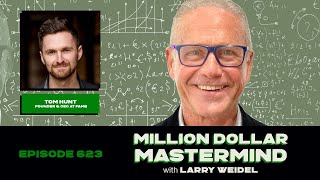
Tom Hunt, founder of Fame, says success comes from joining dots of the past through hundreds of small experiments and a hypothesis-action-measure loop. He spent three years building competitive advantage, applies restaurant hospitality principles to client service, and credits SEO and promotion as core podcast growth drivers.
Welcome to this edition of the Million Dollar Mastermind podcast. This is where we pick the brains of high achievers from all walks of life and get their hard earned real world insights on winning. I'm your host, Larry Wydell. It is interesting.
I don't know that it's always worked, but Steve Jobs, you know, part of his talk he gave at commencement at one of the colleges there towards the end of his life, he said he looked back on his life and he saw how all of the dots connected. And I think a lot of us can look back and see how the random things that seem to happen to us or where we wound up spending a lot of time that kind of came back to our advantage. You know, the contacts or the information or the instincts we developed, you know, and for example, I've got a friend who's a in Aspen, who's one of the big ranchers out there in Snowmass and he comes from a local family and you know, he's always been in farming, you know, raising, you know, growing crops, right? Growing cattle, pretty much the cattle business. And lo and behold, we just found out last week his little secret project he'd been working on, he's started his own line, I think open range, but he's, he's been growing it for the last two or three years about a hundred miles in some flat country down, down valley from Aspen. And he's actually won awards, you know, his first two or three vintages, he won awards. And so he. The cat is out of the bag. But in the article is the first time I'd ever heard this in the article with the paper came out that he actually had some chemistry courses in college.
There we go. That's it. That's it. I'm going to create a wine. Going back to what you're saying though, and I totally agree, like success in the future is going to come from joining dots in the past. And so then the question is how do you increase the likelihood of success happening in the future then? So the advice there is just do stuff, right? It doesn't matter if you succeed or fail now. And that's great advice for me. And here's a warning for the audience. If you do that too much is if you just keep doing and doing and doing and are less strategic about what you're actually doing, then the journey can take longer. I think my problem with not doing stuff, my problem was just doing too much, not focused stuff. I think because for this journey to success, let's say took 10 years, I think If I just get the same amount of doing, but maybe I spent a bit more time deciding what to do, then that journey may have, could have taken less long than 10 years. So that's my like, warning for the audience about the whole just take action advice.
Now say that again.
So if we are trying to like, if the statement that success in the future is going to be predicated on you connecting these dots or the things you've learned in the past, then the advice that stems from that, you just have to do more, do more stuff because then you're going to learn more and you're going to get to success faster. And I think with maybe more than half of the population, their problem is not doing stuff enough. They think about it too much now. That wasn't my problem. I was just doing too much stuff, random stuff that had like no connection and maybe wasn't strategic enough. And so if maybe I did a little bit less, but I was more strategic about things I have done, I, it might not have taken 10 years to, to make it work or to reach success, if that makes sense.
Yeah, yeah, it's. We used to describe that as like, you know, try to get to where it's ready, aim, fire rather than ready, fire, aim, you know. Yeah, exactly. There is a balance and it's how well you, you know, you, you got to be aware of both sides. You know, you can screw up on overdoing or underdoing in every situation and that's the where experience and this backlog of experience plays. Because when you're, is it safe to say in a leadership position you've got to make a lot of rapid fire decisions and the higher, the more successful your company goes. Like from where you had a half a dozen podcasts that you managed to, where you're up to 70 or more now that you're having to make a lot quicker decisions.
Yeah, exactly right. I'm trying to now push that down the chain so more people in the team make the decisions. But yeah, for sure.
And the thing is that you, you get to where you don't have time to debate things. You can get accused of being the ready, fire, aim type person, but that could be coming from someone who's an employee and doesn't understand the time pressures you're in. Decisions have to be made within certain timeframes and you can always go back and correct it. And certain times you just can't think about it anymore. You just gotta call it one shot or another. And usually if you call, the wrong shot shows up in Results pretty quick. And if you're watching things, you can shift, like, okay, not that we're going to go over here, and you see even people like Elon Musk make those shifts. And because, you know, they're operating right out in the. The open, you know, where everybody's watching, they're transparent. And so there is a thing that when you're proactive, I wrote this down. When you're proactive, rather than reacting, you know, you're active rather than passive. You know, you're. You're on the attack. You've got your foot pedal on the accelerator and you're moving, you immediately shift the odds of success in your favor, because you don't sit back and just wait for things to come to you. If you're. You're out looking, you know, you're paying attention, you're listening, you know, you're. You're trying things. You're not just, like, debating endlessly. You know, you're trying things and then finding out. But when you are hesitant and defensive, what have you create space and opportunities for failure that wouldn't even happen if you just kept moving. Would you agree with that?
Yeah, I think the key here is, like, get. Just get in the game. Yeah. Like, choose one thing that you're either driven enough by that you want to make succeed, or you're passionate enough about and you spend three years making whatever that is, whether it's the male leggings or whether it's a B2B podcast service, as best as it can possibly be, that is like, the way ultimately you'll win.
Yeah. And, you know, let's talk about the time frame, giving yourself a time frame for your new ventures to work through. You mentioned three years. When I started the podcast, I did get advice from one of our marketing guys. Is like, you know, he said, we see it all the time that people will start an idea and then they give up before it has a chance to kick in. He said. He said, if I were you, I'd keep my head down and do the best you can, continue to improve and things like that, but not really worry too much about your outreach and your listeners and everything for three years, because probably, you know what, you know, you're getting a thousand a month now. Then, you know, in a year it might be 10,000amonth, but, you know, in the third year, it could be 100,000amonth. You know, and now with you guys, we didn't know we were going to be able to run into you, but now we're consistently over 150,000 downloads a month. But we're well down the road on this thing. But you can look over your shoulder too much. Do you find that people. Why did you mention the three year thing?
I think the three year thing stems from the fact that again, one of the things I said at the start, which I think is the most important thing anyone listening should take away, is that if you want to be successful in business and success in quotes, because different people have different definitions. If you just have to make something that's better than your competitors, that's subjectively more valuable than what your competitors have and for the three year figure comes from the fact that I think if you have one person that's working on developing or one person has average intelligence and knows a little bit about the thing that they're going into, I think three years is a good time period for them to be able to make something, produce something that is better than competitors. Obviously different fields, like if you go into spacecraft, it might take longer, you might need more money or more people. But the average business, I think three years of focus on improving one thing is enough to make it better or at least the same as the leading competitors.
For those of you who are sick and tired of fooling around and are just dead serious about wanting to move up fast, I've got something especially for you. I've combined the best insights from over 40 years in business and making $70 million in income and compressed them into a free webinar. That's right, it's a free resource. If you want to find out exactly what the concepts are that I use in coaching million dollar earners, Register now@wydellonwinning.com you'll discover the five part framework used by so many to reach their financial, personal and professional goals. You can find that link in this episode's show notes.
Yeah, and you know the way to do that is to look at the best. Look at the best. And the great thing is that you should be able to be better because you have them to show you what the best is already as a starting point. And the thing to keep in your mind is that everything can be better. Every aspect of the whole enterprise can be improved. And so if you take the time to study it, these, you know, those improvements will come to you, but it's not going to come to you with a casual glance. How did you go about looking and evaluating the the pod? Because what, you know, when I have a worry Tom, about, you know, I really want a wide variety of guests on here and I have a worry about there's so much technology and Internet and online marketing, and everything gets stuck with one online marketer or one online business coach after another coming in the same old, same old thing. I'm really intent on making sure, and I think we are here, that people see transferable lessons of success in this field to where that would apply to pretty much any business. And, you know, can they. So they could relate to it rather than say, oh, that's just tech stuff. I can't, I can't follow it. But what, when, when you took got going on the podcast business, how did you look at that thing and dig into finding ways where it could be better?
Yeah, so first off, I think I was a little bit fortunate in that I spent four years in management consulting. And what you do basically in management consulting, if you learn how to project, manage, write good emails, run meetings. And so we were coming into this podcast business with this kind of stuff, like the management of the writing organization, like top standard, because of my previous experience. And so first off, we're able to, I believe, be a bit more organized and like write better emails than competitors. So I guess the first answer is previous experience. Second, and I think maybe a little bit fortunate here. About a year and a half into running fame, one of the competitors reached out because he, he, he was a bit smaller than us, but he wanted to go off and do something else. He wanted to basically hand his clients over to us. Obviously we would pay for them, so we paid for them. He handed the clients over. And what that essentially did is it gave us the IP that he had built the process for for running this podcast, and it turned out to be better than us. And so I took that and we implemented it for all of our clients. So I guess the answer, the second point is you can acquire it if you're lucky enough to, to acquire your competitors. And then I think the third comes from a slightly different angle on the industry bit of background. Most podcast agencies are like an audio nerd has started the business because they love audio, and then they're applying that as a marketing tool for businesses. Whereas we're the other around my back or our background is online marketing. And so we're just using podcasting as a tool for online marketing. And so we were coming at the industry from a slightly different gaze. For example, we're marketers first, not podcasters first. And most of our competitors are the other way around. And so that means we can be a bit more strategic and be a bit more, I guess, not aggressive. But advanced in our promotion strategies. So those are three things that I think have helped us get an edge over composers.
And how have you, you got, you seem to have a real understanding of how to make the SEO work. And people who don't are not paying attention to SEO in their business. They need, they need to. And so because people would be looking for your, your kind of service and it's, you know, it's just how they find restaurants and how they find everything, you know, it's. They look online and local and national, depending on what it is. And so the, you, you want to be able to come up in those searches and so talk about SEO and because you've been able to drive us up to where we, you know, I'm gonna jinx. No, I'm not gonna jinx. But anyway, they. Where we've just skyrocketed up in the search engines for Mastermind and Millionaire and things like that. The podcast has. But that's, you know, I, I give you guys the credit for that. So all I do is get on and talk.
Well, yeah, you're the talent, Larry, so nothing would happen without talent. So on the FAA point, I think that the meta point here is that the only reason we're good at it is because I spent the 10 years trying to get good at it by just paying for loads of courses and trying testing loads of stuff. So if anybody's here, it's like, how do I get good at any of this? Is you just tried loads of stuff. The basic concept, if that.
Let me just say that you try loads of stuff and then what you evaluate it on, because it's not just trying loads of stuff. It's like, you know, there's, there's, there's a rhyme and a reason to trying loads of stuff.
Yeah. So, yeah, so you try something and then you look at the results and then you try something again, ideally with what you've learned from the first one. And then you just keep doing that.
And that's easier. It's easier to evaluate. Sorry for interrupting. But it's. Isn't it easier to evaluate if you have specific target goals that you want that letter, that campaign to do and you can, you know, you know, when you send it out, you're going to measure the results based off these things rather than all people are excited, you know?
Yeah, for sure. So, yeah, we have, so you have the hypothesis, then you take the action and then you measure the result based on what you think is going to happen. And if the hypothesis is correct, then maybe you try again with the same hypothesis, but then change something else.
And what would a hypothesis be in a marketing campaign or an online product, would you say?
Yeah, so literally from today. So Abni, this product that will convert podcast audio into written assets. We're currently running Google Ads and one of the keywords we're bidding on is just the word podcast transcript. Now, a lot of traffic for that keyword. And actually our product isn't like best positioned, I don't think, or to get customers from that. From that keyword, from someone typing that in. And then I think there are probably a lot of other companies that will be better to convert people from that keyword. But we've tested it. We spent £200 now on bidding on that term, and now we've seen that we've only got one or two customers from it. And so actually our theory was that we can bid on this term and it's going to be profitable for us. But actually it turns out that that theory is wrong. So we'll probably stop bidding on that keyword and then look at other keywords to invest more into.
I see. Yeah, that's where keep going.
And so now from that mini experiment, I've learned A, a bit more about the potential buyers for our product, but B, a little bit more about Google Ads.
Ah.
Ah. And so to zoom out then, over the past 10 years is that I've probably done hundreds, if not thousands of those experiments. And that's the only reason why I've reached some kind of success now is because I've learned from thousands of those things.
Yeah, yeah. And that's organic knowledge. It's like down the road, you're going to be speaking at these Internet conferences and people are going to say, what a genius. And like all of the geniuses on stage, you'll say, yeah, if I was a genius, I wish I told myself that 10 years ago I could have saved myself a lot of money.
Yeah, exactly right.
You become a genius for millions of not thousands, but millions of mistakes and corrections and adjustments. So as you look at the companies you have and the businesses you have, what are you bringing to the table right now that is the difference maker in your businesses.
So for fame, definitely. I think there's this concept and I'd be good to get your feedback on this that I've taken from the restaurant business called hospitality. So I'm sure you're aware of Shake Shack, the burger restaurant. So the company that owns actually a span off separately, but the company that's built Shake Shack is called Union Square Hospitality. And it was founded by a guy called Danny Mayer, Danny Meyer. And Danny Meyer has written a book called Setting the Table. And he has this concept called Enlighten Hospitality, where really what he's saying is that our business, like we're in the hospitality business, not the food or the service business, we're in the business of making people feel a certain way. And so if you take his restaurants, he has the people in the kitchen creating stuff and then he has people front of house that delivering that stuff you do, that's a service. But the way you make the people feel as you're delivering that service, he calls hospitality. And so one thing that I think that we are doing, starting to do better at is we have this kitchen which is we're finding the guests, we're producing the video or the audio or the written assets. But then. And so we delivered that to you, ideally on time. We do that service, but then we have people in the team, the account managers and account directors who then are ideally delivering that to you and in a way that's productive and maybe doing some little extra things for you in time for the meeting to ensure that you're happy during the meeting. And so I think if that focus on the client and this concept of hospitality that I think is starting to set us apart from competitors.
Ah, interesting, interesting thought.
Yeah.
Well, because the main thing is, you know, we've done battle quite a bit because I'm very hard to please in terms of guests, but your staff is just hung in there and adjusted taking it and nobody seems to get their feelings hurt or, you know, the atmosphere level stays the same. And that's what you're telling me. That's my design, you know, that's not.
Yeah, like we, we want to stay focused on ensuring that you're as happy as possible. And if that means taking the feedback and coming back continuously, then we're going to, we're going to do that.
Yeah. And so when you look forward, where do you get most excited about do what? What would cause this year to be just mind blowingly fun for you and rewarding?
Yeah. So I love like finding out new things and then implementing them. So whether it's like a new promotion strategy for fame, that's what I absolutely love. So I might test something on my podcast and then I'll see it works and I'll write up a working procedure and share that with the team. I get really excited about that. And so equally, I might be using Abni for one of our client podcasts. And then I'll be like, actually, if we change that thing in the product, it's going to get better results for the other 69 clients. Then that is the thing that makes me really excited as well. So I think it's probably like incremental new improvements of things that I love. And whether that's making an update to the FAME service process or to one of the products, those are things that I really love doing.
Thanks for listening to the Million Dollar Mastermind. If you felt there were any valuable takeaways from this episode, please take a minute and leave us a five star review. Your feedback is important and really helps us get the word out to a wider audience. Remember, we have a valuable webinar that is absolutely free. Register for it right now at whiteallowinning. Com. Thanks for listening.
More from Larry







Rick Jordan on Self-Engineered Proximity, Cyber Security Moats, and Truth-Based Leadership

Fire Fast or Fail Slow: Kevin Brittingham Reveals the One Rule That Built a $100M Empire


