Episode #734 - Keep Re-Simplifying Your Products with Orrin Klopper, Co-Founder and CEO of Netsurit
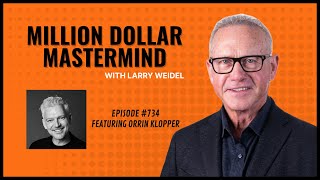
Orrin Klopper, CEO of Netsurit, talks about simplifying how you sell and repeatedly decluttering your product offerings. After losing major customers in 2020, he rebuilt by staying disciplined about what to offer. For MSPs serving 25 to 1000-user firms, the clearer your message, the easier the sale.
Welcome to this edition of the Million Dollar Mastermind podcast. This is where we pick the brains of high achievers from all walks of life and get their hard earned real world insights on winning. I'm your host, Larry Wydell.
It's not bad for us to take a minute out and point out in sales, the simpler you can say it, the better because if people don't understand it, they're not going to buy it. You know, one word that you piece of jargon or, you know, that you throw in there that they don't understand, that's it, you know, they're not listening anymore. You know, and so they. But the tendency for new people coming in, and I know this because I went through it myself and I've seen it repeated thousands of times, is when you go into a new industry and you don't know anything about it, you feel insecure yourself, much less the client. And so you're asking yourself, what if they ask this, what if they ask that, what if about? And so once you go and give the answers to all those things and you've got educating yourself now, you're excited about it. And it's really hard not to go in and just blow people away, like blowtorch them with information because you're so excited that you even know it, you know, and so how long did it take you before that light bulb went on? That like, this is not a good way, good approach, you know, blowing them away with details and facts and figures and impressing them with how smart I am is not going to make the sale. How long did it take you for that light bul. Light bulb to go on? Because I'll tell you, there are people that never have that light bulb go on.
No, and, and I think it's, we've had to remind ourselves again and again, Larry, over time because what happens is you get like, let me give an example. Microsoft have so many acronyms for so many different things in their business. And just we're a Microsoft partner. That's what we focus on. Just for us to keep up to speed with all of the different naming conventions and terms and etc. Is hard enough. So we've had to constantly remind ourselves that we need to. Like, a customer doesn't care about the name of the technology. They care about the impact it's going to have on their business. You know, so we're like, yeah, we're, we're Azure specialists. They're like, what's Azure? Who cares about Azir? I think we've had times where we've done this well and then other times where we kind of lose our way a bit and then we have to re. Simplify things again. So it's constantly something that we try and hold ourselves accountable to. But yeah, we sometimes slip into some of that technology jargon.
Yeah. And it's almost like decluttering really. Because I was talking with some of my staff today. They're in there, they're going through some of our old storage rooms and going through the cobwebs and throwing stuff out and you know, it's like it done. You know, we need to do this every six months. You know, we need to just go through all the closets, all the storage and thin it out just so you refresh your mind on what's there, but also get rid of the unnecessary stuff because it clogs up your. It clogs up everything. And so the same thing with sales pitches and inventories and procedures. It's almost like you need to be regularly self auditing to get rid of the clutter in every aspect of your business for the purpose of efficiency. The fewer things there are to keep up with the better. But the natural tendency is to go the other way for it to naturally get more complicated, isn't it?
No, that's it. And also to stick to things because they've worked like. So the one thing that we do in our strategic planning and we do this every year and some years we do it deeper than others, but we really go and look at, we do a swat, we do strengths, weakness, opportunities, threats, how differentiated are.
Say that again.
This. Strengths, weaknesses, opportunities and threats. So we look at our strengths, we look at our weaknesses, we look at our opportunities and our threats. We do that each year and we let that be the basis of which we, we start the strategic planning.
Yeah.
And, and you know, if I look as we went into 20, as we were going into 2020, at the end of 2019, we kicked off our strategic planning and there were some, there was some trains coming in that tunnel at us. So the first one was our two biggest customers we were going to lose. Not because of service issues. The one was going to insource and then the other was going to. The other was going to, was doing a global outsource and they, they were going to do a, they were going to, they're doing a global outsource and they were, we were going to lose that. So that's our biggest customer. Okay. Two biggest customers we were going to lose. I looked at our organic growth. It was in A hole. We, we had one of the worst organic growth years we've ever had. And then thirdly, the pandemic was rearing its head. So here we are now looking at this. So we cut costs, Larry, more viciously than we ever have before. And essentially what happened was we ended up initiating a total transformation of our business. And then we came up with. So like if you look at our space called Manage service Provider, we're essentially an IT department for our customer. That's the heart of it or we augment their IT department. So just in the US alone there are 20,000 MSPs that, that do what we do.
MSP is managed, the managed service provider.
Companies like Netshares, okay. That are providing this type of IT service to small, medium enterprise customers. Our ideal customer profile is 25 to a thousand users. And you know, so like it is.
Now, why you say what you say them. Let's just get make take the mystery out of this. What you save those companies is for them to have to build their own mainframes and their own, get their own building, you know, where they have their own people trained to do it and you know, you know, do manage all their data themselves. Basically. That's what you save them. Is that right?
That's it. Focus on their core business. Yeah, it's hard enough for me to keep up with what's happening in the technology environment. Then you, if you're, if you're like a manufacturing business, are you going to keep up with everything that's happening in the technology world? And that's essentially our value value proposition that we become that trusted IT partner. Yeah, we built a blue offer, Blue Ocean property differentiated offering Larry, where we saw our customers were using the Microsoft technology productivity set like Word, PowerPoint, Outlook, which is that stack is called Office 365. And then there's another technology set that drives automation for companies called Power Platform. And we looked at that and we said okay, there's an opportunity here. So we built an offering called innovate where for $2,000 a month we will find $24,000 worth of ROI in a 12 month period or we carry on working until, until we do. And automation adoption of the technology, you have productivity enhancements. So yeah, we constantly try and relook at the business. What are we getting right, what are we getting wrong and try and protect our differentiation and do everything we can to protect our culture and our quality of service.
Now when you started this, the company, when you start, was it an abrupt thing? Was it a natural progression? How Traumatizing. Was it to start because you started this in South Africa, right?
Yes, that's right, yeah.
How big of a deal was it? Was it frightening? Was it going out and getting. Seems like you'd have to go get a bunch of mainframes and lease some space or build your own building at higher. It seems like it could be a big deal. Yes.
I think at the time for us what had happened is the market had shifted from mainframes to client server technology. So where there was less of a mainframe and it was more about a network on premise. But the beginning was. So initially in 95, the business ran from the bedroom of this friend of mine that invited me to come and sell from 95, 96 in 97 after my mom saw me counting cash. And at the end, my mom's a classic. She saw me counting a whole lot of cash on my bed at the end of 1996. So then she, she said to me, my boy, we need to go for lunch. So when my mom says we need to go for lunch, Larry, that's, that's serious. So that's not so like, I'm like, great, okay, mom, can we go tomorrow? No, no, no, no, we can go. Can I say can we go next week? No, I can't do next week. So now I gotta wait two weeks to go for lunch. So now there's something coming because I was applying for additional phone lines because the business was going to move to, to my. Where my parents home and was going to run from my bedroom. And anyway, I go for lunch. This is my mom's standard tactic. She opens a sealed envelope, takes a sealed envelope out of her bag. She's got the envelope sealed off, opens it, takes the letter out, handwritten letter, reads me the letter whilst crying saying I need to move out. It was so hard for her. She was absolutely heartbroken that she had to kick me out. But she knew that it was time that I spread my wings. So yeah, she, she, she. And then I moved into a flat in 1997. And yeah, and then, and then we, we. That's, that's where, that's where the business kind of took another step. Ended up. It was a one bedroom flat, ended up having nine people working out of there. My mom gave.
Nine people working. How can you find workspaces?
Yeah.
They went full time.
No, they were, they weren't all full time.
Oh, they weren't all full time. Okay.
Yeah, that was in 97. There were people helping and that. So yeah, and then we just, we just Sold. And I think we had, we did one deal. So basically we, there were a couple of deals that, that gave us this additional confidence and this additional cash. And it was a tough time because when I finished my degree, a lot friends were going and getting great jobs or reasonable jobs. So there was this inner conflict to say, should I go and rather work and get more experience? Should I stick it out? And yeah, God in the universe had a plan and I managed to stick it out.
Yeah. And so how did Eva explain this, people? You, you referred to it real quickly. But we're going to simplify it for me and everybody else. And that is people back then, they were moving away from mainframes. Yes, Monster. I guess we see them now in cloud type forms. Yeah, they big cloud farms or mainframe farms. But to what you said, the network.
Yeah. So basically what happened over time is it moved away from mainframes towards cloud server, towards network technology. So it was on premise, the mainframe or server was on the customer side and then the computers that everybody used was connected to that server in that office. Yeah. Now what's happened over time, which kind of started to really accelerate in 2007, is it's almost gone back to the mainframe model, except now it's called the cloud. But the cloud is actually just, it's another version of the mainframe. You know, it's just, it's just a different. Is a different. So now the cloud. So for instance, instead of having one mainframe server or a series of mainframe servers that serve one bank or one financial institution, you now have an entire data center that Microsoft has in multiple locations around the world. That is essentially the Microsoft cloud mainframe of which you get those services. And that's, that's kind of the change that has happened that we've had to navigate.
Well, you know, this again, I came out of financial services and lots of clients, you know, billions of this and 10, tens of billions of that. And all clients, you know, small clients, most business accounts are small. And so they would have things where, you know, eventually they wind up building another building. They're adding people on. Then you have people been there for long careers and they're having to take on the additional workload and machines they're having to patch and make. You have people that are trying to live out their career to their retirement and they don't want to bring in the brand new, latest and greatest new operating system. And so you're operating on this Model T mainframe thing that has 17, you know, patches on the Tires. And the guys don't care because, you know, another year and I want to be retired and be somebody else's problem, but I don't want to have to be the guy to bring in the whole new technology and educate. And so you have all of these things that the CEO didn't even know is going on. And I did because I realized one thing I realized early on is when you get a project, everybody in a corporation that gets a project or an idea, you know where they go, they go to the Green Berets and the Green Beret, you know, it's just like in the military, if there's a big project, you go to the Green Berets, you go to the special Forces, the SEAL Team Six. And so those people inside corporations are the computer guys. And if you, you know, I would encourage everybody who works at a corporation make friends with the computer guys. Think about the lunch. Because everybod ignores them. Every, you know, they're over there like little gnomes over there in their little world. Everybody ignores them. They, they know everything about you because they see all numbers and everything. But, you know, I remember when, when I went over there the first time, it was like, we've never, we know who you are, you know, we process your business for years and your organization. But they said, you know, we've never seen anybody from your like a senior national sales director level. We've never seen one in person before, you know, and they're on the same, they're just on the other side. You, none, none of your kind have ever walked in our building. We didn't know what kind of person you might be. And so you make friends with them. And then all of a sudden, unbeknownst to the CEO, if you've got a project and they like you, you call them up and your project goes to the top of the list. The CEO could just wait.
Yeah. Yeah, you're so right. I've never heard us called gnomes. I love. So true. It's so true.
But, but the thing is that that's, that's where the power, you know, the deal is. It's the computer guys that get things done, you know, because that's the numbers. That's. Everything's gotta, gotta be established. In fact, you gotta be tracked and proven to whether or not it's valid or not. And so that's, that's where that comes from. So. But not having to keep up with all of that stuff yourself and have your own department is just saving such a nightmare. Like you went through it real quick. You like keeping up with the new technology and everything and learning that that's a big thing. That's a huge thing.
No, it's a huge thing. And also just think about this. A lot of entrepreneurial businesses say you've got like a, I don't know, a 20 person engineering firm, okay? Bright engineers like really doing great quality work and they're competing against some 1000, 2000 person engineering firm that's got more capital. Technology can enable their 20 person engineering firm to outmaneuver and be more agile than their larger competitors. I look at our purpose, supporting the dreams of the doers and empowering and enabling this entrepreneurial part of the American economy. Technology can play a huge role if it's embraced and adopt it in the right way. Take for instance now with this AI and what is happening, you know, so Microsoft's version of this, Larry, is called Copilot. So their AI technology stack is called Copilot and it's plugging directly into a whole lot of their products. And that for a small and medium enterprise, the impact that can have, the agility it can create, I mean that's unbelievably exciting. So apart from taking care of the operational piece of it, it can really become a strategic enabler and differentiator.
Thanks for listening to the Million Dollar Mastermind.
If you felt there were any valuable.
Takeaways from this episode, please take a minute and leave us a five star review. Your feedback is important and really helps us get the word out to a wider audience. Remember, we have a valuable webinar that is absolutely free. Register for it right now at whiteallonwinning.
Com.
Thanks for listening.
More from Larry







Rick Jordan on Self-Engineered Proximity, Cyber Security Moats, and Truth-Based Leadership

Fire Fast or Fail Slow: Kevin Brittingham Reveals the One Rule That Built a $100M Empire


