Part 1 - The Marketer That Scales Successful Companies To New Heights
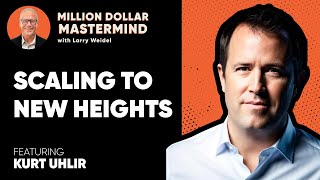
Kurt Mueller, a scaling specialist with multiple SaaS exits, shares how to grow companies through marketing-led growth and systems. He walks through his planning method using intent and tentative appointments, explains when to delegate, and describes his work scaling EZ Home Search.
Welcome to this edition of the million Dollar Mastermind podcast. This is where we pick the brains of high achievers from all walks of life and get their hard earned real world insights on winning. I'm your host, Larry Wydell.
I'm talking with Kurt Mueller. Hello, Kurt.
Hey, thanks for having me, Larry.
Glad to have you back on. It looks like you might be away from your mountain retreat this time.
I am at our house in Roswell, Georgia, just north of Atlanta.
I don't know if I mentioned it last time but you know, when I came out of Georgia Tech, I built houses on the north side of Atlanta and my swan song was up in Alpharetta and Roswell, Georgia. I used to drive up every morning out of Buckhead and that was just starting right now. Now you're in the middle of Atlanta, it seems like.
I'm sure there's very few green spaces now except for the parks that Roswell is known for.
Yeah, well, you know, that's the big thing about living in Atlanta that I'm sure you had to go through. The thing is like I want to be in Atlanta, but where in Atlanta? And you wound up in the places I probably would be and that is Roswell where you can be fairly close, close in but then have a place that you can get away from on the weekends up in a mountain.
Blairsville or where does it's in Blairsville, the mountain property. Yeah. It's nice. I can get into the city when I need to and I have meetings. I've built a career and a life where you can help companies be successful. No matter where I am, but especially I of course like when you would have been here. I have a huge network in town so I have a lot of company meetings I do have to go into Atlanta for but I prefer to do things remote if possible.
You could be productive that way, you know, and depending on what it is you do. But I remember when the first cell phone flip phone came out in early 90s, I never went back to the office. I paid $2,200 for the first one and I never went back to the office unless there was a meeting. And productivity I think jumped. But now let's talk, let's kind of help everybody who didn't get a chance to listen to the previous episodes. I'm going to dump this on you because it's such a complicated story. Your business. How would you describe for people what you've been able to do in business and to get to a position of influence like you are right now to where you can be effective, you can be in touch with a lot of people and. But you can still move mountains and make a difference and keep yourself wildly entertained on the business side but not overwhelmed and still have the life because those young kids are growing up and I'm sure they're becoming more and more demanding.
In a good way. In a good way though. But that's also why I like the flexibility of what I've been able to create in the companies I work with. Yeah, I didn't realize early, like probably the first 10 or 15 years of my career what I was doing. I was highly successful. But it was only after I had joined with a gentleman named Reggie Bradford as his right hand man as part of his executive team for a SaaS based company in Atlanta that we ended up selling to Oracle 16 months later. And I went and started this another SaaS based company venture back and there's a long story we could get in there. But I came back to him for some a couple years later and I was like, this is difficult. We, we raised a bunch of money, we got to break even. But it's just, it's really hard on my family. And he's like, I would have told you not to have done this. And I was like, I don't understand. Like we get along really well. And he goes, I hired you because you're the king of scaling. You touch things and add one to two zeros to the net revenue for companies in just a couple years. That doesn't mean you're good from going from zero to a million dollars in sales. And as we kind of talked through that and made some decisions about what, where I should be looking for my career after that, he was right. I'm really good at. And no matter what industry, it's usually heavy technology focused seeing things in systems. I tend to step in as a head of marketing ahead of strategy, sometimes in the product side but usually all around owning marketing. And I see how all these interrelated piece things are interrelated to me. But most people don't see it. They think the press release that goes out that sets the bad expectation that sales sells on that product, doesn't deliver on that churns a customer later. Most people don't see how those things all relate together or they should. And I'm like that's one system. Let's go in, let's make sure everything's communicating really well and whether it's healthcare or real estate and that's, I've done that repeatedly now at Dozens of companies I'll always join that either burning ship that's on fire, that needs to turn around, investors need their money back. Or like right now, I'm with a company called EZ Home Search. EZ as in zebra Home Search. They're the only confidential home search national home search platform out there. And it's a huge opportunity going up against Zillow, realtor.com and homes.com and Preston, the CEO, he'd been going and he had enough of a foundation. He brought me in a new CTO in, and we've gone, like, to cash flow break even in four months.
What does confidential make me?
So most people don't realize. I mean, it's different when you. If you're. When you're working with, like your local real estate agent, but usually people aren't searching for a home like on your agent's website. They're going to one of these big portals. What they don't realize is what happens on those portals. Well, we'll do it in terms of not real estate. Nobody that's listening would say, I have a $2 million IRA, and they would never go fill out a contact form that says, I'm going to move my $2 million IRA from Fidelity to something else in the next six months, go sell my information to people that want that. But that's what happens with most of those big national portals or even big brokerages of some of which I've worked at. They go, how can we make the most money? By giving your name budget information to somebody that's going to help close a deal, or they'll just kind of sell it. Sell it. Sometimes, you know, some of the public companies that do that, it's a thousand dollars about, on average for every one of those leads they hand off. And so Preston had a view for something very different that said, look, this is private, confidential financial information. You should be talking with the vetted partner that you know who they are and that you've agreed to give them your information and you're in control of that. So if you want to do that, here's an avenue now with this portal so that it's not selling your contact information to the highest bidder, but you're providing it only to somebody that you know has been vetted, if you want to.
For those of you listening, Easy Home Search is who he's talking about. And I think there will be a lot of people that are interested to know that there is a confidential home search option out there.
Yeah, to me, it's the Same thing as so much where like we've, a lot of us have been trained to look for that in our financial advisors and do we work with, you know, percentage based or fee based and what does that look like? But in real estate that just like it doesn't come to most people's mind. But because of so many privacy breaches from some big national portals or AT&T last year that gave away pretty much everybody's data. People are going, who has my data and why is my phone ringing so much?
Right, yeah. And we all have a, we all have too many stories of having a conversation at lunch with somebody about some subject we don't usually talk about and get back and find Google is popping up ads about it. Want a vacation in Costa Rica? Have I got some options for you. Now, as you were coming up, you reminded me a fortunate thing I had coming out of Georgia Tech and going into home building and that is like we're talking about that. I. My last houses I built were up there where you live in now in Roswell. That I didn't know what I was getting, but I was. When I was put in charge of home building, I was Mr. Outside. I was working for a guy and owned the company and he was Mr. Inside. And he always wanted maybe make me a partner. But at a young age, at a young age, somehow my, I had no financial knowledge or no way of knowing this, but my instincts, you know, divine instincts kicked in and said, do not be a minority shareholder in a closed corporation. You do not want to be in business with this guy where he has all the authority. And so I would say, no, no, no, I'll just be, you know, an employee. But I was Mr. Outside, he was Mr. Inside. But it forced me to get like super organized on assigning things, keeping up with things. You know, on a average day we would be, I would have 11, you know, we build 25 houses or so a year, upscale houses. And you know, you'd have 11 under construction at any one time. They're all at different stages of construction. They all need materials. They all have a group of, we used to say subcontractors. Back in that era, you'd have one guy with an IQ maybe over 100, everybody else was below 50 and, you know, on his crew. And you'd have to check on them constantly and you couldn't leave them. It's like toddler, it's like having toddlers with tools building your houses. You couldn't leave them alone alone long. And they would get into all kind of mischief if you didn't keep an eye on them. But so I was constantly running around in my suburban, but I had to at least be organized. And so it forced me to come up with all these systems and flowcharts and where I had it in my mind, where I had my finger on the pulse of what was happening and that became, that was useless to me. It was saying that, you know, your strength was not building companies up to a million, you know, zero to a million, but scaling it. After that I was useless. When I went into financial services and in sales side of financial services, I had to learn that skill because it was just me, you know, I wasn't running crews. So that was a tough three and a half years. But once our company decided, hey, we're going to go and now take this nationwide recruit train, open offices, it was like, okay, now we're back in my game, we're in my ballpark. And I had an advantage and I could see things that I didn't know I had and kind of almost an unfair advantage over the other people in the company because they never had that experience. And it sounds like you picked up an experience, you were in some position along the way where you picked up that ability to see things more globally and seeing how the big pictures, you know, and the small pieces work together and how to make them function more effectively. Where did that come from?
I mean, I was kind of forced into it in that like I formed my first of two LLC when I was 14 because I had between 15 and 20 part time employees and two full time employees in a lawn care business and end up being other home services.
You turned it into an LLC at 14?
Well, yes, I probably should have at 13 in like the November is right before Christmas of that year. When I was 13, my dad said the government's going to come after you for paying people. You're getting enough revenue and cashing enough checks, you're going to have to pay taxes next year. You need to go figure that out. So that was a good, that was a good plan. But at the end of that season I just, I just went out and sold like crazy. So I ended up then having to hire people for the next season. But I think for me, so I had a little bit of it then and I've always been able to operate well. But, but even in the things that I'm running myself, I think I see systems in my own personal, in my own life. And so I think even for solo, solo entrepreneurs that are listening to you, you know, our Sole contributors at companies. Like if they're the individual salesperson. Well, for me, I would separate out like you calling your, you calling and doing Legion is one set of systems. And it's kind of like plates that you'd be, you know, you see the person on stage spinning and it's like you can let your outbound cult lead gen slow down but not stop because you may need to turn your focus as that individual then to cultivating the existing relationships or following up with clients. Well, those aren't your only plates because then you also have a family or you have groceries. And so in terms of like systems, even as just a single person, like my wife and I, we use Trello, a project management tool because we have different cards for going to the grocery store versus going to Costco or Home Depot because those are different to do lists. And whether she grows or I goes. And so we're separating out as just an individual all of the things that could be a system. So that if for nothing else, what I'm keenly aware of, it's actually a little bit easier for me when I'm managing a team because to your point, if things go awry, you're going to see things smoking in the factory, so to speak, and you're going to be able to kind of see there's a problem. You don't see that when you're an individual contributor in your personal life. But it's things are still going awry. You just may not have something that's going to come back and tell you. Which is why I like financial planners. Financial planners tell me, am I on my plan or not? Well, that same thing needs to be done. I need to have a system in place that tells me, am I spending enough intentional time with my kids for how I would like to be raising them, for them to grow up to be the adults that I would like to be. If not, they're going to be 15, 18 out of the house and I'm going to be like, what happened the last 15 years?
Yeah, exactly.
For those of you who are sick and tired of fooling around and are dead serious about wanting to move up fast, I've got something especially for you. I've come combine the best insights from over 40 years in business and making $70 million in income and compress them into a free webinar. That's right. It's a free resource. If you want to find out exactly what the concepts are that I use in coaching million dollar earners, Register now@widelonwinning.com youm'll discover the five part framework used by so many to reach their financial, personal and professional goals. You can find that link in this episode's show.
Notes well you mentioned the word intentionally which intent. That's a big subject for me lately. It's just kind of come to the surface at some point. I'm going to do a little video for YouTube on it. But the thing is when, especially in your own life, in our own lives when we're on our job or whatever, when you do things if you don't have a system for what you're doing, it's going to be done randomly, it's going to be done hit or miss and you're but quit. Have you, have you noticed whenever you it's just like we're going to get up and if you have a varied schedule like both of you, you know you and I have the freedom and we live in different places and we, you know, we don't have a boss, we don't have an office we go into. And so you know, if we want to do something, you know, we want to work out in the morning, we want to go do something else in the morning, run this here we have a meeting or a conference call early. I don't like to do that but I'll make an exception. So we'll have various get up things in the get up. But if you've got a free day on a relaxed day where you don't have the alarm going off or whatever, who knows what'll happen. But you know it's amazing because you don't have any intent for that day. But if you have to get on a flight at 6:10 at the and be at Hartsville Atlanta to catch a flight out you're going to have and you got a car coming to pick you up or whatever at 3:34 in the morning, you're going to have much more intent about how not only you get up in the morning where things are, what you do the night before, who you're going to be, you know and you get more done when you have intent.
And yeah, I completely agree. I mean for me I try to have even my off days planned but also I have because I try to systematize things. Your point about being flexible? You know, some days, you know I wake up and I'm just not feeling it like I was and if I know I have some very knowledge heavy knowledge work that needs to be done and my wife's going to be taking the kids to the botanical garden, I Might decide to not work for the next three to four hours because it's not going to be productive and I'll go spend time with the kids. But for me, even when, like, I don't know, my wife and I put a TBD for to be determined before things in our calendar that we were thinking about doing, but we haven't decided 100%. So, like it's Labor Day weekend coming up as we're recording this, we're going up to the mountain property tomorrow. I know I've been just feeling I need to get out. I need to do stuff that's not just in the gym. And I've got probably about a third of an acre along one of my driveways, that tall 50 foot trees that need to be cleared. So it will give me so much joy and it'll just recharge my soul to go out and just clear cut those trees with the chainsaw. So I have a TBD for six hours to go out and clear that third of an acre. Now it's a TBD because it's a Labor Day weekend. We might choose to do something else. But my wife also gets to see my intention is I need to recharge. Here's what I'm planning on doing unless we want to do something else. And so I try to plan things into there, but it's still the direction of knowing, hey, even though I may not know exactly what I want to do this weekend, I'm planning it out. And I think that's what's important for people is look, depending on where they're at in their career. Look, you may not know exactly what your job is going to be in 10 years or 15 or 20 years, but you at least directionally know. Like, I'm in Roswell, Georgia, always directly know if I'm going to go climb Kennesaw Mountain, which is roughly to my west here, and so I can look there and go. I think that's where I want to go. And my path need meander to get me that direction. And that's, that's the intentionality that I think even that level. Too many people just go through both their personal life and their work life. And they don't sit down and go, what would I like to happen out of my career? Or they go after and go, I only want to do jobs that I'm passionate about. I'm like, screw that. You need to make sure you pay your bills. Like if you talk, you can get passionate about anything at the end of the day. Like, I'll work in any industry. Because it's not that I'm passionate about real estate, which I do love right now. What I'm passionate about is people. And you always work with people.
Yeah. Well, you know this thing about intentionality. If the more you get yourself organized that. With around that concept for yourself, the better you can be with in a leadership position because you. You kind of organize yourself to look at things that way. But I'll give you a simple example, which we all do. We have someone that we. There's something we need out of them. You know, we finally get them on the phone and they're going to go check and they're going to this and they're going to whatever. And then when they get that, we'll be back in touch. Okay, great. And you ordinarily, you're just going to let them get away, but I learned a long time ago, no. Once you got their ass on the phone.
No.
When are we going to get back? Well, I don't know the schedule. I don't know how long this will take. This. I don't know what your schedule is. I don't know my schedule. I don't know. I don't know.
I don't know.
I said I don't know. I may walk outside and have a heart attack. I may have an aneurysm before I get to the front door. I don't know either. But let's. How about if we do this? I learned this has saved me so much in my life. How about if we set a tentative time, tentative schedule, a tentative appointment. You know what I found out 99% of the time? The tentative time. It winds up being the time, right? And we don't get an interruption. However, I would have never gotten the second appointment, full appointment, done that quick, if I had nailed them down the first time. It's so easy at the end of a meeting, the end of a conversation to just let it go and assume we're going to come back. But that intent, you know, if you could, you can hold on to your intent, not let the rope slip out of your hand while you've got it. Even simple like that, you can make smudging your life so much easier because you just saved yourself 10 phone calls chasing that. That guy down for the final appointment.
Yeah, especially when both people want the same thing. I mean, on Wednesday, I spent probably 45 minutes to maybe even closer to an hour with. I'm on the board for a nonprofit here in Atlanta with A number of CEOs and other C suite members and the founder and he's now another board member called me because I've been helping redo a bunch of the positioning and marketing for, for the organization and before we roll out this new website and a bunch of email campaigns. And he called me with like where are we in some changes to your point? Jim has called me at this point to like catch up. Like we had the email lit up back and forth and he's like well I had a couple of changes to make and I said do you have half an hour right now? I'll make the changes while we're on the phone and we can keep iterating. And he was like yeah, because he wasn't expecting me to have time. But to your point, I knew that he and I would spend more than 30 minutes an hour going back and forth on email and trying to figure this out and text message I'm like if we just get it done now, not only does it save us time, but it's done. Like you can send out this mass email to all the members and potential members like tomorrow. And he's like well let's do it.
Yeah, yeah. And that's the idea of being a now person. You know, as much as you can get it done right now, the more you can get things done, it's like when I look back, if I'm happy about a day, it's usually about what I got done. I don't know, it is because I offloaded these things that were important to me to get done and now they're done. You know, it's just a relief.
Well, that's what I tried doing with my team so much is I always hire people that are good at the core job I need them to do. But. But in any fast growing company there's always so many more things on the to do list jobs be done than any everybody could do, right? So I'm always making sure to tell them the here's the intent of the outcomes I want the company to hit. And so because of that then it allows other people to say when they have these down times to go, maybe I'm still they're waiting on something for their core job but they see these other jobs be done and they know that that will be helpful because the intent is the company to go this direction. In addition to the, I mean the core company Easy Home Search I work with, I'm also working on my personal brand because I'm doing a lot of speaking through national Speakers Association. So I have this incredible writer that I've worked with at multiple companies. She and I were catching up earlier this week and I made a comment that I was like, she's worked with me for full public companies. She's working with me at a company right now. And I just mentioned. And I was like, I'm still trying to get to do merging these two massive articles I have on my website that are hugely popular, but they should be one article. And she just goes, well, I. If I have some free time, can I do that? And I'm like, I don't pay you for my personal job, like, for my personal stuff. And she's like, no, no, I'm good at it. You've put it off for over a year because it's a low priority for you. She's like, I want to help and do it. And I'm like, as long as you don't ever feel like it's a requirement because, like, I'll hire you for anything, any work I can do. And she's like, it'll be done. And I was like, but that mentality, that intention. She wants to serve. And she's like, well, Kurt gets four more speaking opportunities. He's going to bring me on to help critique some of that stuff, so I'll pay it forward where I can. That's the intent. By sharing the outcomes you want from your business with people you work for, rather than just the specific micro task you want them to do, it changes. Changes you from being a micromanager to being a leader.
Thank you for listening to part one.
Of this episode of the Million Dollar Mastermind podcast. Commit to your personal and professional professional.
Evolution with our free training video. It's designed not just as an educational session, but as a transformative journey for those bold enough to aim for the stars. This isn't just any webinar. It's a roadmap to achieving the extraordinary. It's tailored for those who dare to dream big. And yes, it is completely free. Join us in a network of least at ambitious professionals ready to take their careers to a new heights. Secure your spot now@whitelawnwinning.com and let's unlock your potential together. Thanks for being part of this community.
More from Larry







Rick Jordan on Self-Engineered Proximity, Cyber Security Moats, and Truth-Based Leadership

Fire Fast or Fail Slow: Kevin Brittingham Reveals the One Rule That Built a $100M Empire


