Part 2 - Bootstrapping vs. Venture Capital: The Ultimate Entrepreneur's Dilemma
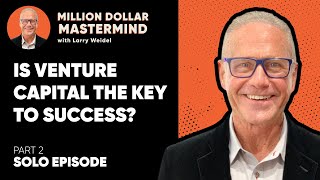
Podcast episode (Million Dollar Mastermind, host Larry Weidel) comparing bootstrapping and venture capital as funding strategies for entrepreneurs aiming to scale to seven-figure and beyond. Covers trade-offs around control and ownership, growth speed, financial pressure and flexibility, risk tolerance, and exit strategies, with practical guidance for choosing a path and a short promotional close.
Foreign.
Welcome to this edition of the Million Dollar Mastermind podcast. This is where we pick the brains of high achievers from all walks of life and get their hard earned real world insights on winning. I'm your host, Larry Wydell.
Welcome back to Million Dollar Mastermind. And I'm your host, Larry Wydell. Today we're going to tackle one of the biggest decisions entrepreneurs face when aiming for seven figure success. Should you bootstraps or seek venture capital to reach 1 million and beyond. Each path comes with its own set of challenges and beliefs and today we're going to break them down so you can make an informed choice. You got to choose and your key differences to consider. You could start off, you break them down. First of all, control and ownership, because we're talking about bootstrapping versus venture capital. Bootstrapping of course, is you're coming up with the money yourself. You're getting your friends and family involved somehow you get your hands on the money, but you still are in full control and ownership, but you bear the financial risk. Now growth may be slower because you don't have a whole lot of money to invest. You got to start it up from the bottom, but you can stay on track for your own vision. Now when you bring in venture capitalists, you can move faster because you got more money to spend and more places to more ideas you can fund quickly, expansions you can fund. However, it's kind of like growing by committee. You're going to have people, if they invested in your business, they're going to want to have a say, they're going to want to be able to ask questions, they're going to want updates. And this is kind of like having your relatives in your house while you're raising the toddlers. Maybe you don't want that. Maybe it's like meddling. Now if they can come in with ideas, it's like Shark tank. You get somebody in, it's a manageable percentage of the ownership to where you still are in charge. And they can bring contacts, resources in addition to the their experience and all, then it can be worth it. But these are judgment calls you've got to make and you don't have to get started bootstrapping and then bring in the venture capitalists down the road so it doesn't happen to be have to be all at once. But the first thing is to realize the control and ownership of it has to do with how it's going to be funded. Who has skin in the game? Then you go, how fast do you want to Grow. Do you want bootstrapping? Growth is typically driven by reinvesting profits. And so you're going to have limited resources in the beginning. But this approach builds sustainability in terms of you have a little bit of money, so you got to really think how you spend it. And then usually you're getting more bang for the buck rather than just getting all these extra millions, 10,000 here, spending like the federal government. You get an idea, write a check for it. Now if it's your home money, that's you don't even think about it. And that's the story. Like the real Wolf of Wall street, they talked to him. There was one of these con guys going through New York and he went to one of the guys parties and nobody else had really identified him as a con artist. But the guy who was a real world Wolf of Wall street said, look, this guy is a fraud. I don't know what kind of game he's running, but it's not his money. He said, you do not spend money on like this lavish parties, jets, all of these things. You don't sling it around if it's your own money, if you had to work to put it together. So anyway, when you're bootstrapping, you're gonna have limited funds, but you're gonna make sure those funds, you get the most mileage out of it. Now venture capital gives you access to larger funds and gives you a chance to scale faster. Now that's good if you know what you're doing. If you've got a business model that works, you've thought it through, you've had been able to demonstrate the thing is going to grow. But on the other hand, if you're experimenting, you're still in the experimenting stage and you're spending this money could get pretty dangerous to have a lot of money at your hand. That's why it's nice to have venture capitalists come in who have contacts, expertise, et cetera, that have been down that road before, can help you with the market expansion, helping you with hiring the right people. And they know how to deal in competitive marketplace. But the other thing you want to think about is financial flexibility and pressure. The more you grow, the more money you're going to need. And without, without venture capitalists or outside investors to worry about, you got more freedom to experiment, to change gears. You're not like on a ocean liner, you're more like on a rowboat. And you get an idea, you can pivot, you can change, you got flexibility. And the cash flow problems may cause you to be more creative in problem solving. Whereas with venture capital, you're going to have to go after big growth, you're going to be facing big expectations for pretty rapid returns. They're not going to want to see you throwing the dice on some kind of screwball idea or what sounds like a screwball idea you found you came up with yesterday. But it may be the perfect idea. But venture capital, they're going to want to see a little bit more assurance that the money's going to come in. So there's more pressure there to turn in those results. And the other thing is risk everything. There's always a risk in a business. And thanks for listening to the Million Dollar Mastermind. Now, if you like the episode, don't forget to subscribe, share it with friends, leave a comment and I will see you next time. So when you're bootstrapping, you're coming up with your money, it works well with a manageable startup cost. You don't have a lot of people, you don't have a lot of facilities, you're not forced to grow fast. And so you can get to profitability a lot of times earlier. With venture capital involved, you're going to have a high growth potential, but you're going to have, you're going to have to move fast. You got to move and get things in place, get things moving because again, they're going to want to see results. So you're going to be taking on more risk and more risk quicker than maybe you're comfortable with this.
Why? Maybe it's for a lot of people.
Have not been down this road, they like to bring in the venture capital later. And the people have been down the road before. They know the game, they're used to the risks, the emotions involved, the decision making involved. And they might want to bring in venture capital, outside investors quicker because like I've been down this road, I want to move fast through these stages. So these are things that you put in your mind when you think about the venture capitalists. The other thing is you always want to have an exit strategy. Anytime you take a job or start a company, it's like, what happens if this ends? You know, like all life has a beginning, middle and end. Every job has a beginning, middle and end. Every company, it seems like it may take 400 years, but every country has a beginning, middle and end. It may go for a thousand years, but you know, not every country survives forever. And so when you start your company, it is nice to know that you have some flexibility on your exit Strategy and founders. When you're bootstrapping, paying for yourself, you often focus on profitability and the long term payoff rather than an exit or like selling and going public because this is your baby and you want to keep it producing for a long period of time. You're not really looking to like buying a house, fixing it up and flipping it. You might be wanting to build something you can run for a long time, pass it on to your kids, make it a generation to generation type business. So venture capital, they typically expect an exit in the form of an acquisition. You don't want to be acquired by somebody else or an IPO a few years down the road where they can get in on that founder stock and get a chance for big returns. So they're going to be pushing for rapid scaling. So you got something, you got a management team in place, you've got track record, you've got outlets, you've got products that people want, big clientele and something you can sell and bring in these other bigger hedge funds and get on the NASDAQ and bring in all of these big investment companies. There's a lot of money swimming out there looking for companies that get to the 10 million, the 20 million, the $30 million level that they can snap up just like going fishing a certain size fish, once they get, you know, you don't want the minnows, but then we get to a certain size, we want to gobble them up. So if you're thinking about your exit strategy when you bring in the venture capital, you need to realize these are people that are going to be more in mind of you not turning into a generation to generation business unless you're going to pay them off quickly. They're going to want to see you grow up to a size to where it can be acquired or it can be, you can come up with an ipo, go public, things like that. By the way, it's a great experience to be on the balcony there at the New York Stock Exchange and hear the bell. I've been there and when our company went public and very exciting experience. And some people do it over and over again, it's just the life they live. But if you bring in the venture capital, you probably got more of a chance of scaling up before you age out and get to the point where you can go public. And so it's a matter of evaluating your business opportunity, what you really want to make happen. So in summary, if you're prior prioritizing, control, sustainability, maybe you just fund it yourself, find a way to maybe grow slower from the beginning. The other thing is, if you want to grow fast, you want to dominate the market, you want to scale up quickly, build something huge fast, and you know the game, you've got some experience, you know this thing has that kind of potential, then maybe you go in there and decide, I'm going to bring in the venture capital. So to summarize, which path should you take? It depends on your business model, your goals, and how much control you want to maintain. There's no right or wrong answer, just what works best for you, what you feel inside. This is a direction I can get excited about going in. And that can change as you go. So thanks for listening to the Million Dollar Mastermind and if you found value in today's episode, make sure you subscribe, Leave a review, share it with fellow entrepreneurs Wayne and on their future options. I'm Larry Whitelaw. I'll see you in the next episode.
I'd like to thank you for listening to part two of this episode of the Million Dollar Mastermind.
PodC.
Timing is everything. You may feel that now is the time to get moving forward so you can do something even greater with your life. Now, if that sounds like you, I've got a free training video to show you how that transformation can take place. Getting introduced to how the cycle of success works has been a major transforming event where so many current million dollar earners. And that's exactly what this video is all about. And yes, it's completely free. Join us at the video@winning.com and thanks.
For being part of our community.
More from Larry







Rick Jordan on Self-Engineered Proximity, Cyber Security Moats, and Truth-Based Leadership

Fire Fast or Fail Slow: Kevin Brittingham Reveals the One Rule That Built a $100M Empire


