Part 3 - How Being 'Average' Can Actually Make You a Better Entrepreneur
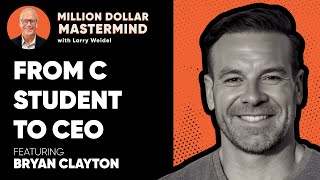
Brian, founder of GreenPal, went from a C student to building a lawn-care marketplace to 300k users. He grew 25-30% annually by handling customer support himself, listening to what customers needed, and staying focused on search and organic growth instead of chasing new services like snow plowing.
Welcome to this edition of the million Dollar Mastermind podcast. This is where we pick the brains of high achievers from all walks of life and get their hard earned real world insights on winning. I'm your host, Larry Wydell.
Now, as you have gone on podcast, let's talk about interviews, podcasts. You've done quite a few of those. And what has been that experience for you? What have you learned about what people are interested in and what the focus is out there? What have you learned about winning yourself by being on these different podcasts? And exposure to people that talk about business leaders all, you know, as a regular thing.
I hope somebody listens to an interview with me and they, and they come away with if that guy can do it, I can do it too. And so because I'm just an ordinary guy, I graduated high school with a C. With a C GPA or 2.5 GPA. And so I'm not particularly brilliant or elite at anything. I just have got to where I am today just through consistency and not giving up. So I hope somebody can, can see that and gets inspired to do something that they want to do in life. By the way of me giving interviews and talking about my experiences, building and selling my first company and now building and then transitioning from a blue collar entrepreneur to a tech entrepreneur, I find that sharing those experiences, I get a lot of, I get more out of it than anybody because it helps me crystallize my philosophies, my thoughts, my approach on, on business building and what it is I'm trying to do and where I'm going. So it keeps me on my A game. It keeps me listening to new, new, new audiobooks, listening to podcasts, myself, reading books that I ordinarily wouldn't read, trying to stay sharp and stay and have something interesting to share. So I become a better version of myself by way of being held accountable to do three, four interviews a week. So that, that's a, that's a huge benefit. And then another piece of it would be, it's impossible to measure, but maybe the exposure helps build the brand for greenpal, helps build my brand. I don't really have a way to close the loop on that, but you know, maybe there is some benefit there as well. But 90% of the reason is I enjoy doing them. It causes me to level up and it causes me to just to crystallize my thoughts and philosophies and then maybe help some people do the thing that they were thinking about doing because maybe they look at me and say if he can do it. I can do it too.
I'm sure you know this, but it needs to be restated. For those that don't know. The biggest, at every college, 100% college and university in the United States, around the world, the biggest alumni donors are the former C students.
Yeah, that's true. That's always the case because when you're.
A C student, you realize you can't cut corners because you could just kind of brainiac your way through it. You're going to have to work and.
You got a chip on your shoulder.
Yeah.
And that chip on your shoulder is the thing that causes you to want them to, to succeed, do something bigger. So. Yeah, so you need to know if.
You'Re out there and you say, you know, I just don't have any great intellectual whatever, you know, Elon Musk may be a smart guy, but there's not.
99% of all entrepreneurs are just, are just doers.
They're just doers that are smart guys wind up spending their life working for the C students.
That's right. That should be inspiring to anybody listening to this that you don't have to be particularly brilliant or elite at anything. You just need to, to be consistent and to constantly be pushing whatever it is forward. When you're first getting started, you just need to do two things. You need to build something and you need to get people to use whatever it is that thing that you built. And if you're not doing anything, anything other than those two things, you're probably wasting your time. You just focus on those two things for five years, you'll have something.
How did you keep yourself on track? I mean, where did you get your, your mental organization? What contributed to that? You know, like, I remember when I was in high, even in high school, the football team had a guy named Bill Glass came and he was an, he was a current, you know, NFL player. And he came in with this book he was talking about called Psycho Cybernetics or something by Dr. Maxwell Maltz. Psycho Cybernetics. And basically it was positive thinking, you know, mind programming. And you know, you talked about Jim Brown, the big, you know, before the, the game, you know, with Cleveland Browns, he would get, he would go out in the field by himself, you know, and he would go into his, you know, it would put his hands in the grass and imagine running and this, that and the other, you know, all of that. So you know, that you could think your way through, set yourself. Like if someone comes up and insults you or says something, you know, derogatory or infuriating to you. You know, you can control your reaction. You know, the educational thing was you don't have to respond, you don't have to lash back in anger. You know, you can, you can look at that and just laugh, you know, and just ignore it, you know, so, you know, it was very empowering. And there were a few things like that along the way that, that book, I don't know, made a big difference. But I know I was hearing things, you know, the Dale Carnegie and book and things like that along the way. I did do Psycho Cybernetics one time. I remember I was a lousy diver and I was at the pool in the summer and I was over there reading Psycho Cybernetics by sitting by the chain fence. And I got myself all psyched up. I'm going to go off the high dog. I sat over there, walk up. I, you know, I visualized, you know, climbing up what it would look like from up there, you know, bouncing, diving off. And I actually did it one time, but as soon as I hit the water, the thought that came in my head, don't you ever do that again.
Well, that's great, but you did it. That's what matters.
It worked once, you know, but the thing is that as we grow up, you know, we're influenced by things we hear. And it's interesting what we gravitate to, you know, what sticks to us in terms of principles that lead to success. So you had to have some pretty good programming in your mind that went beyond just be consistent and things like that. Anything that comes to your phrases you heard. For example, one I heard was great ideas don't care who use them. And mediocre leaders are a dime a dozen, but great leaders are priceless. These are things I heard when I was. Anything you can remember?
Yeah. One mantra that, that always made me paranoid that somebody told me when I was starting this second company was, listen to your customers or you'll have none. And, and that that made me paranoid. And so, and so what that caused me to do was two things that I started doing then and I still do now. Where first off, I did all of our own customer support for like four years. Every phone call, email, live chat, I did it all. And then as time went on and we started hiring staff to do that, I still did a piece of it. And then now, still to this day, even though we have 300,000 people using this thing at any given time, I still do at least an hour or two a day of answering the phone for the 1-800-number or doing email tickets or doing live chat. So I try to this mantra of listen to your customers or you will have none. I try to still let that scare me into getting to a place where there's a big gap between what my customers are thinking and what I'm thinking. So closing that gap by talking to them all the time is what causes me to always stay on track, focusing the team on building what we're supposed to be building, not wasting time on things that nobody wants. And it helps deal with that paranoia of not having any customers one day.
Day.
So that's something that worked in and still works now.
How far along were you in your current company when we did our last interview? You know, like two or three years ago.
So that would have been. So I think we said that was three years ago. The scary thing is, is it seems like like a year ago, but, but it was three years ago. We were a little less than half the size we are now, so. So we're growing 25, 30% every year. We were at about maybe 150,000, 125,000 people using it. We've, we've, we've overdubbed and then doubled. That Covid didn't really help or hurt us. It was just kind of like almost. It didn't affect our business. So that was kind of a good thing. And so we hope within the next three years, we'll double again and then double again. So as, as time goes on, you know, these, these big numbers compounding starts to take its place. It's a lot better. When we were, you know, doing a thousand transactions a week, it took us five years to get to a thousand transactions a week. We celebrated that like it was a million when it happened because we knew that eventually it would be two, then it would be four, then it would be 10. Now we do 10 a day. And so it's something that, you know, you always want to feel like, oh, look how far we've come. But it's always day one. I mean, it really does feel like day one. We've got a long way to go in terms of how much, how many lawns are getting mowed and how we want Reed how to help power.
For those of you who are sick and tired of fooling around and are dead serious about wanting to move up fast, I've got something especially for you. I've combined the best insights from over 40 years in business and making $70 million in income and compressed in into a free webinar that's Right. It's a free resource. If you want to find out exactly what the concepts are that I use in coaching million dollar earners, Register now@widelonwinning.com you'll discover the five part framework used by so many to reach their financial, personal and professional goals. You can find that link in this episode's show.
Notes. Yeah, well, everybody's arc of success is different. And that's part of the fun of going through it. The things you figured out, you figure out. Would you say there's any one or, or more really big adjustments you've learned to and made over the last two years that has really helped propel the growth. You know, they kept you from flattening out and allowed you to keep the compounding because that's a lot of growth.
You know, everybody always says, well what got you here won't get you there. And so, so what the hell does that mean? And so, and so you, you always want to be looking for new things to get you, to get you to the next level. And so we did that and, and we, we subscribed to that, that, that notion of what got us here won't get us there. And so, so two, three years ago, we started looking outside of what our core competencies were for growth. And so we started looking at ways to get new customers through paid media or paid channels. And we started looking for ways to invest in like PR and stuff like that. And it was a mistake. We should have just really doubled down on what was already working. There was so much more white space and what we were already doing and we should have just reinvested in the things that were already working. So we had to spend two or three years like not wasting but, but making bets and other things that didn't pay off to realize that we should have just invested that money what was already working and continue to double down on that. So an example for us is we're the easiest way in the United States to get a lawn mowing service. To come mow your yard today or tomorrow, even if Your grass is 4ft tall, is the easiest way to do that without making a phone call. And we decided, well, we, we want to offer snow plowing and we want to, we want to offer these other services and we really, in fact, we should just focus on our core competency. And then how do people find out about us? Well, okay, you type in lawn mowing service nearby me, GreenPal pops up as like the number one or two option. And we should have just focused more on that rather than Trying to figure out a way to get Facebook ads to work or something like that. So figuring out what you're the best in the world at and then, and then doubling down on that is what's helped get us to where we are today. And we believe will will will get us as far as we can until that starts showing signs of not working anymore, which it hasn't yet. So we, we gave up on that too too early and diverted our firepower in places that, that, that didn't pay off.
Give doubling down on search spend rather than coming up with ads and you.
Know, because other channels that won't prove it out.
Yeah, you know, that's one of the dangers that you'll always have in business. You know, it's like climbing a tree, staying on the main branch, going up. It's easy to get diverted out on a side branch and you go too far out, fall back down to the ground, you got to start climbing up again.
Exactly. And it's okay to make bets, but don't run the risk of ruin and don't go too far out onto the branch, so to speak. And you need to make bets to experiment and figure out if there's something there. But if it doesn't prove out, revert course, come back to what's already working. Double down on that. Whereas we went a little too far down and wasted too much time on things that weren't working.
Yeah, we had a CEO who used to say, you know, you always should have new beachheads, you know, new frontiers that you're trying. But the thing is, keep a hard look at the numbers that's coming from it.
Right.
Just getting, you know, don't get enamored with a romance of now we're going to be doing the snow plowing. Now we're going to be doing. Yeah, we're going to be clearing driveways on the moon, you know, or some kind of, you know, with these in the moon things that, you know, you can't measure and make turn into expanding your company right now. And so as you, you know, you, you've been out and been had the chance to go out and speak live. How. How was that for you?
Little nerve wracking. And you know, it's like one of those things that you, you wonder, is it, you know, by the time you prepare and you, you do it and you deliver the talk is, is it worth it? Is there Roi there? And it goes back to, you just gotta, you just gotta want to do those things. You just gotta love doing those things. You gotta Love sharing your thoughts and, and philosophies and don't worry about closing the loop on was it worth it or not. I think when it comes to things like interviews, podcasts, blogging, contributing on Quora, doing live events, I think it's just something that you need to enjoy doing as a founder because it's really, really difficult to figure out was it economically worth it or not. That's something I've always tried to remind myself of.
Well, and it can open doors. You know, it's like every opportunity can open. You never know which one. And if you don't open the door, you don't know what's on the other side.
Yeah. And especially I heard somebody smart the other day say that a lot of new CEOs, the determining factor on whether they're going to get, you know, that big CEO job or not is going to be determined on their, their social media presence, their online profile, their ability to garner attention. I don't know how true that's going to ultimately be, but that's, that's a strategy and a, and a thought and a, and, and, you know, mentality that that's definitely something that's new in the last five or 10 years is that it's not necessarily dependent on are you the best candidate. It's also dependent on what is your, what does your personal brand look like? Which is kind of, kind of interesting. So, you know, whatever that's for.
You have brought up an interesting point from all the way to the Elon Musk. You know, you see Elon Musk on Twitter, you know, Richard Branson, Martha Stewart on a podcast. You know, you have, you know, all of these things. People are out. They've realized they have to have a high profile if they want to be a.
That's right.
Leader. They have to be out there, they have to participate, they have to be participators.
Exactly.
Someone's calling you to speak or inviting you. You need as much as possible, as long as you can afford to, to be a yes person, as long as it fits in with your. The values of the company and the audience is where you want to be. You need to be. It's like any opportunity. You need to be more yes than no when those opportunities come.
I agree. It's kind of like dieting, you know, or working out in the gym. You could go to the gym every day for six days and then look exactly the same on Monday. But if you stick with it and you constantly make those deposits after a year, that's when you start to notice. Okay. Wow. I'm in a different reality now because I've constantly been doing the interviews, I've been doing the live speaking opportunities, I've been doing the blogging, I've been, I've been, I've been doing guest posting. I talk to a reporter when they want my opinion on something. If you do that for a year, then you kind of realize, okay, we've leveled up because of all of these things together.
Absolutely. Well, thanks so much, Brian. This been fantastic. And I knew we would kind of get a chance to dig deeper, but we really got into a lot of the specifics that you go through, you know, when you're running a business. And I hopefully we got some. Giving people some things to think about. I always like to give my guests the last word. Do you have any one last parting comment you'd like to pass on to the people who have stayed with us this long?
Yeah. You know, one thing that kind of dovetails into one thing we talked about was you think in business that, you know, like, okay, if I just make this higher and I solve these two or three problems and I get this one customer and I fix this one thing on the website, then I'll be good for a while. Then I can just kind of breathe easy and I'll be, I'll be set for a while and life will be easy for a little while. And the reality is, no, just because you solve those seven things, that means you get to solve seven more things. And it's a never ending problem solving kind of experiment. And I think if you can embrace that, it can help make it more fun. But just know that just because you solve, you beat one level of the game, that means that there's a whole nother level with a whole new final boss and that it never ends. And that's what makes it interesting. So, so embrace that and know that that's what's coming.
And know that the next seven that come along, you're going to have the experience of solving this seven as an experience base. So you're going to be a smarter guy.
Exactly. And that's the beauty of it.
And so this has been fantastic. Thanks so much. Look forward to rendezvous back down the road and hearing about how you went over the 1 million.
Sounds great, Larry. I really appreciate it. We'll come back on when we do that.
Thanks so much.
Thank you for listening to the final part of this episode of the Million Dollar Mastermind podcast.
Great ideas.
Don't care who use them.
If you're motivated to move up in a big way right now.
I've created a free training video to.
Remove the mystery on how to set.
Yourself up for big success. This is the information that has changed.
So many of our lives and it.
Can have the same impact on you. And the video is completely free. You'll find it at Y Dell online winning.com join us over there. And thanks for being part of our community.
More from Larry







Rick Jordan on Self-Engineered Proximity, Cyber Security Moats, and Truth-Based Leadership

Fire Fast or Fail Slow: Kevin Brittingham Reveals the One Rule That Built a $100M Empire


