Stop Dreaming, Start Clicking: Inside A World-Renowned Photographer's Mind
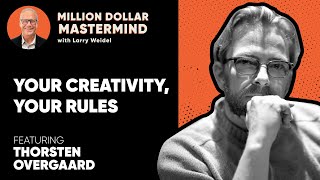
Podcast interview (YouTube) hosted by Larry Weidel featuring photographer/educator Thorsten Overgaard. Conversation covers Overgaard’s workshops and travel schedule, his long-term strategy for owning and preserving creative work (archival/backup practices), views on intellectual property and self-publishing, travel and gear habits, and encouragement for creatives to follow curiosity and ‘permission to exist’. Tone is conversational, reflective, and practical.
Welcome to this edition of the Million Dollar Mastermind podcast. This is where we pick the brains of high achievers from all walks of life and get their hard earned real world insights on winning. I'm your host, Larry Wydell. Hello everyone. We're talking with world traveling photographer and the man who does many workshops, does many. Every version of education you could possibly do uses every version of social media, I believe, to communicate and really inspire people to greatness and their own photographic journey. Welcome to Thorsten Overgard. Hello, Thorsten.
Hello, Larry. Good to see you again.
You too. And Thorsten is one of my favorite people in the whole world and never stops moving in many ways. He never stops moving forward in geographically, but also in professional and career development. And so it's always, you know, when you do that, you learn things and Thorsten is always on the attack and comes up with a lot of interesting stuff which is very educational. And he's, he's a photographer, an educator. He's just about anything to do with in the world of communication and creation and. So what you been up to lately, Thorsten?
I've been. Well, I use everything at the same time. So I'm finishing videos and books and then I'm writing, starting new books. I just came back from some travel and taking some photographs in uk. Came back a few days ago and then I go to Singapore on Thursday and then Sydney and Melbourne and Perg after that and then back here.
Yeah. So how many workshops do you do in a year?
I think I do 20, 25. I kind of almost, almost every year say I want to do less and be home more and write stuff and get stuff done and then I end up adding stuff. Then like somebody's like, oh, you should come to Texas. I'm like, oh, let me see Texas. What's the weather in Texas? Okay, let's put Texas in March. And yeah, so it kind of keeps going like that. And I just added, so it's just added Texas and I added the Cincinnati and then I added I'm going to Tokyo and Kyoto and then Taiwan and Kobe is just so close. It's just a little hop. So I added those also. So there's like always a balance of if you say when I travel, it's limited for how much I can get done. I can just catch up on the daily schedule and editing my photos and email and stuff, but not so much creating new stuff. And I actually like, I mean, you could say it's almost like my ideal since I was a teenager was to just sit on an island with a typewriter and an ashtray. Well, astray wasn't part of it when it was a tea day sometime. But was it sitting there in the Seattle? Yeah. Sit there in the Sierra and ride.
Like an old Hemi maker. Yeah, yeah.
So that somehow is the ideal. But I mean it's not that I love to travel, but I love to be places and see places and meet people. That's what I like about it.
Yeah.
If I could just teleport there, it would be much better. So talk to Elon Musk. Musk. If he can do something about that, get some teleportation going.
He's probably working on it.
Yeah, we all need some teleportation right now.
I think I like Thorsten. I've always liked Thorsten so much because he's interested in so many things. He's got, I would say as a short attention span, which is not accurate. He's got a very good attention span, but he likes to move on to new projects. He got a lot of ideas bubbling in his head and he likes to try them. And usually something great will come from it. And you've created an astounding amount of content information, books, courses, reviews on your website. It's almost. It's become an indispensable site for photographers, but also especially for the Leica photographer. And as you and I know, the rest of the world may or may not know, Leica is the ultimate camera and super expensive. But if you, you really are into photography, a lot of times you find yourself wanting to shoot Leica cameras and lenses. And so your go to source for information on that is Thorsten Overguard. And so Thorsten, how, how many people do you find get into these in a year, would you say? How many years have you been doing the workshops?
Well, the workshops are probably done for like 14, 15 years, I think. And so it would be. It's around 200 people. It's not an amazing great amount if you look at it. But of course, I mean 200 people that you meet in person, you spend three days with and we stay in contact after also. So that is quite. Yeah, quite some people, you know, I mean compared to website and Internet and downloads and stuff, it's like that's entirely different numbers, but it's also a different way of interacting.
But you have built your business organically from the ground up, one day at a time, one workshop at the time, one article at the time. But early on you got to where you got organized right from the beginning to where you had a Place where you could keep, keep this information and made it, make it available to other people. I think that's paid off for you.
Yeah, I mean that is the important, you could say, I mean people who have followed things and read my thing know that, that what goes throughout is that you have to be aware that. Well one thing is like you're your own boss. That's almost, that's what I think people should think with, but they don't necessarily do. And then you should own your own things. And that means you also have to be the one ensuring that the things are available now and in the future and you own the rights to it. You don't give away the rights or leave it to somebody else. So what was our little question? Why did I start talking about that?
Well, we were talking about the fact that early on in your career one smart thing you did was start compounding making your information available in a spot. And I think in the beginning you probably did it just to make pictures available for your family for years and on your travels and everything. But as the reviews and the books and the training things, the ebooks came out, you had place courses. You had a place where you could put them and make them available, but you controlled it.
Yeah, that's true. I mean that is a means for. You could say almost any artist, you have to have a website. You say ones of first of all, like, you see your name is your trademark. Like that's. You have to make sure you own your name. And I think you also should use it. I mean it is tempting, I mean if I should start or as an artist, in some ways I'm writing a book about being an artist and stuff. But anyways, but I would be tempted to just use a made up name, made up identity and never show my face. So you don't have to deal with, you can just live your own life and then you can step into this role, whatever that is past now. But at least you can say whatever trademark or web domain you use that should be your own and you should control it. And the content you should own and control and the music. For me it's just been natural because I always like, well from the beginning, from being a kid, I always wanted, I always was like a storyteller writing and photographing and doing comics and stuff like that. And then I just kind of, you could say it happened to be focused around photography. So most of the things I do is around photography like writing and the products and everything. And then I have this thing I like to preserve and that is basically how the website started. Back when there was no visitors, you could say that was new. 1995, if anybody can believe that, was a year 1994. I was not really in the Internet, but 1995, that's when it took off and became popular. Before that was only scientists. And I just started putting pictures and stories on there, like for. Basically for my family and my employees. They could see what I was up to. And when I got into. I was into falling apart, I got into, like. I somehow just liked to preserve information about specific cameras and lenses and film and scanners and so on. And that became the website. And then as time went by, people started using as a resource, and then they had more questions to say, can you do a workshop? Could you write a book about this? Can you do an exhibition? Can you do this and that? But preserving is still very much key. And when we originally planned this podcast, way before elections and hurricanes and everything else, right, of stuff happening in the world, I actually was thinking that it could be interesting to talk about preservation, because that was something I was into there and I'm still into it. So in different ways, and you say one thing is that you may not appreciate so much what you're doing today. And you could say, if you go out and photograph, let's say you get a new camera tomorrow, you finally get this camera that you order from Leica and you thought it didn't make such kind of vibes, so you go take a walk with it and you take some photographs and it's like, oh, that's nice, and so on, and. And you might not appreciate it as much as you will if you look at it in 10 or 20 years. Because, I mean, I think we both live in places where the sun shines every day, so there's nothing new about it. And there's palm trees and so on. For people in other parts of the world, that's very exotic and different, and they dream to be there. And you can also say the world is going to look different in 10 or 20 years. And suddenly you could say, just the fact that, for example, I was in Kyoto or I was in Berlin, it's suddenly like, that's an experience, that's a moment. And when you look at that again, it has much more value later than they had then. And part of preserving is that you have a workflow that those four photos you take today goes into an archive and they're preserved. You can find them again, and people after can find them again. So that's the whole system I mean that's what I've written and talked about in the Lifeform survival kit. And the Capture One survival kit is like how to get work done easy but organized and high quality. And it remains backed up and everything. And if you say in my own case that means like I put texts in the archive every day and they keyword, they're final in different sizes for different use. And I even have a set of backup I put into. I have a fancy yellow Gucci bag for this where I put in hard drives and it goes in a bank box. And just here before the hurricane I had to check is everything there put in the bank box. And now I even have like some not very expensive bags. It's like 30, $40 for a whole kit for all the hard drives. But this, that you have some radioactive stuff going on or electromagnetic stuff, then it's protected against that also.
Now is this if you're going through airport check in or whatever. I mean, when do you have to check against that?
Oh, that's just like you could say if there was, I think if you put a hard drive nearby in a special machine or a microwave, if you might actually have rays, that would interrupt really the thing. But you say you have terrorism like of electromagnetic pulse that's going to wipe out all digital meters. That's like all your cassette tapes, your tape backups, your hard drives. It doesn't matter if it's solid state or what it is, it's going to be wiped. And then you can put it in what's called ferro something back. You can also buy a whole cave. You can sit and work in a cave like that, but there's no reason for that. So no signals can go through that. And that's also the bags that you buy if you want to put. If you don't want anybody to know where you are, you put your iPhone in that one. And then there's no signal at all. So it's just like a lot of things I studied all the time. Okay, how do you do this? How do you protect this, for example? I mean I don't have the backup drives in my house because when there's a hurricane is coming, you can get flooded, the tree can tilt over, anything can happen. So you shouldn't have your back up here. So where do you put it? And I put mine in the bank and they're organized so you can find the stuff again with this. I mean backup is a little bit ridiculous because backup is something that you don't need. It's like Insurance that most likely you don't need it, but if you do, it has to be there, right? So that's the system that you set up. So you're not, you don't want to spend a lot of time and money on it, on something that hopefully you never needed. But you also, if you don't do it then, and something happens, then you really, then you really fucked. And then you think, oh, I should have done that.
Right. I wanna tell you this before I forget it. Do you know that about related to owning your own, not giving away your copyright or your ownership of your intellectual property. It's like, I don't know if you know the story of Dolly Parton and she was an incredible songwriter and early in her career she wrote a song and went to number one with her singing it, I will always love you. And then it was number one. It was great. Then all of a sudden Elvis came along and he called her up and said. She does the Elvis accent, which is really good, but which he tells the story. But he wanted to record it. I love the song. Love you, love to record it. And she said, I'm thrilled. Go, go, go. And so they set it up and then the dark angel comes in, his manager, Colonel Parker, and he says, he calls her and says, now, Dolly, we've got to have half of the songwriting royalties for any song that Elvis sings, he records. You're going to have to give up half of that, those royalties. And she said, sorry, not going to happen. And so she said, it broke my heart. Elvis was going to sing my song. About 20 years later, Kevin Costner selected that song. He was the producer for the movie the Bodyguard for Hugh, Whitney Houston and Dolly Parton made so much money. She was laughing. She said, I made so much money on the royalties from that one song and that one movie. I could have bought Graceland.
It's so, I mean, it's like, yeah, people. Yeah. You say people are very happy to just work for other people and get paid and they don't see the long term effect of it. And I mean, that's another of my big things right now. So here's. Yeah, so let's just finish the thing about archiving. Because I was actually making like, I even did like a write up a few months ago of how is the stuff organized? I was kind of like, this is for my kids. This is how stuff works. This is where the mailing list is. This is how much it costs to maintain a mailing list. This is how daddy makes his money. Yeah. And so on. And this is where the pictures are. And should this company ever ask to use my pictures, the answer is no. Unless they pay a really lot of money and so on.
Yeah.
So the rules for that. And then you think, okay, so your kids are busy and maybe they're not into tech or whatever the story is. I mean, you can't expect that somebody's going to attack what you leave behind with the same enthusiasm as you do. So. And then what? One of the new ideas I got is like, no, I can just buy a SanDisk Solid State Disk 4 Terabyte that cost $250 on Amazon and I buy one for Easter kit and then I put all the final pictures on that one. That's about one terabyte. It's 130,000 pictures. Everything else is negative. It's like 150 terabyte or something stuff. And you can say any books or whatever I wrote or manuscripts should be there also. And that's kind of like the essence of it. But anyways, that's a very interesting thing to have and is also. Well, you could say one of the things I had with this also is life. Continuum is. Should we say. My mother passed a few years ago and she left a big house and then there was a beach house we owned together or used to own together and so on and some cars and a lot of paintings that nobody knew was if they were worth anything. And it's like that was her game. The big house was 28 rooms. There's a big house. Biggest house in the city.
It was the biggest house.
Yeah, she. She made. She was making curtains. That's. She was just so she. Yeah, she was a very strong woman, but single mother and she's just like. She just worked a lot and she was good at it. And it's not like. But she made more than a CEO at that time, whatever. So she bought this house and retro and everything else. A nice garden and so on. And when she was passing away, well, she was ill on her way to Denmark and I didn't notice he was passing away. I was talking about the will with her and I said, well, my brother, he really likes the house, so we should set up the will. So he gets the house and I'll take the Beats house and nobody uses them. We're just gonna sell it. And then he can. Everything in the house, he can just keep it. Because he was anyways living there nearby. He was taking care of it. And he said it's kind of like, why would we divide it or try to just give it to him and Betty. I also suggested give it to the grandchildren because we are like adults, we don't need to inherit money. And says no. And she's like, absolutely not to the grandkids. And also she said, I don't care about it. Said, listen, of course you do. So let's set it up so it works. And then she happened to die four months later. Wow. And, yeah, it was great. We got to do the last Christmas. We got the kids flown over from the US and everything. So we had a great time. And I also talked with her. This is going to go into a book at some point, but I'll tell you anyway. So I talked to her about what do you think happens when you die? And she says, I don't know. Say, well, I mean, you don't believe in God and all this, so let's just rule that out. And I said, well, it could also all. It could be that it's just black, that there's nothing. I said, but there's also some people, they believe you're going to live again. So if that's the case, then it doesn't cost anything. You can just start thinking about, what if I'm going to live again, what would I do in relation to marriage and men? I said, no, that's fine. I don't have anything about that. Well, that's fine, Mommy. And you would say, you did well with houses and money and so on. But you could think like, where do I want if I going to live again? Where should I live? Should I stay in Denmark? Or should I go to Florida and be with the kids and their sunshine? Said, no, I want to stay in Denmark. That's fine. And I said, well, that's like, you don't have to tell anybody. You can tell. And it doesn't cost anything. Like, you can just start. Just imagine how is your future going to be. And if it doesn't happen like that, if it's just all black, then whatever, then it didn't cost anything. So anyway, so she passed. And then what I learned from that was that even she lived, you could say, great wealth. And she had made this house and garden as it's beautiful and everything. And there's a lot of exotic furniture and masks from all over the world. It's collected and so on. Then suddenly there was actually a lot of work maintaining this property. And my brother, he got tired of it and he's like, no, I want to sell this house. I can't. This is not fun. And we had to kind of maintain it until you can sell it and so on. And that made me realize it's like, that was her game. That was her game. It's not our game. That's like we. If we had the opportunity to buy a house like that and decorate it and do the garden, it's like, no, we wouldn't do that. I mean, I would never go in the garden anyways. And the painting is like, what is worth what? You have to call somebody who can look and say, oh, this is worth something, this is worth nothing. And then you have to dispose of them or sell them or something. So that's one interesting way of life. Continue. Where I decided, no, like, I should leave stuff so it's easy to deal with. I can't expect somebody else to continue. And it was funny. I had a funny story that's also gonna go into a book because I took a picture of it. So we were traveling. I think we were gone in Japan and Paris for two months. And we come back and on the front yard of our house here in Florida, somebody parked a big old Mercedes from 74. So it's like. So we're like, what the hell is going on? With a big to sale sign on. And we're like, what the is this? Like, get this thing out of here. And then goes and said, no, we're going to move in the week and somebody's going to buy it and nothing happens. And then we think, oh, maybe it's meant to be. Maybe we're going to buy this car. Because I always wanted. I like old Mercedes like him. And it's actually nice, it needs to be washed and maybe a few other things. So we find out that the story of it is that the neighbor, her dad had a company and he was doing really well back in the 70s. So he bought this Mercedes, 1974, I think it was. And he got red interior in it, which is the only one that has it and is so well maintained. Then he died. And the wife takes over the car and she put it in. It's like a farm. So you put it out in the house. There's and all the birds shit on it and stuff like that, but it's still fairly protected. And then he dies. And then they leave it there for some years. And then 10 years ago they take it here and put in the garage. And now they took it out of the garage because they want to sell the house and then they should do something about the car. So then I'm like. So we had a guy come and look at it. A Mercedes guy, he said, no, there's too much rust. It's like underneath it's beautiful and everything, but there's rust. And we don't know till we start taking it apart. Was that. And it's going to take six, nine months to fix it up. And then you have a new car. And I like it. I'm not going to. I don't want to do that project. So then I sit there and I look at this car. I sit on the front and I smoke a cigarette. Look at this car. I think that's life continuum. So you have this guy, he buy this amazing car and everybody's like, wow, that's a beautiful car. And then he dies. And nobody fucking dares selling this car and just cash in the money and buy another car that they like. They keep this car and keep this car and keep this car till you just run up and it's useless. And I mean, in the end, it basically had to pay $500 for somebody to pick it up or they can find somebody who wants to pay 3,000 for it.
Yeah.
And that's ridiculous. And that's just how it goes. That is like. So anyway, so that's. We go back to archive is. That's part of what I think about when I write articles and when I do photographs. One of the thing is, I think, how can this article, how can this book be valid in 50 or even 200 years? So one thing I stopped writing about iPhone because nobody's going to know what an iPhone is in 200 years.
Yeah.
So we have to find a name. So it's actually not about the time we live in or new technology of what we think is new technology, but it's the idea of whatever it is and then it has to be preserved in a form so those that it might be a value for can actually find it and use it. And as you go through pictures. That's very interesting. There's so many great pictures. I'm sorry, there's many great pictures I took. You're always like, concerned what I'm going to do now. And there's new camera coming and now I'm going to Singapore. What should I photograph in Singapore and should it be color or black and white and how many megapixels? But stuff I did 10, 15, 20 years ago is. It's almost sometimes like, maybe I should just sit down and go through the archive. You know.
For those of you who are sick and tired of. Of fooling around and are dead serious about wanting to move up fast, I've got something especially for you. I've combined the best insights from over 40 years in business and making $70 million in income and compressed them into a free webinar. That's right. It's a free resource. If you want to find out exactly what the concepts are that I use in coaching million dollar earners, register now and widelawnwinning.com you'll discover the five part framework used by so many to reach their financial, personal and professional goals. You can find that link in this episode's show Notes.
I mean, things don't stay alive if you don't put life into it. I mean it's like, yeah, your career or it's like you.
I think you're onto something there because the idea of creating something that we can leave behind that will have meaning to people after we're gone, they'll enjoy one thing is the pictures, but also the stories and books. They're books that come alive. People will read books that have been around for 50, 60 years and all of a sudden it has a transforming experience and they're talking to everybody about the concepts they got out of the book. So books have that type thing. I don't know about videos, you know, I don't know. But books seem to stand the test of time. And now of course with the ebooks, what do you find that people respond to the most? What are you thinking about? You're going to leave to your kids individual pictures. You have to curate this stuff. It seems like you have to put it together to where it's a package, they'll enjoy it, they'll have a concept for it to stick other than you're looking at it. I see it. Interesting. Next they say in a museum, these priceless works of art all over the world in museums, the average time spent in front of a painting a masterpiece, three seconds.
So yeah, but it's like, I mean in everything I think it's like moments that stick that you remember. And I usually have this thing like I was just talking to a wedding planner a few days ago, two days ago, and she arranged more than. It's like this year's 2, 300 weddings. And some of them is new care now they start in the US also. So a midweek there was an art I was reading like we were sitting and there was the published Vogue or somebody published an article about. And they say something about a midweek wedding is £7,000. And so that's interesting. Especially midweek wedding. How much is a Saturday? He says that's 20. And I think actually American weddings are more expensive or bigger budgets with wedding planners and everything than UK weddings. But anyways. But people like to arrange this big event that now we're going to have invite a whole family to some island and we're going to have a big wedding and they spent months deciding what kind of flowers and blah blah, blah. And what I joke is that you might not even remember that wedding. Or maybe what you remember from the wedding is the Tagus driver from the airport to the hotel that you learn something or he special something but the rest is like no. So you can't really plan or buy those moments. And similarly you could say, you can't say Van Gogh is amazing because if you look at Van Gogh for three seconds and you just like, you think wow, this is a. That's crazy, it's so expensive. Or how did he put all the paint on you clearly didn't get it and you're not supposed to. Or it could also be that you listen to a Bob Dylan song, you see it when God painting and it just, it blows your socks off. That's a moment and it doesn't even have to be Bob Dylan. Or it could be your 3 year old grandkid that have made a drawing or system a Simpsons then just like wow, that's the wisest thing I ever heard from anybody. And he's only three years. So that's. So you could say in terms of what to preserve from. It's like, it's almost like I mean anything what I preserved should be there should be easily available. So you could say fundamentally if I did this thing, I said I'm going to take a SanDisk solid state 4 terabyte. The high resolution pictures and high resolution JPEG that can be used for gallery prints and magazine prints and everything else is 130,000 pixels at one terabyte. So it's not. And you could say if you have a fairly fast computer, you can scroll through this in a few hours and see what you got and then you could hand it over to somebody who wants to deal with. Or there's some nice pictures that you like or your own mother or family or something that has meaning to you. I can't really curate what, what is going to make something important to them. It's like you said for them. I have a drawing in the house here that me and my daughter bought together when she was seven years old, my oldest daughter. And it's just a drawing of. It's very dark and it's like a library setting or something in Denmark. And we just saw it. I was like, wow, that's a. That's a great one. Let's buy it. So that's kind of our. So I kind of know she would like that if she even remember that she liked it. Maybe it's just like, yeah, it doesn't matter. So you can't really. But you just have to make it easy and not. It can't involve a lot of work. That's my take on it. And then I have this thing that I look at. I mean, you have Shakespeare and stuff is still around and a lot of stuff is just lost. We say, why is it that so many things and so much technology is based on that? It doesn't matter what happened five minutes ago. You say, Instagram doesn't care, Facebook doesn't care. The newspaper, New York Times doesn't care what happened five days ago. It's all what's happening today, right? And that's not correct. You could say culture is valuable and you basically should make sure that whatever you did is also available in 50 or 500 years. Or think thousand years. Okay? How can you preserve something for thousand years? And you say that's where video and film is short because the resolution of the medium is very low or has been very low and basically still is seen from the future. And the medium changes all the time. So you have to transfer one medium to the next one to the next one. So who's going to spend the money on transferring family video snaps into the next medium? It's going to be like $10,000 to preserve for 100 years. And who's going to look at it? So that's what you would say. Pictures are easy, text is easy, as long as you don't just leave it to Microsoft or somebody else to preserve it or some cloud. But you either make a piece of paper print that you can put in somewhere so it's preserved, or you could say, even better, put it into a formal library where it's going to be available for anybody worldwide who wants to look at it 24 7. And it doesn't take up any space, it doesn't cost anymore. And that would be the ideal. And nobody can shuffle it around or change it.
And it would be on your own site, basically.
Yeah. Then you could say part of its laws, like, yeah, I have my own site, but who's going to maintain pay for the domain name and web hosting? Right? But then at least days, like on the solid state, there is the whole website In a format that you can actually read it. You could reformat it or something else. So it's there and I mean it. And then you just have to face. I mean, if it's lost, if you live empire to your kids, $10 billion worth. I mean, right. Either they make it to a $200 billion empire.
Yeah.
Or they snort it all up in drugs and poison blows and it's gone in a year and they owe 2 billion. So you can't. That's like at some point it's not your responsibility, but at least you made these things. And you could say, at least I know that people find it valuable. So. So it's going to be value in the future. And you can also see that the things that people find value is valuable is not what I wrote about the Leica M9 or the Leica Q3 43. That's just for a period of five, 10 years that is relevant. Or even the peak in interest is two, three months. Then it's gone. But it's interesting is the philosophical part of what I'm writing, the general things. That is what is really worth preserving. You can say to the degree that all of that stuff is written in a way so it's not connected only to that specific camera model and how many megapixel it had, but it has something to do with photography in general, then it's valuable also to preserve. You know. Yeah, yeah.
There's always choices. And it's interesting to read the letters from artists in the past and they were dealing with the same, like the things we're talking about here, the issues and making decisions and sorting out how you're going to come up with a solution. Artists have had to deal with this forever. And so we can't all do a Sistine Chapel and so that. So it's gonna be. And have a Vatican that will display our work or have a Pieta that's off to the right as you go into the basilica there. And we can't all have masterpiece like the David in Florence. So the challenges are you do the best you can, but you.
It.
It helps you if you're at least aware of the preservation idea. Like, what am I working on? I heard this just yesterday. It's like, what am I working on that's going to last? That's going to have some longevity to it. If what am I spending a lot of time on that's not going to last? For example, we had this set up for a month ago, this podcast. And then came Hurricane Helen or one of them. Two of them. And two of them. And blew you out of carewater.
Yeah.
So you had to get on the road and go to Singapore or someplace. And so we're always adjusting. But the idea is if you have. But anyway, that hurricane came and went and eventually things. That's going to be in the rearview mirror. Whereas I'm sure there's some permanent damage from it. But it's not going to be permanent. That's going to last five years or something. We were in. You have these even in Colorado. They have. I never heard of this before. I've heard of hundred year floods, but then they had a couple of hundred year floods outside of Denver. Then all of a sudden they had a 500 year flood.
Yeah.
But somehow Denver still survived. And then we heard about that for a week and then you didn't hear about it anymore. And so like, are we going to get. I think the challenge for all of us is just think about. This is kind of an extension of a earlier podcast we did on creativity. What are you thinking about and what are you spending your time on that has the potential of making an impact and lasting rather than just being the excitement of the moment. And we just discovered that on the run. You are on the run all the time around the world. What have you learned about traveling because you travel with valuable stuff? I don't know. Are you still traveling with the monitors? And I know you.
No.
How many cameras are you taking with you now? And how do you. I mean, you can't carry all of them in a bag over your shoulder.
I mean. Yeah. So what I do is I kind of simplify. So you say one thing. I came from a viewpoint that you have to travel in style. So it has hand luggage that you actually would carry in hand. No wheels were allowed. And I would have Louis Vuitton trunks or like suitcases. Not the trunk like the big ones, but suitcases which are great in the way that they last forever and you should think somebody will steal it, but they don't. They never touch them. But when you arrive, you just open. It's like your own space. You travel with a drawer. You don't have this suitcase and it's like an egg all over the floor and stuff explodes and you have to sit on it to close. It's very organized. So I actually went away from that. You can say now the last trip I did here when I went to UK to photograph for a few days, I had to dress warm or in layers. I didn't know exactly what the weather would be. And now here I go Singapore. So now, for example, I go Singapore. I just have one suitcase with wheel, lightweight suitcase where I can put in shirts and stuff. It's all warm weather in that direction. And then I have a smaller trolley that the great thing about it is you can open from outside, you can just unzip it. And there's the laptop. So you can take the laptop in and out. And inside that one I have, I can put in two compartments, but I have usually one compartment in the bottom for cameras. So that's basically the same, same size as a Biddingham bag. So that fits like two, three, four cameras and four lenses. So that is there. And I can. I can double it if I really want to have a lot with me, which is not very often. And then I have a.
Are you rolling that on the plane?
That goes on the plane. No cameras or computers goes in taken at all. Yeah, so you said. The newer thing is that I started believing wheels and then you. Because, I mean, in European airports, a lot of airports around the world, they have trolleys inside the airport and it's easy. But you could say anytime you land in the US airport, they don't have any trolleys and you have to walk, right, 10 minutes with all your lockers. And that's not fun anymore.
And they don't have sky caps anymore.
They have nothing. It's just like just Starbucks and airplanes. That's all I have left. So. And then I have on top of the trolley that I carry on, I have a bag that is two compartments, has one compartment where there's like another camera section and then it has another compartment with just everything like headphones, vitamins, scars, passport and all that stuff. And that's basically what I travel with. And you can say when, for example, I go to. On this trip here, probably I'm going to bring. Yeah, there's cameras that I'm using. I'm doing something which I have to like a Deluxe 8. I have to like a Q343. Those are the two I'm writing about. I'm still doing something about the like SL3, so I'll probably bring that also because it's handy for some things. And then I'll have to pick one or two M cameras and then lenses to go with it. And then probably for this travel also bring a tripod and the video camera so I can do some video and a wireless microphone as I can do some video if I feel like it. So that kind of fits into all this. But I mean, even Just this morning I was thinking, like, it could be tempting just bring an M camera with a 50 millimeter and that's it, you know, and one spare battery. Because that can be done. It's not. I mean, we all notice that. We, and I think we all do to some degree, that you go travel and you feel like your life is going to end, so you have to pack everything and make sure you have enough socks and have enough of this and that you cannot arrive to New York or two hours away without everything.
Right.
Which is ridiculous because, I mean, if you forgot to pack underwear, socks, you can buy it, but it's easy to get. The tricky things is like a charger for like an M9 camera. It's not that easy to find, especially if you don't go to Bali or something, then you're really in trouble. So what else is like, I mean, fundamentally, you just take a toothbrush and a credit card and then go anywhere, and then you're fine. But still we try to pack. And I always pack more books than I can read and stuff and things I put on the hard drive that I'm going to work on this, and then I never. I don't have time to do it, you know, so I'm still trying to just cut that down and I'm not there yet. I still bring stuff that is wishful, a sign of wishful thinking that, you know, and notebooks and everything on the planes.
Are you reading or watching videos?
I'm reading and sleeping. I'm basically mainly. I try to sleep and then if anything, I read. I kind of always turn off the screen. Sometimes I will watch a movie if it fits into the timing preset. The rule is like a Travis Day is a travel day. So you get up in the morning, then you go to the airport, you sleep on the airplane, you land, and then you go to bed. And you need all the sleep, all of it. It's not like just because it's a daytime flight, you can just not sleep because you're going to be worn out. So. And I don't feel like there's moments on an airplane where you think clearly or something. But generally, as this thing is, like, it's not the place to think big thoughts or work on stuff. I mean, there's no space for screens. I mean, it's just like. No.
I found that ideas can come to you when you just let your brain go blank there on a plane, ideas can pop up. The subconscious can serve up ideas of a suppressed. They can kind of work their way to the surface.
Yeah, I have that. I mean, but then they have to come to you. I don't think you can. I'm going to go on a plane and now I'm going to be really smart. That's not how it worked. But it, but it does work that you like for whatever reason it is that it's change of environment or you spend two weeks in Caribbean or you did something and now you get on the plane. Or maybe just the fact that now you get to sit and stay out in the air and not have to do anything but just wait for the plane to fly through the air, that opens up for some possibilities that, that I believe more in that. I don't think it's like the pressure or anything. But maybe it's just this moment of being disconnected and not being in your normal environment that allows to look at new things or get new ideas. I tried that. I mean I tried and I have people who consistently say like no, like I'm always postulating in the airplane and so on.
I don't think I've ever heard that phrase postulating on the airplane.
No, but it's kind of like you postulate that I'm going to be big in the housing market or I'm gonna do. I'm gonna build a company or whatever, I'm gonna write a book and this is what's gonna be in it. So that's what I mean. Like you get this idea and you think wow. And somehow you have a moment of clarity or something and I think it does happen, but I don't think you can plan it right.
And yeah, so this is the thing with creativity period. I mean. Yeah. And so talk about what have you learned about stringing trips together when you're in a location. A lot of people, they have lots of locations. They'll get two weeks, three weeks. And what have you learned about what's a good length of time to stay in an area? I know you do the three day workshops but. And you string them together. You go to Singapore, you've got to, you can't go over make go back and forth just for Singapore. You got to put some back to backs together. What's the most that you found? What's ideal in terms of plant. Cause people would apply. This could be useful like they want to do a vacation where some variety different than. Than they've done in the past.
So I don't have like. I mean I feel if I go to for I'm not going to Singapore, but let's say I Go to Tokyo, which is like the most exciting and different place you can go. So that should be enough to look at. But I finally arrive in Tokyo and then next three days I do a workshop. And then on the day after the workshop, I'm basically ready to leave. I don't have and urge to see more, experience more, unless I put myself into a mode where now I'm going to do it and just stay there. But I kind of never, I never did that. And I mean, I never travel as a tourist. I never have places I need to see this tower or this garden or that monument. There's just absolutely no interest. The way I travel is like I walk around and drink coffee and preferably have nothing to do. And that's. I make photographs or I sit down and write or something like that. And I mean, of course it changes. I mean, there's always been like in, in the past there would be. I would always go to the Apple store and the Louis Vuitton store or something like that in almost any city or like a store. And I don't do that anymore. Just like, no, I can't. It's just. I can buy it online if I need it. Yeah, but then you could say, then, for example, here we went in, maybe it was May or something. I did a workshop in Kyoto. So we flew all the way to Kyoto. We flew to Tokyo first and took the bullet train to Kyoto. And you could say maybe one, one and a half day in Tokyo. You can experience a lot there. And then you take the train with this experience also. You shouldn't underestimate those things. And then I had to go back to Tokyo and do some, some photographs, some portraits. And we had just decided, let's just go zigzag back. And I told the magazine, hey, those people don't have to come to Tokyo. Tell us where they are and we will go visit them. And then we basically just looked at the maps and no, let's go to. This city is like one and a half hour away. And we found there was actually cheaper to just take an Uber or taxi than it was to take the train and fly to organize. It's just whatever and everything is nice and order in Japan. And then we went weird places because that's where people lived. And I photographed them there. And then we would find places. So for example, one of the unexpected, exciting place we found was that, well, so we had Leila figured out we had some high height points or she had some high points on her account. So let's find the Highlands just stay for freeze some days. So she find this nice hotel somewhere on the coast between Tokyo and Ryoto and they have all these water things that they do have in Japan. And then I book it and then we find out it's the wrong hotel I booked. The one I booked is like two hours from there. So we end up in Fuji Motorway hotel which is a hired hotel that is like two or three years old and it have all the baiting thing and stuff. But they also have a wave tire outside since the 70s. So. And then she managed to get us upgraded to like almost like a royal suite. So we had like this big terrace to the racetrack. So you get up in the morning and 8:30 they just start racing in Porsche and everything else and they make a lot of noise. And the whole hotel was themed with race cars. So they actually had two floors of race campus here. Race cars for the last hundred years. And the small chocolate for the COVID was shaped like race cars and stuff like that. So that was like an unexpected experience where it's like you can't buy this, you can't plan it and then suddenly it's fun. So that's what we'll do it again for no reason. We'll just travel around in Japan and see where we end up. And I think any travel is good if you can change it. So that means if you go to Europe, you rent a car because then when you get tired of Berlin, you just look at the map and say let's go to Austria or let's go to Paris or something like that. It takes five hours to drive there. And similar in Japan you like, you book the hotel and then if you get tired of the city after a day, sometimes you do you find out this is. This sounded great, but it wasn't great. You just hit the road and find to the next city and then usually you have to get home if to take care of the cats or something else in two weeks. So that's kind of like the limit. And even that you could change if. Or you could go home earlier, you could stay longer. So yeah. So that's interesting. You say what is the driving factor of that is like it is like as long as it's inspiration and it feels fun and it gives you something that you can, you can use in whatever you are creating in life. Then you do it. But for example, I mean I don't have a need to go to Rome and see the Spanish Steps and take a selfie of myself. There's like I couldn't care Less. I mean, I've seen them several times walk by them. But I couldn't care less about the Spanish Steps or some ruin out in nowhere that everybody else have to go look at. So that's the freedom I have. Just everything is just evaluated from what does it give to me? Like, what is basically inspiration? It's the same. I read books, I read magazines, I watch movies. Everything I do is based on how does it inspire me, Can I use this? Does it give me energy? That's basically what it does.
One thing you do well, and I think you've always done well, and I think it has led to you being so incredibly productive is you follow your inspiration, your curiosity. You follow and look for things that will energize you at any given moment. You're very matter of fact in terms of looking at things. And it's like, is it working? Is it not working? How can we make it work better? What can I get excited about? Where. In other words, we all want to have wow in our lives. It's just like, what's wow to you? What gives you a little. And you can't fake that it's inside. Right. I mean, it's like people come to your workshop. You can't make them come to your workshop. How far. What are some of the stories? How far people have traveled to go to one of your workshops. And in one of these places, I know you've had some strange things and happen all the time where people will go across the world to be at a workshop in Singapore or something with you.
Yeah, that's generally like. It's like an adventure experience and it's something that. That you really want to do and then you will make something out of it. It's not. I mean, there's very few that does a workshop out of convenience that is like. I mean, it's not like I will have people ask, are you ever going to do a workshop at this place? And I don't. I look up the place and it's like out of nowhere because that's where they live. But that's the general thing is that's not how people do it. They want that. They want the full experience and they want somehow to combine it with that. The whole package. Sound interesting. You say, if you always dreamt of going to Tokyo or Bali or Berlin or Denmark, then. Or Copenhagen, then you're like, that's part of that. That's where I am. And that's part of what makes it interesting. So here's an interesting. So talk about preservation and also we talked about this, that you put life into things. So I have. Well, you can say everything I do has always been. Some people say, oh, can you do this? Or you should do this? And if it sounds interesting, I'll do it. If it doesn't ring a bell, then it doesn't. So here in the New York workshop, I had a handful of guys. Well, I had three guys. So one of them is a guy that retired. He used to work with. Well, he basically worked with Ikea since they began in 72 or something. And now he's retired and he's. He's Swedish, lives in Canada. And he would give me some funny looks, like analyzing. He's trying to X ray me, something like that. And then he says, I think on the second day, listen, it's great all this stuff you do about the cameras and so on, but I'm not really interested in the camera. What interests me is you. So he says, like, instead of making a story about behind the photograph, you have to make the story behind to Noregaard. How come you can be still so enthusiastic about photography after all these years? And we talk back and forth a little bit, and then he shakes his head like you don't understand what it is I'm asking you. And I have two other guys. One is a former pro golf player, and the other one is one he would drive 22 years ago. He had a big business and dresses. And they're like select, we'll say, online spirits guy. And they're like, they all know what it is he's requesting, but they also see I don't have any idea what he's talking about. And so we go on talking about this and next day, and I say, well, I have written something about this, and there's also this thing. And then we are getting somewhere to where they want to be. And you could say, I haven't figured it out yet. And then you could say that one of the things we talk about, it's like I said, no, but it comes from inside. You say, that's. It's not like you can't go to university or somewhere to learn this. It comes from you. So you have to find out what is it that you want to do. And you have to find a purpose or something you really want to do. And you can say, once you find something you really want to do, you have unlimited power and energy and you can use all your power to work in that direction. You can also change the direction. You can change your mind. And he said, yeah, that's right. It's like we're spiritual being. It comes from you, of course, and so on. So that's something I've been speculating about for the last 10, 15 days. And then, well, I went to UK to photograph for five days, just in and out. And then I came home and there was like this box on the floor and I thought it was some adapter I was supposed to, that was supposed to arrive before I left. So I just left it. And then the day after I opened it and it turns out that one of the other guys has sent me a notebook and a fountain pen and a little card says, here is for your book. You're going to write about this. The working title of the book is Permission to Exist. So now there's no way out. And it's really like. And I mean, they said like, this is the one. This is the one book or books or whatever that your kids and grandkids and everybody else is going to make money off, because this is forever. And this is so essential.
Yeah.
Which is also part of my big campaign and thing now is like that you would say, I always did what I felt I wanted to do. And to some degree in periods, I would just do the opposite of what you were supposed to do. Or the way when I started an advertising agency when I was 19, I specifically studied all the advertising. I knew how many people were working in them, how many was creative, how many was administration, I knew what clients they had, I had idea how much money they made and so on. And then I wanted to be not like them, which is kind of stupid from a business point of view. It would better just study what do they do and then copy it and then do it your own way from there. But anyways, or you say maybe that is part of what makes me tick or what makes me is that I just, I don't look for how do everybody do it. And then we get into, you could say, today's world, where especially in the us, it's like you grow up and then when you get to a certain age, well, you would say one thing is you become a teenager, you 12, 15 years and you want to be on Instagram, you want to be popular, you want to be liked by everybody and you want to be accepted and so on. And that's basically where it stops being unique. And then you get to age where now you have to go to university. So now you have to go to university for some years and it cost a fortune to go there and all you get for it is that you don't have time to actually develop yourself, but you have to do tests and work like an insane to be like everybody else. And the whole idea of that, and you say a lot of Asians send their kids to the US to do that. And then they do two universities because two must be better than one. So they do eight years of this across the fortune. And then the idea is that now you can be successful in life because you have all the papers. And that is so untrue. And I mean, I have a few people around where I can experiment with and say, wow, you should just write a book or you should just do this. And they just kind of don't get it. They don't dare. Because it's almost like the idea is that if you don't have those papers, you're going to die or you're not going to survive, you're going to be unhappy or something like that. So that's like Maybe goes for 98% of the population. And then you have a few. You say that a lot of great business people, a lot of great artists, they dropped out or they never went to school or they just basically started something and then it took off. And you could say we have the Tesla founder that one thing I know that he had is what? Like at one point he figured out that he could live for $1 a day so he wouldn't die of hunger if he had $1 a day. And that basically set the bare minimum for how bad he could be a business or anything or how much money he could lose. He could always survive. I have that thing that I'm like, no matter what I have done in my life, I did went to school, like public school, and I did advertising, I did Internet and I did this and that. I had a period where I was consulting and I had one and a half year, whereas I worked in a company for somebody else. So it's kind of like you see yourself in version one, version two, version three, and then suddenly it skips from being very businesslike in advertising and Internet to being like this artist with hat and long beard and just travel the world. And it doesn't really matter what I do, I'm always going to survive. So that's kind of like my $1 thing is like I know if I gave a photograph today and I started a retail store or garden company, I would make something out of it, I would make it fun and I would make it worthwhile, I would make money on it. So how can you instill that self confidence in people. And the key to just like, believing yourself instead of believing in papers. So that's part of. Also what I see what maybe what they're asking this group of people from New York is like, they want. I don't know why they want it, but I think it's going to. It is going to be entertaining. And that's why the title of it is. The working title is Permission to Exist, which basically is like, just believe in yourself and just do what you feel you should be doing.
But you've written about this from the beginning in terms of convincing, giving people the courage to. To take up photography and to say, I am a photographer and, you know, I can put my stuff out there and I don't have to defend myself to you or what it's like that, like, yeah.
And I think. I mean, it's like goes through everything I say and write. That is my opinion. Just believe in yourself and take photographs and you are unique. And of what I think this assignment is not just say it, but actually make you believe it when you read it. Or is the key to this, you could say, yeah, it's great. You could say, like, he can live for $1 a day. And Steve Jobs was a genius. And Amazon also figured it out from the beginning, before he opened the store, Amazon in his garage. But that's because he's Jeff Bezos, and that's because he's Steve Jobs, and that's because so and so. So how do you jump the gap from that? No, if he can live for $1 a day and be the richest man in the world, I can do the same. I can do better than him and more fun and more money. But that is not generally how it works. That you see somebody is great or they're doing something, you think, wow. And you would say, the key is that, no, you're not supposed to copy it. You're not supposed to look at Leonardo DiCaprio, say, wow, he's a great actor. I can be greater than him. So I'm just going to copy him. Like, no, it has to come from you and it has to be unique because you are unique. So you're not supposed to be a copy of Steve Jobs or something. But of course, you want to study them and learn from them. You want to study and learn from Bob Dylan and so on, but you're not going to be them. You're not going to be a repetition of it. You're going to be. Yeah, you're going to be unique. You're going to exist as Yourself as an original.
I'll give you my take on that. My take on is if you follow your instincts and your curiosity and the things that you're interested in and give yourself permission to do that, it can lead to, you know, you should start with the belief that curiosity, that interest, that instinct is there for a purpose. And I believe it was put in there. And I'm not like your mother in the sense that I do believe in a God, but I do believe that there's a purpose. And, like, if I have that, if I follow it, probably there's a chance anyway something great could come from that. But the deal is, you even hear if it's something you're interested in. Like, you work 25 hours a day. I mean, you're. In the sense that you're never stopped thinking about what you're doing. And all of us do that, are into following our passion, our obsession, our interests. We just do it without thinking. And even Kevin O' Leary on the shark tank, the Mr. Wonderful Guy, he was saying today somewhere that, like, if you want your business of your own, but you're going to work 25 hours a day, you just might as well. You know, you're just going to be obsessed with it, and it winds up squeezing out a lot of the other things in your life because. Not because you're giving them up, it's just because you want to do it. Just like Jay Leno with cars now. It's not because he has to. It's just that's his interest and so.
That'S his real thing.
Yeah, I think that as you put the hours in there, things come out and your. But it has to be developed. It's not gonna come out. Like, your first masterpiece is not gonna be your first sketch or your first photograph. Once you get the idea, you're gonna have to do a lot of it to get a good one.
Yeah, I don't even agree with that. I mean, a lot of great artists and great people did. They did the greatest work when they didn't have a lot of experience. So, I mean, so it comes from, I think, something. If there's something you really want to do, then you have the skill and talent and you can refine it, but it's not like it's unknown territory. So. So you could say in one way, I don't. I don't like to tell people, oh, it takes a lot of work. I mean, it. Yeah, it is work. But when you like it, when you're doing something that you feel you should do, it's not work, it's just. That's what you do. It's better than watching television or something else. For example, I was in some weeks ago, I was in New York and then one of my friends from Denmark was there. So he's a graphic designer. He makes books for Museum of Modern Art and all this stuff. And so I thought, did my stepdaughter come because she's in design school and stuff, let's have dinner together. And she can hear from him. And he is self taught. So I mean, I met him in Denmark when he was just a young consultant in the advertised AC where I was. I worked for a company for one and a half year and he was on the floor below. So he was just selling. He was just a consultant selling advertising or whatever. But somehow we connected and we connected on music and Miles Davis and everything and food, making food and so on. And then I left. I started a new company with one of the guys from there. And then we stayed connected. And then one day he said, hey, Thorsten, can you help me? I want to do graphic design. What? How do does the software and so on work? I remember I was like, what a stupid idiot. Why does he want to do that? Because that's what you hire people to do. That's like. Like secretary work almost in advertising. But that's what he wanted to do. I said, well, this is what you do. I showed him a few things and then off he went. And then he happened to show that he was really good at it. And then I had him in on. We did one of the first websites for a museum in Denmark and so on. We did some other stuff and we won awards from it. And then you say 20 years later he is traveling the world and doing graphic design for museums. And the reason he does that, I hadn't thought about that. But that's what he said at the dinner. It's like, no, he used to do for the museum back then. And then those guys that worked in the museum, they went to oil museums and then they would call him, say, can you come to this museum and do this? And that's how he became the guy that is like the dude.
Yeah.
And you say, well, so then he. So that's one thing. I think that's wrong. And he shows this young talent that. Yeah. She asked like, how do you get to where you are? I said, oh, that's like that took me 20 years. And I'm like, I'm thinking this is bullshit. We're 20 years later. But you had Fun all the way.
Yeah.
It's not like you ever worked hard. I mean, he gets stressed because they have deadlines, but that's his own fault. But whatever. But he loves it and he gets well paid and they love him for what he's doing. It's the dream life. So it's not that it took 20 years to get there, it's just that. Just different clients he's doing.
Now you make the excellent point, and I stand corrected. The. The work day. But it's like this. If I were to ask you, how much are you working? You don't think in terms I'm working. You think in terms I'm having fun. And I would say to you that if you. If in our business, if people bring up the question of how much are you working or how hard do you have to work, it tells me they're in the wrong place because they're thinking about doing things they don't want to. To me, work is doing something you really don't want to do. Fun is doing something you really are interested in doing and want to do. And so the people, the high achievers, are usually following their curiosity. They got an idea, let's try this. But it is. And so you're exactly right of that. And as a result, most, in fact, the bulk of the great art in the world has been created before the artist was 30 years old. A lot of it out there, like the Pieta was then when Michelangelo was 21, I think the day that he was 24. Something like that. But I think what happens as we get older, we lose that fun thing we think of. We stop being as adventuresome as we were when we were young. And then I think your book could speak, could do a lot of good to free up a lot of older creatives to get their fun back in and think, be more adventuresome and go for a while and like, break out, do something new and challenge them to be a little crazy like they were when they were and fearless when they were before 30.
Yeah, I agree. Somehow I just like the idea of thinking I'm talking to 12 years or 15 years old. But it's true. I mean, it's all. Also, for a lot of people, it's like that's when they're going to. When they retire and they have enough money.
Yeah.
Then they're going to do what they always want. And that is wrong, I think. And. But that's also why it speaks to those, because that is to some degree, the people who are there. I mean, they were all actually doing something that was fun. Now they're all active, but also what you would call retired. But you say the ideal is, in my opinion, this like the. The Dire Straits song. Like money for nothing and chicks for free. Yeah, that's how life at work should be. You just go on a stage, go to private jet. You go on a stage, play some guitar, and you get paid a lot of money and all the chicks wants to be with you and you go to the next place and it's just fun. It's like, skip the drugs and everything. But just that I think is right, you know, and how to make people do that. I mean, I had. The other night, I had a talk with the manager from New York. He's running a very successful company with his wife and she's like the main person in it. And. And I always seen him as like, he's a really smart businessman. And then we talk and he's almost trapped in this being in business. And you have to make money and you have to do this and you look around and you want to do better and so on. And something not right for the picker said so. And it's almost like he's more of an artist, but he's not an artist. So then I asked like, what did you really want to. Like you were a kid, what did you want to do? I want to be a writer. I said, why don't you just write them? It's like, yeah, that's the case with most things because I didn't done also like talks around the world, like artist night. Just a couple of hours for all kinds of artists. And it is like people, they put behind what they really believe in or the arc they want to do. And then they have a detail. So when they present themselves, they say, I'm an accountant. And then later, if you get to know them, they also like to be a radio host or something. And usually what I said is you have to turn around and say, I'm a radio host and also do accounting. But because how is anybody going to hide you or hire you to be a writer or radio host or painter or whatever if you don't tell them that where it's going to come from. And it has to come from. Well, one thing is it has to come from inside you. And then the next thing is like, how are you going to make it known to the world and that. You could say, I'm a product of the Internet and self promotion. I never. And part of my whole life of not having a boss, it's like I don't want to ask for approval. So you could say when I started out writing, the only way to publish a book would be to find a publishing house and ask the editor will you publish my book? And when you found one who would do it? Then you went in business. But a lot of people wouldn't do that. And now you have the Internet thing. You could say you can self promote, you can self publish, you can do everything which makes things a lot easier. And you could say that is the natural thing that if you think you're great at playing music, you should play some music and sell it directly. Yeah. And you could do the same with books. And then some people that's going to be in another book somewhere. But some people would criticize that, oh, you're not a real photographer, you're just self promoting and stuff like that. I'm like hadn't really thought about that for a long time. And I think like that's what a crazy thing to say. I mean where would Coca Cola be if they didn't self promote or Tesla? I mean that's how you sell things. I mean and. But somehow in the art you have to find a museum or some editor or something that gives you like this stamp or you have to sew university papers from two universities and then you can become or say that you are like an entrepreneur because you have papers.
Every company is a self promoter, you.
Know what I'm saying?
So that proves there that comment from a critic is.
But I mean all that is just.
Like it proves that when critics open their mouth a lot of times they just show how stupid they really are. The things they come up with.
Yeah, but sometimes you take it to you because there is like some kind of pattern of that. That's how it is. You're reading the paper, you read the paper to find out what's happening in the world, what the truth is or something like that. And then somehow it's also you have to break free and just realize no.
You can actually I think that you're writing, I think what you've done already in your career is giving people the courage to get out there and to, to go do it and in photography. But and it helps if you know a little bit more about it. If the more knowledge you have about it you feel a little more confident to turn yourself loose. You don't have as many. If you don't have a lot of technical self doubts and you have a general idea of how to do it, you're more likely to Turn yourself loose to go do it.
But also think part of being into something, either it's golf or making Internet pages or being a writer, is that you also have the fire to study. How is it done? You want to learn about it and be good at it. So that comes naturally. Like even that comes from yourself. You can say, it's not. Like, I don't believe going to school and learn to photograph is going to make you enthusiastic about photographing. It's just going to make you feel.
Well, if anything, you know, I, I think a lot of times you see that it, it stamps the inspiration out of them. Like, if this is photography, forget it. If this is fine art, forget it. I'll go do something else. You have to protect yourself is basically a large part of it. And so I'm going to give you, we can go on forever. I'm going to give you a chance to, to wrap this up and say, what do you feel good about that we've covered today that you want people to take away from?
I think it's, I mean, we're back to almost like just to believe in yourself. And I was just thinking about one thing. You could say, for example, my friend there, he tells this young talent like, oh, it took me 20 years. And it's almost like one thing is he didn't, he's not really thinking. But then you could say, to the degree his thinking is also protecting his own territory and his own reputation. The truth of the matter is that you get to make a new book for an artist for museum. You have no idea what you're going to do. But what you do know is that you have done it before and you always never know what to do, but you're going to figure it out. So that's the self confidence you have that, you know, but apart from that, you're actually not really certain you can do it. And somehow people also request disrespect, like, no, I've been doing this for many years, or I went to school, right? Whatever you come up with. And I think that's one thing. I basically, I don't have it at all. Like, when I talk to somebody, I never have, I never put the idea that you have to put in a lot of work or it's only some of us had to have special talent for focusing cameras. Like, in my opinion, everybody can do it and it's easy. That's the Messiah in me. Just, that's the constant prayer. It's like, no, just do it. And if you don't want to do it, don't do it and find out what you don't want to do. It's like that's the simplicity of it. When then the question is can I make people believe the list at ease and just do it? Or how do you make it happen for that person and it is the person themselves that have to have it happen. The worst thing you can do is you hold somebody's hand and tell them how to run a business or how to do this and that. It's like they always crash and burn. They have if they don't have. If you can't start the fire in them and get them going on something then and go get a job at Starbucks.
And that's what you're doing.
Teacher at the university.
Yeah, you say that in your thing is that my point is to get people excited about photography. And I will. And you've just another wrap up. You've seen. It's gotta be encouraging to you to you know, in a teacher, student learning situation, the teacher learns. And so how have you been what's encouraging you to some of the turnarounds you've seen from some of your students get that have that turnaround from the workshop experience?
Well, I see that they do more and they just produce one thing. You could say the general thing is that people have done the workshop. You would say almost no matter what's in the workshop, it's not about technical stuff or anything, but just that they have done the workshop. They produce more photograph, they take more photographs with more confidence. And once I saw that, I stopped worrying about that. I had to teach people to do it correctly. Technically I had to give them this or that. It's not about teaching. It is inspiring. And if I inspire them to take more photograph, that's basically what I do. Then you have some that take it further. They start positioning in photo competition, they start to sew trends or they get published or they make their own books and stuff like that. And that's you could say when I see that that's a real sign that they're like they're taking it to the next level. And even, I mean there could also be. Somebody said I gave up digital, I'm going to film. Because after I did your workshop and I don't have anything in my workshop saying you should shoot film almost on the console. If you ask me, it's like, no, don't do that. But then that's what they got out of it, that they found their true self and this is what they want to do. And dedicate their time to shoot film. And then comes maybe I meet them three or four years later now and they did another workshop. Now it takes a different direction, but it's going somewhere.
Yeah.
And that takes. That got to take self confidence and an idea that you can perform this to do that. And that's all. There's a cry. I mean, there is no. You don't get a certificate. That's no exam. There is only one test is like, do you take photographs and do you do something with them? That's all that is requested. And that's the whole point of it. You can say there's no point in going doing a workshop. And then you don't take photographs or you take them and you do and you hide them or you don't like them. No, that's not the point. So, yeah, that's what I see. And mean. Yeah, all like 98, 90%, 99%. They just take more photographs with pride and then it moves on from there. They take it to a new level or they just keep doing a lot of it.
All right, well, thanks so much, Thorsen. This has been great. It's always fun to catch up and I'm going to look forward to. Well, hopefully the next time I see you, it'll be in person and we can do a workshop or I can get you over here to my studio.
And we'll do something.
Palm Beach.
Yeah, we'll do something. But see here, we did one and a half hours of unscripted.
Yeah, just interesting talk, talking about friends.
Hopefully we learn something. And also, people, listen to this. Get inspired.
Thank you for listening to this episode of the Million Dollar Mastermind podcast. Commit to your personal and professional evolution with our free training video. It's designed not just as an educational session, but as a transformative journey for those bold enough to aim for the stars. This isn't just any webinar. It's a roadmap to achieving the extraordinary. It's tailored. Tailored for those who dare to dream big. And yes, it is completely free. Join us in a network of ambitious professionals ready to take their careers to new heights. Secure your spot now@whitelawnwinning.com and let's unlock your potential together. Thanks for being part of this community.
More from Larry







Rick Jordan on Self-Engineered Proximity, Cyber Security Moats, and Truth-Based Leadership

Fire Fast or Fail Slow: Kevin Brittingham Reveals the One Rule That Built a $100M Empire


