Squat Tips with Female Powerlifter ALIZA TESSLER
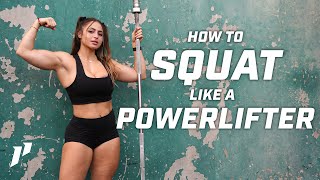
Transcript of a YouTube video where competitive powerlifter Aliza Tessler demonstrates barbell back squat technique, warm-up routine, equipment choices (low vs high bar, shoes, belt), and practical tips for safe and effective squatting, plus brief notes on nutrition and recovery. The video is instructional and aimed at lifters wanting to improve squat form and strength.
Chapters
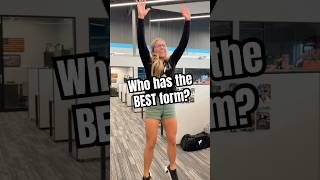
What's up, y'? All? My name is Aliza Tesler. I'm a competitive powerlifter both nationally and internationally, and the first form athlete.
Today we're going to be talking about some tips and tricks and things that I use when I'm doing barbell back squats. Squats are one of the three main lifts in powerlifting. We've got squat, bench and deadlift. But today we're just focusing in on what, what makes me a strong squatter. And maybe you'll pick up something that you can incorporate into your workout. And without further ado, let's get into it.
Before I get started, I usually take first forms megawatt. I love the caffeine in helps me get focused and excited for my lifts and my workouts. I do recommend taking it about 30 to 45 minutes before your top set of your first lift. So normally I'll kind of drink it on the car ride over to the gym and during my warmup. By the time my first lift comes around, I'm like, what's it? I'm going to be using this power rack and I squat low bar. So I want the, the J hooks to be right around armpit height. So something really important when you're squatting is when you're unwrapping the bar. You never want to need to go up onto your tippy toes. So if these J hooks are too high up, it's honestly, this is kind of one of the only things I'll call dangerous. It's super unsafe and unstable to be like, you know, a little ballerina toes when you're unracking or re racking the bar. So just make sure that these are at the correct height for your height. I'm gonna warm up my hips with hip swings and then I move into just higher, like raising my knee up towards my chest, kind of mimicking the squatting motion. You want to keep your hips kind of squared off towards the front. Like you don't really want to be rotating. You want stability there. And then we're going to move into just some body weight squats.
And I set my feet just about shoulder width apart. Different people are going to have different foot positioning. Some people are going to be more comfortable closer in or wider out. And you kind of want to play around with what works best for you. In powerlifting, it's really important that your hip crease goes below your knee joint and that's considered hitting depth. So I'll show you what that looks like. So you need your hips dropping below the top of your knee. So something like this wouldn't be counted in a powerlifting meet. And I focus on pushing my knees out.
Not for any particular reason. It's just easier to hit depth if your legs are wider apart versus in. Hang out down here, rock from side to side, kind of make sure my lower back is nice, I'm warmed up, my hips are nice and open.
And then we're pretty much ready to begin. I would recommend also doing like maybe a quick five to ten minutes on the treadmill walking beforehand. And if you have like particular areas of tightness or discomfort, take a little bit more time working on stretching those and preparing those to lift. Let's head into our first warm up and we're going to do just the bar. And you always want to be starting with just the bar. So I'm going to kind of set my hands so that when I go under the bar, they're fairly close to my shoulders and it's easy for me to get a tight back.
Let's talk a little bit about the difference between low bar and high bar. So with low bar squatting, the bar is going to rest a little bit lower on your back as opposed to high bar squatting. And it's going to vary by person, but the bar is going to be anywhere between like here, which is really low bar, to like here, which is where I keep it. With high bar, you're going to find that the bar is a little bit higher, like closer to your neck almost. And that would be like a high bar squat. That's kind of a more typical movement in bodybuilding circles. High bar will work a little bit more of your quads, whereas low bar will work more of your posterior chain. It's easier for you to use your hamstrings and your lower back to help you get up. Let's add some weight. Okay. So this is going to be my first warm up set. My. Well after the bar, obviously my first weighted warm up set. And this is 135 pounds. What you choose to warm up with might be more or less than what I start with. You're going to want to start with something that's super easy. So something that you could do like 10, 15 reps of and feel like full incline. That doesn't mean I'm going to do 10 or 15 reps. I'm probably going to do about. I'll probably do four or five at this weight and then go up something important. By the way, if you're a boss ass and you've got Long hair, make sure it is not behind you. So you'll notice that I tuck my hair to the front. If that bar rolls off your back and your hair gets tangled in it, you're going all the way back. There's lots of videos of that on YouTube. Don't. You can look it up.
Okay, so that moved really well. That felt really easy other than the cardio aspect of it, but the weight itself felt super easy. Let's add a little bit more weight. We're gonna take it up to 185.
And I think this will actually be my last warm up set. Also, something you want to be doing when you're squatting is you want to make sure you're clipping the weight. If the weight isn't clipped and you unload and the bar is uneven, the weights could start sliding off on one side. And that could kind of be dangerous for you, dangerous for the people around you. Just clip the weight.
Okay, so you want to be getting tight under the bar. Stand up, let the bar settle, then take your ideally three steps back. You don't really want to be walking a mile. And from here, big break.
And something you want to think about while you're warming up is what you're trying to do for your top set. And you're going to kind of adjust your warm ups accordingly. So if your top set is, let's say, a single at £225, you don't want to be like, you don't want your last warm up to be a double at 220 pounds, because then you're going to kind of use your warm ups to tire yourself out, which isn't the purpose of them. You just want your body to be able to like, adapt in a reasonable way to the weights that you're loading. And let's talk a little bit about the different shoes that you're going to see people wearing when they're squatting. My preferred shoe is something with a flat sole. I just feel more stable in it, so I don't feel like I'm tipping forward or falling backwards. I just feel like I have a better connection with the ground. So on my heavier lifting days, I've got these, They're a Vankus and they've got like a super grippy sole. These would be like a flat soled version of a shoe, but you might also see people wearing small heels and that's really good if you're someone who has like ankle mobility issues where like, maybe you get to here and you find that your knees can't go forward anymore. Having a little heel under will help you get a little bit lower. I've tried heels before, they didn't work for me. They might work for you if you have a friend that you could like borrow them from and try them out. Definitely do that if it's something that you think you might be interested in. Cuz they can be a little bit expensive. I'm actually going to use a belt for this set. Not that it's like a super heavy weight for me, but. But I do want to show y' all kind of how to use the belt and what the purpose of the belt is.
So it's not necessarily meant to like support your back or anything. It's not like an orthopedic device. It's not like a rehab device. You use a belt to give yourself a physical external stimulus to brace against. So when I'm bracing without the belt, I'm kind of focusing on expanding out, not just forward, just into my entire abdomen, rib cage, lats. So you don't want it super tight.
When you close it. You should still kind of be able to like walk around and like, you know, it shouldn't be super comfortable to breathe because you still want to be able to like into it, but you shouldn't feel like it's suffocating you.
And then you get to unclick the belt at the end. It looks super cool. Then after this, I'm going to drop the weight a little bit, do some back downs just so you get a little bit more volume, work in, get to build the muscles, and most importantly, work on your technique because you want your technique to kind of be consistent throughout. So that way the only factor that will determine whether you make or not make a weight would be your strength. Something really important if you want to gain strength in any of the lifts is making sure your nutrition, sleep and recovery is all on point. My favorite post workout nutrition is first form, formula one and ignition. I like to mix those together. I also take creatine every day, which hopefully you do too, but if not, it's not too late to start. And an important note on creatine is you can actually take it whenever you want throughout the day, as long as you are taking it daily because you want yourself saturated and it helps you generate energy when you're doing things like powerlifting. Especially powerlifting because it helps you produce energy in your cells, which is exactly what you need if you're attempting a heavy lift.
All right, thank you so much for coming along for my squat day. Hopefully you picked up a tip or trick or two that'll help you. But remember, everyone's body is different. Everyone moves differently. And this is a series. So if you want to learn a little bit more about squat or deadlift or bench, we've got it all. So make sure you check out those videos, drop any questions or comments you have.
Down. Oh, and one more thing. Rerack your weights.