Leigh Marie Braswell on TBPN May 23th, 2025
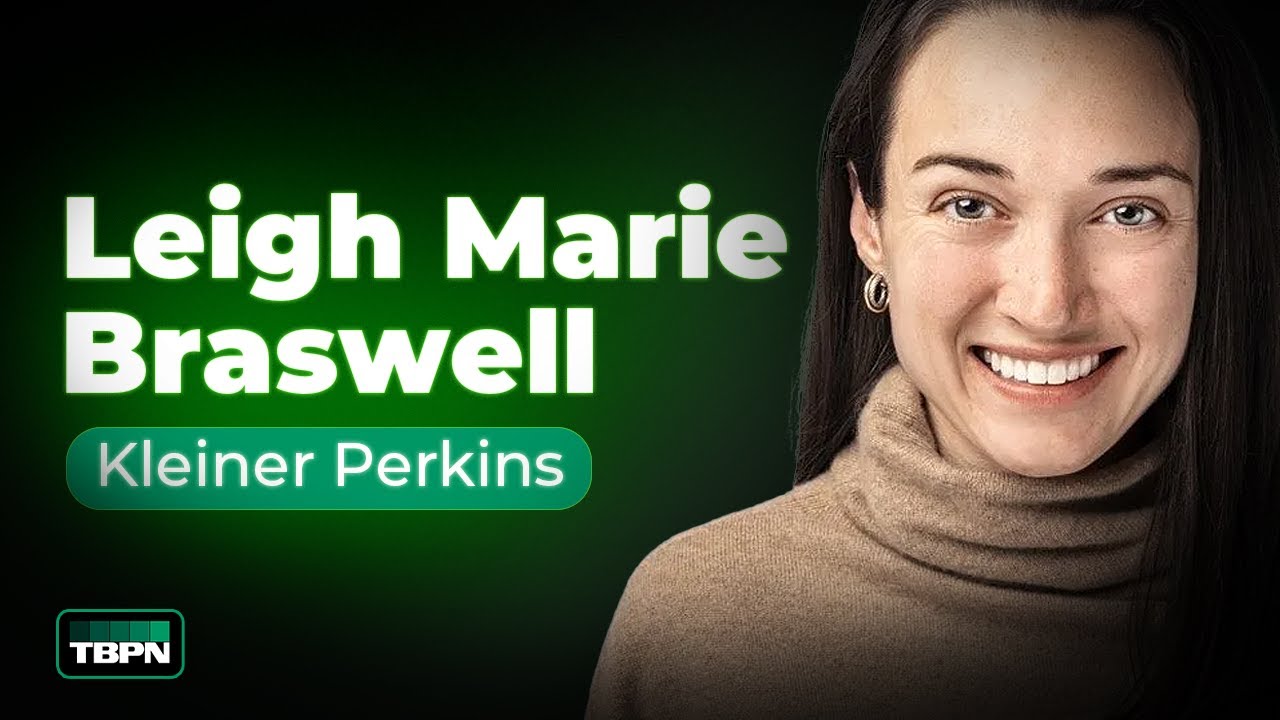
In this TBPN interview, Leigh Marie Braswell—partner at Kleiner Perkins—dissects the week’s AI announcements (Microsoft Build, Google I/O, OpenAI I/O, Anthropic’s Claude 4) and extracts the most consequential trends for investors. She examines OpenAI’s $6.5 billion acquisition of a hardware team (the I/O acquisition), speculating on the form of a future consumer device and the massive market opportunity it could unlock. Braswell then shifts to the perennial challenges of hardware startups, emphasizing supply‑chain, economics, and the difficulty of changing consumer behavior. The conversation moves to robotics, where she highlights the data bottleneck and the need for intentional data collection, simulation, and world‑modeling to avoid a “data wall.” A major focus is the AI code‑generation market: Braswell, a board member of Windsurf, discusses the rapid expansion beyond GitHub Copilot, the rise of prosumer tools like Windsurf and Cursor, and evolving pricing models (seat‑based, usage‑based, credit systems). She critiques overly optimistic TAM calculations and stresses the importance of real‑world adoption and outcome‑based pricing. The dialogue also covers venture‑capital strategy, noting Kleiner Perkins’ portfolio bets in enterprise knowledge discovery (Glean), medical scribe (Ambience), sales AI (Nooks), and the broader battlegrounds of legal AI, customer support, and AI‑driven sales tools. Braswell reflects on how startups can compete with hyperscalers, arguing that while giants have distribution and capital, they still need to acquire or partner with specialized startups to move quickly. She outlines M&A considerations, using the example of a database‑infrastructure startup (DataBack) partnered with Neon. Finally, the conversation touches on emerging video‑generation models (VO3), their creative potential, and the competitive landscape among hyperscalers, independent labs, and third‑party startups. Throughout, Braswell maintains an optimistic yet measured tone about AI’s trajectory, acknowledging both opportunities and execution risks.
Chapters
Oh, what's up, Coogan?
How's it going?
It's good. What's new with you? I'd love to get your initial take on AI Week. We got Microsoft Build, Google I/O, OpenAI I/O. We got Claude 4 from Anthropic. It's been a massive week. What has stuck out to you as like the most interesting, the most underrated, the most worth digging into?
Well, I guess just to start off, and it's so good to see you again. It's been a while.
Yeah, it's been too long.
Yeah, thanks for having me on the show. Yeah, there's never a dull moment, really. I feel like every day there's something really significant that you need to be paying attention to if you're going to try to make money investing in AI companies. And so, yeah, I think the big thing that's— actually, there's so much this week.
Starting with some of the stuff you said, It's the best time to be a technology podcaster. Yeah. Investors, a close second, but podcaster's really where you wanna be. That's where the action is. 'Cause every day there's new news anyway.
Yeah.
What, what, what is sticking out to you?
Hey, Jordy.
Um, hey. Yeah.
So, so there's, um, the, I mean, the I/O acquisition in particular, that news. Yeah. Um, what an incredible video. What an incredible team. Um, I mean, just really showcasing OpenAI's ambition to really, you know, get into, get into a lot of stuff. And I mean, obviously there's a lot of speculation about what the device will look like. I was actually looking this up.
My favorite— sorry, sorry to interrupt. My favorite part was, uh, John and I are, I guess, ex-hall monitors. We're in the community notes program. And so somebody was trying to community note the OpenAI launch video, and the suggested community note was, this video uses AI. These 2 scenes aren't real. If you look at this section, it's like you're trying to gotcha an AI company for using AI in a marketing video. Like, What is this? That's very silly.
What do you expect?
You know?
Yeah.
That's kind of the point. Yeah.
Yeah. Um, so I mean, yeah, I mean, super excited about what potentially that could, that could imply for just, you know, OpenAI's ambitions, especially as it relates to consumer, consumer hardware. I was looking it up on, on O3, but O3 kept then kind of giving me some different answers, but it might be, and to be fair, I don't, you know, kind of know the current state of things inside of I/O, um, Johnny Ive's company, but It might be one of the largest, if not the largest sort of pre-product acquisition of all time. So, you know, I mean, $6.5 billion is a lot of money.
Yeah, we've been noodling on it.
It's a couple points. It's a couple points for a key exec.
Exactly. It's 2% of the company, which when you think about bringing in an executive at that level, that like comp for that—
Industry legend.
It's not that crazy to get to that number. And then today in The Wall Street Journal, Sam Altman was quoted saying that if they can nail it and get a major consumer device, that's a trillion-dollar opportunity. And that sounds crazy. But you look at Apple's market cap, you look at Android, Samsung, like, yeah, there probably is a trillion dollars in market cap.
Well, there was also the tinfoil hats saying, like, oh, he's trying to dilute the profit.
Oh, yeah, that's a thing.
It's like, you know that they are issuing billions of dollars of stock to employees all the time. Yeah, that's happening a lot. This is not some crazy conspiracy.
Who knows?
I do want to get your take on the actual device. We've seen some pre-renders, some AI images around a pendant with a camera on it, the Her model.
Maybe it's an earpiece.
I imagine you get paid pitched a lot of AI devices. We've seen the Rabbit, the Humane, the Friend. Are there any other ideas that you've seen that could potentially be just AI devices, even not from OpenAI, but just in general? Because Apple's got it pretty well covered. They got your ears. They got your eyes with the Vision Pro. They got your phone, the watch, the iPad, the laptop, the desktop. Like, Apple's— there's not a lot of white space in the Apple catalog. But it'll be interesting to see if somebody can come up with something that's new. Have you seen anything that's interesting?
Oh man, I really wish I could tell you about it. But yeah, we actually have a company in stealth. I can't say much, but there's certainly different, you know, models.
Have them come on the show when they're ready.
Yeah, I'll be super excited too. But cool, people are being really creative. And then also, I mean, just generally, and I'm sure you're seeing this too, just given like the pace of how much is happening and then also the competitive nature of these markets, like it's clear that there's this big prize, maybe bigger than ever before.
Yep.
And so if you've got a really good idea, like, and if you don't have trouble raising funding, getting customers or hiring people, like, you know, why, why talk about it too soon? So yeah, I'll be excited to share more on that.
Yeah, there's also, I feel like people have just been generally willing to fund hardware, but also kind of categorically bearish, right? People are just like, oh, like hardware is really hard. Like I'm going to make this bet, but like it's really hard to do that.
It didn't mean the hardware is hard. It used to be about supply chain. It used to be about all the things that can go wrong, and the working capital, and the tariffs. But then also, look at—
we're at a point where Oura and Whoop are big businesses that— I don't know ultra-specifics on either, but I bet that Oura will be a really big company in 10 years.
From my perspective, it's almost harder— it is hard to make the device, and manufacture it, and deal with the fact that 90% of your revenue comes in Christmas. But the real hard part is actually changing consumer behavior, and getting someone to take off their Apple Watch, or add a Whoop band to the other wrist, which is, I think, the predominant pattern for most Whoop users. But what are you looking for in hardware startups that you're looking at? What are the pitfalls that you want to see founding teams overcome before potentially backing them?
Yeah, so I'll say I don't have a massive background in hardware. I mean, I will say I was at Scale. I was relatively early there and was an engineer there for 4 years and then a PM. Um, and we worked with a lot of hardware companies there. So, I mean, the main customer of Scale back in the very early days was self-driving car companies, um, and robotics companies. Um, and so I have seen just through working with them as customers, you know, some potential pitfalls. And I mean, you know, the, the quip is that hardware is hard.
Yeah.
Um, you know, that you've got all of the challenges of building a company, and then you've also got to just manage supply chains, and you have to be a lot more careful about, you know, the economics. You know, software, is usually relatively high margin, or it's easier to make it high margin. Hardware, obviously much harder when you've gotta figure out where all these materials are coming from and ramping up. So even if you have demand, like ramping up in a sort of scalable way, and then also implementation can generally just take a really long time.
And it distributes at the speed of the internet. Like you can go viral and get 100 million people on a website in a day. You just can't ship 100 million things anywhere in any reasonable amount of time. It just takes time.
Like maybe one day. But yeah, it's like, Interesting to remember, like, Waymo was founded in 2009.
Yeah.
Right? So, like, just as that, like, it took more than 20 years to now become this overnight success. But yeah.
You mentioned robotics. I'm interested in the pools of training data that are out there. We've been joking about Scale AI. Are they gonna put everyone in motion capture suits eventually to get to the humanoid datasets? There's also a lot of work being done in simulated environments. Is there a data wall that we're gonna run into with humanoid robotics? How are you thinking about the data challenges in robotics generally, whether that's in humanoid side or elsewhere? Because it feels like the humanoid narrative is taking hold, people are funding companies, it's getting big. But if it's a 16-year journey like it was with Waymo, we could be in for a long one here.
Definitely. It's been interesting. I do think there are a lot of really good arguments for why we'll see robotics progress accelerate. And that's really Obviously, the data is more challenging to get. You know, it's not like you can just scrape the internet like we did with a lot of these, these LLMs, and the data is kind of like there and ready for the taking for at least like some of the early transformer-based models. Though with an asterisk, like as we're now moving into agents, I actually think you have to be more intentional about creating different types of data. But then now with robotics too, like, you know, you've got to figure out ways to get real-world data, whether that's, you know, internally or using somebody like a Scale. Or, you know, there's a lot of really exciting work going on in world modeling and simulation. And so, you know, I think hopefully a combination of being really intentional about the data, both on the sort of like human collection side, and then also some of this work that we're seeing in simulation and world models, will hopefully mean that, you know, we don't all hit this data wall and we'll be able to sort of scale these systems more effectively. However, I mean, with robotics, it's always a little, a little bit challenging to tell what that exact timeline is. Yeah.
Yeah, be interesting. We were talking earlier about the agentic, the coding market, the AI coding market. I was kind of breaking it down to you in, is it 3 markets? Is it 2 markets? Is it synchronous work, asynchronous work? Is there a consumer, prosumer, bottom-up enterprise, top-down enterprise sales motion? How are you thinking about just AI coding generally as a market, as the businesses evolve? Just give me kind of where you're at and then we can kind of tug on that thread in a bunch of different ways.
For sure. My favorite topic of conversation, or definitely one of my favorites, is AI codegen. Near and dear to my heart. But yes, as a disclaimer, so I'm on the board of this company, Windsurf. So agentic IDE, AI-powered developer tooling platform.
Yep.
Yeah, it's been, it has been just utterly sort of shocking to me. Like, you know, when you invest in a company, you expect like, okay, you know, things, hopefully things will go well. Like hopefully market will be there. And I just don't think anybody, I don't think anybody really saw this coming.
Right.
Just in terms of like how widespread tools like Windsurf would become.
Yeah.
And so right now, you know, you're certainly seeing like there's this sort of segmentation, specialization. You know, you have tools like Windsurf and Cursor, um, that are, you know, prosumer. So you've got people even with basically no coding or definitely no coding experience that are able to get up and running very quickly with these tools and really just sort of like talk to it and it acts like this sort of programmer that will, you know, like respond to what you want to do. Maybe it comes back, maybe it comes back with an error, but it can maybe autonomously fix that error once you kind of give it some more guidance. And, you know, it's just been incredible seeing like, you know, even, even though I talk about Windsurf all the time, my father-in-law, who I never mentioned it to, not a programmer, just like once he was on a, on a, we were just talking, all talking. He's like, that's cool. You gotta go, you're a VC, you gotta go check out this company Windsurf. I'm like using it to like, you know, help me out at work and create apps. And I'm just like, wow, this is incredible. Just how widespread he's like, you know, outside of Silicon Valley, all of that.
So, so for those types of tools, I mean, you don't have to speak about Windsurf specifically, but just How much of it is just a ton of people on small consumer plans versus bottom-up enterprise adoption that gets rolled into a much larger consumption-based plan, or even like a seats-based plan? Like, how is the market for AI tooling in the enterprise evolving in terms of pricing? Because we've seen Salesforce is talking about, we want to price things not based on seats, but based on resolutions of customer service tickets. You could imagine charging someone for lines of code that get approved in pull requests or seat-based or usage-based or just pure inference-based. So how is that side of the market just evolving broadly?
Yeah, I mean, so what we're seeing is, you know, there's certainly the prosumer segment for these tools, but it very quickly goes up, you know, bottoms up into the enterprise. And in particular with Windsurf, I mean, from day one, we've been quite focused on the enterprise segment. And so it's, you know, we both have a large enterprise sales team and then these tailwinds from now, all these prosumers and then, you know, sort of like professional developers that pick it up on their own and bring it in into their company. I think pricing, it's always interesting and something that we constantly think about. It's a very competitive market. So, I mean, you know, you also have to kind of pay attention to what other people are doing. I mean, per seat, easy to understand. But then, you know, obviously a lot of these models cost, you know, cost money to run. And so you've got to figure out some sort of either credits or usage system I don't think, you know, in coding we're yet to the point where it's, you know, let's price based on outcome. Like, oh, well, if we get this done, then, then you pay. Like maybe, you know, I've seen sometimes in like customer support and things like that. But yeah, certainly having like a usage element I think is pretty, pretty, pretty important. Yeah.
What, what, what's your reaction when an entrepreneur pitches you and they're like, well, we're, we're building agents to go after this labor, this like end labor market and, and, The TAM is, you know, a trillion dollars because they're just adding up like global payroll for like that type of work. Like, what's your reaction to that? Is that the wrong way to think about market sizing if ultimately these are software products that can be delivered very inexpensively, which will ultimately create competition and drive maybe pricing down for that end service?
Mm-hmm. Yeah, I mean, definitely, definitely some good points. I mean, generally, generally I'm pretty optimistic. Um, I think now just like kind of living through the codegen market where, you know, just to use this as an anecdote, you know, GitHub Copilot came out. My first kind of pessimistic reaction was just like, oh, well, this is like so useful already and GitHub's got all these advantages. Okay, this like market's done. And they will be like, okay, every developer like uses it and then it's kind of over. And it just, the opposite of this happened. Like, it turned out that there is a lot of white space in the market for teams to innovate and to create really great product experiences, whether it's a startup, whether it's a foundation model company. And then also just like, I think the market blew my mind.
What was the secret? What was the secret to either the challengers to GitHub Copilot? I haven't really used them. Is it more driven by flexibility around which model you're plugging into and GitHub Copilot kind of locking you into their model and not moving quickly enough? Or is it something more on the user experience side?
So I forgot the exact date GitHub Copilot started, I think OpenAI only, given the sort of relationship, but it relatively quickly moved to an option. So it's probably—
So you can put in Claude 3.7 Sonnet, which everyone loves.
Yes. And I think actually recently, you know, I think I was reading this this morning, but, you know, you know, GitHub announced like, okay, for these particular features, we're gonna go with Anthropic only, like particular backend features. So it's clear like, you know, they're, they're, GitHub is not locked into, to one model provider.
Yeah.
I think, you know, what Cursor, Windsurf, and others have done is just create, you know, different product experiences.
Mm-hmm.
Um, and obviously GitHub Copilot's still doing very well, but I think what this all has told me, and kind of back to your original question, was these, these markets are actually much bigger than we give them credit for.
Mm-hmm.
Uh, and so when I'm kind of sort of being pitched maybe a ridiculous TAM, sure, it's probably good to like verify that and really drill in on that. But I mean, we are in the world where now software can do work. And so you do have to kind of, you know, you don't just get the sort of TAM being, okay, it's the, you know, incumbent software spend. I think you have to also realize once the product gets that much better, people will want to buy more software and then also think about it as a work So you kind of get all these kind of bonus markets that, you know, TV, you know, end up being just like this huge thing.
How do you, how do you, how do you process the tension between model providers kind of figuring out if they're wanting to end the own consumer or be a platform? I mean, the most obvious example was Windsurf didn't get immediate access to Anthropic's new models, which seems You know, I'm sure you can't comment on that specifically, or maybe, maybe you want to come in with that. Put him in the hot seat. But, but yeah, it just feels like— Give the lawyers a hard time. Just do it. It feels like a very real tension that's going to have to get resolved quickly because these are all big companies now, or at least the main players are big companies. There's billions of dollars of revenue on the line. And everybody's in a constant race to be at the edge.
You're right. I probably shouldn't say too much. I mean, what I will say, yeah, it's something that I think is going to have to be addressed in the next year or two. I think it's just very clear that cogent in particular is this market that everybody kind of wants to get into. I do ultimately think that You know, I'd be shocked if in a year or two we don't see cogent products that are both, you know, synchronous. So like assistant, you know, I can talk to it and from the same interface I can delegate tasks.
Yeah.
I just think that that is something that a lot of people are building towards.
Mm-hmm.
It's like there isn't a great experience today that kind of has both.
Yeah.
Um, at least, you know, sort of a generalized both. But I mean, ultimately, like, All these companies are, I think, gonna in the, in the sort of even medium term come up against each other. And ultimately what you want is sort of this distribution. And I think, you know, all these companies too are realizing you also want the model, um, and you want to be able to, you know, give yourself really favorable, favorable economics. So yeah, it's, it's going to be a super exciting, even, you know, probably, probably 6 to 12 months, I imagine.
So legal, the, the sort of legal AI space has been heating up. Kind of an interesting comp. In many ways, it felt like Cursor had a ton of mindshare and then Windsurf just exploded. People realized how quickly it was growing, at least that was my perception. And then Harvey similarly has been more in the Cursor bucket in that tons of attention, bunch of rounds back to back, and then Lagora, Came out of— feels like it came out of nowhere and they raised a big Series B this week. Is there— are you— do you have a kind of prediction or a take on what the next category to see these sort of battles play out? I'm sure you guys already have some bets in whatever category that is.
She's already on the board of 4 companies that are going to dominate it.
The next 4 categories.
Actually, I had to jump to the board meeting in exactly what you just said.
Yeah.
Yeah. You know, I'm very lucky in that, you know, I think, I mean, even before I joined, so I've only been at Kleiner Perkins for 2 years. And even before that, a lot of my partners made really great app investments. So for example, my partner Ramoon incubated Glean.
Yeah.
Which is now, you know, kind of the enterprise knowledge discovery platform in this kind of new AI era. So certainly, like, we've got a lot of apps in the portfolio. I mean, Harvey, we, you know, did their Series B. Ambience, which is a medical scribe, also in the news recently. We did their seed and Series B. So, and then, you know, we have some, some investments in sort of sales AI as well. I work with this company Nooks, which has started with a power dialer that people really like and is now expanding into other, other parts of assisting salespeople with AI. I'd say like those, you know, those categories, plus maybe add customer support, which we don't yet have kind of a generalized play in. Those are kind of like the, the battleground spaces. These are where it's going down right now. Like, it's clear. The models work for the use cases. It's clear there's a giant prize at the end. And so you've got, you know, inevitably a lot of companies competing for it. In general, especially with software, you know, I think it's basically impossible to be the only company in your town.
Can you fund a company that will just pick up the phone when I get like a robo AI call that's like trying to do some social engineering hack or whatever and just pick up the phone and waste their time really inexpensively? That's, I feel like that's what I need.
There's definitely some cybersecurity companies out there.
Yeah.
I think I've actually been pitched one.
I would have to find the name, but yeah.
It's great. What do you think about competition from the hyperscalers? Obviously, Microsoft Build and Google I/O happened this week, and there's one narrative that's like, oh, so many startups are now just bullet points in a Google I/O keynote. But Ben Thompson wrote shortly after Google I/O that Google only cares about search, and they only win when it's directly impactful to search. And so you might, as a startup, not need to worry if you're doing something that's more in the labs or experimentation phase for Google, and Google is more just almost doing it as a demo of their platform, and then they really would be fine with another company just buying a bunch of TPUs on GCP and building a real company on top of their innovation. But how are you thinking about startups competing in these new AI markets with the legacy incumbents?
Yeah, it's a really good Good question. And it's something that I think about a lot.
Yeah.
Just given, like, obviously, you know, somebody like Google has giant advantages, distribution, money. I mean, Google literally created the, you know, first Transformers paper. So, I mean, certainly, certainly it's something that whenever you're investing in, in an app company in particular, you know, you, you need to, I think, at least think very deeply about what's, what's the roadmap of, of all these companies, OpenAI, Anthropic, et cetera. I mean, certainly, certainly seems like sort of areas in search and sort of like social and, and prosumer that, you know, seem like kind of the most under the microscope with these big companies. But, you know, it, it wouldn't shock me if they tried, tried to compete in some of the other app categories we've talked about too. So, yeah, in general though, startups, I, I like to bet on startups.
Yeah, of course.
Focus is important. And then, you know, I think if you move fast, If you're very strategic, there are a lot of good sort of like wedges you can sort of start with and then expand from there.
What about M&A markets in particular? I mean, my reaction to the Windsurf acquisition was, and it's gonna be kind of hard for you to answer this, but was basically that like, whoa, like maybe that whole meme of like, oh, don't build a ChatGPT wrapper or whatever, maybe that was overblown. Maybe that there's gonna be a lot of app layer companies that get scooped up. Obviously, OpenAI is moving very quickly, so they're kind of early to this, but you could imagine every hyperscaler needing application layer AI companies to slot in, especially if they've had distribution and they've actually scaled revenues and they have a really great team. And it feels like, unlike in the previous era, like 2010-ish, like the hyperscalers are more sclerotic than ever. It's been 15 extra years, they're less founder mode. And so I don't know what your read is on the M&A markets broadly, But how are you thinking about the hyperscalers' approach to staying on the leading edge of these AI application layer companies?
Yeah, I mean, I think it's important to remember, and I have to remind myself, that ChatGPT is less than 3 years old, I think. So it's like, this is happening so fast. And so when you think about, like, I'm a hyperscaler and I see a market that that like makes sense for me strategically, you know, is it really faster for me to go and try to build it internally?
Mm-hmm.
Or is it faster for me to find a really great startup, perhaps with expertise that I don't have?
Mm-hmm.
And maybe, you know, some other advantage, whether it's the product or the distribution or, or something else. And then, you know, explore, explore partnership conversations with them. And so, I mean, you know, the one, one, you know, acquisition I, I can talk about is I, a company that I worked with Um, at, at Founders Fund and, and still on the board of Neon, uh, is partnering with DataBack. Oh yeah. Yeah.
Cool.
Um, and it makes sense because it's like, you know, you've got this team of database infrastructure experts and then you've got this company who clearly wants, you know, their customers to be able to realize the full potential of AI agents. And so you do need, you know, a database and memory, um, for those agents. Uh, and so, you know, it, it certainly now, you know, now I'm trying to think in my mind like, oh well, what, what are the other categories that, that, that hyperscalers might, uh, might, might be looking in and, and what makes the most sense for each one?
I mean, the big one to me that I'm trying to figure out is just video generation, which we had— I wouldn't call it a Ghibli moment this week, but VO3 was close. Took a little bit. It just takes a lot more work, and it's harder to get a consistent quality output.
And there isn't a single meme where everyone— like, the Ghibli thing was like, just take your profile picture, take whatever's in your camera roll, 2 words, boom, one shot, and you have something cool. With VO3, you have to be more creative with the prompts.
Well, yeah, the interesting thing there is, I can— it's so easy to imagine in the future where consumers are using video generation tools daily just for fun.
Oh, totally.
Yeah, there's some like consumers just like making memes on the internet. Then there's like kind of prosumer, SMB, I'm gonna make like an advertisement. And then there's the like Hollywood studio that's like, I'm gonna make a movie, or independent filmmaker. But where companies kind of fit into that, I can see a world in which hyperscalers are kind of dominating, like, Meta, for example, figures out a way to get really good at video generation because it fits into the Meta ecosystem or YouTube, you know, with VO3. And I think that from my point of view, I can see some of these more independent foundation labs that are focused on video having to really move upmarket to actually dominate.
Mm-hmm.
Because that feels like an area that like Google's not gonna necessarily build the thing that creates the next blockbuster video.
Yeah.
But if you're competing for the prosumer SMB, like, feels like a really tough place to compete purely from a cost standpoint and with YouTube or Google's sort of YouTube data advantage.
Yeah.
Yeah. I don't know. Any reactions to VO3 this week?
Oh, I mean, super cool. And we were playing around with it. My husband's a founder and he was like trying to make this new video for something that they're developing internally and oh my God, just insane. Yeah, so it's, yeah, really cool. And I mean, I, I kind of agree with some of the points that have been made, but then on the flip side, I will say, like, especially in video, there's so many really great models and they excel at a variety of different things.
Yeah.
And so if you're like kind of a third, you know, a startup that is not connected to— I mean, Google obviously is developing their own models. So if you're not connected to any one of the particular models and you can offer like kind of a best-in-class, like, okay, you can pick from, you know, many of them, maybe that's an opportunity, or if you're sort of like very, very specialized. So yeah, I mean, generally still optimistic, just kind of given at this point there's not, in my opinion, a ton of platform risk. You've got so many of the hyperscalers and labs like that are, you know, both closed and open source offering these types of models.
Yeah, very cool. Well, thank you so much for stopping by. We'd love to have you back. This is fantastic.
Yeah, this is great. Thank you.
This is super fun.
All right, bye. See you later.
More from Leigh
Kleiner Perkins at Cerebral Valley: Exploring AI’s Frontiers with Leigh Marie Braswell & Bucky Moore

Kleiner Perkins at AI House Davos: Leigh Marie Braswell on the Future of Generative AI


Cerebral Valley: Leigh Marie Braswell, Bucky Moore, and Amber Yang with Eric Newcomer

#19 Product-driven Culture - (Founders Fund) Leigh Marie Braswell | Slush 2022

Investing in MLOps // Leigh Marie Braswell and Davis Treybig // Coffee Sessions #81