Overcoming the Stereotypes of Real Estate Sales with Jan Kimbrough Miller
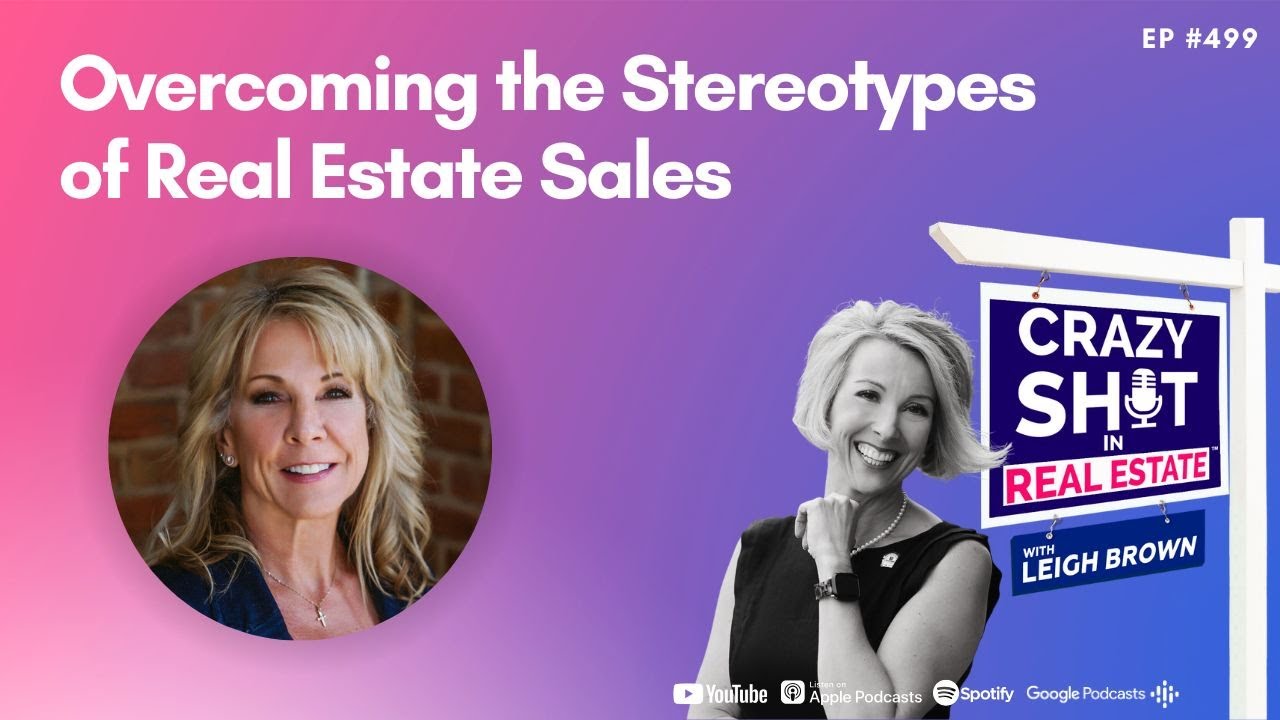
In this episode of the Crazy Shit in Real Estate podcast, host Leigh Thomas Brown interviews Colorado‑based realtor Jan Kimbrough Miller. Jan shares her unconventional path from a two‑decade career as an occupational therapist and clinic owner to real estate, emphasizing that she never fit the stereotypical "salesy" persona. The conversation centers on her company’s "Expectation Selling" framework, which stresses two‑way communication of expectations to reduce surprise and liability. Jan explains how therapeutic skills—building trust, guiding clients through uncomfortable tasks, and detailed documentation—translate directly to real‑estate transactions. They discuss the importance of matching agent personality to client type (detail‑oriented engineers/accountants versus feel‑focused buyers) and how diverse agent styles can serve different market segments. Jan describes the evolution of Expectation Selling from a team member’s suggestion, leading to online training courses aimed at mentoring agents who lack formal apprenticeship. A dramatic anecdote about a buyer beginning remodeling before closing illustrates the risks of premature key access and the need for clear processes. The hosts also critique common industry stereotypes, argue for a listening‑first, relationship‑based approach, and touch on ethical considerations in small‑town markets. The episode concludes with contact information for Expectation Selling and a plug for Leigh’s Answers.RealEstate coaching program.
Chapters
I'm Leigh Thomas Brown. This is Crazy Shit in Real Estate, and today I've got Jan Kimbrough Miller with us from Colorado to share with you what she's learned along the way as a not salesy realtor. Really fun conversation. I hope you'll enjoy it, and I'll see you on the other side. I think it's the nature of our business since we deal with people all the time, and people are not always predictable. Would you agree with that, Jan?
I would agree with that. As much as I try to make them predictable, they're not always.
And as you've your company expectation selling, which is a step in the right direction.
Yes, exactly. Exactly. I'm going to do all I can to make them predictable.
Hello, public. We like to set expectations that we will do our best and we can't predict if it will or won't happen, but we'll do our best. So, Jan, tell them who you are, where you're located. Give them a little thumbnail sketch of you and those cute blue headphones. I just love how that pops on.
I just got these and I thought I didn't think about about how it would look on camera at the time. I just thought, if they're blue, my husband can't lay claim and neither can my grandson. So it's like, these are clearly mine. So now I get on the video, it's like, oh my gosh, they're blue, very blue.
They're Carolina blue. I would like them being a Carolina girl.
Um, so, uh, a quick thumbnail: I was in the medical field for about, uh, 18 years or so, 18 to 20 years. My degree is in occupational therapy, and I owned outpatient orthopedic physical therapy clinics all across Colorado and western slope of Colorado and a medical billing service. And I did that for all those years. And then my brother got into real estate. Actually, I met you a couple weeks ago, a couple of months ago. You were a keynote speaker at our office thing at RE/MAX 4000 Grand Junction. Yeah. So I got into real estate. My brother got into it. It was just divine intervention. My brother was in pharmaceutical sales. His wife passed away and he kind of needed a new gig. And a family friend said, oh, you'd be great at real estate. Let's, you know, do real estate. So he got started in that and he had great sales training but no business background. So about a year and a half in or so, he was going crazy and he's like, oh my gosh, I think you should sell your sell your clinics and come to work with me as my assistant. I'm like, okay, I'm really sick of managing employees and managed care and answering to insurance companies. So, okay, I'm going to take a— I'm going to take a gamble on this, even though I am not the sales personality, which is— I was very hesitant. I can't sell. I am not the stereotypical salesperson.
So, man, you could tell I was ready to jump on and fix that. So good.
I could tell. I could tell. Yeah, because my brother's always like, you are a salesperson. I'm like, no, I'm a helper person. I am a helper person. So, I mean, I tried to sell Mary Kay in college. I gave it all away because everybody was poor like I was. It's like, in my mind, I, I, I am not the typical sales stereotypical salesperson, but it's been wonderful working with my brother for now another 18 years, and we have a team under the RE/MAX umbrella in western Colorado.
And you have kids, right?
Oh yeah, I've got kids and grandkids. So my kids are almost late 30s, almost 40. My grandkids are 18 and 13.
So yes, you can't say you're not a salesperson because every parent has had to sell to their kids. I need you to put your shoes on now because I need you to eat this. And here's the pros and cons and the consequences. And that is salesperson one-on-one is they need to take action steps and you're getting them to take action steps for their own benefit.
Well, you're right. And what I really discovered was that everything I had ever done in the medical field, okay, so just in a capsule, it's like when you're doing physical therapy with people, they're there to exercise parts they don't want to exercise. Everything hurts. It's like, it's like, I got 30 minutes. Okay, strip down. I'm going to make you do a bunch of stuff that hurts and you don't want to do. And by the time that you're done, you're going to love me. You're going to think I'm the best thing since sliced bread. You're going to go back to your doctor and tell him to send all his other patients to me. So it was sales, but it was via relationship and building trust and rapport really quickly.
And it's just like real estate because the process is incredibly painful for a lot of people and it is fraught with having to do things you don't want to do. But when you get to the other side, the goal is that you're grateful for that. Although my cousin who does physical therapy, they call her Dr. Pain, which she enjoys that nickname a little too much. But yeah, she's in high demand because if you listen to Dr. Pain, then you don't have as much scar tissue as if you are being sold a bunch of lies, being told, oh, it's perfect. It's easy. You don't have to try very hard. And frankly, Yeah. A lot of people get into real estate and they've been told how easy the business is. You're going to make $100,000 and it's so easy. And then they get and find out they want to do it well. It's actually very hard. So it's good that you came in with a background of organization and a background of having to deal with managed care, which can't be any more painful than dealing with the— the action on the other side. Because we all know that the worst part of any real estate deal is the other side. And it's it's just how it goes and it's maybe our perception and maybe not, but management of expectations is absolutely the key. And I'm, I love that y'all named your team that. What, what caused you to land in that expectation name there? Was it the experience of setting expectations well so your clients were happy about it or did it happen out of the gate where that was what you wanted?
Uh, no, we kind of boiled it down to what has made, um, us successful in terms of we do a super high volume of business in a really small teeny tiny town. It's like, uh, we had so many people asking, how do you do this? How do you do this? And, um, we got thinking about it because an agent that used to be on our team had moved to Boise, and he, um, basically kind of came back to us years after he'd been on our team and said, you guys, you need to figure out how to teach people this. And so we kind of got boiling down what, what is it that we do that makes it so different? And it, and it, a lot of it is, uh, is about communication of expectations going both ways so that all that stereotypical real estate lifestyle of the 24/7 of, you know, the memes of, you know, here's what it looks like to go on vacation with realtors and they're standing in the pool on their telephone with the computer on the side. It's like, we, we don't do that, but we still do a ton of volume. And how is it? And it has a lot to do with setting expectations.
Well, there's a great story there that the, the person who caused you to have that conversation was a former client who had experienced things differently. And I know that a lot of agents, as they're trying to think through what does make me different, what makes me successful, you try to ask yourself that question. You're probably not the right one to ask. Maybe y'all should go out and talk to some past clients and say, what is it about the way that I conduct business that you liked as a buyer or seller? And then drive your business in that direction because you guys are fortunate that you built the kind of relationship that allowed somebody to come back and help you continue to build because that's— yeah, it's pretty impactful stuff.
Yes, actually, we never would have done expectation selling had it— it was an agent who worked for us. But yeah, he came back and it's like, this is— I've been other places now. I've seen how it gets done and, and this is so different. And frankly, we wouldn't have done it because the same reason we've been— we've done a lot of volume. We've never gone on our own brokerage or whatever. It's like, why have we not done that? Because we just love taking care of the people and doing stuff. You couldn't pay me enough to be a managing broker. So it's like, forget that. We just love the working with people part. So yeah, I mean, it is really wonderful. We've been super fortunate and it was nice that he came back and kind of helped us decide to to kind of put it together because otherwise we never would have.
You might have, but it would have taken you another minute. And so he helped you get there faster.
No, we wouldn't have done it. Honestly, we wouldn't have done it because it's like, yeah, yeah, yeah, yeah. Recording online courses and going to California to, you know, to video in studios and all this stuff. It's like, no, we'll just keep taking care of our people. So, I mean, but it's been good. We're super thankful that we did it. We feel grateful grateful that we can, um, hopefully use that as a platform to help a lot of agents just learn some of those things that nobody teaches you. And when I was reviewing some of your prior episodes, um, podcasts, I mean, I, I heard that several times about how agents got into the business and there was really nobody to teach them or help them, or there's no apprenticeship or anything like that. And it's like, so hopefully this will be something that people could use It really is effective across all personality types and work goals. It's not just about making a kajillion dollars. I mean, the guy who came back to us, I mean, his goal is to work as little as possible while he plays and supports his family. So, yeah, I mean, so we're excited about helping other agents.
Well, I think a lot of people who have washed in and out of real estate weren't necessarily bad agents or bad humans. That's a very common misnomer in real estate that the, all the survivors are inherently good. That's not so, but if washed in and never encountered a broker who poured into you or encountered somebody who was able to take you under their wing, that's a big reason a lot of people do wash back out because it's so hard and the training is so uneven across the business, which of course is gonna happen with 50 states that have different real estate commissions and different guidelines. And then every brand had its own training platform. It really just depends on the brokerage where you land, not the brand, but specific broker. And how did they help somebody figure out the practice of real estate, which is different than the culture of real estate. And I don't think we're ever going to even it out, JM, because we are in such a fluid business that is different market by market and client by client. And it's so competitive and there's all these different business models, which make it great, but to make it really challenging to navigate when you walk in the door the first time.
Oh, for sure. Yes. I was so thankful to have started where I started, where there was support and people around that could mentor us and that kind of thing. But because I see it all the time that that doesn't happen, especially. Yeah. So yeah, that was part of just the whole purpose of Expectation Selling was being able to help those agents.
Well, let me ask you this. Back to your first day in real estate. Yeah. When you walked in the door knowing more than some, because you're joining your brother-in-law and you've been around the block a couple of times, what was the thing that you walked in the door and said, well, I sure didn't expect this when it comes to the practice of real estate. What was surprising to you about becoming an agent?
I guess I was mostly surprised, actually I was surprised by two things. One, I started as my brother's assistant and and he had zero systems in place. He had lots of business, and it's like, hey, uh, how about—
where's your—
I mean, it was no, no contact management system or anything. So that was shocking. Um, but after that, um, once I adjusted there, I guess I had really, um, completely underestimated how many of my skills from being in the medical field would translate, and that I really didn't have to be that I didn't have to do those cheesy lines and the typical cheesy stereotypical sales techniques of, can you picture yourself on this patio with your glass of wine looking at the view, you know, and getting them to sit in the furniture. You know, I just, I just was surprised that, I mean, thankful and surprised that really it didn't take that at all. And quickly I surpassed most, if not all of the peers, you know, without using any of those stereotypical techniques.
When you say that, and it makes me wonder how many agents have hit a level of plateau or even fail because they tried to be the mainstream media version of real estate and the Hollywood version of real estate instead of the type of real estate that says, oh, I'm talking to this person who might be my neighbor. Let me just make friends with them and answer some questions for them, which is definitely not the version you see when it's— when our profession is portrayed. And it's really frustrating because that's why you're successful is your ability to connect. It's not about selling, it's about listening and responding.
Yeah, that is totally it. I think it— I think the business, just the nature of it, partly because the stereotype attracts certain personality types that— I mean, they're not bad personality types. But they are more of a sales— like my brother. I mean, he had, you know, the top sales training. Pharmaceutical companies are notorious for having great sales training, and he had years of that, was very accomplished in that. And his personality is completely different than mine, and he does great. It's not that he's self-interested. It's just a different personality type. But I think a lot of people like me who don't have that personality would think, oh no, I could never. Sell anything. Actually, I didn't. Had I not been at a really kind of critical personal time, I wouldn't have made the jump. I probably would have thought it was too risky, but I needed to make a change at the time. And I thought, you know what, I work really hard. I know I can work hard enough. I know I'm smart enough. I'll figure this out. You know what I mean? How to do it. But yeah, I think it probably— there's probably people who would be great in the business that don't do it and people who are in it that it's like they just would be so much more successful if they would cut out some of that stuff.
Well, and I think—
of being on their own agenda.
There's an example we can give, which is that if somebody who's watching or listening to this, if I told you that I had a buyer referral for you, you'd probably say, "I'll take it." And then I said, "And it's an engineer or an accountant." They're like, "Oh, no." That's not my personality type. Is harder for the traditional real estate agent to deal with because engineers and accountants are spreadsheet checklist people. And I'm married to one, so I know what it's like to live with a detail person. The average realtor is not super known for details, like walking into the office, finding the lead management is a phone number written on the back of an envelope. And yes, well, that's, I knew what envelope it was written on. So if I didn't know that there's a huge segment of the population that is focused on details, that's a reminder right there. That the agents who are also wired like accountants and engineers and are great with details, you're desperately needed. And you have to start talking about that in your marketing so that that segment of the public can find you. Because they don't want me. They don't want the person who is ready to say, well, did you know who's over here? And I heard this and I'm all about the inside scoop in the county. My husband does not. But he wants to know the R-value of the insulation. I don't care what the R-value of the insulation is. I'll ask the inspector. I want to know the last time the HVAC was serviced. I'm thinking HVAC's working. I'll ask the inspector. Different ways to operate with the information is part of why real estate is so fascinating. And there's such a space for all of these different personality types and business models. And the public doesn't always get to see that because they only see the one you're referencing, which almost kept you out of the business. But your clients would be very upset if they'd never had a chance to be serviced by somebody who looked at the business differently. So if you're in real estate and you're listening to this podcast or watching it and thinking, man, I need some more Leigh Thomas Brown answers in my life. Well, guess what, friends? I have a new program that is launching right now called Answers.RealEstate, where I will give you every bit of insight I have to help you grow your real estate business. Help you better respond to consumers to provide a more excellent real estate experience so that the next time you land on crazy shit in real estate, you'll have a better solution to whatever you ran into. Answers.RealEstate. There are monthly plans available. You will love it. Get your coaching. Sign up with me today.
Yeah, my dad was an engineer and I know your husband is because you've talked about that. And so I totally get that. And that is a huge piece of my people because they know I'm just going to be so detailed and I'm going to cover everything and I don't necessarily have to be their friend after we're all done with the thing, which you're probably friends with everybody you've ever done a deal with.
Pretty close. And my husband won't talk to two of them. He has very little patience for all these people, but he wasn't looking at real estate as a way to add to the friend group. I look at it that way. So I love that you brought that up because it's two different perspectives, even on Deck space management.
Yeah, yeah, yeah. My brother, when I give him a referral for somebody, because we have this business split up in a way that he, he does residential resale listings. So if I've sold somebody a house and I, you know, refer them to him because now they're going to resale, um, he's like, oh, this is, this is one of Jan's. This is that, that has a whole meaning to him of like, I'm gonna have to know, you know, be detailed with this person. They're gonna need a certain set of stuff. And, um, yeah, that, that is, that is right. That's kind of who— but you know what, I have all kinds of— I know you're kind of tuned into the psychological stuff too because you've mentioned about talking about your dad and him being in real estate and giving you all kinds of pointers. And I'm married to a marriage and family therapist who practices what what he preaches, and he is very great at it. So all those psychological things of picking up on you open two doors and see who gets in the front or whatever, it's like all of those things are part of the expectation selling thing of there's so many things that people are not aware of that just small things that can give them so much insight to really make the process more surgical. Than, you know, looking at 40 houses and hoping they like one of them. I mean, I, that doesn't happen with me. I can't do that.
Okay. So Jan, I have to ask you a question. I did not know that you're married to a marriage and family counselor. Does it drive you nuts when realtors roam around saying, oh, I'm a counselor, I'm a therapist. And I know they're saying it halfway joking because we do get to hear far more than any of us could probably hear from our clients, but they're not therapists and counselors. It kind of drives me nuts because you live with a professional who understands the boundaries you can and can't cross. I'd love to hear some perspective on that.
Actually, it doesn't bother me because I understand what they mean because we all do have that experience where, yeah, the last time I did an intake with a couple, they walked out of the room and said, this was better than the last family therapist we went to, you know, just getting drilling down on, okay, what they put the two of them needed, how are we going to get the two to meet in the middle and that kind of thing. But no, it doesn't really bother me because I understand what they, what they mean. But I mean, there is a huge piece of that that is really significant in terms of identifying personality styles and types and speaking their language and adapting to what they can hear. And, you know, you don't ask a feeling person what they think. You don't ask an engineer how you feel. It's because they're like, I don't really feel anything. But like you said, you know, what's the R-value of this roof? But his expertise over 40 years has been super helpful in terms of kind of shaping how do, how do I make this a surgical process so I can do a lot of volume, help a lot of people without ruining my own life or marriage, basically.
So does he send you people after he has a little therapy with them? He's like, uh, they're not gonna make it, call my wife. Is that what happens next?
No, no, honestly, it doesn't.
Happy people.
No, it's the craziest thing. Cause we'll be out somewhere and, and somebody will say hi to me and then they'll say hi to him. Like they know him. It's like, cause he can't tell me who he does therapy with or anything else. It's like, I had no idea that he knew so-and-so. It's like, oh yeah. Then they tell me, oh yeah, I've been seeing your husband for, you know, whatever, 6 months or whatever. Neither one of us knowing that we were both taking care of the same people. Crazy.
You're probably the only wife on the planet who somebody walks up and says, I've been seeing your husband for 2 years, and you don't get upset.
I do not get upset. I'm more saying, honey, what's taking 2 years? It's like they should either make it or break it in 2 years.
So, you know, just in case.
Yeah, it's a small town. That's part of what happened. You know how it is, been there a long time and everybody knows everybody. And the minute you say— you have to be very careful what you say to anybody because it's, um, yeah, everybody knows everybody.
I mean, all joking aside, it is one of the important parts of being a professional realtor is learning how to keep your mouth shut because there are big small towns. And if you let scoop out, even accidentally, you can harm somebody else's financial position. You can harm their marriage. So I wish all realtors would be helpful as they, as you tell stories and as you talk about listings and buyers. Don't, don't let so much of the cat out of the bag. Make it very, very USA Today, top line, easy to understand. No details. Yes. No, you're right.
I work with a lot of physicians and people and kind of sensitive spots. It's not that the physician doesn't want necessarily people to know they're buying or selling a house, but it's like a lot of agents, I'll get an offer and they'll be like, oh, this is the new doctor, the new neurosurgeon over at whatever. It's like, well, that's great to know. I'll let the seller know. And then they're going to counter you harder than they probably would have had you not said your guy is a neurosurgeon. You know what I mean? They think they're I mean, the agent is trying to kind of have a feather in their cap, but unfortunately they let out information that really compromises the ability of their client to negotiate the best deal for themselves sometimes.
So, and that can be an advantage when we're going up against that agent in a listing appointment or a buyer appointment to say, look, yeah, I'm going to have an advantage because I listen to these things and I don't let it out. Advantage. So we're gonna look for those advantages. And that being said, of course, the point of my podcast is really just to let people see the side of real estate they never see and to hear some of the stories they've never heard. And I'm very curious to know what you've seen out there in Colorado that you still can't believe you saw it besides people coming up to you at supper talking about seeing your husband and you had no idea they were gonna come. I have a whole episode showing up in my head right now. This would have made a great TV program, but since we're not making a TV program, let's move on to Miss Leigh. What's the craziest thing?
So the craziest thing, it was absolutely horrible. It came to me pretty quickly, which tells you something after 20 years and, you know, tons of transactions. I had not been in the business very long, and I was sitting with a couple, a buyer, in their kitchen, kind of talking to them about their criteria, this and that, you know how you do. I get this call from my brother. I ignore it. My brother who's in real estate with me, I ignore it, and then he keeps calling. So finally I'm like, oh my gosh, he must need something. I'm gonna— I feel my Southern accent coming back. I'm from the South and And if I have 2 glasses of wine or talk to somebody like you, it all comes back. So I'm with these buyers. So, and my husband, so I pick up the phone finally and Dave's like, you have got to get over here. You have got to drop what you're doing. I don't care what it is. Get over here to this house. So it was a house that he had listed in this kind of exclusive part of town. It was owned by a well-known restaurant owner here in town. Down, and she had, um, she had listed it. I got it under contract with my buyer who was from, like, uh, he was like Norwegian and way high up with an oil and gas company like Chevron or something. So, um, the seller had moved out but left her furniture all there. So I get over to the, to the house, and I'm like, what in the world is going on? And my brother, literally, he is standing there with his head between his knees to keep from throwing up. He had gone by to check vacant houses, which he did. You know, if we had a house that was vacant and he had it listed, he'd go periodically check, make sure everything was fine. Well, my buyer waltzed out of the house. This is before closing, about a week and a half before closing. My buyer waltzed out of the house in his jeans and no shirt and had said, hey Dave, do you want a beer? Come on in the house. I'm remodeling. I am remodeling the house. And Dave's like, what? He's like, oh yeah, um, I've started remodeling the house. And, uh, Dave's like, who let you in?
Who told you you could do that?
He said, well, Jan told me I could do that. Jan told me I could, um, could get in and start remodeling the house. So this big 6-foot-5 guy, I got up in his face, my client. I'm like, okay, tell me this. Tell me, look me in the eye and you tell me that I said you could get in that house to remodel. And he's like, okay, you really didn't. I'm like, how'd you get in the house? Well, an inspector or appraiser or somebody had left a back door unlocked. He had gone in a week and a half, 2 weeks ahead. And I mean, we're talking tore out floors, doors, tearing out walls. Her furniture was in. She was going to be there the next day to start moving her furniture out. Well, yes. Oh my gosh. It was like, it was like, oh. So then he blamed it on the fact that where he came from, it was just fine for people. Yeah, it's like, no. Liar. So liar, liar. That's right. That's one of those things. Yeah, you can't assume anything of anybody. That's the expectations being stated and expressed and having systems and processes in place. But So the seller was cool as a cucumber. She was great. She's like, you know what? Oh my gosh, she was— it was divine intervention. I tell you, it was divine intervention. She was like, you know what? As long as he closes, I'm good. But if he doesn't, you let him know I'm coming after him. So I did. I told him, I don't care what happens, you're closing on this house. And yes, we closed it and got it done. And it was the most traumatic transaction of either his career or mine. This— my guy getting in there and starting to remodel. Unbelievable.
I mean, my stomach hurts and it wasn't my transaction and I can feel the blood rush out of my extremities because the liability. I mean, the fact that—
licenses, the liability.
She's got insurance on the property. He's working in there with tools and could cut his leg off. By himself. Holy crap. Drinking beer while he's doing it too. Don't drink beer when you're remodeling, people, just for the record. That's a terrible plan. But, uh, the lucky thing here is that it did close. And what we would like you to know in the public is that when we suggest to you that you don't get keys until state law says you can have keys, that's right, your protection and our protection. In the cellars and it ain't your house yet.
That's right. It was absolutely horrifying. And then the fact that he tried to lie his way through it was, it's like, and he was just this huge big guy. It's like, no, you're not going to lie your way out of this, buddy.
But let me ask the question, Jan, did you keep him in your database after closing, after he accused you of being the one that let him in the house, or did you delete him?
Here's what I did. I never delete anybody. I put a note on it that said, do not work with. And then I put a bunch of notes in there in case he called in and anybody else on our team would have gotten the lead and not known. Cause I thought, you know what, if I delete it, nobody knows about this horrible story. So, so we didn't delete him, but we do not work with, you know, he got the, he got the red flag.
The DNWW. That's what, not, it's not WJD, it's DNWW.
No, because because that is what Jesus would have done too.
He did tell his disciples to shake the dust off their sandals in the town that wasn't friendly to them, and you shook the dust off of your, uh, boots, I guess. Yes.
Yeah, yeah, that was horrifying. So that was the worst thing that ever happened, the most unbelievable.
Well, if he watches this because he stalks you on social, shame on you, sir, for blaming for You didn't sneak it in the other house. Shame on you.
Yes. He knows. He'll know exactly who it was.
Yeah.
Only one of those in a career.
So we know he's probably listening and watching because all of your database—
of course—
and now they're all sitting there thinking, this town's not that big. Let me figure it out. If y'all do— but if somebody wants to reach you and your crowd over at Expectation Selling, how is the best way for them to connect with you?
Actually, just jan@expectationselling.com. That's our website. Any of your podcast users, they can go to that website and put a backslash discount, and they'll get a discount on some of our programs, our online trainings.
Well, there you go, friends, and we'll make sure and include that specific link in the show notes for this episode so you can find Jan and her crowd very easily. And especially if you're the person out there who thinks you don't have a sales personality and you feel like this is a hard space to navigate, please reach out to Jam because there's definitely a space for all kinds of personalities and styles in real estate. And that leads to a lot of different kinds of success. So thank you so much for reaching out and coming on the show. It's a pleasure to see you again. And I can't wait to hear what stories your husband wants to tell us sometime.
Sometime he will. He'll change the names to protect the innocent.
Yes. I won't know, I'm not in North Carolina, but we'll call all of them, uh, Dickens' name, like the old children's primer books, and nobody's actually—
Yeah, exactly. Hey, thank you for having me. I really appreciate it.
Well, I'm just so glad. And so now, audience, you know your job. Say something to Jan in the comments. Make sure you click the bell to subscribe, and most importantly, come back and see us next time.
Thank you.
By the way, friends, don't miss my brand new coaching program at Answers.RealEstate, where you can have access to Leigh Thomas Brown, submit your questions, have them answered, meet like-minded professionals, have an entire library to help you build your business no matter what happens in the market. Get signed up today. I promise you'll be glad you did. So if you found value in this episode, please like and subscribe to this channel. Turn on the bell. And catch another amazing episode by clicking above. Crazy Shit in Real Estate is also available on all of your normal podcast apps. So if that's where you like to hang out, go find me, click subscribe, and most importantly, leave me a review that says you think I'm awesome, my guests are awesome, or this content is just exactly what you were looking for. And then by the way, if there's something you need, you want to learn about something, You can comment below anytime. You can also send me a direct message if you need to remain anonymous. No judgment. But anyway, I'll only judge if you forget to subscribe and click. I'll see you next time.










