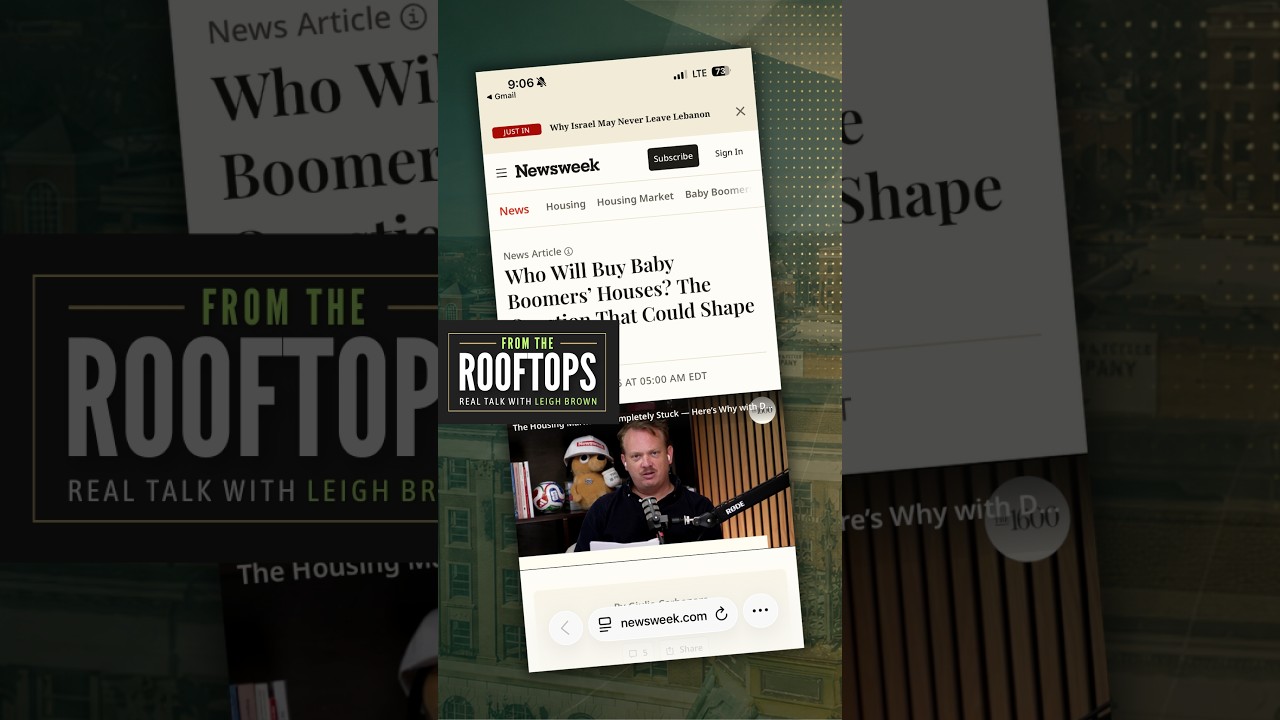
In this commentary, the speaker argues that a major reason many baby boomers are reluctant to sell their long‑held homes is the unchanged capital‑gains exemption for primary residences—$250,000 for single filers and $500,000 for married couples—originally set in the 1990s and never indexed for inflation. Because home values have risen far beyond these thresholds, boomers who have upgraded their houses would face substantial tax bills if they sold. The speaker blames this tax disincentive for contributing to a constrained housing supply, alongside high prices and limited buyers. He calls out lawmakers for failing to adjust the exemption in the 21st Century Road to Housing Act, expresses distrust of government fiscal management, and notes that some owners prefer to stay in the home until death, allowing heirs to receive a stepped‑up basis. The overall message is that policy inertia, not market demand, is a key driver of the housing shortage.
Chapters
think about the baby boomers who do want to sell, there is a reason a lot of them don't sell. And it's not because they don't have a buyer who'd like to buy their bigger, nicer house. It's because of the capital gains rules. So my biggest question for all of our lawmakers who aren't listening to me, because I talk to y'all all the time and you don't seem to listen to me at all, but I keep trying. Why wasn't the capital gains exemption moved in that 21st Century Road to Housing Act? That would have been the most logical place to put it because the current exemption of $250,000 is not taxable on your primary residence for a single person, $500,000 for married filing jointly, and that's the same number that was set in the '90s when this came into being under President Bill Clinton, but it hasn't moved since then. There's been no indexing to inflation, so now we have the situation where a baby boomer who's been in a house for 30 years and they've done some nice upgrades. They added the master, they added the garage, added the upstairs, made it really cute and nice. The values here, their gain is more than $500,000. And maybe they don't want to pay taxes to the government because the government hasn't shown that it's very good at managing money. Let's just be honest. The government doesn't produce anything. They take from us and then do whatever they want to do. So you have baby boomer sellers that say, I'm not trusting y'all with my money. I'm just going to stay here because I don't feel like paying taxes on it. I'll just go on and die, and then my heirs can let the basis reset. So if you want to know why we have a push-pull, maybe it's because we don't have enough buyers. Maybe it's because the houses are too expensive, and maybe it's because the boomers aren't willing to pay crazy capital gains. And maybe all of that is because our elected officials aren't listening to good voices on all sides of a conversation and realizing that there's got to be some reasonable things happening besides just throwing more houses into the marketplace.