Naming expert shares process for creating billion-dollar brands: Vercel, Azure, Windsurf, Sonos
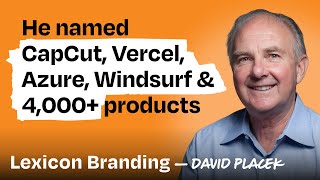
David Plasik, founder of Lexicon Branding, explains how he named Vercel, Azure, Windsurf, and Sonos. He walks through the linguistic research and psychology behind each name, why certain sounds work better than others, and why naming AI products is harder than it used to be.
Your brand name. Nothing's going to be used more often or for longer than that name. Design will change, message will change, products will change, but that name is there.
What's a name that you came up with that you have to fight super hard for that?
The client just hated when we presented Sonos. It was rejected because it's not entertainment. Like we argued about that because I said this is outside looking in. But I don't see you as an entertainment company. Humans do like to be comfortable. Part of our job here is to help people, to give the confidence, going bigger and being uncomfortable.
There's a quote that I found of yours. If your team is comfortable with the name, chances are you don't have the name yet.
We look for polarization. We look for tension in a team arguing about these things. Polarization is a sign of strength in the word. Most clients, they come to a naming project absolutely believing with full confidence that they're going to know it when they see it. And the truth is, it almost never happens.
Most people listening to this, our founders a lot of PMs on product teams. Let's say they have a couple weeks, got to come up with a name. What should they do? Today my guest is David Plasik. David is the founder of Lexicon Branding, which pioneered the field of brand naming and invented a few names that you may have heard of, including PowerBook, Pentium, BlackBerry, Swiffer, the Impossible Burger, also Vercel and Windsurf and Capcut and Azure. In our conversation, David opens up about the very specific process that he and his team go through to find winning names, including a simple exercise that you can do with you and your team to help you find the right name in just a few weeks. We also talk about why a great name is worth spending your time on, why you won't know a great name when you see it, and why you need to feel uncomfortable about the name first. Also, why big team brainstorms don't ever lead to great names. The stories behind names like Pentium and Sonos and Vercel and Windsurf. Also such interesting insights about the feeling and energy of every letter of the Alphabet, and so much more. This episode is designed for anyone trying to figure out a name for their product or company, and also just for anyone that's interested in hearing the stories of how some of the most iconic names came to be. If you enjoy this podcast, don't forget to subscribe and follow it in your favorite podcasting app or YouTube. And if you become a paid subscriber of my newsletter, you get a year free of a bunch of amazing products including Bolt, Linear, Superhuman, Notion, Perplexity, Granola and more. Check it out at lenny'snewsletter.com and click bundle. With that I bring you David Plasic. This episode is brought to you by work OS. If you're building a SaaS app, at some point your customers will start asking for enterprise features like SAML authentication and skim provisioning. That's where WorkOS comes in, making it fast and painless to add enterprise features to your app. Their APIs are easy to understand so that you can ship quickly and get back to building other features. Today, hundreds of companies are already powered by WorkOS, including ones you probably know like Vercel, Webflow and Loom. WorkOS also recently acquired Warrant, the fine grain authorization service. Warrant's product is based on a groundbreaking authorization system called Zanzibar, which was originally designed for Google to power Google Docs and YouTube. This enables fast authorization checks at enormous scale while maintaining a flexible model that can be adapted to even the most complex use cases. If you're currently looking to build role based access control or other enterprise features like single sign on SCIM or user management, you should consider WorkOS. It's a drop in replacement for Auth0 and supports up to 1 million monthly active users for free. Check it out at workos.com to learn more. That's workos.com Last year, 1.3% of the global GDP flowed through Stripe. That's over $1.4 trillion. And driving that huge number are the millions of businesses growing more rapidly with Stripe. For industry leaders like Forbes, Atlassian, OpenAI and Toyota, Stripe isn't just financial software. It's a powerful partner that simplifies how they move money, making it as seamless and borderless as the Internet itself. For example, Hertz boosted its online payment authorization rates by 4% after migrating to Stripe. And imagine seeing a 23% lift in revenue like Forbes did just six months after switching to Stripe for subscription management. Stripe has been leveraging AI for the last decade to make its product better. A growing revenue for all businesses, from smarter checkouts to fraud prevention and beyond. Join the ranks of over half of the Fortune 100 companies that trust Stripe to drive change. Learn more@swepe.com David, thank you so much for being here and welcome to the podcast.
Well, thank you. I'm excited about today and looking forward to the conversation.
Me too. These are actually my favorite kinds of conversations because this topic is so outside of my wheelhouse and I know I'm just going to learn a ton also. This is just something that every founder and product builder has to think about at some point and they have no idea what they're doing. And then their name becomes so core to their identity. It's really the word they say more than any other word. And I feel like I've never heard advice on how to do this well. So I'm really excited for this conversation. I'm going to just dive into a question, and the question is just what's a name that you came up with and your team came up with that you have to fight super hard for that the client just hated and you ended up winning and now is just such an obviously awesome name that everyone loves.
The story I like to tell is a story of Sonos One a great client team. I worked with all the founders, but at. At the time, they were stuck on being in a. A brand name that put them in the entertainment business. And so when we presented Sonos, which has many qualities to it, they. It was rejected because it, it doesn't have enough sort of emotion to it. It's not entertainment like. And, you know, we argued about that because I said, I don't. This is outside looking in. But I don't see you as an entertainment company. You. You make speakers that allow for the flow of entertainment through these things. And Sonos is about sound, but it had a particular quality. It's. It's called a palindrome.
Right.
So which really means that you can flip it. And, and it means the same thing in the case of Sonos. You could all also turn it upside down. And it was essentially the same. Right. And so I. That got them thinking about this, but they were still has. So I left that meeting there in Santa Barbara and I came back and they were still struggling with it. And I went. I got on a plane, didn't even bill them for this. Went back down to Santa Barbara and met with them again and said, I really believe in this name and I think it's the right for you. And at a certain point, one of the founders, you know, Bob McFarland, who's just a wonderful client, I could see him thinking, and he said, you know, we're trying to name this for ourselves and what we really should be doing is naming it for the marketplace and the customers. And, you know, I think Sonos now is the right name and that. And I felt really good about that. And he later wrote me a note about, about how I help to do that. And we. And we use it sometimes in credentials presentations because it's such a nice note. But, but Sonos is something I'm so, I'm so glad that I had this internal energy to. I got to go down there and make a bid for this. I don't, I don't do that often, by the way, but I felt very strongly about Sonos.
I love Sonos. I love the name. I have many Sonos products. How often does this happen where the client is just, no, this is not the name. We have this bigger vision. We have a whole other idea of it. And then you convince them, well, it.
Happens all the time. And it's a little bit bi directional, right? We, you know, there's most clients, and I can understand this, right, they, they come to a naming project absolutely believing with full confidence that they're going to know it when they see it. And the truth is it almost never happens. I have now, I think this year we'll hit 4,000 projects that we've completed. And it's interesting, you know, we'll tell people in a very polite way, you're not going to know it when you see it, but, but I know they don't believe me. And even when you could see them thinking that, you know what, he was right. I really have to think about this. I have to process it. And part of that, part of why clients don't like the bolder names, the more imaginative names that we present is they are looking for comfort. And that's the opposite that what you want to do. And part of our, our, our job here is to help people to give the confidence that going bolder and bigger is. And, and being uncomfortable. There's, I use the expression, there is no power in comfort, not in the marketplace.
Wow, there's so much here already. Okay, so this idea of you're not gonna know it when you see it is something that people come in with thinking, like, once I see it, it'll be obvious just why. Why is that never, almost never the case? Is it because the name has to be something that is uncomfortable?
There's a lot of psychology to this, which ironically I, I never even took a psychology class in, in college or graduate school. But the first element is humans do like to be comfortable. And one of the mechanisms of comfort is if something's been successful before, then I feel like I can approve it or select it. This is why, you know, movies like Harry Potter or even novels like Jack London's Call of the Wild get rejected so many times. I think Harry potter was rejected 16 or 18 times. And Jack London's a book. Even more than that. I mean, think about it. He's. He's pitching a book and they say, what are you talking about here? You're saying a dog becomes a wolf. I, I've never heard of anything like that. So, so we really do have to help people think about. It's not about the past. You're actually creating the future. And we really talk to people and emphasize the idea this, this isn't a name. You're creating that. This, we're creating the experience for you. We're going to work together. And we really, our conversations always start with, talk to us about how you behave now and how you want to behave in the future, as opposed to, tell me about your positioning, tell me about your values, tell me about your mission. That's really kind of old things thinking. It's very traditional. And that did work, you know, 25 or 30 years ago. But this is a far more complex, interconnected world, a digital world. Now that, that, that stuff just doesn't create, it doesn't create names like Sonos or, you know, some of our other credentials that we probably will talk about today.
Yeah, we're going to talk about just the process you guys go through, so stay tuned for that. But before we get to that, is there another story you can share that kind of shows this idea of being bold?
I'll talk about Microsoft's Azure. So when Microsoft came to us, they were pretty much stuck. And Marcus Roth does, and in many ways, to their credit, a lot of things don't need to be named. They don't need trademarks, they don't need brand names. They need scriptures. And so they came to us to develop a name that started or ended with cloud. Made sense to them because it was a cloud service. And our reaction was, if you do that, you're going to be in an ocean of other cloud, this, cloud that, and you have an opportunity as Microsoft here to really emerge as a leader in this. And so, you know, there was a discussion about, okay, we'll, we'll take a look at those, but we'd like to see some cloud, some cloud names. Okay. Which is easy to do, by the way.
Okay.
And so we did that. And we, along the way, we, we, we came up with this word Azure, which is, you know, another word for blue. And so there was a link to clouds, blue sky, clouds, things like that. And, but, but we really presented it based on its linguistic qualities. It's, it's a noisy word that, that Z in There starts with an A, you know, and it ends in a nice smooth flow. So we, we really strive to do create names that are balanced and in a very busy competitive world, having some, a strong signal which is generated by noise is a good thing. The reaction wasn't, wasn't good. You know, one of the clients said that's just a dumb idea. And I, you know, we, this remarks like that at this point, after these four decades, it sort of rolls off my, my back like water off a duck, is what my grandmother would say. But, but I think along the way, um, as we talked about it, they began to warm up to this. And now of course it's, I don't know, a hundred billion dollar brand or, or something like that. But that's an example of. I haven't seen that before. I'm very comfortable with cloud. Cloud is what it is. That's, that's the, you know, we're describing it, but that's a statement. And I think that, Well, I don't think, I know that's what I said in one of the presentations is you don't want to make a statement here. Here you want to start a story, right? And Azure is going to behave differently in the marketplace than Cloud Pro, which is I think one of the names that we presented to them on the other site at their request.
I'm glad they went with Azure. Let me actually ask this question. I know you're biased, but just how important is a great name? Like if you had a better name than a product that was better than you, does that make a big difference? Just anything you can share there to help people see this is the power of a great name.
Let's look just at the, at the reality of this, your brand name, whether it's product name or company name, nothing's going to be used more often or for longer than that name. Design will change, Messing will change, products will change, right? But that name is there. So I like to talk about this idea of cumulative advantage, right? Over time, as people buy more and more of the product, they see it more often. They, that their bond between you and that brand or them in the brand, I should say, becomes stronger and stronger. So you want that name to stick in their mind to be distinctive because distinctiveness is what creates that cumulative advantage. The second thing is this notion of what I call asymmetric advantage. It makes perfect sense. And most people, most clients agree with this. When we, when we say this is that even before you launch this brand, why not start with an advantage in the marketplace? And you won't get an advantage if you're descriptive. If you are cloud Pro and there's 10 other cloud services, you're not going to stand out in the marketplace. You won't have the ability to create that, necessarily, that cumulative advantage in the marketplace. So, so those are, those are my two reasons why names are, I think, you know, done right. And we, we do, we do talk about. Our mission is not creating good names. A lot of people can do that. Our mission is to create the right name for, for clients. And, and because the right name does deliver asymmetric advantage and cumulative advantage for you, and that for us has almost unlimited value.
This is a great answer. Essentially what you're saying is it's not going to like, necessarily make or break you, but it gives you an advantage. A great name gives you an advantage, especially if you're just getting started the like, you need every advantage you can get.
Exactly. And this is maybe a little bit off, off a tangent, but one of the best books on marketing I've ever read, which is not a book on marketing. It's. And you may have read it along the way in, in college if you studied any Greek or, you know, classics. It's called the Million Dialogues. And it's a dialogue. It's will take anybody listening to this maybe 25 minutes to read it. Between the Athenians and the government of Milos. And the Athenians had decided that they needed that island and they went and approached them very nice way, but that we want to take over the island. Nothing will change. You'll be taxed a little bit, but we'll protect you. And the Athenians had thought every aspect about how to take that island before. So they, by the time they got there, they had created asymmetric advantage in terms of ships and men and all this other stuff. And it's just by the way, in the book, there's no mention of marketing or brand strategy or any of these things. But if you read it, you begin to see that it's marketing really is about asymmetric advantage. And so why not start from the very beginning with, with an advantage. That's the value of an A.
Let's dive into the actual process you guys go through. And I want to read a, a quote that Guillermo Rauch shared when I asked him about what it was like working with you. He's the CEO and co founder of Vercel, which he has worked with. I definitely want to hear that story, by the way. So he said, before David, the ability to name something was like Charisma. You either have it or you don't. It was so surreal to watch his team distill it down to a science. So let me just ask you, what does that science look like? What are the steps to coming up with an amazing name for your product or company that you guys go through?
That's very nice of Guillermo. He is a very impressive innovator in this category and we greatly enjoyed working, working with him. Well, our process is real. I break it down in three steps. If first we have to identify, then we invent and then we implement. So it's just three things. It's not, it's not rocket science, but it does. It's a combination of creativity and discipline. Right. And obviously talented people and experience in these things. So let's just kind of go through those things in, in the first section of Identify. It's really trying to find out from, from the client. Let's talk about behavior. Right, so how do you, how are you behaving now and how do you want to behave in the future? Right. That behavior is bi directional. In other words, the marketplace behaves towards a vercel. As you know, that's the name we created for Guillermo. And they behave towards the marketplace. And, and that's an important point because everything, you know, buildings are bidirectional and you know, the look at a building, you behave differently towards a temple than you or a church versus, you know, a Holiday Inn in terms of how that architecture states. So we focus on. That behavior is closely aligned for us with experience. How do you want this brand to. The experience of this brand. Now when we listen to those things, we, we begin to think about, you know, rhythm of the, of the name. So something like Dasani has a lot of rhythm to it, right. It's kind of calming, right. And, and so we'll begin to extract things from that discussion on experience. We will then also, as part of this first phase, look at the competition. We call that developing a landscape. And we're looking for what are the words, you know, the. What are the brand names first and then what language are they using in this space? So, so because we want to be, we have to be distinctive. If a brand name isn't distinctive, you lose, right? Then you're imitating and that's a form of suicide, I think. You know, that's a famous quote from some, I think the president of PNG, you know, 50 years ago or something like that. So, so the, that's that first phase which allows us to create what we call a creative Framework. And we don't even use the word objectives here because that gets too logical. We, we actually framework for us is a metaphor for a window for us and our teams and our linguists to travel through, to kind of open things up so that we're not coming back with a narrow list of names. We're coming back with names that have depth and breadth and have different experiences and personalities to them. And clients will sign off on that. And then we get going this. So now we're moved to the invent stage. And in the invent stage, we do really two things. You can look at this as, you know, two layers of our process. And I think the second layer is probably what makes us quite unique in the marketplace. And it's the result of millions of dollars of, of R D on our part. So the first thing is no surprise to anyone. We, we work with, you know, creative individuals and we don't use this, this will be contrarian. We don't use large brainstorming sessions. I did when I first started the company. I used freelancers. I use brains, bards, brainstorming groups. And along the way, through some analysis, we really discovered that that was not really working for us, that actually the names were coming from employees and from small groups. And so we've moved our process to at least two or three small teams of two people and each of those teams. So let's say we, you know, on, on significant projects, we always use three teams and each team gets a different briefing. One team knows everything about the project, but the other teams don't. We'll replace if we're working for Microsoft. The second team thinks they're working for Apple. I mean, they know it's disguised. We're not keeping this from anyone. And then the third team, we take it out of computers and, you know, they might be naming a bicycle or a car or something like that. What we're trying to do is open up the coffers of creativity for this. And so when people are working on what they know is not the real assignment, they are now free to make all kinds of mistakes. And so most of our names have come out of the second or third team because they're. Yeah, I think the process. At some point I will hopefully write a. Either a good article on this or maybe even a book. But this process would work for, I think, a lot of things. I know, I know. It works. It. All right. Now, what's that second layer that I talked about? Well, we have made significant investments in this area of linguistics and cognitive science. And it's in two ways. One, building proprietary knowledge. So we know through and through research that we funded an extensive amount about an area in language called, or linguistics called sound symbolism. So what are the Sounds of the 26 letters of the Alphabet and what do they do? How do they evoke things? Well, it turns out that, that, that each of those letters sends out a signal that, that creates a certain sort of vibration, if you will, or, or experience. Now there's been research on that over the years, but there was some gaps and we decided to, to fill this. And we, you know, over the years, we've got a very good relationship with Stanford University, with their Department of Linguistics, with, you know, we, we've hired linguists from mit, from Berkeley. We have a linguistic internship here. I actually just ran this number preparing for, for, for this discussion. We have employed over four decades now, 253 linguists, most of them PhDs, some of them contracts, some of them actual employees. Well, that's a lot of intellectual knowledge. So we, we really have what I call an, a linguistic engine here. And then we now have an operating network of. I, I just checked on this figure yesterday. We have 108 linguists in 76 countries that help us. Some of them do creative work, others will do just the analysis of, of names for, for us. So now we have that creative framework. We have creative teams working on this. Now we're tapping into databases that have, you know, over 18,000 small word units, technically called morphemes. And so we also can tap in from a sound standpoint, you know, what are, what are the, what are the sounds of reliability? What are the sounds of aliveness? And so with Sonos, by the way, we wanted, you know, things that are somewhat noisy, right? And so S is a noisy letter like, like a Z or even a V. And so you begin to set priorities about what letters we're going to use. And that work from that, we call it, you know, an engineering layer, sort of floats up into the creative teams. And so it's a mixture of things at a certain point in time. All right, now what happens to all that? At a certain point, usually three to four weeks into this, we might have two or three thousand ideas. I say ideas because they're not all solutions. They're not all workable. They may be just beginning ideas, concepts, and we sift through those. And now one of the major challenges that we face, and certainly our clients face, is the need to clear a trademark for it to be not in conflict with a marketplace that is, you we're almost reaching a tipping point in terms of difficulty of clearing names here. And so we have paralegals here and we have a trademark attorney and we'll analyze those names. That gets us to a small, much smaller set. And then we'll do our linguistic work with our linguists and, and we end up with a set of names to show our clients. We'll do this twice with our, with most assignments, sometimes we'll do just one time, depending on timing and budget. But we really try to get two cycles here, partly because humans love to compare. Right. Well, you don't. If you're looking for a house, you don't just look at the first house, say, okay, let's sign us up. You, you, you look and you learn that we, we don't need a swimming pool, but we do need a view. It's the same with names. And so we get feedback from our clients. And sometimes that's a co creative process where a client will come up with a word or a solution and we'll then run that through our screening mechanisms for them and that's really the process. And the final phase is implementing.
Let's actually pause at that because I have so much I want to talk about with this second step. But we'll get to step three. The, uh, there's just, this is just blowing my mind. All the things you guys do here. This is incredible. There's so many things here that are so unlike what I expected. First of all, the creative folks that are actually coming up with these names. What are, what's kind of like the background of these people. Who are these, who are these people? Yeah.
So the fundamental quality is they're going to be curious and they're going to be hardworking. This is, and hopefully. And this is hard to screen for, but you know, lower egos. This is unlike the advertising business, which I came from. Right. So I have six years at. In a large agency where a creative person or a copywriter can think about something and come in with three or four alternatives. Right. In terms of a headline or body copy and that might be refined a little bit and maybe sent back to the drawing boards altogether. But it's a relatively simple process. Right. And no, no disrespect intended there here. I can't just sit down and say, okay, well we're, you know, we're naming a new car here. And so I'm gonna, I'm gonna generate a hundred names and, and you generate 100 names and something will fall out that, that just, that won't those names will not. There's not enough in that list to clear through our screens of legal screens or linguistic screens. And remember, we start with a creative framework and criteria that the names need to meet. So we're looking for people who can churn out a lot of work and when that's rejected, they just keep going. So we look for tenacious people. Right now we have, and we'll probably get to this later, we have software here that helps people generate names. Not really. Maybe five years down the road it'll actually spit out solutions but now it's helping us to generate ideas and directions and what I, you know, you know, sound symbolism, ideas, word unit prefixes, suffixes, things like that. So, so it's relatively easy for anyone that works here to develop a list of two or three hundred names over a three or four day period. Where do we find these people more who are writers from you know, newspaper reporters because they have to work fast, their stories get rejected, people who might have written a novel. We have hired people from agencies over, over the years. They work a little less effectively than others who have a speechwriter from, you know, I wrote speeches in Washington D.C. those people have to work hard, crank out a lot of material, get rejected. Candidate says I don't like this, start over. Those are more resilient people. That's where they come. It's not, it's not easy to find these people. It really, it really isn't.
Let me just throw out here, I'm going to ask you after we go through this process what people that don't have the resources and time to do this, what they should do to come up with a good name. I'm just going to let people know as they're listening because I imagine many people are wondering, but let's not go there yet. Okay. How long does this process usually take? What's like the ideal length that company should expect when they want to come up with an amazing name?
For us the ideal link is pretty short. It's eight weeks for larger corporate projects where you have boards and a little more politicking to do and a little, few more presentations. It's a, it's a three month turn and sometimes by the time they approve things and, and clear it, it's a four month process.
Okay, cool. So eight weeks mostly if you're a big company with a lot of red tape, you have to work through then longer. Okay. This point you made about three different teams with different in almost context is so interesting. So say let's use Windsurf as an example, which is an amazing name, killing it that you guys helped come up with. So is the idea there. Okay, here's. We're naming this ide. AI Ide. One of the teams is told, no, you're building a bicycle. But here's all the. Here's all the same brief, but it's a bicycle. And then another team's bill, you're building a, I don't know, lap. Like, I don't know, something non technical, essentially.
Right? Yes.
Like a cup. Say more about that. That is amazing because. And you're finding that most of the best names come from the groups that aren't. Let's name an amazing AI id.
This is a good example. So. So in technology, there. There are some things that, that, you know, someone hands you a new phone and you look at it, it's tangible and it's got a shape and color. Things like that, easier to name. But. But, you know, the, the name of Windsor, before it was Windsurf was codium. Right. And so, so it's all about a type of code or a process for coding that's intangible. And even though we do an awful lot of technology work, it is still hard for us to kind of really get a hold of what that is. Right.
So.
So our rule here is if there's something that is intangible like that, we have to make it tangible. And sometimes we do that not by. Not by giving a team, and sometimes it's an individual the assignment to create ideas for the brand itself, but to just dive into a particular context. And in this case with Windsurf, it was this. This is about sort of flow, about giving people that are coding something much more of a flow process, you know, a smoother process, more dynamic process. So in that case, one team was just given the task of. We want to look at a list of all the things that can communicate either in a real word like flow or metaphorically or in a sport about that kind of dynamics, that kind of movement. And there was wind surface sitting on a list. I mean, it's. Sometimes this is just. It really just that simple. Of course, you have to have the right framework and you have to give the right sort of directions to someone. And you windserve for us, particularly for me, you know, it checks all the boxes. It's. It's a wonderful image. It's an experience, literally a physical experience. It's a compound, right? Two words put together. We know from the research we've invested in that compounds like PowerBook or Facebook are multipliers of associations because there's wind, there's circles around that, and then there's surf images around that. So one plus one equals three. Right. It's interesting that when we present compounds to clients, we often get the comment, well, it's a little bit long and it's a compound. I'd rather have a shorter single word. And then that's why we actually did research on just how effective our compounds, so we, we could pass that information along. We passed that along to the, the team at, at that time. Codium, by the way, could not have been a, you know, more intelligent, nicer, more respectful team that we've, we've worked with. I'm, I'm so glad for, for their success. But we explained to them about the multiplier effect of compounds. We showed them imagery that they could use. Right? I mean, it's simple to execute on something like that. And so that's how that, that's how that came about. I, I'll stop there and, and see if you need more information or not.
Let me actually follow this thread real quick. It's going to be kind of a tangent. You guys have been working with AI companies more and more recently, which is so interesting is what's, what's different about naming AI products from traditional products, not AI.
I guess first off, we are working mostly with engineers and engineers who haven't, you know, delved into the world of kind of creativity and necessarily marketing. And that's their strength. And what we have to do is we have to sort of balance their strength with our strength. So there's a little bit of a challenge there. But I think we, we, we deal pretty well with that. Secondly, this is the fastest moving, progressing category I have ever experienced. And, and I, I have that perspective, right? I, I, I went through the early days of, of the Internet, right, And, and, and the World Wide Web, and that was moving pretty fast. But the Internet compared to this looks like a, a daycare school or something like that. I mean, so, so we're, we're challenged by just keeping up with, with developments.
Right?
Third thing, and this is the creative challenge here, is that engineers come to us wanting more sophisticated names, right? Where they, you're likely to end up with another Codium or an Anderil or an Anthropic. And we, when, when we saw this trend of that AI is going to take off and, and it was an intuitive feeling on my part. I just, you know, I could have been wrong. I said, let's, let's find out what's going on here? So, so both not only like, who's developing the products, but how do people think about AI? And we did a series of research. You know, I probably invested $20,000 or so, and we interviewed consumers in Europe, South Korea, just picked out one country in Asia and in America, and developers in those three. And they really have different views. Developers are all totally positive on it. Okay. They see the future, they see a big future. Not too concerned. Some are, but most aren't. Consumers are skeptical, worried about it, worried about their jobs, see the hope in it, those types of things, but haven't got the handle it. So Codium is an example where we said we think what you're doing needs to be much more tangible and something that people can grab onto and much more natural as opposed to a Codium. And they listen to us, as simple as that. And, and, and in this case, we were right. And by the way, there's also, I have to say there's some luck to this. Windsurf happened to be available and they saw it right away. Not exactly right away, but it took about a week going back and forth to select it. So let me stop there and see if that answers your question.
Absolutely. And it feels like most AI companies end up having a different name for their product than their company. I've noticed this funny trend cursor was any Sphere Bold with Stack, Stack Blitz, Windsurf with Codium. Basically everyone. When does it make sense to change your name? Windsurf just officially changed their entire company name to Windsurf from Codium. It was just a product. So let me just ask you that. When does it make sense? Feels like a huge deal and a very challenging thing to do.
It is challenging. And the larger you are and the more customer base you have, it becomes, you know, a significant project. So the first thing is you have to, you have to make an argument that it's worth the change, right? That, that we're going to be better off by changing our name. So there's, there's a couple situations where you want to, you want to change your name. First one is let's, let's focus first on startups. Startups get going early that, you know, they get into Y Combinator or something like that, they're raising money and they just need a name. And although they know what they're doing and that may change by 10 or 15 degrees, it's almost like we just got to have a name. I mean, and, and that is the absolute expression I hear from when, when a Startup calls and says, we want to change your name. You know, we started off a year and a half ago. We just needed a name for the documents, and so we chose X.
Right.
And it's not a very good name. So that's, that's example number one. Number two is the company actually has, you know, pivoted. Right. And so the name that they have no longer really reflects who they are or who they're becoming and which makes that name ineffective. And the third is that a company has merged and it's time now to create a new start and reflect to the marketplace that we're new now, maybe bigger, but certainly we have more capabilities and we want you to know about it. And because of that, we're changing our name to blank, which reflects those capabilities at some level.
I'm excited to have Andrew Luo joining us today. Andrew is CEO of One Schema, one of our longtime podcast sponsors. Welcome, Andrew.
Thanks for having me, Lenny. Great to be here.
So what is new with One Schema? I know that you work with some of my favorite companies like Ramp and Vanta and Watershed. I heard you guys launched a new data intake product that automates the hours of manual work that teams spent importing and mapping and integrating CSV and Excel files.
Yes. So we just launched the 2.0 of 1 schema file feedback. We've rebuilt it from the ground up with AI. We saw so many customers coming to us with teams of data engineers that struggled with the manual work required to clean messy spreadsheets file feeds. 2.0 allows non technical teams to automate the process of transforming CSV and Excel files with just a simple prompt. We support all of the trickiest file integrations, SFTP, S3 and even email.
I can tell you that if my team had to build integration log like this, how nice would it be to take this off our roadmap and instead use something like One Schema?
Absolutely, Lenny. We've heard so many horror stories of outages from even just a single bad record in transactions, employee files, purchase orders, you name it. Debugging these issues is often like finding a needle in a haystack. One Schema stops any bad data from entering your system and automatically validates your files, generating error reports with the exact issues in all bad files.
I know that importing incorrect data can cause all kinds of pain for your customers and quickly lose their trust. Andrew, thank you so much for joining me. If you want to learn more, head on over to OneSchema co. That's OneSchema co. I want to Come back to this linguist piece, which I know is really unique to the way you guys operate and it's so interesting. So you employed, you've said over 250 linguists over the course of your business career. This linguist step, the way you described it is they're not coming up with names. They're more kind of like a filter for, here's all the names we've come up with. Here's the ones that are good linguistically. Is that right? Or is that team also suggesting names?
Yeah, some of the people there, particular depending on the assignment, will actually help us create names for.
For sure.
Right. And so we have linguists here and then we have, in the network, we have linguists, and, and those linguists are contracts to, to us, not full time employees. So. So there's a little bit of both. But the preponderance of their work in our linguistic network is to evaluate names. Not only just is it, does it mean something negative or positive, but are there cultural implications to it, political implications, or even things that a natural disaster that would have happened somewhere that, that, you know, no one here would know about even if we had, if we, this was in Italy and there was a, you know, a bridge or a flood that killed a lot of people, someone that speaks Italian very well here, say at Berkeley University, but has lived here for 20 years, wouldn't know about that. And we, and we, we don't, we don't want anything linguistically that would slow our clients down. And so that's why we've invested in building this network. We have a woman that runs the network for it. So it's not an insignificant facet of our business that we have to run and manage.
Is there a name you love that didn't pass the linguistic filter that ended up being like, oh, that's a really bad name in this culture?
Well, it, it happens frequently where we will find something that, that isn't really terrible, but it's, it's worrisome to us. It's interesting. You know, cultures like Australian or in people in Australia, they have a lot of interesting expressions. Right. And so we do find things that, you know, this sounds like it's a certain kind of, you know, shrimp and things like that. And we eliminate those things and then we find things that have sort of sexual connotations. We eliminate those. I would say it happens, you know, every third or fourth project we will find something that we will eliminate and.
Never show the client and something you love. You're like, okay, I guess we can show that One that's true.
That happens. It does, it does.
You also said this really interesting thing about how every letter of the Alphabet has a vibrance and an experience. Can you give a few examples of that? I know you're not the person doing that work specifically, but just what are some letter feelings?
Well, yeah, I, I, the, the work is from the linguist, but at this point I'm, I'm pretty adept in it. So let, you know, let's look at, I'll start with the letter V because it, it is, it is so illustrative of, of what this is about. V, from our research that we've done, is the most alive and vibrant sound in the English Alphabet. And, and that's whether you were, you were born in Rome or in, you know, Sausalito, California. So if you know that, if, if you know that as you go around the world there are going to be some exceptions to it, it's going to have that vibrancy. So look at Corvette. I mean that they probably didn't know about V, but it's a perfect name for a car that's fast and has a, you know, big engine that roars. Think about Viagra. Same idea. And there's been surprises to us. B, the, the sound of the letter B is, is one of the most reliable sounds in the English Alphabet. That was one of our rationales, by the way, for BlackBerry. Right.
We be.
Because that's another example of a client who thought we were, I mean the, the founder actually said, I, I, I thought the people at Lexicon were crazy when they presented BlackBerry. And we said, well, let's, let's stop and look at some of the assets here. First off, you know, black colors, technology.
Yes.
Not everybody knows the word berry, but we have those two Bs. We talked about the nature of a compound and all of a sudden people at least lean forward to consider it as opposed to rejecting it too fast. So, so those are just two examples I mentioned Z, that in Azure, that's noisy. Letter X is fast and crisp as a sound. And of course there's semantic value to all these letters too. X is about innovation from, from aircraft to computers. And so you have to look at the semantics of it and the sound symbol of it.
This is so fascinating. I could listen to this stuff all day just thinking about Vercel with the V, but very aligns with what they're trying to do. Just like very strong, opinionated.
Yes.
Way of working. And Guillermo, he feels like a V, a V person.
He is. And there's an example of a group that had a lot of confidence. Right. And, and what the product is, is very innovative. And so what we had permission there to create something new because Vercel is a coin solution. Right. But notice that we put some very simple, easy to process things together there or ver. Ver. You know, in this case. So we have, you know, envino veritas. Right. Truth and wine, things like that. You have verde green. So, so very familiar. And then there's cell like accelerate something which is really what they do. They accelerate a client's performance.
Performance.
So that was a relatively easy name for us to present and for them, we were excited about and for them to sort of grasp. By the way, that's, that's known as processing fluency. Which is when you, when you think about how the brain processes information. We're told by a number of cognitive science that our brains are a little bit on the lazy side. We, we, we don't like complex things. And, and so we really strive to make all of our solutions relatively easy for so, so for the brain to process. So, so it wants, it leans in towards them as opposed to. I'm too busy, I'm. I'm walking past that. And so names that are complicated are. It's a liability and we really avoid that. But Vercel perfect fluency.
Okay, let's go back actually to the three steps. So we covered two. I went. It took us on a long tangent to dive into a lot of the stuff you shared with the second step, which you call invent. So it's essentially the three steps are. Was it create which.
Yeah, it's identify, identify and I use the word inventory with intention because it's more than creative. Right. And then the final thing is implement. Now for us, we're not a design firm, we're really focused on brand names and the nomenclature that supports the name. But so for us, Implement is helping the client team if they choose for us to help them with the presentations as it goes up the chain. Right, right. As it. To help them sort of write a longer rationale for why this. These names. If they're presenting three names to the president of their company or the cmo. Why these names make a lot of sense and to help them develop what we call prototypes. So we'll put the name on a baseball cap, on a T shirt. We'll put the name in a mock up ad in the Wall Street Journal. Something's very positive like because of, you know, because of Procter and Gamble's new blank product. P and G shares, you know, gained 10% this year. So that executives can see the, the lift that that name can have. That's our implementation phase for, for them. And we also do consumer research or customer research at that stage. And we do that probably about 50% of the time on our, on our projects where we're going out and we're really talking to their customers and, and putting the names in a series of drills, drills that make them not the marketing person for the day. But we're really, we're really making these customers feel that this is a new brand. And then we're asking about expectations, right? We're seeing how these names fire their imagination. And that's the most important thing in research. Not, is the name popular? Are they comfortable with it? Does it fit to concept? If you're asking people, is this fit to concept, you are inevitably always going to get a descriptive name.
You make such a good point about how you need to arm the people working with you with ammo to win over other folks internally. Because if the person working with you is on board, then, and the name is bold and not an obvious winner, I could see it being important to be like, here's what you should show them to help them see the story and the mockups and all that.
Yes. And what's really important is to help their management see this in the context of the marketplace and their customers. This is a very human thing. But people want their boss to be happy. Right. They want to be okay with their boss. And, and so they're thinking about, I don't know if my boss would like this. You know, he's more conservative or she's more conservative. We try, in a, you know, very diplomatic way to say, this has nothing really, in the end to do with your boss. It has to do with the marketplace. Well, you know, that's easy for me to say because I'm not working at a PNG or an Intel. Right. But we really try to give that advice for, because it is about being successful in the marketplace place. Right? And so we, first of all, we try to separate the clients that we work with. We, we really want to work with clients that play to win that, that want to win that, not. Not just want to not lose in a marketplace. And so we try to encourage our direct clients to sort of lead the process to, to really say, hey, I. If, if a manager or a CMO or a president says, look, we're the team that's going to execute on this and we believe in this, we can make this work, they usually rally around it, right? They usually do. But if you're just taking names up to a manager and saying, what do you think? There's a different outcome offered. So we like to be in that implementation base because we have so much experience and, and usually credibility with, with people.
And you said that you come up with three to 4,000 names. That's the top of the.
Well, yeah. And just to be, you know, clarify that it's, it's ideas, directions, it's, it's not complete.
Ready to ship names.
Yeah, not ready to ship names at all. Yeah, it's, there's a, this is a very inefficient process and a little chaotic. So in that list of 3,000 names is probably 250 potential diamonds that have to be sort of, you know, fractured and examined.
I, I really want to see just like a documentary of this process at some point. This is the closest we're going to get for now. But this is so interesting. I want to ask about how you would approach this if you're just a startup that doesn't have the time or research to do this. But before I do that, is there anything else around the process that you guys go through with clients that you think is important to share or where they think might surprise people?
I think we've covered it. I do.
Okay, great. Awesome. Okay, so most people listening to this are, there's a lot of founders, a lot of PMs on product teams, they're working on a new feature, they're about to launch a product. They got accepted into YC and they're about to like launch a product. Then they have, I don't know, let's say they have a couple weeks, got to come up with a name. What should they do?
So the first thing I do is to say, okay, let's forget about developing the name for right now and I will have them. And I think this is a good exercise for anybody. We do it here internally when we think about our, our business. As I say, just because most of us now because of COVID is on video and I'll say just draw a shape of a diamond on a piece of paper in front of you. And I said on the top of that diamond put the word win. Right? You know, how do you define winning is really it? I said, now on that other next corner of the diamond, what do you have to win? Write that down on the bottom. What do you need to win? And then on that final angle on the left hand side, what do you have to Say to win. Okay. Then I said, yeah, let's go all the way to that final thing of what do you have to say to win? And that's where you just get people thinking about, well, you know, what we really have here is and we're better than this. And, and then I'll just say, okay, now what you want to take that because this is really should be about experience and behavior. How do you want to behave in the marketplace? And how do you want the marketplace to behave towards you? And what kind of experience are you creating? Because, and then they'll start, you know, talking a little bit. I'll say now you just need to probe on that. You need to keep going. You need to look at metaphors because this is about experience. And I'll just give them some of our examples that we've talked about. When you have BlackBerry says to the marketplace, they're not like the other guys. I mean, think of something like Google versus Infoseek, right? Google is an experience. Google says, I don't know what these guys are going to do, but it's not this practical, mundane info seek, right? And that's what attracts people. And so I'll do a little coaching like that. And, and then I, that, that usually kind of sets them free. And they're now thinking about it not as a word which has maybe limited value, but as creating an experience which has the potential for unlimited value.
Okay, so let me try to reflect this back for folks. So they, so the advice is create, Draw a triangle. So you're coming up with a name. Draw a triangle. At the top win. Yes. At the bottom left. Was it how do you win?
Yeah, what, what you. So, so the diamond is, you know.
Oh, diamond.
Okay, I see two triangles.
Okay, got a diamond. Great.
And so on that next angle there on the, the right side is what do you have to win already? Right? Because they, they wouldn't be, you know, either in a Y combinator or getting some seed money if they didn't have something to win. Right? And so, and that's, and, and often people, startups don't appreciate how much they actually do have to win because they're so busy and so stressed on, on what they're doing. And then what, what do they need to win? And then finally what do you need to say? And, and, and, and then by the way, if we, you know, we start with that question usually on a assignment that we've been awarded and if we're in a room with five people, all five people have a different, you know, Definition of what? Their definition of that company winning. And that's good to kind of sort that out because we can move down different, different avenues from a creative standpoint.
Okay, let's just make sure people have these phrases because this is awesome. And I imagine many people are going to be taking notes and like, cool, I'm going to do this.
I hope so.
Say the four points of the diamond again just so folks can write it all down.
At the top of the diamond is just the word win. And underneath that is how do we define winning for us as a company? Right. And that, that can start off being simple. Like know we want to be the dominant player here, but you really have to work at that. What does that really mean?
Right.
The second on that right hand tip there of the diamond is what do we have to win? What are we doing now that makes us a winner? Then we go down to the final, the bottom of the diamond and it's what do we need to win? There could be technical things there. You people talk about talent and resources often there they'll say, you know, we need a good name. We always correct that it's not the good name, it's the right name. And then finally is what do we need to say? And that's where I say that's where you want to spend some time in really thinking about all the things you need to say that you can say or you would even like to say, which maybe right now you can't say. But you want a name that actually is going to have the flexibility as to what when you can say that it still works and that gets them into behavior and experience. And that usually launches a really good, a good discussion with founders internally.
And so in the context when you say have to win, the what you're thinking about there is what is it that you have that will help you win and then what is it you need to have?
And all companies are in that same situation. They have a bunch of stuff, but they need a, you know, a PNG might say, well, we need a, you know, a good distributor. Okay, all right, well let's that put that on the list. Right. And then you might say, well, we need an, when it gets to what do we have to say? We have to say the right things so that a distributor is interested in us. And then that, that then you go down sort of an avenue there. Well what, what is that? Right? And it all. It should, if you work at it, it's not, this is not a, a one hour exercise. It may be an you know, exercise repeated over the next four or five days.
Okay, so you have this diamond and then the idea is just sit and put names down in a Google Doc, let's say.
Yeah, and then you start. But, but there is this in. And maybe it's naivete. I, I guess that's probably the best word for this. Is that. Because I do hear this all the time. Hey, we, you know, we, we've worked at this. We got a list of 200 names and you know, they, but they don't. We, we don't think there's something there. And I'll say, well, 200 names is not enough. Right. Get, get to a thousand, fifteen hundred names and directions. Don't evaluate them. Just, just generate names and directions and ideas and, and then have a meeting and don't evaluate, but speculate. You know, what could we do with this name? What's the potential here? The, the, there's a lot of over evaluation in our industry. Right. It, it's makes sense. It's, you know, we survive as humans because we figure out what's wrong with this picture. Right. If, if I want to cross the street, is it safe to cross the street? What's going on? Those kinds of things. You have to counter that. You have to say let, let's just suspend judgment for a while and, and let's, let's do an exercise here where we take these 10 names that we think might work and what are we going to do with it? Because it's how you execute. You know, going back to Windsurf, if as we showed them pictures of people wind surfing and waves and things, if they said, you know, that just doesn't work for us at all, I'm very uncomfortable with, well then it's not their name. Right, but they leaned into. So, so that's why we build these prototypes for people. And that's what I think the best advice I can give to whether it's a startup or someone starting a new cookie company is it's not just a list of 200 names. It's that, that we have. So I know it's difficult, but it can be done and you just have to give yourself some time. But stop evaluating, suspend judgment and speculate. That that's, that's my number one advice to, to people trying to do this on their own. Now how can you get help? You can, you can talk to your employees, but it's not so much what do you think of this name? It's what do you think this name could do for us? That's A much better question, right? If you go out and talk to friends who don't work for your company, there's a, there's a fun drill that I suggest. I said listen, go out to them and say, they'll know what you're doing and say, you know what, we just have a new competitor and their name is blank. What do you think about that? What happens there is you're not asking them to give you an opinion of, to evaluate a name. You're asking them then what does that name do for you? The information you're getting is that that name. They're telling you what that name does for them. What, how it helps them to imagine which is a fundamental role of, of any name. Slight tangent, but I'm going to go to ARC kind of research. Uh, we do mostly qua quantitative research now but for years we did qualitative work and we still do. But what we found in. We were always looking for the, I'll say it this way, we were always looking for this answer from consumers. If a consumer said, well, I don't really know much about that new product, but I know that they're not like the other guys. That's when we knew we had a good name because they were now what, what happened there? I mean the technical term that we use is we've created that name will create a pre. Disposition to consider this product because they're not like the other guys as opposed to I already have something like that. I don't, I don't, I'm busy. I don't need another one of those things. I need something new and different and hopefully better.
That's awesome. That's a good reminder. There's a quote that I found of yours that's exactly along these lines. If your team is comfortable with the name, chances are you don't have the name yet.
Yes. Yeah. And we, and by the way, the opposite of that is we look for polarization. We, we look for tension in a team about arguing about these things because we think that polarization is a sign of strength in the word and interesting story. The person who taught me that honestly was Andy Grove over the Pentium name because, and I learned a lot from him. I always say this. I, I, you know, I, I just was very fortunate to work with him on, on Pentium and Sion and a few other things. But when we, when we went to, you know, an executive committee to present Pentium and by the way, internally, one of the names that makes sense here, descriptive bunch of engineers, Pro Chip. Hey, it's professional, it's premium, and it's chipped, so it should be pro chip, but okay. So Andy had me give a presentation about the strengths of this thing. And he said, he said, now let me tell you why I think this is the right name. He said, because I see the polarization here in it amongst people. There's this, you know, pro chip over here. There's the Pentium thing. He said, that tells me there's energy for Pentium here. And he said, that's why I think we should go with it. And I've never forgotten that. And so we do look for that. And when we tell that story, people say, you know, you're right. There is, I mean, we are arguing about this and there is an intensity with the name, and that's what you want. You don't want to go out into the marketplace, this very competitive marketplace, regardless of the category, with something that doesn't have a level of boldness or intensity.
That was an amazing story. Just, again, so kind of a. A tip here is if half your team or, I don't know, some percentage of your team hates it, some percentage of your team loves it, that's a good sign.
Yeah, it is. It is. Look for that polarization. That's what we look for.
I also love this tip of asking people if our, hey, our competitor just launched, they're called Windsurf, how your team reacts if they're just like, oh, wow, that's a great name. I'm interested in that product. That's. That's what you want to look for.
Yes, exactly. Yeah.
Handport is the dot com for the name you come up with. I imagine that's really hard to get these days. Just what do you think about domain name when you think about naming?
I am so glad you asked this question because it is, at this point, it doesn't really matter at all. The dot com or URL address has become an area code, and whether you're in 415 or 615, it doesn't really matter to people. And now with AI search, the, you know, SEO is going to be less important. Right. And so I just think the principle in play here is you got to get the right name first and then if you can get the dot com, sure, go ahead. But if you can't, there's ways around that. You know, you can put a prefix in front of it or a little word in front of it or after it, or you go to AI or something, something like that. But the, the principle in play is, let's get the right name first for those who really. And there are people who really get hung up on the dot com and. And they tend to be sort of older, by the way, and have in their mind sort of the hotness of the Internet and having a dot com which did. Did make a difference 25 years ago. But it's 25 years now or 30. Right. The good news is, because they're less valuable, you can typically buy a URL if you negotiate the right way and have time for 15, 20, 25, $30,000. And, you know, we say, hey, if you can do that, have fun. I'd put the $30,000 into marketing.
Awesome. That's reassuring. I imagine many founders just like, God damn it, there's no names available anymore. Let me zoom out and just ask you this question as a maybe a closing thought to our conversation. Say you were just in an elevator ride with someone, and I'm sure this happens to you. Or just like, hey, David, I gotta come up with a name. What. What's your biggest tip for coming up with a great name? What would your answer be?
I go back to think about. Forget about the word. Think about behavior and experience. And then the second thing from just a. A, A creative help. I'm a big believer in synchronicity. And we try to sort of force synchronicity here, and I'll give you a couple examples of that. But this. This idea of connecting sort of dots, you know, two unrelated ideas together. And so I'll say, look, if someone says, well, you know, we're. We. We make. We make sailboats. And I'm. And I'm trying to. I'm here in Sausalito. I guess that's why I thought about that. But. And I'm trying to create a new. A new name for my company that builds sailboats. I would say, forget about sailboats. I would go and pick out some magazines about hunting or flight. Flight. Flying magazines. And I would just look through those, get a notepad out and. And put out words that you like, things. Expressions that you like.
So you're.
You're. And then that synchronicity. I said, I would bet you $5 that out of those two magazines you will get a word that you never would have thought of, but somehow it will relate to sailing.
That's. That connects very much to your story of how you have these different teams and the teams that end up coming up with a winning name are the ones thinking about a very different version of that product.
Yes.
So interesting. Okay, David, this was everything I was hoping it'd be. I feel like we're going to help so many people. Is there anything that we haven't covered or that you want to leave listeners with as a final nugget or piece of advice or story before we get to our very exciting lightning round?
I'm going to emphasize one point I think, which is that I really would like the listeners to really begin to think about how, how valuable a brand name can be. That is, you're not just looking for a word, you're looking for this experience, right? And if you get it right, not just a good name, but the right name, the value is almost unlimited, right? And so give yourself some time, give yourself a budget, give yourself the right resources to do that. Second thing is, you know, we try to really be helpful here. And so I am always happy to talk to people about where they are in a process and if we can help or just give them a little bit of advice. And we schedule, you know, we call them office hours here. We're judicious about it, but we are open to that. It's just playing a long term game. So I'd like to leave that with the viewers.
Also, we're about to book out your office hours. I love that offer. I think a lot of people are going to take advantage of that. That is super cool, David. With that, we've reached our very exciting lightning round. I've got five questions for you. Are you ready?
Yes, I'm ready.
There we go. What are two or three books that you find yourself recommending most to other people?
There's a book called Resilience which was written by a former Navy Seal and it's not about combat and it's just a tiny bit about being a seal, but it is about overcoming things. Right. And it's about tenacity. And I think, you know, everybody in the world, we all have challenges and things and I, and I do recommend that to people. Second book is Andrew Roberts latest book on Winston Churchill. Winston Churchill is really one of my heroes. He was one of the most unusual, provocative statesmen, politicians of the 20th century. And here's another person that talk about tenacity and ups and downs and stick with, with it. And so I, I do, I do like to recommend it. Some people just kind of, you know, tip their head and said, I don't know, it's, it seems like maybe a boring book but, but those are two.
Books that I, who would ever say that Churchill's story is boring? That's absurd.
I think so I agree. I agree. It's absurd. Yes.
Yeah. Yeah. He's so fascinating. There's a recent documentary, I think, that really showed me the. Yes. The character.
Yeah. Yeah.
Incredible. Okay. What's a recent movie or TV show.
You'Ve really enjoyed for me is the Yellowstone series. We have. We're very fortunate as family. We have some property in Montana and.
You'Re living the life.
I'm. Yeah, very. Listen, very. I can't tell you how fortunate I am. And, and I bought this property 28 years ago, so it was a lot cheaper than in a snowstorm and it just felt right. But I think particularly the 1883, that the precursor to.
I was going to ask if you saw that because that was incredible.
Yes. And then the after one, 1923, which is the post war 1883, really gives people a sense of what it took by those early Americans to build a life in a place like a beautiful place, but a hard, tough place like Montana. So. And it's just phenomenal. The person, you know, producing and writing those things is incredibly talented. Taylor Sheridan, I think is his name.
Yeah, I love that like in the story, like Montana was the easy route almost from the, the journey they went on.
That's right. It's very true. Yeah.
Oh, man. Yeah. Like you almost don't even need to watch Yellowstone. Yellowstone, just starting with 1883 is how it works.
In fact, I recommend people. I say there's three, but if you really want the. The truth about the American west is it's 1883.
Yeah. I've suggested that on this podcast a bunch actually. So I love that that's where you went. Next question. Do you have a favorite product that you have recently discovered that you really love? Maybe one you named, maybe not?
Well, I didn't name it, although it's got a very good name to it. We, our whole family, I have two daughters and, and my wife, we're all fly fishermen. And last summer I really. But I, I bought this for myself, but I gave it to my wife, but it was one of those things. It was a present for her, but I knew I was going to use it more and it's a. Yet it's a hardy. It's an old British fly rod, but it's a beautiful rod. It's just perfect for the big rivers of, of Montana. So that's my, my favorite purchase.
That's the first fly fishing rod of the podcast. Excellent choice. Next question. Do you have a favorite life motto that you often find yourself coming back to sharing with friends? Or family.
I do. I do. And I. It's. It's a little longer. So. So I wrote it. I. I have it written here somewhere. But it's. It's the. The quote from T.E. lawrence. Lawrence of Arabia.
Arabia here.
And if I can find it, I should. Should be. Yeah, I think it's a wonderful quote. So I think, hopefully your viewers will like this. Here's what he said. He said, all men dream, but not equal those who dream by night in the dusty recesses of their minds wake in the day to find that it was vanity. But the dreamers of the day are dangerous men, for they may not on their. For. For they may act on their dreams with open eyes to make them possible. I. I just. I read that years ago and it just hit me pretty hard. So.
So, yeah, that is an amazing quote. It makes me think about the quote about the man in the arena. Yes.
Yeah. It's the same idea, just a little different. And I also think Lawrence of Arabia is a fascinating person. What he did, so inspiring in some.
Ways, an amazing movie. Okay, final question. Let me just try this. Is there a name that you didn't name that you just like, wow, that was an amazing name. I wish I had come up with that name.
I'll tell you, there is one name, and it's DreamWorks. I think it's a wonderful name. And it's somewhat of a. Somewhat ironic that the entertainment industry in general has pretty mundane names, right? So you have all these talented people, and yet when you look at the. The names of production studies, movie houses, you know, Comcast, you know, think, things like that, it's just. It's very mundane. But here's DreamWorks, just like Sonus. Check all the boxes. Compound dream. You know, you expect something great from DreamWorks. They've created an experience, the experience of dreaming in a movie. I think it's a wonderful name. I wish I'd done it.
That's such a cool answer. David. Thank you so much for doing this. This was incredible. I learned a ton as I imagined. I feel like a lot of people are going to have a much easier time thinking about approaching this topic.
Well, I certainly hope so. I do. It's been very, very enjoyable, very thoughtful, and I have nothing but respect for the way you do this and the talent that you have. So very fortunate that we've come together and we live in the same place, so maybe we can get together a cup of coffee or something.
Northern California for the win.
Yeah.
Thank you so much for being here.
You're very welcome.
Bye everyone.
Take care.
Thank you so much for listening. If you found this valuable, you can subscribe to the show on Apple Podcasts, Spotify or your favorite podcast app. Also, please consider giving us a rating or leaving a review as that really helps other listeners find the podcast. You can find all past episodes or learn more about the show@lennyspodcast.com See you in the next episode.
More from Lenny


Why every company now needs to think and operate like a lab team | Josh Woodward (VP Google Labs)








Why most actions on the internet will soon be taken by AI (OpenAI’s head of ChatGPT, Tibo Sottiaux)
