Why ChatGPT will be the next big growth channel (and how to capitalize on it) | Brian Balfour
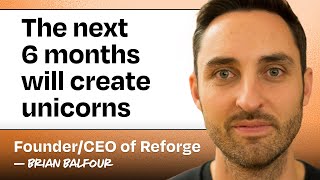
Brian Balfour argues ChatGPT and AI platforms are becoming the next major distribution channel. He outlines a four-step cycle platforms follow: identify a defensible edge, open APIs to attract developers, then close or monetize later. The window to capitalize is short, and historical examples like Facebook and the App Store show both the opportunity and the risk of being locked out.
Chapters
Everyone's always complaining. SEO's dead, it can't grow.
Word of mouth is so hard.
All of the ingredients for new distribution platform are essentially happening. My prediction the new distribution platform will be ChatGPT. There's a bunch of signals that they're about to launch that this is a.
Huge opportunity for companies to get on it.
It ends up being a prisoner's dilemma. Don't trick yourself into thinking that you can't play the game. The cycles seem to be getting shorter and shorter, so you actually have a smaller amount of time.
If you don't do it, your competitors.
Are going to go to the new platform and your customer expectations change. There is no opting out of the game.
This is the opportunity to disrupt an incumbent.
If you're a late stage company, you place multiple bets. For startups, it's a totally different ballgame. You have to choose one and go all in.
Think about companies like Zynga that grew on Facebook and then became massive companies.
Building a great product is one of those things that's necessary but not sufficient. And actually the separation is between those that build really great distribution.
What would be the backup if not chatgpt?
My hypothesis of who's best positioned would.
Actually be.
Today my guest is Brian Balfour. Brian is the founder and CEO of Reforge, a company that I've been a longtime fan and advocate of. Historically, Reforge has focused primarily on teaching courses on product and growth, but more recently they've transitioned to building their own products, including a product called Reforge Insights and a bunch more really cool stuff coming very soon. Prior to Reforge, Brian led growth at HubSpot, and over the course of his career, he has seen the rise and fall of every major distribution channel, including Facebook's ad platform, Google Ads and SEO, and Apple App Store. Based on what he's seeing, he is predicting the emergence of a brand new and powerful distribution channel that will likely arise in the next six months, centered most likely around ChatGPT. It is really rare for a new growth channel to open up. It's been a long time since the last one appeared, and the people who recognize this and hop on it early are the ones that reap the most rewards. So this is a huge deal. In this conversation, Brian shares what he's predicting, what he's seeing, why this is a big deal, and what you should.
Be doing about it right now.
I highly recommend you listen to this full conversation and discuss the ramifications with your team. If you enjoy this podcast, don't forget to subscribe and follow it in your favorite podcasting app or YouTube. Also, if you become an annual subscriber of my newsletter, you get a bunch of incredible products for free for one year, including lovable, replit, bold, N8N, linear, superhuman, descript, Whisperflow, Gamma, Perplexity, Warp, Granola, Magic Patterns, Raycast, Chapierd, and Mobin. Check it out@lennysnewsletter.com and click product Pass. With that, I bring you Brian Balfour. Today's episode is brought to you by dx, the developer intelligence platform designed by leading researchers. To thrive in the AI era, organizations need to adapt quickly, but many organization leaders struggle to answer pressing questions like which tools are working? How are they being used? What's actually driving value? DX provides the data and insights that leaders need to navigate this shift. With DX, companies like Dropbox, Booking.com, adyen, and Intercom get a deep understanding of how AI is providing value to their developers and what impact AI is having on engineering productivity. To learn more, visit DX's website at getdx.com Lenny that's getdx.com Lenny this episode.
Is brought to you by Basecamp. Basecamp is the famously straightforward project management system from 37signals. Most project management systems are either inadequate or frustratingly complex, but Basecamp is refreshingly clear. It's simple to get started, easy to.
Organize, and Basecamp's visual tools help you.
See exactly what everyone is working on and how all work is progressing. Keep all your files and conversations about projects directly connected to the projects themselves so that you always know where stuff is and you're not constantly switching contexts. Running a business is hard. Managing your projects should be easy.
I've been a long time fan of what 37signals has been up to, and.
I'm really excited to be sharing this with you.
Sign up for a free account@basecamp.com Lenny get somewhere with Basecamp.
Brian, thank you.
So much for being here and welcome.
Back to the podcast.
Yeah, thanks for having me excited for this one.
I'm really excited to have you back. We're just going to dive right in. Essentially you've uncovered a really important trend or insight about how products are going to grow differently in the future, how growth is changing, and this is something that I think a lot of people need to hear. So I asked you to come on to share what you're seeing. I also think it's just very timely. I think you said like you're going to say in the next like six months things might significantly change. So I'M really excited to do this. We're going to spend this whole conversation on this insight to set us up. What is just the big idea? What's the high level idea here?
Just like you, I've spent my whole career just like really passionate about startups, figuring out how to build products that win, that emerge in new markets. And one of the things that I have learned over time, or one of the things you hear a lot is from a lot of folks is to when you have to really build a great product, a lot of the advice kind of boils down to that.
And one of the things that I feel like I've banged my head against the wall in a lot of ways.
In my career is actually telling people.
That building a great product is one.
Of those things that's necessary but not sufficient. And actually the separation is between those that build really great distribution.
And so this general partner, his name's.
Alex Rample, he's at Injuries. And Horowitz actually wrote this blog post 10 years ago back in like, I think like 2015.
And the essence of the blog post.
He basically says one thing, which is.
That startups is a game of trying to get distribution before the incumbent can copy, right?
So it's this kind of concept of escape velocity.
On that note, which I think is.
Like a very good summary of what you're trying to do in a startup in distribution, is that we're right now.
Living in this environment where that game.
Of startups kind of getting distribution faster than the incumbent has gotten way harder.
In a lot of ways and in some small cases has gotten a little bit easier. But if we think about this, the way that it's gotten harder and some.
Of the things that probably a lot of founders or folks working on the growth side that probably feel is that one is that incumbents can copy faster these days, right?
So that window that you have to.
Get that escape velocity has actually shrunk. It's decreased.
The second thing is that a lot of the organic distribution that we've had.
Especially over the past few years, has really shrunk as well. So everybody's talking about the decline of.
SEO and clicks declining, but you also.
See it in some other cases. A lot of these social platforms don't really let you send as much traffic to sites. LinkedIn just changed their algorithm, which has really dropped organic distribution. Obviously the, the Twitter to X transition that happened, right? Like TikTok's almost always been like that.
And then the third way that it's.
Gotten harder is that AI is really good at writing software, right? And code generation. And so everybody's kind of feeling this infinite increase of competition, especially at the startup level. And, you know, YC is pumping out six of the same thing, every single cohort, right?
Like, that's what it literally feels like. So it's gotten way harder. This game, this Escape Velocity game has.
Gotten a lot harder.
It's gotten easier in some very exceptional.
Cases, like a cursor or something, where AI has kind of been like, the spark. You know, I know you wrote the blog post about the race car engine, and I think you said, like, there's.
Like the spark plug in the engine, right? And so AI kind of really created that.
A new type of spark, a new type of interest of early adopters to, to. To fuel some, some new players in a short period of time, right?
And so it's amazing to see something.
Like cursor overtake market share of something like GitHub Co Pilot in nine months or less, right? Like that. That's how fast it happens. It's kind of crazy.
But the main thing that people need to understand is, okay, well, if that's.
The game I'm playing, right, how to get Escape Velocity before the incumbent, like, what are all the ways to do that and, and to really figure that out.
And there's multiple ways that this can happen, but one of the major ways.
One of the major, major ways that.
We always see is that this can.
Happen when new distribution platforms emerge.
And because when new distribution platforms emerge, startups are usually the fastest to take advantage of them.
It's slower for the incumbents to move. It gives startups this opportunity essentially to play this game.
So Casey Winters wrote this blog post.
About two years ago, maybe like 18 months ago, about the AI technology shift.
And his key point was the AI.
Technology shift has been a technology shift that has not come with the distribution shift yet.
So if you look historically, we've had a bunch of technology shifts from, you.
Know, the Internet to the cloud, to.
Mobile, to social, like, all of these different types of things, and some of them come with distribution, new distribution platforms.
New ways to distribute products, and some of them don't. But the most powerful, powerful ones, the most impactful ones are the ones that do come with these new distribution platforms.
And so his second key point was.
That these two things don't actually happen at once. Usually you get the technology shift, then you get the distribution shift a little bit later.
So now we're a couple years from that post.
We are a couple years into AI.
Technology shift, and One of the things that I am seeing is all of.
The conditions, all of the ingredients for new distribution platform to emerge are essentially happening.
And so I think we're at an inflection point where we're going to see.
This emerge really fast.
And the key thing for everybody to know is that as new distribution platforms emerge, they follow the same four step cycle.
And it's kind of a game that you're playing that everybody's playing.
And so just like any game, you kind of need to know the rules of the game, you need to know the steps of the game in order.
To have any sort of opportunity to win.
And that's kind of like the thing that I've lived through once again, both painfully and also in good ways and is something that I'm keeping my eye.
On and something that I've been talking about.
So before we go into that, you.
Know, four step cycle, I figure I'll pause there to see if you have any follow up questions on that. Okay.
This is amazing. So essentially what you're saying is we follow these ways to grow. There's SEO, there's paid growth, there's sales. All these channels have been around for a long time. They're extremely saturated. Everyone's always complaining, SEO's dead. It can't grow. With SEO anymore, I can't grow.
Word of mouth is so hard.
There's so many amazing things now that's hard. Paid is so hard. It's just like all this money.
Yeah, all these things.
Yeah. So all these saturated channels. And what you're saying is there's an emerging new channel that has not yet been saturated and this is a huge opportunity for companies to get on it. And you'll talk about timing because it's a little tricky to even know exactly when to go big on this.
That's right.
Yeah. But that's a huge deal.
This has been a long time since there's a new way to grow that you can actually use as a lever for growth and not just hope for the best. Okay, before you get into the, the.
Cycles, do you want to tease what.
The answer is just to give people a little hint or do you want to keep it secret?
Well, to be clear, right, like, okay, so my prediction will. We don't, we don't have a clear winner yet.
My prediction of the new distribution platform will be ChatGPT. In some ways that people probably already think it's happening, in some ways that it won't.
But the thing that is less important.
Or like that is more important than whether I have predicted the exact winner correctly. The thing that's more important is to under the stand the cycle and evaluate like how to determine where you want to place your bets and how to place those bets, which I know, which I know we'll talk about because I.
I'm, I could be wrong about the ChatGPT prediction and what's going to happen there.
There's, I think there's going to be two parts of it. There's going to be what they do with like a chat GPT search experience.
But I think the bigger thing will.
Be whatever they do with launching a third party platform on top of ChatGPT, there's a bunch of signals that they're about to, that they're about to launch.
That I'm pretty sure it's going to be chatgpt. The thing I'm way more sure about is that some new distribution platform will.
Emerge and it will follow the same four step cycle. That's kind of the key.
So could be wrong on the first piece.
I am very confident on the second piece.
Okay, excellent foreshadowing. I completely agree. If it's anything, it would be chatgpt at this point. Let's get into it. What are the cycles that platforms generally follow?
Yeah, and I'll give some examples of this. But let me explain the first four steps.
The four steps of the cycle first and then we'll go through a bunch of examples of all those individual steps.
So the, the four steps are essentially.
One is like I call a step zero. It's, it's the, the conditions of the market have been met.
Step one is about a moat, Step two is about a platform opening and.
Step three is about the platform closing for control and monetization.
So let me kind of briefly explain each one. Step zero is about the competitive market.
Being met, the conditions being met, and.
There'S a few part pieces. This one is that typically what happens is that there is consensus that there.
Is going to be this new huge category, right. Think social, think mobile, like all those types of things. And in this case these AI like chat platforms like a chatgpt or a clock.
So there's consensus about that, but there's.
No clear winner yet.
And you typically have somewhere between five to seven, you know, major players really battling it out.
Right.
So, and they're all kind of looking for what is the edge, what is the thing that is gonna, that is.
Going to, to help me win.
Because all of these dynamics you in, in all the history, they either end.
Up in monopolies or Duopolies, right? And so the stakes are really large and so the competition is fierce. So that's kind of step zero.
And I think we could all agree that we are in that mode. You know, right now we've got, we've got OpenAI battling with Claude, battling with Gemini, in Google, with whatever meta comes out with their new team, you know.
So on and so forth. Like, and there's huge amounts of capital, there's consensus, like all the, they are in a fierce composition. So that's step zero.
Step one is then these players, somebody essentially identifies whatever the moat is, the thing that is going to help build.
Them defensibility and help them hit escape velocity and become that monopoly or duopoly in that single category.
And once they figure out what that mode is, then they need to press the advantage, right?
They need to figure out how to.
Gather that moat as fast as humanly possible. And it tends to be that you.
Can'T do that by yourself.
And so you kind of need the.
Help of an ecosystem in order to gather more of that moat.
And that typically comes down to third.
Party content creators or app developers and other businesses.
And so they all establish like a third party platform, right, that has some incentives built in. And usually the value exchange is, hey, you develop on top of my platform, right? You add more use cases, you know.
More engagement, like all of these things to my platform.
And, and in exchange I'm going to.
Give you something in return.
And usually that thing that's in exchange.
Is I'm going to give you some new form of distribution for your application and for your business.
But what essentially happens as we go over time is that we go into.
Step three, which is the closing period.
Which is at some point all of these companies end up starting to lock down the platform. And this tends to happen for reasons.
Of like monetization and growth, right.
They either competitively don't want, you know, somebody to use their own, you know.
Platform to disrupt themselves. Like we saw that in the early Twitter days with things like vine and Periscope, right? Like shutting those things down unceremoniously, right.
Or they need to find ways to.
Monetize at a deeper and deeper level. Because all these companies, like they have to grow. And you know, Google's the classic example here of just more and more real estate has either been taken up by either ads or their own, you know, first party applications.
And so that's the key is like they close it down by doing one.
Of two, by one of a few things.
They either shut it down Entirely Two.
They develop their own first party applications to absorb the highest use cases or.
Three, they artificially depress the organic distribution.
That they gave you in the step prior it to push you towards paid mechanisms in order to monetize.
And so I think we should go.
Through like multiple examples here, but that's kind of like the core essence of the four steps. And so I'll pause there.
Awesome. So it's essentially figure out what's going to make create defensibility long term. What's your moat? Bring everyone in. Hey everyone, welcome to Facebook. Everyone joins Facebook and then. Okay. And orally developers build on Facebook to bring in more people on Facebook and then they're like, okay, now you gotta pay, there's a toll. And but you love this so much and you're so hooked. All your friends are here. You may as well stick with.
That's right. That's right.
Amazing. Okay, so yeah, a few examples would be great.
Yeah. So you, you just hit on the first one. The first, this is the first one.
That I always think about because this is where I learned about this cycle.
Very early in my career. Like my, one of my first companies was during the whole, the Facebook platform boom, you know, social gaming, all of those applications.
And I lived the full cycle in a very short period. I lived the, the glory days and the, just the absolute horror days.
And, and it was very painful.
But this is exactly what happened.
So let's go through the four steps. So step zero.
Facebook was in a brutal battle with.
MySpace, Friendster and a few others. People forget this, people forget that there is actually like a bunch of competitors at that time.
And, and in fact those competitors were.
Bigger than Facebook at the time.
They had more users back in 2007.
When Facebook launched their third party platform.
But one of the key things is that Facebook was very early to the insight about the direct network effects and that there's going to create real lock.
In that the, the more friends, the more of the global network that was on there, the more that it was just going to feed and, and hit this escape velocity.
And so at the time they launched their platform, I think they were maybe.
Like 1/4, 1/5 the size of something like MySpace or even Friendster Orchid, these are some of the names at that time. But they opened up their third party platform and what was the value exchange?
They went to third party developers and.
They said okay, we've created this canvas. They used to call it the canvas.
And they were like, you can put anything in the canvas that you want.
An app A game, whatever you can.
Monetize in any way you want. We just want this sidebar real estate on the ads.
That's, that's what we're really interested in.
And so there is this mass mad.
Gold rush on that Facebook.
Sorry. The other part of that was not only will you put it there, we're going to give you access to all.
Of these notification channels and feed to get distribution for your application. That was, that was the other piece of it.
And so you had this mad rush.
Of developers coming in and you had.
This huge like social application, social gaming boom.
The people just grew incredibly virally very fast. But eventually, essentially what happened over time.
Is they kept peeling back that value exchange. They first were like, ah, actually you know that those dollars that you're, you're making inside that canvas area, well, we.
Want a percentage of that, right?
So they changed that and then they figured out their, like their ad systems.
And then they started peeling back, you know, they started suppressing access to all of the organic channels that they had.
Eventually they went all the way towards.
Absorbing the highest, you know, use case into their own first party platform. Things like, first party applications, things like events, photos, all those types of things and basically shut down the platform for dead.
And these companies that have basically built.
On top of this platform.
You know, the other thing is by the time they started closing all those things down, all those competitors that we talked about, they were so far ahead at that point because they had built.
Off the back of all these developers coming, adding use cases, bringing more users onto the platform, like all like identifying that moat. They were so far ahead, it didn't matter, it didn't matter what the other folks did at that point.
And that's what kind of really gives.
You confidence to start closing down. But there's so many other examples of this, right? If we go through it, right?
So just before you get other examples, just something I'll highlight here. One is the moat they identified in theory was the friend graph. I imagine just like once we have all your friends, you're not going to want to go anywhere. I imagine it's also important to note you may not.
This is kind of like a natural.
Thing that would happen. If you build the thing and it grows and you're like, oh, maybe we should change strategy. I imagine not everyone even knows this is what will happen and they kind of organically evolve their strategy. Or do you think everyone's just like, this is our going to be our plan step 1, 2, 3, 4.
I think a different version of that.
Question is, I think some people could sit here and interpret this as all these folks are evil.
Right.
And that's not what I'm saying.
Right.
Like, that's actually not what I'm saying. I want to be very. I want to be very clear on.
That because I think, you know, a.
Lot of this cycle happens because of competitive and capitalistic, like, dynamics and pressures.
It's the same environment that enables, like.
Creating amazing new companies right here in the U.S. so, and there's, there's like two sides of the coin.
And so you go through this cycle.
Because it's a competitive environment. You're trying to figure out how to beat competitors. And this is one of the strategies to beat competitors.
But at some point, like, you just.
Have to continue growing. You still have. You have to grow those dollars. Like, the market does not reward flat companies, if anybody's noticed.
Like, you have to keep growing. And so they have to keep finding ways to grow as well as prevent their own disruption. Right. They can get so big and they can give access, so much access of.
Distribution to new developers. They don't want to enable their own disruption as well as, like, they need to keep growing.
And so my guess is anybody who is kind of sitting in their shoes, you know, owning their platform is going to follow the exact same playbook and.
The exact same reasoning.
And, you know, look, sometimes it happens also because it actually is the best.
Thing for the user. Facebook's channels did get super spammy and like, all of those things.
And that was part of the reason, you know, they play this.
But let's be honest, it wasn't the only reason. Right.
Like, a lot of it was, a.
Lot of it for was. Was for these other reasons.
And so I don't think it's evil. It's just you need to know how to play the.
You just need to know how to play the game.
That.
That's competition, that's business. They're playing you. So you need to play them like that. Like that. That might be a little. A little sadistic or something, but. But that is, that is business.
That's.
You're.
You're in a game of competition.
Yeah. Essentially, the incentives are pointing you in this direction. Capitalism, the set. Capitalism works.
Yeah.
And so it'll pull everyone in this direction, even if they. They don't. They want to avoid it. Let's do a couple more examples.
Yeah, we'll go through them quick. You know, I think everybody's probably.
Google's an interesting one because it played out over a much Longer period of time. You know, Facebook happened over the course of about in 5ish years, something like that.
Google kind of did it like very.
Slowly over years, but same thing, right? Massive early, massive competition against Yahoo. I don't know, altavista, Lycos, you name them all right, that was even before my, that was even before my time, right?
They were first to really identify these.
Data modes and incentivizing essentially web developers, content folks to optimize, you know, for their search algorithms.
It create this great, great distribution mechanism.
Everybody's kind of building content and everything.
You know, for them. But over time, slowly but surely, right.
They did two things. One is more and more that real estate became ads that they were monetizing. So they're suppressing organic distribution in order to push people towards the ads as.
Well as absorbing a bunch of, of.
The highest value first party use cases, things like travel, you know, as an example or even like, you know like restaurant search and like all those types of things. You know, the Yelp, former Yelp CEO and founder has been, you know, been out there saying a lot, a lot of things about, about these practices.
So same, same exact cycle, mobile went through the exact same cycle, right?
IOS created a new distribution mechanism. They were in massive competition. They had a ton of competition among different phones when they first started on. They found the defensibility was more about the apps they got in. All the developers created the, the App Store, like all of these types of things.
But over time we've seen more and.
More restrictions there on that front.
And then most recently, right, like we've seen this happen in smaller places too.
LinkedIn as an example, first went through.
This wave with company pages, right? They were like ah, companies, you know, come on, promote your company page, bring in more users, like all that type of stuff and then get, get all these followers. And then of course they, you get.
Almost no distribution now through your company page because they're pushing you towards ads.
And then they recently just did this.
With personal profiles too, which is they really boosted distribution for individuals to create content for that platform. They then introduced the thought leader ad format, a way to monetize those in those individual posts. And now you've seen them really pull back on that organic distribution.
So this happens in big forms and.
It happens even in smaller use cases as well. But once again the steps of the.
Cycle are exactly the same. And the key part about this too is it the broad trend is that.
The cycles seem to be getting shorter and shorter and shorter and shorter. So you actually have A smaller amount of time to play the game.
Okay.
And the big aha here is, yes, this will end. Maybe not great for you, but there's this magical period when they're open to customers and users where you can grow like crazy because they want everyone to come and they give you a distribution. And what you're saying essentially is chatgpt, potentially some other platform maybe is about to enter this mode. Yeah.
Well, let me first, before we get.
To ChatGPT, I think the natural reaction when, when you first realize this is screw them. I'm not playing that game. Right?
Like that. That's what I feel like. Most people like how, how they react, right?
Because.
Because the unfortunate truth is is that.
A lot of companies don't predict that last stage and end up in a really hard, hard position, right?
So many companies got completely killed during.
You know, the crash of the, the Facebook social platform.
Apple's 30% tax, you know, basically destroyed a bunch of types of types of.
Applications and business models because it just, you couldn't. You feel like it just wasn't like margin effective. Like all.
So many companies built on, you know.
SEO loops, right, that are in serious, serious trouble right now if that's their only channels.
So, so all these things, right?
And so I think the natural reaction is yeah, like, like, why would I play this game if I'm a startup or, or a company, right?
And you can even see this with.
Like Chat GPT as an example, right? They just launched these like deep research connectors. One of them was my former company, HubSpot.
And you know, if you sat inside HubSpot.
More from Lenny


Why every company now needs to think and operate like a lab team | Josh Woodward (VP Google Labs)








Why most actions on the internet will soon be taken by AI (OpenAI’s head of ChatGPT, Tibo Sottiaux)
