ADHD Doctor: How To Hack Your Brain For Better Focus | Dr. Sasha Hamdani
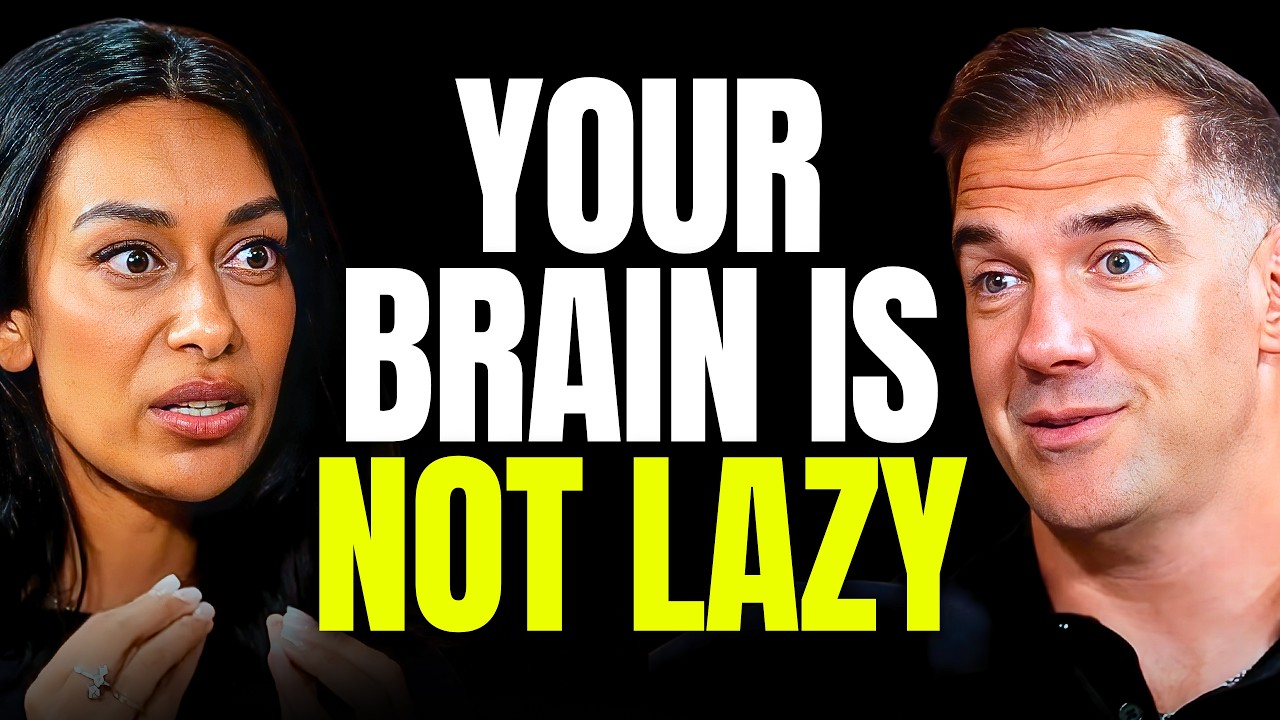
Psychiatrist Dr. Sasha Hamdani explains how rejection and avoidance fuel perfectionism and anxiety, and why understanding your brain's wiring is key to focus and resilience. She shares her book's three core truths: lean into emotions, cherish time with loved ones, and lead with kindness. Her work ties motivation directly to identity.
Chapters
There's so many things that fragment focus. Trauma can fragment focus. PTSD, anxiety can fragment focus. So many things that impact focus, impact behavior, but that's not truly ADHD.
What would you say is typically the root cause of someone having ADHD?
Genetics.
It's not trauma? Really?
No.
She's a board-certified psychiatrist, a bestselling author, and ADHD specialist who was diagnosed with ADHD herself. Please welcome Dr. Sasha Hamdan.
You can't You can't observe emotional regulation. You can't observe these kind of difficulties and subtleties that are happening internally. We have this entire world of medication. Like, if you have an ADHD diagnosis, you don't necessarily have to be on one of those medications.
These kids almost seemed like they got worse, or it was just like, it didn't seem like it helped them. Why are drugs typically the first thing that most doctors or primary care individuals prescribe to someone when they diagnose them with ADHD? I think when Your experience as a doctor around ADHD. First off, what is the difference between ADHD and ADD, and what are the main, I guess, flags to know if you are undiagnosed with one of those?
Yeah. Okay, so I'm going to blow your mind right now. ADD and ADHD, same thing.
Same thing.
Same thing. It's just ADD is an outdated term. So previously ADD was really classified as more like an inattentive presentation, and now ADHD is broken into 3 categories: inattentive, hyperactive, and combined.
Inattentive being not, meaning not present? What does that mean?
Like difficulty with initiating tasks, difficulty with completing tasks, difficulty with forgetfulness and organization. Like think about the daydreamer. That's me.
That's me.
Yeah. And then hyperactive, think about physically and verbally impulsive, difficult staying in your seat. You have a hard time. Okay. So that—
I used to like shake my knees constantly in school, just like all day, just couldn't sit still.
I kind of have that now, and that's why I'm crossing my legs and smushing it down. Yeah.
So focusing.
Yes. So, and then combined is obviously the combination of both. And so ADD, what it was previously called, is really more aligned with ADHD inattentive type.
So the third, what's the third aspect of ADHD?
Combined. So it's partial in and out.
It's hard for you to focus and you're verbally and physically compulsive. Is that what it'd be? Impulsive.
Impulsive.
Interesting. Okay. And so those would be kind of signs to see if you do this frequently, you might have that. Is that correct?
Yeah. And I love how you said might, because equally important to diagnosing in ADHD is diagnosing out everything else that could be fragmenting focus, which is a lot of things.
Yeah. Or just distracted or whatever. Yeah. So, so how does someone actually get diagnosed with ADHD?
There are a couple of different ways you can do it. You can do like computer or neurological evaluation where you're doing a bunch of tests and you can do it with a therapist. You can do it with a primary care doctor. You can do it with a pediatrician and they're getting information from you. If they're evaluating a child from maybe teachers and from parents. If you see a psychiatrist, a lot of times it's based on clinical interview. So you're going and you are talking about your entire medical history, you're talking about your entire psychiatric history, you're looking for these longitudinal patterns showing like your focus over time and how that has been impacted or changed by different things like hormones and life events and other things like that. And then— The additional like layer to all of this is that frankly, this is coming from my perspective. I think ADHD, first of all, I hate the name. So attention deficit hyperactivity disorder. I don't think that encapsulates everything. I think it's confusing. Secondly, I think that it's really, instead of attention deficit hyperactivity disorder, I think it's truly a regulation issue.
Emotional regulation?
All. I think attention is in there. I think motivation is in there. I think energy is in there and I I definitely think emotion is in there.
And so I remember being in middle school, elementary school, and there being a few kids who were like, they had ADD, right? Back in the day.
We all know that.
In the '80s and '90s growing up, right?
Yeah.
And hearing that they were on drugs, right? Whatever it was, Adderall or something, or Ritalin, Adderall, all these things, right? And it didn't seem like it helped. Like these kids almost seemed like they got worse, or it was just like, it didn't seem like it helped them. Why are drugs typically the first thing that most, I guess, doctors or primary care individuals prescribe to someone when they diagnose them with ADHD? Why does it seem like that? Again, maybe it's not the case, but—
I think when, so when a physician is evaluating you or when a mental health, well, yeah, a physician is evaluating you for ADHD and you've done, and we've decided, like we've looked at the medical history, we've looked at the psychiatric history, we've ruled things in, we've ruled things out. I think this is ADHD. I think the conversation really should be about the 2 ways you can treat ADHD, which is behavioral and like lifestyle modification and medication. And a lot of times it's the combination of both that has the best result, but there are people that do really well with just behavioral management. So as a general protocol, I think that initial conversation where you're talking about medication or you're talking about potential treatment forward, You should always talk about the behavioral and lifestyle, like at its base level. And then you kind of figure out— now what I will tell you is that ADHD medication and stimulant medication specifically can be life-changing for some people. Like some people just have incredible benefit and it actually allows them to do the behavioral and lifestyle modification. But we have this entire world of medication. Like if you have an ADHD diagnosis, you don't necessarily have to be on one of those medications.
And what would you say is typically the root cause of someone having ADHD?
Genetics.
Really?
Yeah.
It's not trauma?
No.
Really?
No.
So you're saying not having an adverse childhood where your parents are arguing and screaming and you're feeling like you have to be hypervigilant isn't an environmental cause of having some type of ADHD symptoms?
No. Okay. So to say something with absolute certainty is not gonna be my jam. 'Cause, right, I think that maybe, maybe there's something I don't fully understand about that space, but I think at a fundamental baseline, I think primarily it's genetic. And I'll tell you my beef with this trauma perspective of it, 'cause I truly understand where that's coming from.
Uh-huh.
My issue is that sometimes there isn't traumatic things. happening and a parent is looking at their kid who might be experiencing ADHD symptoms and there is actually a hesitation to get them treated, get them evaluated because they don't want to— there was trauma here, this is your fault. I feel like there was, there's some difficulty in terms of, is a parent at fault with that trauma hypothesis?
Well, I don't think you need to blame parents necessarily on, on on every case of a kid having it, right? So there's different circumstances, but I'm just thinking from what you said, you know, this book being about emotional regulation and learning the skills of emotional regulation. For my— I'm speaking for myself and a lot of people I've spoken to, that when I grew up in an environment that did not feel emotionally safe, I didn't have the emotional tools on how to regulate myself.
Yes.
And therefore I used strategies as a kid To feel safe and to protect myself.
Yeah.
You know, even though I wasn't physically necessarily in harm's way, emotionally and psychologically, I felt like I was not safe.
You were in danger. Yeah.
And so therefore I used strategies to try to protect myself or stand out or do different things. And I feel like for me, that trauma, that experience caused me to act out in a lot of ways. From my personal experience, if I'm self- Assessing my childhood. And I feel like that environment caused me to be hypervigilant.
Yeah.
Vocally and physically erratic or whatever the terminology is. But I don't think it was genetic for me because I feel like I've learned the skills of healing and learned tools of emotional regulation like you talk about in here that caused me to be more at peace and feel more psychologically and emotionally safe.
Right.
And so that's where I was asking about the trauma side of things versus genetics.
Well, let me, let me back up. First of all, love that you have, have been able, given a chaotic kind of upbringing and environment initially, that you've been able to find those skills and actually not only fine-tune them and actually make them applicable for yourself, but actually see benefit from them. So that's huge. But what I would say is that There's so many things that fragment focus. There's so many things that trauma can fragment focus. PTSD, a huge cause of that. Anxiety can fragment focus. Thyroid conditions can fragment focus. There's so many different things.
Hormones, everything. Yeah, yeah.
Hormones. So there's so many things that impact focus, impact behavior, but that's not truly ADHD. So you could have focus fragmentation that's coming from all those things, but ADHD is a distinct Longitudinal pattern that's usually genetic.
Well, interesting. So I might've had symptoms or similarities of ADHD, but not ADHD.
Yes.
How does a practitioner distinguish the difference? Do they look at your blood work and say like, okay, your DNA says this versus the behavioral traits that you're using or experiencing in life?
Yeah.
Because if the symptoms look the same, how do you know Okay.
Yes. So if, you know, you're seeing these symptoms of fragmented attention kind of throughout, and the doctor has, does a full assessment, they've looked at medical stuff, they've looked at psychiatric stuff, they've looked at the just psychological kind of environment that they're in and the state of affairs in terms of their life and what's happening.
Uh-huh.
And they get to a spot where they're trying to figure out like, is this ADHD or is this not? Then you start looking back at patterns. Is this a consistent pattern from birth? This was going on with ups and downs and this had been a consistent pattern. Is this really localized around traumatic things? And this is like a trauma response. Is this something that happens when metabolically something is different? So you're looking at—
Mm-hmm.
context and you're looking at kind of when these things peak and valley, you're looking at from early, early ages, what has this pattern been throughout?
Yeah.
And I think it's really difficult because I also, we touched on this briefly, but like I think with ADHD diagnostically, we're at a very problematic spot because that initial data was done on hyperactive young males. So right now we have this diagnostic criteria that's not encapsulating so many other presentations.
But also, aren't many young males hyperactive? I mean, it's like, are just hormones make young men more hyperactive than not?
I have a 6-year-old young male.
He is, um, jumping off the walls and running around of energy and vigor.
I, I, I think it's, I think it can sometimes be Difficult to tell for sure. But, but the criteria was built on observable data. There's a lot of this, especially when you're making the argument to include emotional regulation, which by the way, Europe did in 2019. They amended their criteria to include emotional regulation and the US still hasn't.
Wow.
But when you're looking at all of this, you can't observe emotional regulation. You can't observe these kind of lived experiences and these, these Difficulties and subtleties that are happening internally. And so now we have this, in this presentation where anyone who's having this emotional turbulence that happens with ADHD and emotional dysregulation, because of that failure in criteria, doctors are like, okay, well, it's anxiety, it's depression.
Mm-hmm.
And they're treated with antidepressant after antidepressant after antidepressant. And antidepressants, by the way, I'm not against antidepressants. I think they're great. I think they're life-changing tools if that's your diagnosis. So if you don't have anxiety and depression, you're started on, um, an antidepressant.
Oh.
This cycle just perpetuates. And what happens is that I've had patients come into my office, they're, they sit in the chair, they're, they've, maybe they're on their 10th antidepressant and they're like, I went to my doctor. And I asked him after seeing stuff online or talking to my family, I think I have ADHD. And the doctor will say, well, we can't even look at that until we get your anxiety and depression under control.
Shut up.
Yeah.
Wow.
So you're just in this perpetuating cycle of misdiagnosis.
That's where I feel, again, that's where I feel the medical world can be harmful if they misdiagnose and put you on 10 different antidepressants and say, well, we can't treat you for something else until we figure this anxiety and depression thing out. I'm not saying all medical is bad, but I'm saying it can be harmful when that happens and someone comes in your office and is like, I've been on 10 antidepressants and I don't know how to get better. It's almost like it's harming that individual more than helping them.
Yeah. Well, if it's the wrong diagnosis, it is objectively harming them because you're giving a medication that is changing your brain functioning.
Oh man.
It's wild.
That just makes me angry.
Yeah.
If someone's been misdiagnosed, been given a chemical to transform their brain in a negative way that they weren't supposed to have, and then they have to live with that potential for the rest of their life.
I mean, look at, if you look at the average age of diagnosis for males, 6 to 8, for females, 35.
Of ADHD or anxiety and depression?
Of ADHD. That's when they get their diag— and usually it's because they're bringing in their kid and they're like, Wait a second. This sounds just like me.
And so, so women, so moms will come in and get diagnosed at 35 when they bring their kid that they, that they seemingly can't control. They don't know what's wrong with them or what's going on, right?
Yeah. And so they'll come in and they're like, actually, that sounds a lot like me. And that might be the first time that they're actually getting treatment for what they should be getting treatment for. But think about all 35 years when they were having these pockets of time around puberty, around childbirth, around all of these different things where you saw big spikes in emotional regulation because it's a hard world and life is hard. And like, they're big pockets. And instead of like looking at what, what's the root cause of this, what, what is at the base of this, it's, it's hormonal, it's mommy brain, it's, you know, they're just getting— it's anxiety, it's depression. And so they're either misdiagnosed or they're just— frankly ignored and passed along.
Postpartum or whatever it might be, right? Different things. Now, how does someone know they have true anxiety or depression versus stressful thoughts that come and go or anxious thoughts that come and go?
Yeah. Patterns. Patterns. You look at intensity of kind of thoughts. You look at how disruptive it is in terms of your day-to-day functioning. So like for depression, you need criteria that is over a certain span of time. And you look at sleep, you look at interest level, you look at, is this person experiencing guilt or hopelessness? You look at energy, you look at concentration, you look at appetite, you're looking at all of these different— it's not just, you know, does this person have suicidal thoughts or not? It is, you're encapsulating a lot of different things. Over a certain span of time versus they went through a breakup and now they're sad. This, this is a big difference. So you're catching it over a pretty prolonged period of time. Um, with anxiety, same kind of thing. You're looking over a period of time and you're looking like, is this person dealing with like musculoskeletal stuff? Are they restless? Do they have muscle tension? Is sleep getting impacted? Do they have Panic attacks. Like, you're looking at all of those different pieces, but the thing that distinguishes that from a situational up and down is truly patterns over time, length of time.
Over a long period of time. Because if you've gone through a breakup and you're still sad 3, 6, or maybe 9 months later, it may not be anxiety or depression. You just maybe haven't dealt with the breakup fully yet or the loss yet. But a lot in your book talks about Rejection. And it sounds like most people in the world are afraid of being rejected or the feeling of rejection.
Yeah.
Whether it be a micro rejection, meaning a comment online where someone didn't approve of their post.
Yeah.
Or a rejection of approaching someone, then saying no, or rejection at work or rejection in their marriage, whatever it might be.
Yeah.
What is the consequence of rejection for most people in the world right now? When they experience rejection, they feel what?
So let's, let's back up a little bit because I don't think anybody likes rejection, right? No, you're never going to meet someone who's like, that was great for me after getting rejected or criticized. Or maybe you do, I don't know. But most people are going to be like, that was bad. But then they are able to kind of move on and, and take whatever positives they need to from that moment, or possibly not even do that. Just forget about it and move on. There is a concept called rejection-sensitive dysphoria, and that is a profound emotional response to real or perceived rejection, criticism, or disappointing someone. It is a neurological phenomenon that's happening. And so what I tell people is that If you are looking, you know, at where you fall on this emotional spectrum and say—
Rejection-sensitive dysphoria.
Yeah.
And it's real or perceived rejection, right? Yeah.
You might think you're getting received, uh, you think you're getting rejection.
You're not.
You're not.
It's just a fear around it too, right? Okay. Sorry. So what is it? There's a scale of this?
There's a spectrum. There's a spectrum. So if you're looking at it and it's, it's pretty intuitive because when you ask yourself like, How sensitive am I? What is normal? You look at this spectrum and, you know, that's what we go over in this book because I don't think that was ever delineated. I don't know where you would consider normal, but where I considered normal would be when you're having a situational stressor and your mood goes up or down appropriately. Now you look at one end of the spectrum and it's apathy where you're having an emotional trigger and you don't really elevate up or down. It's just numb. You're there. Polar other opposite end of the spectrum, which is kind of where I live, is where you feel things deeply and quickly and for a long time. And it's truly because of a difference in neurological wiring. And I would put RSD on that side of the spectrum— rejection-sensitive dysphoria.
How many days does it take to go from total beginner to reasonably proficient at a new skill? Well, if you practice for a focused hour a day, then about 250, which also happens to be the number of reasons to choose T-Mobile. Here's an excellent reason. They have the fastest 5G home internet according to Ookla speed test, which you can test for yourself worry-free with their 15-day money-back guarantee. Another great reason, it's fast and easy to set up too. Plug it in and you're online in practically no time with no appointment or technician needed. Those are just a few reasons. Find yours at t-mobile.com/homeinternet where you can check availability and try it for yourself. They're so sure you'll love it, you get your money back if you don't. Fastest according to Ookla Speed Test Intelligence data, second half of 2025. All rights reserved. Redeem money-back guarantee within 30 days of cancellation. So if you feel things deeply and intensely for long periods of time, whether it is a seemingly horrible event that occurred to you or a friend or someone you know, and you feel deeply around that experience, or maybe it wasn't that horrible perceived of an event, but you still feel deeply for something that's smaller.
Yeah.
What does that say about you?
I think that says that you're highly emotionally sensitive. Yes. And I don't necessarily think that's— I mean, I want to make sure that that's not being put with a good or bad label, right?
Just is what it is.
It's just, you're wired. Like there's some people that process emotion more intensely. And so if, if that's how you feel really deeply, really quickly, really intensely, and it lingers for a long time, you're one of those people that probably does interpret emotion differently, process emotion differently. And there's a different set of skills that you use for that.
Yes. I feel like I grew up like that.
Yeah.
Yeah. Feeling deeply around lots of things.
Did you get called sensitive a lot?
Uh, no, maybe emotional, but you know, but I would like, I was, yeah, I just felt very deeply and I would go into like an emotional cave at times, you know?
Yeah.
And either by myself or around other people.
And yeah, it's interesting.
And I had to, I had to learn tools as an adult on how to, like, I still feel very deeply. But I've had to, I don't know if it's a psychological tool or an emotional tool or what it is, spiritual tool on how to feel it, not bypass the feeling, but also not let the feeling take over my life so that I can actually keep moving forward and focusing on, focusing out rather than focusing inward constantly.
So that's kind of the entire gist of this is I wanted to make sure that people understood. It's not about making you less sensitive, it's giving you more control.
Yeah.
So for people who do feel things really deeply, I feel like being able to utilize those skills, and it's all stuff you've heard about, it's all stuff you know, but knowing when to apply it, how to apply it, that's really gonna help you. And I think with this book, the way it's broken up is the first part is the neuroscience of truly if you're neurologically wired to process emotion differently. Then it goes into where you fall on that spectrum. Then it goes into the tools. And then the last part of the book is just all real-world examples where then it breaks down like, this is what's happening in the brain. This is the skill you use. Let's practice it. Because I think going through, if you are able to do that while you're not in this dysregulated state, you're going to be able to kind of learn and build. And then when you need it, it's there.
Yeah.
You kind of learned and experienced and You've practiced it in lower-stake moments. So I think that's, that's the key of kind of moving more into that emotionally resilient spot.
Yes. If someone feels like their brain is working against them and they feel like they just can't get ahold of their thoughts and their brain is kind of working against them, what do you think is actually going on inside of them if they feel like they cannot get a control on their brain?
You have to give me more information. Do you mean like they feel like their emotions are out of control?
Yeah.
Yeah. I think a lot of times, if you go back and you actually think about the neuroanatomy of what's at play, there are 2 big, big things that we talk about. Number one is the amygdala, and that is that emotional threat detector in the body, in the brain. And, the second part is your frontal lobe, that prefrontal cortex directly under your forehead, smartest part of the brain, judgment, decision-making, processing. That's all that frontal lobe functioning. When you're dealing with someone who's highly emotionally sensitive, that amygdala, hyper-responsive. So now it's like taking emotional data, processing it, and it's dumping alarm chemicals. Like, I am in danger, something's happening, this is going on, this is real. And so you, and you kind of described this with this hypervigilance, you know, you're on lookout for this is happening, this is dangerous. So this amygdala is spinning, dumping alarm chemicals. Then the frontal lobe, under-responsive. So when you need that guy most, where is he? He's not processing or overriding this, and the connection between the two is weak. So basically your emotions are going to outweigh that logical part of your brain almost every time, unless you have those skills.
This is where, you know, I probably made too many mistakes in my past, letting my emotions get the best of me in the heat of the moment, right? It's like, and you react or you say something, you're like, oh, I shouldn't have said that.
Oh my God. I have many examples.
Many of those moments, right?
Many examples.
You spent years thinking something was wrong with you before you had a diagnosis, correct?
Yeah.
So what changed once you understood what was really happening?
I don't even think it was about the diagnosis because my diagnostic story was a little bit weird in that I was diagnosed in 4th grade, did well, didn't bother me, didn't really No, that I was on ADHD medication, which was weird.
No way.
Yeah.
Your parents just gave it to you without you knowing?
Yeah. Just thought it was a vitamin.
How do you feel about that?
Well, not even, okay. So what, what explains—
You feel trained for this?
So they were like, this is gonna help you focus.
Okay.
Okay. So I, but I never would had that sit-down conversation of like, this is ADHD, this is what you're taking.
This is a drug. This is chemically changing your brain every time you take it.
Now keep in mind. This was, I'm not gonna, like, it, it was a long time ago. This was very un— girls getting diagnosed with ADHD was basically unheard of. Um, I was in a school where, you know, I, number one, I was like the only ethnicity, so I already felt really othered and I was like from the get-go—
You wanted to be accepted. You wanted to be, yeah. Yeah.
And from the get-go, I knew I was very emotionally sensitive, and so did my parents. So I think they fumbled the bag on that one. Like, they could have handled that better. But now being— Do your best is good. Right. But being a parent, I understand that this is where it came from. And I think that they more than made up for that because then when I, I go through school, I do pretty well, get into medical school, and in medical school, I go through Like it was like the first 2 weeks and I was like, did I have a stroke? What is wrong with me? Like, why are things—
Stroke? Yeah.
I just felt like—
In medical school?
No, I didn't actually. But I was like, things have got— I've gone from the top of my class to the bottom of my class. What happened? My parents were like, are you taking your vitamin? And I was like, I don't know where that is. And they're like, okay, well, it's actually ADHD medication.
Oh my gosh.
And so then, yeah, I felt Extremely betrayed. I felt very angry. And you know, this is coming from parents who, well-educated, like the most attentive, loving parents. And I just, I, I was so angry. So angry.
I, yeah, I can imagine it.
And then I was like, fine, I will show you. Like I knew kids who had ADHD when I was growing up and they weren't me. They're like kids who are You know, doing crazy stuff and getting in trouble, and that is not me. So I tried and I tried, and I was watching all my peers, um, whiz past me, and I got into a spot where I studied so hard for an exam, so hard. I knew this neuroanatomy of the brain inside out. Like, even right now, if you were to show me, I'd be like, this is it. I know it all. I go in for this test. I do this test, hand it in before anyone else, out the door. I'm like, that was perfect. This, I'm gonna shove it in everyone's face. This is gonna be great. We go and this is, I don't know if you had this, did, did they ever like post grades?
Oh yeah.
On a thing? Yeah. Not online. This is just like on a sheet. So we're all like huddled around.
Yeah. Yeah.
The next day I'm looking and I was like, oh my God, somebody got a 32%. And I was like, oh God, it's me.
No way.
So I'm looking at my ID number and I was like, like, I got a hundred. There's no way. This must be an error. I go, I forgot to flip over the sheet.
Oh, you left the whole thing blank. Mm-hmm. And so you would've gotten 100% had you flipped it over, probably.
I was crying. I went to the instructor and I was like, just give it, give it to me orally. I'll do it right now. I'll show you I know it. And he is like, you need to learn from this. And I was like, I will learn nothing from this. And so then I was like, that's what kind of was like, this is a tipping point. I need— and then my dad was like, just come home. Let's learn about your brain. And if it's ADHD, we'll figure out what to do. If it's not, we'll figure out something else to do. So we went home, like just did this whole library excursion. We were sitting on the floor reading articles, like learned everything.
Wow.
And by the end of it, I was like, this is For sure me. And this is what we kind of made a plan and started working on both like the behavioral side and the medication side and trying to figure out a good path forward from there. I forgot what the actual question was.
I mean, you learning about your parents, you know, kind of lying to you, I guess, about the vitamin being medication and you being upset and then you realizing, okay, this is I'm gonna prove them wrong, and realizing that the test—
I did not prove them wrong.
Yeah, that could have been a one-off though, because you were like, you proved that you knew the information, you studied hard, and you had the answer.
I got a perfect score in the first half.
Yeah, so it's, I mean, in some ways you did prove them wrong, but yeah, you forgot to flip the page.
Um, so the, yeah, I think it's, it was just an interesting kind of trajectory. I think they, they Really handled it beautifully. Like if in, in that moment, like going back and, and being able to, you know, my dad in particular, he was an engineer and he just, you know, was like my second brain. He was just trying to help me and he was like, well, let's look at, let's look at the data. Let's look at how you answered these questions. Where was the problem? And, and really, like, without his help, I wouldn't have gotten through medical school because I was learning so much about my brain and learning about how I learned.
Mm-hmm.
And how I handled things. And I think part of that diagnostic thing is, ADHD aside, I don't remember where the question was going. ADHD aside, the emotional regulation I figured out much, much later. And it wasn't until my dad died.
That's when you figured out emotional regulation?
That's when I figured out for the first time. So my dad died in 2024, um, relatively quick. Like he had been He'd been sick for a while with an underlying lung condition, but had been stable. And then he, we found out he had a spot, like lung cancer, stage 1. They were like, don't worry about it. Like, it's not that big of a deal. He does radiation, does chemo. And then he called me and he was like, something's wrong. So I fly from Kansas City to him. I like, he looked terrible. I was, took him in the hospital and I was like, do something, do a PET scan. We need, and they're like, it's too early. I'm like, just Do one. I don't care. Let's just figure out what's happening here. It was everywhere, everywhere, anytime.
Cancer?
Mm-hmm. Died 13 days later.
No way.
Yeah.
Oh my gosh.
And so, at that point, I think just the whiplash of all of that and just how heavily emotional it was, that was the first time, Lewis, that I was like, my emotional status directly impacts my functional status. If I am emotional and emotionally overwhelmed, I can't do these things. So I was like, and I, I had seen that before with like breakups and, and other things like that where things happened, but I didn't tie those 2 things together because like, if it, if it's overwhelmed, 'cause I have tons on my plate, I will delegate, I will hack my way around, I will figure out a skill, but I can't delegate the emotional side. And so that's when I figured out that connect, and that's when I started writing that.
Wow. Yeah. For me, it was the emotional side of things would take over my life when I would feel too deeply or the range of emotions, guilt, loss, shame, anger, whatever the emotion was, sadness.
But deep. Deep.
It would suffocate me. It would engulf my life and I couldn't turn it off if I was at the office or if I was, you know, I would literally just kind of just stay home by myself.
No, you fought.
'Cause I didn't know how to emotionally navigate those things, those feelings for a long time. And it would, yeah, it would suffocate me. My whole life would be suffocated by emotions. And that's when I became kind of not obsessed, but really all in on like, okay, why? Why is this happening? And that's where I asked you in the beginning, like learning how to heal traumatic memories that cause the emotional avalanche to take over my life.
Yeah.
Once I learned emotional regulation and healing traumatic memories that were triggering the emotions, that were causing the hypervigilance because of an emotion tied to a memory that I had yet to heal, an open wound from the past that when you poked it, boom, my whole nervous system would just be in pain.
Yes.
And the bigger the trigger or the bigger the perceived abuse or perceived abandonment or whatever the wound was, the perception of whether it was real or not perceived, I didn't know how to navigate it.
Oh yeah.
And so that's why I was asking in the beginning, like, when we learn, I think, the ability to navigate our emotions and we can use a lot of the skills you talk about in your book, Um, we can come back to the present. We can hopefully learn to integrate the healing journey. We can hopefully have a moment to refocus our energy on what's at hand, whether it being present with someone, whether it being our job, whether it being whatever things we need to do.
Yeah.
Instead of being engulfed in the feelings.
Yes.
Consuming us.
Yeah.
And constantly ruminating on the event that happened that caused this feeling. And I think when we can learn those emotion regulation skills, like you talk about here, it doesn't mean bad things aren't going to happen that we need to face, like the loss of your father. It's going to be overwhelming. But hopefully it doesn't take years of your life away from you living in the present now.
And that's what it's felt like in the past. Like when you get that hit with something so emotionally, it, it does take away years of your life. This is what you go to sleep thinking about. This is what you wake up thinking about. It's, it consumes you.
Yeah.
And so, and, and when you're right in the throes of it, you're just like, this'll never end. I'm gonna feel this way forever.
Yeah.
It, it, it just takes up so much mental space, emotional space, having to deal with that. And, and for people who do feel deeply, They feel it obviously more.
Extremely deep. Yeah.
Yeah. They feel it more.
I mean, it seems like women often get told that they have anxiety or depression for years before someone checks that it's potentially ADHD or something else. Why do you think that happens to women specifically?
Oh my God. I think like if you're talking about ADHD specifically, and these are women who have been misdiagnosed with anxiety and depression, you go back, And one big thing is that the diagnostic criteria, it's not built to capture women. So it's not built to capture, it's built on hyper young boys. It's not capturing adult females.
That's right.
Like you're not really getting that presentation. The second thing that I think is a big factor in this is just the hormonal component. So hormonally, when your estrogen drops, your dopamine drops as well. And dopamine is that great regulator that kind of helps everything with mood and alertness. And so when you have that drop in dopamine, your ADHD symptoms get worse. Problem is, is that so does mood. So do all these other things. And so you're being told, you're just hormonal. This is postpartum. It's not that big of a deal. You'll get through it. Or you get treated for anxiety, you get treated for depression when really it's the secondary ADHD that's complicating things as well. Third thing is that I feel like women From just like a societal perspective, it's unacceptable for them to be rambunctious or, you know, interrupting things or, you know, get up and move around. A lot of times they learn from an early age they have to mask their symptoms. And so as time goes by, they get better and better at doing that. It's not that the symptoms go away. It's not that the symptoms aren't impacting them. They're just really good at compensating and getting past it. And blending into society better, all while taking that on as a huge toll on themselves. And so now you get, you know, 10, 15, 20 years down the line and these women are like, okay, enough's enough. Let's go and get diagnosed. And then the doctor's like, you would've known if you had it before.
Mm-hmm.
That you're doing too well. And so it's just, it's, it's a system that wasn't built for women.
Interesting. Do you think just modern society life is causing a lot of anxiety, depression, and ADHD versus, I don't know, living on a farm and working hard with your family unit back in the day or something like that? Like, is it just modern society is causing so much overwhelm of the brain and the emotions to be able to navigate all the, all that's happening?
I think right now it's hard. We're living in a really hard world. It's hard every which way you look at it, which is why I think discussions about emotional regulation are especially important right now. But I think, like, does this increasingly digital overwhelming world, does that cause ADHD? No. Does it worsen ADHD? For sure. So I think there is an exacerbation of all of these things just because We're living in this extremely chaotic timeline with so many things happening. So many, like, I have an 8-year-old girl and she sees me on my phone and she was talking about like, I want a phone too. And I was like, no, never. And she's like, well, why? That's not fair. Why do you have a phone? And I was like, there's literally nothing good that lives in my phone. I want to throw it into the sun. Like I, like the phone, I feel like that's where I've fed it. Like a lot of times social media is so dark and difficult and like, it just, it wears on you just being a human right now.
Yeah.
From a psychiatrist.
So just modern society is hard in general, like everything that's happening. Yeah. I kind of feel blessed that I didn't get a phone until I was like 17 or 18. So I kind of missed that window of being on screens really. I guess I played like maybe a little bit of like video games, like maybe, but I was more—
Super Nintendo?
I think, I mean, I was more into like, we didn't have enough money to have a Nintendo until years later, but I would like go to the arcade.
Oh yeah.
And like, but it was like a set amount of time and I didn't have enough money to be there for hours. So like, how many quarters do you have? But I was more in the sports world where it was just like after school, I'm playing on the playground, I'm doing sports activities. So I was always out playing. And then I come home at night, have dinner, and it was like, maybe later I had like a little bit of time, but I wasn't really interested in playing video games when I was older because I wanted to get better at sports. So I kind of missed that window of being a kid in this generation where you got phones early or your parents had phone and you're playing the games with them or iPads. I kind of missed that.
Yeah.
But as a parent of 2, you know, twin girls right now. What advice would you have for me around iPads, iPhones, screen time, cartoons, movies for my kids or any parents for their kids if they want to have healthy young kids that have fewer chances of getting anxiety, depression, and ADHD?
So I don't think screens are going to cause ADHD. I think they could worsen an underlying ADHD for sure. And screens do fragment focus. So in that early developmental period from 0 to 2, that's really when you're still so neuroplastic. You're, you're learning things, even though you're not up and about doing all of those things. You're learning kind of the flow of the world. You're learning how to encapsulate attention. You're You're building all of that gray and white matter and trying to figure out what your brain is doing, how it's going to be wired, right? So, I am never going to be the person who's like, absolutely. My mom is that person. My mom's a pediatrician and she is like, don't do screens. And I was like, I literally grew up on TV.
Sitting in front of the TV.
Sitting in front, like this far away from our TV. Um, and so I, it was, you know, I, I know that for a lot of parents, screen time is truly a tool so that the parent, it's, uh, or his or herself can take a break and do, yeah.
And have an hour to themselves.
Yeah.
Can make dinner, can do the laundry, can just go to the bathroom. Yes.
Totally. So I, I don't think like if you have an excessive amount of like guilt and shame about stuff like that, I don't like. It's all about moderation to me. I think if there is a way that you are able to minimize screen time, use more integrated play and movement and other interactions that are screen-free, your kid is more likely to kind of grow up and need that less. But if you still have screens, and I will tell you, my kids had screens, not of their own, but like they were exposed to it at different points in their lives. And there are still times where I'm like, okay, I need to finish this last patient. And if, if I, if you guys are around and I'm trying to play with you, there's no way I can do that. Here's a show. It's 26 minutes long.
Yeah. Yeah.
You know, I, so I think it's It's all about moderation.
If someone is, you know, they don't have ADHD, they don't have anxiety and depression, but they are just feeling overwhelmed a lot and they feel like they don't know how to reclaim their thoughts, their emotions, but they're not diagnosed with one of these things. What's an emotional tool that you talk about that people could use If they're just feeling like life is so hard right now, I'm overwhelmed, I'm overworked, I'm feeling stressed, I can't reclaim my focus. Like, what's an emotional tool they can use right now to help them?
So I, again, a lot of the tools in this book are stuff that you've heard about, or probably I've been told, like, for example, anytime I was in this, like, spirals of overwhelm or things like that, take a deep breath. And I'm like, I like, get outta here with that. I don't wanna hear that from you. But if I arrived to that conclusion, myself, I somehow think it's like the greatest breakthrough of all time. But I think one of the best things is the way we talk about emotional sensitivity and dysregulation and overwhelm is also understanding that it can present very differently. Like there are times where I feel very overwhelmed and my initial impulse is to be a recluse and to withdraw and be quiet and go do that.
That's right.
Then there are times where I'm emotionally overwhelmed and I am pacing and I'm like talking out loud and I'm like trying my best to kind of work through it. If I am in a spot where I'm like by myself and withdrawn, I probably do have the capacity where I could be like, okay, let me take a deep breath. Let me do this because I'm already kind of on the quiet side and I'm by myself and I'm, I can, I may be more likely to do that. If I'm pacing around, telling me to slow down and take a deep breath feels so much harder.
Yeah.
So, that time when my nervous system is literally on fire, I lean into it. Like, I need to use movement. I need to somehow push that oxygenated glucose into my frontal lobe so I can think my way out of this. So, this is like, I'll give you an example. Being on this press tour and for this book, it's just, first of all, writing a book about rejection, then being on a press tour, 0 out of 10 would not recommend. But, um, I had, you know, these podcasts lined up and one of the podcasts pulled out 2 days before I was supposed to film. And I—
How did it make you feel?
God, like trash. So I was just like, I am just not a big enough deal and that's why they canceled. I— they feel like I'm bad for their brand. They don't want to talk about emotional sensitivity. The book is stupid. I'm stupid. Like, it just It went from 0 to 60 really quickly. And I was sitting on the couch with my husband and I just started getting up. I started pacing around and he's like, okay, something's happening. And then I remembered like, okay, I know what's happening. My amygdala is spinning outta control. I'm dumping alarm chemicals. I need that frontal lobe to kick on, but I, it's hard because I can't think my way outta this. I can't even think about an alternative to what's happening cuz I'm so convinced this is happening. And so, I had seen a couple of days prior to that, someone was talking about the benefit of doing squats for longevity and muscle health and brain health. And I was like, great. So, I'm going from pacing to all of a sudden doing squats in front, and my husband is just like—
What are you doing?
And so, I'm doing squats and it's like, Less than 2 minutes. And I'm like, okay, I stop. I sit down again. I reread the email. And this time I'm like, this is the first time that I reread the email and I saw the words due to a family emergency. Did not even read that the first time. And I was like, okay, that I can, that I can stomach.
Uh-huh.
And then 2 hours later I get a thing where they're like, they wanted to float you this different date. And I was like, Okay. Well, so, I mean, I think it's all about like understanding how you present, working with your body instead of fighting against it, and just using, knowing when to apply the tools.
Sure. What's happening in the brain in simple terms when someone feels a small moment of rejection as overwhelming pain or anxiety?
So I think basically from that fundamental perspective is that emotional threat center of the brain, the amygdala. is very hyper-responsive. It freaks out. It starts sending alarm chemicals to the rest of the body telling you like, you are in danger. And it's very much this fight or flight response. You're in danger. Something is wrong. You need to either get ready to throw hands or you need to get outta here, or you need to freeze because those are your options that you have. And all while this is going on, Your frontal lobe is supposed to help you do checks and balances and be like, this actually isn't totally accurate. You can calm it down a little bit, but that is under-responsive. So you're not getting that checks and balances. So really you're at the mercy of this emotional cascade slowing down. So unless you have those skills to help that happening, you just gotta ride it out, which it seems very unfair.
Yeah, that's tough.
Yeah.
So you need the skills, you need the tools. Yeah, you need the tools. Um, what's the most damaging piece of advice people with RSD get from well-meaning friends or family?
Oh my God, can I tell you one I hate the most?
Hopefully I haven't done this.
No, and if you have, straight to jail. Yeah, right. Um, just calm down. It's like, oh my God, thank you so much, I never thought of that. Like, that doesn't help me at all.
And this is with someone has rejection-sensitive Dysphoria.
Yeah. So if I'm already feeling like my, my entire brain and body are responding to this rejection or threat or criticism, and I recognize in real time this is a huge response and it's overwhelming, now you're telling me to calm down and relax or whatever. Yeah.
So what can someone say when they see a friend, a loved one, In their mind, looks like they're freaking out over nothing.
Yeah.
You know, to the person, it's a big thing that's happening, whether it's perceived or real.
Yeah.
But in the friend's mind, like, this isn't that big a deal, or it's all gonna be okay, chill out, relax. What can that friend say or do instead?
So this is something my husband does so beautifully, and I think it, it was just intuitive for him, but maybe it's been since You've trained him also.
Maybe you've trained him.
But in those, like, for example, when I was pacing around and then just randomly doing squats in front of him, he was sitting on one end of the couch. I go and sit on the other end of the couch. He moves closer to me and he was just like, what happened? And I, you know, I think number one, he entered it from curiosity. It wasn't what's wrong. It wasn't That was crazy. It was what, you know, what's, what's happening right now? I go through this kind of thing that happened from like, well, I read this and then I started like, it just every, I, I, the way I explained it was like everything felt so hot. I felt like I was just getting so hot. That's how I describe it to my husband. And then I just started getting at like, and he's like, you were pacing around. And I like, I didn't even realize I was pacing around. I knew I got up. Definitely knew I was doing squats. And then I was like, yeah, I tried to kind of calm things down because I was feeling really restless. And then I went back and read the email and I realized it was a family emergency. And so then that neutral kind of, I'm just sitting and supporting you, letting you regulate your nervous system real time. Because I think for a lot of people who are dealing with this fear of rejection or criticism, especially if it's in the context of that person that you're receiving it from, if they storm off or if they tell you to calm down, you feel even more unheard. You feel even more rejected. Sometimes him just sitting there, being with me, knowing like I can, it immediately regulates my nervous system.
I think it's a powerful thing when someone can do that. And I think it's In general, I would say it's hard for most men that I've known to learn that skill, to be able to sit peacefully when something is chaotically happening, which seems like nothing happened and you're overreacting, right? This is the seeming situation for a lot of people. And if men haven't learned the skill of emotional regulation themselves, which most men haven't learned that yet.
Fair.
They can't handle someone else, what seems like a freakout around them.
Yeah.
If they don't know how to navigate it. So it's hard for them. So this is the challenge. Like when, I'm not saying, you know, some men aren't able to do this, but there's, then there's challenges in relationship breakdowns when a woman doesn't feel seen or heard and the man feels like, well, you're just acting crazy or whatever the terminology is. And that's the challenge. That's why I think when both individuals Or all individuals can learn emotional regulation. Hopefully it's less heated by one person and the other person has the skills to be able to meet them and see them and hear them and hold that space. But that just takes very present people who are actively trying to improve themselves.
Oh my God, teach it in the schools. Like, give me something, man. These are things that I think really would benefit. Like, I think everybody could benefit from emotional literacy.
Yes.
Like, you know, but I think like if you start integrating, like the way you experience emotions is neurological, the way you talk about emotions, the way, like you just, I feel like this world specifically, people are so careless with that component of it.
They are. They are.
Yeah.
What is something you wish you knew When you were growing up that you now know now?
The emotional regulation part. Like, if I had, if I had understood that the emotional side of things would so directly impact my ability to be productive and move forward in a pathway, I would've spent that time instead of shoving down my emotions or compartmentalizing them or 'Cause I felt like that was my default. Like anytime I felt something big, I'd be like, not right now, go away. And I, and it would show up later in the weirdest kind of ways. So I, I just never figured it out. And it was truly until I was like, oh, these 2 things are connected, that I felt like this deserves me going into and learning how to manage things. And my life has exponentially improved since then, and it's made me a better parent. It's made me a better partner. It's made me a better doctor. It's made me a better person because of that emotional regulation.
Yeah. How can someone who feels like they're overly sensitive turn that into a strength?
Number one, by recognizing that it's neurological. Like, this isn't a quirk. This isn't your personality. It's not something that if you're born with it, you're out of luck. Like, you just, you are, this is something the brain is just so incredible that we have this capacity and this agency to rewire our brains. I think that's so, it makes psychiatry feel so hopeful.
Hmm.
And so I think that if you feel, yes, I get overwhelmed all the time, this is really hard for me, and it's difficult for me to navigate through life because I feel like I'm constantly responding to these triggers, I think it is possible to kind of move on from these things, to learn your patterns, to learn what your triggers are, to learn how to manage them in real time. And you said this previously, and I loved how you phrased it, is you still want to feel things. You just have to navigate it. And I think that's what the takeaway is. It's, it's giving yourself and trusting yourself enough to be able to navigate without feeling like I'm always going to be sucked under.
As a parent of 2 kids, What's your biggest fear over the next 10 to 15 years for them based around what's happening in society and like the overwhelm that a lot of youth are feeling and things like that?
I have so many fears. I don't know if I can go. The one that I most recently was thinking about, and it kept me up like 3 days ago, is thinking about like how increasingly digital our world has gotten and how isolated we all are. Like, we're all kind of operating like, you know, what triggered this is I walked into a coffee shop and I was waiting for my order and I looked around, literally every single person sitting— On their phone. On their phone. Sometimes there were 2 people sitting to eat with each other, they're both on their phones. And I'm guilty of that at times. I'm checking my email, I'm trying to multitask, but that's the world that we kind of are in right now where everybody is so in their own universe that it makes me think about like, what's, what's 10 years down the line going to be? Yeah.
As a parent though, and as a doctor, how do you ensure that your kids have this emotional regulation at an early age?
I think some of it, some of it is honestly in our house. I think because I've been figuring this out in real time, I've also made it a point to talk it out loud. So when I'm feeling big things, and especially with my dad where I was like, I really can't explain my way around it, they're seeing it. Like, I don't, we just have to talk about it. Talking about those kind of emotional moments and letting them in on how can we make this better? How can we? And having honest discussions. I think one of the most wonderful things that came out of that is that it really made me less afraid and it made them less afraid of emotion. Because like, you know, I could not stuff this down. And so, and they were seeing that. So it's like, how do we navigate this kind of as a family? And we're talking about it and we're talking about emotion. And I don't remember ever doing that as a kid with my parents or—
Talking about emotions?
No.
When something challenging would happen in the family, or—
I mean, maybe intermittently, but not like, not like, this is where sadness is coming from in the brain. This is like, when you feel this way, what's the difference between like feeling sad and feeling scared? And, you know, things like that. We're, we're really talking about emotion a lot more. Um, and like, you know, if we are, uh, if we see something on TV, like my husband, Watched The Goonies with them the other day. And I was like, all right, great. But like talking to them about like, okay, look at this. What do you think they were feeling at that spot? So just like talking about it and integrating emotion into the conversation. Yeah.
I think that's powerful.
Yeah, I do too.
So I feel like if you don't talk about, and I think maybe there's, you know, what is it called? Gentle parenting or something where it's like, maybe there's too much Emotion every day long talking about it. But I think having those moments where you talk about your feelings or your emotions at different times, I think help kids realize it's not like something to stuff and you can't have emotion.
Yeah.
Um, and I think there's an extreme on the other side where you're talking about it all day long, every day. It's too much. Like, how are you feeling? And tell me more. And, you know, I think it's maybe too much. I haven't gotten to that point yet because they're still young.
They can't talk.
Yeah, they can't talk yet.
I feel like with gentle parenting, and my mom's a teacher.
Gentle parenting. Yeah.
Yeah. We talk about this all the time and I feel like, I mean, in my brain, I thought as a parent, like my Pinterest version of myself was that I would be a gentle parent. I'm not at all. But I think that sometimes it's a fine line between emotionally validating and kind of letting the child figure out, but also giving that firmness and structure. 'Cause I think kids really need that. Yeah.
Boundaries.
You need boundaries and you need, like, the kid can't navigate the, because then you get your whole slew of other things going on. Like it's really difficult for them to handle disappointment later. It's really difficult for them to understand rejection, like how to be, yeah, how to be resilient.
If someone doesn't have the ability to handle rejection, what type of life will they live?
I don't know. There'll be a psychiatrist on social media, I guess. No, I feel like rejection is just such a normal part of the human experience. And a lot of times rejection is just redirection, right? It kind of pushes you into a different pathway. I think what's important—
But if you never learned how to navigate and handle rejection, small or big, what happens to your body, to your life, To your mind?
I mean, I think you get consumed by it. Like a lot of times, sometimes you see rejection, um, and in people trying to avoid that or potentially, um, deal with it in a different capacity, you see a lot of compensation behavior. So you see a lot of perfectionism, you see a lot of people pleasing, you see a lot of different pathways that yes, initially may feel advantageous. So this is, people aren't criticizing me. I am always top of my game. I'm getting validating comments. This is great. But like, in terms of sustainability, what is that doing to the quality of your life? What is that doing over time to you? What happens when you are normal one day and everyone's like, are you sick? Like, what's happening to you? And so I think it's, it's just a balance of trying to understand yourself because if you never really get on top of how to navigate rejection, how to navigate criticism, you're going to find other maladaptive ways to do it.
Yeah. And I think also if you never learn how to do it, you may never go after what you want because you're afraid of the rejection happening. So you never go for the career you want or launch the project you want or do, you know, go for the relationship you want because you're afraid of the potential rejection that may or may not happen.
Yes.
And how to navigate the feeling of not being good enough if and when that happens.
And just like anticipating that acute pain, I think is so hard. I've had many patients who come into me and, you know, you're talking about just their overall history, you're talking about medical stuff going on, you're talking about psychiatric stuff, then you just break into like kind of socially, what's happening in your life? What's your life structured like? And they talk about within relationships how that's a thing that they really, really want. I see my parents have had a 35-year relationship. They're so happy. I want that. I want kids someday. I want all of these things, but I can't get past that initial point. Or if we get into a conflict, it gets so hard and I back away. And so it's difficult. And I feel like in my 20s, You know, I tell my husband, like, I've never been broken up with because I would leave. I'd like, things would get a little hard and I'm like, uh-uh, uh-uh, uh-uh. Wow.
So no one ever broke up with you? You broke up with them or you left?
Yeah. I would just be like, this is scary. I'm outta here. And I would use the excuse of like, I'm in medical school. I don't like—
You're busy.
I'm too busy. I'm too busy. And so it would be me running away from that. And I feel like my husband kind of snuck past the guard on that one because we were long distance. So I didn't have, I wasn't constantly reading his tone or his body language. We had, you know, we were communicating via text and phone call and all of this stuff. And it would just, it felt so easy and comforting. And by the time we were in the same spot, it could—
Did you try to run at one point? Were you like, ah, it's too much conflict?
He's pretty easy to be around.
He's peaceful. He sounds like, hey, what's going on? Why are you feeling this way?
He's a joy.
That's amazing.
He's involved.
Yeah, yeah, yeah. It's good. You got lucky.
He had 2 older sisters, and I think they just like beat it into him.
Yeah, it's good. I have 2 older sisters as well.
Yeah. Okay.
Well, probably why I was too sensitive and also emotionally like, hey, what's going on? You know, it's like—
Yeah, you can tell.
That's interesting. So there was not enough conflict for you to feel like, I'm out, once you got close?
No, believe me, there was plenty of conflict, but it wasn't—
For you to feel like you're out though?
At one point we did break up, but it wasn't conflict on his and our part. I think it was—
Did you end it? Oh, so you did. You still hadn't even broken up with— yeah.
I did. But I think that that was like, from a cultural perspective, we couldn't figure out how to blend those two.
Is he a white guy?
Yeah.
Oh, wow.
And so I was like, I don't— and like my family, I mean, it just like historically has had arranged marriages. This was like so out of the norm.
What do you mean you have love? Yeah, what is this? You're allowed to love someone?
Yeah, it's crazy because my parents were so in love. They were truly meant for each other. And so I had this like expectation, like, that's what it's going to be. There's no And then, you know, it just, it, it blossomed into this wonderful relationship. And then I was like, wait, but that's not what we're supposed to do. I'm not supposed to do that. My family doesn't want that. And, and then we had to—
Well, why waste your time with someone if you weren't supposed to do that?
I don't know. I don't know. It happened.
Everyone goes through the phase and then they're like, all right.
He was so handsome.
Well, there you go. There you go.
So, I mean, it's like, given that opportunity, 10 out of 10 times I'm going to take that opportunity. But—
But your fear of either rejection from your family or society or the culture was like, oh, I'm not doing it the way it's supposed to be. And so part of you was afraid of that rejection feeling.
I don't want to let down my parents. I don't want to. And, and since that time, it's been like such a beautiful blending and everything has been great. But that initial period I, I think it was too scary.
How long were you together for before that breakup?
Like 3 years. Wow.
So didn't you know though, going into it, like, this isn't gonna last if the fear of rejection, I'm gonna back out eventually because it's not an arranged marriage.
Okay. Can I tell you though? Because it was such a cute story that I was like, it's fate. Clearly this has to, like, we, we, I, we ended up seeing each other and I saw him from like across a restaurant. I was like, Awesome. And so like I went and immediately talked to him and he had been sent from across the street because that bartender across the street was like, go and talk to that girl. You'll like her. And then later I found out that my best friend's parents had been trying to set us up on a blind date for 2 years. And I kept saying like, no, I don't want it. I don't like, just show me a picture. And they wouldn't. And I was like, the guy's gotta be a dog. Don't like, no. And so I was just like, there's so many.
But then you had the fear after 3 years that like, oh, we can't do this. It goes against—
I think it became so real because we're like, well, what do we do here? Because I'm ending school. Like, I, like, we're, we have been together, we love each other so much. Do we get married? Do we cut, like, do we cut ties? Like, this is such a transitional spot. And then I was just like, too scary, too much. And like, at that point I was just like, my parents were just They had such a hard time with it that I was like, I can't. Yes.
For 3 years they had a hard time with it?
Oh, they didn't know for the first part.
Oh, wow. Wow. So the first couple years they didn't know?
I mean, no.
So you're also afraid, you were also afraid of the rejection from your parents that you weren't even telling them?
Yeah.
For a couple years?
Yeah.
Long distance.
Wow.
So you had a fear around the rejection from them as well?
Big time. Because I knew my expectation. What my expectation was is that you finish your educational kind of background and then you go into this next season of life. And at that point, your parents know you so well, they find you a partner that you, and you date them for a while. If you like 'em, you get married to that person. If you don't like 'em, you try again. But it's someone that your family has vetted and they know the family and they know everything about them. And it's like, it's like, it's not even like just your parents, it's like Really? Yeah. You have like the weigh-in from all these people of like, I think that's gonna be a good match. So I just kind of assumed that was my trajectory. And so I was like, when we got to this point where I'm like, oh God, I like this. I fell in love with this beautiful, beautiful person in my life.
Emotionally involved, beautiful, kind. And like, and I'm gonna say no to him?
Family.
I mean, Oh my God. I swear, when I hear stories like this, when people are watching or listening, I'm like, you found a dream man. And other women would be like, what are you doing? It's like, how could you say no to this?
It's insane. And Lewis, you lay eyes on this man—
Handsome guy, huh? Even I would be attracted.
Yes. He will get stopped in public. And I'm like, I'm right here. But it is one of those things where I was so terrified of what does this mean? What does this mean for my relationship with my family? What does this mean? I cannot, I have to let this go. And so I think that was hard.
And then, you know, so how'd you get back together then? How did you overcome the fear of rejection from your whole community?
Yeah.
Your parents, your family, your extended family, everyone judging you, making you wrong for making this choice. How did you overcome that fear?
Now, keep in mind that even though all of this was kind of happening, I truly understood, even, even as this was happening in real time, and he understood too, which was incredible, that this is so culturally driven. This wasn't, this wasn't that they hated him. This wasn't that they didn't trust me. It, although I had a terrible track record, so like, This was, this is what we do culturally.
Yes.
Your mom and I are so happy. We want that happiness for you.
Yeah, yeah, yeah.
So after a month of us, and I told David, I'm like, we can't talk 'cause it'll break my heart. You can't do that. This man calls me. I was in a call room in Phoenix, um, and I was on call. So I pick up the phone and I was like, I told you not to call. He calls me and he's like, I will wait as long as it takes. If you have to, I, and I will move on when you get married.
And I was like, holy cow, I can't pass that up. Holy cow. So what?
So then I was like, all right, then let's do this. Let's do it. And so then that next day I was like, this is what's happening to my family.
Wow.
And it was a rejection. It wasn't, it was a cultural clash. And they were like, this can't work. Like we, this, this isn't like, he doesn't come from the same cultural background. How are you gonna raise kids together? Like, it's going to be a blend. There's going to be too many barriers. We're so scared about this process.
Wow.
And it was difficult because for a while they weren't even— like, the 2 parties weren't even interacting with each other because my parents were like, just make this go away. Like, we'll figure it out. And then we got all the way until, you know, we're, we're getting Married and were doing all these things. It, it, it, it was really after kids where it was just like everything kind of clicked into place. And then my parents were like, oh, I get it. Like, and it, it was just like that fear of me like not following cultural things. They could see then in, in their own way and their own conclusions that This is such a loving, supportive person who truly like cradles my whole life, makes it so easy.
Wow.
And so, I mean, once they saw that and once they saw him as a father, what they saw him as, it just like everything. And towards the end of my dad's life, my, um, my husband's mom died of brain cancer. And so he knew this process. He was there like every second tending to my dad. Oh my gosh.
I know.
I know.
I want to give this guy a hug.
He's— you should. He's great.
How long you guys been married now?
We just had our 10-year anniversary.
Holy cow.
Yeah.
2 kids, 10 years married, and you haven't run away.
No, I don't think I'm going to. I'm tired.
And so it's, and so it's like you've shown that like, hey, it doesn't have to be this cultural way to be the only way.
Also. Yeah.
Even though they rejected it or were not fans of it and pushed it away for a long time, it took time for you guys to face that together. But it seems like a beautiful love story.
It was. It's my favorite love story. Wow. But to be honest, I think that the cultural kind of expectation of an arranged marriage, really good for someone who's scared of rejection. Like, this is already, this is already set for me.
But isn't it part of a human being's experience to have to overcome that fear of rejection rather than saying, all right, just take care of it for me. And I'm going to stay a kid forever because I'm gonna let my parents always do things for me instead of have the courage to face potential rejection.
I don't necessarily think having an arranged marriage, like, I think there's so many people who do that and are perfectly evolved and they're, they're Whole. For me, myself, if I had gone down that road, it was simply because I would be too scared to step outta that cultural lane.
Yeah.
And it was truly because he was so wonderful that I was able to, and it like wonderful in a way that like most people would have, if there is a family that's like, we don't want you.
Yeah.
He's still staying.
Yes.
This guy, it's, this guy's a saint. Totally.
This guy's a saint. That's great. Sasha, I gotta get to the end here. I've got a couple final questions for you. Before I ask them, I want people to check out your book, Too Sensitive: Rejection, Resilience, and the Science of Feeling Deeply. I wish I had this book when I was a teenager. It would've helped me a lot. This is a question I ask everyone at the end called the 3 truths.
Okay.
Hypothetical scenario, you get to live as long as you want on this earth, but it's the last day for you in the future. And you get to create and experience life on your terms. All your dreams come true. You write tons of bestselling books. It all comes true to you.
Yeah.
But on the last day, you have to take all your work with you and no one in this world has access to your content anymore, but you get to leave behind 3 truths. And from everything you've learned in life, everything you've learned in your work, family, relationships, You get to leave behind 3 truths, 3 lessons you would leave with the world. What would those 3 truths be for you?
Okay. The first one is don't be scared of your emotions. Lean into them. I think that's a really important one that for me, even sometimes I'd be scared by the highs I would feel by something, 'cause I'm like, it's gonna go away. So just like be able to feel them, be able to process them. That's one. The other truth is I think there's nothing more precious than time with loved ones.
Mm-hmm.
I just feel so strongly about that. And I feel like it, it takes, like if you're lucky enough to have those relationships where you can continue to cultivate and grow them and spend that time and energy, Um, with that quality time, there's nothing better than that. And the third truth is to lead with kindness, even when the world expects you not to. Because I think the world is a hard place, and I think you just need to infuse more of what you want to see. Mm-hmm.
That's beautiful. I want to acknowledge you, Sasha, for the journey you've been on. I know it's not been easy, from the marriage stuff to your dad passing and all the things you've had to face in your practice. And people need this work more now than ever. So I acknowledge you for putting this book out there, for sharing your content online, and for having the courage to face rejection yourself as a great example for other people as well. So I acknowledge you for that. My final question, Sasha, what's your definition of greatness?
Greatness is truly understanding and being able to work with your brain. Because I think that that lives in us, and it's just a matter of understanding how your brain works and how to unlock that potential.
Sasha, thanks for being here. Appreciate it.
Of course. Anytime.
Amazing. Powerful.
Yay. People will say to me, Dr. K, I have no motivation. That's incorrect. You have a ton of motivation. You have a ton of motivation to stay home. You have a ton of motivation to play video games. There is such a powerful drive to return to the couch. So identity shapes motivation.
He is a psychiatrist, a Harvard-trained physician, and founder of Healthy Gamer, one of the fastest
More from Lewis







Secret Service Agent: Your Neutral Face Is Making People Distrust You (Here's How to Fix It)



