Andrew Huberman: SCIENCE Is NOT Enough! Prayer and Faith Matter!
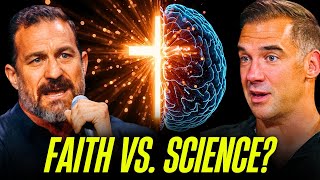
Andrew Huberman discusses why science alone isn't enough, exploring how prayer and faith affect the brain. He shares personal insights on meditation, neuroplasticity, and why curiosity matters more than cynicism.
Chapters
I think the most dangerous thing to brain change, to plasticity, is cynicism. Cynicism is anchored in the idea that things are one way and they're not going to change with each phase of life. I think the real work for us to do is the same work we did as when we were children, to embrace the learning and the curiosity about what's being presented to us and try and evolve into it, evolve with it. Andrew is a neuroscientist. He runs the Huberman Lab, which studies.
Neural regeneration, neuroplasticity, and numerous brain states. Andrew Huberman.
Here's what's very interesting about the neuroscience literature over the last couple of years, which is the release of dopamine actually occurs often in response to errors that we make while trying to learn. Here, again, we thought dopamine was pleasure. We know it's motivation. We know it's a number of other things. But here it's also released in response to errors that we make, which wake up the brain that it has the opportunity to change.
What have you personally gained in the last year and a half since diving deeper into the practice of faith and prayer?
For once, I can answer in one word, which is peace. I pray for, among other things, peace for myself, for others. You know, one of the things that I found to be most beneficial is actually praying for those that you dislike the most. We could place our brain into particular states to do the things that we want to do. This is my real work over the next year or so. So the practice that I encourage you all to try is to.
How many of you guys are excited to see Andrew Huberman live? Yeah. Someone of greatness, baby. Let's go.
I'm ready.
He's ready. He's, like, as brilliant as he is, he's very introverted, actually. So this is a lot of energy for him. You got NQ saying, bring me all the energy. And he's like, oh, my goodness, this is a lot of energy. So we're gonna have a fun time. This audience has been learning tools to help them thrive for the last couple of days. People have flown from all over the world. There are a lot of locals here as well. How many from LA Here? We got a lot of locals and others who have flown from other countries and all over the world. And I wanted to make sure that we created an experience for two full days to give people tools and inspiration to help them improve the quality of their life. You talk a lot about the science and the neuroscience behind health and living a healthier life. How to Maximize our brain, our bodies, and ultimately our spirit and our souls to feel more peace and harmony. You talk a lot about sunlight, getting up early and making sure you look towards the sun early on. You talk about getting quality sleep. You talk about eating well, which is a lot of what our parents or grandparents tried to tell us to do as well. But sometimes we've forgotten how to do these things. But I have a bunch of questions for you here. But there's one thing we talked about backstage beforehand, which we were taking some photos backstage and before you said you were meditating and you were praying before you came up here. And I wanted to ask you, this is not in my questions, but I wanted to ask you, is there any science or research behind prayer or faith that helps people heal their body, their mind, or their souls?
They answered for you. Well, first of all, great to be here. Truly, it's really wonderful. And so, believe it or not, there's quite a lot of science now about prayer and meditation, but we differentiate between those two. And work by a guy by the name of Dr. David Destino at Northeastern University and others has really identified, first of all, a number of clear health benefits to acts of faith, including prayer. So the acts of faith, acts of.
Faith, what does that include?
So the mere statement that one believes in higher power or God or something larger of some kind is not sufficient to sort of glean these, these health benefits. It's not a problem, but you know, it doesn't get you any health benefits. However, people that engage in faith based practices, pretty much of any kind, that get your mind outside itself to some extent and acknowledge something or other things outside of you, have been shown to have pretty spectacular health health benefits in the short and long term. Everything from reduced cardiovascular disease, cerebrovascular disease, recovery from grief, recovery from addiction, and on and on and on in ways that we can separate from the social connection that often goes with faith based practices, which of course are also wonderful. Convening with people, in some cases praying with people. And of course prayer and faith is a very individual thing. Um, it's something that for a long time made scientists kind of uncomfortable. Unless you look into the history of scientists and then you realize that many scientists actually had faith based practices. And the reason I say faith based practices is it's different to engage in actions related to one's beliefs as opposed to just thinking, yeah, like I believe in, in something greater than just so.
Not just saying I believe in God or I believe in the universe or a higher power or whatever. You're saying is bigger than you. It's not enough to just say that, but it's actually having a practice of prayer or communing with people in a faith based practice.
That's right. And you know, it was, I'm a longtime meditator since I was in my teens. I turned 50 in a couple of weeks. I still and feeling good. Thank you. And you know, meditation for me started off as a kind of a standard 20 minute a day or 10 minute a day. It soon went to 0 minutes per day type practice as it does for many of us. It's very difficult for people to maintain a meditation practice. Very few people do that. It's a wonderful practice practice as you know, for reducing stress, giving often insight, allowing more creativity. There are many, many hundreds of studies on this now. But the practice that I really embraced starting back in 2017 that I'm a huge proponent of is traditionally called Yoga nidra. This has been something that's been known about for thousands of years and done for thousands of years. It involves lying down, doing some long exhale, breathing. We can talk about why that's beneficial, which lowers the heart rate among other things, sort of body sk. Getting the mind out of thinking and doing as they say in these Yoga nidra scripts and to one of just being and feeling one impure sensation. Okay, so that's my meditative practice. I, I coined that somewhat reluctantly as non sleep, deep rest because I thought that would bring more people to the practice. I but I acknowledge that's a thousands of year old practice that was not developed by me, was developed by others. That's a form of meditation in the sense that you're not in a dialogue with anything outside yourself. Prayer, I think we all know what that is, is something quite different and that's something that I've always done in the past. It was somewhat covert prayer for me. I didn't really acknowledge that. I pondered an existence of a higher power and I had, I wouldn't say a religiously divided family, but the beliefs and value systems were, let's just say, very diverse within. So it was a point of confusion for a long time. And then starting about a year and a half ago, I got into a regular practice of prayer daily or it's actually nightly for me. And the way I do it doesn't really matter because again it's highly individual but this is, it's a communication with, you know, a non human, you know, entity for me and you know, praying to God. So and people do this very differently. And again it's I think it can make some scientists uncomfortable because you say, well, you're supposed to be a person of science, you're supposed to be objective. And scientists and theologians have gone back and forth that, you know, can you prove, can you disprove? And as disteno doctor David Destino points out, it becomes sort of irrelevant at the point where you acknowledge that the human brain. I think we can all acknowledge that the human brain is spectacular. It can change itself, it can make plans, it can enact those plans. There's a reason why we are the curators of the earth. I mean, we have brains that are far more sophisticated in terms of our ability to build technologies than any other species. And here I of course acknowledge the incredible sophistication of other species. But humans are the ones basically in charge of taking care of this planet. And yet human brains alone and even in combination are spectacularly terrible at solving certain problems. I mean, every time we see a challenge in the world as we, you know, many challenges these days, but recently there have been, you know, some of these have been highlighted again and again. And it's hard to not just acknowledge that and see that and think, are we progressing? So then people cite statistics, right? They say, well, you know, 100 years ago things were far more violent or difficult, infectious disease was worse, et cetera. But somehow you'd think, well, shouldn't we have it right by now? I mean, I mean, shouldn't we be able to control our behavior, resolve our differences? And that to me personally, I'm just revealing my personal beliefs is where acknowledging that humans are not equipped to have all the answers. And that's where I look to my training as a neuroscientist. I say we understand a fair amount about how the brain works, certainly not everything. And I don't think that the human brain, for all its beauty and abilities is capable of managing everything that life here on Earth presents to us. And so for me, this notion of higher power and faith based practices have been enormously powerful for me in terms of helping me navigate decision space, come to clearer understanding about what emotions that exist in me and in others mean. And again, it's a very personal thing for each and every one of us. And I acknowledge that. But it's something that the science is really demonstrating has immense benefits as well.
What have you, what have you personally gained in the last year and a half since diving deeper into the practice of faith and prayer for you? What is just whether you've researched it or not? What has personally been supportive for You.
It's a work in progress.
Have you seen health benefits or mental benefits?
Yeah, for once, I can answer in one word, which is peace.
Oh, wow.
You know, it. It's.
That's good. Wow. Did you not have a lot of peace before you started this practice?
No.
Really?
I mean, you know, I could find joy, I could find happiness. I like to think I could find meaning in my work and relationships and. But I didn't have that notion or that's, like, sense this, like, really core belief that I now hold that I'm not supposed to have all the answers of how to bring about peace. And so I pray for, among other things, peace for myself, for others. You know, one of the things that I found to be most beneficial, and we've heard all of this in the. In the psychology studies, is actually praying for those that you. You dislike the most. Mm. I mean, so, actually, I didn't think we were going to go this direction.
I didn't either. You brought it to me last.
Well, I'm going to try not to take the entire hour by doing this, but when I sit up on my seat, that's. That'. So we'll.
Let's go.
So. Okay. May I. Okay. So yesterday, two days ago, on my podcast, I had a guy on my podcast by the name of Christophe Koch. He's a. He's a luminary of neuroscientists who's been studying consciousness for the longest time. And that episode will come out, I believe, Monday. But the point is not to plug the episode. The point is that I asked him, what is consciousness? And we have a conversation about that. Asked him about how one changes the brain. And, you know, I know a thing or two about that, and he does, and so I was learning from him as well. And then we got to this point of, you know, there seems to be two bins right now, broadly speaking, two bins of mindsets about the world that we see around us, which, of course, is filled with wonderful things, but also is filled with very troubling things, including questions about whether or not we're evolving or devolving, frankly, whether or not social media is good or bad. And I think we all acknowledge that these answers are somewhere in the gray zone. And we got to the point during this podcast discussion, which was sort of an agreement that there seem to be two stances that one could take about life. One is live and let live. Look, as long as somebody is not harming anybody else, you know, live and let live. Right. Okay. The other is one of moral Judgment where we feel infringed upon by people's choices. Right. And I think we all have the capability to go into either of those. And if we acknowledge that that's been the case throughout human history and very likely is going to be the case going forward, then I don't think we can expect things to get that much better. Right. As long as those two bins exist. And so the question is how to get outside of this, what Kristoff calls different perception boxes. He made up that term, I didn't. These are boxes of perception based on what we neuroscience, we call priors, which is nerd speak for your, your own personal history and memories. You believe certain things based on how you were raised and your experiences. Other people believe different things, different perception boxes. How do you, how do we get outside it? And by the end of that very long conversation, and I basically came to the conclusion that I started with at the beginning of the conversation, which is that humans don't have all the answers. We can't do it ourselves because the brain is just not equipped to do that. It's equipped to do many wonderful things. But the brain is so context dependent, it's so self perception box depending. We're all looking out at the world through these boxes that are, you know, built on our personal histories and beliefs. And unless we were to embark on a worldwide experiment where we all try and enter the minds of other people and develop immense empathy and make that a project, it's very, very hard. I think we can assume that some of the same, many of the same problems are going to continue to show up, but in different form. And so if we really want, I believe if we really want to evolve our species. Right. And evolution is often discussed as sort of a cornerstone of, of non religion. Right. But if you, if we want to do that, we're going to have to embrace the idea that we can't do it alone. We need some outside guidance. We have to because otherwise it's going to be human brains which are fallible, making fallible choices despite best of intentions because of these perception boxes. So it's, I don't have a stance of pessimism. And we also talked about, and maybe this is a segue perhaps to kind of more, you know, daily life things. But on one end of the continuum we have optimism and curiosity and neuroplasticity, right. The ability to change our minds in ways we want. And on the other end of the continuum we have cynicism and I think the most dangerous thing to brain change, to Plasticity is cynicism. I'm absolutely convinced that cynicism is the enemy.
Can you?
Of all good things.
What is that?
Cynicism is the belief like, yeah, well, people are, you know, fill in the blank. Any statement that dismisses the possibility of change.
A negative thing, could be a group.
Could be about yourself, the worst kind of thinking. And there's science to support this. I have a colleague at Stanford who studies this. You know, the worst thing for brain plasticity is cynicism. Because by definition, cynicism is anchored in the idea that things are one way and they're not going to change. Curiosity is an interest in what might be there or could be there, sometimes layered with an emotional hope that it might be a certain answer. But real, true curiosity is about wondering and wanting to find out and doing the work to find out, understanding that the answer might be one thing or another. Curiosity and neuroplasticity are absolutely linked. In fact, if you look at the great minds throughout history that seemed to be great learners throughout their lifespan, the great Richard Feynman among them, the great Oliver Sacks, neurologist, writer among them, they were curious about many, many different things besides science, art, animals, nature. And curiosity is something that we can breed inside ourselves. It takes more work for some than others. But curiosity is basically the gateway to brain change. I'm certain of it. And the data support that. Cynicism is the way you make your brain filled with cement. You take what you've got now and you kind of cap it off and you go, I guess I'm just going to kind of live out the rest of my years believing this, believing that, and not just about other people, right, but about ourselves. So I truly believe that with each other phase of life. I can say these things now because I'm turning 50. With each phase of life, I think the real work for us to do is the same work we did as we were children, when we were children, which is to embrace the learning and the curiosity about what's being presented to us in this next, you know, frontier of life, the next month, week, year, and trying to evolve into it, evolve with it, as opposed to clinging to these notions of self. And the Buddhists talked about this as, you know, ego detaching from the ego or disillusion of the ego. But I think ultimately, if. Since simple things tend to stick with us, cynicism is the enemy. Curiosity and neuroplasticity is hope, basically.
I'm so excited about this because a lot of the things we've been talking about you know, my man down here said he came back this year. Tell me your name again. Corpus. Corpus. Came back this year from last year. And I said, why'd you come back? He said, to help me overcome the negative thinking in my life because it just keeps coming creeping back in. And what I'm hearing you say is that the cynicism sounds a lot like negative thinking. Doubting myself, doubting what's possible, doubting could I actually do this thing. Is that similar to negative thinking and cynicism?
Yes. Cynicism is sort of a. It's anchored in this core belief that things can't change. And if they do, not much, and if they do change much, then they're going to change back. And it's work to be curious. It's. You know, this is what we forget. It's sort of like anytime we see a great performance of someone in the arts, you know, we think that it just kind of came to them. Right. Virtuosity does not arrive by chance. It's built on tons of work. And we know that. So the work to make our minds perhaps not optimistic, maybe optimistic is too. Too lofty to really reach for. We just to just try and remain curious, you know, why the cynicism? Ask questions. I mean, the best way to trigger brain plasticity is to ask questions of oneself. And, you know, going back to this thing about prayer, you know, that's also something you can pray for. You know, you can acknowledge that the brain, our brains, all of us, are stuck within our own modes of thinking. I mean, think. This is so. W. Right? You. You talked about the kids, right? The kids?
Yeah.
Yeah. Okay, good.
Yeah, yeah.
Because otherwise it's like. Yeah, yeah, okay.
We had a. We had a gender reveal. The whole thing yesterday. It was a.
Because if not, I just kind of. He's having twins.
You talked about the kids? No, we didn't.
So, you know, I teach. I. For many years, I. I taught human fetal brain development so we could talk about that.
Perfect.
But the point here is that the most incredible thing. The most incredible thing is that all our brains built themselves. Don't get me wrong, your wife's doing a lot of the work and you're doing like this much. But. But the. But the. Your brain built itself.
Huh?
It took the genetic instructions and built itself. Sure. Nutrients come in. We need to support it. There's a communication between mother's body and fetus, of course, but it built itself. And then the brain, the human brain can self direct its own change. Now, fetal development is a Miracle, right? It's a spectacular miracle that you get. You join two cells, sperm and an egg, and you get a baby. Your case, you get two babies because you're ambitious. And so, you know, but it's. And I think that the most important. I'm going to say it's the most important thing, like 50 times. I realize a key thing to understand is that we don't have infancy, childhood, adolescence, teen years, adult, and that's it. Development is an arc. Our whole life is a developmental progression. And some of the great psychologists like Erickson understood that at every stage of life, we're dealing with some core conflict that we need to resolve. He was smart enough to understand that. It's not like you. You become an adult at 25 and your brain's wired up. By the way, I just found out that for men, the myelination, the enshrining of the neurons with the. With the tissue that allows for fast transmission between neurons doesn't occur until 50. So, yeah, I know you'll notice mostly female laughter in that one. So sort of a frequency, two more weeks.
Two more weeks.
So. Oh, man, you got it in for you. You're so stoked. I'm so happy for him. I really am. You know, see your friends, who obviously, Louis is going to be a spectacular father. It's just so awesome.
Thank you. Thank you, brother.
Thank you. So, so much fun. So brain change is not easy, and it's more and more difficult as time goes on, but it's a skill. It's a skill that can be mastered like any other. And we could talk about ways to access it. I've talked about that on various podcasts. You know, we say you gotta be alert, you gotta be focused. Okay? You need to be alert to be focused, and you engage in some learning process and it's gonna feel hard. It's difficult. And it turns out that the challenge, the friction of learning, the errors themselves are the signals back on the learning system that it should change, right? Which makes sense when you hear it. But then we all are looking for flow states. And the notion of flow states is wonderful, but flow states are something that are kind of a higher order thing, and when you start reaching for them, it disappears and it's like grabbing for fog. And so you have to go back to this alertness, focus, effort, errors. That means you're doing everything right. So every time you have a cynical thought, but you're like, there it is again. Actually, my. I'm going to sound like a name dropper, but he's a close friend of mine. I just spent a couple of weeks with him each summer, as I do Rick Rubin, who's a master of creating things. And we talked a lot about meditation. Rick's awesome. Just such a nice person too. And he is a longtime meditator. And his process of meditating is very simple. But there's a very powerful tool within the meditations that he had never told me about. And I'm kind of pissed that he didn't tell me about it earlier, which was he said, you know, when he, when he's meditating, which by the way, he does every day. I observed it. And a thought comes up. He just labels it, like, with a little sticky thought. Like, that's a thought. That's a thought. When we can start watching our own mental processes, we can start seeing things like, oh, I'm in friction, there's an error here, I need to try harder. And you, you start to observe yourself learning, and you get better at that process. So frustration becomes the prerequis and all that's good and fine. And then you need to sleep at some point. I've talked a lot about sleep and how to access sleep on the podcast, and sometimes you actually access sleep on the podcast because they're very long. I always joke, if nothing else, I'm gonna cure insomnia. But really serious hat tip acknowledgement to the great Matt Walker, author of why We Sleep. Because I would like to point out that 10 years ago, the mindset in the high performance community, it was like, we'll sleep when I'm dead. And a lot of those people are now dead. But Matt was the first one to really start beating the drum, like, hey, this sleep thing is important now. You don't want to get sleep related anxiety about getting sleep. But during sleep, and particularly the second half of your sleep night, the brain rewires. You get neuroplasticity. Okay, all that's fine and good, but if we really think about neuroplasticity, how can we accelerate this process of learning? The real process of accelerating neuroplasticity and learning absolutely comes from clearing away the clutter and accessing the things that for us feel most true even as we're making errors. There's something really pleasureful about digging through a learning process, and it's very hard when we have to learn something we don't want to learn. And here's what's very interesting about the neuroscience literature over the last couple of years, which is that the release of dopamine actually occurs often in response to errors that we make while trying to learn. And here again, we thought dopamine was pleasure. We know it's motivation, we know it's a number of other things. But here it's also released in response to errors that we make which wake up the brain that it has the opportunity, opportunity to change. And Rick and I were, and he gave me no permission to talk about this, but I'm just going to do it anyway because we decided, you know, it's kind of interesting. There are all these meditations. There's love and kindness meditation, there's yoga, nidra non sleep, deep breaths, there's even forms of hypnosis out there. But you know, wouldn't it be amazing if we could place our brain into particular states to do the things that we want to do? This is my real wish and my real work over the next year or so. And, and so I don't even think these are meditations. But the practice that I encourage you all to try is to. Is very brief, is, you know, these days we know we're being bombarded with tons of content. We essentially walk around with little TVs, like little TVs all the time.
We're like, what?
And then we're like, I don't know why I can't focus. We're watching TV all the time, you know, and. But our brains are very context dependent. The way to think about the way your brain works is that in certain states of mind, you're like, your mind and your focus is like a ball bearing on a flat surface. And it can go anywhere. If you tilt that surface. As you get more focused, imagine little dimples in that surface and it can drop into any one of those dimples. And the thing that we're all seeking is for the ball bearing to drop into a deep trench and be locked there for as long as we want and then out. But typically it's the other way around. It's. We get locked into these states that are either because our emotions have been grabbed by something external or because, you know, we're upset about something and so on and so forth. And it's very hard for us to get that ball bearing down into the trench of the thing that we know we need to do. And so the practice that I've been developing for myself is one in which I acknowledge this. I acknowledge that the world is noisy, my brain is noisy. And I have a practice now of about one to three minutes. And believe it or not, I just scripted it out onto a voice memo. I do Believe that when we do it in our own voice, and I encourage you all to do it in your own voice, it's more powerful than listening to someone else's voice because after all, it's your voice. And I highly recommend recording three voice memos or four voice memos. The first one is one that you tell yourself. There's a lot of noise in my head. There's a lot of noise in the world and I'm going to get distance from that noise. And for me the visual is one thing, I can share it with you, but for you it might be another where I just imagine the noise moving further and further away. I'm still acknowledging I'm in the world and it's happening, but it's sort of like ripples moving further and further, further away. After about three minutes, I shift to a different voice memo which is. This sounds so crazy, but knowing what I know about the brain, I figure it's, you know, not quite as crazy, which is. Then I listen to a one to three minute script about focusing, which is really to try and acknowledge that focus is something that constantly drifts until we're in a flow state that we. That focus is a process of redirecting our attention. Redirecting, redirecting, redirecting. I had Alex Honnold on the podcast, right? The guy that we were all terrified to watch free solo up El Cap. Probably more than he was amazing. It's. That's the craziest movie we know. He lives like from the first frame of the movie and it's still terrifying.
Yes.
But you know, in that state he's got so much to anchor his mind that I doubt he's pushing away lack of focus. But for most of us, because it's not life or death circumstances, you have to acknowledge that you constantly pushing away things and you have to refocus, refocus, refocus. It turns out people that are very good at accessing flow states have powerful activation of what's called the no go pathway. There are two pathways of action in the brain and brain circuitry called the basal ganglia. A number of different brain areas. One is go like to generate movements or thoughts. The other is no go to try and suppress movements or thoughts. Flow states are mainly accessed mainly by the no go process. So the more you can shift out of your mind cynicism and try and redirect for instance to curiosity, the more you're in a no go. That way. Yes, that way. So this second short script is what I use to visualize focus and sometimes I actually will think about Alex's climb as a kind of a. The pinnacle of an example of focus. And then I'll go into something I really need to do. And this might sound silly or overly structured, but I'll tell you what's really silly. What's really silly is that voice in my head saying, you should do this thing. Now I gotta do this thing. Oh wait, there's a text message. And then three hours later you're a little fatigued and you need lunch. And then you're a little fatigued because you ate lunch. And then the next thing you know, the thing didn't get done. So I'm talking about a one to three minute investment to clear clutter. Get distance. That's it. Get distance from noise. A one to three minute script to acknowledge the focus process and get into. And then to do the thing, you know, that's thing about that we procrastinate the thing that we can just avoid until it becomes a deadline or it's terrifying or it's passed. Now here's the real key to plasticity. Those steps are required, but the real key is when you finish out what you're doing. Your focused work on whatever is most important to you. At some point later that day you need to reflect on what happened in that work bout. And this is so important. If you remember nothing else that I said, please take this away. We know now, based on the neuroplasticity of learning literature and how best to study and that whole mountain of literature, that the best way to remember information is to not forget it. Which sounds like I'm joking. No, it sounds like I'm joking. I know, I was like, I have to like get into it.
How do you not forget it?
So here's the thing. You self test. Every bit of learning turns out to be anti forgetting. And I know it sounds like it's just a twist on words, but here's the experiment that's been done many times now. I give you a passage to read four times or one time or two times. And in some cases I have you self test just in your mind for a few minutes later that day. Then I wait three to six months and I come back and I test you on the material. Turns out reading something once and self testing later and realizing you don't remember it all, but you remember certain things allows you to remember more significantly more information six months later then had you read it four times. So it's the reflection on the thing that we did earlier that locks it in And I'll give you an example of a ton of sensory exposure with a ton of focus and a ton of attention that you devote every single day. And you remember nothing of. If you were to think, okay, last night, you're probably yesterday, you probably scrolled social media at some point, you didn't think about it afterward. I mean, do you know how many dog posts I look at? And if I think about it now, I'm a little afraid to do this because I don't want to remember the wiener dog sleeping in first class thing that I saw yesterday. And now it's stuck in me, right? But when we were the whole. The social media is wonderful. You can learn there, you can connect there. But when we reflect on the thing that we did or that we learned, in particular the errors that we made, you lock in the critical information, you prevent forgetting. It turns out that most information that comes in through our eyes and ears, et cetera, is designed to be discarded, which is why reading something four times doesn't allow you to remember it that well compared to reading it once. Yes, your mind will drift and then later that day going, okay, what do I remember? I don't remember that. I remember that piece. Okay, I'm going to go back and look up that piece. Self testing is not just something that we should experience of others testing us. Self testing on knowledge or skill. Or this could be physical skill, musical skill, could be relational interaction. I mean, how many people after, like couples therapy take a walk by themselves and go, yeah, like, what did I really learn? You know, maybe that's why I should be more of it, who knows? But the point is that we don't do this. We tend to think that the experience is the experience, the learning was the learning. And it turns out you can learn so much faster, you can learn so much more durably. And there's a terrible instance in life where we know this works, which is in the case of trauma and things we don't want to think about later, the replay later is critical, replay later is critical. And so if it's not happening automatically, as is often the case, you need to do that for yourself. And then the sort of fourth. So I have a one to three minute script which reminds me of this. It says, you know, like Andrew, the data all tell you that, and I already know it, but it's useful to have a practice. This is why, dare I say, we sort of coined the word protocols even though it existed before. Because in laboratories you would say, what's the protocol to stain these cells for dopamine or something. So protocols to me make sense because as a word, because it's supposed to be a list of things that you do that work the first time and every time to get you someplace. And so it's critical that we acknowledge that our brains are just not good at doing all the steps without a little bit of self guidance. Then the question becomes, what self guidance? Then the question becomes, well, how can that self guidance be weaved into my day in a way that's seamless and easy and quick and doesn't cost anything? And I'm giving you some examples of these. So this is simply what I've been doing and I've found to be very useful. And, you know, neuroplasticity does exist across the lifespan, but, you know, in a kind of, you know, acknowledgment of a reality. It's harder to learn now than it was in my 20s, but I think with these practices, I find that it's not that much harder. And all the data tell us that our brains are plastic throughout our entire lifespan. So I encourage you to think about these not as meditations. The word that comes to mind is sort of activations. You're trying to place your brain into particular states that have you less noisy in your head, more focused for the second one. Then you do the thing, whatever that is, and then in a state of reflection to really lock in the plasticity that you'll experience that night or the next nights when you sleep. That's basically what it is. So sorry, there was probably another question and I just kept ripping.
No, it's amazing. I haven't even gotten to the first question. I haven't even.
So I'll stop.
I have all the questions for a whole episode on the Protocols of Greatness. But you just kicked it off so far so beautifully that I was like, all right, we'll have to do another one later. I was just in flow state watching you, man. I'm like, it's amazing you got so much information. I'm curious then for you, you know, when you were talking about the self guided meditation, essentially these voice notes, this is something I did 22 years ago when I was in college playing sports. I would record voice notes, not on a phone back then, but on a voice recorder. And I would sync music to it to create an emotional feeling for myself. Kind of like a motivational song with my words over it. And I'd play it at night and try to anchor in this feeling of belief in myself for the next day, for practice. For games, for things like that. And you are just reminding me now that I need to do that again. Like these voice notes. So is these, do you have music over them or is it just a voice note for like two minutes that you just say to yourself and listen to?
Yeah, for me, it's. There's no music. It's just dialogue. And, you know, it's funny. Like 10, 15 years ago when you were doing this, you said 20 years ago. Okay. You look so young. 20 years ago, you were like an. In college.
No.
Oh, yeah. The, the, you know, a lot of the stuff that we now know is, is supported by science was, you know, like, people were like, oh, that's kind of like weird, like breath work and you know, and like, are you going to levitate too? It'. Well, if I could, I would, but it's been just a little bit of an editorial here. It's been really interesting to me. You know, my lab worked on respiration physiology. We used to breath work. We didn't call it that because that sounded like mysticism. And, you know, it's really interesting that science is evolving to, you know, meditation. There's tons of peer reviewed, federally funded studies on meditation. Thank goodness. Also on yoga, NIDRA lowers cortisol, helps you sleep, helps you learn better. I mean, respiration, you know, we. Now basically, the, the breathing thing is all pretty straightforward, right? What? The conclusion I've come to after all these years of looking at everything from Wim Hof breathing to Kundalini breathing, to physiological sign to box breathing to all of it, is that if you emphasize the exhales, make them longer or more intense than the inhales, your heart rate slows down, you get calmer. If you emphasize the inhales relative to the exhales, your heart rate goes up, you tend to be more alert. You do a combination of the two, you can be very alert and very calm at the same time. Right? And it works through respiratory sinus arrhythmia and the motor and the sensory branch of the vagus and the diaphragm and carbon dioxide and oxygen, but basically, longer, deliberate exhales calm you down. Longer, more intense inhales wake you up. And, you know, I'm not trying to trivialize, you know, hundreds of studies, some of which I, you know, I got very involved in for a long time, but that's basically the crux of it. But for many years, science and my community of scientists, they were disparaging of it being like, oh, yeah, I don't know, you know, like, that seems a little weird. And. And then I'm like, well, you look kind of stressed, and maybe you should do it. And, you know, but. And likewise with the sunlight thing. Right. People have been talking about getting morning sunlight for thousands of years. All of the circadian biology, all of it tells us that it's extremely valuable for elevating your morning alertness, which we could talk about the mechanism for that, improving your sleep and things that I've, you know, blabbed about for a long time. So when we talk about adding music, music is an incredibly powerful anchor for emotions. And there's something really special about the music that accompanied particular life events with other people we care about. Right. I'm sure you can remember the song they played. First dance after being married, this kind of thing. Right. I mean, you'll probably play music as your babies are being born. Right? That would be awesome.
Every time they play music, they, like, start dancing inside. It's cool. They start moving.
Amazing. He's so stoked.
Yeah. It's gonna be fun.
I love it. You make me cry, man. Don't do that. Yeah.
Yeah.
Don't do that. Okay. Yeah, don't do that.
Huberman never shows any emotion. You know, he's very scientific.
Yeah, I'm a real robot.
Yeah. Yeah.
Actually, last year, I cried on two podcasts. No, Stephen Bartlett's podcast. I kind of welled up, and I was like. And then. And then when Martha Beck was on my podcast, she made me cry.
Oh, wow.
Yeah, she made me cry talking about my bulldog, Costello. And it was. It was. It was actually. And I told my producer, Rob. I looked at him. He's been in every podcast we've ever done. And, like, when it was just me, him, and Costello, my little closet, and Topanga and I looked him after we wrapped with Martha, and I go, we're not releasing that. And he goes, we're definitely. I was like, oh, man, I still can't watch it. But the. No, emotions are good. Emotions are good. Emotions are good. Emotions are better.
What do you. What?
I'm half Latin, man. My dad's Argentine. Like, we're used. So it's like, you know, the.
I'm curious, speaking of emotions, what happens to the brain of the body when we express our emotions, whether it be through tears, through crying, through physiological release of some type. What happens when we do it and when we block the flow of emotions that we want to release, but then we stiffen up.
Yeah. Well, unless it's okay. So feeling emotions, obviously is healthy. Right? The ability to Feel your feelings. What's probably not healthy is catharsis directed.
At somebody else, like angry, mean, or.
Screaming at them, you know, screaming at yourself, you know, I guess there's so, I mean, I've let out some pretty loud yells at myself that were pretty effective, I think, you know, I think so. There's a time and a place for it. We know that pushing down of emotion is not healthy. We know that. But of course, you know, we have to behave ourselves. Right, right, right, right. All the data tell us that, you know, this vagus nerve thing, I did an episode about this, this last year that really opened up my eyes. You know, we all know the mind and body are connected. The vagus is the connection between the mind and body. More serotonin is made in the gut than the brain. But I had no idea, even though I teach neuroanatomy, I had no idea how far the research has come in the last like four years. Basically, the Vegas can be summarized this way. It collects sensory information from your whole body. Heart rate, lungs, how full they are, your gut, the status of your conscious and unconscious stuff, and it's sent up to your brain. Like 85% of the vagus nerve pathway is sensory. It's stuff going up to your brain. It's feeding your information, feeding your brain information, excuse me, about the status of your body and what it's experiencing. And then there's about 20% that's descending information that is motor. It's controlling your heart rate, it's controlling how full your lungs get or how not full your lungs get. And so it's a bi directional pathway. And we've heard so much about it being parasympathetic, it's a calming system. But it turns out that it's a system that's positioned to understand when you're packing something down. You know, that packing down that we're all familiar with because it's like not the appropriate time for something or you don't, you know, you just don't want to feel what you're feeling.
Stuffing.
Yeah, sadly, I mean, I can say, and I think I'm, I'm certainly not alone in this. I can remember one particular event in my, you know, childhood history where I, I remember feeling something really. And I was like, and I was like, wow, that's good. I can do that. I can like pack that. That turned out to be not so good. That's not good, not so great. But the ability to, to pick time and place for and way of expressing emotions is obviously key. But Emotions are the gateway to plasticity. Your music experience and practice certainly acknowledges that. We talk about peak and awe experiences. We never forget those. And on the darker side of things, traumatic experiences, we can unload the emotional component of those through things like cognitive behavioral therapy, emdr. These days there's a lot of interest in it's not really a psychedelic, but in pathogenic therapies like MDMA, which by the way is still Schedule 1. It's still illegal. Have to point that out and maybe we'll get FDA approval this year. If you ask me, I'm hoping for FDA approval, but they need the proper safety checks in place. The question is, who are going to be the therapists? How is this therapy going to be done when people are in a state of vulnerability? So some really serious issues and despite what you could say about government and the fda under any political leadership, you know, but they really do. There are good people who want to protect people from harm. But I think within pathogenic help, you can learn to emote more easily and have empathy for self is a big part of being able to tolerate emotion. So emotions are a wonderful aspect of life. It's about being able to control time, place and way of expression. But yeah, I think crying into your pillow every once in a while is pretty healthy. Yeah, yeah, I do. I think it's a good. I think it's a good thing to do and no one has to see it unless you do it on a podcast. So, you know.
Okay, I'm going to try to get to my first question. I still haven't gotten to the first.
I mean, I'll keep going on. I don't care. Right. I'm not. I mean, I love this. I mean, so it's, it's up to you. You probably. People probably want to go see the Canelo fight or they want to go out to dinner.
Canelo's fight. That I.
Right, I know, yeah.
Sorry.
It's okay.
We're all hanging out tonight, you know, so that's going.
I'm perfectly happy to miss the fight.
Yeah, yeah, yeah. I'll see the replay. You know, this is all about the protocols to greatness again. I wanted to give you guys the best of the best here at summit of greatness. This man is the most popular scientist in the world, the biggest following in the world. He's changing lives. I'm curious for you if you had to say, these are my top three, top three science backed protocols to support you personally. And the evidence is just abundantly clear that if you follow these Science backed protocols. You will have more peace, more clarity, more focus, more freedom, more of what you really want in your life. What would those three things be?
All right, well I'm going to take a freebie and tell you four.
Perfect.
Because I'll just reiterate earlier, it's interesting. You started with prayer. You're like, let's go in the deep end here first. I mean I do think that when we feel least able to control our mind and where it goes, that's especially, that's an especially good time for something like prayer where you give it over. It's not like it's not your task to handle everything and it certainly isn't the task of other people in your life. I mean that's another benefit that I've noticed is that is like meditation, prayer, they, they unburden a lot of people in your life that you. That I was otherwise burdening. Right. To solve things or to reflect back things I want. I mean we're a crazy species and we love love and we don't like to feel angry and then we. It can get all mixed up and it's tough. And so when you, when you just acknowledge like and you just ask for feelings to be taken away so that you can have more clarity and more depth of connection with the things in your life and the people in your life. I mean anyone who's done this knows it works. I can't tell you why. And I kind of love that. I can't tell you why. Like for once. It's a short sentence. I don't know why, but it works. Okay, the other three, the other three, the other 3. You know, I talk so much about this morning sunlight thing that it's almost like a joke by now, right? It's kind of like a meme. I keep seeing it, the morning sunlight thing or long exhale breathing to slow your heart rate or nstr. And I do think nowadays, thankfully, something that, by the way, back in the day when I was a teenager and in my 20s and 30s, resistance training, oh, it's all going to turn to fat. That's only for bodybuilders and military. It's like, no, everyone needs to do this. And now everyone knows they need to do it. So basically whatever they're saying right now is ridiculous. That's the future. I mean, have you caught on to the pattern whatever that people go, that's ridiculous. Like, well, this whole creatine craze is pretty interesting to me. I don't think everyone needs to take it. But yeah, there's some benefits for many people. It's not necessary, but creatine's been around a long time. It just only broke through. Now, vitamin D3 made it first for some reason, then, and then magnesium will probably be next. Just remember, not everything is safe, but whatever is being kind of chuckled at now is very likely to be the thing in 10 years, five years. So I think rather than give you three protocols, I'll give you a framework.
Okay.
That will encompass all the protocols and I'll try and keep this brief. So when I was a little kid, my mom. No, seriously, my mom, bless her soul, I would, she would say to me, we'd be in the kitchen and she'd say, sweetie, we're just going to take like two minutes and we're going to stop talking. And I was like, but why are we going to stop talking? You know? And when I was really little, the reason this worked is, okay, half Argentine, so we call the pacifier the chupete. So I used to have one in my mouth and I carry one in each hand. So I learned how to talk out the side of my mouth. And what they should have done is just said, just shut up and sit in the corner. So, but, so, but in all seriousness, here's the deal. You want your cortisol, this so called stress hormone, it's not a stress hormone. You want your cortisol high in the hours after you wake up. I don't care if you wake up at 5am, 4am, 8am, noon. It doesn't matter to me. Do what works for you and your schedule and your life. And you want your cortisol low at night. Use that as the bookends and the framework of your days and you will be amazed how many things go incredibly well. Here's the deal. Viewing bright light, ideally from sunlight, in all the ways I've described elsewhere. I won't rattle off all the details. Take off your sunglasses, put on eyeglasses and contact attacks are fine, et cetera. Blink is need to protect your eyes. All that stuff in the first hour after you wake up. Doesn't matter what time you wake up, doesn't matter where the sun is. Although I'll place a caveat on that. You have a unique opportunity in that first hour to amplify your cortisol levels. You wake up because your cortisol levels rise. It's called the cortisol awakening response. Okay? You actually wake up in the morning because of that. Most people are keeping themselves in environments that are too dim in that first Hour. Your phone won't do it. A 10,000 lux artificial light will. If you don't have access to sunlight, but get outside and get just a little bit of sunlight, you'll amplify that cortisol. Guess what? After about two hours, going outside will feel nice. Going outside will feel warm. That sunlight won't amplify your cortisol. Drinking caffeine, provided you're a regular caffeine drinker, won't amplify your cortisol. It'll extend the duration of your morning cortisol. Exercise will get surprisingly deliberate. Cold exposure won't amplifies epinephrine, norepinephrine and dopamine, the so called catecholamines, but it doesn't amplify your cortisol. Now you say, wait, cortisol is a stress hormone. I don't want to be puffy. I don't want visceral fat any more than I already have. Like, what are you talking about? Here's the deal. Your cortisol is going to go up and it's going to go down every 24 hours. The higher it is in the morning, the lower it's going to be at night and the easier it's going to be to fall asleep. If you look at conditions like cancer, you look at conditions like ptsd, you look at anxiety, you look at mild or major depression, what you see is what's called a flattening of the cortisol response. So instead of a big peak in the morning and then it tapering off into the afternoon, at night you see this kind of gradual tapering off. And the higher it is later in the afternoon, the easier it is for little bouts of stress to ride on top of that higher baseline. And then you find it. Typically people can fall asleep if they're exhausted. And then at 2, 3 in the morning, you wake up. So get your cortisol high in the morning. There are a bunch of other things you can do. Believe it or not, eating grapefruit will double the duration of that peak in the morning. So that's cool. I like grapefruit. You don't have to do that. Licorice root with something called glycyrrhizin greatly amplifies your cortisol. But here I have to say, be careful. First of all, don't take licorice root late in the day. That glycyrrhizin will greatly extend the activ. Excuse me, the activity of any prescription drugs you're taking because it works on some enzymes in the cortisol but other pathways too. So you have to be careful. You know, you could take a little bit of licorice root with glycyrrhizin. Actually, many licorice root products and teas, they have the glycyrrhizin out because it's increases cortisol. So exercise, bright light, caffeine, grapefruit, licorice root, these are very basic things. People with Cushing's syndrome. Be careful. There's a whole other thing. Talk to an endocrinologist. Okay. Now, ashwagandha, the herb rather, that everybody knows can reduce cortisol. And it does have a fairly potent cortisol reducing effect. You wouldn't want to take it in the morning, would you? If you are going to experiment with it, it would be in the evening. I don't think you should take high dosages of it, at least not for long periods of time. It is very potent at lowering cortisol, by the way. Pregnant women, the cortisol rhythm of high, low in Morning vs. Night, it's maintained. Perimenopause, menopause, it's maintained, but it tends to flatten a bit around the transition between perimenopause and menopause. And so doing a few extra things to, to try and make the peak higher will make the trough lower later in the day. And then at night, just think about all the things you would do in the morning to increase your cortisol and do the opposite. Keep the lights dim because it doesn't take much light in the evening to raise your cortisol. Long exhale breathing. Certainly avoid things like licorice root and caffeine. We know these things. And so pretty soon you go, wait, the protocols just fall into these bins. And of course you can't do all of them every day and you need to be careful about which ones you select. But if you think about cortisol not as a stress hormone, but what its real function is, the real function of cortisol is to mobilize glucose and other energy stores to your brain and body. That's why it wakes you up in the morning. And guess what? If you sleep with too much bright light in your room, even with your eyes closed, if you don't use an eye mask, morning blood glucose is elevated. This was published last year or two years ago in a really fine journal. Makes sense, right? Cortisol is released and it causes elevations in blood glucose. So now we can regulate our blood glucose with cortisol. Yes. Yeah, this is the way it works. And so for me I'll continue to pursue and evolve protocols and share protocols. I mean, we talked a little bit earlier about these short one to three minute. I call them activations because they're not really meditations. I'm trying to create a certain neural state to be able to do things. So I just call them that. That was Rick Rubin's idea. He's so damn smart. He was like, well, they're not really meditations and they're not. And he goes, activation, activation. I'm like, damn. Well, that's why you're Rick Rubin.
Right.
By the way, he was in the Beastie Boys. You know that he wasn't just a producer.
Yeah.
Go back and watch the first videos. Yeah, he's the big guy with the beard that back then was not a big white beard, it was a big brown beard. So if you imagine these bins for your morning and evening, it all falls into place and they say, well, wait, does that mean I can't go out dancing at night? But guess what? Going out dancing at night, you're not elevating your cortisol. It was a stressful experience. And look, it's okay to get some bright light exposure after dark every once in a while. You'll be getting a lot of that. Actually, I'm going to encourage you. I'm going to give you something I've. So we all heard of red light therapy. It's great. Increases mitochondrial function for reasons we can talk about, by the way. You can get it from sunlight. Long wavelength light from sunlight does that. It goes through your body. This was shown by my colleague Glenn Jeffries. And it improves your mitochondria. This, the long 850 nanometer light, which is long wavelength light, comes from the sun, goes through your body and charges your mitochondria.
Wow.
Like a battery.
Wow.
Wild. But for you, because the little ones are going to be here soon.
Yes.
At night when you're up, you're going to be up.
By the way, what do I need?
You need red lights like, of like a Christmas tree. Red lights or any lights that, where they're not very blue. Not LEDs, you know, incandescent bulbs or red lights. You'll sleep better and your babies will sleep better. The other thing that I just learned, and this makes so much sense, it's like, how stupid are we? Turns out, you know, women will, will, you know, they produce breast milk and they'll, they'll pump and then they'll set aside milk to give their babies. Turns out the milk collected in the early part of the day, guess what, it's very high in. And in the evening, the opposite. And people tend to not divide them by morning collected or evening collected. And they're now looking at the. Turns out babies could sleep well all the time. Like, sorry, parents. No, no, it's like. So it has a big effect. There's a big effect on improving the sleep patterns of babies. These poor babies were being blitzed with cortisol. I was probably one such baby, you know. Anyway, I'll stop there.
This is amazing. I've got three. Three things. Three things for you. We're gonna have to do another episode in the future because I have a lot of slushes that I.
You wonder why I'm an introvert. It's because I have no friends. Because I like if I meet up with people.
Two, can we put up Andrew's slide for his new book? It's not even out yet.
It's delayed. I have to.
It's delayed. Preorder it. Right.
You can pre order it. Thank you.
There's a QR code here, so I encourage all of you, get your phones out. Pre order this. This is going to be. I told this to Mel Robbins last year, mid last year, I said, your book's gonna be the number one book of the year. And it's been number one on Amazon, I think, for the last nine months. This is going to be the number one book of next year. If it comes out next year, maybe it's in two years. I don't know. Whenever it comes out, it will be the number one book of the year. I guarantee it. So make sure to support this man right now.
Thank you. I should say I didn't ask him to do that. That's very kind. And the reason it's delayed is because I decided to include illustrations and lists to make it clearer as to what was in the text. So forgive me, but.
But, you know, and the last thing, the last thing, we got the book up there, we got some of the protocols here. What's the last thing? I'm thinking, you know, I'm trying to. I need to recall the beginning. The first thing that we talked about was about faith. And I wanted to acknowledge you, Andrew, for starting to talk about that and you doing this in your own practice over the last year. Because, you know, there's a lot of people that say inner peace is the new rich and you are creating more peace in your life. And I think it makes you a better person in all areas of your life. You seem healthier and happier and thriving. And it's good. I'm sure it's many different factors, but I'm glad to know that you're bringing prayer into your life more frequently, and I think you're only going to be a better scientist and researcher in that process by doing that. So I want to acknowledge you for that. And give it up one more time for Andrew Huberman. Give it up, guys. Give it up.
For going along.
You're good. You're good. Appreciate it, brother. One more time, guys. Andrew Huberman.
There's something called dopamine reward prediction era, where people work, work, work, work, work, where they expect something to be great. And as you do that, you actually raise the level of. Of dopamine that's required to make it feel good when you get there. This is why people, you know, achieve great things and kill themselves. You know, the failure to restore.
More from Lewis







Secret Service Agent: Your Neutral Face Is Making People Distrust You (Here's How to Fix It)



