Cedric The Entertainer: From Selling Insurance To BUILDING a Comedic EMPIRE
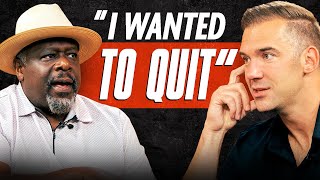
This content was created by Lewis Howes. This content was uploaded by Lewis Howes. This is a YouTube video titled "Cedric The Entertainer: From Selling Insurance To BUILDING a Comedic EMPIRE" featuring a conversation between Lewis Howes and Cedric The Entertainer. The discussion, recorded on September 8, 2023, covers Cedric's journey from working as a State Farm insurance agent to becoming a successful comedian and entertainer. They discuss his career transitions, the challenges he faced, and the lessons he learned along the way.
Chapters
Don't ever try to convince people to like you, be you, and then they'll decide and if they like you, cool. If they don't get you, cool. But be yourself. It's going to be your best way. And that's been one of those, like, flagpole things that I live off of, like you trying to change, thinking you're going to fit it so that they are going to get you, they're going to love you because you changed your little way. You can do that.
I think you got to have a dream. The school of greatness.
Really?
Yeah.
Please welcome Lewis Howard.
Welcome back, everyone, to the school School of Greatness. Very excited about our guest. We have the inspiring, the iconic Cedric the Entertainer in the house.
My brother, what's going on?
I'm so glad that you're here because I told you this when we had dinner months ago through a mutual friend, Rubin.
Yeah.
That I was living in St. Louis for six years during kind of the golden era of St. Louis, where it was Nelly, it was the Rams. Rams, and it was Cedric the Entertainer Bowman. And for me, being in that city during that time, during the late 90s, early 2000s, was so exciting. And you were such a, at that time, really exploding onto the scene in a massive way and making a name for yourself in a big way. I told you before that I was a massive fan of Kings of Comedy, and I think I watched that probably 20, 30 times.
Yeah.
And the way you deliver your comedy, the way you communicate, the way you entertain is so magnetic. And how you've consistently showed up with a positive attitude, a positive energy for a few decades now is so inspiring to me and so many people. So I'm so grateful that you're here and I appreciate the work you do. And thanks for putting St. Louis on the map.
Let's go stuff.
I love it, man. I'm curious. You've got a number of things that you've been working on lately. One is your book flipping boxcars, which I want to get into. You got a, you know, six seasons of the Neighborhood on tv. Right now you've got Kings of Barbecue on A and E. You've got so many different brands and businesses going on. But I want to ask you about the transition from a career as a State Farm insurance agent into comedy. Because when I you told me this story, I was just blown away. Way that you used to be in insurance.
Yeah.
And did you ever think that you would go beyond kind of a traditional career working with an insurance company and being where you're at Today. And how did you make that transition and have the courage to. It wasn't like comedy back then, was like a big money maker. No. Whereas there's a lot of younger guys today figuring out with podcasting and touring and making a name for themselves as social media. You didn't have social media then and you went for it. How did you make that transition?
You know. You know, that's. It's really interesting because I grew up in a time where, you know, generationally, that was the motivation. Your parents tell your kids to go to college, you get a good corporate job, and then you live your life, you know, going up the corporate ladder. So. But that was basically the steps I followed. My mother was a schoolteacher, you know, so education was a big part of our household. And so I have a younger sister who is a professor at Pepperdine. Right.
Yeah.
And so. So that education was kind of like our vibe and then. But I was always kind of creative, you know, again, probably being the only male in the house. House that, you know, that dude trying to, like, figure it out, you know, like, you know, so, you know, so I was always funny, witty. You know, in high school, I was. I wasn't necessarily a class clown, but I was what they, you know, I would call the. What they used to call it Joaning or bagging on people. If you, you know, if you was in the lunchroom and it was going down, you were getting. You won't be on your side. So. So, you know, I kind of, you know, was known for that, of course, having a witty sense of humor and all that, but never really knew I can do it as a, you know, as a business. So, you know, my. My thing was to go to school, you know, follow kind of my mother's instructions for my life. So went to school, got my degree, and, you know, and worked a couple of different jobs. Worked at, you know, selling fax machines for RICO Corporation, a little a division of that company, and then, you know, and then landed at State Farm and became a claims adjuster for State Farm. And right around the same time I discovered I could do stand up, I had a friend that was another stand up. And he was doing it for a living and basically, basically told me I could do it. He was like, you could do this. So he was making.
He was making a living.
Dude, he was out. He was out. I mean, you know, I got my corporate job, thinking, feeling good about myself, got my little tie right, you know, got a little cubicle at work, you know, but he was like, Yo, I made 1100 this week. And then I made 1400 last week. And then I'm like, whoa. Doing what? He was like, I do comedy. I'm like, yo. He's like, if anybody can do this, you can.
So was he funnier than you? Was he talented?
I mean, he's a talented person, you know, like, say he was a pro. That's what I would say more than anything. Like, show up consistently, know how to deliver a joke, know how to make a crowd laugh, you know what I'm saying? And was one of these guys that knew how to do the job, right? Knew how to stand on there and deliver and be a professional comedian.
Is this back in St. Louis?
St. Louis, yeah. What year?
What year?
This is like this. I'm say this is 80, 70, wow. Somewhere in there, like 87.
So he's making a thousand bucks a week, maybe doing stand up, killing it. And back then. That's. That's great money.
That's. You're rich.
You're rich back in St. Louis too. You're. So he said, all right, you can do this.
Yeah.
And did you think or believe you could do it or were you doubting yourself?
Well, you know, I always loved the idea. Entertaining. Like, you know, I, you know, I definitely did the school plays and talent shows, but mainly singing at that time. Look, back in those days, I would sing in groups and be a singer and go on stage. One of my first big jokes was Luther doing the alphabets. Because that was a little warm up thing I used to do, like when I was like, you know, trying, you know, when we work out in the group. And I would. It A, B, C, D.
H, I.
J, K. Elemental peace. So, you know, wow, that was. Yeah, that would be like a little warm up, fun thing I would do. And I would do that on stage, you know. And then I said that's how Luther got his weight problem, because all the girls be giving them snacks. Like, you're the third grade. You want to sing, I give you my peanut butter sandwich. Oh, man. Yeah. So. So, you know, and then, so I had a lot of little jokes like that where I would vocalize. And then, you know, he. He, the same guy helped me shape the. Shaped up my set. And I, you know, I got in a comedy competition and the first time I ever did it, I won $500. And that was it, bro. I was hooked.
$500 doing comedy at that time, like, this is incredible.
Yeah. And then, so, you know, bit by bit, just step kept the job, kept working at State Farm and Neapon Places to be, do comedy at night.
So comedy was the side hustle back then.
Yeah, exactly.
And when was the transition where you said, okay, I can make more than my main job and I'm gonna go full time in comedy?
You know, it was a strategy, you know, like, again, I think, you know, I kind of. I definitely related to, you know, having, you know, going to college and, you know, kind of thinking about things in a more strategical way and not necessarily just wanting to, you know, kind of believe that, oh, you know, this is what I do now, you know. So it was. It was a comedy club based in St. Louis. The Funny Bones. Yeah, they used to have 22 clubs, and you can go twice a year. So that's 44 dates if I. But, you know, you had to qualify for that. Like, you had to get in their system and they book you. And if they book you, then, you know, you got at least 44 dates this year. And so that became my goal.
And how much did you make on one show? Have you got 44 days?
This kind of. To your point right here, like, back then, the opening act. 350 for the week.
350 a week for one night or for every night for the week you.
Go and you do nine shows.
Nine shows for 350 bucks.
Come on, man. That's what it was. Was you happy you were part of the system, and you got it every week. And, you know, you got this 350, and you would have to drive. So the only top of that, you know, it was all around the Midwest, so Davenport, Iowa, Des Moines, Cincinnati, Chicago, you know, Cleveland, Columbus, Ohio. All that run, man.
So that was every night you were driving a new place.
Well, you stayed. You stay in the city for a week.
Got it.
So you go for the week. Yeah. Then you drive to the next one.
Yeah. That's a grind, though.
That's grind.
That's what we call the road.
Yeah. And most of them weeks, you know, like, you stay out because it goes from week to week, and you got, like, maybe three days in between. Right. So that became another. Another hustle because, you know, the shows usually started on Wednesdays or Thursdays, and then you got. So if it starts on Wednesday nights, then you got Wednesday, Thursday, two shows, Friday, two shows Saturday, one Sunday maybe, and now Monday, Tuesday, you got to figure out what you're going to do.
What are you doing that you can't.
Stay in the condo no more? That's over. Whatever. Wherever they had you staying, that's over. So now you're Trying to, like, either drive to the next city, find a.
Friend, sleep on a couch.
On the couch, pick up a. Pick up a random show. Somebody's doing a comedy night somewhere along the way, see if you can go in there and get $75. See if you can go in there and get a hundred. You know, so somebody's got a Tuesday night in. In Louisville. You drive all the way to Louisville to get. Get a hundred bucks, 100 bucks, then drive back to Indianapolis, you know, that kind of thing. Like, you know, were you, like, sleeping.
In motels of those nights or was this. You have enough money for hotels or is it more like sleeping in the back of your car? What's happening?
I slept in good hotel parking lots. That was my move. So. My mother used to be so worried about me, you know, So I had my little Ford Exp Escort. So the little coupe, the two doors. I felt like I had a sports car. I had some rims on it and.
I had some speakers.
They weren't doing the spinning wheel. That was too. The spinning wheels came way. Yeah, before that, I was. Before that, just, you know, a matter of fact, I had like some 12s and that was considered rims. Right, right. You know, because people didn't have. You had 12s or 14s on your car. The inches that was like. Oh, right. 20 inch wheels. That was out of them. This seemed ridiculous, you know, so. But. And then I had like some little speaker, had a little subwoofer. Yeah, with the small subwoofer. Clarion speakers. Come on, man. All right, Pioneer. Come on, bro.
So wait, so you were sleeping in the back of the. Of the.
So I would sleep parking. Yeah, Parking lots, you know, and I was letting my mother lay the seat back or lay the seat back. You know, had my blankets, had everything I needed in the car. You know, would sleep in there. Had my windows tinted. So I was just like finding like a cool hotel parking lot and just.
You know, security wasn't trying to kick you out or.
I never really ran into that situation because, you know, it just always kind of felt like, you know, maybe one. Maybe one time, you know, security guard came, was like, yo, you gotta roll.
How many nights do you think you slept in your car?
Oh, man. You know, through that. Through that run, I'm, you know, maybe, you know, 14. 14 to 20. I don't know. It's a blind number in there.
In that first kind of run.
That first little run. And then.
You ever have to do that again?
No, no. You know, luckily. And it was Interesting because timing is everything in business and in life. You know that I didn't even get to do the second run of that because, you know, shows like Def Comedy Jam started to happen. You know, evening at the not even but Showtime the Apollo. It was another show that shot in New York called Uptown Comedy, something like that. Uptown Comedy was another show. So opportunity for urban comedians to get on television and be urban. Like you didn't have to switch your setup and try to, you know, fit in. That those things became important. And then. So that was the awesome. Also the rise of the kind of all African American comedy clubs too. So clubs like Comedy Act Theater, all jokes aside, in Chicago, it was Comedy Act Theater in Atlanta and here. And then Steve Harvey did a club called Vuku Ray in Dallas. And. Well, and that's where we met in, in the first part of my run, I met Steve, we became partners. He took me under his wing and then we was, I was just on a different trajectory from there.
So you did kind of half the tour leg.
Yeah.
And then you started to get opportunities.
Yeah. Bigger opportunities.
Is that when you met. So you met Steve at that time and he said, hey, let's get you on this TV show or let's do this other thing.
Well, he was just, you know, he kind of introduced me to the bigger world of stand up, you know, so it was like. So I went from 350 to a thousand dollar guy, you know, wow. You know, so. Because I even, even when I was doing the 350 shows, I was getting moved up, you know, I was surprising the club owners that like, oh, you're like really good. You're, you're better than, you know. Yeah. The position you're in. So we're gonna flip the, we're gonna at least flip you to the middle and then so you go to 650. But that was good. You know, it was totally different. But then, you know, on the black comedy side, I was a big deal, you know, a bigger deal. More like thousand, fifteen hundred to come do a show for one night? No. Well, this was again, multiple shows. There's comedy club work. But then of course, you know, the one night show started to come after Def Comedy Jam came out. Then hop in concerts became the, you.
Know, how big, how many people are going to those. What's the audience?
That's like, you know, anywhere from 3,000 to 5,000. So that's.
So how quickly did this happen from going to the first comedy, from winning the 500 competition to 3000. 5000 person arenas essentially how, how long that time was.
That's about. It was about. It was probably about five years.
Okay.
Yeah, it was probably a good five year kind of space in there. But again, that's fast. You know, people don't recognize that. But that's, that's fast for, you know, comedy because, you know, if you're just building it up in the comedy club system, you got to run that ring. I would have had to be. I would have had to stay the opening act that whole run. Then I would have, you know, they. They moved me to a middle in a couple of spots, but. But the most part, I was hired as the opening act. So they would have. And then I would have had 15 minute set.
Is that a 10 minute, like, that's the short set.
That's like seven minutes.
Seven minutes.
Seven minutes, five to seven. But you're the MC too.
But if the club sees it, you're killing it. And you're just getting the most. Last of them a whole night. They're like, all right, let's move this guy. Give him an extra 12 minutes or something. Right?
That's what happened. They ended up moving me to the middle. But you can't really knock the headliner out, nor did I have that kind of time either. Like, I was funny. I had a really good, you know, 12 to 15 minutes.
You didn't have a 30 minute set.
No, I would have panicked if I would have. Which happened to me one night because in one of my first opening act gigs, Sam Kinison was the headliner. And then. So it was a middle act. It was a dude that was the middle and Sam Kinison was the headliner. He was the rock and roll. Sam Kenison at the time. I don't know if you know who Sam Kenison is. So he's the. Yeah, he was a very famous comedian that was like yells at people, but funny, like. But was a rock and roller. Trump, get lit. Girls everywhere, Wild, drugs, everything. Yeah, wild, man. So. So. So he was the headliner and I was the emcee. And then it was the middle guy. And the middle guy would, you know, struggled. And then. So I had a good set and the middle guy struggling. And Sam was in the car, in the. Out in the parking lot, drunk, couldn't come in.
So they needed you to fill.
So they need me to fill in. And man, I'm up there.
Just Twitter.
Yeah, just where you guys. Yeah, like. Yeah, that whole thing, like, just. And you know, and that's not really my brand. I'm not like, look at just, you know, look at your shirt and being able to, like, pull a joke out of it. But that night, you just happen to dig, dig, dig, and then I'm making it happen. And then he finally comes walking through the front door. Not the back. He comes walking through the front door. I'm like, oh, there he is, ladies and gentlemen. And then they, like, walking him. It's looking like, I don't know what's gonna happen. They walked him up on stage, and them lights hit, and he was magic. It was crazy. It was crazy to watch. Like, he was like, you. You saw him like, oh. And they like, boom. Walk up on stage and Sam Kisborough. Boom, boom, boom. Jokes, joke. Crazy. It was one of those wild things, one moments. I was like, that's wild to watch.
Wow.
That really make you love it, though. Somebody that's, like, got that kind of spirit, kind of chappelle as, like, a person that can just walk in and just figure it out once they get there. Sure, yeah.
What was the moment where you realized, I can actually make it big in this world?
I went to Chicago, and so, you know, from St. Louis, Chicago, of course, second city, known for comedians, you know, and it was a big comedic town with a lot of great comedians that came from there. And they had a competition called Miller Genuine Draft Comedy Competition. And you would win $3,000.
Come on, that's big money back then, man. That's big money.
Now. Let's say three grand, you win $3,000, plus your picture would be in a magazine. You got all these kind of extra perks. You got a bunch of Miller Genuine drafts, show up at your house. All these kind of cool little perks, right? But I won that. But it was inside that metropolitan area of going to St. Louis. I mean, going to Chicago, performing with all these great comedians, people that, you know, have grown. Grown up to be legendary comedians themselves already killing the game. And you realize, like, okay, I was able to hang and shine and win in that environment. So now I believe that I got what it takes. And so that's when you start to really, like, kind of just like, all right, cool. This is it.
What year or how long into the career was that? Was that three years in? Two years in?
That probably was like. That probably was more like two years in. Okay, yeah. Somewhere in there, two to three years in.
How much did it increase your confidence to say, I can do anything I want in this arena?
Oh, I mean that, you know, but that's it. Because once you start to play, you know, I would Imagine, like, for any kind of, you know, sports, saying, guy that plays basketball, once you kind of go outside your neighborhood and test your skills with the, the best in the city and you realize, oh, I can play with this guy that they say is the best. That's. That's when you start to be like, okay, and that was good. That's. That's what I, you know, that was the thing. But even being able for me, like, even, even for somebody like Steve to like, embrace me. And we would have, like, we would do these freestyles on stage sometimes because he just liked to come up and it was his club, so he would come up and just be talking. You'd be like, yo, man, you about to take the audience away from me. I'll go back on stage. And we had many nights up, just me and him doing these one, you know, one, two tag offs.
And just we up at the same time.
Yeah, at the same time. Like just, you know, and it was just a unique, you know, Kendrickship partnership that we developed. And so, you know, that was one of the things once he, you know, he started getting TV shows, you know, he was, you know, I was just always his guy. He would look out for me, like, you know, so. So when he got to Steve Harvey show, he was like, I want to say it, you know, like, so that was that.
Wow. What's the, the biggest lessons you've learned from Steve Harvey?
You know, probably my greatest lesson, I tell this lesson all the time was, is that I was. I'd gotten the Steve Harvey show and we went to New York to do the big showcase. And so all the agents and the big power players, the advertisers are there. And so I decided to change my set because I see the room is like, kind of like all white, it's all executives. So I change my set. Yeah, button it up. And I bomb.
Really?
I bomb, like, bomb. And it's.
No one's laughing.
Nobody. And it's hurtful because one, he went to bat for me. Oh, no, I know he went to bat for me. And one, I know that I'm funny for real, but I've tried. I'm trying to do something else. And that Steve comes up, comes up, you know, like, I'm like kind of getting, like, I. I see it's going horrible and I'm like, let me just kind of like wind it down.
How long was this for? Like, five, ten minutes.
It was probably supposed to be a little ten minute set.
You got to bring it down to seven.
Yeah, yeah. I was like, yeah. All right, coming up next. It's crazy. This is wild, man. Let's get out of here. So how many. How many mothers in the house got to give it up for the moms?
Okay, so you're widening, you're bobbing bob. So how many people are watching?
I'm gonna say it's a room of 300 people.
And these are like, executive decision making.
Yeah. Like, and, you know, people like New York and they. New Yorking, so everybody's feeling very cosmopolitan. Steve goes up and he just rips them, you know, like, rip. Talk about they suits and they little shoes, how they think they special in your little BMW. Oh, he murder him. They dying.
They're laughing.
He didn't die. He's not. He's not. He cussing. He not being nothing but himself, right? Like, you know, he's not trying to fix it. So he comes off and he tells him. He's like, man, you already earned it. Like, don't ever try to convince people to like you. They be you, and then they'll decide, wow. And if they like you, cool. They don't get you cool. But be yourself. It's going to be your best way. And that's been. That's been one of those, like, flag pole things that I live off of. Like, forget about it. Like, just don't worry about it. Just go up there and be yourself. If that don't work, then that's. That's different. Right? But you trying to change, thinking you're going to fit it so that they are going to get you and you're going to. They're going to love you because you change your little way.
It's kind of like, you know, it's better to bomb being yourself than bonding someone else.
The only way to do it, right? Because the only. Only way to do it, it's kind of like, you know, like when you dating or you see when people put on the false fronts, you know, they kind of. Yeah, they're gentlemen and they do all the things. I got a daughter. I got daughters. So I always tell them, like, be very. And other. The. The. The false front, you know, where this. You know, I'm this kind person. But look for them little keys that if a dude a yeller, if he a whiner, if he go, you know, he don't ever want to pay, or any of these little things, these are telltale signs of who that person is.
Wow. What do you think was the biggest mindset shift you had to make through your career of transitioning from Again, Yeah. State Farm insurance of go to school. Get this career. How. What was the mindset shift for you? And is it still the same mindset today as it was back then?
I think probably me. Probably one of the greatest mindset shifts was to think of, not to think of yourself as this kind of monolith that's outside the system that, you know, you're so far outside that nobody else can see you. Right. I think we all feel like. I used to always kind of feel like you never can make it from St. Louis. You can never, you know. You know, oh, you know, I'm not the, you know, I'm not the shiny silk dude that's going to be, you know, like. So you start to see yourself like, ah, you know, I only. I'm only going to be able to, you know, knock down these doors. And as you kind of go, you recognize that the world is big, is. It is truly an audience out there for everyone and you earn them. You don't. You don't. You don't get it automatically because you feel you deserve it, you earn it. And so that's. That's truly one thing that I keep to this day. I literally am willing to work for, go grab, go hustle for and build every little thing that comes my way. I'm not. I'm not resting on any laurels. I'm not resting on any hubris. You can give me all the accolades or anything you love. That's great. Thank you. Right now I'm here to do a job today for you. Like to get that. If whoever's paying the money come here for you. Let's go.
You still feel like you gotta earn it.
I earn it. I want to earn it.
Wow.
So that's the thing that I take. I. I take as, you know, and I try to teach that to my kids, too, is that, you know, you can. You can be great. You know, you can get a lot of things that's going to come your way that's going to feel like, hey, you know, and after a while, you're a celebrity. Your starter makes you feel like that is this should be mine automatically. And you gotta recognize that that's not a truth.
Did that ever hang you up over the last, you know, decades, where you became more of a celebrity and had bigger opportunities and got the bigger paychecks? Did you ever catch yourself thinking you were better than. Or now you deserve something, and you had to wake up and say, oh, I actually got to keep working for this?
Oh, of course. I mean, this is the, you know, I would imagine, you know, everybody's gonna have that as trajectory happens. Right. Especially when it. When it's we in the hot spot. When you're in that white hot space where things are just blowing up and you like going. Then you like, all right, cool. It's things that you need, you know, I mean, like, you know, like, these are things that I feel are requirements for me to get the job done. And then you kind of. You kind of realize, really, do I really need.
Do I really know? It's green Eminem.
Yeah. Is that a necessary. Like, I can't do the show unless I don't have. Come on, man. You start to go, like, that's ridiculous. Right? You know, now, I never was that far. But, but anything along that line, little, little things that become like, you know, you know, hotels, if I don't have a suite, if I don't have a, you know, this kind of car, you know, like, you, you like, okay, this is ridiculous. You know, like, that's, you know, so those are. Those are moments. And I think that you, you know, life will humble you one way or the other.
Yeah.
And so, because it is truly an ebb and flow to it all, you know, it's always somebody next is always. You know, I feel very blessed to be consistent. What? I feel consistent for as long as I am 30 plus years in this business. Super highs, you know, of course, down periods, but overall consistent, like, you know, great career, good life, nothing. No, no scandals, you know, like, just consistent. Do my thing, man. Like, just me.
How do. How do. How do you feel? You mentioned kind of there's always someone next. There's always like. Seems like there's so many talented comedians or people in comedy who are making a name for themselves, growing, massive social media followings, selling out arenas, all these different things. How do you deal with comparison of the younger generation coming up? Maybe they're doing things differently or in a new way. How do you deal with that emotionally or mentally? Even with all your success, even with, you know, being on the Hollywood Walk of Fame, even with all the accolades, does comparison ever creep in?
I mean, you know, I think it. It creeps into the point that it, you know, for me, it's either a motivator or something I applaud most of the time. I just, I love to see people win. Like, you know, and if you win in and you. You literally your food, your food and your plate is yours, you know, and people who have learned to be able to be great at that, especially like, you Know the rise of the social media fame. And you like, look, these guys are. They're unique. They do these skits, they wake up and they actually do the work, right? So you can't be mad at somebody that actually gets up and do it. Like, they do it. They shoot them. I don't shoot them. So why don't sit up and critique it and be like, that ain't real comedy.
Right?
But I never tried one. I never did it myself. I don't do it every day. I don't go and work to build an audience. So what am I critiquing Something that I'm just observing, you know what I mean? And got opinion, like, go, you winning?
Killing.
You know, and then you meet. I've met a lot of these guys, and, you know, they're funny, unique young people, and they motivate you. Now you start to think a different way. And so, you know, that's really been my space. I try to really stay true to who I am. So I actually developed with a lot of young creators to get them bigger projects. You know, your social media is your thing, but, you know, I'm in the world of television and film, and let's take that idea and develop it into a bigger idea. And those are the relationships I have with them, as opposed to being anti or hating on or whatever that. Yeah.
Have you always had this collaborative mindset versus being a competitor to people in the industry?
Yeah, I think so. And I kind of feel like that's a Midwest thing in a way, is a very much like, you know, because we. We all kind of feel like we. We're. We, you know, we're. We're here together in our own little niche, you know, and so there's a lot of, like, you know, help. Help the other dude up, come on up, and then we all go. Right? So. So that's always been my thing. I love that environment better. I. I much rather be with a group of my friends and family doing something than. Than to be the only one doing it. You know what I mean? Like, you know, so we gonna go on vacation. Like, you know, like, yeah, let's figure out how we all can do it. Like, sure, I can stay in the Four Seasons, but if everybody can stay in the Western, let's go there, then. Let's go. It's gonna be more fun. Like, you know. Right. You know, that's different. So, like, yeah.
What would you say is your biggest limitation after 30 years in this business? Do you have any limitations?
You know, I think, you know, for the most part, you know, this industry is one that, you know, you have to be in the deal flow in a lot of ways. So, you know, what does that mean? That means, like, you know, when movies are happening, TV shows are happening, people have to kind of know who you are. Right. And if you're hot, that's one thing. If you've cooled off, then you have to prove that you're worthy. That's a different thing, like, as you get older. So because, you know, you. You kind of see that in this business, always hot is always considered next, right? The next. The next dude is the it thing. And then you hit your apex of that right now.
You can't ride that forever.
Right now you have to make sure that people understand that you are something that's consistent and it's still worth value. It's a very interesting space in this town. So you. You have to kind of, you know, that's why, you know, like, for me, like, doing the neighborhood, doing a television show, end up being a smart move as opposed to struggling to continue to try to be a movie star, really. Right. You know. Cause I had a bunch of movies, and the movies did okay. Some of them did great. And then some of them were hits. But if you do, like, just all right, then it's hard to kind of.
They start to say, well, yeah, let's.
Go to the new dude. Right. Cause movies is a. Is kind of a hit thing. Television is consistent. You're on. And so, you know, that's a strategy for me. It's like, I did that wisely, and I did it for my kids. It was a couple. Because movies took you everywhere. You.
We would shoot Gone for three months. Yeah.
In Prague, in Australia, you. Everywhere you like. And it was fun when you young, but, you know. And then when my kids were young, because they were young enough, but when they started getting school age and got schedules then, you know, now you go on three months, four months, and you missing out a lot of life. You know, you're missing out on a lot of the world. You come home, you know, and they're like, I'm sorry, sir, can I help you?
They don't recognize you anymore.
Yeah, New dad. Yeah, of course. Please go to your room. Right. Yeah. They block my son blocking me now.
Sure. So you, you know, the goal was. What I'm. What I think I'm hearing you say is, the goal is, okay, let me transition from one thing to the next. And movies was kind of the apex opportunity for. For a comedian, I guess.
Right. Yeah.
Movies and tv.
Yeah, movies was.
Yeah, movies was kind of like, all right, if you're in the movies, that's the biggest thing. And what I'm hearing you say is if, if you're not riding it high consistently or the next hottest thing, constantly growing up, then for you it was like, well, let's try to make sure that TV I can get the consistent gig for my lifestyle, my family, but also to really stay. I don't want to use the term relevant, but worthy of being in the industry at this high level consistently.
Yeah, right.
Is that accurate?
Yeah, yeah. It became a smarter strategy because becoming a TV star, you're in homes every week and you're in the home, people go to the theater, which is kind of, you know, Denzel kind of explained that really great. And I thought that was, it was really wise. When somebody sees you on a hundred foot screen, you're a big deal. You know, when I come into your, when I come into your home, I'm a family member. So it's the thing of like, you know, people seeing you and actually feeling like they know you already. And I get that reaction a lot. You know, somebody can just be doing their thing and they look over and they be like, say it.
Yeah.
And they'll say it like, I'm they man, like. And I'll be like, what's up? You'd be like, no, I don't know you, I just know you. But the way they said it, you like, oh, okay. But it's that real familiar nature of like you sitting in your own living room and this person is a part of it. Right.
Is there a different energy to when someone sees you as a movie star versus when someone sees you as a TV star?
Oh, for sure. Really? Yeah, yeah.
Where it's more of like they feel like they know you, you're part of the family. When you're on TV versus Movie, it's more of like shock and awe when you see them or.
Yeah, the movie in energy is way bigger for some reason. It's more of the, the kind of screams and pandemonium energy, you know.
Gasps.
Yeah, like it's a little more shocking, I feel like, you know, and you react that way a lot, you know. You know, even as a human being, you can react that way to people that you, you, you see in a movie. Like, they just kind of like, you know, I saw Ewan McGregor one time in and like, you know, and I was like, really? Yeah. Oh, hey man, what's up, dog? Really? You had to play it off Though, but it was like, because you watching the film and you, you know, the film just seems like they're really far away. And I mean, I'm in the industry, but it's one of these things, like, when that person, like, right up on you, it just caught me, like, like, totally different. Like, I was like, yo. Then, you know. But you see a TV star and you know them, they feel familiar, and you kind of talk to them in a more familiar way. It's just different experience you're having with them because you're at home, you're watching them in the bed, you're watching them on the tv, you know? Yeah.
You're watching your phone in the toilet. You know, you're just like, going to the bathroom.
Hey, Paul. Giovanni. What's up, man? I'm a big fan. I'm a big fan of Billions, bro. What's up?
Billions is great. I love that show. Yeah, he does amazing in that show.
Yeah, well, yeah, he's. He, he. He's one of those great dudes that, you know, again, you saw him in movies early on, but again, made some really cool transitional, you know, moves to see his actor. That's what I love about, you know, the space nowadays with both streaming and the way it's done, you don't have to be locked into either. It used to be a time if you're gonna be a movie star, you can't be a TV star.
Really?
Yeah. You can't be both. Like, you gotta, you know, movie stars needed to stay movie stars. But now, you know, great actors can find a really good movie they love, and then they can also find a really great character in television, you know, such as, like, what we're talking about and run that and be like, yo, and you. And be just as beloved and just a big deal. And so, you know. You know, I think. I can't even think. What's his name? Brian. I love the character on Succession, the dad.
That's incredible.
But, you know, like, I mean, he was a big movie dude and he had that brand, but on Succession is where you see him go, like, now that's deeper.
Yeah, yeah.
I mean, that dude can get down. That's acting right there.
Incredible.
Yeah.
Speaking of fame, what have you learned about fame over the last 30 years? You know, you've ridden the wave of fame.
Yeah.
For 30 years. Different stages and seasons and heights.
Yeah.
What has fame taught you? And what do you think people don't understand about fame? Who want to be famous.
That's a good one right there. I Mean for me, probably is the false sense of finance. Fame gives you fame, makes you think you're rich, you're not. You know, like, you can be famous and don't have the money to back it up and be broke. Yeah. So I think that's one of the real things that I feel like. And I saw that kind of early on with people I thought was famous when I first started to kind of get into the business. And you thought you knew that, you knew that they were famous, but then you saw the financial side and you realize like, oh, I believe that you were all of these things, not realizing that your fame can get you caught up because you think that that is enough to be famous, is enough to take care of everything else. And so you do have to understand that inside the fame, you gotta go to work, you gotta be humble, you gotta have connections, you gotta stay busy, you gotta stay aggressive. You gotta still strategize about who you are. And you can't give your fame over to the machine. That's the other thing.
What does that mean?
This is most people, they kind of work very hard to build their careers. You know, you, you, you, you know, as a standup, you build your standup, you travel, you do around what I did, you go to all grind. And then I get one TV show. And I believe that the agents, the managers, the lawyers in the town know me better than I know me. And I give it up, I give it, I give it over to the machine.
Don't get me started on this.
Right, yes. This is like, you trust him because.
You believe you guys are the experts.
And if you have any little pop and they, and they were a part of it in any way, then they make you think it was because of them. And now you kind of like, you don't do your part anymore. You, you show up as the commodity, not as the, you know, not as this, this thing that's there to do the work. Like, you know, to build it up, to shape it to. So only, you know, great creators and people who really grind, you know, you'll see people that, you know, that that's able to do a number of things, and that comes from their hustle. That's what I would say for me, I, you know, I'm, I'm stand up on movies, I'm television, I did Broadway, I do, I write books. You know, I'm not gonna be in your box, bro. Like, I'm not in none of those boxes. I can do it all. I do side businesses, you know, I, I'm I'm a. I'm an entrepreneur. I'm. I'm not sitting around, like, counting on that. I'm famous, so.
And even just saying, okay, I only do TV, and. And, yeah, TV's gonna be around forever for me, or always gonna get a show or. I think a lot of people can get stuck in that if they're not willing to not diversify but have other projects going on as well. The main thing also.
Yeah, no, for sure. And I think that that's important, you know, and you put family on top of all of that, too. Like, I got a great family. I've been married, well, coming about 24 years. Got kids, wonderful, good house, good life, good wife, all of those things. Good friends, all those things are important to the ecosystem. And so fame can oftentimes make you feel like all those people owe to be a part of that.
Really?
Yeah, you know, I mean, you've seen it, you know, it's kind of a very telltale Hollywood story. When people get extra famous, they started to kind of believe it's all them. But that's what kind of fame will lead.
Friends and family or the person?
Both.
Yeah.
The person usually believes it's all them, and then the friends and family have to fit into that. And if they don't, then that's why divorce is big and that's why kids are all separated and don't know your dads. And it's a very Hollywood tale.
How have you navigated that? Obviously, being from the Midwest, I think might have. Have. Might have helped support you with those roots and the values that you grew up with. But how have you stayed happily married, have kids that are grown and still want to be in your life and like you.
Yeah.
And without. And also navigated. I'm assuming that for 30 years, there have been people and friends and family who said, I want money. I need this. I, you know, give me this. I deserve this. Now, how have you navigated those elements of friends and family maybe wanting something from you at different times and you just being okay with all of it or navigating that?
Yeah, I think, you know, again, it's a combination of being honestly, you know, being, you know, true to who you are. Kind of go back to that Steve Harvey, you know, untrust that part. Like, so, you know, people got to earn, and they got to, you know, they got to earn their space around me. So, you know. You know. Yes. Is there some, you know, benevolent behavior for, you know, certain family members that you just take care of and love and give it to them, you know. Yeah. But most people, you want them to, you know, learn to be self sufficient and independent and, and if they gonna be a part of this, they gotta come truly come in and contribute. And so find, find the space for that. Earn it. Show me something.
Add value and value.
And if you can add value, then, you know, good. We'll figure out how to make that work. And I think that that kind of goes all around again. You kind of say that to your kids. Y' all wake up every day, y' all got this beautiful home. You got all these things. What do y' all bring to the table? Really what y' all do? Y' all just keep so good grades is a part of your thing. Being a kind person and a good, that's a part of what you offer to the family. You don't, you, you don't, you don't do none of those. You're gonna be a jerk. You're gonna be, you know, mean to people. Then, you know, then you're gonna have to have a talk with me. Like, that's not. So what is your contribution until you become an adult? Until you, you know, get a skill set or something you love, where you can start earning money, you know? You know, but you know, I always say I got a scholarship program. And I tell the kids that's what I. My scholarships are loans. Like, you know what I'm saying? Yes, you can go to school, but like, if you quit, I want my money back. Wow. It's a joke. But that's what I did. But I, but I say that to let people know there's no real free money. Like, people can take that attitude. Like if I, if I do something for you and you, you decide like, ah, I'm not gonna do it, then.
You know, hey, give me the money pack.
Yeah, Run that back, right? Yeah. You don't get to just.
Yeah.
Cakey, right? Yeah.
You got to deliver on something.
Yeah.
You have a number of things happening right now which I love about you because you're multi talented. You're not just on TV or just doing one project. You're creating a lot. Flipping Box Cars is the book that is about to drop. Can you explain a little bit about this book and why you're deciding to.
Do a book right now? Yeah, man. So Flipping Boxcars is a novel. And it's a novel loosely based on my machinations of my grandfather that I never met.
Okay.
So this is my father's mother, who I would, just as I started to climb in my career, he Would pop in my head sometimes with. Never met him. Never met him. He would say things to me, and I could see how he's dressed. I knew what he smelled like. And he would have these cool sayings about, you know, the suit don't make the man, but it makes the difference. You know, you'd be like, okay. You know, like. You know, like. And I would wake up and be like, oh, you know, even if it was a daydream, I would just have that, and I'd write it down. I was like, yo. And so I would have. I had these for a long time. And so when I had an opportunity, they asked me, did I want to write a book? And I said, I got this novel idea about my grandfather. I never met him, but I have these little tidbits. I got little stories from my mother, little stories from my uncle. But I see him as a whole character. So we created this fictionalized tale and made him the center of it. So it's little true and a fictional tale.
Interesting.
And that's what flipping boxcars is. It's so much fun, man, because of course, I had to go in and dig up some family history and go back and do some research and all that was great. And then at the same time, get to tell this imaginative story of someone in the 1940s. If he could have been me, he would have been. That's basically what I feel is the connection, is that he was a person that, you know, the world was totally different. He was in a small southern town in Missouri where, you know, as a black man, there's only so much you can do. But if he could have literally been who he wanted to be, he would have been his whole self. Like me, Like a person that's like, I can't be stopped by nothing, like. And I don't have nobody stopping me, you know, so I can literally get up in the morning and try and try to do things and not do things, and it's on me. Like, nobody's saying, you can't do that. So in 1948. 1948. 1948. We based the story around that. The Fourth of July. He used to host this. But he was. He was a. He was a gambler. Like a famous gambler shooting dice. And back in those days, dice players were a liken to the poker players we know today. Like, how we know famous poker players, like then. But dice players were known. People knew these guys, you know, Blackie Johnson and Babe Boyce. They was known. Like, they would be on. They would be on Billboard, like on the flyers that you stick on a light pole like that and said they're coming to town to gamble you. Like, so. So my grandfather was one of those guys. He also had a business with my grandmother. They had a cafe in this place called the Sportsman hall that also had a big banquet room in the back that they would turn into a casino certain nights of the week. And then he was friends with the sheriff. And these were real things. And so I took that whole story until this. This made a caper. And so flipping box cars is about dice. So, you know, to see a pair of sixes is. The box is considered the boxcar. Oh, cool. And then on the diet. Then it's. It's a whiskey caper going on because they're moving liquor. He and his partner, the sheriff, are doing this big caper and they have to do it with the trains. So the box cars on the train. So you flip the box cars is a whole little thing that's going.
That's cool.
And so it's a great story. We had so much fun writing it. And Harper Collins, Amistad. And Harper Collins is putting it out September 12th. People go check it out, man. And it was special and a real great journey for me to like, allow that kind of creative come out, you know.
That is beautiful. You know, it's interesting. It reminds me my. My great, great grandfather wrote a book about. Wrote just the history of his life. And we have it in a book format.
Yeah.
I think like 20 people have read it in our family. But I have this historical data of what life was like back in the 19, early 1900s.
Yeah.
From a grandfather's perspective. And I'm. It makes me want to go back and read through this and really dig in and see what his perspective was. So I appreciate you.
Yeah, man.
Doing that. I want people to get the book flipping box cars.
We'll have it linked up.
We'll put a graphic up. Make sure you guys grab a few copies of that for some friends. That's really cool, man. I'm glad you're doing that.
Yeah.
You've also got a show on A E called Kings of Barbecue. I love the nod. He's a comedy, but amazing stuff so people can watch that. Saturday nights on A E. It's all barbecue related stuff. You've got an amazing brand also out there called AC Barbecue, which is in Walmart and I think it'll be in other places soon as well. Sauces, rubs, more things. So look for AC Barbecue. I think it's a brilliant thing you know, that you're matching media and your own business and brand, which I think is brilliant. That you're not just thinking, I'm a talent and I'm just gonna do talent work. Yeah, but you're building businesses, you're building products, you're adding value to your community and extending and using media to promote these things. I think it's really smart how you've strategized your career and your business mindset through the process. It's really impressive. Then you also have. You're in the sixth season of the Neighborhood, which you're. I believe you're an executive producer.
Yeah, yeah.
Executive executive producer on the show as well, which is hilarious. I think I told you I used to. I used to do CrossFit with Max, like 10 years ago almost for, like, every day, so. Funny guy. This is probably like just a tenth of what you're doing.
Yeah.
But it's amazing everything that you're up to. So I want people to check out flipping box cars. Yeah, you can order that. Now. I want you to check out Kings of Barbecue if you want to laugh and see barbecue on Saturday nights. A E. And then the Neighborhood. Yeah, man, we can't get enough of you, man.
Yeah, we need more. We need more from outside.
You got so much other great stuff, but where can we follow you just to see everything else you're working?
Yeah. Yeah. You follow me? You know, my IG is Said the Entertainer. You look for the blue check down on ign. I am Cedric is my website that kind of has everything. And then I, you know, and I know that, you know, I'm on Facebook and Twitter and all the.
But your website and Instagram are kind.
Of like the main. That's what I mainly rock with.
Okay, said the Entertainer. Yeah, Iam Cedric.
Yeah.
Dot com.
Yeah.
As well. We'll have all this stuff linked up.
Yeah. It has all the other links to everything.
Amazing, man. We'll make sure to link all this stuff in the show notes, too. But this is powerful. I've got two final questions for you. This is a question I ask everyone towards the end of my interviews called the Three Truths. Okay, so it's a hypothetical scenario. Hypothetical question. Imagine you get to live as long as you want.
Okay.
As long as you want. And you get to continue to live your life the way you envision it. Family, friends, career, it all goes the.
Way you want it.
But for whatever reason, in this hypothetical scenario, it's the last day on earth for you. You got to turn the lights off and you can't leave anything behind that you've created. So flipping boxcars. Any other book, this interview, Kings of comedy. All the TV shows you've done and going to do the movies, for whatever reason, they're gone. But you get to leave behind three lessons to the world. So without having access to your content anymore, you get to leave behind three final truths. This is all we would have to remember you by. What would be those three lessons you would leave behind or those three truths for the world?
Oh, man, I think that, well, nobody can be you but you. So trust that your DNA is necessary, is an individual thing, and that it is a reason to be. You're. You trust that part. Be a good citizen. I think that we just live in a space where civility, understanding, sensitivity to others, what their circumstances is, is super important. If I can give you that as a citizen, you just, you, you live. And I'm a, I'm civil. We good. Like, don't come, don't come over here with your nonsense. I won't come over there with mine. And then, and then, you know, laugh, man. Laugh man. Just try to get a good laugh here, man. Let's, that's it. Fine. Fine. Find a way to laugh, man, in life and, and, and, and find joy. That's, that's the, those are the things I think are really important, man. Like, you know, if you can, you can have those moments, those, those, they, they lift you and they help you rise, they heal you. And you know, they always say laughter is a good medicine, but really, you know that, that good laugh is one of those things that can really change the trajectory on a rainy day, on a sad day, on anything. So figure out how to get you a good laugh at me.
Those are good truths.
I love that.
Before I ask the final question, Cedric, I want to, I want to acknowledge you for a moment like I did in the beginning for man, you showed up for again, the St. Louis community. You showed up for the country in so many different ways. You bring healing energy through your entertainment, your laughter, your ability to be creative and, and bringing people together through your way of being. So I just want to acknowledge you for your consistency. It's. I don't think people realize how challenging it is to show up at the level you do for 30 plus years and do it with a good heart, a kindness to you, a good energy, a consistent creativity to you. So I really want to acknowledge you for being a leader in this entertainment world, in comedy and beyond the way you've done it. It's been really Inspiring to. To grow up watching you, to know you now and to see you continue to thrive.
That's right. I acknowledge you, man.
I acknowledge you.
That's big.
My final question. What's your definition of greatness?
Definition of greatness, man, that's a, That's a. That's a really interesting one, man, because I think you have to. I think my definition of greatness would be to be excellent. And then one step past that, like so be as. Be as excellent, as proficient, be as, you know, unique as you can as a person, as an individual. And then to be great, you got to somehow cross step right past that. And you know, it's a, It's a thing that's. So that, that means that, that means that you, even when you are excellent, when you are at the, the top, that you, you, you. You've decided that I can actually put something else in the world that will. That everybody else can now aspire to. The line has changed. And that's what greatness is. It moves the line. It moves the line up to where now we got to keep going because if we all right here, that's dope. We killing it. But that one person that did that, you like, oh, I didn't even know we can go there, right? And then you keep doing it. Now that's what greatness brings about. And I think it's something we should all aspire to find our thing that makes us want great. You don't need to be a comedian, you don't need to be a movie star. You don't need to be a rock star to acquire greatness. I grew up with a guy named.
Brad Rackey, One of the best pitchers I've ever seen in my entire life. Went on to play in the pros.
He had greatness. You don't need to be that great.
More from Lewis







Secret Service Agent: Your Neutral Face Is Making People Distrust You (Here's How to Fix It)



