CIA Director REVEALS How To Get The TRUTH Out Of Anyone | John Brennan & Lewis Howes
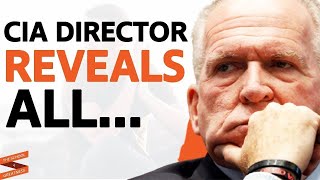
In this extensive interview, former CIA Director John Brennan reflects on his four‑decade career in intelligence, describing the day‑to‑day reality of CIA case officers, the recruitment and handling of foreign assets, and the evolution of tradecraft in a digital world. He recounts high‑pressure national‑security crises—including 9/11, the Washington sniper, anthrax attacks, and the Abbottabad raid that killed Osama bin Laden—detailing the inter‑agency coordination, decision‑making processes, and the emotional toll on operatives and their families. Brennan also discusses the ethical dilemmas of covert actions, the tension between legality and morality, and how he strives to maintain personal integrity while leading a secretive organization. The conversation touches on his relationships with multiple U.S. presidents, the challenges of operating under intense political scrutiny, and practical insights into detecting deception and managing stress.
Chapters
Of course we have to take care of our own country and our own people. But that doesn't mean we do it at the expense of the rest of the world. Sometimes it shakes your confidence, certainly. It makes you wonder whether or not, not just whether the decisions that you made were wrong, but just, you know, how are you going to be able to make future decisions?
I think you gotta have a dream.
The School of Greatness. Really? Yeah.
Please welcome Lewis Howes. You have seen some of the craziest things in the last 40 years working with the CIA, almost for four decades, is that right? You were working there?
Well, I worked first for 25 years at CIA and retired, went off to the private sector to see what it was like to earn a living outside of the appropriations of Congress.
To make real money. Yeah.
Well, yeah, for at least a little while. Then went back in for the entire eight years of the Obama administration, four of which were at the CIA. So 29 years at CIA and four plus years at the White House.
What would you say is the craziest thing that you had to deal with? Because it seems like every four to six years, there's something crazy that happens. What would you say was the biggest stress for you that you needed to face and help overcome?
Well, there's so many to choose from. There are all my interactions with Congress and the hyper-partisan environment there. I think as I point out in the book, I'm an equal opportunity offender. So there are people on both sides of the aisle that have called for my resignation or firing over the years.
Everyone wanted you fired.
Yeah, yeah. It's sort of the life of a CIA director and intelligence officer. But obviously the bin Laden raid was a very nerve-wracking, anxiety-producing, nail-biting situation. Dealing with the aftermath of 9/11, and trying to ensure that CIA was able to respond very quickly to prevent recurrences of those attacks. That aftermath was particularly challenging because we were also dealing with the Washington Sniper, the Anthrax attacks, just a number of things that I think just made the whole environment all that more of concern and worry. And so, and then many things that when I was overseas, just making sure that my children were going to be safe when we lived in Saudi Arabia, when there were terrorist attacks in the region, and many things that I can't talk to you about. Right, sure, sure. Was very intense. Yeah.
What is the, you know, I think when people think of a CIA agent, they think of a spy in a movie or a film that's romanticized in that way. What does a day in the life of a CIA agent actually look like?
You know, and one of the things I think is important is terminology because a lot of people refer to, you know, CIA spies as being the CIA employees, but in our lexicon at least, CIA officers who engage in conducting espionage are called case officers. They're operations officers. They're the ones who are trained in the tradecraft of espionage and go out and try to recruit foreign nationals to spy against their countries.
Really?
Yes, and it's those foreign nationals who are referred to as the spies or the assets or the CIA agents, which is a bit confusing because FBI agents are actual FBI employees. They're the Americans who are in the FBI who carry out their law enforcement responsibilities. So there is a difference in view, a difference in Lexicon. Sure. But again, CIA officers, and I started off in the CIA very briefly as a case officer to go over.
So you were working with other people from another country to try to get information to use for our country?
Right, that's what CIA case officers do. They don't necessarily work with officers of other countries. In fact, frequently when they go overseas and most times they go overseas, it's not known that they are CIA officers. They have other personas. They have maybe other official cover such as an employee of another government agency or department. They may work at embassies but they They are not known to be CIA officers because they have to operate surreptitiously in order to meet with foreign nationals who are going to commit basically treason against their countries.
Crazy. How do you convince someone of a country who has pride of a country, maybe they don't anymore, how do you convince them to essentially work for you against that country?
Well, it's interesting because I think foreign nationals who decide to work for CIA do so for a variety of reasons and motivations. Some live within countries that human rights and political openness and freedom of speech are very much suppressed and they believe very strongly in what the United States of America stands for. And so they want to try to help the United States because they feel that the United States is a force of good in the world. Some individuals are motivated by money or by the potential for resettlement in the United States if they work for the CIA over the course of time and they provide us useful information. They want their children to go to American universities. They want to get the visas, the immigrant visas to come and settle in the United States. And also there are some people who just, you know, enjoy the whole romance of it all because they are involved in this, again, clandestine activity working with the CIA. So I think most of them, you know, have a a component of that first category, which is that there is something that they admire, respect, like about the United States and want to try to support US interests, global interests.
How many, what would you call them, spies then for the other countries essentially?
Yeah, the people, the foreign nationals who are recruited by CIA, assets.
How many people did you recruit or is that something you're allowed to talk about?
No, well I didn't, as I said, I started out just very briefly in CIA as a case officer, but then I that I didn't have, I think, the skills, the interests to do that because it really is a very, very challenging profession because they have to adopt these false personas basically and try to cultivate relationships with foreign nationals and try to develop a rapport that's going to allow them to then recruit these individuals to work on behalf of the US government. And I find it difficult to misrepresent, you know, who I am. And so I moved over into the analytic ranks of CIA. Now, I also did serve as the chief of station overseas in the Middle East in the 1990s, and I oversaw those espionage activities. So, I just, my admiration is very, very strong for the women and men of CIA who over the years have gone to great lengths and taken great risks and have demonstrated great courage. to recruit these foreign spies who really give the United States the type of insight that we need to understand the nature of the threats against us.
How did you know that the information was accurate? As someone overseeing these agents who were finding assets of other countries, how could you trust that the information was true?
Well, a lot of people who want to give information to the United States, their information ranges from the most accurate and reliable to the most specious and bogus. And it's up to CIA officers to try to determine whether or not someone is being truthful. And there are different ways to do that. There are ways to validate or verify information. There are techniques and tools that you use to try to find out if someone's being honest, including the polygraph. So CIA will frequently administer polygraph exams to foreign nationals who are spying for us. Those Polygraph exams are not necessarily dispositive of the truth, but they frequently will, you know, rivet one's attention on telling the truth. So, and also there's a track record over time. Again, you're able to verify somebody's access, verify that the information or documents that they may be providing are in fact true. You also have to make sure that they're not a, what's called a dangle, which is a foreign intelligence service, you know, pushes someone forward to presumed CIA officer and to see whether or not they're going to be recruited as a way to expose CIA intelligence activity. So it really is a challenging, challenging profession and undertaking for, you know, the CIA to make sure that their human assets are going to be providing information that is accurate, reliable, and important.
This is fascinating to me because you're essentially living a lie when you have to go out and be undercover and be act like you're someone you're not. How does someone like that? And I don't know if you know this or not, but how does someone go out, let's say 9 to 9 and then come home at night and be in integrity, be honest, you know, be their word with their friends and family and not continue to wear the mask. that they're living most of the day.
That's a really good point. And I do think that there's a certain amount of professional schizophrenia that has to exist because, yes, you have this undercover CIA responsibility and identity, but you have to live maybe a different type of COVID another government agency cover or commercial cover. But you also have to be very, very careful in terms of who knows your actual organizational affiliation. When I was director of CIA, we would have every year what's called a family day and CIA officers, women and men, would bring in their families and show them around CIA headquarters and bring them up to the director's suite where my wife and I would greet them. And there was a couple of dozen, I think, occasions over the course of four years of family days where CIA employees were bringing their children into CIA headquarters for the first time. And it was the day when the children learned that their parents actually was a CIA employee.
No way.
As opposed to being an employee of another organization or just a private company or something. And the look on these kids' faces when they came in and just where, you know, they were gobsmacked that, oh my goodness, it's so cool. My mom is a CIA officer. You know, my dad is. And because you don't want to burden your family members, especially children, with this knowledge that if exposed really could compromise a CIA officer's ability to carry out their activities. So it's, you know, when CIA officers conduct these activities overseas, they are basically violating the laws of foreign countries because carrying out espionage activities, just like here in the United States, if a Russian or Chinese intelligence officer was doing it, they're breaking the law and the same thing that CIA officers do overseas. So again, it's a very risky profession. but also a critically important profession.
Wow. How many assets do you think there are in America that are doing work for other countries?
More than a few. Wow. The fact that the United States, I think, is really the epicenter of democratic values and freedoms and liberties allows a lot of foreign governments and intelligence and security services to use the openness of American society, whether they send individuals here under government cover or as businessmen or as students or academics. And so you can imagine the FBI in particular has its hands full to try to understand- To track this. Yeah, because the theft of intellectual property, of technology, and now we're in this COVID environment of pharmaceutical information or related to vaccines or whatever else. Intelligence security services from around the world are very active in the United States. And thankfully, we have a world-class FBI organization that does a good job of trying to keep track of them. But in addition, they have to keep track of would-be terrorists. And so it's a full plate of responsibilities.
How do you have inner peace when you're in this position? When you're running this organization within the government and how do people that are living these secret lives in the organization not stress out all the time, not break down, not be emotional wrecks, not have anxiety attacks, like how do you guys cope? Is there strategies? Is there meditation? Is there, you know, you know you're fighting for something greater? What is the way to manage your inner interpersonal well-being?
Well, the CIA has always tried to take care of its employees, particularly those that have these very stressful positions and responsibilities. And it is stressful. You know, a CIA officer is handling a foreign national who is an asset of CIA, who is really putting their lives on the line. Because if these foreign nationals are found out by their governments, they can spend their life in jail or be executed. And there have been many CIA assets over the years who have been killed because of their CIA relationship. That's why it's so important for a CIA officer who is meeting with a foreign asset or national to do everything, everything possible to prevent any exposure of that individual. So when CIA officers operate overseas, you know, they, what it's called, they go black. They will spend hours upon hours upon hours ensuring that there is no tail that they have picked up from the local intelligence and security services, so that when they have that very, very quick meeting with an asset in a park or wherever, that they have not been trailed and they have to make sure that the asset also conducts him or herself in a manner that is not alerting to the local authorities and goes through the same process of trying to ensure that they're not being tracked as they meet with their CIA case officer.
How do you, if it's just practical for the human being that's not a CIA operative, how does someone know when they're not being trailed or tailed? How do you get someone off your back?
Well, there are certain techniques, and I'm not going to reveal, you know, CIA's tradecraft, but CIA officers go through extensive, extensive training. and they go to great lengths. And there are ways and techniques that you can at least have strong confidence that you are free of any observation. You know, sometimes it takes some very innovative and creative means, including the use of disguises or whatever. So I think over the course of CIA's 73 years or so of existence, we have developed a number of techniques and learned lessons that were very important for this.
Is there anything that you could share that's more basic stuff that is common practice or well known?
Well, disguises, I think, are fairly well known in terms of a way to mask one's identity. It's become much more challenging, though, as a result of all the technological advancements particularly over the last two decades, especially with the evolution and explosion in the digital domain. Because the environment now overseas is such that the traditional ways to get across borders or to operate clandestinely in foreign countries no longer apply. In the past, intelligence services could fabricate passports as well as visas and then go into countries and with a fistful of fifties, as people say, operate. It's still at great risk. They didn't have to worry about closed circuit televisions or the digital domain, because every time you use a credit card or an ATM machine or with an iPhone, you are alerting.
You're pinging somewhere, yeah.
Right. And so the challenge for CI officers is to operate in this very busy digital environment. And so let's say that they operate-.
Is it possible right now?
Well, yeah, because if we could tell CI officers, well, don't take your iPhone, your mobile phone out of the embassy when you were. But if everybody else in the embassy who's not a CIA officer takes it out, the absence of that digital pinging is alerting in and of itself. So again, we've had to find very creative ways to operate within this very dense digital dust environment so that again, they can operate clandestinely, securely. And learning more about that digital domain and the use of it both by our, you know, foreign intelligence services and adversaries. It's critically important for the CIA to be able to operate today around the world.
What would you say is the moment that you're most proud of from your work there, the CIA, and involved in this process where there was a massive tragedy or stressful event and you and your team really stepped up and prevented something extremely catastrophic from happening?
Well, the CIA is frequently criticized for some of the tactics that it employed in the aftermath of 9/11. And people have the missing understanding that the CIA is not a rogue organization. It doesn't decide to do things just on its own whim. that detention and interrogation program that included things like waterboarding were directed by the president of the United States, George W. Bush. They were determined to be lawful by the highest legal body in the executive branch, which is the Office of Legal Counsel in the Department of Justice. So when the CIA receives a duly authorized order and it's determined to be lawful, they carry out those programs. Now, I find that, you know, those programs were unfortunately, you know, reprehensible from the standpoint of, you know, ethical principled moral intelligence work. But again, I, I, they were lawful at the time. So let's set aside that in terms of the controversy of it. But the CIA in the aftermath of 9 11 worked day and night around the globe, including with a lot of intelligence services. around the world to uncover the Al-Qaeda operatives who were poised to carry out a second and third wave of attacks. And there was a very well-developed plan by Al-Qaeda to carry out a series of aircraft attacks against the west coast of the United States. They were going to be launched out of Southeast Asia. The funding, the resources were acquired, the operatives were identified. the flights and other things. It was only because of the tremendous work that CIA did along with other US departments and agencies, but principally it was the CIA that stopped those follow-on attacks that could have been quite horrific. The CIA was the one that deployed to Afghanistan first in the aftermath of 9/11. It was CIA boots on the ground before US military boots. CIA officer was killed first in Afghanistan before any US military. was killed there after 9/11. So there are a lot of things that, you know, unfortunately for any of you listeners that I can't go into detail about, but the, the lens to which the CIA went and I think the very courageous acts that they engaged in again, some of them, I, I think were very unfortunate that, you know, were conducted. But there's a strong track record of success.
Is it public knowledge about where Al-Qaeda was going to strike on the West Coast or were they going for San Francisco and Los Angeles? Was there specific buildings they were trying to target? Or is this...
I'm not sure what has been made public or not. Now, I know that there was public acknowledgement of this and some of it is detailed. previous books, but they did have targets picked out and again, flight paths that were identified for them. And so it was again because of the work to disrupt that. But there were other types of things as well, and attacks that were planned during the Obama administration where they had brought bombs onto aircraft that they were intended to explode over the United States. the infamous December, Christmas Day 2009, when someone by the name of Abdulmutallab, who was a Nigerian national, was aboard a flight that was landing in Detroit and his pants went on fire. And I got a phone call at home and I detail this in the memoir that they didn't know what was happening. Why was this person's pants on fire as they were descending onto Detroit airport? Well, he tried to detonate an improvised explosive device that had been hidden in his underwear. And there was a bit of a miscue there. And so it didn't detonate, it just flamed. And they were planning, this is Al-Qaeda, planning to bring that aircraft down over Detroit with, you know, could have been catastrophic results. And there were other attempts to do the same thing towards Chicago and other efforts. So, you know, these are very serious threats, and thankfully, none of them came to fruition the way the 911 attacks unfortunately did. But it's because, again, of the, I think, very, very courageous work that was done by CIA and others.
You worked very closely with Obama, correct?
Yeah, for the entire eight years of the Obama administration. For the first four plus years, I served as his Homeland Security and Counterterrorism Advisor. my office was in the West Wing, almost directly below the Oval Office. So I was up and down the stairs seeing him multiple times a day. And then in a second term, I was director of CIA. So, yeah, he's just a very, very impressive individual. And I have great admiration for him. Again, none of us are perfect or mistake free. And, you know, I think he would look back on, on his eight years and probably, you know, wishes that he would have done some things differently. He talks about that in his book. But I felt very privileged to work for him as well as for, I worked for six presidents, three Democrats and three Republicans. And although I had disagreements with them as far as policy choices, I had tremendous respect for all of them because I thought that each one of them really tried to do what they could to protect this country and advance our national security interests. And I guess that's why I've been so maybe outspoken about Donald Trump, because I think he has been such an aberration and such an abnormal incumbent in the Oval Office that he put his interests above the country's interests.
Which president do you feel that you worked with managed the national crises the best? or were the most inspiring in your mind on how they showed up and responded based on the level of stress and crisis that would come?
Well, I got to know four of them fairly well. George H.W. Bush, Bush 41. I got to know him best, in fact, when I was, you know, after he had left government. But he was a former director of CIA before he became president of the United States. he was CIA director for a year and he always, always just treasured that experience. And so I would go down to Houston, my wife and I, and we'd have dinner or lunch with President Bush as well, along with Barbara Bush. Just a very, very enjoyable. And he's somebody who, given that he was eight years as vice president and director of CIA and served in Congress and ambassador to China, he had a tremendous breadth of experience. And so dealing with, for example, the Gulf War in 1990-91. He had a very, very measured, as well as experienced, approach to dealing with that. I had the privilege of being President Bill Clinton's daily intelligence briefer for a year. So I would go down and sit with him in the Oval Office and go through what's called the President's Daily Brief. And he's somebody who really had a very impressive intellect. He could absorb just massive amounts of information. process it and had tremendous powers of recall. He could recall things that I had briefed him, you know, months previously and I had long since forgotten them. So very impressive. George W. Bush, I thought he had a lot of integrity and I think he was miserved by some people around him, up to including his vice president in terms of the decision to go to war with Iraq. But in the aftermath of 9/11, the way he, I think, rallied this country and the way he spoke out so forcefully and to ensure that people didn't see this as an attack by Islam on the United States and made a very strong point about, you know, this is not to be blamed on Muslims or Islam. This is just a group of depraved terrorists. So, you know, I do think he handled that situation very well. I think he made some policy mistakes afterward. But Barack Obama, I think he very much deserves the moniker no Drama Obama because he always, always was able to receive even the most unnerving information in a very measured and calm manner. And so I just, he had also almost a unique ability to see relationships far beyond just the information that was being presented. He seemed to always be playing like six-dimensional chess because he always was looking for, well, if I move my chess piece on this board, how does it affect my positioning on the other board? And he always would ask additional questions to understand the implications of a policy decision he might make. So, you know, the presidents that I got to know, they were different, all of them, but they all again were impressive and took their national security responsibilities very seriously and also tremendously valued intelligence. That doesn't mean that they, you know, put, you know, confidence in everything that we said. They would challenge the intelligence briefings and me, but they very much appreciated the give and take. as well as they appreciated the work and the sacrifices that were made by intelligence officers.
Wow. So you would say you became the closest with Obama because you were seeing him pretty much all the time?
Yes, on a regular basis. Yeah. Late at night, early in the morning, if I had to go up to the private residence or call him and wake him up. So you get to know people.
What can you share about the, the bin Laden scenario about the strategy behind that, about the information that you would give to Obama about, you know, the planning of it. What, you know, can you share, what can you share about that?
Yeah. And I, and I tried to go into some detail in the book because it was a, a very historic event, I think, for the United States. I think the CIA in the aftermath of 9/11 really felt a degree, I don't want to say a responsibility for 9/11 attacks, but really were crushed that they weren't able to prevent that strike on 9/11. And so therefore we're working diligently over the course of many years. And the intelligence business is really one where you really try to find all the different puzzle pieces and you know you're never going to get all the pieces and you try to understand what those puzzle pieces reveal in terms of the picture. And so in the first Obama term, when Leon Panetta, who was the director of CIA at the time, came into the Oval Office and told us that the CIA believes that they had identified the residence of where a carrier of Obama was staying, which we were told and we knew that if we were able to identify the carriers that were interacting with with Obama, they might be able to lead us then to curries to Bin Laden. Not Barack Obama. No, no, right. It was Osama Bin Laden. Yeah. So it was exciting, but we also knew that there were some real challenges there. And when we were told that this compound was in a place called Abbottabad, which also was the location where basically the Pakistani equivalent of West Point was. That's where they would train their military officers. So it made us wonder whether or not the Pakistanis were hiding bin Laden and giving him protection there. And so it then provoked or sparked a months-long effort to try to get as much insight as possible into who was at that compound. And we were able then to observe a tall individual who would walk on the compound and just in an exercise fashion. And we called him the pacer. And we didn't know whether that pacer was bin Laden or not. But Barack Obama wanted us to come up with options in terms of if it was bin Laden, what would we do? And so you were about to track.
This through satellite or through how were.
You All of the above, let me put it that way.
Anything you could find, yeah.
Yeah, there are, you know, we were wanting to, you know, tap into our human source networks. We wanted to use different types of technical collection systems, whether they be ways to observe that area or ways to pick up signals intelligence. So it was, again, this is the work of intelligence officers to piece together everything possible to, again, try to understand what that puzzle picture actually looks like. And so the options that were considered were to hit that compound with missiles. That was dismissed for a variety of reasons. One is that it would have caused a lot of civilian casualties in the area. But also we wouldn't have had confirmation that it was bin Laden who was there. And so eventually we decided on the assault by the helicopters and the US Special Forces, the US SEALs. navy seals to go in. And it was a very, very intense, nerve-wracking operation with great, great secrecy associated with it. And it was, you know, a real testament to not just the dedication work of the intelligence professionals, but the talent, skills and courage of our special forces.
So now are you orchestrating this whole thing essentially? You're planning it with Barack day in and day out for a month or two? You're In the weeds of it?
Well, there were a lot of people. I was the president's counterterrorism advisor, but I worked very closely with Tom Donilon, who was the national security advisor at the White House, and with President Obama and Vice President Biden, and then Leon Panetta at the CIA, and then Bill McRaven, who was admiral, who basically led or oversaw that assault. So it was basically a trifecta of Department of Defense, the CIA, and the White House. And it was designed to try to ensure the utmost secrecy because we knew that bin Laden was not going to stay at that compound forever. Because al-Qaeda leaders would go to certain locations and then leave after time because they were afraid that their location was going to be exposed. And so we were working against time. We also though knew that one of the things that Bill McRaven told us that when we decided on the helicopter assault, that we had to do it according to the lunar cycle. Because every 28 days, you want to make sure that there is going to be the least amount of moonlight that the helicopters can travel into Pakistan and the assault can take place. So you have about a three or maybe four day window every 28 days. And so we were trying to time the assault so that it would coincide with the least amount of moonlight. And also the weather.
That's fascinating.
And also conditions on the ground. So yeah, it was orchestration.
Fascinating. So it had to be one day essentially with the least amount of light.
Right, every 28 days you try to optimize that. And so we decided that it was going to take place on that May 1st day.
Wow. So how many When you said, this is happening, we are doing this, and we're going to be doing this in this fashion, how many months or how many days did it take from, okay, this is happening, this is the way it's going to happen, this is who's going in, how long did that take until it actually happened?
Well, it was in early September that Leon Panetta came into the White House and told us about this, compound that might be, in fact, a location where they could build. And it wasn't until May 1st that the assault took place. So it was, you know, through the fall and winter. And then it was about in the February-March time frame when the options were narrowed down and the decisions were made as far as how to go forward with it. So there had to be the training that was done, you know, the mock-up of the facilities. so that they could prepare for every eventuality. They had to identify the teams. So it took a number of months, but those last 60 days in particular, March and April were the time when we really then were focused like a laser on doing it at the nearest opportunity, but recognizing that we were not going to have full confidence that it was bin Laden who was there.
That's crazy.
The most nerve-wracking time for me was after the assault took place and we were confident that we got bin Laden and they were bringing his body back to Afghanistan by the helicopters. It took 90 minutes for those helicopters to go back into Afghanistan. And by that time, the Pakistani air defense forces were on alert. The Pakistanis had sent up some aircraft because they knew something was going down in a badabad and the local law enforcement, you know, was out there. So I was very concerned that even if we got bin Laden, if one of those helicopters was shot down and we lost a dozen or two dozen of our Navy SEALs, it would have been disastrous. And so I, those, that 90 minutes was the longest, you know, in, in my experience, working that issue.
And you, I mean, you're in the White House. this time it's late at night or what time is this?
Yeah, well, we started out very early in the morning, I think, got to the White House around six o'clock that day. And the operation started to go down basically at 2 o'clock Washington time. It was night time over in Pakistan, 2, 3:30. So between that time, they actually got in the compound and started the assault. And it wasn't until seven o'clock at night or eight o'clock at night that we really had confidence that everybody was back, that it was Bin Laden. Then the rest of the evening we were spent doing the things that we needed to do. President Obama called President Bush as well as President Clinton. I talked to my Saudi counterpart because one of my roles was to tell the Saudis that we got Bin Laden. Although Bin Laden was a Saudi by birth, the Saudis had pulled his citizenship. But my job was to offer to the Saudis the body of Bin Laden. And we thought that they were not going to take it. And they declined the opportunity because they didn't want to have to deal with the remains and what did they do with them and martyr. So his remains were disposed according to Islamic rights appropriately. But we all had some after action responsibilities, calling counterparts, talking to Congress and other things. And then President Obama, I think it was a little before, a little after midnight, gave his address to not just the nation, but to the world. So right now in my office, I'm looking up at a photo that was given to me. It's a large photo. And it's President Obama, myself, Tom Donilon, who was the National Security Advisor, Dennis McDonough, who was the Deputy National Security Adviser at the time. And President Obama is in his suit, and we just went over his remarks that he was going to deliver to the nation. And the looks on our faces are much more relaxed and relieved than they were just hours before. And it really was, I think, the culmination of a years-long effort by many, many individuals who were working tirelessly to just bring justice in the aftermath of that 9/11 attack.
So this is essentially 10 years after the fact.
Yes.
And this is something that you guys have been trying to find him for a decade and figure out how to resolve this essentially. What was that feeling like? Were you guys able to celebrate? Did you guys have like sip champagne? Did you have some tea together? What is that like when you have 10 years of tension built up? from a moment of completion.
Yeah, well, there's the iconic photo of many of us were sitting in, not the situation room of the White House, it's in a little anti-room and we're gathered around a table. We were looking up at a screen and, you know, Secretary Clinton has, you know, has her hand over her mouth.
But Obama's standing up and everyone's sitting down.
Well, Obama's sitting in a chair and he has this intense look and we're all, because that's just when the operation was going down. But when we got the word, Geronimo, that Bin Laden was down, was taken, there was no celebration, no jubilation, no clapping or applause. It was a very somber, sullen, even almost a sacred moment, if I can use that term.
Wow.
Because I think we recognize that we happen to be the stewards of this responsibility. of ensuring that there was going to be justice in the aftermath of 9/11. And so there was no excitement. There was a sense of accomplishment, but it was a quiet sense. It was, you know, we looked at each other, you know, and people and president was saying, well done. And so we were not congratulating each other so much as just saying, boy, this was so, so important, and it was done. so well and the teamwork was just so strong that again it was we just felt that we happened to be in the government at the White House with these roles at the time when all this came together, all these puzzle pieces. And as I talk about in the book, it was about 12:30 or so in the morning when I was going to be leaving, I was going outside to get into the car, but the outside of the West Wing of the White House, it was lighter than usual, brighter. And I could hear noise and as I'm emerging from the doors of the West Wing, I could hear from Lafayette Park, the square right next to the White House there, a scene of most recent, you know, demonstrations, whatever, this glow, because the lights were on and there was chants and people with horns and there was chants of USA, USA, CIA, CIA. I know, and I do all the time because it was the first time that day where my emotions got the better of me because you're running on adrenaline and you're trying to make sure you do everything that's necessary in order to have mission success and ensure that the president is getting everything that he needs. And then so coming out and hearing that and hearing Americans in the wee hours of the morning, you know, just showing their, their appreciation and respect for what was done, it, it, it sends chills up my spine.
I'm getting like, yes, like goosebumps. This is, oh, man, that's amazing. Where were you? 9 11. Do you remember? Obviously.
I, I do. I was the deputy executive director of CIA, which is basically the deputy chief operating officer of the agency. a senior official at CIA. We were in the morning meeting that the executive staff would hold. And right at the end of the meeting, the head of our operations center came in and said, A plane just hit the World Trade Center. There were no more details than that as far as the size of the plane or serious or what. We all were looking at each other and we knew that al-Qaeda was trying to carry out some attack, including in the homeland, but we didn't have have, unfortunately, the details of when it was going to happen or the target. And so we ended the meeting and we all went back to our office. My office was right across the hall from this conference room where the meeting was being held. And so I was looking then at the television that was in the suite of offices there, and I saw the second plane hit the other tower. And I saw the smoke coming out of the tower where the first plane had hit. And everybody at the agency knew immediately this was Al-Qaeda. We're under attack. And it was, you know, all hands on deck. And so the rest of the day, we were busy evacuating the building because we had intelligence that CIA headquarters was on the target list. I remember going through that building and knocking on doors and making sure that we were able to get people out of the building. We, our folks who were working on counterterrorism, stayed there irrespective of the risk and the threat because there was just a tremendous, tremendous requirement to learn everything about who was on those planes, what else might be planned. And there was gridlock along the streets and roads in the nearby area. And so it just took hours upon hours to get all the non-essential CIA officers off of the compound. But I knew then that the next years, certainly in the immediate near term, was going to be just such a demand on CIA to be able to respond to Al-Qaeda.
How do you-- I mean, you say all hands on deck. This is pre-iPhone. This is pre-social media. This is-- I remember 2011, I'm a freshman in college playing football. And early in the morning and I remember seeing it. I don't even know what the World Trade Center was. You know, I'm a guy from Ohio. I had no clue what, you know, World Trade Center was. But then it became very obviously very quickly learned what was going down. How do you gather enough information when it everyone it seems to be in chaos, the country, the world, it's there's no intelligence through phones like there is now. Like what do people do? They're just like calling on a landline.
You're just a Well, the CIA had communication systems that we were able to talk securely to our people overseas, to our foreign counterparts and others. And CIA has a presence in many, many, many countries around the globe. And so immediately, as I said, everybody went to sort of battle stations. But one of the things about the CIA and also the US government, as good as we are, we rely so heavily on our foreign counterparts. because they're the ones with the eyes and ears in the countries of concern and of interest. And so we had to work very, very carefully and closely with them and intensively to ensure that they gave us whatever information they had that could have helped piece together that puzzle to find out who is responsible, who else might be out there, because we were very concerned about those follow-on attacks. And we didn't know if they were going to take place the next next day, the next week, a month, or whatever. So for quite a while we were on Razor's Edge and racing against time to do what we could. And that's why CIA was asked to send people immediately out to Afghanistan and to work with the Afghan locals and the tribes and to see whether or not we could find out where al-Qaeda was and the leadership was. And that led then to the US military arriving and the push against the areas where they were, you know, holed up in and Tora Bora. And that's when al-Qaeda scattered. And so it became then a years long effort to try to again find, disrupt, dismantle the al-Qaeda, you know, entire organization.
How do you personally deal with self-doubt when maybe you don't have all the information or all the data, and that's your responsibility? And you're saying, here's what we need to do. Here's what we think something is. Let's take these actions. How do you overcome doubt and insecurity around information that may be accurate or maybe not?
Yeah, it's- To be an effective leader.
Really within your organization or with the president or whatever.
It's a big challenge and the thing is that the CIA has very intensive training programs and tries to ensure that you understand exactly what types of information are important, how to evaluate them, them, how to determine how to collect more information. But then when you're in these positions of responsibility, and I think one of the important lessons that I learned is to know when you need to make a decision and when you, there's not time to wait for more. But also one of the critical skills I think of intelligence officers and of policymakers is to try to ensure that you understand the gaps in your knowledge. And I would always tell intelligence officers who are going to go brief down at the White House, whatever, is to make sure that the people that they're briefing understand that what you're sharing is not the totality.
It's 20%. It's 10%, yeah.
Yeah, we might only have 10 puzzle pieces and there might be, you know, a hundred yet to be found. And so understanding the context and making sure that you appreciate the gaps in your knowledge and the confidence that you have in it. But again, there come a time when whether you're a president or whether you're an intelligence officer, director of CIA, you know that you have to make a decision based on the knowledge that you have, the advice that you get, recommendations that you are given. and try to do the best job possible with what is available to you. And, you know, looking back over my career, there were decisions I made based on the, the data I had, based on the, the sense that I had of what was the right decision. There were mistakes that were made, those I'm going to have to live with for the rest of my life. And I would always go back and try to say, you know, why did it not go the way we thought and again, learn lessons from them. But again, when you're in these positions, if you wait for totality of knowledge, I see it as a sin of omission. You can make sins of commission, but sins of omission can be as devastating. Yeah.
And how do you personally deal with decisions made that you tried to give your best based on the information and what was available? but ended up in hurting people or causing tragedies in some way. How do you personally deal with that to make sure that you have confidence moving forward in decision making?
Sometimes it shakes your confidence, certainly. It makes you wonder whether or not, you know, not just whether the decisions that you made were wrong, but just, you know, how are you going to be able to make future decisions? Yeah, but again, if you're going to be in these positions, of tremendous responsibility. You cannot neglect those responsibilities by avoiding decisions. You have to know when it's, you know, you shouldn't make a certain decision or you don't have to make a decision. But the best intelligence officers, the best government officers, best public servants I've seen take to heart mistakes that they make. and really tried to ensure that they do their absolute best, never, ever to have to make a decision that might entail another mistake. And fortunately, I think the overwhelming number of decisions that are made are the right ones. Sometimes there are big strategic decisions, you know? Do we invade Iraq? Well, that obviously begets so many more decisions and actions or whatever else. So, you know, there are tactical decisions that are made that have just, you know, have implications, but in a defined time or space. But then the, the broader geostrategic decisions that are made that have, you know, reverberations, you know, well beyond, you know, that day or that, that. that area.
Was there anything that you were against that ended up being a big mistake in the last 30, 40 years that you were saying, you know, I don't really think we should be doing this as a nation, whether it was a president's decision or whoever's decision? Was there anything you were like, you know what we could have done without that?
When I was in CIA for close to 30 years, I saw some things that I very much disagreed with. And when I was director, I tried to correct some of those things that I thought were wrong. The CIA was involved in some things like toppling governments in our history. Certainly during the Cold War when there was this rivalry and competition and almost existential tension between the United States and the Soviet Union. And so there was a race to try to gain favor in different parts of the of the world. What I talk about also in the book is that I am very much an opponent of any type of dissemination of disinformation. I think it's the propaganda, the putting out falsehoods and intelligence services, including US intelligence services, have done that over the years in order to advance their interests. But first of all, I think it's incompatible with the values of our country. I I think it can be very, very damaging if it's uncovered. But also, I think that the United States should really be seen as a beacon of truth, as opposed to false smears just to advance some particular program or project. Also, I do believe strongly that the COVID action programs, these are programs again authorized by a president United States should never be done just to conceal embarrassing information. I think that the hand of the United States sometimes has to be hidden overseas, but also I think we need to take more responsibility for the types of things that we do as a way to demonstrate how a country operates in the international environment in a responsible judicious manner. And so there have been some things that again, the CIA has been involved in over the years, whether it be disinformation or again, toppling regimes. These are things that I think never should take place.
What's your definition of integrity?
Integrity is a combination of things for me. Honesty is at the root of that. But also, when I used to, I would administer the oath of office to incoming CIA officers, every month in the CIA lobby. And I would underscore the importance of integrity, which brought employees into the agency. We were willing to trust them with the nation's secrets and be part of the CIA family. But integrity is the distinction between right and wrong. I don't say good and evil. It's really right and wrong. It's what is that North Star? What are those moral lessons, ethical lessons? What are those principles and values? that really do define, I think, what it means to be a good person, a kind person, an honest person, a person who is not going to try to take advantage of others in order to advance their own personal interests. Integrity is sort of a package of how a person defines themselves as well as how they treat others. And again, I think honesty, humility, recognition that we are on this planet, I think, to try to ensure the betterment of mankind. There is a sense that for me, integrity makes one aware of their responsibilities on this earth and again, carries out their activities, their responsibilities in the most honest, forthright manner.
How do you live with integrity knowing that you're being so deceitful in the business that you're in? It's to essentially not be in integrity in certain practices, but how do you personally keep your integrity as an individual and make sure you stay on that North Star path.
Yeah, that's, you know, because the end does not justify all the means by any stretch of the imagination. And I think that's one of the reasons why I decided to get out of the operations profession, because I could not see myself doing that and deceiving individuals. Now, I think there are some things where the pursuit of just ends and good outcomes can allow for certain types of behaviors and activities that facilitate the accomplishment of those admirable and good goals. But you asked a question earlier, how do CIA officers really maintain their integrity and their personal lives and adopt these other sort of personas and tactics? And sometimes I found that it was hard for individuals. and I found that some people were not living by that division of maintaining that integrity in everything that they do, except for maybe those aspects of their operational responsibilities where at least that initial meeting or initial meetings with somebody and they present themselves as a Department of State officer or Department of Defense officer is that Is that something that really is unethical? Well, maybe it's not completely truthful, but as long as then the relationship with the individual adheres to certain types of traits or attributes, I think that getting your foot in the door by maybe not being fully transparent is, I guess, you know, maybe I'm rationalizing it.
Sure, sure.
I don't consider it necessarily unprincipled or unprincipled.
This is the, I, I get it. It's finding my Justice through these actions. I understand that. I'm curious how much, I mean, a lot of this comes to me of understanding identity, because as a former, let's say, for myself, as a former football player, and I see this today where sometimes guys do wrongful things out outside of the court or the field or whatever it may be on the football field, and then they'll do bad things, right? They'll hit their wives or they'll do certain aggressive actions that reflect being on the football field. And I remember as a football player, we were trained to have this identity to inflict pain, to hit with anger, you know, to do these certain actions and live in this persona and this identity. And then, you take the pads off and you're supposed to be this loving, vulnerable human being. How Does the CIA deal with identity and psychology training in terms of making, because you've got to play the part all in and then play a different part. That's got to be challenging, right? Psychologically, emotionally, for some people.
Yeah, I think that's a big, big question for almost everybody in the world. And you're right, I played a lot of sports as well. And so much depends on leadership. and the role modeling that parents provide, teachers provide, coaches provide. I can remember, you know, played high school basketball, and there was a team that we played, and they were, you know, they were higher ranked than we were. And their players, you know, would take every opportunity. If the ref wasn't looking, you know, grab the shirt, give the elbow, whatever, and just, you know, resort to any tactic in order to win. and just watching them and watching the coach with them, it was almost encouraging it. And so some people have this approach of, you know, win at all costs. And this inculcates in individuals then this attitude and approach to life that goes beyond, you know, the football field or the basketball court. It's how they work in business or in whatever profession they are. or cheat in school. And so I think it's, we have to get back to, you know, having, you know, maybe a stronger educational system. Yeah. And to have, and it starts at a very early age, to again, try to distinguish between right and wrong. Now, sometimes the adrenaline gets going and, you know, now when I, you know, you see a, you know, team score a touchdown. My goodness, it's a rally in the end zone. Years ago, they would catch, throw the ball down or whatever and go and just, and so the culture, I think, has changed a lot. But I do think having some real open and honest discussions about what is appropriate, what is not, but that role modeling, walking the talk, but one of the things I realized when I was at CIA as director, everybody was watching what I did, listening to what I said, and I had to always be very aware that I wasn't sending any, you know, unintentional signals or, you know, what I, the way I said something was, was received in a way that it wasn't intended. Because what person does at the top, what a coach says or what a coach does really does have resonance then with the members of the team. So I do think it's, you know, for CIA officers, for intelligence officers, making sure they understand exactly what their obligations are on the professional front, on the personal front. What does it mean to have professional and personal integrity? What are the boundaries within which one has to work? And one of the challenges for CIA officers, I think, is just because something is lawful does not mean that it's ethical or principled, such as the example of the detention interrogation program. And so what I tried to do when I was at CIA is to first of all ensure everything we do is lawful, but then is it consistent with the values that I think that need to, you know, the CIA needs to embody? Is it consistent with the ethics and principles of what the United States and the premier intelligence agency should in fact be engaged in? And everybody's going to have their own individual dual North Star that has been shaped throughout the course of their life. But I think that if we go back to maybe just a better sense of there is right and wrong, but unfortunately too many people opt for the wrong, including politicians today, who role model for especially our young Americans, the deceit, dishonesty, the lack of integrity, the lack of decency. It's just unfortunately it's being emulated far and wide, which is unfortunate.
What would you say are some practical things that you're allowed to share of understanding if someone's lying or not? Are there any tips you could give that are common practice that you can see? You know what? There's some things you could really find out about a person when they do these things or if they're telling a lie.
Well, I think people will pick up on some discomfort in terms of how one moves or handles themselves. When somebody's accounting of events or a story changes, that's usually a good indication. And so you'll find that people who try to get out of culpability of something and they'll give one version of what happened. The next version will be either slightly different or it's telling the truth usually. You know, I think it's imprinted in your brain, the events as you remember them, as opposed to trying to misrepresent the facts. And so there are some things that I think the CIA officers will try to evaluate and detect. when they're dealing with a potential asset or called a developmental or a foreign national of interest. And again, the stories that people weave sometimes give them away pretty quickly.
Before we continue this video, make sure to subscribe below and turn on the notification bell right now so you don't miss out on these great videos every single.
More from Lewis

The Ancient 4-Step Method That Clears Your Mind and Unlocks Manifestation | Shi Heng Yi







Secret Service Agent: Your Neutral Face Is Making People Distrust You (Here's How to Fix It)