DOCTOR FACT-CHECKS Media On Healthcare & Shares How To STAY HEALTHY | Doctor Mike & Lewis
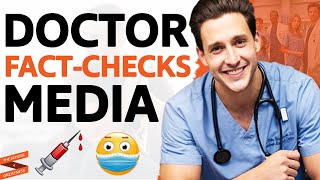
This is a YouTube video titled "DOCTOR FACT-CHECKS Media On Healthcare & Shares How To STAY HEALTHY | Doctor Mike & Lewis" created in June 2020. It features a conversational interview between Lewis AI and Dr. Mike, a board-certified family medicine doctor and social media influencer. They discuss topics including the mind-body connection, the importance of empathy in medicine, challenges in the healthcare system, nutrition, mental health therapy, vaccine safety, misinformation in media, and the COVID-19 pandemic. The conversation blends medical insights with personal experiences and addresses public health communication and social media influence.
Chapters
It's mind-body. There's no distinction between the two. It's not mind and body. It's not mind dash body. It's mind-body.
Welcome everyone to the School of Greatest Podcast. I'm super excited. Today's guest is Dr. Mike. He's a board certified family medicine doctor practicing in New York City area. He's also got 10 million followers across social media, probably more than that now, with over half a billion views plus on YouTube. He's also voted Sexiest Doctor Alive by People magazine. Dr. Mike, my man, super pumped to.
Stay connected to you. How you doing? Doing great. I gotta love that introduction. The People magazine reference, it's like, so.
Out of my control. I have nothing to do with it, but you know, I appreciate it. I know, man. I know. Hey, I wish there was like 50 sexiest, like, motivational podcasters and I was on the list, you know, it'd be great.
We got to recommend that through People Magazine.
Let's make it happen, Dr. Mike. We've got a bunch of mutual friends. We've been in the social media world together in our different industries. You've blown up your personal brand through showing your life as a doctor going to med school and kind of showing that you can have a life and also follow your profession and be in medicine and be a practicing doctor. I've been kind of doing that on my own side as well of showing my lifestyle with my business. And so it's been fun to just see what you're up to from afar, even though I really don't know a lot about medicine. I know I like to stay away from it if I can, but it's good to know that you are educating the world on how to stay healthy, fit, and have a great mindset as well. So, I'm super glad you're here, man.
Yeah, I'm really glad to be here, too. I've been a fan for a long time. And I think that's interesting that you say that about medicine. and we want to stay away from doctors and hospitals. And while there's partial truth to that, there's also a value that doctors bring to society that we haven't really heard of much, which is keeping people healthy. So it's not as much going to see doctors when you're only sick. There's a lot of great reasons why patients come see me and they're doing absolutely fine, at least from a physical health standpoint. And then we start talking about more difficult subjects. What's going on in their life? What risks are they potentially facing based on their lifestyle habits? anything we could change, anything they want to change. And just seeing people as a whole as opposed to this person's a diabetic or this person's a cardiac patient. There's so much more than that. It's someone who has diabetes, a patient who has diabetes, not simply diabetic. And the more we get ourselves out of that mindset, I think the better we'll do as a nation and as a healthcare system.
If you're a healthy human being, all standards considered, not obese, you don't have diabetes, you don't think you have any physical ailments, maybe there's something internally but you're not sure. How often should you be going to the doctor for a checkup? If you feel like, you know, I'm not getting sick, I don't have the flu, I don't have, you know, anything out of the ordinary, should I go every year?
Should it be twice a year? What should we do? I think it should be, I mean, obviously depends on everything that's going on.
But once a year at minimum.
Really. At minimum.
Just as a friendly check-in.
Friendly, it's a preventive visit. I know we always call our physical exams like the annual physical exam, but in reality what the annual physical exam devolves to is a patient has had a problem. They haven't taken care of it and they didn't come in when it was actually really bothering them. And now during their annual physical we're actually talking about that instead of focusing on all the things we could be doing to prevent problems down the line. And that means vaccinations, cancer screenings, risk assessments, all of these things, especially as we get more data and AI and medicine, we're learning that we can actually help people not live even so much a longer life, but a better quality of life. And I think sometimes it's more important.
Yeah. Now, fun fact about me, I was raised in a religion called Christian Science. And I don't know if you're familiar with Christian Science, complete opposite of Scientology. They read the Bible. But, they're kind of extremists in the sense, I guess I was raised not thinking it was extreme, but I never went to the doctor. I didn't have vaccinations as a kid. I always had like a slip that I could do things without getting the vaccination. I never got shots. It wasn't until I was an adult when I started getting a lot of shots based on travel and going to different countries. But I was also raised with a philosophy that we can heal ourselves with our mind, with our way of thinking. And when I started to become friends with medical individuals and learn more about science and the human body, I started to have an appreciation for what doctors do as well. How often do you think, because you mentioned, you know, when you come in once a year at minimum and you talk about how's your family, how's your, how's your mindset? How important is focusing on the holistic approach to mental health and emotions in healing the body's physical ailments as opposed to does that not matter and just true medicine is what will heal you physically?
It's mind-body. There's no distinction between the two. It's not mind and body. It's not mind dash body. It's mind-body. And the reason for that is we're learning more and more that there's this intimate connection that exists, that if you disrupt something in your physical system, it's going to travel back to the mental health system. And it's not simply just because of nerves. A lot of people think, oh, it's the neurological system. That's why it's happening. And while, yes, that is true, that's part of it, but there's also endocrine factors, hormonal factors that play a role. So how you feel in a given moment may not have a huge role as to how your physical health is, But if you're constantly depressed, you're constantly on edge and nervous, and are living in a society full of fear, let's say, that will show physical implications over the long term, not just because of the neurological system, but also from the endocrine system. And all of that has to be taken into account when you're trying to help a patient. And when I recommend to go see a doctor every year, that doesn't mean every year you need blood tests. That doesn't mean every year you need vaccinations or screenings or or imaging. In fact, there's a huge push against all of that in my industry. And part of what I do is trying to find that middle line between the type of information you were taught in your, what you call an extremist religion, and what modern medicine is. Because medicine back then did a lot of stuff wrong. And we have to be able to admit that. We have to be able to admit our failures as healthcare clinicians. In fact, when we look back 100 years from now into the stuff we're doing now, 50% of it's gonna be garbage. We're gonna look like barbarians for the.
Stuff that- Right now, 100 years from now.
Right now. Yeah, right now. But we don't know which 50% is that we're doing wrong.
What do you think we're doing wrong that's hurting us more than helping us? That everyone's preaching, that everyone's prescribing, that everyone's following a protocol that you think in 100 years is gonna pay a price?
I think that our nutrition research is poo poo. That's like the nice way of putting it. And because of that, it's pushing people to follow extremist diets, restrictive diets where they're losing on vital nutrients that we've yet to even establish what they are. Like our required daily intakes of vitamins and minerals are from 30, 40 years ago. It's not based on any great science. Even our own temperatures, like our base body temperature, is now being debated on whether or not it's truly 98.6, and we're actually finding it's probably lower than that. And it's continuously changing as we evolve as a human species. So we need to consistently be updating what we know, and at the same time, I guess I see this as my role, educating the general public that, A, doctors make mistakes, researchers make mistakes, and we're gonna change what we say. We're gonna change our recommendations, and not to look at an organization Let's use the CDC as an example. Initially we're like, no masks, you don't need masks. Now we need masks. And people view that as a failure, but I view that as a great accomplishment as an organization that they're able to look at new evidence and understand that they were mistaken and not have the fear to say that.
How do you go in with so much confidence as a medical doctor when you may not be confident when you're like, oh, actually we haven't been testing for this for that long and we don't have enough test results or cases, but this is the best thing and we prescribe it. How do you communicate that to patients or just to people online? Sure.
Being comfortable with being uncomfortable is one of the most important things you have to do as a physician. It's one of the things you train early on. And there's two things that I've used successfully in my career. First is I approach everything with a huge layer of transparency and honesty. Second, you have to come in with a level of humility that you don't know at all and not be afraid to say, I don't know. In fact, when I was invited to give a TED Talk in Monaco and the subject, the theme of the conference was the license to know. It was like a James Bond 007 vibe. I go on stage and I say, I know everyone's talking about knowing, but I'm here to tell you that if your doctor, if your researcher says, I don't know, that's a sign of an intellectual. comfortable with saying that they don't know what the information is that research hasn't shown us. And the people who are quick to throw out theories and claim to know everything, they're usually the ones full of it. Yeah.
One of the reasons I started the School of Greatness was because I felt like at 30 years old, I had achieved a lot when I launched this seven years ago. But I was like, man, I am so ignorant to so many things still. Let me bring on experts like yourself to continue to teach me that I could share with the world. What's the thing that I heard you talk about nutrition and your education on nutrition. I've heard that from so many doctors that you weren't truly educated on nutrition. And I've heard a lot of doctors that have, I guess, replaced their practice or quit their practice because as they started prescribing nutrition to their patients, they started to see the results of healing based on nutrition alone and kind of more talk therapy, releasing emotions. Dr. Lissa Rankin is an example that did that as a practicing physician. I'm not sure if you know who she is, where she was on lots of medication herself as a doctor, but she realized her marriage was in shambles, her view on herself, just like her emotions were all over the place and she wasn't eating well. And when she started to shift those things, she got off the medication. So is there anything else besides nutrition that you've learned over the last decade that you're like, We need more education on this or we're not prescribing the right things.
We need more education on empathy as physicians. And it sounds weird because you think you'd be talking to the most empathetic group of people because we constantly treat patients who are ill and we're putting ourselves in a position of trying to do better. But I'll give you specific examples. In this culture where we find ourselves in, it's easy to say all of medicine is poisoning us. We're taking too much medicine as a society. On a macro level, that's true. Do we need more therapy? All of us on a macro level? Very true. Do we need to do better with the foods we consume and what we put in our bodies? Macro level, absolutely true. Now I want to put those individuals who are claiming you can come off all these medications and use their lifestyle habits as the sole way to practice medicine. I challenge one of those people to talk to one of my Black patients who works three jobs, is facing tremendous amount of racism, stress in their everyday life, crime in their community. To say, oh, get off of your medication that's lowering your risk of having a stroke and heart attack right now and just eat better. Where do they shop? Where can they get the funds to go shop at Whole Foods 20 miles away from their home? It's not a reasonable option for so many people. So I think in a reductionist way to say that everyone can just practice medicine without medications, it's not true. In fact, what we're taught in medical school is always to say, when we're treating, let's say, blood pressure as an example, to start with lifestyle changes first and then reevaluate in three months, see what progress we've made. And if it's not working, we have to shift to medications as a risk reduction model. We try that, but two things happen. One, socioeconomic factors prevent us from doing this well, especially at a large scale. And two, we have patients who don't want to change their habits. And we're not good at being empathetic and influential enough to change those habits.
It's very hard to change a habit someone's been doing for a long time, even if it's killing them, even if it's making them become more diabetic, obese, whatever it may be, you know, losing circulation in their limbs, people will keep drinking 10 Cokes a day or keep eating the bad food, keep not moving their body, even if it's killing them. which is hard for me to watch, but I've seen it with friends, I've seen it with family members in the past. And so, I agree with you there for sure that we should hopefully be able to influence people, but it's just not that easy and you want to bring some relief to people and healing. This is going to be a broad question for you, but with everything that's happened this year, what do you think is the single best thing people can do to improve their overall health?
I think we all need therapy. I think that's just like, so the form of therapy that I'm actually recommending is called cognitive behavioral therapy. And it's the modern form of therapy, has the greatest evidence behind it, has been the most well researched. And while cognitive behavioral therapy works really well if you do it with a doctor, a psychiatrist, a psychologist, a counselor, you could also do it on yourself. And there's a lot of great resources out there from books to websites on how to address your unwanted thoughts. And the whole premise behind cognitive behavioral therapy, which we call CBT, is we as humans are prone to irrational thinking. We call these examples of these cognitive distortions. Examples of those would be all or nothing thinking. That if I don't get a perfect grade on this test, I'm never going to succeed.
I'm a failure.
Is that a rational thought?
Yeah.
That's not a rational thought. So what we teach our patients is to A, have themselves hear them say it that they're thinking this thought, and then not think it, because that's hard, but replace it with a rational alternative that may not completely replace the rational thought, but it'll take the power away, which will decrease anxiety symptoms, decrease depressive symptoms, and it works so well not only for these pathologic states where patients are suffering with anxiety, depression, substance abuse, but also in the way we communicate. My God, you turn on any news channel right now and every anchor at 8:00 PM is exhibiting cognitive distortions where they are pushing these inaccurate, irrational thoughts on the general public and it confuses us. It gets us angry at each other, more divisive. So I think we could all benefit from therapy, not just from a mental health standpoint but from a physical health standpoint as well.
Are you doing regular therapy yourself just as a practice or if you ever need, check up emotionally and mentally?
I do it on myself almost every single day. Any problem that I encounter that I see upsetting me, I will always try and be as best as I can. And not all of us are capable of doing this. And sometimes I fail, is checking in with myself why these feelings are coming up. Because really feelings start off as thoughts and usually irrational thoughts. and it's totally okay to be sad. It's totally okay to be depressed. It's totally okay to be depressed to the point where you have major depressive disorder, but know that there are ways to come out of it. And you can even do some of those things yourself. And I want people to educate them.
It's part of what I do on social media. What are some of those things people could do if they feel trapped in.
Their own thoughts and trapped in their own depression? I mean, first and foremost, I love when people have a good primary care provider. Because good psychological help begins there. A lot of folks are uncomfortable right away reaching out to a psychologist and psychiatrist. It's not easy to be that vulnerable and admit that you need that. But if you have a trusted primary care provider long term, where they know your medical history, they know your life history, they know how you usually are, they can spot these signs early on of something not right going on. They won't be afraid to give you guidance, maybe even push you a little and encourage you to get the help that you need. Once you start with that, you could then move on to bibliotherapy, which is simply reading a book on the subject that can teach you. There's a great book called Feeling Good, and it teaches you this basic form of cognitive behavioral therapy with some handouts and things you could fill out in the book. Great way. It's been a staple of the reading of psychologists, primary care providers for decades.
Dr. Yeah. Has there ever been a time in the last 10 years Where you felt stuck emotionally or in your thoughts or trapped in, you know, a physical ailment that was scaring you to the point where you didn't know how to get out. If so, what did you do to overcome that anxiety, fear, depression or stuck feeling?
I think where I sort of had my biggest stumble and the time I was most confused in my life was actually when all of this started. Because my journey was-- All of what?
With the medical practice online.
So the media, the attention going on television. Initially, I was only focused on becoming a doctor as fast as humanly possible. I did one of these seven-year combined programs. I saw the field because of my father. I was exposed to it early on. He did medical school in the United States for the second time in his life. In his 40s, most kids don't see their parents go through med school. I was old enough to witness it. I fell in love, I wanted to do it, so that was my goal from day one. And then I do this, in my intern year of residency already, I'm a doctor, I've graduated medical school, and my social media platforms take off, and not for publishing research, not because I have an encyclopedia chapter published, not because I'm the youngest doctor in my hospital, but because they titled it Hot Doctor and His Husky. And because of that, Alan DeGeneres is calling, Steve Harvey's calling, everyone wants you on their show, Things don't go well. Hillary Clinton ends up taking my spot on Ellen DeGeneres Show. I get booted last second. So I call all the other shows and they're like, oh, you're old news. You're two weeks ago. We don't care. And I was really confused about what to do and what to make of this hot doctor moniker and how I could use it as a way to push my message of primary care, calling out misinformation. Because there's so much trash out there.
Like you said, it was one of your motivating factors. Yeah. Wow. So, how long did you struggle with that kind of internal battle of do I keep pushing this personal brand of the hot husky doctor, dad doctor, do I just focus more on research and try to pull back from that kind of persona? How long did it take for you to accept it, lean all in, and realize that it was going to be a superpower to get a message out there?
It took the whole first year of managing all that media, learning really quickly on the spot, A lot of medical professionals were telling me it's not smart to take selfies as a medical professional. It looks unprofessional. They think that marketing in medicine automatically equals manipulation or evilness. What I've come to realize and where I think I had the biggest turn was you have to be a good influencer as a physician. You have to influence patients to take their medications, to follow treatment protocols, to change their lifestyle habits. that's influence. It's not just marketing for crazy weight loss supplements. I don't do that. I use my influence to teach people how evidence-based medicine works, what it means to have a good study versus a crappy one. And right now, it's very easy to trick people who are busy with everything else going on in society to show them a really bad study and say, hey, this is why you shouldn't get vaccines and confuse the living hell out of them where they don't know what to do for their kids.
When was the moment you felt like, okay, I'm fully embracing this. I'm going to lean into it. Even if all my, you know, some of my mentors tell me this is crazy and you shouldn't do this, when did you just say, you know what? I'm going to do what I want to do. I'm going to do it for good.
Did it take that whole year or was there moments where you're like, okay, I feel it? It took longer than even that whole year. At the end of my residency, at the end of third year, I said, I'm going to jump in all in and put all the resources, which is very limited resources. You don't get paid much as a resident, probably like $10, $15 an hour, if that, for 80, 100 hour weeks. And I said, I'm gonna start a YouTube channel. And I am going to go all in because it was hard getting booked on CNN, on Fox as a young doctor. You know, you don't have years of clinical experience. Yeah. So I understand why they weren't hiring me, but I said, okay, I'll just, I'll make my own proof of concept and I'll dive in. And I partnered up with my close friend now and partner, Daniel Owens. He's my videographer editor from day one. And we've managed to create this YouTube channel in a span of three years. It's like you said, half a billion views, almost 6 million subscribers now, changing the world in terms of how education is done. Just two people on a couch. That's it. That's what it takes now.
That's amazing, man. And I think you're a great example for maybe what only a few people did in your profession as doctors, maybe a couple doctors had a TV show or did segments or something like that where people saw that. You have said like, no, it's okay to do this. And it's it's more you're doing more of a disservice if you're not putting content out there to educate not only your immediate clients or patients, but the world to the best of your ability. So I think you're doing a great service by continuing to build your personal brand to create more trust. as long as you use that trust for good and put out the best information possible. I think that's what's... Because otherwise, if you're a bad person, you might manipulate people. Easily.
I mean, that's like the Spider-Man quote right there with great power comes great responsibility. I actually written an article for the American Academy of Family Physicians, and I said the absence of quality evidence-based physicians, the fear of being labeled unprofessional, has really allowed for misinformation to rise. and social media to become a misinformation superhighway. There was no one to counter them. Now, when a documentary like pandemic documentary, like pandemic comes out and people are confused about what's true, what's not, guess what? Now I can jump in and my video has 2 million views where people can now see the counter to it.
Wow.
But before that didn't exist. There would be one doctor yelling into a megaphone with their 1000 subscribers and no one would hear it. Influence is not just the fact that you're saying good info and are able to influence. It's also your reach. So you have to understand your platforms. And I spent a tremendous amount of time learning and figuring out how things change, what the algorithm means, how I can do better. And sometimes it means not even making medical content, or at least not fully medical.
Yeah, you do a lot of laughing at memes.
Yeah, like playing a Sims game and creating a medical character in it. You would think, why would a doctor do that? Well, guess what? Now all these young folks who play Sims watch that video and then get recommended the truth about COVID and they're able to educate themselves. But that's how you have to think. You can't think just within this little square.
Yeah, I think it's like, you know, to really influence people in a big way, you have to, yes, master your craft and be great at what you do, but you also have to understand marketing just as much and put time and attention in understanding the algorithms, how to create the content, building partnerships and relationships, going on other people's shows like this, and getting the message out there. Otherwise, you can't influence more people if you don't learn that game as well. You mentioned COVID, you've been doing a lot of stuff around coronavirus and COVID. What is the right information we should be thinking about right now after these, I guess, three months of kind of intensity of it in America and longer around the world? What is the consensus? Where are we at? What should we be thinking about? Should we be worried to go outside with a mask, without a mask? What are your thoughts now?
My advice is that if you're over the age of 60, have any underlying health conditions, have an immunocompromised state, you should be treating this just like day one, do not go outside, do not put your life at risk. And if you have someone at home like that, you should be keeping away from them if you are going outside. That being said, there's more that we don't know yet about this virus, and we don't yet know what the future holds even for America. Right now, there's a lot of protesting going on, understandably so, with everything happening in our nation. However, what happens in two weeks because there's a lag time between the reporting, by the time people feel symptoms, how many people are going to get sick? How many people are going to go home, get their elderly relatives sick, and how many lives are we going to lose? We can't even answer that question. That just shows how much we don't know and how much we're still learning. But the one thing that I am certain of is we've done a piss-poor job at communicating this to the general public. The WHO, recently just came out and said, you know, asymptomatic transmission is rare in COVID, meaning those who don't have symptoms usually do not spread the virus. And this is the opposite of what we heard from the CDC. And this is simply a miscommunication in an argument of nomenclature. We do this so much in science. We try and throw medical terms and complicated vocabulary. Here's what happens. People who are pre-symptomatic, meaning that they're asymptomatic, no symptoms, they're gonna get sick in a week or two, but they're already spreading the virus. What's the difference in calling this pre-symptomatic and this asymptomatic and categorizing the difference for the general public? They don't need to know. They shouldn't need to know. Just explain that someone who looks totally healthy can be spreading this virus. Whether they get it later on, who can, it makes no difference for the practical person who needs to decide whether or not they're gonna go out. But that kind of information, that kind of back and forth creates so much mistrust. I even saw Joe Rogan post this and he wrote like WTF, what's happening? Because they are not great communicators and when you're not a great communicator, that shows you have low empathy.
Yeah, and I bring it back to empathy. I think that was interesting you said that's one of the things that every doctor should be bringing more attention to. I can only imagine the pressure and stress and overwhelm that a doctor must face on a daily basis, let alone when there's not a global pandemic and a crisis like this. And especially if your structure of your hospital system is set up where you don't own the practice and you're just going back to back to back 15-minute slots, it's probably hard to have a moment of reflection and empathy when you're dealing with a lot of stressful day as a doctor. So how does a doctor or a therapist who kind of sees people all day long and deals with the pressure and overwhelm of helping people solve these problems, how do you develop empathy if you're just overwhelmed yourself?
Yeah, they don't and they burn out. Another fellow medical creator, ZDogg, calls this moral injury. It's true. That's why suicide rate amongst medical professionals is as high as military personnel coming back from wars. Because we went into this field to do well by others, and we're being distracted by this and our administrative tasks. Because we've become a bloated system, where I'll even give you a practical example. The other day a patient came in, I know they needed an antibiotic for something, I write it, common antibiotic, not expensive antibiotic. Max out of pocket, you get the most expensive version of whatever that antibiotic is, $20, $30. But pharmacy calls me, oh, it needs prior authorization. I'm thinking to myself, why does a common antibiotic need prior authorization for the insurance? I call, I spent 30 minutes of my time that could be spent seeing two other patients that I'm also not getting reimbursed for. For me, it doesn't matter for my fellow colleagues, makes a big difference. And I find out that the reason is my computer automatically called that antibiotic capsules. And this insurance doesn't allow capsules. They don't have a deal with that company. They want tablets. So I spent half an hour with the insurance company, 20 minutes with my nurse, calling the patient back, apologizing that they went to the pharmacy, wasn't ready.
Oh, my gosh.
For what? For what? I just wanted to deliver good care, and now I haven't completely—like, I'm trained to talk to a patient, understand what they're suffering from. Be empathetical, but instead I'm being distracted with that. How do you deal with that?
I mean, this is a broad question as well. If you could fix the system today or create a game plan to fix it over the next few years, 'cause it might take time, what would you start implementing right now as a system so that doctors could show up and be their best and give the best solutions to their patients?
I wish I was confident as I am with everything else to have that answer. I have to show my humility here and say I have no idea what the right answer is. I'm not a politician, I'm not a lawmaker, I'm not a budget person to know how to make the system work. I do know that steps that could be taken would be to make technology our friend instead of our enemy. Right now the computer programs we have are absolutely awful and they impede our ability to take care of patients instead of help. I know a lot of companies are working on that right now, Amazon, Google, I recently spoke to the head of Google Health and how they're helping us search patient records, even handwritten ones, so that if I'm talking to a patient, I don't need to spend 20 minutes looking for a colonoscopy report, I can just type in their name and colonoscopy, and anything that has that word on it pops up, that will go a long way to helping us. And I think we have to do something right away to increasing the amount of doctors who are in the room during these decisions. You cannot have non-clinician folks make all the decisions about how medicine is practiced when they have never been in the room. Just like generals need to be soldiers first and know what it's like to be on the front lines before they send people into war, the same thing needs to hold true for people making decisions for health care systems, hospitals, even private physician offices.
So explain it to me, what's happening right now?
Well, just like with our political system, you have some people that get in a room that completely exclude doctors and say, what's the cheapest way to make this happen? What's the most efficient way to make this happen? And the most politically correct way to make it happen. And sometimes those are okay, but then what about the actual patient? We forget about the patient. We forget about the doctor who cares about the patient. And there's no one in the room to remind them of that. And it's really disappointing to see it. head down in such a direction.
Is there anything that individual doctors can do on their own to make their own practice better, no matter what policy or insurance or whatever is happening on with the system? Is there things that you could do or that you would ask other people to do?
Is it possible? Yes. But if we're being fair, no, this isn't about one doctor. This is about systems fully being transparent and understanding that they're broken. The more pressure we put on individuals, physicians to toughen up, to just grit their teeth and get through it and be tough, or even to say, oh, you know what? Here's a chief wellness officer. You'll get to do yoga on Wednesdays. How does yoga help me with the fact that I had to spend an hour just trying to get the medicine that should be just instantly given to—It doesn't help. You're not fixing the system. You're putting on Band-Aids on a bleeding wound. We have to be honest about that. There's so many things that are corrupt within our medical system that are truly corrupt that we don't talk about enough. And many times we're arguing about things that people think are corrupt that are not corrupt at all, like vaccines. For example, the pharmaceutical industry makes a killing on health care, an absolute killing. And there's ways that they do it that are not transparent. We don't know pricing. Even us doctors, when I write a prescription for a medicine or a test, I have no idea what it costs. It's an absolute mess and we need that level of transparency so we can give better decisions and guidance. I don't want a patient not coming in to see me or not coming to the emergency room because they're afraid that they're going to get overcharged. That's not a solution. That's actually a recipe for disaster.
Dr. Yes, life threatening could be life killing disaster.
Dr. And costs more down the line. The budget folks don't even recognize that. Dr. Yeah. Dr. When a patient, doesn't come in for their primary care visits, they let a problem bubble on to the point where now it becomes a multimillion dollar problem where if you paid me instead of $100 for the visit, 150 like we requested, all of a sudden your million dollars that you could have gone for, so there's not only patient benefit, there's also financial benefit, just not a quick hit and they don't see it.
You mentioned something about vaccines. This seems to be, I live in Los Angeles and I'm sure in New York City, it's a very hot topic for parents. on should you vaccine your kids? Should you not? I'm not going to allow my kids to go to school unless every kid has got the same vaccines. Is this a corrupt business? Is it safe for you? You know, I grew up without any vaccines. I remember getting the measles and living through the measles for two or three weeks all over my body during the 19, I think it was 1990, somewhere around there, 1991. I don't even know if you were born then, but, yeah, there was a measles outbreak in America or chickenpox and and I got it and never took a vaccine, never took medicine for it and I survived. I don't know if I'm messed up in some other way because I didn't get it, but what should we be thinking about in terms of vaccines? Should we give them to our kids? Should we be taking them? Could they cause other damages to our body or our mental faculties? What are your thoughts?
Any medical treatment, vaccine, prescription medication, surgery, therapy, whether it's physical therapy or emotional therapy, carries benefit and risk. And the thing you have to do as a physician is always balance those two to increase benefit and decrease risk. Right now, the evidence could not be clearer that vaccines have way more benefit than any potential harm. Do they have harm? Yes, we have to admit it. Things happen. However, the benefit that you get from it is better and you have to vaccinate your children. Does that mean in the future we may find out something? It could always happen that way. We have to say that we could.
So you're saying you vaccinate your kids now and then in the future realize that there might have been a better solution or it wasn't the best.
Is that possible? Of course it's possible. Is it possible that we find out that when someone has a heart attack, that there's a better treatment all along and we were doing the wrong? Yes, but right now the things that we're doing show that it helps. We have to follow our evidence, and it's not about one person. In fact, something I say on my channel so often is expert opinion is the lowest form of evidence. Because expert opinion is not guided by anything except your ego, except what you think is supposed to happen. A lot of medicine is counterintuitive. You think you're like, oh, I'm going to inject myself with testosterone to give me more testosterone. and then your body's like, oh, okay, you have enough testosterone. We're just gonna shut off our own supply. Like there's a lot of things that are counterintuitive that we thought could work, didn't. That's why we have to do the research. And we consistently do safety trials figuring out what we can do better, how we can improve. But to say that it's just 100% corrupt or it's 100% bad for you and we're hiding these things, it's just not true. It's not what I experience. It's not what the evidence shows. So if you're saying that they're corrupt and you want to be heard, bring some evidence with you. Don't just say, oh, you know what? We're being shut down and it's the truth. You can't. You need to have something to back it up.
What is the evidence saying about vaccinations for kids and how many vaccinations should we be giving our kids? Yeah.
So all of our guidance, including how do we space out vaccines, how many we give at the same time, it's not just done because one person at the CDC woke up and said, this is the best policy. because that's what anti-vaxxers do. One person wakes up and says, no, this is evil and they push their theory. No, we do a lot of testing to make sure that we can give vaccines simultaneously. If we see a pattern emerging of vaccine adverse effects, we start researching as to why it's happening. Is it because two are given at the same time? Should one vaccine be given as a catch-up? Like before we used to give this rotavirus vaccine as a catch-up and then we realized past a certain age, Not only does it not carry benefit, it carries harm. So now we don't do catch up for that. But that's all done based off research, not because it's someone's opinion, expert opinion, I'll say it over and over again, is near useless. The only time it makes sense is if we don't have any research to go on and we have to make a decision, sometimes we do rely on that.
I'm curious, you know, we're talking about expert opinions. And you mentioned this a little bit earlier about coronavirus and the media. I saw one of your videos on Instagram about just these politicians or economists saying like, everyone should get the coronavirus, let's just give it to everyone so we get it done with in the next two weeks and we can move on in our economy. What is the media getting wrong about the coronavirus as well, just to kind of bring that up?
I think it's turned into a political issue, a social issue when it's a health issue. And health is number one, whether you're Democrat, Republican or independent. So we need to talk about it honestly. We need to keep our politics out of it. I see it happening on Fox and CNN as much as I see it on MSNBC. It's everywhere. And we're misguiding folks either into a level of comfort, which is dangerous because they're gonna go out and think everything's fine. Or we're scaring the living bejesus out of people to the point where their anxiety levels are so high that Zoloft is almost about to be out of stock because we're prescribing at such a high rate because everyone is stressed out.
It's crazy, man. Yeah, that's crazy.
So we need to understand the audience that we're talking to and why we're doing it. Too many times I see news corporations constantly outbreak warning, alert, danger, pump the brakes, what is the danger? Tell us and let me decide how dangerous it is for me. Present the information in an unbiased manner. L.A. Times publishes an article. New mutant coronavirus is stronger scientists say. My God, if I read that as a person without a scientific background, I'm having a panic attack reading it as a scientific person. And when you read into the article, you see, okay, it's a one of a million mutation strain, showed that it could potentially be worse on a clinical level. We're not seeing this. It has no application on a practical standpoint, day to day life. But that headline, man, and you know people's attention spans, we're not reading much further than the headlines.
What advice do you have for content creators in general, whether your media, your fake news, whatever it is, on the content you write and the headlines and the attention grabbing clickbait thumbnails on YouTube because you can't just say, check out the latest on coronavirus. That's not good. You need to say something like that, right? To get people to draw in. That's why you do meme videos and talk about doctors on TV to draw people in to then give them the fruits and vegetables on the inside. So what's your thoughts there?
I think it's about constant reevaluation of what you're doing, understanding why you're doing it, and frankly, just working harder. I deal with these same struggles all day, entitling my video. So I suffer with the same competition, or maybe not suffer, but I deal with the same competition that these agencies do every time I upload a video. Because if my video is not getting clicked over someone else's, all of a sudden my video is not getting viewed, not just because that person didn't click on it, but because then the algorithm lowers it and shows it to less people. So I understand the struggle to want to make people click, but there has to be a line, an ethical line, where you yourself as a journalist have to respect where you have to put integrity over profits. There has to be a line.
Yeah, my producer Ben who's listening is probably nodding his head in the background saying, Yes. What are the online health tips that you see that you think are killing people? What are those things that you see on a consistent basis that you're like, no, actually this is really hurting people and potentially could kill them? I think, but coming across as a healthy advice.
Yeah, yeah. Well, the vaccine advice, the anti-vaccine advice that I see probably does the most harm because it's affecting children, which is horrible. The fact that parents are not vaccinating their kids and exposing them to outbreaks of diseases we've had eliminated two decades ago. That's horrendous. Telling folks that there is A one-size-fits-all solution to whatever problem bothers them is not only evil, but it provides a level of feeling of security, which is totally inaccurate. Actually, this is a fun test. If your listeners or viewers can go on Google, if you type in curing cancer with, the number one search result is carrots.
Carrots?
Carrots, because there's a book written on that subject, and there's a lot of people talking about that. But do you think that people should discontinue their evidence-based cancer treatments to just drink gallons of carrot juice? But people are doing this. They're falling for this type of miracle cure-all products day in and day out. And what upsets me the most is when I see medical professionals that have taken an oath to do no harm are profiting off of it.
Yeah, that's challenging. I think there's a lot of quote unquote health experts out there sharing advice and opinions are just one solution to fit all, and it's not always the best solution. So what advice would you give to people in general in the world of how to read and consume content without taking it for face value, but making sure you do the research as well?
I think folks have to be healthy skeptics. I don't want them to become cynical on anything they read, which is where we're getting like, oh, these doctors don't know anything, or, This research, there's no such thing as a healthy diet. Well, wait, approach it with a healthy amount of skepticism. Read it, understand that there's not one piece of research that can come out and change everything we do just off one piece of research. And then have a trusted source who you trust. Usually that should be your family medicine doctor that you can go to and say, Hey, I read this. Can you look into it and let me know what you think? We talked earlier about how folks message me all the time. not only about their rashes or something going on with their health, but they're also sending me these articles and they're asking me to give them some guidance and to educate them what I'm looking at and what makes a piece of research important or accurate. And look, I can't expect people to become research experts. That's hard. That's time consuming, especially with everything else that's going on. If you can, great, do that. Get your basic scientific literacy up. But if you can't, find a trusted source and be a healthy skeptic.
Yeah, I love that. Dr. Mark Hyman, I'm not sure if you're familiar with him. He's a buddy of mine that I lean on. And, I love, he's written, I think, I don't know, 12 or 13 New York Times bestselling books, but he always has a ton of pages that are just research pages backing the information. So, someone's putting out information and saying, this is, here's one resource that's backing it. That's not enough, like you said, Dr. Mike, you've got to have, here's at least, I don't know, 10, 20 resources backing it of credible non-biased research-based evidence platforms, I guess. So, and I think the people, the doctors that have more evidence backing something, then it's something that worth looking in, it's worth looking into and exploring yourself. Sure. You're gonna be someone who's on my speed dial in the future. I'm just letting you know off top of hand right here. What is, yeah, I love that you talk about gratitude as doctor and this is a practice of yours. This has been a practice of mine for a long time. every night before I go to bed next to my girlfriend, we ask each other three things we're most grateful for. And it brings us a peace of mind, it brings a piece of completion for the day. And even if we had a stressful day, we can always find three things to appreciate and be grateful for to remind us of how good life actually is. Why is gratitude a part of your life as a doctor? And why do you emphasize this for everyone?
What you're practicing, three positive things or three good things is something that not only I recommend to my patients, I do myself when I get into a rut. There's a great book called Flourish by Dr. Seligman. He's a founder, at least a huge proponent of positive psychology and its benefits for our thoughts. We as humans, we've evolved with a baseline level of anxiety. It's helped us survive. We need it to survive. And as society becomes more safe, meaning that there's no lions or bears around us, depending where you live obviously, crime is still coming to lower levels than it once was. We're safer. But because of that, we have this lingering level of anxiety and we lose focus of the positives. We have a negativity bias. We're constantly thinking about the negatives.
The worst thing that could potentially happen, yeah.
Exactly. And those are important. Like we need to do that. But you need to balance it out sometimes when it flips over, the pendulum swings too far the other way by reminding yourself of the three good things. And like you said, they could be small. Your dog listened to you. Someone held the door for you. It doesn't have to be I graduated, I got a promotion. It doesn't have to be so big. I had a great conversation today. It doesn't have to be something huge, just something that's positive with a one sentence explanation why it is.
What'S the things in your life right now that you feel like you struggle with the most that you know you need improvement on or you could use improvement on? Is there an area of your life? Is it your physical health? Is it relationships? Is it the way you talk to yourself mentally? What do you go through?
I think one of the biggest things I'm suffering with right now is sort of trying to figure out where to go and understand, like a lot of times I talk about being comfortable with being uncomfortable and I've gotten pretty good at that over the last five years with everything that's gone on. But now sort of celebrating those moments and taking time to celebrate those moments is something I absolutely have to work on. I actually talk about this on YouTube in an upcoming video. But have you heard of the premise of Hedonic Treadmill?
Hedonic?
Hedonic Treadmill.
Hedonic Treadmill. What is this?
So it's a treadmill where you're constantly on chasing extrinsic forms of happiness, outside forms of happiness, like I want a Toyota, I want a BMW, I want a Lamborghini.
Yeah, yeah, yeah.
You're just constantly on this treadmill because you can't ultimately get fulfillment from those things. They're not inherently intrinsically fulfilling. So when you're striving for happiness in life, you can't just focus on those things. And I call YouTube an evil personal trainer. Because YouTube essentially forces you onto this hedonic treadmill.
Oh man, I completely agree.
Unless you're growing on YouTube, you're actively dying. So we look at these big creators who have millions of followers and we say, how are they unhappy? Well, it's because they constantly have to innovate. Not season to season like TV shows do, but video to video. And the fact that you have 5 million subscribers will mean nothing in three months if you don't continue innovating. And that's a painful pill to swallow that YouTube hasn't quite figured out. I'm actually talking to them to try and figure this out because they're getting a lot of innovation as a result of this. They're getting better content, more stuff for people to watch, but at the expense of the mental health of some creators. So where we go next is really interesting.
I think there's a lot of creators. I think Lily was putting out something on Instagram a couple months ago about her mental health challenge around content creation and just feeling like you always have to step up. and create, create, create to get the same amount of views or more views or whatever it may be. And if you reach a certain level and you start to see your numbers going down or people unfollowing or less views and you're putting in more work and energy, it can be deflating, even if some people might be saying, well, you've got 10 million followers, like appreciate it and enjoy it. But it's like you said, if you're not growing, there's something psychologically that happens to you when you're creating, it's deflating. Do you feel the sense of underlying struggle or acute suffering with that psychological for yourself?
Yeah, and I've seen the waves of subscribers come and go, drop offs, figuring out how to adapt. Luckily, because of medical school and all the struggles I've been through in my life, I literally have grown accustomed to that kind of challenge. doesn't mean I handle it well. I still struggle with it all the time and I put it on myself to constantly do better and improve. But it's so easy to get burned out by it. Like I feel like I'm someone who's quite resilient and I get burned out. So imagine if you're not one of those people who's inherently resilient, this will tear you down. I mean, it's not easy.
It's not for giving. It's easy to get discouraged. Well, how do you separate the emotional side of things with your online brand, YouTube business, everything like that, and not bring it to a patient 101 so you can be connected to them, empathetic, and give them clear instruction on what to prescribe.
Because as much as YouTube has been a success in my life, my number one goal is to be in that room with that patient. And I think me being on YouTube and me seeing patients are two hands feeding one another. so when I'm in a room with a patient, I'm learning about what questions they have, how they best understand the information that I'm giving them, what they're struggling with. I can bring that to YouTube. And then on YouTube, I'm doing a lot of research. I'm learning about these conditions so I can better speak on a topic, which I then bring back to my patients. So I can't live without that dichotomy of being a doctor in a room one-on-one with the patient, and then also one-on-one with the camera delivering information to millions.
Yeah. Now, I think you said this from my research that you were not popular in school and you struggled talking to girls, is that right? Yeah. So we're like brothers there because I remember feeling so nervous every time there was a girl that I was attracted to or liked or whatever in middle school, high school, and I could not even have the confidence to go up and say hi to a girl. And I remember when I was going into my junior year, I said to myself in the summer going to junior year, I said enough is enough. And I gave myself a challenge. I said this summer, I think it's two and a half, three months, I said every time I see a girl that makes me feel butterflies, I'm going to aggressively run up to them in a not a creepy way, but I'm gonna run up to them and confront this discomfort and say hi. And the first couple of weeks were horrible because every girl laughed at me and ran away from me, but it just kept showing up. And by the end of the summer, I had just the confidence to say hi to any girl, groups of girls, older women, young women, it didn't matter. I was just saying hi and building relationships and friendships and getting phone numbers and going out or whatever. And that challenge that I did to lean into discomfort gave me the confidence to do the next thing in my life. What did you do to gain confidence to overcome the fear of talking to girls and everything else?
Yeah, I mean that's amazing that you were able to make that turnaround and commitment to doing something so difficult.
Not easy, man. You know the pain, the struggle, man.
Oh yeah. I actually have a friend, my buddy, that did exactly what you did sort of to get out of his shell. And I think there's something inherently uneasy and it sort of signals that you are a good human, that you're uncomfortable coming up talking to somebody like that. Because in reality, what can you, what good reason do you have to approach a stranger and have them care about you and you care about them? But once you come out of this and you take it to a higher level where they don't have to care about me and I don't have to care about them, I can just say hello and we can converse as humans, not date, and we can walk away and they don't have to reject me, I don't have to reject them, and if they don't want to talk, that's fine. Be respectful. But unless you play out all these experiences, it's hard to know. And I think I was lucky that I forced myself to go into these conversations, not as brave as you in making it a mission of a specific summer, but I said, I want to do better. I want to talk to more people. I want to put myself in uncomfortable positions. I remember when my mom passed away, I was spending a lot of time, I was in medical school. I was spending a lot of time at home. And I said, I need to get out of the house. Just to do something without my friends always being there. Because anytime I wanted to go out, I would call somebody, hey man, come with me to the park. And if they didn't, I would be alone. So I said, let me call like an agency and I called it was Gilt or Groupon or one of these sites and I got a package to go boxing. And it was going to Manhattan from Staten Island. I was meeting a trainer. All of these things were so uncomfortable for me. Even though I was already in medical school.
Yeah, but you went alone.
Alone, yeah. I went and now the person that trained me that day is a close family friend of mine. A decade later, his family is my patient. We love each other, we care for one another, our success is each other's success. And that would have never happened had I not pushed myself to do it. And I also got in better shape. I was able to box and all this stuff.
And you got content for social media. That's great.
Exactly.
Win, win, win. A couple of final questions for you. Every time I go on a plane or I'm in commuting on a bus or a plane, and every once in a while, I've been on a lot of planes, but every once in a while you hear over the loudspeaker, you know, is there a doctor on the plane? Every once in a while, if you commute a lot. And I'm always thinking to myself, man, that's got to be one of the coolest, things to say, you know what, that 8, 12, 16 years of med school and getting $10 an hour for 80 hours a week and all the struggle and stress that you went through to be able to show up and know that you have a tool to potentially save someone's life, it's got to be one of the most rewarding things about the sacrifice doctors make. And I heard that you saved someone's life on a flight. Can you share that story and what that was like when someone said, Hey, can you Be the person to come help us.
It's so funny. Hearing you say it as a non-medical person sounds so much better than what it actually feels like.
It's just a call of duty to you. But for me, I'm like, that's got to be the coolest thing.
Well, it's just it's traumatic in the sense that A, you don't know what to expect and B, you want to help. And sometimes that person may be experiencing something that you've not trained or don't remember how to handle. And it's very scary. For me, I was flying from JFK to Israel with a nonprofit group. And over the Atlantic Ocean, they make that announcement. I volunteer. I was actually dressed to take a nap and sleep the trip. So I'm in a hoodie, no shoes on. I look, I'm not a doctor at all. And it was a young gentleman who was experiencing an allergic reaction on his hands at that point. And they asked, what should he do? And I said, oh, do you have some Benadryl? It looks like you're having some hives. Maybe you ate something earlier. He takes it, no problem. I said, if anything gets worse, get me again. 15 minutes later, he gets me. He's like, My mouth is swelling shut. But we're over the Atlantic. Two hours back, two hours forward to land. There's nowhere to go. And I'm like, okay, we need the emergency kit. We need an EpiPen, right? That's like what you do for someone who has anaphylaxis, the worst type of allergic reaction.
Break open the medical kit.
No EpiPen. Oh, man. Airplanes don't have EpiPens on them.
Why not?
Expensive medical equipment, I guess. I mean, afterwards, after this successful encounter, I actually met up with some politicians and we got that changed, which is cool.
Wow, that's cool.
But I'm like, okay, what do I do? There's like an episode of House or Grey's Anatomy or something where I'm on an airplane and the gentleman's throat's closing. Like, the thing you do is you give epinephrine. If you don't have epinephrine, you have to make an incision in their neck with what? There's no sharp objects on board. And I haven't done that procedure since training. Like, it's so... And you did it.
Probably on like a doll, not an.
Actual human, I'm assuming, right? Exactly. I mean, I've done it with an attending physician by my side. So if anything were to go wrong, and they guided me. Here, it's like not sterile in the aisle.
There's no...
I mean, it was crazy. You got a sleep pad over your eyes. It was not... And you have to act in minutes.
This isn't something you could sit and think about.
Because the throat is closing.
Tighter and tighter.
Tighter and tighter. And it closes to the point where he can't breathe. That's it. So, like a minute there and that's it. So, I was lucky to find epinephrine, which is the same medicine that's in an EpiPen or one of those epinephrine auto injectors. But, the epinephrine they had on board was for cardiac arrest. So, different dosage, different syringe, much bigger, huge needle. Not one of those cute little needles. Like one of these giant thick ones that you do for intracardiac injections or IV injections.
Oh, my gosh.
I'm calculating the dosage, trying to figure out how to make it work. I've never seen the specific injector that they had on board. We're trying to figure this out in three minutes because otherwise the throat closes and we lose a person. Luckily, I figure out their approximate dosage. We stab his thigh. He takes off his pants in front of everybody, and we save his life. His throat opens up. and he feels better. Obviously, he's screaming in pain because I jabbed him in the leg, but his throat started opening up, which was a big win. And my concern was sometimes EpiPens need to be done a second time in order for it to work. And I was like, okay, if it doesn't work two times, the next step is to intubate. I don't have intubation kit. Do I then make an incision? So I'm trying to use the horrible Wi-Fi on the plane over the ocean. Like, what do you do? What do you do? And I'm trying to see if there's other medical professionals. There is like a radiologist or something on board who reads x-rays and CAT scans and imaging.
Not helpful in this scenario. If you're like, Google this for me.
Yeah, go to WebMD or something. But luckily, you know, we saved his life. He landed paramedics attended to him 13 hours later. I checked his blood pressure every 20.
Minutes until that flight landed for eight hours.
Oh, man, so much for getting a good night's sleep. I mean, we said, and the funny part is when we landed, you would think people would thank me for saving his life.
I guess they didn't know what was going on. They thanked me for not diverting the plane. oh, wow. Yeah. If he would have been, if he would have died or something would have happened, they would have had to divert the plane. And people, they also offered me to.
Divert the plane, even though I gave the injection. But I said, you know what? Let's watch and wait. I'll do his vitals every 20 minutes. And if anything changes, then we can divert. And, wow.
So people were like, thank you. I'm surprised people weren't complaining of the screaming.
Right. I guess they understood how serious it.
Wow, that's amazing, man. What is the one resource that people should go to online that you feel like is solid, quality baseline information if they are looking at a rash or something happens where they could get hopefully the best information for themselves in that moment?
I like familydoctor.org, it's run by the American Academy of Family Physicians. cdc.gov has a lot of great information with infectious stuff as well as travel. especially if you're traveling and you need vaccinations, CDC has a great travel website. Then, I'm going to do a little plug here. Check out the Dr. Mike channel if you have any topics you're curious about.
Dr. Mike, I like that. A couple questions left for you. This has been really powerful. This is called the Three Truths. I asked this to everyone at the end. It's a hypothetical question. But imagine a thousand years from now, it's your last day on Earth. you're able to extend your life as long as you want. It's a hundred years, thousand years, whatever. But you got to turn off the lights and you go to the next place. You've achieved every dream you can imagine. You've created every piece of content. You've done all the things you want to do, saved thousands of lives. But for whatever reason, everything you've created, you've got to take it with you. So there's no more YouTube content, no more books, whatever you want to put out in the world, all that information. is with you in the next place. But you get to have a piece of paper and a pen to write down three things you know to be true from all your experiences in life, your lessons, the practice, the relationships that you could share with us as something you would leave us with. What would you say are those three truths for you?
First would be something I have tattooed on my body that I think everyone needs to know. It's know thyself before you do anything, before you find a partner, before you decide your career, before you decide what you're eating for dinner, you need to know yourself. And the way you do that is by experiencing things, being uncomfortable, all of that. Second would be to be a healthy skeptic. And I think that applies further than medicine. I think when a stranger approaches your child and says, get in the van, you want your child to be a healthy skeptic. Maybe that's demeaning or belittling that position. But if they're a skeptic, they're not going to just get in. And if you see something happen on a political sphere that you feel like is wrong, you'll speak up as well. And then the final one is be empathetic to all humankind. Like you just have to. And I think the things that are going on in our society with injustices that we're seeing, things coming to light that a lot of people weren't paying attention to, myself included, We need to do better at that. And I think the more empathetic we can be, the more truths we're going to discover. Because I think the only way you can learn is to be empathetic. Like watching a debate from two people who hate each other. What are you going to learn? You're just going to hear people screaming at one another. But if they truly spend the time trying to understand each other's position, perhaps one person will learn something, the other one will learn something, and the viewer.
Gets something out of it. I love that. Know thyself, be a healthy skeptic, and be empathetic. be empathetic to humanity. I want to acknowledge you, Dr. Mike, for showing up in the face of people making fun of you, telling you this is not what doctors do, criticizing you, whatever people are doing to try to discredit you because of the brand you build and because of the content you put out there. I want to acknowledge you for having an authentic voice and being of service to humanity to the best of your ability. I love that you focus on empathy and gratitude as a doctor. It makes me want to go see my doctor more. So, I acknowledge you for everything you're doing, man. I can only imagine the amount of pressure that doctors go through, the stress levels that could be high based on all the technology you got to deal with in between things, and also showing up to help cure people. It's really admirable what you do and how you do it. which I think is more important is how you do things, not what you do. I got one final question for you, Dr. Mike, but people can follow you all over the place on social media. Where can we go to check you out?
Dr. Yeah, luckily, I'm the most popular Dr. Mike at the moment. So, if you just search Dr. Mike on Google, obviously, YouTube is my home for educational content. If there's a topic you're curious about coronavirus, keto, green tea, anything, type in Dr. Mike with that subject and you're going to get it in one of these search platforms and know that you're.
Going to get the unfiltered truth whether you like it or not. I love that, man. We'll have to have you come back on in the future sometime and talk about these other things about nutrition, keto, and all that other stuff. I'm sure we could geek out on a lot of things of working out and sports background and stuff. When I come to New York City, we'll have to do a workout or.
Go take a run with the dogs or something, you know?
For sure.
And I gotta reciprocate all of that. I mean, I very much appreciate everything you're saying that you're validating the hard work that I've put in. It wasn't an easy journey. I'm not a martyr. I've enjoyed my success from the hard work that I've put in. Luckily, not everyone gets to do that, so I consider myself blessed in that manner. But it's still always good to hear some positive compliments coming your way after reading a lot of comments from trolls every single day. It's not easy, man. Yeah, and I have to reciprocate saying that, you know, the work that you're doing with the School of Greatness, that's mandatory nowadays. We need to encourage people to be great, to challenge themselves. Empathy is important, but challenges are equally as important. So we can't overlook that. So thank you for that.
Appreciate you, brother. Final question, what's your definition of greatness?
To leave the world in a better state than what you came in.
Dr. Mike, thanks brother.
Thank you.
Thank you so much for watching this video and if you're looking for more greatness in your life, then check out this next video right here. Particularly American society, but now most of the Western country. We're eating things that we have no business eating 365 days a year. And most of us are just getting ready for the winter that never comes.
More from Lewis







Secret Service Agent: Your Neutral Face Is Making People Distrust You (Here's How to Fix It)



