Finally Unlock Your Confidence With These Habits | Masterclass
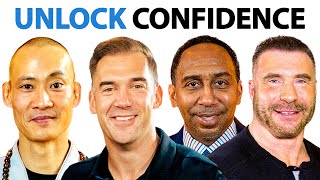
Lewis Howes hosts conversations with Eddie Jaku, Michael Wilbon, and Jordan Peterson on building confidence and overcoming laziness. They discuss intention, service, and leadership as paths to personal growth.
Chapters
The physical appearance of that laziness, of that dullness, of that heaviness. It's apparent. But why is it there? You are not creating any identity of yours in order to harm. If this is what your initial intention is, then I think the penalty will come.
Hey, guys, thank you so much for being here. A quick message before we dive in. You may be watching the show, but haven't taken a moment to click the subscribe button below. So if you've ever gained value from this show, it would mean so much to me if you click the subscribe button right now. And not only will this allow you to see these messages first, all this great content we have, you're gonna get notified first when it comes out. But the bigger our subscriber base grows, the more people we can impact and the bigger the guests we can get on this show as well. So again, thank you so much as always for your support. It means the world to me. Make sure to click the subscribe button below and let's dive into this conversation. What was your biggest weakness that you had to overcome as you started to grow up, you know, studying martial arts, living in the modern world and then becoming, you know, a teacher, a student in the temple. What was the biggest inner enemy that you faced? and overcame or you're still in the practice of overcoming.
It seriously is still the five hindrances. Because it is just something common.
Yeah.
So for example, one of the next hindrances is laziness.
Yes.
Very easily. The lack of energy. Meaning you have great ideas, you have great plans, all of this. But the spark to put you under fire is just not there.
Why do so many people lack the spark to act, to launch, to build momentum, to be consistent? Why do so many people lack that energy, desire, and stay lazy or dull?
I think it's a combination of the way of life people have lived before. and the lack of vision, what lies in front of them. So both of these things. So what I mean by that is not always it's just like a, let's say the physical appearance of that laziness, of that dullness, of that heaviness, it's apparent. But why is it there? And this has so many different variations now when you look into the past, it can really be because of the food that you're eating, because the lack of movement that you're having, because of your habits, whatever type of habits it is that cause you to now end up in that body, which is at the moment pretty inefficient.
Yes.
To generate fire. I have to say, sometimes in my spare time, I like to build engines. I build engines. I build race engines. And therefore, if I look at it, I really like that similarity. You want that engine to perform well. One of the things that then normally needs to be optimized is number one, the air flow, the intake and then also the amount of the air that gets in there, the quality of it. That's why on the engine we filter it, so but now it comes to us. What are you breathing in? How is it with your lung capacity? How much of your lung capacity are you able to really use? How clean are you inside of it? Because what is it eventually that with that oxygen that we are taking in What is it that you are burning and try to make into energy? There are a lot of things that you can eat and try to burn, but the quality of this energy is very little. There is other food, they have a very, very high amount of energy once you burn them. So that means, of course, these things, the diet has an effect also on the dullness of the body. This is the one thing. And now looking into the future, well, if you are expecting fast results, this.
Is.
You know, looking out into the.
World.
What comes fast goes fast. And especially something that is changing the status quo of your life, your lifestyle, let's say, something that is changing it too quickly. It is like, let's just say, no, no, at the moment I visit you, I see you like this. In one month I come back and you might have 30 kilograms more on muscles. I know. Whatever you did, it was not good.
It was too fast.
Yeah.
Because all these quick changes, also when we look outside sometimes, I mean, let's just take the earthquake or the tsunamis or a lightning strike, anything like this, the natural forces. Yeah, they don't tell you one month before that they are coming. The problem is when they come, they very often have this destructive character, not always, but often. And when it comes now to creating our way of life, when it comes to the transformation of ourself, at least in my world view, I take this into consideration, meaning I don't even expect myself to make huge jumps quickly.
Quickly.
Because I just feel like, okay, that might just not be sustainable. That might not just be something that is helpful on the long run. And therefore to take pressure away from you, make small steps.
Yeah.
And this is what I mean by how far is your view on your future vision of what you want to achieve there?
How far should we be thinking out in terms of our vision or our mission? Is it based on the season of life we're in? You know, if we're 18 years old and we're going to school, we should just be thinking out, you know, the next four years. Or should we be thinking out five, 10, 20 years? Because so much can change so quickly in life and situations.
Okay. I can only talk about myself. Yes. And I have to say, I'm a dreamer.
Yeah.
Yeah, I'm a dreamer and a visionist. A visionary, probably. I don't know how you call it.
Visionary.
Visionary. My way of seeing this world where I'm embedding in is super huge. That's why, of course, you can always say, yeah, but this is just your imagination.
Yeah.
Yes, which is your most powerful source. Your ability to put something into your own mind where nobody else has impact on. And only you know that day in, day out, you just still walk this path and feel for yourself how it's getting real because it's unbroken. because there's nobody who can interfere. It's all small things.
And probably.
I can just say that maybe to try it out. Okay. Of course you should not like dream too big, which is like unrealistic. Let's say like this. Of course not. But a vision that there is something you can bring out about yourself that this world has not seen yet. This is something which is quite appealing to me and is therefore also something that I also, let's say, continuously practice and keep on the mind. And now comes the but. Whatever vision and dream you have.
Upon.
Yourself, that you are projecting upon yourself, I do think that you need to have at the same time a commitment. And first of all, for example, the commitment and what are you going to do with that identity of yours if you're going to get there?
So you mean a commitment of like the daily actions you're going to take that you're committed to, or once you're there, what are you going to do with it?
The commitment now very clearly you are creating because you want to help.
To serve, to help others.
Yes.
You are not creating any identity of yours in order to harm. Because I think if this is what your initial intention is, then I think the penalty will come.
What if your intention is to only serve yourself? Is to look good, to make money for you, to get famous for you, to buy things for you because you want to be successful, but you're not including doing it in the service of other people as well. What happens when it's only about May.
You might reach it in this lifetime. But if you bring this one to the to an end or if you continuously go there. Not and in my vision, not only in this lifetime.
Yes.
You're gonna be lonely. You're gonna have everything you want. You're gonna have everything that blinks. You have all the reputation. It's all great. Everything you ever dreamt of, you have it. What you don't have is something that gives you real stability, something that gives you real value in this life.
What is that?
I think it is something that can't be taken off from you. I think it is the connection to other fellows. It's a connection to people, to humans, to animals, to this world and ultimately the connection of this life. And what happens with this person if he only lives this way of life? He's going to repeat himself. Why repeat? Or what do I mean by repeating? Now, I jump a little bit, but sometimes this life seems to me is like a video game. And if you're at level one and continuously fail at level one, you're never gonna move up to level two and get into touch with the next challenges of life. So if somebody is still stuck on the material level, of wanting this and that's really materialistic. So this is really the basic plane. This is a very very basic plane. This is like level one. Sometimes it's necessary you need to have it first. And then your relationship towards these things starts to shift and suddenly you find yourself that Now it's not these things anymore that start to matter to you. Now suddenly, since you're in level two, now you're starting to ask yourself, okay, now it's not material things anymore, but I love my wife, I love my husband, I love my children, I love my dog, I love the jobs, I love my employees, but they are getting sick, they are starting to die away. This is now starting in level two. to trouble you. So now it's the time figure out a way how do you walk through this lifetime figuring out these challenges of life that our ancestors lost people, our future generations are going to lose beloved people. It's nothing new. How do you learn despite the fact of that is existing. How can you still find something about yourself to still keep going, stay strong and still keep going and supporting and helping despite of these things? And then maybe level two, you manage to find a way for yourself. And then you're going to be exposed to the next type of challenges that this life is giving to you. So what I'm talking about is that I'm not sure if life is getting easier. I just think that you are becoming more mature. You are becoming more skillful in order to tackle the challenges of life. I think this is what ultimately, for me at least, seems to me like this.
Yeah, it's learning to become a better leader for yourself. It's developing these skills, overcoming the challenges so that I think I heard you say like life doesn't get easier, you just get stronger and you can manage it with more peace and grace as these challenges and pains come to you, right? When do you think is the easiest time in life? When you're younger or when you're older?
When you're younger. Out of just the fact that you have not learned yet and have not been exposed yet to all of these adult ideas of what you are supposed to do with your life.
How do you manage the level that you're at now? I'm not sure what level you're in in the video game. Is it level seven or 28 right now for you? But how do you manage this level where you're stepping into new seasons, new decade of the material number of the world you're in, the platform that you're building around the world globally? How do you step into that and master it?
I think before we talked about it already a little bit, that within the last three years, four years, I could really witness in a way how like these type of teachings or let's say my name was really spread out into the world and more and more people starting to also participate in listening to what is it that is being shared out, for example. And at the same time, I can also feel that everything I have to say, everything that I like shared, the reason why I could share all of these things is because the first 35 years before that, I was not the talker at all. There couldn't be any more quiet person than me. So I was really, yes.
Until when? When do you start using your voice?
I think it happened in the moment where people asked me to explain what I'm doing. And then I just said, look, I'm not just doing my punch. This is not punching for me. So in the martial art, for example, I started to explain, for example, the punch is not just for me something, let's say, physical. It has also something to do. What are you doing to prepare inside of you before you throw out that punch? Because if you throw out something, if something moves outwards, the question for me is, where does it get in? Because if you throw out punches, 500 punches every day, you just throw them out, where do you get the energy from to throw 500 things out? And now different ways how you can express it, but for me coming from this field of Martial arts where the yin yang symbol does matter and also does matter why it is around. Means for me I started to explain if you wanna throw a punch There are different ways how to throw it if you have a lot of mess already on yourself you probably can just use Straight line movement. No issue at all. But if you look at at me, small Asian, I have to compensate for the lack of mess somehow. And therefore, I need to use another method. I need to use different methods to compensate for the lack of mess that I have in comparison to other people. So, and suddenly out of a question, how do you punch? Starts the talking discussion.
Yeah.
And honestly, I think this is where the beginning lies, where then people found it interesting. that apparently there's a whole philosophy just behind like a punch. And I said, Yes.
How did you, I can resonate with the fact that, you know, you were shy most of your life, right? You didn't speak that much up. You didn't use your voice as much. You were more introverted with your voice, is that correct? Yes. So how did you have the confidence and learn that skill of confidence to use your voice when you really didn't use it that much beforehand. Were you fearful? Were you nervous? Were you afraid? Or how did you step into that?
I just had to laugh right now because I just imagined in my mind, they were very often also now in school time already. Of course, my, my, my friends, they were standing in the break time, everybody having discussions. I was always quiet. Yeah, but internally, I could already, like, feel like I knew what I would say if I would open my mouth. It's just that I didn't.
Why not?
Because ultimately I just thought that it's pointless. It's pointless because sometimes just sometimes the.
Topics are just superficial or whatever.
Yeah, yeah. It doesn't bring benefit to it to do anything.
Yeah.
It's just meaning maybe that you are like, profiling yourself with that was it. Yeah. So that's why I kept it for myself. But internally, observing people, watching, just listening inside of me, the language was always speaking. I always knew, like, what would be my answer if somebody speak to me like that?
Sure, sure.
And so ultimately, I really think it was for me not difficult at all to then, when I was asked to just. let it out.
Say it, yeah.
Because I already had it inside. I just had to, let's say, allow my mouth to speak it out.
Think of all the amazing things in life that are expressions of just you. For instance, the song you stream over and over again while you're in your 13th hour of gaming at 4 a.m. in the morning with all the lights off, trying not to wake up your roommates, or the recommendations that you share with your friends on the top six comedy podcasts that are the best to listen to on your your way to the gym and back, or even your new haircut, which may or may not be an epic bowl cut from the 90s and hopefully is. Everything that makes you, you, makes all the difference. State Farm believes insurance should work the same way. Your plan, your coverage, they need to be personalized to you. And the ability to choose the plan you want by picking the options that fit you, like building your home and auto policies, is exactly what the State Farm personal price plan is all about. Getting the coverage you want at an affordable price just for you. So Are you ready to make things personal? Call or go to statefarm.com today to create your State Farm personal price plan. Prices vary by state. Options selected by customer, availability and eligibility may vary. So what I'm hearing you say is link also link confidence to intention. Some people say link it to the effort, right? Like the effort that you show up that you just keep showing up and others talk about the results. should we be thinking about it?
There's two, I have a whole, I call it the Holy Trilogy in the Book of Self-Confidence. What is this? But the confidence trilogy is faith, have confidence. So if you're a person of faith, no matter what you believe in, it's amazing to me how people that believe in energy, quantum energy, or they believe in, they're a Christian like me, and I believe in both, by the way.
Yeah.
But whatever their faith is, that they have it on Sunday, they have it in Bible study, or they have it when they get together with their friends or when they meditate, but somehow when they walk into a business meeting, they're alone. So, why are you alone then, but you're not alone these other times? So, I'm never alone. So, that's number one. Number two is my intention. And third is my associations, change my confidence. But here's the biggie. If you don't have self-confidence, here's what you have. You have a really bad reputation with yourself. Yes. You have built a habit of not keeping the promises you make to yourself. We've all heard this before, but there's a level. I have a book chapter in the book called One More Standard. Here's how I built what I would call almost superhuman confidence in spite of my insecurity. Think about that, superhuman confidence in spite of my insecurity. And it's exactly what you just said. It's an effort play. If you don't have self-confidence, you've never kept the promises you make to yourself. Check that box. If you have self-confidence, you've started to keep the promises you make to yourself. If you want to have superhuman self-confidence, you keep the promises you make to yourself and one more. So if I'm gonna get up and I'm gonna work out, I'm gonna do 10 reps in the gym, I do one more. If I'm gonna do 45 minutes on the treadmill, I do one more. If I want to make 10 contacts in a day, I do that and one more. I'm gonna tell my daughter I love her every day, I'm gonna do that and one more. And so that higher standard, because in life we don't get our goals, we get our standards long term. And so if your standard is one more, what starts to happen is you go, I'm willing to do things other people aren't willing to do. And I combine that, that I have great faith, great associations, and I intend to help people. This is a formula to build wonderful self-confidence and never lack humility when you have it.
So, when did you learn this one more mindset? Was this from your dad early on or was this...
It's from my dad. So, we talked about this a little bit earlier, but my dad had these couple theories he would always say to me. And so, one was when he got sober, he gave it one more try. He was going to stay sober one day at a time. And then my dad, there's no dreaming in my house. There's no like, my jet, you know, I've been blessing like multiple airplanes in my life. My jet was in almost walking distance of my dad's house. he's never been on any of them. Wow. And I would say to my dad, I would say, Hey, let's go play golf in Maui. Let's go, there's these great golf courses in the ocean. And my dad would say, well, why would I go all the way to Maui to play golf with my favorite person, my son, when we can play here in Chino? It's not about there, I want to be with my son. So, my family had none of that stuff. But my dad knew I was a dreamer and my dad would always say, you, know, I was one decision away from changing my life. the whole time, one choice. And he'd say, Eddie, you're not as far away from these dreams as you think you are. And I'd say, Really, Dad? And he'd go, no, you're actually a lot closer than you think. But because you think it's so far away, you behave in accordance with that belief system and it always keeps it.
That far away from you.
So how do we bring our dreams closer to us? The first thing is, that's a great question. The first thing is you need to believe and know that your one decision, one relationship, one meeting, one book, one thought, one something away from a completely different life. And when you know that, then you begin to look for them. And so in the second chapter of the book, I have a thing in the book called the Matrix. And your Matrix is your reticular activating system in your brain. It's the filter for your entire life. Okay? And this filter reveals to you the world that's in front of you. Again, an example of it is, I just, I like what Musk is doing. So I just bought a Tesla.
I drove it here today. I got a Tesla, too.
You did?
Model X or what do you got? I got a Plaid.
Okay, wow.
Plaid, it's a good one. Nice. And so, I bought this plaid and all of a sudden, man, everywhere I go, there's Teslas.
They're everywhere.
Oh, I see them everywhere. Another one. Three lanes over, other side of the road. Freaking Tesla, this is crazy. They were always there. Why didn't I see them before? Because they weren't part of my RAS. So the key thing I teach you in the book, how to slow down time and create the matrix of your life. When you make the Teslas of your life, those relationships, those meetings, those thoughts, those encounters, you can very easily do this, but there's a process of repeated visualization you do that's not complicated. It's chapter two of the book and it will shift you. The other component too, I have a chapter in the book called Become an Impossibility Thinker and a Possibility Achiever. Here's how most people's frameworks, they don't have an RAS program, they're not intentional, so they keep getting, if the things most important to you are your worries, fears, anxieties, problems, bills, you will continue to have people, places, and things revealed to you that confirm it. And if you operate out of your memory and your history, if this is your pattern, your framework, you will continue to find those things. You need to learn to operate out of your imagination and your dreams. This is a different framework for life. Imagination is different than dreaming. Imagination causes you to create dreams and thoughts that never happened. When you imagine something, you create a space. Once you have a thought, this is powerful, when you have a thought, you create a space that did not exist in the world before you had that thought. And that space is now exists. And the way your brain works and your life works and the universe works is, It tries to furnish that space, whether it's a negative or a positive thought, it starts to hear things it wouldn't hear. That's why like when you're in a crowded room and they say, Lewis, you can hear Lewis auditorially over all the noise. Why? It's in your RAS. It's why you see the Tesla. Okay? So, the key thing is being able to operate on this imagination. Why is imagination so important? When you were a child, three, four, five years old, you were probably happier than you are right now. Why? Two reasons. A, you were closer to God. You had just been with God more recently. And two, you operated out of your imagination. You didn't operate out of a history and a memory because you didn't have one. And slowly over time, by the time you were 10, 11, 12 years old, loving people installed their limiting thoughts and beliefs, their software into you. Because most things in life are caught, not taught. You catch them. And so now you're starting to operate out of history and memory and you repeat it and your RAS begins to see the things that reinforce that history and memory. And so you basically have the same life over and over again with a different cast of characters in a different environment with the same emotions. You have the same emotional home. My dad used to say to me, every call bro, till the day he died and I'm 50 years old, blah blah blah, whatever we're talking about. Last thing he would always say to me, be careful.
Be careful.
What the heck? And I go, careful with what?
I don't know.
I never knew. But when is that programming from the time you're eight years old? Be careful. Hey, go to school. Be careful. So what that, they operate on this fear thing, right? I need to be careful, I need to be careful, but don't make this risk, don't take that business decision, don't start a podcast, don't get on that stage and speak, don't do this, don't do that. You say that to an already unconfident, insecure person, he meant it lovingly, by the time I'm 50, worth hundreds of millions of dollars, be careful. He didn't even know he was saying it to me, but what was he doing? He was installing, God bless him, his limiting beliefs into me as a little boy. So a lot of these things that you believe you were defenseless when you started to believe them. They were installed in you by loving people who were around you. And even though your life may look differently, your emotional home, the four, five, six emotions you experience pretty regularly, might be really familiar from your parents, one or two of them, right? And so you need to look at your emotional home.
What's your most powerful emotion and the emotion that you wish you could let go of?
Love is the most powerful emotion in the world. We will all do everything for love. If there were more love in the world, the way we treat one another, the way we express our thoughts. You know, you'll do anything for love, right? So love is by far my most powerful emotion. It's like I love you. And like when I just saw you, we didn't just hug for like one second.
Yeah.
And you do this better than I do.
I hold people. I make it uncomfortable because I just want to hug and love on people.
But it's not uncomfortable, bro.
Right, right.
Because the reason you're so successful is you truly do love people.
Yeah.
And you come from that place. And I know we're bigger dudes and like, that's a beautiful expression of a man. A real man is capable of real love. That's the sign of real strength. So that's the most powerful one. And then for me, I know the emotion that I wish I didn't have. It's chaos.
Really? How often do you experience chaos?
Less, because I'm aware of it. But I'm going to tell you, all the time till about five years ago, even when we first met, why I used to even say this, Man, I operate great under chaos. Man, you should see me operate under chaos. Most people can't handle chaos. I am calm under pressure. Well, the reason for that was I grew up in an alcoholic home. So, I'm very familiar with chaos. It became a very familiar emotion. And what we do is we gravitate towards the familiar emotions in our life, even if they're not ones that serve us. And I don't think there's negative or positive emotions. I say this in the book. There just are. Fear isn't negative. Fear in abundance is negative. But some fear, being afraid to do this podcast, to some extent, causes us to prepare. So a dose of it, it was given to us in the caveman days, so T-Rex didn't need us, right? So some fear is good, some anxiety is okay. Some frustration, some anger is appropriate. It's to the dosage level. And we get these four or five of them. For me, some chaos is okay, it's fun, it's exciting, it's exhilarating, right? But getting it every day, every week, every month, all the time, and so how do you get rid of it? Well, one way you get rid of it is just to be awareness. When you have an awareness of a thought, it loses its impact and power over you. It almost becomes like this, I'll do it. I'm like, I'm doing it again, aren't I? I'm doing the chaos thing. Everything's great right now.
Yeah, yeah.
All the houses are paid off. My kids are happy. Married to a great woman. Got great friends. I'm doing the chaos thing again, aren't I? You dummy, you're doing it again. And it kind of loses its power over you. So I have a chapter in the book called One More Emotion and how to take an inventory of the emotions you have And so, yeah, man, mine's definitely love and the one I don't want is chaos. Because chaos causes me to act out.
Of anger and frustration. It can depress me.
And your intentions are not going to be as, I guess, pure. It's a gateway emotion. Chaos is my gateway emotion to the ones I don't want. Chaos gives me stress, chaos gives me.
Anger, chaos gives me frustration, chaos gives me fear.
So it's a gateway emotion. What is the result when you create from that space of chaos? It's funny. I have found the ability to externally create something pretty productive.
Right.
But stay with me on this. But the process in getting there is destructive. The process in getting there is not beautiful. And I used to think, a lot of successful people.
-Forcing your way to get the results.
-Almost through force.
Yeah.
You know, and I still do it sometimes. I'm thinking of a situation this week where I did it. And I used to think, well, that's a superpower though, because I've created all these external.
-Look what I made.
-Look what I did. and I'm doing it because of that. The truth is I did it in spite of it.
It's interesting for people to know just in working environments, relationships that people care just as much about how they're treated over the number. People, and maybe it's not over, but it's just as it's an equal My.
Pastor, my pastor, and again, I'm not the most religious person in the world, but you know, I love God and I'm thankful for all the blessings that he's given me. And one of the greatest blessings he's given me is my pastor, A.R. Bernard. at the Christian Cultural Center in Brooklyn, New York. He is a man that is near and dear to my heart, and I love him eternally. And a lot of times I use him as that litmus test per se.
Or.
That morality gauge per se, for lack of better words. Sorry if that's not good enough.
Sure.
I wanna make sure he knows when I'm on the air and I'm bragging or whatever, I'm having a good time trying to make people laugh. I'm joking around or something. He knows that's not my ammo, you know? So it's like he knows that about me. If I'm sitting there, I look good, hell no, I don't think I look that good. I'm not ugly. I'm not Godzilla, but I don't think I'm some male model. I ain't Zoolander, okay? I'm not that guy, all right? That's not me, all right? But here's the thing at this industry, in this industry that I'm in, of television, of broadcast television, stuff like that, I believe I'm the best there is. I ain't apologizing for it to anybody. I think I'm the best thing since sliced bread. My pastor knows why I feel that way.
Why is that?
My sisters and my family and my closest friends know why I feel that way. Number one, I always use this line, I'm brilliant because I know I'm not. I steal from those who are. And I learn from them and I disseminate that level of brilliance that I got from other people, always giving them credit, number one. Number two, here's the biggest thing. I think I'm the best because I think about the company. I know Bob Iger, the CEO of Walt Disney. I know George Bodenheimer, the former president of ESPN, ABC. I know Jimmy Pitaro, the present president of ESPN, who's a really, really good man. Norby Williamson, Dave Roberts, pick up former bosses like John Skipper, John Wildhack, Connor Shell or whatever. I challenge any human being alive.
To.
Go to any of them and ask them what my dedication was to winning. What is winning? It's not my definition. They define it. When you represent a brand, the brand decides what winning is. You can't sit up there and say, this is what winning is to me.
No, not your company. Yeah.
I'm a big dude. I'm a big deal. They say I'm the most recognizable face on ESPN, blah, blah, blah. Man, you bigger than ESPN. No, I'm not. They'll be just fine without me. NFL, NBA, Major League Baseball, National Hockey League. List goes on and on. I'm a lot of things. I ain't a 22. Billion dollar a year conglomerate. That's not who I am. I'm not that big. I'm not Walt Disney. But you know what? Whatever Walt Disney's mission is, how can I help? So, as I say in the book, how can I make my bosses more money? How can I get some of it?
Right.
That mentality.
That's a game changer.
Is what makes me the best.
That's a game changer.
Because what I'm saying is, I'm not saying I'm the best because I articulate myself on television better than anybody else. Even though I think I work as hard as anybody, but I work more than anybody. Or that I got, even though I've been number one for 11 years and more than television, pardon the interruption, there's number one on ESPN, not me. I'm a lot of things. I'm not my brother Michael Wilbon. I'm not my brother from another mother, Tony Kornheiser. I'm not those guys. They're the institution. You see what I'm saying? I understand who I am. But what I'm saying is, is that you show me what winning is for the brand, and I'm gonna bust my butt to go and get it for you. Don't forget me. Make sure you reward me. Or I'll go someplace else.
Treat me well.
Yeah.
Treat me well.
I'll find a way to go someplace where I will be treated well, even if it's on my own, like I'm doing with my podcast, I will do all of those things. Okay? All I'm saying is, is that that is what I believe makes me the best. It's my commitment to excellence for the collective whole.
That's incredible.
Not just me. I don't go on first date. I'm the executive producer of first date. The boss has handed me carte blanche. I'm the one that determines to run down every day. I'm the one that goes on TV every day and executes it. the people that contribute to First Take have been handpicked by me. I picked them. Okay? I'm the one responsible. Do I have bosses at the Institute? Dave Roberts, yes. Jimmy Pitaro, yes. Nobie Williamson, yes. Bob Iger, yes. I have to answer to these people. No question. They're the bosses. But they've made me the boss of First Take.
Right.
Okay. Antoine Lewis, exceptional black man, be a producer for First Take. James Dunn, Sam Tanucci, Nick Scali, all of these guys, phenomenal guys. But I'm the one that they put it on this, on, on the shoulders. Okay. I understand every day. What would Dave Roberts want? What would Jimmy Pitaro want? What would Bob Iger want? I'm not saying that those decisions are the final decisions that I make because they left it up to me.
Sure.
And sometimes I believe that my thought process, it's rare. But sometimes I believe that my thought process might be a little bit different than theirs and it might work better for this particular show. But there is never a moment that I'm on the air that I don't think about what they want. And a lot of people will sit up to you, what China true independence is that stop it. The fact of the matter is you getting a check from somebody else. You have an obligation to think about them.
Sure.
And a lot of times It's just like a musician. If you Jay-Z, you running Roc Nation, you're a billionaire, blah, blah, blah. Do you make music just for yourself or do you think about what the audience would want? What about the record company that you, the people that you employ? Who do they think about? You know, we have the president of the United States leading the free world. Want to get reelected? Don't you got to think about what your constituency wants? Everyone has to think about somebody. It is absolutely silly and erroneous and disingenuous. to convey a message that says otherwise.
Yeah.
And that's what I know.
That is brilliant you said this because if everyone could take this in and realize it's about the win-win. Yeah. It's about how can, you know, when I was playing high school ball, the freshman trying to make the varsity.
Right.
And I wasn't as good yet, but I was tall, so they put me in there. Right. Right. I would listen to the coach and say, and complaining about some of the starters who weren't hustling. He said, we need more hustle. Yeah. I need you guys diving for balls, jumping out of bounds. And I was just like, I'm gonna be the hustle guy, right? I'm gonna do what he needs, what he wants so I can play and.
Try to help him win.
Right. And that got me on the team. Right. It's like working for a company. It's like, if you can help the company make more money, they and show them that they're going to want to continue to support your growth. Yeah. The win-win so this is, for me, that's brilliant. And I don't think a lot of people probably think you think that way. They don't. so for me to know that you're thinking of like, how can I make this the best show in the world, obviously for me, but for the company to succeed, the win-win. That's why you want to do that.
And that's why I can be in a negotiation and I'm looking at them with a raised eyebrow, how you gonna treat me? Because the names that I mentioned, along with everyone else at that company, knows that about me. So if you know that about me, why would you undercut me? Why would you lowball me? Why would you put me through stress and strife when you know I'm trying to do this for you? you because those are those are the things that are going to determine my tenure here. You see, because you do get to a point in life where you got new regimes coming in, you got people that have been reassigned, repositioned, and they got their own vision and they want their own people.
Before the interview continues, if you feel like you're not living your most authentic life, not leaning into your purpose and not living the life that your future self would be extremely proud of, I've written a new book called the Greatness Mindset. And I think you're gonna love this. Through powerful stories, science-backed strategies, and step-by-step guidance, the Greatness Mindset will help you overcome all the different challenges in your life to design the life of your dreams and then turn it into your reality. Make sure to click the link below in the description to get your copy today. Okay, let's get back to this video.
They don't always tell you in corporate America, and I'm not talking about ESPN, I'm talking about Walt Disney, I'm talking about in general, they don't always tell you they don't want you anymore. They just have little ways of showing you. Right. And so when you realize that it's incumbent upon you to say, I got the message, it's time to make new plans. And so the beauty of the business that I'm in, the business I've chosen to be in, is that instead of working around the clock trying to figure out what somebody else wants from you, good or bad, there are moments that crystallizes it for you in your mind. Pay attention and you'll see what they are.
Yeah.
And you'll know what to do accordingly. Don't be scared to leave. Don't be scared to bet on yourself. You're going to be scared anyway because it is scary. But at the same time, betting on yourself isn't always leaving. betting on yourself is believing in you, knowing who you are, what you're worth, having an idea about it anyway, and willing to work towards that to validate that reality. That's betting on yourself. Whatever decision emanates from that is based off of you looking at you and saying, I'm going for it.
Yeah.
And that's why I wrote my book. That's why I have my podcast and all of this other stuff, because That's the point I reached.
I believe self-doubt is one of the biggest killers to anyone's dreams. So how does someone develop self-confidence and sustain it with the ever going changes and stresses and uncertainties that always come up? Once you reach a certain level, there's a new uncertainty.
So I think it's ironic that we call it self-confidence because I don't, for one, think it comes from the inside. I think our self-confidence comes from the outside.
Right? You mean that's the wrong way of going about it or you think that's where it comes from in general?
We are being misdirected by the name. When we say build your self-confidence, that's the instruction is saying go inside, look inside oneself.
But.
I think that's a false direction. Children aren't born self-confident. Their confidence is built from their parents and their friends and their teachers, where they're rewarded when they do well and they're pushed when they fail, when they can do better. Simply, you know, we know this, that simply telling kids that they're great all the time actually doesn't build self-confidence it actually does the total opposite. Right.
Right?
And I, for one, I can tell you in my own experience, my own self-confidence A hundred percent comes from the relationships that I have. It's not some deep internal fortitude. A world-famous trapeze artist is not going to try a brand new death-defying act for the first time without a net. So it's the people in my life. It's when I do doubt myself, that somebody says, you got this. When somebody says, I believe in you. When somebody says, no matter what happens, whether it succeeds or fails, I'm going to be by your side. That's when I have the confidence to do difficult things. I don't have some natural battery that just. That to me is bravado. I don't know if that's self-confidence. you know, being a huge risk taker is not an indication of self-confidence to me. You know, jumping out of a plane and jumping out of a plane with a parachute are two different things.
Right, right.
To me, self-confidence is measured, and there should be a degree of.
Of.
Of doubt.
But.
But I. I think true self-confidence belief in oneself and belief in one's cause. I could not do the things that I'm doing and I would not have the strength to have made the sacrifices that I've made or continue to wake up on a daily basis to drive to spread this message if I were alone. And so when we talk about building one's self-confidence I think the mistake that we make is that we look inside. I think the reality is when we try to build our self-confidence we should be looking to our friends, we should be nursing our relationships. When I'm looking to build my self-confidence the question is who who around me do I need to take care of? You know, the way we bid our self-confidence is by helping somebody else build theirs.
Right.
It's an act of. We will build our confidence with an act of service. So I I'll tell you a true. A true story. So I did an experiment. I love doing experiments in my own life. Yeah, me too. You know, I have mad thoughts. I'm like, well, let's try. Let's try this one out. So I have a very dear friend who has stuck with me through thick and thin, who she She is absolutely profoundly one of the reasons that I am who I am today, right? And I have my confidence in large part because of her, right? She's one of a small group of people who I look at and say, mm-, yep, yep, good friend, right? She was struggling, like seriously struggling. Oh, let me take a step back. So we decided that we were gonna She was struggling. She was going through some hard things in her life. Career wasn't going the way she wanted. Her personal relationship was struggling. There was a lot of rough.
She was lacking confidence.
There was a lot of rough. She was lacking confidence. And we would get together on a regular basis and I would attempt to coach her. And she'd feel great for the hour after she left me, and then it would very quickly go back to normal. And we'd get back together and I would coach her, and she felt great for the hour after she left me, and then it would go back to normal. And I can't say that there was some profound change being made in her. So I had her brain idea. I went to her and I said, I need your help. I said, I'm struggling. I don't have a coach that I love and trust. You've known me for years. I trust you with with everything, I feel unbelievably safe around you. Can you put together a program and.
Can you coach me?
I think you're good at it. And it wasn't reciprocal. It wasn't, I'll coach you, you coach me. I said, it's just, I need your help. Because I'm struggling. It was legit. It wasn't like I was just making stuff up. You were stressed. It was legit. I could do with the help and I trusted her to help me. And something profound started to happen. Over the course of just a few weeks, it wasn't even a few months, but over the course of a few weeks, she started to gain way more confidence. Her career started to really move in a more positive direction. Her relationship firmed up. And the more that she was in service to me, the more that she grew herself. So I think self-confidence, I wish we didn't call it self-confidence because like I said, I think it gives a false direction. The way we build confidence is with. You know, con means with, doesn't it?
Interesting.
So I have no idea the etymology of confidence.
That's interesting.
Just making stuff up here. But con means with. To confide. Let's look this up because fidelity, you know, is something to do with truth. So confide, Right? Yeah, look it up with the etymology of confidence. Look up the etymology of confidence. You know, it's to confide is to people like a conspiracy is a co-whisper. That's what conspiracy is, the co-whisper. So, confidence is co-fidelity.
Right.
What is so, let's see if the instinct is matched by the etymology of the word, and which if it isn't, I'm still okay with it. Yeah, what do you give, what does it say? So it comes from Late Middle English, confident translations, origins and meaning. Here we go. Unlighted in a mellow dictionary. Gotta love it. Where does the word come from? It's about trust or reliance? But what's the actual etymology of the word? Yeah, I'm not gonna sit here and waste everybody's time. Yeah, we can look it up. But it comes from cum fidere, and fidere means to trust.
To trust yourself or trust other people.
Or come.
What does come mean? Uh, it means with. It means with trust.
Wow. It could be with trust, but yourself.
I think it's been, that's my point. I think it's been, I think it's like a conspiracy require, a conspiracy requires two people. You cannot have a conspiracy with one person. It's a co-whispering. You commit the crime of conspiracy when you tell someone something and you're both in on it. So I think confidence is the same thing. I think it's at least two people who undertake the task of trust and reliance.
So she was coaching you and you saw a change with over a few weeks of her confidence built.
Her confidence built.
And her belief in herself.
Her belief in herself. grew when she was in service to helping me.
To helping me.
And so, and so that goes back to the root of the question, how do you build your self-confidence? Or how do you overcome self-doubt? How do you overcome self-doubt? Help someone else overcome self-doubt.
I love that.
I love that.
Overcome self-doubt by helping. Like, and it's not a selfish thing. I'm only helping you so I can. You have to genuinely love and commit to the person. This the person that you're helping, you have to genuinely care about their success and their confidence and their lot in life.
So, everything comes back to service.
And like I said, it goes back to the origins of humankind, right? Which is we are naturally tribal animals and we actually are at our best when we are in service to each other in a cause greater than ourselves.
The more we focus on what we're lacking, what we don't have, what's not working for the challenges we're going through, the more doubt we're gonna have.
Correct.
When we're inwardly focused on what we don't have.
Oh, I wish we'd had this conversation about eight months ago, because I would have written half the stuff in this book.
Well, I'm writing a book on self-doubt right now.
Well, because this is what the infinite mindset is all about. A finite mindset is win-win-win, be number one, be the best. Me, me, me.
Win-win-win, meaning Win at all costs, not win-win.
Correct. Not win-win-win-win-win. It's win, come a win, come a win.
Because the infinite game is you win, I win, the world wins, right? We all win. Humanity wins.
It's a whirlwind.
That's what it is. It's not win-win.
Right.
So.
We are players in infinite games every day of our lives, whether we like it or not.
Or not.
There's no such thing as being number one in marriage. Good luck with that.
Right. That's not the point.
There's no one who's declared the winner of life. We come, we go. If you make more money than somebody else, you're not the winner of life. Someday you just die and you don't take it with you. And there's no such thing as winning business or winning global politics. But if we listen to too many leaders, they talk about being number one, being the best, and beating their competition.
This was me in my entire life. Yeah, it's a lot of time. Until like six, seven years ago when I learned that doesn't work.
And you're an Olympian.
Well, I haven't made the Olympics, but I'm on the Olympic handball team.
Yes, on the national team. Okay, whatever. You're at the highest levels of athletics. And you know this from spending time with athletes, which is individual athletes.
I know, it's all about... Right.
Where team athletes tend to be a lot healthier. So like individual athletes, when they reach the top of their game, Michael Phelps, Andre Agassi, they become the greatest in the world. The next thing that happens to them is depression, right? Where as team athletes, you win the World Series, you win the Super Bowl, it doesn't like deep depression is not.
The next thing that happens.
Some people maybe, but not in general. Not in general. And the, you know, Olympic athletes are.
Such a unique, and I talked to a bunch of them for this book of a gymnast who are like, 16, you have a billion people watching you, you win the gold medal.
Now what? And it is one of the most selfish finite pursuits because the entire pursuit is I'm gonna be number one.
The gold medal.
And they all say the same thing, I want to win the Olympics. Well, you don't actually win the Olympics, you win one event.
Yeah.
But they all say the same thing, I'm gonna win the Olympics. And then they say nonsense like, you know, I want to inspire all the little children. Not a single one of them on their vision board has pictures of little children overcoming adversity. You know, they have pictures of them standing on podiums, holding medals, holding trophies, or the vision boards. It's entirely a selfish pursuit.
Yes. Right?
And any inspiration to little kids is just a lucky strike extra that's really good for the press conference. Right, right.
Right?
But not a single one of them is waking up doing it for the kids. Right. I drag myself out of bed, I'm running in the rain, I miss Thanksgiving, For the kids. Didn't happen. Never on any planet.
Right?
It was for me.
Right.
And so there's this, you know, whether they meddle or not, when they're done, even if they were medalists, when they're done with the Olympics and their ability to pursue, they spent their entire lives from their childhood to adulthood striving to be number one, you know? And let's be honest, they're not the best. They're just better than everybody else that day.
That day.
Which is really funny to me. Right, which is you can get a gold medal in pick a sport, ice skating, and you fell in your routine. But if everybody else fell twice... You're the best.
You're the best. You're the winner. But you're not.
You're just better than everybody else in the competition because it's finite. And finite has known players, fixed rules, and agreed upon objectives. It's only the players. But it's not life. And there's an imbalance. Yes, finite games are very important. Finite games and finite objectives are essential essential in an infinite game, right? But the infinite game is the context for those finite games. I need to excel or be the best here in order to X, right? And recognize that this is not the end all be all. The analogy for living with an infinite mindset is not about winning, right? The better analogy is exercise, right? So how do you be a healthy person? Well, you have to eat well, you have to sleep, get enough sleep, you have to nurse your personal relationships, and you have to exercise. If you do some of those things, you'll be healthier than doing none of those things, but you kind of have to do them all, right? Living an infinite mindset is the same thing. There's a series of practices. Do some, you'll be better than none, but you kind of have to do them all, right? And the way the finite mindset fits into it is, I want to get into shape. I've been sitting on the couch for most of my life watching TV. I'm going to get into shape. And I have a fitness goal, a finite goal that I can easily measure, my weight. I can look on a scale and I can measure the progress. And I've made the goal that I'm going to lose this amount of weight by this date. And so I commit to a healthy lifestyle. I eat better, I exercise more, I'm getting more sleep, and I'm watching the weight fall off. And I miss my goal. I don't lose the amount of weight that I wanted to lose by the day. So what? You're still healthier and you're on the road to being healthier and I can see for a fact that you absolutely will hit the goal later on. And even if you hit the goal, the problem is you can't stop exercising. You have to do it for the rest of your life. That's what an infinite mindset is. An infinite mindset is more like a lifestyle, which is yes, Absolutely, having finite goals is very important. We are absolutely driven by goals. We like measuring things. It is much easier to get into the lifestyle of exercise and the habit of it if I have metrics. Look at the insanity of Fitbits and things like that. Overdone is actually unhealthy and has adverse obsessiveness. But we'll talk, you know, it's not the subject. But the point is it's helping people get up and have a healthier lifestyle. We like measuring stuff. It's just, it's a human thing.
Right?
But it's not about winning. It's not actually about the goal. The goals and metrics are simply a way to help us measure speed and distance. I've lost this amount of weight over this amount of time, right? You cannot run a marathon without mile markers. It's unnerving. The mile markers help me measure how far I've gone.
How far have I gone?
Yeah. How far I've gone and how fast have I gone? And the metrics we have at work. Help us measure how far we're moving and how fast we're moving towards a vision that is, for all practical purposes, unrealizable. That's the infinite game. There's a context. And so when we beat ourselves up because we miss an arbitrary number by an arbitrary date, but the question is, are we building a healthy organization? And I would rather organizations do all the right things to build a healthy organization, even if they miss arbitrary dates. One of my favorite stories is Gary Ridge from WD-40. WD-40 is a public company. Huge company. It's a decent sized company, which is kind of incredible because it's basically oil. Basically just one product. It's like, basically what grease. It's, you know, it's very sophisticated lubricant that was actually made for the, for the space program. But by the way, we talked about, you know, fancy food and their offices for, they just moved into a new office recently. Their old offices were a dump.
Really?
And yet the morale?
Through the roof.
Why is that?
People love work, because it was never about the office.
It was about the people.
It was never about the office. It was about the people. Anyway, they have a lovely new office now, but still about the people. That's why I said before, is it the food? Well, it depends on the company. Anyway, he was on one of his quarterly analyst calls, and one of the analysts said, you missed your numbers. And Gary said, No, I didn't. I missed yours. Mine are fine.
Wow. Right?
And that's the point, which is we, there's nothing wrong with having metrics and goals. Those are very important human beings. But to what end? What are we serving bigger than ourselves?
Right?
So my analogy is like an iceberg.
Right?
So we know that the majority of an iceberg lies underneath the water. So when there's a tiny, tiny, tiny bit of the iceberg sitting above the ocean, Right? It's the visionary who can see beneath the ocean. It's the visionary who stands there and even though everybody sees a tiny or nothing, they can see nothing. The visionary is able to explain what exists in their imagination only.
Okay?
It only exists in their imagination. And they inspire a few people to join them because like, that's yes, we can do that. And they start working and a little bit of the iceberg shows. And a few people go, oh, it's going to work. And so they commit to joining the movement or the company, and a little more of the iceberg shows. And before too long, enough of the iceberg shows that people can go, this is a real thing. You're not insane and crazy. What you're doing is actually in reality. But the thing is, the vast majority of the iceberg still exists under the ocean. And so what the visionary does is constantly remind us where we're going and how much more we have to do. And though we can celebrate how much we've achieved, how much of the iceberg is sticking up above the ocean, the reality is we have way more work and when I die, it's still going to be the majority underneath the ice. And that's what the movement is all about. The metrics help us measure how fast and how far, how much of the iceberg we've revealed. But the infinite game is understanding that the majority of our work still lies undiscovered.
How can someone overcome that fear of, you know, a classmate laughing about them or saying, oh, that was a dumb question, or just something maybe bigger, like putting something out on social media and getting attacked, or whatever it might be. How do people overcome that insecurity?
Well, I do think we've taken a step back actually in in-person communication, a huge step. Everything now is people are more comfortable in texting and communicating through social, and then when it comes to in-person, Something's completely shifted. You can see people having a harder time communicating in person and everyone's kind of deviating towards typing, texting or email. It's become the comfort space.
What's the most easiest way to communicate without text? Yeah, exactly.
Text is the easiest. Email. So, here's the thing. In person is the best way to communicate, by the way. Whenever I can speak to somebody in person or sit down and see them like this, this is where you get the best. The best is where you get magic. Right then there's you okay, then there's the phone phone is another great way But when you go to email you still have to write you can but long-form sentences you have to write properly texting is just a couple of words and that is where everyone's kind of shifted to gone. It's also the on an when I text or when I post on social I'm not as It's keyboard courage.
You wouldn't say it to someone's face.
You would never say it to somebody's face.
I feel like you should only say things online with what you would say to that person to their face. Otherwise, what are we doing?
Yes. If you can't look at somebody and say it, then you shouldn't write it. But it's the anonymity that I can write this stuff and then I can take out whatever's going on in my life out on somebody else and I can feel brave in that way. But it's such a false way to be brave.
What does that do to the person communicating in that way, having that false bravery by saying something strong or powerful or aggressive online, but the unwillingness to do that in person? What does that do to that person?
You have to check in with yourself and realize, Am I being a coward? If I can't say something to somebody's face, but I can do it over text, There's something that's missing. I think bravery is something that we don't speak about and courage is something we don't speak about. We don't do it in a very overt way, in a very physical way, in a very engaged way. It's talked about as this like thing, oh, be brave, be motivated. Where is that? You have to manifest that with your body. You have to do it. And it's doing it in the day-to-day decisions that you make. So going back to my class, it's interesting. We talk about criminal justice, criminology, and sometimes we'll talk about even being, for example, I showed them a video of somebody who fell on these New York City train tracks in New York City, and there were all these people on the platform, one person gets down to go help the person. And so I asked them, would you do that? The majority of the class, no. No, hell no. No, whoa, I'm not gonna do that. And I hear that and I think something is lost there amongst us. When the answer, at least I feel through my belief system again, is that the overwhelming answer should be like, I would want to help save another human being's life. I would want to help save somebody else. But we've come to this place where it's very much self-preservation. Don't say anything wrong. Don't do the wrong thing.
Right?
And attack in a way that's safe and comfortable, or not even attack, but you can disagree. And here's the other amazing thing. I think we don't understand how to disagree. So you can disagree or you can be competitive. It's something actually that you're taught in interviewing and interrogations.
Are you trying to be competitive in.
Interrogation or just- so when I say competitive, I mean that I can disagree with you in a healthy way. So you call it competitive dialogue.
How does it look? If I say, you know, the sky is green today.
Okay. Well, tell me why you think the sky is green.
It just looks green. You know, I just see the color, you know, I don't know, maybe it's a reflection of something, but it's green, it's not blue.
Okay, so now what I would do in that moment is ask you why you think of it that way, why you see it that way.
What is you agreeing with me and.
Saying, oh, you know, you're an idiot, it's blue. Yes. You're not doing that.
You're not getting like defensive or aggressive. Because that is your value system. So I may, for example, I have a very strong belief system, fitness and working out, it's been part of me. But that's my belief system. It is not somebody else's. If I try to impose it to somebody, so for example, when you hear somebody say, I have to lose weight, I have to lose weight, their belief system is not really based upon working out in fitness. So I can turn around and be very direct and that's being direct with someone is the way you lose people. So what you want to do is you want to always let people talk, even if you don't like what they have to say, even if you don't agree with them. Let them go, let them explain themselves.
What happens when you let someone explain themselves, even when you know they're 100% wrong?
You shut up. You shut your mouth. That's like, I always say that. The gift to any great communicator is this. Let them go. Don't correct them. Don't tell them that they're wrong. Just let them be in their world. Now here's the important thing. One, they're going to say everything they want to say. You're going to understand what their mindset is. And two things happen. One, you can speak now because once somebody's done sharing everything, now they can hear you. Well, what you do is you're speaking, I cut you off, I insert myself, you get frustrated, hey, you're not listening to me, I'm talking, she's dismissing me. And so when I speak, you come back at me, I come back at you, and now we have conflict. And so, for example, when I used to do interviews, I would sit in rooms with people who...
When you mean an interview, you mean interrogation. Yeah.
I use, you know, it's interesting. Call them interviews, though. Interviews and interrogations are the same thing. So what you in TV, in law and order that you did it, you this, you that, that's garbage. It doesn't work. It doesn't that work. The best confessions I've ever gotten, they've been almost like psychology sessions or conversations where people progressively over a bit of time give you what we call admissions.
A little more, a little more.
Yes. So it'll be like, yes, I was there at the house. Oh, yes, I was there at the time. Yes, I saw her or I saw him. Yes, I left upset. Yes, this. Yes, that. And then incrementally they get to, you get to the confession, Yes, I did it. Whatever that is, right? Whereas we go straight, most people go straight for the kill, Tell me. And it's because of this lack of patience, this thing that we know everything. And maybe you are right in that moment, but it's not what it's what the other person thinks, understanding how they think, getting into their head and speaking to them. So now if we bring this back to what you asked me about, being competitive means I can compete with human ideas without it being ugly, without being confrontational or conflict. But what we've done is we've made conflict a confrontation, this very negative thing. We don't want it when it happens, people lose their minds. I have so many people reach out, especially when I do consulting. How do I, the question is always, how do I avoid confrontation? How do I avoid conflict? Why do you spend so much time avoiding it? Why do you spend so much time avoiding speaking what you want to say, speaking your truth or sharing your ideas? And why can you not present them in a way where there is disagreement, There is competitiveness. I compete, you compete. No, the sky's green. Well, I see it this way. Oh, I see it blue. But why do you see it this way?
And you have that dialogue.
But it's not an aggressive competitiveness. It's an open dialogue. It's not me being a jerk to show you how smart I am.
Yeah.
And it's not me shutting you down. And it's not me having an attachment to the end result. Me being right and me showing you how right I am. Confident people don't care how right they are. They don't. When you're confident, it's like, I know what I know. I'm good with it. This person sees things a different way. And also, it also comes into where the dialogue where sometimes we think, well, I'm saying this and this is what I mean. You also have to think, what is this person hearing? So just because I think, well, I said this, it's like, that's great, but what are they hearing? How do they hear you?
What's the skill then for people to-- What happens when people avoid conflict as much as possible as opposed to leaning into it and being comfortable with the discomfort of conflict?
That is very dangerous and it is very bad.
To avoid it.
To avoid it because I'm not telling you to go look for it. Avoid it to certain degrees when it's noise, when it's chatter. Like people talk to me about politics all the time because I was former Secret Service. I don't participate. To me it's noise, it's chatter. I don't share. And I never speak about the people that I had access to are protected.
Sure.
But it doesn't matter to me.
But a conflict between relationships of friends or family or co-workers?
So it depends, if it's important to you, you should address it. What you do is it causes long-term regret.
If you don't address it.
If you don't address it, it causes you to build up resentment. Anger, bitterness, and hate. That's where that comes from.
And then the other person doesn't even know what they did maybe.
Maybe they know, but if you don't check them, because from time to time in life you have to, I say check, this is my queen's coming out, but when I say check, address it.
Yeah, check in with them.
Yes, you said this, this is how I see this, and when you debate something with people, use language that's factual. You said this, you said this, you said this.
What are the keys to building confidence when you feel insecure, afraid, or scared of being embarrassed, whether it be dating someone or a career or anything? What's the keys to building confidence so that you're attracting what you want?
Look, I read some of your biographical history before we talked today, and you tell a story about being picked last. and then you compensated for that. Yes. Now, there, Alfred Adler, by the way, the psychoanalyst, the associate of Freud, built his whole theory around compensation of that sort. Inferiority complex plus compensation. But it's adaptive, right? Like you got picked last. It embarrassed the hell out of you. Yep. So what did you do?
You decided that is not going to be me. Never again. Right.
Never again. Okay, now, you did say, you know, that you adopted. a maybe too what, inflexible model of what it meant to be masculine as a consequence. But when I read that, I thought, yeah, but still you. Fair enough. It wasn't the. The new you that you adopted wasn't optimal in all possible manners, but it was definitely Improvement over the previous you.
Exactly. I was a big last again, that's for sure.
Right.
Well, exactly. Okay, so. So the first thing I would say is that if you feel insecure and less and ashamed and all of that, that you have to take stock. And look, I have an exercise online at selfauthoring.com, there's three exercises there. One helps you write about the past, one about the present, and one about the future. The present authoring program helps you assess your faults and your virtues. Okay, well if you have some faults and you feel insecure and inferior because of that, Well, you should. Now, it shouldn't be so much that you're crippled by it and unable to take action. You shouldn't be beating yourself into the ground because you're not everything you could be because no one is. And if you beat yourself into the ground, then you can't get up and improve.
But.
You have to differentiate. It's like, okay, to what degree am I being hard on myself? Counterproductively critical? hearing the voice of my too harsh and angry father in my head, adopting inappropriate stereotypical representations of masculine competence. How much of my self-criticism is ill-advised? Fair enough. And you want to deal with yourself with a certain amount of care. But then along with that, there's the, well, fix your weaknesses. If you're ashamed of being ignorant, you're shown up at a party because you claim to knowledge that you don't have and someone exposes you. Well, you can be angry at them and you probably will, but they've actually done you a favor. They pointed out an inadequacy is a pathway that you can travel down. A recognized inadequacy is as soon as it's such a gift in some sense, if it's accurate. I mean, because you think, well, what should I do? What should I do with my life? That's a real complicated question. Oh, here's an inadequacy. Excellent. You have a goal now. Rectify it. Now you still have to think strategically and figure out how to rectify it and do it step by step. And, but Carl Rogers, the psychotherapist, pointed out that the person for therapy to be successful, the person has to want to change. So they have to have recognized that they have a problem. If someone is mandated by the court to attend therapy, it's very difficult for the therapist to convince them that they have a problem. Once you're convinced you have a problem, it's like away you go. You know, I know it's still technically difficult. It requires discipline and all of that. There's no magic solution, but if you're plagued by feelings of inferiority, you should rectify the most obvious inferiorities.
Right. Focus on those first. Over optimizing strengths, would you say?
No, not necessarily. Not. Not necessarily. I'm. And you don't have to redress every. Like, I can't. I'm a terrible jazz musician. You know, it's not.
It's not a thing where you hold.
Shame around or, like, well, it's not an impediment.
Yeah.
Yeah.
I would say that you have to rectify an inadequacy when it's clearly an impediment to your goal, or you have to shift goals. But if you're shifting goals because of an inadequacy related impediment, then you have to ask yourself, is your desire to shift the goal reliable, or are you just taking the easy way out? You can protect yourself by picking a different goal that's more difficult. That's a good mental hygiene. practice because sometimes you should switch goals rather than rectifying inadequacies. But you can fool yourself then and that's not good.
And if someone is goalless, lazy, unmotivated, not sure what they want to do, what would be a few key steps to get started to turn their life around or to find the motivation for something greater than where they're at?
Well, I think a fair bit of that's probably to be found in, you can find it in shame, you can find it in guilt, you can find it in conscience, you can find it in anger, you can find it in.
Interest.
And engagement and beauty. There's lots of pathways. If you're angry about something in the world, well, you know, that's an indication that that's in some sense your problem, right? It's speaking to you in a moral sense. This shouldn't be that way. Well, maybe you're the person who should do something about it in some manner. Maybe it'll take your whole life to figure out how to do that. But it's bothering you for a reason.
So.
That the negative emotions can be a pathway to transformation. I'm not trying to romanticize them. They can crush you completely and leave you with nothing.
Yeah.
Right?
For sure. And they can go badly astray.
But.
Shame, that's a good one. What am I ashamed of? Well, can you fix any of that? Because you might ask yourself, let's say you're so ashamed and so crushed that you're nihilistic and you can't see any hope for life. You're just done. You might think, well, what if I was less ashamed? Like, I'm not going to jump off the bridge today. I'm going to wait a year. I'm going to work on these things that I'm ashamed of. And just see, like, does my life improve enough so that I'm not so bitter about it now or I'm not so hopeless about it now? And my experience has generally been that that works. It works. And then some of it's practical knowledge too. It's like you can get a really long way with very small changes, incremental changes.
Yeah.
Micro habit changes. So aim low.
Don't have big goals or big transformations.
Well, you can, but the problem with a big goal is that it's daunting enough so that it might paralyze you and there's a high probability of failure. Imagine that you're your own child. Okay, now imagine you love this child and you would like him, we'll say him because it's you and I talking, to succeed. Now you have an ideal for this child you would like him to grow up to be the best he can be, better than you, the best man he can be. That's what you want for your son. If the good part of you is talking, you definitely want him to be better than you are, but you want him to be the best he could be if your vision is unclouded. Okay, but then you offer him a goal. It's like, well, do this. Well, can he do it? Well, if he can do it without a second's thought, there's no challenge in it. There's no developmental impetus. It's not in the zone of proximal development. You want a goal that you can do, but that requires some improvement on your part. Because You want to attain the goal that's satisfying, but then you want to make yourself into the thing that can attain goals. And so you want to push yourself. You want to push yourself a bit far. Yes. And there's an ample psychological literature that suggests that that's where maximal motivation is to be found.
Interesting.
So you're pursuing a goal, but you're also pursuing the goal of transforming yourself at the same time. You're doing both of those at the same time.
Do you need to know that you're transforming yourself in order to attain the goal? Or do most people just think, I got to take these steps to make it happen, but they don't realize they're becoming better human beings?
It depends on what you mean by realize. They have the sense of satisfaction and confidence that would indicate that, although they might not be able to make what that means explicit. But I would say it would be better to make it explicit. It adds one other dimension of possible motivation.
How do you think people lose confidence? We've talked about gaining it, but how does someone, how could someone like yourself, who's accomplished so much, who's got millions of followers, who, you know, is financially successful, has a great marriage, how could someone lose confidence? once they've built it.
Illness, that'll do it. That's one way. Death of someone, loss. I mean, there's lots of ways of having the rug pulled out from underneath you. Moral error. As the stakes get higher, as we already discussed, the consequences get larger. Ingratitude, that's a big one. You can succumb to the temptation to believe your own egotism. That's a big mistake. There's lots of ways that things can go sideways, that's for sure.
So it sounds like, you know, we start off with a lack of confidence. When we're pointed at, you're inadequate in this thing, and we go down a journey of, you know, building ourselves and overcoming the challenges and diving into the fear to have these small wins to build confidence. And then the more successful we become, the more we succumb to losing that confidence again when a lot more- no.
No, I wouldn't say necessarily that you become more susceptible to that. But you asked, how can that happen? How can that loss occur? I think, I think, I still believe that, you know, genuine accomplishment, but it's ethical, it's always ethical accomplishment. I believe that to be the case. Genuine ethical accomplishment is the best source of security, but it's not un-erring.
When you mean ethical accomplishment, do you.
Mean Doing something good, right?
Whether people know about it or not, just good and right for yourself. Is that what I'm hearing you say? Or does someone else need to acknowledge that this was good and right?
I think if you've done it for yourself, that's good. But if you do it and other people are in on it and along for the ride, that's also good. And sometimes that's better to bring people along. if it's just a matter of them acknowledging it, well, there's value in that, too. I mean, you know, you. People say, well, you shouldn't care what people think of you. It's like, well, of course you should. Psychopaths don't care what people think of them. Now, you shouldn't care so much what people think about you that you're willing to lie to maintain whatever it is that you think they value. Like, there are places beyond which that becomes counterproductive. productive, clearly. But of course, well, I mean, I read the comments in YouTube particularly, and I pay attention to them. And if, you know, 30 people say something like, here's something I do, and I probably did it to you. When I'm interviewing, I interrupt more than a certain percentage of my audience would like.
That's my comments. It's like, just let them speak. You interrupt too much. So I just try to shut up more now.
Do you know the joke?
What's the joke?
Knock knock.
Who's there?
The interrupting cow.
The interrupting cow. Boo.
Sorry, that's a stupid joke. But it's a stupid joke. Anyhow, so, you know, I read those and that's what people think. And then I think, okay, I should probably try to interrupt less, but I get excited and and then with Zoom, there's a lag and that makes it harder. But I do pay attention and you should pay attention.
Do you have a certain approach to how you interact with the audience? Do you like, I look for shirt colors, I look for ethnicity, I look for couples, I look, are you thinking or is it just, it just comes to you?
Yeah, it kind of just comes to me. I mean, I always like, I don't know, like I always just kind of tell them, remind myself to just like trust my gut. So just say the thing that I'm feeling, no matter how weird or uncomfortable or awkward it is. What are you feeling right now? And that works. That truth works because other people are also curious about that. And especially when you're in a theater, it's a little bit different because everybody is lined up like this. So you got 3,000 people there. The people on the balcony can't see what the people in the front look like. So when you're interacting with them, you also have to do a little bit more description for everybody there. you know, context.
But you're in a night, if you're.
In a nightclub, there's 100 people or 50. They could see that guy's shirt, that guy's face, like everybody's so close. So that is a little bit faster, the interaction. Like it's, you could even, you could even look at somebody and just kind of be like, and everybody else will.
Look and be like, laugh.
Exactly. Just because they're like, I would say if I looked at that guy too, right? Like so much of comedy is just like, acknowledging this feeling that we all have or acknowledging things that are right in front of our face that we haven't seen yet. And that's for me, it's like, what is the joke? What is the joke that everybody should have said but hasn't said? About the most popular thing even. So it's like, how can I get one of those for every single thing? That's the challenge.
That's the fun. Okay, so that's the second part of the framework.
Having just a great interaction. Having great Long bits a lot of people that are unfamiliar with all my content don't know this about me, but like Most of them know like the crowd work stuff etc and that's the stuff that I've been able to like you put out there and people are laughing at it yeah, but that's stuff that like I'm not using for the set so I have an hour of jokes, but that's the stuff that I.
Can give the audience that's the first.
15 minutes of just it were kind of like pepper through but it was the only thing that I could give out every week if I gave out one of these bits that I've worked on for six months and I'll run out. Because these bits for me, when I do a bit, it's a chunk. It could be six minutes. So it's like everything all encompassing in this topic, six minutes, eight minutes, you.
Know, it's a full story.
Yeah, like story or like an analysis of an idea, person, place, or thing from every angle justifying maybe the most absurd situation. Like the more absurd, the better. But that to me is like, I need a few of those. In the set where you go, oh, that bit, boom. Oh, his abortion bit. Or, oh, his Michael Jackson bit. A few of them in there where you're just like, you need to see his bit about this. Interesting.
So two to three bits.
Depending on how long, I mean, I have a bunch throughout, but there has to be a few in there that are so memorable. You have to see it. That's the feeling. I want you leaving going, I mean, I can't laugh at that. That was crazy. That was crazy. Like, that's how I would design the sets early on in my career. I was just like, even if you hated me for the first 45 minutes, the last 15 minutes, you should be crying.
Wow.
Because you have to leave on that, you know?
Like, do you ever experience self-doubt at this level?
Yeah, of course. All the time. Before I go on, I'll feel that way. Like, is this joke even gonna work?
Yeah.
Of course.
Are you nervous like the day before, you know, 20 minutes before? How long?
Depends on the show. You know what I mean? Like sometimes the whole day I'm thinking about, sometimes I'm not thinking about anything at all. Like it just depends like the thing that I want to accomplish, you know? Yeah, it depends. I put it this way, I'm much better to be around after.
When you're done with the set, like, okay, it's over. Yeah. Don't hang out with you before. I'll come say how do you after.
The show when I come watch you?
I just leave everybody and I just go into the green room and I just like, Focus.
Focus.
Think about what I want to talk about. Try to remember the things.
And like, have you ever gone blank in the middle of a 60 minute set? Yeah. All the time. What do you do when you're like, oh, I'm not hitting anything. I'm going blank. I'm just mumbling here. What's the best way to get back on track?
One thing I'll do is I'll pretend.
Like I had a thought.
Like, so I'm giving you some game. So I'll do this. I'll be like, I'll be like, like.
Like, you know, I'll be like, see.
The thing is like, I can't, I can't. And then the audience is like, what.
Is he thinking about? I'm like, I don't know.
But like, I'll have like little games that I can play to like stretch out.
Sure, sure. Yeah.
How long, you know, we can take those silences.
Do you think having self-doubt is a good thing before?
You need it.
You need it, you need it, you need it, you need it. I mean, we talk so much about confidence, but like self-doubt, you need both. It's the combination of self-doubt and confidence. Confident enough to do the thing and insecure or doubtful enough where you get better. And like without both, you cannot be great. I mean, if we're talking about greatness, like every great person has self-doubt and that self-doubt is a massive motivator, but they have enough confidence to overcome it. I think it's the people who lack confidence and have the self-doubt that they can't do anything. They can't get out of their own way. And the people who have too much confidence and not have self-doubt just never really get that great. They're good. Like their lives are probably better. They're probably happier. Like real talk, maybe they're happier. But I want to be great. And that requires constant criticism of yourself.
Do you think a comedian can be a 10 out of 10 happy?
I don't think people are. Yeah, I would say I'm on the happy end of the comedian spectrum.
You're generally a happy human being.
Yeah, I mean, yeah, I don't put it this way, like, I don't feel sad, but I don't feel, like, angry. I feel a lot of gratitude and a lot of joy. And, like, I feel stress, which I enjoy, and I feel like-- so you're.
Taking on big projects and-- yeah, and.
Like, you know, building things, and obviously there's disappointment So, frustration, but I don't like wake up going like, I'm sad. And I understand that people do that. And like, I felt, you know, I've, you know, I felt like down or you come down off of certain big projects. And my parents bow this, and I imagine people deal with that every single day. Like that could be incredibly difficult to overcome. I'm very lucky where I haven't felt it. And I've tried to curate a life and habits to keep me away from like, I need to do certain things. I need exercise. Like if I don't exercise, I'm a wreck. I need to be creating. If I'm on stage, that works. If I'm putting out clips or something like that, that works. Couldn't get on stage during the pandemic, but I felt very fulfilled by putting out content. And maybe I'm leaving myself in the hands of those people saying, great job on Instagram. That's a little bit vulnerable, but I at least felt like I was doing something. And I understood the recipe to like my own, like mental wellness, if you know. But yeah, I don't think that you should be happy all the time because then you're not happy, you're just normal. I think that you should feel normal enough so when you're happy, you're really grateful.
Yeah. You know, like... What are you most grateful for these days?
Oh, God, all of it. All of it. I got a great woman.
And... What's the thing you love about her the most?
She hates when I say this, but like, there's, like there's like a great safety with her. I know that sounds like a weird thing because you're supposed to be the one that's providing the safety, but like there's like building with her feels I'm just so excited, you know, and that's not only like family, but that's also like emotional connection. Like she's yeah, I mean, she's just she just creates a great environment to like, feel safe. What did you not feel safe about before?
With her?
I mean, I never really, like, almost.
Immediately, I felt, like, really safe with her. And by safe, I just mean, like. Like, to go, I want to spend the rest of my life with you. Like, you gotta love that person, and you gotta love spending time with them. That's not to say that we don't, like, get in arguments, but, like, genuinely speaking, like, if there isn't distraction and it's just the two of us hanging out, it's an awesome time. Life complicates things.
But.
To me, I'm so grateful for that. And she's just awesome, like so in tuned, like, you know, with what like I might need. And I don't know. I mean, she's just so great. She's just like, that's beautiful. Yeah, it's just really selfless in that way. And I know that I require a lot, especially given my career and stuff. So like, knowing somebody who's having somebody who, like, knows that and is, like, aware of that and, like, and wants to give and, like, wants to. To support is just like, you got to be grateful. Like, just so. Yeah, it's a weird. I know it's a weird thing, like, being. Feeling safe, but, like, that's really important to me.
Yeah.
Like, I want to be able to share without being judged or made wrong or.
Yeah.
Not accepted or all these things.
Yeah.
Like, I just tell her everything, and she accepts it. Yeah, that's beautiful.
Yeah, I mean, I don't think you accepted everything, but like, I just feel like I can share these things that, you know, might, I might go like, I might with somebody else so I don't feel safe. Be like, ah, if I say that, will they not like me or they, you know, will they stop being in love with me or whatever, but like with her, I just really feel like I want to build with her.
Something about with my girlfriend too, where when we first started dating, I was just, my previous relationships, I would be 100 honest and they would get hurt or upset or not like something. And then I would kind of like hold back 100 of the honesty because I was like, this is going to make them freak out for the night or whatever. Right? Yeah. And so when I started dating her, I was like, okay, Martha, listen, you're asking me a very vulnerable question now. Are you sure you want the truth? Yeah. Because every woman I've been with in the past said they want the truth, but they couldn't handle the truth.
Yeah.
So I go, you sure? She goes, yes. You're not gonna like it. She goes, I want to hear it. I go, you,'re not gonna like it though. I'm just letting you know, but I'm gonna not abandon myself from telling you how the truth. And I'd say it and she'd be like, that's it.
I love that about you.
And so the more I was able to do that with her, I was like, man, this feels safe. So I know that feeling. I've never felt safe in a previous relationship. And I'm like, it feels amazing to be able to just say whatever I want to say. Not something in a bad way.
I'm not like saying something negative, but.
Just say the truth. My truth. Yeah. And be like, okay, yeah, I accept you. Yeah. It's incredible, man.
Yeah, it's the best. It feels unbelievable.
Yeah, you get to be yourself.
It's incredible.
And if you have to live with someone for the rest of your life, you better be able to be yourself. You need that. Otherwise, it's gonna be miserable. You were mentioning about therapists last year, and I talked about this on my show, but I went through a year of therapy. Okay. Every two weeks, minimum, for a year. I was getting out of another relationship that I was trying to make work.
Yeah.
With the therapy. It didn't work, ended it. And I said, I'm gonna stay in this and keep myself emotionally accountable to integrate the lessons I'm learning. So I don't repeat this because I've been repeating this for 15 years. And the consistent therapy was probably the most powerful gift I gave myself ever for one year. And I'm continuing again for this year. Incredible peace that I felt. How long have you done therapy for?
You really treat life like sports.
I do, man.
It's great.
Life, business, it's all sport, man.
Yeah, but like, I don't know, the way that I've like heard you talk about your life, it's like, okay, here's this thing.
I'm gonna figure out this thing. I'm gonna practice this thing.
Yeah, that's it. And I'm gonna get coaching. I'm gonna get feedback.
It's all stuff. I did it for this amount of time, but a handball. Even therapy.
You're like, okay, I'm gonna figure out this thing. It's really great. It's really good. But how long, when did you first experience therapy? I think when I was like third grade or something, some teacher. said that I should go to therapy or something. I was, like, probably acting out.
Okay.
My parents were like, all right, go. Then I went. I don't really remember much from that.
Do you do it now every now and then?
Oh, God, I would love to, but I just don't.
But I would love to. I love it. Well, because you've got an amazing audience that just. You think they should be paying you.
That's like, what is the best thing about therapy for you? Ah, it's just vomiting, dude. Like, just emotional vomit. Emotional vomit and, like, getting all these, like, cool. little words that you then can, like, use in arguments with your girl, you know what I mean?
Give me an example.
Oh, like testing, you know that word? Yeah, like, you only test someone if you want them to fail. Like, yeah, yeah. And, like, also, like, understanding why, like, understanding the emotions behind your behavior. You know? Like, sometimes I'll see a comic say something smarter than, like, who they are on stage. Like, he's, he got that from. He got that from somebody for 200 an hour. Yeah, but, like, yeah, I. I think it's just awesome.
What would you say are some deciding factors that can help someone with their self-esteem? Because you and I are very similar where my childhood, I didn't have much confidence in myself or esteem because I was in the bottom of my class in school because I had tutors and special needs classes because I just wasn't able to understand it and comprehend that well and felt awkward and goofy in my life. What are some things you think people that in their teens or even in their 40s and 50s who don't have confidence yet, what are the things we can be doing differently to gain confidence, to build self-esteem? Because I think this is one of the key factors of success is believing in yourself. It doesn't matter if the world believes in you, if you don't believe in you. What can we start to do to change that?
Well, I think a person has to start to study themself. Most people know very little about themself. They think they're their body. you're not a body. You have a body and you have a marvelous mind. And when I first started to study this, I thought, you know, studying the mind, that's for psychiatrists, psychologists, behavioral scientists. And the man that told me, he said, no, it's not. He says, that's for anybody. That's for little kids. And so I think as we start to understand something about our mind and something about our higher faculties. See, we're all programmed to live through our senses. We go by what we see, hear, smell, taste, touch. Well, I've got a little dog at home that you can see here, smell, taste, touch. All the animals in the world, they're completely at home in their environment. They blend in. They operate by instinct, which is perfect. We had instinct removed and we had higher faculties put in our place. in the place. And if we would study these and gain an understanding, your self-image would automatically start to improve. You have perception, the will, reason, imagination, memory and intuition. Those six faculties will give you the ability to create your own environment. See, we're totally disoriented in our environment. where all the other little creatures are completely at home in theirs. And we're disoriented in ours because we can create our own, but we don't know that. School doesn't teach us that. School is more interested in the development of your intellect than in the development of awareness.
Like.
A person doesn't earn $100,000 a year because they want $100 a year. they earn a hundred a year because they're not aware of how to earn a hundred a month. Awareness is really the key. And when we become aware of who we are and what we've got working for us, you know, marvelous things start to happen to us. And that's really what happened to me. I never went back to school.
I.
I built a very successful company and operates all over the world. I didn't do it myself. I have a tremendous team of people. I've got a just an absolute genius of a business partner, a woman who's an attorney. I mentioned to you before you should have her on sometime. You'd be fascinated with her. She's that interesting. It was a group of people. We've attracted a phenomenal group of people in our company. And we're operating now in 91 countries teaching this information. I don't know another company that teaches what we teach. Like I think Tony Robbins has probably done more for our industry than any individual. The secret has probably done more for it as much as Tony has, the movie. But there's. I don't know anybody else teaching what we're teaching. And what we're really doing is teaching people how their mind functions and.
How.
To expand their understanding of how it operates.
What are the six faculties again? You shared this before, which I love. And I think if people really understood this, perception, helped them build their self.
There's perception, the will, imagination, memory, reason, and intuition.
Which one is the hardest for people to...
I don't think any of them are.
Awareness.
They're. They're all equally valuable. You take your imagination. Think of this for a minute, Louis. Nothing is created or destroyed. Look here. Here's a little cell phone. What you can do with this almost blows your mind when you think of it.
Yeah.
Well, when I was a kid, we didn't have a phone. We didn't have a phone because we didn't have any money. for the first reason, but the second, not everybody could have a phone. We were not aware that there was an infinite number of frequencies. Today, there's, what, a zillion phones? Because there's an infinite number of frequencies. This phone is on its own frequency. Yours is on its own frequency. if I have your number in here and I hit send, you and I connect, we're on the same frequency, won't matter where you are, we can see each other, we can communicate because we get on the same frequency. Well, the good that we desire is already here, it's on a frequency. The way to build this has always been here, we weren't aware of it. But somebody took their imagination and went off into no place, what they were really doing is going on to a higher frequency. And if you'll stay on that frequency, you'll attract everything that you require. That's why Dr. Werner von Braun, when President Kennedy asked him what it would take to build a rocket that would carry a man to the moon and then bring him back safely to Earth, von Braun said the will to do it. The will is the mental faculty that gives you the ability to hold one idea on the screen of your mind to the exclusion of all outside distractions. See, if you take your imagination.
Do.
It, you have goals, take your imagination and then take yourself there, see yourself already have completed the goal. And then hold that picture with your will. When you go there with your imagination, there is a place. Whatever it is you want, you went there with your imagination, there is a place. You stay there in your imagination. You will attract everything that's required for the manifestation of that picture. We don't work toward the goal, we work from the goal. You get the goal in your mind. Our problem is we measure everything on the physical. and you look at the physical and you say, well, I haven't got it yet. If you think your conscious mind, if you get an image there of your goal, you've already got it intellectually. If you didn't have it, you couldn't share it with me. But if you have it, you can share it with me. You can share with me the idea that you've got in your mind. So you've already got it there, haven't you?
Right.
As you get emotionally involved with that idea, you've got it also on an emotional level. You've got it there. You've got it intellectually. You've got it emotionally. The only place you haven't got it is physically. Now, there's a period of time must elapse for that idea that you have intellectually and emotionally, for that idea to move into physical form. We understand how much time. Pardon?
How much time does it usually take?
We don't know. We don't know. That's the only thing we don't know is the gestation period for an idea. We know what the gestation period is for wheat. We know what it is for a carrot. We know what it is for a baby. Moment of conception is about 280 days. We didn't always know these things, but we do now. We don't know what the gestation period is for a spiritual seed, and that's what an idea is. But it grows by exactly the same law. And so if we hold that idea in our mind, it must by law manifest in form. It moves into form. Now that is called the perpetual transmutation of energy. It's one of the laws of the universe.
Wow. There was something that you shared just a moment ago that reminded me of an interview I did with Joe Dispenza recently where he said, we're really good at remembering the past and actually building a story in our mind about something traumatic that was actually way worse in our mind than it actually probably was in person. We're really good at remembering these stories. But what we need to do, he said, is to remember the future. and when he said that, it kind of triggered something different. It's like what you just shared. It's like have an idea of the future of what we want to manifest and hold on to that idea and remember the memories of the future as opposed to holding on to the memories of the past so we can move into that as opposed to be stuck in the past.
That's totally what that is.
Yeah.
Yeah.
Yeah. That's.
That's.
And it's hard. Why is it so hard? Why is it hard for us to hold on to or. maybe to hold on to, but keep in our minds and imagine the idea of a greater future for us, as opposed to constantly being stuck in the past. Why is that hard for so many of us?
Because we're programmed to go the other way. You know, what language do you speak?
I barely speak English.
How about Russian?
Privyet, cag de la. That's all I know.
Well, the point is, You were raised with the English language.
Yes.
You don't know another language. I was raised with the English language. I don't know another language. I was working with people over in Kuala Lumpur a number of years ago and they had a little boy, four years old, that little boy could speak four languages. They thought nothing of that. There's people speak many more than four languages because that's the way they're raised. We're the product of our environment from the time we're born. But prior to that, genetically we're programmed. You're genetically programmed from the moment of conception. You get all mom's DNA and all dad's DNA. And God knows how far it goes back on either side. Well, that is programming. That's in our subconscious mind.
And.
That'S called a paradigm. That's what it is. It's a program in our subconscious mind. Now here's the crazy part. You have programs in your phone or in your computer. The people that write the code for these programs are really smart when it comes to writing code. They really know what the hell they're doing. The people that wrote the code for our biocomputer had no idea what the hell they were doing. They don't. They did not. They were writing a code for my subconscious mind and for yours, that's our paradigm, and that probably controls our life to an enormous degree. It did with me until I was 26. Now I was fortunate when I met Ray Stanford and he got me into the Think and Grow Rich book and that led me into God knows what else. I have been working at changing that program since I was 26, I'm 86 right now. So I've been at it for a long time and I work at it every day. Most people don't even know that they have the problem. So they stay stuck their whole life.
What do you think of the programs or the programming that hold us back the most? Maybe the two or three things that-.
Well, we were talking about earlier, the self-image, that's programming. and I have a little great-granddaughter and her mother and father are really fascinating. I'm watching them how they treat this little girl. It is fascinating. Her name is Nora. And if they do end, they'll say, thank you, Nora. Nora, that is really good. This kid, I think, is going to grow up with just a phenomenal self-image. Now, they have been studying this all their life, and now they've got a little baby, and the two of them working with her, it's phenomenal. But I think self-esteem has to be one of the biggest problems. That's not really taught in school. It's not taught in many homes. you take and get into any of the sports leagues, they don't teach much about the subconscious mind. The subconscious mind is controlling how well you play the game.
When we remove the masks and the makeup, figuratively speaking, of our life, we're all trying to figure out what value am I providing to the people I'm interacting with? What value am I providing to society? Where is my place in life?
More from Lewis







Secret Service Agent: Your Neutral Face Is Making People Distrust You (Here's How to Fix It)



