Gene Simmons: My Mom Survived 3 Nazi Concentration Camps & Brought Me to America with Nothing!
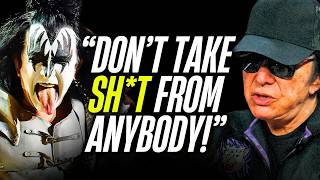
This content was created by Lewis Howes. This content was uploaded by Lewis Howes. This is a YouTube video titled "Gene Simmons: My Mom Survived 3 Nazi Concentration Camps & Brought Me to America with Nothing!" featuring a conversation between Lewis Howes and Gene Simmons. The discussion covers Gene Simmons' life experiences, including his family's migration to America, his mother's survival of Nazi concentration camps, and the rise of his band, Kiss. The video was created on June 4, 2025.
Chapters
Did you ever doubt yourself?
Oh, hell no. I know that I'm not the best looking guy in the world or the smartest or anything, but I will walk into any room and I will walk out with your girlfriend with no doubt in my mind.
Simmons and Kiss revolutionized rock in the 1970s and 80s.
One of the most influential rock bands of all time.
30 gold records, 14 platinum records. Here's Gene Simmons.
Don't ever take from anybody. Just roll up your sleeves and go to work. Wow. What do all great champions do? They psych themselves up. I'm gonna win it. I am the champion. I am the greatest. I heard Muhammad Ali doing that. I never heard a human being talk like that publicly. Like, who is this guy? Actually, he was stating fact. It's our problem that we thought, well, you're not supposed to say that. Why not? Why not set greatness in front of you and then work towards achieving.
Yeah, that's true. What have you learned about fame that you wish everyone knew?
If you become famous.
And I heard an interesting story or a very powerful story that of when you're. When you and your mother were trying to get to America and trying to come here and migrate to America, what was the lesson you learned from your mom and the courage to get over?
My father had gone, so the provider was no longer there because my mother stayed at home while he worked. So once my father left, my mother was forced to go out there and, you know, while I went to school. So when I come home from school at 3, 4, whatever it is, in the afternoon, I was alone at 6, 7 years of age and, you know, would cry myself to sleep because my mother would work until late at night six days out of the week. There was no such thing as five days, two weeks, two days off. And in Israel, it's the Sabbath. Saturday that you take off. Sunday you go right back to work from 6:00am until, oh, 7, 7:30pm and so my. Both of my mother's brothers became successful in America. So they.
And they already came to America.
Yes. Right before World War II, my mother and my father went to Israel, 1949, and both brothers had already started working in America. And the stories I could tell you about my Uncle George until the day he passed, he loved Wonder Bread. In those days, you could. For 29 cents, you could buy a whole loaf. He would buy a whole loaf with water and sit in a park bench in Central Park. And to him it was like eating cake from kings. He would just eat the bread and drink water because you didn't have it. In Europe, there was barely any. The fact that he could eat an entire loaf of bread by himself and nobody would kill him to get a slice of bread was a. Was beyond anything because Europe never really recovered from the 1929 stock market crash. People were killing each other all the time. And in concentration camps, if you had a loaf of bread, they'd kill you for that. It's a different world in America, the land of plenty. Even During World War II, people ate, you know, we grew wheat. So.
So you're. Her brothers were already here and then successful and successful. So she said. They said, hey, you come over and stay with us.
That's exactly right.
And was it that easy to kind of, you know, leave the country at that time?
So when my mother came to America, she. She had to work, you know, the whole time. And I was. I remember going into my Uncle Larry's house and they had their own house with a basement and stuff. I mean, I just couldn't. And you'd look out the door and there were paved streets and cars going everywhere, and people were fat. And I never saw a refrigerator. We had a box. And if you had a piece of ice, you'd stuck it in there. So you can have milk, by the way, not branded. They'd give you a sheet of newspaper and your week's piece of meat and your week's butter and your. But that. It was a new country. There was nothing. There were no stores. People can't fathom that. I remember all that. And I remember just everything was new. You know, you have branding cups and. And canned food. I never saw canned food until I got our first. Till we got our first care package from the UN and we opened up the box and there was a. I get choked up when I. And there was a can of peaches. And I never saw a can. I know people are going to think, well, he's exaggerating. No, I never saw a can of food. There were no supermarkets or grocery stores, nothing. You lived in Hills. And I remember taking the can and they were a full color picture of peaches dripping, you know, with stuff. And I remember at about 7 years of age looking at it, and my mother, you know, grabbed that out of my hand and she took a big rock. There's no such thing as can openers. And she put it on the ground and, you know, banged into it and then peeled back, you know, the metal. So the sharp stuff was going there. And she gave it into my hands and my little hands grabbed it. And I looked and saw the yellow peaches inside. And my mother said, you know, in Hungarian, because I spoke Hungarian, Hebrew, Turkish, Spanish and those stuff. And I remember tasting it, and I. Sorry, I'm getting a little verklempt here. Never tasted anything. I still. I still taste it. Never tasted anything so sweet or anything. And I wanted to show my mother, and she was like, we were just amazed at this thing. And. And the fact that this. And it also had a Bugs Bunny book colored with he's going down the road and all that. I didn't. Never heard of Bugs Bunny. And a sweater that was all torn. My mother put it on me, and it was all, you know, too big, but it was colorful and all that. And my mother would read me the same Bugs Bunny book every night, but she had to make up the words in Hungarian because she couldn't speak Hebrew, and the words were in English. So she'd make it up, and I'd just look at the pictures and I'd go to sleep with that. And as a matter of fact, Mel Blanc, a Jew, who did all the voices for all the Warrants. See what happens? Who did all the voices with Daffy Duck and Melton, all Elmer Fudd, told him the story. And he said, that's one of the reasons why I wanted to do these voices for the children whose lives are changing. Which is why as soon as I got some money, I made sure that took a bunch of money and sent it to Kids in Need, originally through the Christian Child Fund, and then became the Child Fund. And I, to this day, support 1400 kids in Africa who, if they don't go to school, won't get clothes and won't get fed. That means you'll starve, because there's nothing there. Zambia, you come to school, you get fed and stuff. So it teaches you that school has it. So I got lost. And what was the question?
Well, really about, like, your experience when you got to America, you never saw anything like this before. You never experienced the taste, the foods, the refrigerator, all these things.
I was in the kitchen with my Aunt Magda, who herself survived the camps and had some problems. And she married my Uncle Larry, who was my mother's brother. And we go into the kitchen because there was always another room. There were big bedrooms, like a palace. You can't believe it. And there's this big white box or something and a metal thing. And my Aunt Magda opened it. And I was. You know, I was a little kid. I never saw anything like it. And it's just food. There's wrappers and food and cheese and things. And on the side. I'll never forget it. My Aunt Magda. I was attracted to the red because it was a jar of red. I later remembered it was Schmucker's. With a name like that, it's got to be good. It was Smucker's Jelly out of Ohio. Yeah. And my mother said to me in Hungarian, you know, have some. And my Aunt Magda opened the can. I'd never seen that before. You don't understand. In Israel, they'd give you a slab of whatever, butter, never jelly. And that would be it for the week. You'd have to make it. There was no refrigeration or anything. So my Aunt Magda gave me a spoon. And in broken Hebrew, she must have said, taste it, because she was fascinated that I didn't. Wasn't quite sure what it was. I'm only halting because if you weren't here, I'd start bawling. And I thought she said, eat it, because she gave me a spoon. So I started like a Christmas goose. I just started my mouth full of jam with the jam falling all over, you know, just eating it, because I never tasted anything like that, the entire jar. And both my mother and my Aunt Magda were laughing so much, you know, they were in tears. And I didn't know what was going on. I was just that this is the best thing I ever had. And America just kept. And then I was afraid of crossing. I still have the marbles. I was afraid of crossing the street because cars were going by, you know, people crossing. I didn't understand it. So I walked around the block and I saw other houses next to each other. I said, this is like, where are all these houses? These are. This. Everybody's rich. Yeah, everybody's rich. And I went to the other side of the street. Then I had to come back and went a little further. Then eventually went around. I thought if I went around, I'd get lost. I didn't know that came around to this. I know it sounds.
Yeah, yeah, yeah.
And on the other side, eventually I saw some guys playing marbles on the grass, which would be. I don't know if you have a marble or something and they're throwing it like this. It's not what we did in Israel. You stood up on two legs and you went like that. And you get really good because you can aim it on the ground. If you do the marbles like that, you know, the ground would make the marble not thin. And. What are you, stupid? Can't you speak English? Yeah, I know. I don't know. God is an idiot. I play. I play. They go, yeah, here. They gave me a marble or two. I won all their marbles. They didn't laugh for long. Yeah, I still have all the marbles. I want about 80 of them, really? In an old Dutch Masters cigar box. That's cool to remind me. Don't ever take shit from anybody. Just roll up your sleeves and go to work. Wow. Make them work for you.
How did that make you feel, though, when you didn't speak the language? You didn't have any friends when you came to America. You're in this new world. How did that make you feel? Were you more excited or more scared?
I've never been scared. Not after my mother survived Nazi Germany. But I've always felt like outsider. I still don't feel like an outsider. Maybe that's okay. Maybe I want to be like everybody else. I want to be an ordinary guy. No, I don't want to be an ordinary guy. I want to be an extraordinary guy. I want to excel at anything that I try to do. And I'm willing to work harder than you do. And the only thing that prevented me from getting into sports and everything else is because the pragmatism in me tells me that you've got a short life when you enter sports or things like that. If you get an ankle, you're done. But I can be a banker or a lawyer or a teacher thing forever. It made more sense and therefore more dollars. Yes, if you're lucky. Because every kid in every poor neighborhood wants to be the baseball player or the football player and stuff like that, because 50 million Carmelo Anthony made it. And for a while I worked with Carmelo. They make all this money. You don't see the tens of thousands and millions of carcasses on the side of the road that wanted to this and put all their eggs in one basket and achieve nothing. You only see, you know, the tip of the ice, people. Yeah, yeah. The winners. Oh, that means anybody can do it. That's a fallacy.
When you. So when did music start to come into your life? Because I heard a story that you saw the Beatles on TV when you were 13. Was music something you were interested in before then? Or did that open your mind to a world of, oh, dreaming that maybe I could be this one day?
I didn't put the 2 and 2 equals 4 thing together. I was more an observer on life. Because in America there was so many attention deficit disorders, so many different things. Going by. There was sports and. Yeah. And television and radio and all that stuff going by. And so I worked. And when I was about 13, I came home. Yes, I worked on Sundays and Sunday nights. I'm pretty sure it was the Ed Sullivan show, unlike any show that's ever been on TV at that time. In 1963, 64 population of America was 170 million people. About that. Now it's double that. It's 330 million and that. And the Ed Sullivan show was so big. They had pooping elephants and comedians and puppet guys and, you know, one rock band for the kids. And I remember coming home from work and my mother got one of those TV dinners. People have no idea what that is, but you buy them frozen. Because poor mom had to go work, she couldn't. And it was like this kind of like old shoes crunched into like burgers, peas and some mashed potatoes. And you pour the gravy and that. It. And I didn't know anything. I liked it. So I was eating it. And ladies and gentlemen, the Beatles. And I'm going, what is that? And by the way, I've met the biggest stars in the world, you know, especially musicians. And they all point to that pivotal moment. Scientists call it a singularity. All of a sudden these feminine looking guys with hair over their ears, because in those days, even shorter than your hair, you'd see the meat between the ear and the hairline above it. Or like crew cuts. And these guys talk like that. Here I work my fingers to the bow and all that, like, what is that? And they're small compared to Ed Sullivan and everything, you know, kind of feminine in a way, because Americans were bigger and fatter and stuff. And these guys were all, you know, like bone thin and spoke strangely. I didn't understand. I was watching and I thought, gee, they look weird. And I remember my mother coming in and saying, gee, I think they look weird. And bango. At that moment, I said, no, they're cool because my mother thinks they're weird. You want your own thing, you don't want to do Lawrence. Well, you never heard of Lawrence Welk? Oh, my God. God, kill me now. Oh, man. Lawrence Welk was on every Sunday and it was mom and dad music.
Okay, gotcha.
And now we're going to do the polka. Yeah.
So since your mom said it was weird and you were like, that's cool then, right?
And.
But it's different. And different is. Is better than good. Yeah, different is good. But you were. I mean, you're a branding and marketing genius, when it comes with that word.
Genius is not right. I've been careful, so I win.
Well, you've been a branding and marketing master at studying and executing it. Yeah, at studying and executing how to brand yourself. I mean, your book, Me Inc. You built a personal brand before personal branding was a thing you studied. How to be unique and different from seeing the Beatles and other people, I'm assuming, and.
Well, more specifically, how to be Disney without the overhead. But it's not as difficult as people think it is because unlike other countries, all information is available for free to anyone who wants to put in the time. And it was called. It's the House of God, otherwise known as the library. Don't forget that second R in the middle. It's not library, it's library. And I used to go to the library every day after Yeshiva. I was studying to be a rabbi, but then I discovered girls, so I was in school, Yeshiva, which means the city, the whole day. And afterwards I'd go to the library, which was only a few blocks down. And I'm the only guy I've ever met or talked to who's actually read the Encyclopedia Britannica cover to cover. I am the corniest, most boring guy at a party.
When did you feel like you were able to really monetize the artistic gift that you were developing? Take it more either in the country, globally. Like, when did that start to happen? You said, oh, this is more than just weekend parties.
And yeah, in 19, even during college, I went to the State University Upstate New York, took out my own bank loan, paid for it myself and all that. So afternoons I'd be the lifeguard at the Pines Hotel up in the Catskill Mountains, otherwise called the Jewish Mountains, literally, because every weekend you'd have Jay Lewis there and, like, all these guys, Milton Berle. And so I worked right after I'd finished classes and I'd go make some more money. And on the weekends, the Wicked. Not wicked Lester, but what was it called? Bullfrog Beer. That was the college band. And we played covers and some of my original songs, which by then I learned how to write my own songs. Not very good. Two of them or so wound up being Kiss songs. And during one weekend, I'd make more money with the band having fun with the chicks and the attention and all that than I would the whole week working. It started to make more financial sense. Yes, and more fun. And then I graduated 1972 from the city University at Richmond College and started teaching sixth grade in Spanish, Harlem Segue to being the assistant to the editor of Vogue magazine, assistant to the director of the Puerto Rican Interagency Council, a government funded research and demonstration project where I saved $23,000. By the time I was 23 years of age, I lived at home. Makes more sense. You want to meet a Jacob, go to the Holiday Inn. Otherwise, save your money.
Yeah, save your money.
Lived at home when I didn't need to spend money. But of course I contributed a little bit. And we. I met another guy who shared the love of English music, which is really American music. Anglicized. We were Anglophiles, the Beatles and the Stones and Zeppelin and, you know, all that. And made our own pastiche, our own thing, like they did their own thing of American music. And by 19, 1973, we got signed to Casablanca Records, a new record label.
How old were you this time? Roughly just after college.
Okay, 22.
And this wasn't. Was this called Kiss at the time or no?
Yes, it was.
We became Kiss. And you're doing. You got signed, but how big were the venues where you were playing before you got signed?
We played hard, people. From nothing to everything, really. Yes. We played New Year's Eve, fourth on the bill, at the Academy of Music in New York City, 1973, 74. And two months after that, the first album came out. We were fourth on the bill. Kiss, Teenage Lost, which was a local band, Iggy Pop and Blue Oyster Cult. And on the first, by the third song, I'm Spitting Fire. If we're Full makeup, My Hair Catches Fire. And we're on the covers of all the magazines and everything. New band from Hellfire and, you know, all this kind of stuff. I was just glad to be alive. But within a year and a half of coming out, before mtv, before cell phones, we had still rotary calls. Superman was still going into that booth and changing. Of course, people can't see him taking off his pants because he's in a phone booth. While all this was happening, within a year and a half, we're headlining Anaheim Stadium in Los Angeles. Wow. Yeah, just that overnight thing. We had no hit singles, nothing really. Yes. It became what the Germans called Zeitgeist, the water cooler conversation. The way you spread your brand in those days were rock magazines, circus and raves and all these colorful magazines that had posters. And we were always on the COVID because the rest of the band's just boring. Yeah, they're not visual. So our brand and people, you know, the fans, we started selling out multiple days in arenas before we even had a gold record. It Was us backwards.
So you guys developed a brand almost before you developed the music.
That's right.
It's like the. You were like, let's create the image of us, let's create the Persona.
Let's giving us too much credit. We didn't know anything.
You weren't thinking about it.
No.
But that's what happened.
You were just rock and roll gypsies.
Right.
You were glad you didn't have to do nine to five. Right. And be in the same cubicle doing the same thing.
That's interesting. Did you intentionally think about let's be so different so that people pay attention, or were you just like, let's have fun and just be playful? Or how did this character develop?
None of that. Scientists either call it a singularity or an anomaly. We were rehearsing, doing these songs that Paul Stanley and I wrote. Stanley Eisenhower. Oh. Eisenberger and I started writing and then Ace Fraley contributed a song or two. And as we heard, you know, this kind of sounds pretty good. And we had Peter Chris on drums and everybody could sing, everybody could play. And then instead of doing a market analysis or anything, I recall clearly, because I never got high or drunk. One of us, and I can't tell you who, said, let's go down to Woolworths, which was like a department stop. And it was around Halloween, I believe, and they had a lot of gimmicky things like plastic ice cubes with fake flies in the middle that you could stick in your girlfriend's drinks. And she'd go, you know. Or whoopee cushions. You know, the whoopee cushion is. Yeah, yeah.
Sit on it and make parts.
Yeah, yeah. And we went down there and said, let's buy clown makeup. And we literally, almost like our hands were being directed, bought Stein's Clown white. Stein's Clown black, Black stick. Paul bought red lipstick, a few other things. And we went up to the rat infested loft where we rehearsed and found ourselves hypnotically looking in the mirror and putting on makeup without anybody telling anybody what to do or what to think or do. It just happened. It sounds suspicious. And then when we looked around the room, we were fascinated by. Wow, that kind of school kind of looks different. Yeah, different kind of cool. So much so that. And because I'm kind of a Make a list, check it twice, find out I'm that kind of a guy. Worked in offices all my life. There was no manager, so I was calling local gigs. Clubs. Yeah. To try to get us. And booked ourselves in for. I don't know, $35 a night to Coventry, and there was nobody there. We had my girlfriend, somebody else. There was like, five people. Yeah, yeah. But for us, we were at Madison Square Garden. And then the second show was at the Daisy in Amityville where they had Jaws and all that and the Amityville Horror and all that in Long Island. And shortly thereafter, we got signed. We barely played any shows.
That's crazy to think about. And then a year and a half later, you're selling out arenas, breaking so.
Much so that within two years of that, we're breaking the Beatles record in Japan and playing five days, I think, at the largest arena, Budokan. And before bands were playing stadiums. We're doing multiple days in Australia in stadiums. 1980. 1980.
Where do you think you'd be if you guys didn't put makeup on that first day?
You mean if I wasn't in a band? Or would Kiss have done as well without the makeup?
Without the makeup. Like, if you guys didn't go to that store and say, hey, let's start putting the makeup on. Where do you think the band would be if you never did it like that, but you just said, we're gonna go out there and play and wear cool, you know, jeans and look like rock stars, but not put on the makeup?
Or the jeans are so bold. Like, if I'd have to. If I'd have to say not as big, really? You could ask the Beatles, what would you have gotten as far with the same songs and everything if you didn't have the matching haircuts? It's always pieces of the puzzle that somehow fit, that make the whole bigger than the sum of its parts, which are fancy words that says all of it helps.
It did.
Yeah. And if you take, like, a house of cards, if you take any one of those, it's just one card. Maybe all of it comes down.
Interesting. It's so interesting to think about.
I get paid a lot of money for this kind of stuff. Yeah, that's fascinating. I'm kind of a big deal. I know.
I know you are. Now, when did it. When did you. Was there ever a. A moment in your career where you said early on where you said, I'm actually going to use this. This is working. You know, wearing the makeup, putting on the outfits in this way. It's working. I'm going to make it a character. I'm going to make it an alter ego or.
I was always aware that character was not the right thing. It's Persona.
Persona, not alter ego or alter Egos.
And by the way, I know people get so upset when I keep bringing up the Jew stuff, but the idea of the alter ego was created by them. Also. All the superheroes, Superman, yes. Batman, the Hulk, Fantastic. Were all created by Jews who dress British, think Yiddish. The idea of the weak man and the secret Superman, Der Ubermensch. Well, that's Nietzsche. And all created by disenfranchised people who never felt powerful. So the superhero was created by those guys who were never lifting weights, couldn't dribble a basketball, but they owned the teams.
Yeah. Or they built the IP or whatever it might be. Yeah. Did you. So did you think about building the Persona or the alter ego as you were developing the. The band then?
No, it happened very quickly. And you react to market. The smart people react to the market. And immediately we didn't think about it, but fans started to make homegrown T shirts. Oh, they want T shirt. Let's make T shirts. And they wanted. We were aware that if you were a. I don't know, a Joe Cocker fan or somebody, you didn't necessarily want to look like Joe Cocker. And Cho's a fantastic artist. It was music and somehow we didn't plan it. We want to be unique and all that's true, but we didn't quite understand the cultural significance of the idea that you may not be able to be in Kiss, but you can feel like it. How many. How many more tennis rackets did we sell? Because people bought those and put on KISS makeup and pretended when they were 13 that they were in a band. Because just as soon as you. And I'll show you photos of Lenny Kravitz when he was 13, like, all down the line, these people going, what I do. He was kicked out of school for. At 13. Coming to school dressed like that. That's interesting. But you wouldn't be kicked out of school for coming to school dressed like George Harrison. Right, Right.
Yeah, but that's not cool.
No, it is cool, but it doesn't.
Doesn't get it.
There's nothing negative I can say about the Beatles, but, Mark, market research. Markets. Market research is a strange thing. It makes assessments based on the way things actually are.
Yeah.
So Mount Rushmore. You've heard of it? Could you tell me who the four faces are? Yes, I've been there.
I mean.
Yeah, you've been there and you still don't. Washington. Yeah. It bears noting that market research says the four Kiss faces are more well known on the entire planet than Mount Rushmore.
That's Great.
That's great. You can go to Africa and as soon as they see one of the four faces they say it's. That's Kiss.
Yeah.
If you show them one of Mount Rushmore's faces, they wouldn't know what it was.
Yeah.
Yeah. That's astonishing, isn't it?
It is. Did you feel like you were becoming a different person when you had stepped on stage in that. In that Persona? And what did that feeling. What was that feeling experience like for you on stage in that Persona versus Gene Simmons in life offstage?
I was a regular, normal guy with regular appetites and, you know, nothing out of the ordinary and never veered towards self destructive behavior. Never.
I'm curious about how you started to brand yourself even bigger because Kiss became something much bigger than a band. You know, after the first few years it was big, obviously. But for decades you elevated it to.
I can't say you. It's not fair to Paul.
The band elevated its. Yes.
Itself to another level because sometimes, of course, an idea will come from left field and they go, why don't you. Yeah. You know, you're right. We should be doing.
Yeah.
Yeah. So no matter who you are, how did you.
How did you all decide to continue to elevate the brand or. Or maximize.
Especially in light of the fact that times change, tastes change and different generations come into it. Cool is a moving target. Yeah. So I give ourselves kudos to be able to be flexible and move around and do that stuff. As hair metal bands came in, thrash came in, new romance came like all through all the different things. So we started co branding like hello Kitty. It's one of the largest brands on the planet for young girls, for little girls. So Kiss hello Kitty had about 1500 CO licenses. Everything that's amazing from training bras to tissue paper to potato chips, you name it. And then we co branded with Family Guy and the. And Archie. We had Kiss, Archie Comics and Astro Boy from Japan. And just a lot of.
What was the biggest licensing deal that Kiss did? Kiss beyond beyond the band. What was the biggest co branded or licensing deal? Yeah. Or dlb.
Yeah. Okay. Would probably. Really biggest. Yeah. Because we were endless. And then they changed CEOs. Actually the CEO flew into LA and we had dinner and he and I are sitting next to each other and we're talking about the future. Okay. We got a ramp up this clearly working and everything. And he said as soon as I get back to Japan on Monday. It was the weekend coming up. I'm going to draw papers and we're going to do some big, big, big stuff. And then he passed away and the new CEO just, you know, didn't see it. Oh, that's a bummer.
Where is the. The biggest revenue come from these days then with the brand? Is it licensing, is it still royalties, is it still music?
All of it music Less because entire generations of fans don't pay for music. They download and voucher. Both of our kids, Nick and Sophie are massive on Spotify and Shmotify and all the other childlike words. Yahoo, Google and Sophie for instance is managers co writes. She's writing a. Co writing a song right now with the writer who wrote do you believe in La Ferdinand? You know for sure. What a small world. Yeah, it just.
And she's no Small world. That's a Disneyland.
It's a what?
It's a small world. That's a Disneyland.
It's a small world after all. As a matter of fact, I recorded when you wish upon a star for my solo record because of how emotionally Jiminy Cricket affected my life. I thought when that little insect in the movie goes Gene. When you wish upon. I thought he was singing to me. I was 12. Wow. I went out there like in a religious epiphany going I can do great things because Jiminy, your dreams come true. I can do it. And that's why I like if you're not a bad guy. That's why I like guys like you. Because sometimes someplace in Wisconsin there's somebody who can. Who's. Who possibly might do great things and the only thing holding himself back is himself. And if you can just light that little fire in the belly that you know that that puts the light on, they'll do amazing things. Yeah.
Did you ever doubt yourself?
No. Really? I couldn't afford it.
So you never had any insecurity or self doubt?
Oh hell no. But I'm delusional. I am aware of it. I know that I'm not the best looking guy in the world or the smartest or anything, but I will walk into any room and I will walk out with your girlfriend. There's no doubt in my mind. And part and parcel of that has to do with a mindset that's really important that I was only able to recognize many years later.
More from Lewis







Secret Service Agent: Your Neutral Face Is Making People Distrust You (Here's How to Fix It)



