Habits Of Irresistible Conversationalists | Michael Bungay Stanier
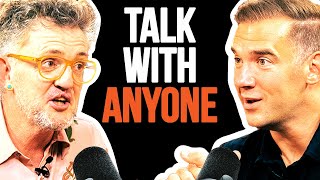
This is a YouTube video titled "Habits Of Irresistible Conversationalists | Michael Bungay Stanier" created in July 2023. It features a conversational interview between Lewis AI and Michael Bungay Stanier, discussing coaching techniques, building meaningful relationships, and effective communication strategies. The dialogue explores concepts such as the Coaching Habit, I-thou relationships, and how to foster deeper connections both personally and professionally.
Chapters
I'm trying to unweird coaching so it becomes an everyday tool that regular people can use. So the definition that we have for coaching in the coaching habit is can you stay curious just a little bit longer and can you rush to action and advice giving a little bit more slowly? Because most people are advice giving maniacs. I mean, they love it. Somebody starts talking and in about 10 seconds they're like, I know, I know what I need to say. I think you got to have a dream. The School of Greatness.
We really love it.
Yeah.
Please welcome Lewis Howes. You are Probably best known for your book, the Coaching Habit, which has sold more than a million copies. And you've also got a new book out called How to Work with Almost Anyone, which is about the five questions for building the best possible relationships. And I want to ask you first, why some people struggle with having deep, meaningful relationships in intimacy, personal relationships, and also in their career. versus people that just seem to be so charismatic, seem to be so present, connected, know exactly what to say, funny, interesting. What is the difference and how can we be more magnetic?
I know. How can we be more magnetic? That's such a great question. Well, some of it is inherent. Some people, I think, are just wired to go, I'm over there. I am with you. I am interested in you. I can make your eyes glitter. I can make my eyes shine as well, because I'm so excited around this, you know. this weekend I was with a mutual friend, Rory Vaden. He's like that. He's like, he comes up to you and I'm like, I didn't even know who he was. And he was like, I'm so excited to meet you. This is so great. And I'm like, I'm feeling great. I don't even know who you are, dude. Then we got to know him and of course you know him as well. So I think some people have this willingness to kind of go like, I.
Love people and I'm out there.
But for the introverts of the world. Right. And I'm kind of a little bit like that. I'm like, I have my moments, but the song part of me is like, I don't like people all the time. It's not like I'm backing away from them. And I think there's two parts. Where would I go with this? I think there are people who go, I care about relationships. That's kind of where it almost starts, which is like, my life gets better through people, work gets done through people. So how do I build relationships with people that allow me to kind of make that magic happen? And a philosopher, Martin Buber, said, look, there are two types of relationships. There are I-thou relationships, and I-it relationships.
I-thou.
I-thou and I-it.
I-it.
I-thou is when you show up in your present to that person and you show up in your humanity and they show up in their humanity and you can be just there for the messiness and the glory and the whole of it, the whole catastrophe as it's sometimes called. They're kind of like, I'm building that type of relationship. And I-it relationships are a little bit more on that kind of transactional, mechanical, I'm trying to get something from you here. And I think the world pulls you towards i-it relationships. We're all busy, we're all overwhelmed, we've all got stuff to do, we're all trying to get ahead, we've got our own ambitions. And I think the people who have a real magic are the ones that go, I'm just trying to build i-thou relationships with you. I'm trying to show you my heart, I'm trying to see your heart, I'm trying to make that level of connection without necessarily trying to prove anything, without necessarily trying to get anything, but just going, I'm trying to see you for the full human that you are.
What's the question that makes the person asking the question more magnetic to the person receiving it and also the person receiving it feeling like the most interesting person in the world?
Yeah. I think there's probably a lot of questions that you can ask. It depends on the person, it depends on the time, but I think the secret is listening to the answer. There's this ability to kind of like ask a good question and then go, actually, I care about what you're saying. I'm not feeling the need to jump in or interrupt or add value or one up you and tell you how I also went on vacation in Greece and I had an even better bottle of wine than you did. There's this ability to kind of say, be present to the like, tell me, tell me what your answer is to that. So I have different you know, they're different moments. I'm like, what are you up to? Is a really great question if I'm really interested in that, if it's not just a transaction. Sometimes I'm like, I want to go deeper. I'm like, what's the thing it's finally time to put down? What's the burden you've been carrying that it's finally time to put down? And, you know, in Toronto, I will occasionally host these dinners. It'd be me and two other people, kind of random, slightly randomly selected. I mean, they're in my sphere of the world, but it's kind of, serendipity who comes together, and I will bring five questions to the table. And they're like, each person gets to pick a question, and then they answer the question, and then the other two of us answer the question. And these are questions designed to kind of break us open a little bit, to kind of create vulnerability, to show us a bit of ourselves. And so we'll do one round of answering the question, and then the second person will pick from one of the four remaining questions, and then we'll go around. and that's a three hour dinner. That's it. That's all that it takes.
Just to open the conversation.
Yeah, because, you know, it's like, what's the burden that's finally time to put down?
Interesting.
Big question. You can go really deep on that if you want. What's the crossroad you're at? What's the hard lesson that you keep having to learn? How much is enough? I mean, these are all endlessly big questions that you can sit and wrestle with. I mean, if I'd asked you 10 years ago, how much is enough, you'd have had an answer.
Right.
And it would have been really interesting and I would have sat there and gone, that is interesting. Right. And if I sit down with you now and I go, well, Louis, now everything's changed. You've got books, you've got podcasts, everything's shifted. It's like it's 10 years since you started your business. But now how much is enough? You know, what are you hungry for now? You know, 'cause who you are in this world and what success is to you in the world, that shifted and shifts for everybody. So, I love having a range of different questions, 'cause, you know, there are some times where if I'm sitting at a dinner party and I'm like, you know, what's the burden it's finally time to put down? The person's like, who am I sitting next to? I'm just here for chit-chat. I just wanna talk about the Oscars level stuff. I just wanna talk about the Oscars and the sports on the weekend and the commute and the weather. That's funny. So, and I think you can, you know, a question I ask myself at the end of a day is, what was the best thing about today? So that's a great question to ask people. It's like, what was the best thing about today? Because what you're inviting is a story and what you're inviting is like, tell me something I don't know. Tell me something that lights you up. Like, you know, if you can get to ask a question and then listen and you see their eyes sparkle a little bit, what you've got there is an eye-thou relationship in potentially.
I know, yeah. It's interesting. you sparked a video I saw recently of Jim Carrey.
Yeah.
I think it was an a year old video. So of him saying that he's retiring from the act.
Right.
And he was doing an interview talking about this, and he said, yeah, I think I'm done after this last movie. And the interviewer is like, you're joking, right? He's like, no, I think I'm done. And I'm going to tell you something that I don't think any celebrity would say, I've done enough.
I have enough.
I am enough. I agree. I just get chills when I hear that, right?
And I was thinking to myself, yeah.
You know, I'm not sure how old Jim is right now. Probably in his late 50s or 60s or something, but I was like, okay, yeah. But would you have said that 30 years ago? No. You know, there are different conversations and different seasons of life. When you're 30 trying to make it in Hollywood.
Exactly. You're like, you know, hungry. I'm doing all I can, I'm doing the mask, I'm doing whatever it takes. I'm kind of playing full out for that goofy thing, but now he's kind of, you know, reclusive. He's like, I love painting. That's it. And he's like, I'm doing that, and it's like, I found the second mountain for me to climb, and it's not trying to stick a flag on Hollywood.
It's- and amass more wealth or whatever. Yeah. Just trying to be a fully expressed human being, I think, for him. Yeah, it's great. And so I think a lot of.
It is also understanding what season of life the person is at. That's right. On how we ask questions, how we step into conversation, and how we connect with them. And also, because so much of what you're about is how do I be of service? That's kind of what I sense is at the heart of this. And I'm like, so what's the question that's of service to them? Part of the success of the Coaching Habit book is a question like, what's the real challenge here for you? That's one of the questions there. It's kind of the one that really resonates with people, 'cause it's got two things to it. The first is it says, let's help figure out what the real thing is we've got to fix, because so much in our lives we're busy solving the wrong problem. We get seduced into thinking that the first thing somebody says is the real answer. It's like it almost never is. It's just their first answer. It's not the real answer. So it's like, what's the real challenge?
Can you give an example of what people might say? Say the question again and then what's the typical answer that someone might say?
If you come to me and go, Michael, I love my podcast and I'm really, I've got big ambitions for it, which I know you have. And I'm really looking to scale it, to grow it, to make it kind of not like just the podcast. And I'll be like, great. And there's one part of my brain that goes, look, I know stuff about scale and I know stuff about marketing and I know stuff. So part of me is like, I'm going to add some value to this conversation. I'm going to show Lewis just how smart I am. I've got all these tactics and tools and strategies and people and the like. But rather than that, if I go, look, my advice, that may not even be the real problem. It may not be the real challenge. So I go, but Louis, what's the real challenge here for you? And you're like, well, the real challenge is I'm still trying to figure out what success is. Or the real challenge is that actually the podcast needs to morph into this thing to be it. And I go, yeah, but what else is a real challenge? Okay, what else? And you're like, well, what else is a real challenge?
It's quite deeper.
So I'm peeling the onion. And part of the power of that question is it accelerates you towards what the real challenge is. But then the secret sauce is not, it's not what's the, it's not what's the challenge. And it's not what's the real challenge. It's what's the real challenge here for you. And now we're not talking about the external thing around the podcast or whatever it might be. It's like, Lewis, you're a founder, you're the figurehead, you're the man on the camera, you've got the vision, you're the visionary. What's the challenge for you in growing it? And it could be completely different. It's like, I need to de-Lewis the Lewis brand because I'm like, it's exhausting. I can only be in so many places at some time. I've got a conference to run in Ohio, I've got a thing to film in LA. I've got too much going on here. or I need this brand to last for a hundred years. So how does that work? Because unless you've got some secret you haven't yet told us about, you're probably not gonna be here in a hundred years. You look very good for your age. I look young and your skin is dewy and your eyes are glistening, it's fantastic. But I'm like, you,'re probably not around in a hundred years. So it's like, is it longevity? You're like, actually, my ambition to grow the podcast is not an expression of I need more listeners, it's I need a hundred year brand. Or it could be going, I'm right thinking your COO has been a long-term friend of yours. Another guy from IHO, you're like, It's all going to with him. It was so good for so long. I trusted him with everything, but now he's turned on me or we've just grown apart. And actually, I need somebody with a different level of skill. So who knows what? I'm just making all of this up, of course. But the power of it is adding for you onto the end of the question, because now I'm getting you to hold the mirror up. It's like, I get, that's the big challenge. What's hard about this for me? And all of this is to say, here's how you ask a question in service of the other person.
Wow.
And me giving you all my answers is often in service of me looking smart. Sure, I'm trying to add value and help, but because I want you to think I'm a really great guest and you want to invite me back. And you think this is even smarter than Simon Sinek, who I was talking to earlier today. And Simon Sinek's a smart guy. But actually, it's like this whole thing about being other oriented can be so powerful.
Why do you think the coaching habit has blown up in this massive success, sold over a million copies? What is at the heart of that? that people struggled with and you were able to give a solution to.
Yeah, I think it unweirds coaching because coaching comes with a lot of baggage. You know, people, there are people in the coaching community and I know lots of listeners are part of that. They're like, oh, we get it and we love it and we've kind of drunk the Kool-Aid or whatever the saying is. So they're all for it. But for lots of people out in the world, they're like, I don't know, what is coaching? Is it sports coaching? Is it life coaching? Is it ADHD coaching? Is it therapy? There's just a lot of stuff that comes. Is it about fixing somebody who's broken? There's a lot of stuff that comes with this. And when I was writing the Coaching Habit, I was really clear who I wanted to serve. It's like you are mid-level to mid-senior level professional. You like your job. You're a little stressed. you've got a good team, but you're like, I could be doing better. You're overworking. You'll become the bottleneck to your own team. And I'm like, I'm trying to unweird coaching so it becomes an everyday tool that regular people can use. So the definition that we have for coaching and the coaching habit is, can you stay curious just a little bit longer? And can you rush to action and advice giving a little bit more slowly? Because most people are advice giving maniacs. I mean, they love it. Somebody starts talking and in about 10 seconds, they're like, I know, I know.
What I need to say. Why is that the wrong approach in building magnetic connections, relationships, deeper relationships by giving advice to someone when they come.
To you with a problem?
Oh, that's such a great question.
Whether it be in your career or an intimate relationship. Yeah, that's such a good question. So, a mentor of mine, a teacher called Ed Schein, just died six months ago in his 90s, but he wrote an amazing book called Humble Leadership. And in that, he talks about how relationships can be level up or level down. And it's about the kind of the status and the authority and the control that you have in that relationship. And here's the irony, the paradox of trying to be helpful by giving advice. As soon as somebody comes to you and goes, blah, blah, blah, this is my challenge, and you're like, great, I already know what the problem is. I know what, I barely know you, but I'm pretty sure I have the solution here. you one up them and you actually diminish them in a little bit. So ironically, if you rush in with your advice, you create resistance from the person who you're desperately trying to help. Because you're doing it because you have a good heart, but there's that point of resistance. What's powerful about slowing down the rush to advice giving? So it's not not giving advice, it's like slow it down, is that you keep giving them power and you keep giving them authority and you keep the focus with them.
It's like, how do you do that?
Well, I go, what's the challenge for you? And then I shut up and I listen to the answer and I let you try and wrestle with this and figure this out. So you're creating new neural pathways in your brain. You're coming up with your own ideas. You're not feeling me taking the, I'm going to save you and rescue you from this and kind of knock the relationship out. I'm trying to say to you, look, I'm really here. I'm on your side and I trust that you can figure some of this stuff out. I've got some ideas and I'll share them with you. But what do you think the real challenge is for you? What else do you think? So what's the real challenge here for you? And if that's the real challenge, what ideas do you already have? Because I know you've got some ideas. What else could you do? What else could you do? And so I'm getting them to do all the work. in service of them feeling empowered, becoming smarter, feeling that they still own the issue. I am, you know, when I think about coaching, I think about fierce love, like love, meaning I am on, I want them to be the best they can be. I want them to have the impact they want to have in the world. But fierce meaning I'm not going to rescue them or save them or be nice to them necessarily. I'm going to push them and provoke them a little bit. I think great coaching can have an element of that kind of fierce love to it. And that's what asking a good question and saying, how far can you get without me? Because I bet you can get a lot further than you thought.
Yeah, that's cool. I like that. What if someone feels like they can't reach out to a mentor or a coach or a guide to help them solve their own problems? Yeah. Whether it be a career or a personal problem. How can an individual be a great coach to themselves without having someone they look up to guiding them?
It's tricky because we are very slippery with ourselves.
We get stuck and we get stuck.
We get slippery, we get stuck, we get sneaky, it's hard to get out of our own heads around this. So I think there are a couple of things you can think about. One is you don't necessarily have to be paying money to a coach or a mentor or a sub guide to kind of get this kind of professional support. you might like, you can just go, let me see if I can figure something out with the people I already know and I like in my life. Like, I had a mastermind group for 15 years, like me and five other people. We would check in pretty much daily, like three or four days a week, which is like, here's what I'm up to. We talk on the phone every two weeks, and then once a year we get together for three or four days to hang out and have fun and kind of go deeper. and that was free. But we're like, we're gonna support each other in terms of what we can do here. So I do think there's a way that you can be the person who reaches out and says, hey, what if we supported each other? 'Cause I could do with a bit of support and maybe you could do with a bit of support and let's do our best guess to figure this out. But if that feels too much, I think that's when you come into the power of something like journaling, because in some ways you've got to get out of your own head. So, you know, when I'm journaling, I tried doing like the two minute morning stuff, you know, where you like write pages every morning. I'm like, I just can't do that. I just don't have enough to say or I'm too bored or I wanna check my email. So I have three questions at the start of the day and two questions at the end of the day. The three questions at the start of the day for me are, what do I notice? So for me, what do I notice is about what am I thinking and what am I feeling and what's right there in front of me and what's been bugging me and what was I dreaming about last night and what's out of the window. In some ways it's about trying to be more present. But for me, Louis, I don't know if the same is true for you. It's also trying to be a little more connected to my feelings. Like I'm not that good at that.
Not just thinking about experiencing your feelings.
I'm a head guy. and part of the work I'm trying to do is I'm like, there's so much knowledge in your body and your feelings, and I wish I could just get a bit more connected to that. So what do you notice helps me with that? What are you grateful for as the second question? 'Cause that's, you know, that's just a silver bullet, really. Yeah. There's so much research that says regular, small acts of gratitude just make you a happier person. True. And then the third thing I ask is, what's the one thing today? 'Cause I have too many to-dos. I'm notoriously overcommitted. I'm like, if I can only do one thing, what's the one thing? So I don't finish the day, you know, I've done 48 of my tasks, just not the two ones that I had to do, you know. Right.
And then the end of the day-.
The end of the day, eat the frog concept. Yeah, eat the frog concept, you got it. And then at the end of the day, I go, what was best about today? Sometimes that helps me figure out what progress I've made. So, you know, Teresa Amabile, Harvard Business Professor, She's like, people get happy by making small progress on stuff that matters. And I'm like, but sometimes it's not about progress. Sometimes it's like, just what was the thing I most want to be grateful for and think was the best about the day? And then the fifth question for me at the end of the day is, who do I want to reach out to tomorrow? Because not only is there all sorts of research about an increase in loneliness and America and in Canada and across the world. But like, I feel lonely. I feel a bit isolated. I'm like, I know lots of good people and I'm not naturally wired to be reaching out to them. So who do I want to reach out to to keep being the person who says, let's connect. Let's build those eye-thou relationships. Let me be still present in your life.
I like those questions. So these are five questions. Three in the morning, two at night to ask yourself to be more present, to be more connected to who you are, what you're up to in life. So the I-thou relationships is about service and relationship with others, right?
It's kind of like showing up fully. So I have a sense of who you are, you're present with me, I'm not just getting the mask. I've got the mask off. And even if I've got a mask on, I'm like, I know the mask you're wearing and I have a sense of what's behind that mask. Because you take off one mask and there's another more subtle mask. There's masks all the way down in some ways, but it's like you're getting close to putting aside that you're not trying to necessarily kind of prove status with each other, kind of one up each other, but you're just like, I'm seeing the best of you and I'm doing the best I can to bring out the best of you and you're doing the same for me. that that's the magic.
Yeah, that's beautiful. And how does the the coaching habit support with I thou relationships?
Yeah, this is what I love about this question, Louis, is it gets to the thing that I mostly don't talk about with the coaching habit, which is kind of the way it disrupts hierarchy and it disrupts power. So most of my work happens in a corporate setting. I mean, the coaching habit gets read everywhere. I get letters from parents and letters from pastors and letters from sports coaches. So it's transcended that. But I wrote it thinking of this middle manager and organizations have a way of just setting people up in hierarchy with each other, which is inherently an I-it relationship. Yes. And if you're the boss and somebody comes to you with a problem, lots of us go, my job is to have the answer. which freaks bosses out because they're like, There's so much going on. I don't know the answer. I barely know the answers to the stuff that I'm responsible for. Yet, I don't know the answers for the stuff you're responsible for.
Right, right.
But they're like, this is how I help, this is how I prove value, this is how I prove my authority. And what you're doing in answering a question is you're handing the humanity back to that person, saying, Look, I'm gonna And raise your status and raise your authority and give you the autonomy, the competence and the confidence and the self-sufficiency to figure this stuff out itself. And in doing that, you're really saying, I'm giving you your full humanity. I'm not taking it away from you. And I think in that moment, you have this opportunity to be human to human as you work together rather than boss to subordinate.
Interesting.
Yeah.
And what are the main questions that every coach should use to effectively empower the person they're communicating with and build a deeper relationship?
Well, in the Coaching Habit, there are seven good questions. I mean, there are five different questions in this new book, but in the Coaching Habit, there are seven good questions. So I can give you a taste of those.
Yes.
The first, the bookends, question one, question seven. So if people are listening and they're like, I'd quite like to be more coach-like, stay cure as long as possible, but how do I start? It's like, I'm sure I could do it if I got going, but I'm not quite sure what the first thing is. The kickstart question is what's on your mind? And what's really powerful about that is it's not what's on the agenda, and it's not what do we always talk about, and it's not, here's what I want to talk about. It says, what's on your mind? excited about or worried about or nervous about or just feel like it's like, this is the thing I've got to talk about. So again, it's this act of giving and sharing of authority and autonomy. And the final question in the series, so if this is the bookends, how to start and how to finish, is the learning question is what was most useful or most valuable here for you?
In this conversation.
In this conversation. I do this I was just speaking at a group of, you know, in front of 500 people yesterday, and at the end of this session, I'm like, turn to the person next to you and like, what was most useful and most valuable for you? And what's amazing is it's never really what I think. And again, it's when you ask this question, you get two gifts, three gifts. One is you help them name the thing that they're taking away, and they might have missed it otherwise. So they're actually going, okay, I'm actually articulating what was most useful. And when they do that, neurons fire and people remember the stuff.
Yeah, yeah, yeah.
Secondly, and here's the gift, you get to hear what was most useful and most valuable. And sometimes it's different from what you were thinking. And sometimes you're thinking, that wasn't valuable at all, that conversation. I was just jazz handing my way through the whole thing. But they're like, no, actually this is what really landed.
And that might be powerful for one group, but not for a different group.
That's right. And you know, when I was speaking to these 500 people and I was like, so tell me some of the things that landed. I'm like, 10 different people, 10 different things they took away from the session with me. And then what's also manipulative, but in a good way, is that you're not saying, was this a useful conversation? You're saying, what was most useful about this conversation? So you are framing this conversation as a useful, valuable conversation, which makes them find it more useful and valuable, which makes them find you more useful and valuable, which strengthens the relationship.
Interesting.
Yeah.
And what is the difference between a keystone conversation versus a normal conversation?
Yeah. So this is the heart of this new book, which is like, okay, so we're trying to, you know, our working relationships have such a big impact on our happiness and our success.
Yeah, that's true. like, you spent a lot of time at work.
You spent a lot of time at work. And if you take a moment and you think to, like, one of the hardest working relationships you've had, you know, it's a real struggle. It was a bit miserable for you. And you think of the back and forth of what happened, and then you think of the impact it had on you. It's significant. Like, you hear people talk about it as like, I felt distrusted, I opted out, I shrunk. I lost my confidence, I quit my job. Basically, a bad working relationship will shrink you and diminish you. And then when you flip it and you go, tell me about a great working relationship, one where you felt seen and heard, maybe an I-thou relationship, and you imagine, go back to that moment and you imagine the give and the take, and you go, and what impact did that have on you and your work? They're like, it's like, I felt bigger, I felt bolder, I felt braver, I took more risks, I bought more of myself, I brought my genius to the table. So it can have such a big difference. And most people go, I'll just cross my fingers and hope for the best. I hope I get lucky. And I hope we can figure it out as we go along. It doesn't get too messy.
They're not setting an intention.
So the Keystone Conversation.
We're searching for the conversation.
Keystone Conversation is setting an intention. and it is this, have a conversation about how we work together before you plunge into the conversation about what you're working on. And it's hard because we are wired to talk, want to talk about the stuff that needs to get done because it's there and it's urgent and it's exciting and it's bright and it's important and it's critical. So we're like, let's just get into it. But if you go, look, let's stop and go, hey, how will we actually work together before we get into it. I mean, before we started filming here, I was like, Silvest, tell me, you had a really great podcast guest. What happened? You know, what did they do? What did you do? What should I know from that? And when you've had one that, I'm sure you haven't had a bad podcast guest, but one that was like slightly lower rated, didn't quite have the magic. What happened? What was the difference there? And what we're doing is we're creating a contract between like, I want this to be a really great podcast for you and for everybody watching. I'm like, I want them to go, that was amazing. And you want that too, 'cause you're like, I want all of my episodes to be brilliant. And I'm like, so let's not talk about the content. Let's talk about how you and I are together. That will bring that because work happens through people. And so, you and me get aligned as to don't do this and do do that and be like this and don't be like that. like when I talk to your team, could I ask them the same questions as well? Like, so what makes a really good guest? They're like, the thing that you and they have all said is like, well, the more authentic you can be, the better. That's really helpful. There's a sense of kind of vulnerability and sharing and service. And I'm like, great, because at my best, I think that's how I try and show up. But that was really helpful to give me full permission around that, whereas other people, I'm like, Keep it tidy, keep it neat.
Whatever.
Give me the sound bites. No long sentences, no random stories, no waving your hands around. And I'm like, okay, I can do that as well. But I'm like, I think I understood the rules, and now I'm trying to allow myself to be the best version of myself I can be for my sake and for your sake and for everybody's sake. Right.
So it's really preparing before asking the questions before the keystone. conversation, correct?
Well, the Keystone Conversation is like, here's five questions that can help you have a conversation about how you work well together.
Oh, gotcha.
Okay, cool. So it's, you know, it's one thing to say you should talk about how you work together before you jump into what you're working on, but most people then go, well, okay, I buy that, but how do I do that? It's like, I've never done that before. I'm like, well, here are some questions that can help.
Sure.
Yeah.
And I love this when you're like, If you're in an intimate relationship, not a working relationship, but an intimate relationship, I think that's, you have one of these questions, which is the good date question. What can you learn from successful past relationships versus what can you learn from frustrating past relationships? I think that's kind of interesting to ask in intimacy as well. What was the part of your previous relationship that really was great? Maybe you don't need to go into these details.
I'm like, exactly.
But what was- Too much information. Maybe that you were able to communicate effectively or you guys had calm resolution when there was conflict or what are the things that you enjoyed that worked really well and what were things that didn't work well? And I think you get a better frame of mind understanding around, okay, how do we create our own agreement? What are our own boundaries or agreements into our working or intimate relationships?
So, I've been with my wife for 30 years. Met in, in- How did you fall for her? I know. She was stazed and confused. But we had both arrived in England to study and we had both left pretty bad relationships behind. She was going through a divorce. I'd made a mess of the previous relationship I had in part because she was in Australia and I was going to Oxford and it was all getting complicated. And we ended up sitting next to each other on a bus from Oxford to Stratford-upon-Avon to go and see some Shakespeare play. And it's a long and windy road and we'd been dating like maybe two or three dates. It was really, really early on. And we just somehow fell into this conversation about what are we up for? Like I was 25, she was 36. So we were kind of old enough to go, we want to figure this out. We're like, it's not We're not kids anymore. We've got a bit of experience. Let's actually try and do this. So we actually had this conversation. It was like amazing and excruciating at the same time, not least because we're in the back of a bus and we're both feeling car sick and maybe other things as well. But we're like, you know, this is what I've learned from my past relationships. Like I was saying, look, here's what I've learned from the relationships that I've screwed up. I have a way of disappearing into my own head and taking that other person for granted. And she's like, Great, because I will kill you if that happens. And I'm like, that's really helpful to understand. She's like, that just won't happen on my watch. And that is true. Very hard to pull that off with Marcella. But before we had any of this structure, before I'd figured any of this out, I just kind of got lucky or maybe desperate, 'cause I really banished her. I'm like, I don't wanna screw this one up. I screwed up the last few. I want this to be great. We actually had this conversation kind of tapping into the good date and the bad date questions that you're talking about, which is like, what can we learn from the past? Because both for the good and the bad dates, those patterns will repeat. They'll keep showing up again in the future. So why don't you be explicit about it with each other so that you can navigate around it, so you can know where the hotspots are going to be, so you can give yourself the best preparation to say, this is how we can recover from this. This is how we'll repair this.
What do you think would be the three questions based on your personal experience and based on everything you've researched and taught in the Coaching Habit, but also how to work with anyone? What would be the three questions that every person should ask their partner before getting married? To try to set themselves up for a conscious, loving, Mm-. Relationship, knowing that there's gonna be, you know, ups and downs in life. But set yourself up for the best possible relationship.
Well, I'm going to take one of the questions from the book, which is the fifth and final question, which is how will we fix it when things go wrong? The repair question.
That's great.
And, you know, I just acknowledge all the work of the great people like Esther Perel, and Terry Real and John Gottman and Dan Siegel, these kind of giants in the world of intimate relationships who really studied this for years. And as I was writing this book and kind of re-immersing myself in all of their material again, two things became really clear. The relationships that last are the ones that get repaired. And most of us are not very good at repairing relationships. You know, most of us We break far easier than we think. We're like, oh, I feel a bit broken, a bit betrayed, a bit let down. And so many of us either do fight or flight or... What's the other one? Freeze. You know, Terry Real- Freeze. Yeah. Terry Real said it was freeze and flee are two options. But the third one that he suggests, which I really like, is fits.
Fight, flight, fix.
Interesting. Which is kind of moving into rescuer mode. Right. Like if you know the drama triangle, which is, comes from a psychologist called Stephen Kaufman. He's like, when relationships get dysfunctional, three roles play out. There's the victim, there's the persecutor, and there's the rescuer. And they're all equally dysfunctional. Rescuer sounds better than victim and persecutor. Just as screwed up as the other two. It is, yeah. And they're all, reactive ways of behaving and they keep the relationship stuck in dysfunction. And in fight and flight and FIC, you actually have the brain description of those three roles. So I reckon- Interesting, because when you're in the first two years of marriage, really, in all the years leading up to it, it's like, this is amazing. She's amazing. I'm amazing. We're amazing. This is- any kind of hiccups, they're like, Minor stuff, we get over that because everything else is going on for us, it's fantastic. But after two years, it's like, okay, the veil drops a little bit, you kind of get clear on other things, and it will go off the rails somewhere. It might be an explosion, it might be a dent or a crack or a bend or something, but something will happen. So I would say, I wish I'd asked this question, 'cause I didn't. How will we fix it when things go wrong? How will we fight? How will we fight in a way that will not break us, but will kind of be a source of learning and growth and clearing and kind of resetting?
Yeah, I think my friend Jay Shetty talked about this in his recent book where it was about the success of a relationship is in how well you fight.
Right.
And how successful you can fight together.
I think so. Yeah.
And not hurt each other too far beyond repair, which is the repair question.
Yeah.
How will you fix it when things go wrong? And I think it's, you know, death by a thousand paper cuts, like where you hurt someone little by little, it's just like, I just don't care anymore.
Yeah.
If you don't learn to repair it. I think that's key in intimate relationships, family relationships, friendships, career. it's like repairing these things when you maybe feel like there was something that wasn't good. But I think the challenge is asking this repair question, how will you fix it when things go wrong? It might be easy to say, oh, when things go wrong, I'm gonna be fine, and I'm gonna apologize, and I'm gonna do all these things. But then when that time comes two years later, you're like, screw you. You're horrible, and I'm not talking to you for a week.
But he's amazing.
You may not remember what you said.
You probably won't. But that's not the magic of that question. The magic of that question is it says things will go wrong. It's an acknowledgement that the honeymoon moment is going to pass and that things will get hard and you get a chance to revisit it. So I think getting people's best guesses about how they're going to fix it when they go wrong, that's helpful. And if they can pull some of that off, then everybody benefits. But it does, what I think is the real hidden power of that question is it says it will go wrong and we're acknowledging that now. And when we say, how will we fix it when things go wrong? We're acknowledging a shared commitment to wanting to fix it. And when it does go wrong, it's something that you can say is going wrong. Right, right. We can actually talk about it going wrong because it's been raised before. Yeah. I think it's that permission and shared commitment that actually can be part of the real magic of that question.
Yeah, and maybe you can say like, it's not going wrong, we're just not in alignment or something is off or whatever might be happening. And I think this is one of the reasons why I really love hearing stories about world-class athletes, Navy SEALs, MMA fighters, because they talk about Preparing for challenging situations and how am I going to get out of the challenging situation? You know, usually as an athlete, it's more of a solo sport or a team sport, but, you know, the MMA fighter doesn't just train standing on his feet punching when he's healthy and in the best position. He trains upside down.
Right.
With his neck against the cage.
Yeah.
With one arm behind his back. Getting punched in the face over and over again. Yeah, that's all this.
Yeah. Saying, how do I get out of this?
Right, exactly. It doesn't say, I'll be fine, I'll never be in this situation. And it's like same thing with Navy SEALs. They train for, okay, here is the mission, and here's the best case scenarios. Like, this is the plan.
Yeah.
But what is a backup plan when everything goes wrong? Right.
Right.
When this person gets hurt, when this doesn't work out, then what do we do? And I think when we prepare and acknowledge, Something's gonna go wrong. We're not gonna go 100% according to plan in intimacy and career and relationships. What can I do and take ownership of to be responsible for my part and how can I get back into alignment? And I think that's a powerful thing with this question, the repair question.
To your point, there's that quote maybe from the SEALs. I know James Clear thinks it as well, which is like we don't rise to the occasion. We fall to the level of our training or the level of our systems.
Depending on the level of our habits.
So there's variations on it. But it's like you prepare for the mess of it. But for me, just the permission, like I didn't have this conversation with my wife. I kind of wish I had because we didn't, we don't really have blow up fights. We have kind of separating moments where I'm like, I get into my own head, I take it for granted, we do that. And I'm like, how do we fix that when that's happening? And that would have been a healthier conversation. We figured this out. but that would have been a healthier conversation earlier if we could have got to that.
Sure.
What question would you add? Like, I'll give him one question, but what's the question that's at your heart in terms of setting up intimate relationships for success?
I'm just trying to think about all the things that I did with Martha, my girlfriend, which is essentially the opposite of everything I've ever done before. The thing, and listen, I'm, we're two years in, so I'm not 30-year marriage, so I'm, you know, sharing that information because some people might say, well, wait till five years, wait till 10 years, all these things. But the thing that really made me say, oh, this is my partner, right? And I can really feel safe emotionally, spiritually, physically safe with this person. It's early on I said, listen, I've made a lot of mistakes in my past relationships. and none of my past relationships have worked. But in each one of them, I wanted to do therapy when they weren't working.
Right.
And the partners that I chose never wanted to do therapy with me.
Right.
They were resistant.
They.
It took a year and a half, two years of, like, it not working. And me saying, hey, can we do this and find support?
Yeah.
And they never wanted to do it. And I say, listen, this isn't really an ultimatum, but I want to feel emotionally safe. Would you be open to going to therapy in the beginning of the relationship? Not when things have problems in the future, but can we go together now?
Yeah.
She was like, 100%. That'd be amazing. I'm down for whatever. She was like, I've always wanted to do that too.
Yeah.
I felt like, okay, just her acknowledging that.
Yeah.
And then us doing it has been a beautiful foundational process of a safe space to talk about maybe touchy or uncomfortable conversations to create boundaries, agreements and commitments, which has not, you know, removed all friction or conflict, but has removed a lot of it and given us a lot more grace and flexibility and freedom to have courage to communicate When there's something that, that didn't feel right, let's talk about it. And that was a beautiful thing, just asking that question. So I don't know what that question is. It's not the therapy question, but it's more like, Hey, are you open to having outside support and having these conversations?
Yeah, it's really powerful.
And so for me, that was a beautiful conversation.
Well, the question it relates to in the book is the bad day question.
The bad day question.
Because what can we learn from frustrating past relationships? And it's like, and these are my words, not yours, Louis, but it's like when the relationship was hard, I didn't feel like I had the support I needed, and I didn't feel the other person was as committed to repair or fixing it than I was. And that's what I really want in this. And, you know, there's a definition of like an adult to adult relationship. An adult relationship is being able to ask for what you want. Knowing that the answer might be no, you don't always get what you want, but being able to ask for what you want is a really rare thing and a really powerful thing. And it just feels like from your story, it's like what I've learned is I've figured out what I want and I've got the courage to ask for what I want and that's made all the difference.
And it occurs to walk away, you know, the steady question, what are your practices and preferences? You know, I was very clear with her in the beginning of us dating, really in the first couple days of meeting each other, I said, this is who I am.
Right.
This is my vision. This is where I'm heading.
Yeah.
This is what I will be doing and this is what I will not be doing.
Yeah.
And I will not be living this type of relationship or this type of life.
Yeah.
If you want to put me into some stereotypical box of certain relationships, that's not me.
Yeah.
That doesn't mean I'm going to be out of alignment with a monogamous relationship, but I'm a driven human being. I'm running this business. I've got a vision that is going to take a certain amount of energy and effort. And she asked me a question early on, which essentially is, what are your preferences? What are your preferences questions? She said, what are your priorities? And I never had the courage before to be honest with my priorities. Now this may evolve over time and anything else, but I said, listen, no woman wants to hear what I'm going to tell you. Are you sure you want the answer? Are you sure you want the truth? It was kind of like my Tom Cruise moment. You can't handle the truth, right? I said, are you sure you want me to tell you the truth?
She said, yes.
And I said, I don't think you're gonna wanna hang out with me after you hear this. Because no one in the past was able to handle it, was able to receive it. And so she said, yes. And I said, okay, well, it's been good knowing you, but here are my priorities.
Good for you. I said, my priorities.
A brave moment. Right? And I was like, but I wasn't willing to risk, I wasn't willing to abandon myself anymore, which is what I had always done. I'd abandoned to make someone else feel okay or safe or secure or whatever, as opposed to just, this is who I am. And maybe that means we're not the right fit for each other.
We're not the right match for this type of relationship. Let me show you my cards.
And let's see how this goes. But I always lacked that emotional courage. cause I was afraid of hurting people. Right. And I said my priorities, my number one priority is my health. And no woman wants to hear that they're not the number one priority in a relationship.
Right.
With an intimate partner, really.
Yeah.
They don't like that. Most of them at least. And I said my number two priority is not you or the relationship either. And no one wants to hear they're not number one or number two. Please number two.
Yeah, exactly. At least give me a silver medal.
Exactly. Exactly. No, I said, My intimate relationship will be my third priority. Now let me give context because I need my health to be a top priority so that I have more energy, focus, and value to you and to my second priority.
That's the kind of foundational thing that allows everything else to be built. Relationships and business.
And to my second priority, which is my vision, my mission to serve people. And if you hold me back from my health, Yeah. And I feel unhealthy, I'm not going to be good for you. If you hold me back from my purpose and you try to deter me from that, I'm going to be resentful, frustrated, like antsy. But if you are in alignment that these are my top two priorities, you're going to feel like the number one priority. Well, that's nice. And so it's creating that context and conversation, just setting the stage and just being like, you can never pull me away from these things unless there's some emergency or whatever, but it can't be this, I don't want you going to the gym. I don't want you working on your mission. I don't want you. I need you here with me more. And I was like, I'm not that guy.
Yeah.
Maybe in 10 years, that'll change, and I will be.
Well, what?
But right now, I'm not.
What was the work you did that allowed you now to ask for what you want and be as clear as that?
I needed to heal a lot of my inner child wounds.
Right.
Really. And and have a different relationship with my younger psychological self that never got to hear or be validated the way that I needed to validate it and never got to heal or mend painful memories. So it wasn't until I was able to mend the memories of the past and create new meaning around them.
Yeah.
And create a sense of connection in an intimate relationship with my painful wounds.
Yeah.
Of repair. That's when I was like, okay, I am safe, I am free, I am peaceful as I am. I don't need to please you to feel loved and accepted and free. And I was able to say, okay, I'm happy alone if this relationship doesn't work.
Yeah.
But I'm never going to abandon myself again. So that was a big part of it, having that healing journey and doing the therapeutic work on that.
You can go, Michael, stop interviewing me and don't ask me about my partner, but I'm curious to know if you were able to ask her what she wanted, like what her priorities were.
Yeah, I asked her really early on. And she, you know, one of these, this conversation where she asked me about my priorities, she was like, I was like, what do you want? What's your vision? And what's your vision for intimate relationship, you know, a committed relationship long term. I've said this on the show before a few times, but I was like, you know, she said, well, I want to be married and have kids. And that's something that I want and I value. I said, okay, cool. I value that as well. But I can't tell you that in the first couple weeks that that's going to happen with us. So I need to feel safe. I need to feel time, a foundation. So if you're cool with that, knowing.
That maybe- It's a maybe, yeah.
But everything has to work out for me to feel like a yes. I can't commit right now.
Yeah.
And another thing was also, I said, I'm not gonna be sharing things with what I think is not the role and responsibility that I want when we have kids.
Right.
And this is the type of, you know, partner that I will be and father that I will be. Now, maybe all this changes.
Yeah.
And maybe when I have kids and all these things, my. My role and responsibility, I'll be more flexible or I'll change or whatever. But I'm telling you, this is where I'm going to be. This is what I will do really well. And this is what I'm not going to do. I'm not going to do these roles and responsibilities as a father that. Now I'm gonna be fully present, fully committed, fully in all these things, but I'm just not going to do certain things that maybe is in society looked at as what's supposed to happen.
Right here. Yeah.
And if you're cool with that, then I feel more seen, safe and valued.
Yeah. Yeah.
And she was like, 100% I'm cool with that. You know, it works for me. So it was just being clear about the future.
Yeah.
And really having conversations about money, you know, intimacy, kids, all these different things early on and not guessing that they were thinking something.
Right, because it's so easy to make up what they believe. Like you kind of put together clues, you kind of have your own confirmation bias, you have your own secret hopes and wishes which you then project onto them.
Yeah.
And mostly you just don't know.
Yeah, exactly.
Like one of the great surprises to me, and that has been kind of foundational to our relationship with Marcelo, me and Marcelo working, is that Like, I like the spotlight. Like, I like the spotlight. I like performing. I like being a leader. I like having a vision. She really doesn't like that, but she loves playing the support role. And what that meant is that it helped us negotiate kind of our careers about how we would manage that together. And rather than me going, oh, I feel bad about this, 'cause I'm stepping on her toes, I probably need to shrink to allow her to have her space. that we just figured it out that I'm like, this is my job, is to be the visionary and to try and change the world and kind of.
That's a big area of conflict for, I think, couples where, you know, if you don't feel like you can fully be who you're meant to be.
Yeah.
Or if someone's resentful of your success. I had that in a lot of previous relationships where I felt like I would share something I was working on, I'm really excited about, and it was almost like they'd get sad because they weren't doing that.
Yeah.
For themselves.
So John Gottman, who I mentioned earlier on, who wrote a fantastic book about the secrets of successful marriage. But one of the intriguing things that he found through his research is 70% of issues in a relationship are perpetual. They don't get solved. And that for me is a very liberating discovery because it means that there's a bunch of things where we're like, we will perpetually be at odds around this. So what we're now doing is we're learning how to navigate our different points of view and our different ways of working around that. So that helps me figure out how to manage the 70% that are perpetual, they're never going to change. But it says 30% of issues within a relationship are solvable and resolvable and evolvable. And there's ability to work on that. So I get freedom from both of those things, which is like, It's kind of like that circle about what can you control and what can you influence? You're like, I can't control or influence these, but I can kind of figure out how to dance together around the stuff we're never going to agree on. Like, my wife and I, I'm like, she's a talker. She loves to talk. She loves to share that. I'm terrible at that, which surprises everybody because, you know, they know me as a kind of talker, but I'm like, at home, my God. She's like, what are you thinking? I'm like, oh, what am I thinking? She's like, what happened today? I'm like, oh, what did happen today? Oh, it's in LA. Oh, it's with Lewis. Yeah, it's like, I remember that. And we're like, I don't think that's gonna change. So we now have our language and we have our humor and we have our way of dealing with that when I do my best to tell her stuff and she does her best not to grill me. And then we can- 30% of stuff we can really kind of dig into and go, let's make this better because we're both committed to a great long-term relationship.
I'm curious, what do you think are the the four or five key habits of magnetic individuals who can communicate clearly and get incredible results from conversations and relationships, whether they're introverted or extroverted. What are those four key habits that make them magnetic and enrolling and captivating to get things done?
Yeah.
No matter what personality type they have.
I think one of the key habits, and we've talked about this already, is knowing what you want, knowing what you want to ask for. And that immediately makes you quite different from other people because a lot of people are like they're in a conversation and they're communicating, but I'm like, but where are we, what's the point? And if you can get really clear on the request you have, and the hope you have as an outcome, that is an extremely charismatic and powerful place to stand.
And how would you set that up? Is that like the intention behind it or saying it right away? Is it like knowing what you want in your mind but not saying it or saying this is what I want?
The hard work is to know what you want. Then you negotiate and you navigate the moment in front of you and the person. You've got to play the person. not just the cards in your hand. What's helpful for me is to tease apart in any conversation, not just what do I want, but what are the facts and what are the feelings and what are the interpretation of the facts. And I think people who are charismatic in how they communicate often have an ability of not getting all that sort of stuff squished together, which is what happens to most of us. So I know that for me to be in conversation with you, and if I'm trying to move something forward or change something, it's really helpful for me to have the data and the facts of the situation. What's amazing is that there's almost always very little data. Most of what we're experiencing about a situation is this combination of our feelings and our judgments. And most of what knocks us off of being magnetic and being charismatic and kind of being compelling like that is the fuzziness of some of our judgments and our feelings in terms of actually how we then communicate. So I'm always going, okay, what are the facts? I need to know those. What feeling and judgment combination is most powerful for me to express that serves me and them in the situation? 'Cause a lot of my judgments aren't that helpful? Often my judgments are like, I'm a loser. This is a disaster. Why am I here? I should never have signed up for this. This is going south. This is never going to get anywhere. I mean, all of that sort of negative self-talk going on. But if I'm like, you know, giving somebody feedback perhaps, I'm like, look, I'm frustrated because I'm not sure you understand how important this is. That's a feeling and judgment combination. Really helpful, particularly when I go, so here's what I want. like I'm sad because it feels like we're stuck and I'm not quite sure how we're gonna get out of this. So what I want is for us to go see a therapist together to get support to work through this sort of stuff. And this idea of going, how do you learn how to add the depth of feeling and emotion to owning your judgments, to asking for what you want, can be a really compelling way of actually communicating in a way that feels magnetic and authentic and grounded and human.
Wow, okay. What's the next habit?
Some of this is self-management. And this got taught to me by a friend of mine called Mark Boden. He runs a company called Truth Plane. He's a fantastic TEDx talk on this as well. And particularly if you're in front of a crowd, how you use your body and how you use your hands in particular, is a very influential way on how the crowd will feel about you. So the language he gives me is be the strongest signal in the room. 'Cause the crowd will respond to the strongest signal in the room. They will feel what you feel. They will be who you want to be. So I'm like, great. So how do I want my audience to feel? And often for me, I want them to feel encouraged and to feel loved and feel awesome and feel light, like a playfulness. So I'm thinking about that in terms of what I am bringing to my presence. And then what Mark taught me was these three different positions you can use to communicate. And it's about where you put your hands, particularly in front of a stage. And the critical one is the truth plant. And he calls that, it's like keep your hands at your belly button level. Because actually that is the most vulnerable expression you can have, because you're basically saying, look at me, this is my weak spot, my belly's my weak spot. I'm showing it to you. And this is because the body leads the brain. So the brain go, the body goes, if you're showing him that your most vulnerable spot, you must feel safe and you must feel confident and you must feel relaxed. And that makes you feel safe and confident and relaxed. And because you're the strongest signal in the room, the audience feels safe and confident and relaxed. And then if I want to shift the energy in the room, I'll just lift my hands up. So you can see that just by going like this, even though I haven't changed the content at all, actually the experience has actually shifted a little bit. If I really want to make a point, I'll lift my hands right up here. And everybody's like, I don't know why I'm feeling so good right now, but for some reason I'm feeling good right now. I'm like, I'm just saying the same stuff, but I've just lifted my hands up. But now come down here. suddenly we become a little more intimate and a little more vulnerable and a little more human around that. So for me, this is stagecraft, which is like in these subtle ways, you prime an audience to respond to the strongest signal in the room, which means you have to get your signal clear, which means you have to have an intention about how you want the audience to feel, and you have to have the movement on stage. to actually reflect that.
That's a good idea, yeah.
And then there's a third thing I might add. So there's something really powerful about priming. So just like, see how you're nodding your head right there? That's a classic priming move. So if I go, Louis, I've got to tell you something here and you're going to really love this. What's happening is you're nodding your head, people at home are nodding their head as well. They're like, I don't even why am I doing this? Why am I, why am I, I already love this and he hasn't even told me. And there's a way that you can use language to help your audience understand and appreciate what's about to happen. How?
This is gonna be fantastic.
I think you're gonna really like what I'm about to tell you now. That's it. That's me priming. The audience doesn't even hear it, but I'm just giving them a chance to get their brain to be ready and to hear it in an open-hearted, open-minded way. Sure. It's like, this might be the best thing I've got to tell you all day. Right. The second thing is going to be fantastic. What is it? Is that the second thing is going to be fantastic. And, you know, it's this fine line between, like, I am manipulating an audience when doing this. I'm working really hard to give them the very best chance to get the very most out of what I've got to share with them so that they feel present and served, and I've done my best contribution to them. And I'm doing all of that to kind of be in an act of service. And, you know, all of these things can be used for evil as well. So, like, your intention is significant in this. Right.
Okay. I love these habits so far. Would there be one more habit that would make someone a magnetic communicator and roller and force for good?
Well, here's my preference, Louis, and this is a bit kind of off the path, but when I am working with, If I'm presenting or running a workshop or speaking to a large crowd, I spend a lot of time getting the audience to speak to itself.
How do you do that?
I say, Turn to the person next to you. Like, this is how I start a keynote. I ask them some check-in questions. First of all, on a scale of one to seven, how active do you plan to be with me over the next 90 minutes. And they're like, oh. And I'm like, I don't mind what number you choose. You can choose, you're an adult. I'm not bullying you into a seven, but like, one is, I'm right at the back. I'm planning on having a nap. I'm hoping to get my pulse rate down into the low 30s. I didn't even want to be here. Seven is like, I'm stoked to be here. I'm so excited. This is the talk I've been hearing. Fantastic. And then my second question is, I score a one to seven. How much risk do you will take with me over the next 90 minutes? I don't mind what it is, you choose, but one is no risk at all. I'm hoping to think nothing new, learn nothing new, meet anybody new. I'm hoping this whole thing doesn't affect me at all. Seven, on the other hand, is like, you know, I have poor personal boundaries. You know, I'm gonna talk about the incident from my child. I'm talking about my, you know, child's wounds and how that still makes me cry. When we do the naked thing, I'm gonna be taking all my clothes off. That's a seven. Everybody laughs. If you can get an audience to laugh early on, they form as a group and they like you more. They feel safer. That's great. And then the third question I ask is, a scale of one to seven, how much do you care about the experience of the other people in the room with you here? One is, I hate these people. This is a nightmare. I'm at this greatness conference and I'm trapped. I don't even like any of these people. I thought this was an automobile conference. I don't know what I'm doing here. Seven on the other hand is like, I love these people. These are my people. I'll do what I can to contribute to the group. So I'm inviting people to show up. In some ways it's a version of how to work with almost anyone, which is like, let's have a conversation about how we be together before we get into the work.
That's cool.
And I'm priming them to kind of go, look, I'm making a decision on how I'm showing up. I'm making a decision on how much risk I'm taking. I'm making a decision about how I contribute because they hadn't really thought of it before they sat down. They were just there because it said, be in this room at nine o'clock for the opening keynote. I'm, and they're kind of in passive recipient mode. Yeah. And then I'm like, now get up and go and find a partner. And I often ask one or two questions. It's like, talk about the high point of the week for you. Person with the longest hair goes first, give them really certainty about who goes first. And the buzz in the room lifts because everyone's talking about a high point. It's an I vow conversation right there. And So far, I've taught no content. We're now 10 to 15 minutes into a 90-minute speech. So I've given up a lot of.
Time, but you've built connection.
But I've built connection. I've given the audience autonomy. I've given them a sense of being seen and heard. They've often met somebody new that they haven't met before.
And they think, I'm brilliant.
And you haven't done anything. Well, I have. I've got out of the spotlight. And I said, let me put the spotlight on you to remind you how great you are. That's brilliant. You can see how this is a scaled up version of what we were saying earlier on about how coaching shifts the conversation from me having the authority to having you picking some stuff out and giving you the authority.
That's powerful.
I'm constantly going, how do I hand authority and power to other people? Not least because, you know, I'm a straight white bestselling author, Rhodes Scholar, tall, devastatingly handsome, blah, blah. I've got all the kind of the cards of power and privilege. So my job is to go, how much can I give away, how quickly, so that I can invite other people into that to have some of that? Because I've got a lot of that I can give away without diminishing who I am.
That's really smart and a good habit to do because I learned early on, not by choice, but because, well, I guess kind of by choice. I didn't have any other choice that when I was early on going to conferences and events and networking outings, I didn't think I was smart or intelligent or had anything to offer.
Right.
I didn't think I had any skills. I didn't think I I didn't have the confidence to actually tell my own story, none of that stuff. And so I got really good at just asking other people questions and kept following up the next question and never saying anything about myself. And by the end of the night, people were like introducing me to everyone, like this is the most interesting guy here, and I didn't say anything. I mean, I said questions, but I.
Didn'T talk about- you- were interested in them, which makes you interesting to them. Exactly.
The most interested person in the room becomes the most interesting.
I think so.
So when you become interested in your audience, having value, connecting, feeling great, you become more interesting to them and they are more likely to listen to you.
Exactly.
I think that's a powerful habit in really connecting deeper and allowing yourself to work with almost anyone, people who are willing to participate actively in that. And that's a lot about what your book is about, how to work with almost anyone, which is the five questions we were just going over for building the best possible relationships. And as you know and as our audience knows that the quality of our life is directly related to the quality of our relationships, the conversations, the emotions, the feelings, the experiences you have in those relationships. And that's why this is all about having deeper, better, more fulfilling relationships. And so your book covers that also the coaching habit which is sold over a million copies, helps people have better conversations and just have more tools and skills for learning how to connect better with people of all walks of life. I want people to make sure they get the books. We'll link it all up. What else are we missing here? Is there anything else that people need to know or hear to support them in deepening their relationships? accelerating their life in a positive way and having everything they want.
Well, I'm going to say two things. One is a bit more tactical, which is around, well, what is the best possible relationship? And we've kind of covered it, but just want to nail it for people. It has three elements. It needs to be safe, which you've talked a lot about and the importance of that. It needs to be vital, which means it needs to have life, and it needs to be repairable. So safe and repairable, I think we've talked about, but I just want to point out that psychological safety is so important, but I don't want a relationship that's just psychologically safe. I want a relationship where I can also be psychologically brave. And that's the vitality. And in any relationship, you know, you with your partner, me with my partner, me with the people who run my companies, I'm trying to build our version of a relationship that is safe and vital and repairable. and they're different with each relationship because it's a unique relationship, but I want that right combination. So that's kind of a tactical level. And then if I was to ask anything of this audience, it would be to be the people who are brave enough to start this. You know, we've talked a few times about the power of reaching out. Somebody said the other day to me, nobody likes to be the first person to say hello. everybody loves to be greeted. And one of the responses people have to this idea of having a keystone conversation, a conversation about how we work together, not what we're working on, is like, that feels like it's going to be a bit awkward. And I'm like, it probably will be a bit awkward. I'm not, I'm not, it's like you don't have a role model. You probably haven't experienced it before. But to be the person who is brave enough to say, hey, before we get into it or We've been in it for a while, but let's just take a beat and actually stop and look across the table at each other like we're doing and go, how can we work better together for our sakes, for our happiness, but also for the success of the work we're doing?
Yes.
What would that be like? And so what I hope is people have the bravery to kind of reach out.
That's beautiful. And we'll make the call to action to people right now. My friend Jesse Itzler says every day he reaches out to three people in his life and asks them interesting questions and gets them to open up. So I would say to everyone listening or watching, you know, to reach out to at least one person a day, send them a text, ask them one of these questions, check in on them, see how they're doing, and let me know in the comments if they reply. And what sparks from you reaching out and have that courage and have that great- I'm excited to dig into the.
Comments and see what happens from this. I think some magic's about to happen. Exactly.
Michael, again, I want to make sure people get the book, How to Work with Almost Anyone. Make sure you guys Take a look at this, get a copy of that in the coaching habit. You're at mbs.works. Mbsworks on Instagram and all over the place on social media. We'll have all this linked up. You guys can go to Amazon and get the books as well and see everything there. This is a question I ask everyone towards the end of our conversations. It's called the Three Truths. So imagine you get to live as long as you want and accomplish and experience all that you want. But for whatever reason, it's the last day for you on Earth.
Okay.
Many years away.
Yeah.
And for whatever reason, this hypothetical scenario, you have to take all of your work with you.
Yeah.
So no one has access to this conversation.
Right.
Any book you've ever written or will create.
Yeah.
It all goes somewhere else.
Yeah.
But you get to leave behind three lessons to the world, three things you know to be true from all your experiences that you would want to share as lessons for others?
Such a good question.
What would those three lessons be for you?
The three lessons for me would be stay curious longer, 'cause magic starts to unlock when you can stay curious longer. You see something new in the people you're curious with. You see the world differently when you're curious. The second lesson would be We unlock our greatness by working on the hard things. So I think that's probably a thing that resonates loudly here, but it's like, you know, having the courage to step out to what I would call a worthy goal, something that's thrilling and important and daunting, is not only about doing the work, but it's about cracking you open so that future you can call you forth. There's a future version of you. which is the next level of you. And when you do the hard things, that's what opens you up and allows that next best version to be called forth. And I think the third truth, which we've talked about a little bit in the last segment, was to say, be the person who reaches out, because people are lonely and people welcome somebody who reaches out and says, hey, How are you? How can I help? Yeah, I'm here. That is a powerful gift to give people.
That's beautiful. I would acknowledge you, Michael, for your wisdom and your ability to communicate clearly and effectively and be curious enough to ask these questions for yourself on how to be a better communicator, a better friend, a better lover, a better coach, and all these different areas. and taking this information and simplifying it for the rest of us because I think a lot of people struggle. They are lonely because they don't have the skills and tools to communicate better. So I acknowledge you for putting this together, creating this work, sharing it with us here, and being of service to humanity. I really appreciate it. Again, I want people to follow you, check out everything. Mbs.works is where they can get all your information and all the links to everything, the books, we'll have it all linked up as well. But the final question for you is, what is your definition of greatness?
I think it is the fullest expression of the best version in the service of the people that you love. What does it mean to find the right person? And there I will say, the simplest way of looking looking at it is this. There are many people you will love, and they are not necessarily the same people that you will make a life with. Are you looking for a love story or are you looking for a life story? You.
More from Lewis







Secret Service Agent: Your Neutral Face Is Making People Distrust You (Here's How to Fix It)



