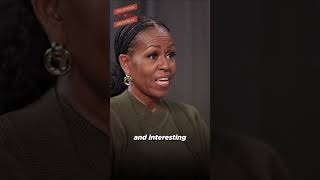
In this interview segment, Michelle Obama and a co‑host discuss how she cultivated a deep sense of self‑worth despite growing up in a modest Chicago apartment as a Black child from a working‑class background. They attribute her confidence to early parental affirmation—her parents consistently told her she was smart, funny, and interesting—providing a mirror of excellence at the kitchen table. The conversation highlights that, while society and some educators often tried to lower expectations for people like her, her family instilled a "can‑do, must‑do" mindset that acted as armor against those external doubts. This step‑by‑step process of internalizing belief enabled her to navigate setbacks, ultimately moving from humble beginnings to the iconic White House residence, illustrating how sustained self‑belief can translate into high‑level success.
Chapters
Here's what I'm curious about, Michelle, and both of you, both of you have had successful careers and made big impacts in the world in your own way. How did you build belief in yourself that you were worthy of the success at such a high level? You as a coach and in the business world and the NBA and even going from a small little apartment with both of you to being in the most iconic house in the world. How do you believe you're deserving and worthy of that life when you come from such smaller, humbler beginnings.
Well, it's a step-by-step process. And if you got good, smart parents like we did, you know, who don't even know what's coming, but they understand, they understood for us that they wanted to make us feel that way at our little kitchen table. So you begin feeling that because you feel it, you see your excellence in the eyes of your parents. Like we have parents that really thought we were smart and funny and interesting, and they reflected that back to us. They wanted to hear what we thought. So we grew up thinking, we're so funny. We're so smart. We're so interesting. You know, I know you want to hear what I have to say. I know I'm five, but let me tell you my opinion about these things, right? So it starts there. And especially when your poor black kids from, you know, on the south side of Chicago, I think our parents knew that what was coming for us was the absolute different message.
Interesting.
That at every turn, what was awaiting us, regardless of who we were, there were going to be teachers and people who would be constantly lowering our bars for us anyway. So I think they fueled us with a level of can do it, must do it-ness. Interesting. That would give us a kind of armor as we went out and sort of started getting dinged.