How to Become a MILLIONAIRE This Year! (Shift Your MINDSET!) | Alex Hormozi
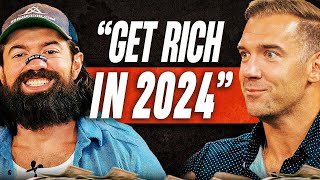
This is a YouTube video titled "How to Become a MILLIONAIRE This Year! (Shift Your MINDSET!) | Alex Hormozi" created in November 2023. It features a detailed interview-style conversation between Alex Hormozi and Lewis Howes discussing mindset, work ethic, and practical advice on achieving financial success and entrepreneurship. The dialogue covers topics such as managing expectations, the emotional readiness for wealth, the importance of learning and persistence, and reflections on personal growth and success.
Chapters
The reason that I'm going to go from 100 to a billion and 10 billion and beyond is because I am working harder now than I work to get here. And it's because I've learned a better way to work. And so this is me sharing that better way to work. If I had thought the way I think about business now and work now, I would have been here faster. But for the court of Alex, I know what it's like for me to give it my all. And it's the absolute proudest I am of myself. And there's nothing anyone can do to take that from me.
What do people not understand about making money reaching millionaire status that they really need to know before they hit I.
Will probably answer this differently than you expect.
I think you gotta have a dream. The School of Greatness. Really?
Yeah. Please welcome Lewis Howes.
We both know a lot of wealthy people. People have made a lot of money. People have had huge exits. People that have private jets and multiple homes and massive bank account. Do you think the people that you know who have a lot of money are typically happier? Or do you know more people who are wealthy, who are unhappy than happy?
I think it depends on how they got their wealth. So I think if they were given their wealth, absolutely, I would say Barna and they are not as happy. And I think it, I won't even get into the why. I say that's just my observation. For the people who earned their wealth, I would say many of them are, I would probably say the same smorgasbord as the rest of society, maybe with like one movement upwards, because money cannot buy happiness, but it can help you avoid pain. And so I think that is the that's the hard part that is difficult. It's the same thing as health where like you can, you know, money can help get the hospital, you know, get you out of the hospital, hypothetically, but it's not going to get you into super, super fitness status. They're completely different continuums that people see as one straight line. And I removing pain versus gaining joy, I think are two completely different journeys. And so I think money helps absolutely decrease the punishment that we experience in life and the pains that we have to deal with or inconveniences for sure.
Why do you think some people, I agree with that, and there's also some outliers where it seems like people with a lot of money almost have more problems, more pain, more stress, more overwhelm. Maybe it's too much to handle or everyone wanting something from them or everyone's expecting something now from them. How do you learn to manage the approval or people pleasing of others once you have more money, especially your own family, your own friends who are now saying, oh, you've gone beyond where the rest of us are financially. And I want some of that or I have an expectation. How do we overcome that? Navigate it.
I wholeheartedly reject all of it.
Reject what?
All of it. Any expectations of me. And so my litmus test for doing deals for giving jobs, any of those things for people that I know is that you have to, it's actually the first conversation I had with Layla when we were, it was our first date. So our first date, I pitched Layla on quitting her job and working for me because I was like, this might not work out, but you should totally work for me. We'll make a bunch of money together. And I said, this compensation has to make sense for you independent of our relationship. So like, if we're not together, does this still make sense? If it makes sense, then we're cool.
It's on your first day of dating. If we're not together in a week or two months, would this still work for you?
Yes. It's clear, it's all talent. And I think that litmus test has served incredibly well for me. If you want to hire your mom, would you give somebody with your mom's experience the bookkeeping job? Now, if she's a 20-year bookkeeper, Then yeah, maybe. Maybe. And to be fair, but would you pay the bookkeeper $200,000 a year? I don't know. Probably wouldn't. So I believe in making all deals as though you weren't friends or you have no relationship. And if it still makes sense, then all of the relational benefit becomes as a bonus.
Yes.
Rather than I'm going to amend the terms of the deal because of this amorphous value that we have, which can change. But if the deal is made logically, then conditions can change and you will still both always feel good about the deal because it was made without the relational component. Because sometimes you have good days with your mom, sometimes you have bad days with your mom, and all of a sudden you're like, I can't believe I'm paying 200 grand a year. She messed up the books and she took a course on it, you know, whatever. But people make that mistake all the time. And so I think that it has been significantly easier for me to just say, Would I give you the role? Or would I give you the thing? if you were a stranger. And if the answer is no, then the answer is no. And if that person really wants it, then I'd be like, then do the same things a stranger would do. And then I'll have a reason. Now, if I have two candidates and they're identical, which would be impossible, but if they're identical, then yeah, maybe I would give it, but they have to still meet all the standards. And then that way you give objective quantitatively, like do these things and then.
We can have this outcome. Seems like a lot of young people.
Want to make a lot of money.
People wanna make a lot of money. People are winning a lot of money. But it seems like, at least something thinking of social media context, you see a lot of young people in their 20s, early 30s that are striving for that. And they're striving for it fast.
They're striving for it.
I just graduated college and I wanna get there in the next couple of years. What do people in their 20s not understand about making money or reaching millionaire status? that they really need to know before they hit that.
So I will probably answer this differently than you expect. I believe that sex is colorblind, ageblind, everything blind because there are certain activities that you have to do. If you do the activities, you can get the outcome. Now, if you're in your 20s, it's very difficult to do the amount of activities for a long enough period of time in order to get that. Now, You've got Ben Francis who started Gymshark when he was whatever, 16 or 17 years old, and he was 28. It was worth over a billion. So he was in his 20s and he made a billion dollar company. Is that the exception? For the most part, yeah. That's not as common. I became a millionaire when I was 26. I can't remember, between 26 and 27 is when I had my first million dollars in my bank account. But I started business when I was 22. And so I still had had five years in. Now that's still fast. Don't get me wrong, it's still fast. But the accumulation of knowledge, because I spent almost all of my excess income on education. And so I wanted to pay down my ignorance tax as fast as I possibly could. It's rather than buy the Bentley or buy the watch so that I could flex on it, I still lived, split a room in a house with six other people. while I was making 20,000 a month take-home because I wanted to have all that money so I could go on the offense if I wanted to go to a seminar or buy a course or go to a workshop or whatever it was so that I could uplevel my skills and get there faster. And so I think the idea that you want to get there fast is fine. It's just having a realistic expectation of how many skills you need to acquire to get there. Because if you have all the skills, because I think we'll have continuously younger and younger and younger millionaires and billionaires that are going to continue to happen because now A viral idea. I mean, Taylor Swift was 16 when she started reporting music. That was a long time ago, right? She's 33 now.
Now she's a billionaire.
She keeps showing up consistently and building it. Mr. B. She's a billionaire. 24. Crazy. So it's going to continue to go down as the access to education increasingly gets democratized so more people can access it for free. And so a nine-year-old can watch, there's nothing that stops a nine-year-old from making and running a Facebook ad. There's nothing. And usually they're more tech savvy anyways.
Maybe they just got to get a credit card.
Sure, yeah. Yeah. But if we break it down to the physics or the actions, it's not that hard. There's nothing that prevents people. And so I think that the level of competition will continue to rise. I think young people are more tech savvy and so will in general have a continuously improving competitive advantage over older people because the rate of technological change hastens, goes faster. And so the advantage of being young versus old is actually, I think, going to continue to expand because tech moves so fast now. that I think there will be more.
What do you think about, I mean, I had a mentor once told me when I was 24, when I was broke on my sister's couch and I was living for free. I was not paying rent. I was, you know, eating leftovers. Good life, man. And I remember saying to a mentor, I was like, man, I could really use some money right now. Like, I could really figure out how to make some more money. and he said, money comes to you when you're ready for it. I was like, I feel pretty ready. He goes, yeah, maybe you get it and you're not ready and you lose it all because you're not emotionally ready. So what advice do you have to people in their 20s who want to make a lot of money, but if they're not emotionally ready, what might happen to them?
Everything is trainable. And so if, like, If we define handling money as a skill, then it can be learned. And so if you, and you can look at anything. Like if you were somebody who continues to hop from thing to thing to thing to thing to thing and you can't stick with it, it's usually because you don't have the skill of sticking with something. You haven't been rewarded enough in the past for staying with something, or you haven't been burnt enough from starting over. Like on your fifth time of starting yet another thing and not getting deep enough on it, you have to think to yourself, maybe this isn't the right way to do it. I love giving this kind of like S-curve analogy, which hopefully your audience will enjoy. But there's five stages I see it as somebody goes through the entrepreneurial journey when they're starting out. In the beginning, you've got the midline, right, where they start. Step one is they go above the midline and they go to uninformed optimism. They see the grass on the other side, it looks greener, and they're like, my buddy's doing drop shipping and he's making all this money, and that's gonna be me. And then they buy the course, they start watching videos, they start to connect things, things break, they buy some information, they don't know how much to buy it, and all of a sudden they go to the 0.2, which is now below the line, which is informed pessimism.
So it's hard.
Yeah, they find out all the things that they didn't know in the beginning. They paid down some ignorance debt, but there's still more to pay. They're like, okay, wow. So they keep going because they're like, I gotta figure this out. And then they go to 0.3, which is the value of despair, right? Which is where they're like, this isn't gonna work. This is never gonna work. And one of the hardest costs, and this is like what entrepreneurship feels like if I can give it to anyone who's new to this, is the feeling of uncertainty that you don't know if all of the work that you've been spending all of your nights and weekends and off time investing in will ever pay off. And so it's this fear that you're wasting your time. But the reality is that the outcome isn't the thing that you're building. The person you are is the person that you're building, and that continues to work. And so there's a proverb in the Bible, I'm going to butcher it, but I think it's in all labor there is profit. And you can rephrase that as, I like, as the work works on you more than you work on it.
Say it again.
The work works on you. more than you work on it. And so it's about who we become while doing the work, more than the outcome from the work itself. Because like I lost everything five years into my entrepreneurial journey, but I still had all the skills and beliefs that I had from before that. And then I was able to reapply those and then have a really, you know, big outcome in what we have today. And so I remember when I lost everything that first time, I thought, did I just lose five years of my life? Like I just moved back, I'm at ground zero again. But I wasn't 'cause I had all these skills that I had learned, you know, owning and scaling six gyms at that point. And so, 0.1 uninformed optimism, 0.2 informed pessimism, 0.3 the eye of despair, and then go to 0.4, which is informed optimism. So now you do have a lay of the land. Do you understand that there's some skeletons? You do have to understand how you manage some inventory, you got to get ahead of some of the stuff, but you can start, you learn how to forecast, you can know that weekends you tend to do better and weekdays you tend to do less, and so you can dial back support on those days and dial it up on the other days, you start to recognize patterns. Then you start to know what you're doing, right? You're paying down all the ignorance debt. And then finally, step five is you achieve whatever the original goal was. But the problem is that most people go step one, two, three, and then they jump back to step one. With something new.
Right.
And so they go to yet again, the grass is greener on the other side, but what they don't know is that it's still fertilized with manure. They're still on the other side too. And so there's always everywhere.
Let me get into real estate now.
Let me get into this. Right. Investing in wholesaling and day trading. Right. Of course, there's all these quick make money things. But if you look at the people who are making the most money in it, they spent usually a significant amount of time. And I'm saying this again, but I'm burying it for repetition, is that the rocky cutscene last two minutes in movies might last five years for most people or 10. And I remember my neighbor, I met him when he was 15 years old. He now works for us at acquisition.com, but this is a cool story. So he's 15 years old and he's like, I want to be an entrepreneur. And so he worked out with me every day for a couple of years. at my home gym. And so he- Is he jacked now? Never more jacked than me. And so he then goes to college. And after his first semester, he's like, I don't know, like this is, you know, I'm studying business. And I was like, dude, are you willing in this or not? Are you really doing this? And he was like, well, you know, I just, I'm not, school's not really blah, blah, blah. And I said, the world doesn't need another 3-1 business degree. Either crush school or don't go. If your goal is entrepreneurship, he's like, well, I want to be an entrepreneur. And so I apparently told him this that he remembers because he brings it up all the time. But I said, you are afraid of going all in on entrepreneurship because staying in college is safe from an approval perspective. So you're doing all these side things, but you don't have to bear the brunt of not failing because you're still in school. Yeah. It's like, so you need to give- you-'re not all in. You're not all in. Exactly. And so he quit school and then he started on the call floor of gym launch. Now, that's not glorious. And to be fair to the point we're making earlier, I said, I can't get you the job. I won't give you a job. I said, I can get you an interview. I was like, it's gonna be up to the sales manager. And I'm not gonna tell them that I know you. He was like, okay. I was like, you better be prepared. And so he did get the job, to be fair, the qualifications for frontline callers, not super high. And the reason that I started him there was because I actually walked in on him one day when he was waiting for me to go work out and I heard him on the phone trying to do one of these wholesaling real estate deals. And I said, you, know, did you close the deal? And he said, no. And he said, I'm not sure if real estate, you know, the wholesaling things for me. I said, well, have you heard you on the phone? And he was like, what do you mean? I was like, you, sound horrible.
You can't sell anything on the skill.
Of course. He's like, well, how do I get good at sales? I was like, you work on a sales team with somebody who's been there before and can tell you what to do. And so I got him the interview. He took the job. He became the top salesman on the setting team. And then he became sorry, the outbound team. Then he went to the setting team, which is second rung of salesmen. They qualify the leads and became the top one there. And then he got to the top.
Of the Christmas tree, which is closers.
And he became the top closer. He learned skills. 26 guys. Wow. Big team. And a lot of these are men. You don't have families, kids.
Wow.
And how much can you make as a top closer?
250. 250 a year. Yeah.
It's pretty good money.
Yeah, it is good money.
For a 21 year old, 22 year old, yeah. Yeah.
19 at the time. 19, making 250.
Yeah.
That's life changing.
Of course. And you had to learn how to talk to men. Talking to gym owners. Four year old gym owners telling them how you can help them with their business. Wow. Right. Takes balls. And so I bring that up to say, is that when you are starting out, you need to focus on learning rather than earning. Now, he obviously earned, but it was because he quickly fast-tracked his learning process. And so I think one of the biggest hacks in the world is getting paid to learn. Like right now, we have this big societal context of like, you pay in order to learn. But what if there were a world where you could get paid to learn? Well, that is what working at a company is if you're mindful of what career path you want to get into. Now, if you're like, I don't know what I want to do, then I would recommend starting with a meta skill. So sales is going to like, if you learn how to sell, it'll work in any company. If you learn how to market, it'll work in any company. I mean, to be fair, if you get into HR, a zillion businesses need HR stuff, if that's what you like. Now, if you're like, I don't know what I like. Well, you also aren't going to like anything unless you start because we usually only like things that we're good at and we usually aren't good at things that you start. Right? And so the only way to get good at something is to do a lot of it. And when you start, you suck. And so a lot of the time there's this fallacy of finding the right thing or the perfect fit But one, almost every entrepreneur that I know has had many, many, many businesses and mostly many failures before they had their success. It's because each one of them stair stepped. And so there's this paralysis around like, I got to pick the right thing. And it's really, you got to pick something. And then you'll learn all the inadequacies that you have no idea about once you get into it. Like I started a gym when I was 22 years old. Like brick and mortar, signed a lease. Yeah, you shared a thousand. Yeah, it was stupid. I had no idea what I was doing. But I did have, I did sign, I was, you know, kudos to younger me. I had a mentor early on who was in the gym world.
That's great.
Right.
So you could get advice and learn from?
Yes. I mean, still, it was still incredibly hard, but I got, I was able to just get, you know, suck everything like a, you know, fire hose? Like a vacuum cleaner. To get all the information I needed to just barely keep my head above water until, and then things started to work out because I just, every weekend I'd go and drive over to a gym owner and say, Why do you do this? Why is your lobby like this? How many leads do you convert? How do you call it? Whatever.
And so I just kept doing that.
Every single weekend because I was such a young guy. Exactly. And I owe a lot to those older entrepreneurs who helped me out. And so in some ways, a lot.
Of what I do at acquisition.com is my small way of paying it forward. And one of the cool things is when you're someone who's getting started and you're going out and humbly asking for advice, but you're taking the actions. Hey, I'm launching this thing. I'm taking the steps. I'm just trying to figure it out, but I'm taking the actions and I'm in the process. People usually want to give advice and support and say, hey, why don't you come check out and we'll go out for lunch or whatever it is. But if you're just saying, I want to do this, but I'm not taking any action, people are less likely to help you. Maybe they'll help you a little bit, but they see you struggling and trying and leaping before you're ready.
It's like, all right, cool, let's help you get it going. I love the saying, luck favors the prepared. So like if you if you want to go ask, you know, Lewis to have you on or to get Lewis on your show, right? Well, what do you do? You don't just ask Lewis. You show how much you've prepared. You say, Hey, I went through 50 hours of your content. These are nine questions that have never been asked to you before that I think would be really good. I've got two guys, two buddies of mine from college who are going to also video it. I've got this church basement that I can get the lighting to look really cool so we can make cinematic. 'Cause to be real, I know I don't have the audience that you have, but I can help at least give you clips that will distribute and actually convert for you. And hopefully that's enough of value add. Now, Lewis might not say yes, but if you do that a hundred times, counting hundreds, one Lewis will say yes. And everyone loves to help people who help themselves, always. Because the biggest fear that anyone who gives advice has is that someone takes the advice and does nothing. Exactly. They didn't learn. They didn't change their behavior.
That's true.
It's a waste of the time. So you don't feel like you're teaching. You only teach if they change their behavior, if they change the behavior, they learned. And so everyone, many people like being a teacher. I think a teaching role is nice. I think most people feel good about it. But you only feel like you have a teaching role if you see a change. Someone takes action.
And you can hack the whole system if you just show people that you'll take initiative. 100%. If you take, that's what happened for me early on. I was just taking a lot of action and people were like, They wanted to add me in the room. They wanted me at the table because I was willing to take action. Even though I was young and broke and struggling, they were like, Hey, this guy's showing up. I would go to every conference that I could in kind of the social media blogging world early on and somehow get to the late night dinners at 2:00 a.m. with all the speakers and they'd be like, Hey, why don't you come tag along, young guy? You know, you're bringing us a lot of joy at least, right? Even though you have no clue what you're doing, you can't offer anything else but joy. But you're asking me some interesting questions that people don't. So yeah, I'm happy to talk about myself for another 20 minutes.
Totally.
And you get in the room, you get access and you take action, people will want to keep supporting you.
Totally.
Because you're applying their teachings and people like that.
Makes them feel important.
It does. It validates, oh, I know something about what I'm doing. And that's good, you want to keep helping this person grow. What do you think your 85 year old self needs to tell you now to get to where you want to be faster?
Oh, it's funny that that was the question.
I mean, he would tell me- Speaking of the mentors.
Yeah, no, I mean, he would tell me, why do you want to go faster? Be like, why can't it take 10 times as long?
From 200 to a billion?
Sure. Why not? Why does it need to be five.
Years or 10 years? Why can't it be 50 years?
If it took 50 years, but then it all happened at once at the end, would you like that? I don't know, right? It's kind of like the man who lives an amazing life and the last day everyone finds out he's a fraud, or the man who lives his entire life with everyone thinking he's a fraud, and then in the last day of.
His life, he's proven right. Which one would you rather be? If you're gone, you're not gonna get to experience the fruit of it all.
Interesting question, though. It's like the painters that become famous once they're dead. Yeah. And so I think, I mean, 85-year-old me, I'll tell you the recurring theme that he works on with me. Patience is a big one. Focus is a big one, sticking with what I committed to, focusing on the controllables of like, what are the activities, what are the actions that I have to take, and being okay with potentially varied outcomes. Sometimes it's good, sometimes it's bad, but being consistently divorced from the outcome, but trying my absolute damnedest to make sure that everything that is in my control was done to the utmost. And I like We started there, but I just like, it's hard to understand the context. Like you hear this, you hear people say this, like it's about the journey, it's not about the destination. And you hear people say like, you know, it's about doing the stuff. It's not about the outcome. And you're like, yeah, yeah, it's easy for you to say when you have the outcome.
Right, when they've already made the money.
Of course, of course, I get it. But if you can make that flip, like it's just, The hard part is the action is so much greater. If you really measured yourself by the actions you take, then you might be embarrassed. So you really hope to measure yourself on the outcome because you can get by on sometimes winning when you don't deserve it. And so 85-year-old me never lets me win when I don't deserve it.
Ooh, man, I would rather lose, but now I gave my all, then win and be like, I just kind of just barely showed up today. Right.
You wouldn't know.
I won, but it's because I had an inferior opponent. It's not because I played my best. It sucks to lose.
Yeah.
To know, man, I was freaking gave everything, every ounce of my energy and every trick and skill that I had to play this game and win it. I came short. It's gonna sting. It's gonna hurt. But at least I know I don't regret the effort that I put in. And I can be, here's a great example. This still haunts me today.
2002.
It was October. So 21 years ago, is that right? October 2002. Yeah, almost 21 years ago is that what it was? 2002. We're playing, I'm playing football at Principia College, small school in Illinois. And we, it's my sophomore year there. My freshman year I went to another school, so I transferred into this school. We're playing and it's a tight, tight game at home, back and forth. Can't remember the final score, but we lose by a touchdown. I score three or four touchdowns. I think I got an extra point, I got a two point conversion and I had 17 catches for 418 yards.
And we lost.
In the last couple of plays, we didn't score to go and win. And I remember being the last one out of the locker room. I was in the shower. I was so upset that we lost. And my coach comes in, it's kind of an awkward moment, 'cause I'm in the shower, you know, an exposed open shower. You know, I'm just like kind of pouting and like sad and depressed or whatever and just like in there, everyone's gone. I'm sad we lost the game. And he kind of comes around the corner and says, Hey, Lewis, good game. Just to let you know, you broke a world record today. And I go, what? And I go, what do you mean? And he goes, yeah, you had 17 catches for 418 yards. No one's ever done that in the history of a football game. Your new NCAA all record holder. And I go, I'm sad and depressed and angry because I didn't do more to help us win. And we lost.
Yeah.
And at the same time, I hear that I did something that no one in the history of the world had ever done in the football game. And it was tough, 'cause I felt like, man, we lost, but I gave it everything.
But I was like, But could I still give it more?
It's like, I don't know. But I feel like, you know what? At least we didn't win, and I played to a lower level and didn't create that result. At least I created something that for me, I can be proud of, even if we lost. It still haunts me that we lost.
Interesting.
But I know because we were behind, I had to give so much more than I was capable of. If we were winning, I wouldn't have gotten that effort out of myself. So it's an interesting dynamic.
Yeah. It is, because I would wonder if you had that same exact experience, but you didn't break the world record, or no one ever told you what exactly. Right. If you would still... Because you said that you had the sting of the loss, and I wonder if Lewis today would feel that way, because If you, because you said, I don't know if I could have given more, but I feel like on some levels, at least for me, sure we can get into the hypotheticals of you can always give more.
Of course, yeah.
But there are certain times where I know I could sprint after the guy, even though I'm probably not gonna get.
But I could give it the last 20 yards.
Right, exactly. And I think that this is where 85-year-old me is the one that he is ruthless. And I love this David Goggins saying, I don't know if it's a saying of his, I heard it in one of his videos, but he said, There's no shortcuts for you, Goggins. And I just really love that. He doesn't even look for them because he said, you, don't get those. You don't get shortcuts. There are no corners to cut. And that to me is the embodiment of that, of that 85-year-old self because he knows if I could have sprinted it or not. And so it's if I can appeal to that man's incredibly high standards, which is why commit to the journey is not the easier path. I think it is the harder path because the standard is higher. And when you really do that, the winning does happen by default. But even saying that still makes winning the objective. And you're just saying this is a different pathway of getting to winning, but winning still kind of matters.
It does matter. I think it's a both. The journey matters and the outcomes matter. Because the outcomes also give credibility. They give more context. They give more experience. They give more wisdom to the teacher.
Oh yeah.
If you had no outcomes, but you said, look at all the efforts I put in though. But I put in 10,000 hours. But I haven't sold a company. I haven't built anything because this is really hard. Didn't work. You need a both hand.
Yeah, this is really interesting. Because on some, so I think from, this is, I'm really liking this. So from a, yeah, from a fulfillment perspective, I believe that truly giving your all, actually, not like try your best, that's just like, it's such a, it's repeated so many times that it's lost its meaning. But leaving everything on the field, having the tank on zero or empty when you walk off, and truly knowing and looking at yourself in the mirror, like, I could not have done anything more. And it's tough to do that. because we're naturally built to conserve effort. And so you really have to push and overcome the internal mechanisms that you have that say, don't spend the last.
Quarter of your life. Put a little more, yeah.
Right. And that's why when I walked on stage for the presentation, I was like, I have done this before. I am prepared. I could not have prepared more for this in any way that would have been reasonable. And so to that degree, I can still define success that way. The outcomes will happen. And I think it's still that little thing where it's like, do this in order to, you have to cut off the in order to. I really genuinely believe that because I remember when I was in my retirement year, which is, I still own the company, but we were in the process of selling. I had nothing to do. And it was an incredibly depressing year for me, which is why I've oriented my whole life around work because I really enjoy it. I remember getting really angry about this and thinking, it's not you work hard so that you can. It's like the hard work is the point. The point is how hard you learn to work. And that's the whole point where what has changed from last year to this year is my understanding of my capacity to work continues to grow. And so I am able to work harder and therefore am more proud. of the effort that I put into it, because at least for me, I feel like I am, I know in the mirror, did I give it my all? And if I try to play out this as a stoic frame, but like, if I had had like a hurricane go through and we had not been able to launch, because all the energy would have been gone, let's just say hypothetical. And we have all this prep.
Fear virtual event. Yes.
Would I have been proud of the effort that I put in? The answer would have been yes.
You seem to be let down and disappointed that you didn't get to do the thing.
Yes. But I think that it would have been short-lived because I think that is like, you asked early on, what has been the biggest difference for you specifically? And this has been whatever we even call it, superpower, secret, whatever. This is what has allowed me to keep my internal temperature separate from the external temperature to the greatest degree possible. is knowing that I'm using my internal thermometer to gauge my success, and I'm not perfect by any means.
Right, right, right.
But the more I do that, to use your example, if I had worked my absolute hardest for 10,000 hours, and I knew that I gave it my all, and I had nothing to show for it. Now, I've actually had that instance, because five years ago I lost it, really.
No external results to show for it.
So I do know what that's like. I think at the end of your life, you'd still be more proud of the man that did his everything, gave it his all, left it all on the field, even if he didn't win. And I think that would be the man that I'd be more proud to be.
I hear that, and I'm also like, if I reflect back, if we would have lost every football game, I think winning matters also. You've got to have some wins, you know what I mean? You've got to have, if I'd have lost every game for four years, I'd probably be like, this is not fun. Sure, I'm becoming a better athlete and I'm competing against great people, but just always losing, I wonder a challenge. Absolutely. Because you'd be like, this is not fun. It's fun to win. It's not fun to lose consistently.
Yeah, I've- you- learn more in your losses probably. Totally.
You learn more from the bigger breakdowns and the challenges you face than always winning.
Yeah.
The difficulties, the challenges develop us. Having easy wins doesn't make us stronger and better. But I think having all losses may just say that, okay, maybe this is the wrong thing you're in. You should be in something else. Use this energy and effort and attitude towards a different thing, a different purpose, a different sport, a different mission, a different art after a period of time. That's why so much losing you, because.
I mean, I could gamble.
I think the confidence comes in the effort and the journey, but it also you've got to back it with some external results, I think. Yeah. Or some type of credibility somewhere.
Yeah. It depends if, so the credibility is if you were trying to be an expert and espouse and give advice.
Credibility to yourself, if you have no external results.
I still, like, I think, you, were broke today. Yeah. Yeah, no one would listen to me.
That's okay. But how would you feel about you?
After 10 years, totally. 15 years, I'm busting it. Did I do it for five years? I get it. Okay, but 10 years though. 50 years, right? Right. I think, but that's where I'm saying, like, What has changed about me that has made me better, stronger, faster is because I genuinely believe that the more I can divorce that win, even when you say like, you know, you got to win sometimes. It's like even that small statement still makes it king.
Yeah, easy for you to say with.
A couple hundred million and all the wins.
Yeah, easy for you to say at this stage like you said to others.
But I think that the reason that I'm going to go from a hundred to a billion and 10 billion and beyond is because I do genuinely, like I am working harder now than I worked to get here. And it's because I've learned a better way to work. And so this is me sharing that.
Better way to work.
Now, to be fair, maybe I have certain skills that if I don't work as hard, I can still win, but I would still know. And so I think that if you can, like if the whole point of anyone who's listening to this is that you can open up another level of effort I think that is the next level of effort because if I had thought the way I think about business now and work now, I would have been here faster. And that's me catering to the audience who wants to win. But I'm saying I would have become who I am faster. And I think that as a result, I would have evidence that would support that for the court of public opinion, but for the court of Alex, It's just, I know what it's like for me to give it my all, and it's the absolute proudest I am of myself, and there's nothing anyone can do to take that from me. And that's when I feel bulletproof, and there's not many times I can do that. And so when I have realized how much work it takes to do something well to gain the approval of my 85 year old self, I also realized hand in hand that there's only a few amount of things that I can do because I have to be dramatically more focused because the amount of work it takes to do something well is so much greater than I used to think that I can't do 20 things if I'm going to do it well. And so it goes back to one of my favorite sayings, which is if it's worth doing, it's worth doing well. And the thing is that most people focus on the back half, but I think it's focusing on the first, like most things aren't worth doing. If it is worth doing, then it is worth doing. Cut out the things that aren't worth doing so that you have all of the energy to actually give your all to something. And I would say this is that Most things aren't that hard if you really try. It's that most people don't know how to try hard. They don't have the skill to try hard. And so the number, I mean, you probably know the stat from the podcast world, right? Which is it's 90% of people only upload one podcast. Of the remaining 10%, 90% of them don't make it past 20 uploads. So to be in the top 1% of podcasters, you have to upload 20 podcasts.
It still may not be successful. You still don't get downloads, but you're doing a lot better than the other 90%, 99%.
The price for excellence has never been so cheap.
It's showing up consistently.
Everyone is so soft now. that to win, you just have to not be made of glass and be willing to have someone tell you, I don't approve of your life. And you say, that's okay.
Why do you think so many people are soft in our society today?
Well, I think we've put a lot of guardrails up that prevent people from getting hurt. And I think that ends up resulting in people who don't know what getting hurt feels like, and they feel like it's death, but it's not death. You know, I think that's just, I mean, at its absolute core, no one knows how to have hurt feelings. And I think people think their feelings matter a lot more now than they used to. Yeah. I don't think they matter that much.
Why should people's feelings matter that much?
Why should their feelings matter? Why should my feelings matter? Like if I hurt someone and I say, what makes me feel good? Why does that matter? It hurt somebody. So it's just looking at the actions. And I, that's, I mean, to be fair, I'm very extreme in that manner, but I think that if we can, for me, the more I can ignore my feelings and simply do the things that are required, the more I tend to see the results that I want. And one of my favorite internal sayings, like the things that you repeat yourself, I'm sure everybody has like a couple things that like you say to you. Whenever I have something that I'm like, God, I don't want, like the next rewrite of the book or, Hey, man, we gotta reshoot that whole thing because the mic was off or, you know, the worst.
Yeah, yeah, yeah.
The worst, man. Is, I have this, I have this refrain that's been trained faster and faster, which is, I will do what is required. It's not what I want, it's not what I feel like, it's, I will do what is required. I'm enjoyable. I will do what is required. Yeah. And that's it. And so, like, there's not, there's not.
A question, there's not a if, it's just, I will do what is required. And that has helped me a ton. Yeah. You try to learn from the pain or the challenge that occurred so it doesn't happen again, but, you gotta do what's required. I saw this clip recently of this podcast called the All In podcast, which I see these clips a lot online. I wanna start actually listening to this whole show, but I think they go too long. But they have a lot of great insights. It's like these four venture capitalists and they're all billionaires and they all are puppet masters in their own world, right? And one of the clips was of a guy, I can't remember his name, but one of the guys who said he was spending a lot of time in Italy over the last month or a couple of months. And he was saying, you know, I really like spending time over here because my friends in Italy know how to relax, they know how to have great conversations, they know how to talk about life and art and magic and wonder and music and not just focus on more money, because this guy's a billionaire, multi-billionaire. And he was like, there's more to life than just making lots more money when you already have a lot of money? What do you think about a point like that or a conversation like that where it's like, you know, live in Europe and take three months and relax and travel?
I think there's an overarching assumption which is that life should be a certain way. And I think that I would reject that notion. And so it's like, we should, because implied in that statement, I think, is We should be more like them and whenever I see a should I kind of Don't really accept any should frames. It's like why? Why should we? Because you prefer that which is fine youe could say I prefer to live the same in which case go live that way But to then say everyone should live that way or you know then now you're casting a pre your personal preference on everyone else and I reject that wholeheartedly so if you if you want to if you want to play video games all day and be the absolute best in the world at it and and you are the best in the world at it, and you get Twitch sponsorships, and you have all that stuff, and you learn to eat because you're so good at it and you're so obsessed with it. Who am I to stop you from doing that? You're going to die, and I'm going to die. And at the end of your life, would you rather just go be a foreman at a factory? That's not a disrespectful thing. I'm saying more so that if you love doing what you were doing, choose to not do what you love because you now are legitimate in the eyes.
Of people who you don't care about.
Like, There was one rule for me, is do you.
Do you, yeah. I wanted to ask you about this. This book launch just happened, and I know you did a vlog on this recently, which I want to dive in deeper, but can you give big context? Why this book, why the launch style that you did, how many people showed up, how many people bought and upsells everything, and how did you get that? result to happen. Not that we focus on results here, but the efforts. How did you get it all to come to fruition? So my first book, 100 Million Offers.
Was a book that answered one question, which is, what do I sell? And so now that has 17,000 five stars and incredible, nice, great book. Actually, it's still an Amazon charts top 20 of all Amazon, and so is that one. So it's two of the 20.
Not that we're calculating results or success here.
Of course, of course. And I didn't even sell it on Amazon. I sold it on Shopify. So all those sales didn't count. But anyways, this book, the purpose of this book was to, once someone knows what they're gonna sell, they ask the next question, which is who do I sell it to? You need leads, right? And so this book is about advertising. Now, I split test the title four times to figure out what people like. I tried marketing versus advertising, I tried advertising versus leads, I tried leads versus promotion, and leads won as the categorical leader for what's the name of the book. And so that's why I called it 100 Million Leads. But advertising in and of itself is the process of making known. If no one knows about your stuff, no one can buy it. And so- say that one more time. If no one knows about your stuff-.
Sorry, the first part. Advertising what?
Is the process of making known.
Is making- advertise the process of making known, period. If no one knows about your stuff.
No one buys it.
Right.
And so what happens is most people have an offer and no one knows about it. And so you have to make it known. You have to advertise it. And so, this book, so the first book all hinged on something called the value equation, which is people talk about, hey, provide value, provide value, but how do you mechanize that? How do you operationalize value? And so it was actually solving a problem that people want, increasing the likelihood that they think it's going to happen, in other words, decreasing the risk that when they buy, they're not going to get the thing that they want, decreasing the time it takes them to get whatever the outcome is, and decreasing the effort and sacrifice that's associated with the work that they have to do in order to get the outcome. So there's the four variables. You decrease the last two, you increase the first two, and you have a more valuable thing, which we covered in a different video, so you can watch that one. With $100 million leads, I talk about the advertising cycle. And so there's eight pieces to this. So it has a little bit more pieces to it, but I think it's simpler to understand in some ways. So the first four is a core four. It's the only four ways any person can let other people know about their stuff, advertise. And so it's just a four box. There's 101 and 1:1, and you've got people who know you and people who don't. So if you're letting people who know you one-on-one, you were doing warm outreach. You reach out to your friends and say, Hey, come to my book event. If you're letting people know one-on-one who don't know you, that's cold outreach. That's reaching out to strangers. If you're letting people know one-to-many, two people who know you, that's posting content. And if you're letting people one-to-many know who don't know you, that's running ads. So there's the only four things that you can do to let other people know about your stuff. Now the natural question is, are there other things that you can do? The answer is yes and no. No in that you can't do anything else, but yes, there are other people who can let people know about stuff. Four, right, and so there's four, which I call the lead getters. So you've got customers who can send you referrals. Now in order for them to send you referrals, they use the core four. They either reach out to friends, they post content, they do the same four things. Because they're the only four ways a person can let other people know about stuff. The second is you've got employees, right? So when I was making content for the book, I didn't actually make the content. My team made the content and then they posted it on my behalf. And so I got leverage on the amount of content I could put out because I had other people help me. From the paid ads, sorry, from the lead getter number three is agencies. So you can pay agencies to help you make content, you can pay agencies to help you run ads. And for me, for this book launch, I had agencies run the actual ads for the book. Right. Because we're a holding company, we don't actually transact, so it made sense to contract that out. But my team made the ads, their team ran the ads, but it was still leverage. And then finally we had affiliates.
So that's another business.
Who refers you business and just to find it for the audience.
They get a commission.
Yeah. They get paid in money, free stuff or both.
Right.
And so we had 27,000 affiliates.
27,000.
And we had 104,000 people who attended from affiliates. We had 137,000 people. Wow. 137,000 people came in from paid ads. We had just probably just like 210,000 people came in from content.
Organic.
Yeah. And then the outreach And then I would say that employees kind of factored into that piece, right? And so I used all eight methods in the book to advertise the book itself. So I could have just made a, I could have just emailed my list and just done a presentation or just released it, and I probably would have sold a lot of copies. But I wanted to use everything in the book to advertise the book to demonstrate that everything proof, that everything that I do here works and that it'll work for them too if they just follow the steps in the book. And so I purposely followed the scripts that I have in the book for making ads. I followed the scripts that we had for making content throughout the whole thing so that people could look back at my ads, they could look back at the content that I made and be like, He followed this to a T and resulted in a world record-breaking event.
How much did you spend on the ads to get the leads?
$275. $275. Yeah. Which is not for anybody that sounds like a lot of money, but for the context of how big of an.
Event this is, it's nothing. And then how much did you pay out affiliates, which is another form of advertising? How much does that payout, I guess? Zero.
Zero.
They got free stuff. How many people? 20,000?
27,000 affiliates.
They didn't get any commissions.
Correct.
On nothing. Really? Why did they promote it then? What was the leverage or the value add for them?
I think it was goodwill.
Wow.
And they also knew that the last book was good. And I'll give you the tactical piece of this is that most people require money to advertise to their audience because it's extracting goodwill to a degree. Yeah, yeah. And so, what I made rather than saying, Hey, the top 10 affiliates get Lamborghinis, which only benefits the affiliate, not their audience, I said, the top 10 affiliates, I'll do a live Q&A with your entire audience. Wow. And so it benefits the audience to have the person who's promoting it win, and it doesn't extract any goodwill. In fact, it builds goodwill because he's like, Hey, I've got this amazing event. This book, I know Alex, I've been following this stuff forever. It'll help you out. So go do this thing. And if we're in the top 10, we'll also get time with Alex and we can answer questions and do this stuff so we can apply it to us. So it's a win-win for everyone. And so trying to find, in my opinion, I talk about this in the book, the best way to use affiliates is to find a win-win-win, which is it wins for me, it wins for them, and it wins for the customers. Interesting. Usually it's only two wins and one loss. And that's how most people do affiliates is why they have to pay an arm and a leg in order to get them. Now, a lot of times also they haven't built trust or goodwill with an audience before making an ask. So I'd spent two years doing hopefully nothing but providing value. And everyone expected the launch event itself to be probably a pitch of some sort. And I tried to sprinkle that in because I wanted to build up the anticipation and the tension for the event. But, you know, upon the events, we had five, so the official count was we had 542,000 people who registered for the event. We had 188,000 click to join live with us. And it was wild, right? How many book sales in that first.
Day, do you know? We sold 100,000 in like 10 minutes or something.
Yeah. That's insane, dude. It's incredible.
And that was with no large bundles.
Wow. So that wasn't like buy 100, get this.
It was like one, two, or three maybe.
Three was the largest one that was incentivized. Wow. Yeah, so I just said, if you buy three, you get a hat. And the main reason that I did that was because the whole mission of acquisition.com was to make real business education accessible to everyone. And so it's like, if you share my book with two friends, you've earned this hat. And so this can't be bought, only earned. And so you earn it by giving it. And we had 50% of people who chose to. Good three.
That's incredible, man.
And so was there an upsell after.
That, or how was the- that was it.
That was it.
Wow.
I mean, if I had wanted to make money, right, you do it with coaching or something. I would have been a very, it would have been a very different, you know, I would have structured things very differently. But the objective of the event was to demonstrate that the concepts of this book work. And the objective of my last book was to show that making an amazing offer can grow the sales on its own. So that one I did zero advertising for and it sold 500,000 copies. Wow. None. No paid ads, no event. I had 10,000 followers on Instagram when I posted that. It was before Alex Romanzi became Alex Romanzi. It was literally an internal SOP that Layla encouraged me to post as a book. So I said, fine. And I added stories in it to make it interesting for my team. 'Cause I was like, if they don't read it, it's not gonna matter. So I added stories in it. and I post it as a book and then it just continues to sell more month over month. And so that is the hope, you know, obviously with this book too, is that you make the product so exceptional that you get that lead getter bucket of customer telling other customers and affiliates telling other people. And I think that the goal was if I ask people to promote something and I say that it's going to be worth it, that I have to absolutely deliver on that so that next year or two years from now, if I say, Hey, we promote my next book, they'll do it. Now, if I had gone and sold whatever, some coaching thing or something like that, right? That would have been the last time they would have promoted me, because I would have been- For free. Right, yeah. I would have been siphoning their audience or whatever. But I wanted to just install even more goodwill at scale by doing something that hopefully would be memorable that no one else would do. And so I made a huge pitching presentation to stack all the value that I gave with this book. and I price anchored it at $12,000. Then I started dropping it down. And then I was like, it's free. And then everyone, you know, it became a much more memorable event.
That book was free or what was free?
The book's free, too. The book's free, too. So the course is free, the book's free on my podcast. So on the game, I have, I actually also made my offers book free as well, just because people were like, Alex makes his money on the $2 that the book costs. So I just, just a dispel the myths. Offers and $100 million leads are both on my podcast in sequence. You can just listen to them straight through.
But if you want it all together.
In a physical book, you gotta pay for it. If you want to pay for it, yeah, I mean, if you physical books.
Cost money to print and ship, so. Right.
But it was free on your podcast. Correct. And we have to just. And the course is on my site with no opt-in. You don't even have to opt-in for it. You can just have it. And so what I will say this, this you might find this interesting, is that It's always the scariest thing in terms of giving. Giving is always scary, no matter how much you have, whatever it is. If you work really hard on something, there's a part of you that wants to monetize it. It's innate to us, right? You want to get something back. And so that's why it's so hard to delay gratification for such a long period of time. But it's also what will make you stand out in a marketplace of takers. And so that was what I have consistently I mean, I've preached this message of just give, give, give, and you will be able to grow faster than you can imagine. And the event was probably the largest demonstration of that that I could do. And what has now happened since then is, you know, we're number one in business on Spotify, we're, you know, we're 19 in all podcasts. Um, from doing that, we get a, you know, 150,000 unique views a day on my site. Wow. 'Cause the course is free.
That's huge.
And so people share it. and that's the thing. And people share the podcast because they got value from it and they know that they, you know, it's a 20 hour book, I think, on Audible picks the prices for that. But like, it's, but because there's intrinsic value, people will share it. And I think it's, that's the thing is people give away free fluff that sucks because they spend no time on it. And then people consume it, realize it's junk, and then associate that junk with the person and then say, you have a junk brand because I've associated you with the one thing that I've consumed from you. And so despite the fact that your customer is only going to be 1% of the people that you ever advertise to or less, your reputation is made by the 99. And so if you want to control the reputation that you have, then you need to give away more stuff. And in a world where trust is going to continually decrease and the amount of information and content is going to only increase with AI and things like that, I believe that personal brands and trust and authority are going to be increasingly important. I think that more companies will have celebrity partners. in order to gain trust because cost to acquire customers on paid ads has gone up 100% in a very short period of time. When you have CAC, so cost of our customer increasing at that rate, you have to have something that is going to counteract that and that's what brand is. And so brand has never been more important than it is today and I think will only increase in importance. And so this was a brand play.
That's incredible.
And so yeah, we still, we sold 190,000 copies so far.
Oh! the first, what, week and a half, two weeks?
Yeah, 10 days or 11 days, whatever.
Wow, man. 980,000. That's crazy, man.
Yeah. With no, with no thousand pack bundles.
It's amazing. Yeah, it's inspiring. What are the, how many pieces of content do you put out a day on all social media platforms right now?
We put 300 a week out.
300 a week.
Yeah.
And if you could go back to two years ago when you only had 10,000 followers, to now you have 5 million on all platforms in two years. What would you say to your younger self, two years younger, about the path to getting here?
The honest truth, I wouldn't say anything, because I wouldn't want to mess anything up. That's the real real.
Do you think you can get there by posting less?
No, I think the volume is quantity creates quality. You learn how to do things better by doing more of it. And so I've wholeheartedly embraced that perspective when it comes to making content. But I do believe that it's not just, because there are people who will post every single day and they get zero engagement, et cetera. You're not learning from it. Right, you need feedback. You still need feedback. You need to take the feedback from the market. And ideally, you can also have feedback from people who know more than you. And so you use those two feedback mechanisms, and the faster you can make that feedback loop, the faster you'll learn and change your behavior and get better. And so you want to do tons of volume with tons of feedback because the quality is better than quantity, but you only get quality through quantity. And the only thing better than that is quantity with quality. Right.
Then you really start to grow.
Yeah. And then you get wild in terms of all the different platform distribution. Yeah, it's been a super fun ride. I'm very proud of the book.
Yeah, that's great, man.
I know that there's nothing else that I could have done to make the book better at my current level, maybe in two years. Right. I might have been able to. I wrote it. I did 19 drafts. I had four, four rewrites. I did six hours a day for two years.
That's crazy.
I worked from six to noon every day. On the book. On the book. Unless you were here doing an interview with me.
Of course.
And then the afternoons. My afternoons when I do my meetings and take calls and do the remainder of my actual job.
Right. The only thing that I would add to this conversation right here, I'm sure there's a lot more, but the things popping out for me is People could hear that and say, okay, you could keep working on this for another two more years until it's perfect. Because you said, I like what you said, is you put it out at the current level that you're at, you couldn't have done anything else than where you're at right now. Maybe in two to four years, you would have been, I could have changed this a little bit. I think a lot of people are going to get hung up on that. They wait, wait, wait, wait. That's not ready yet. And this isn't ready for yourself 10 years from now, right? It's it's not as good as it could be in ten years writing it. Yeah, but it is as good to where it is right now.
Yeah.
For your current self. And I think people need to learn how to also ship quality with with what they can do it now.
Yeah.
And not just wait forever.
I think a lot of people hide under the guise of perfectionism when it's really just laziness and fear. So the reality is they're like, it's not ready yet, but they're working on it 3 hours a week.
They're not going all in obsessing about.
So, I mean, like, I think the whole like, It's tension between two extremes, right? You've got the MVP, which means minimum viable product. Ship it as fast as you can. If you are proud of your first product, it sucks, right? And on the other hand, you have Apple that ships in your product every three years, and they really only have four products and built a $3 trillion company. So where on this continuum do you lie? And I think it's learning the right, it's honestly probably matching your personality to the work that you do, but regardless, work has to be done. And so I can say this, it's like if you work on something for six hours a day, every single day, and you truly work on it. When I say work, I mean like you set a timer and when you step away or you look at your phone, you stop the timer. When you do six hours of actual work on something every single day, you will know the things that you could do to make it better. And if you do all of those things, and the difference is being very clear on the problem definition. So that's, okay, so this might round out this whole conversation. If you're really clear about the problem that the product, if we're talking about making a product, is supposed to solve, and so I could then of course write a whole book on sales and I could write a whole book on monetization. So then the scope would then change. So you have to be ruthless with the problem definition of the scope of whatever thing that you're trying to solve is. But then within that very narrow line, is this everything I can do in this tiny little sliver? If it's everything that I can do, then you can ship it. And so I think that's the, like you're not gonna create the everything solution. You're not gonna create HubSpot CRM when you're a coder in your basement, but you can probably create an autoresponder that works exceptionally well. And so do that. Just do that. Don't add the other dude. Just make that, one of my favorite stories about product iteration was Dragon Dictation. Do you know Dragon? way back in the day, like 90s. And so you got a headset and you would talk and it would type. And this was like, oh yeah, I remember the whole thing.
I remember the snap.
They got lauded, praised by like Tech Magazine or Crunch or whatever it is, for Dragon 2.0. And in Dragon 2.0, they literally added zero new features. They just made it work better. And I think that is like the spirit of true product innovation is that A lot of people think they need more bells and whistles, but if you just fulfilled the first promise that you made and really did it and did it better, then you can make 10 times more money by doing something twice as well. Because it's just how much better, like.
If I said- More efficient, yeah.
If I said I can get you customers, I don't need to also hire your staff. If I can just do that, I fulfilled my promise. And this book specifically only sits between somebody who doesn't know you exist and someone says they're interested in what you have to sell, that's it. As soon as someone says, I would like to find out more, that book is done. Everything that 280 pages is to get you from, I don't know who you are to I'm interested to find out more. I would like to consider buying your stuff, which is why the sub headline is how to get strangers to want to buy your stuff, not to get them to buy your stuff, to buy your stuff is sales.
Yeah, and that's the third book. Stay tuned for that. They can get the book for free on your podcast. You got a course on your site, acquisitions.com They can follow you everywhere, Hormozie.
If you love hard copies, you can go to shop.acquisition.com and grab a hard copy.
I would get this, get a few copies for sure. It's pretty, right? Where can they get the hard copy?
It's on Amazon too. Yeah, I think paperbacks, hardback, if you like hardbacks, I have them, shop.acquisition.com shop.acquisition.com I'm sure if you just go to.
The site- Where I make all my money. All your 299 in books.
Exactly.
If people are business owners that are looking to be a part of your portfolio, I'm sure they can go to acquisition.com and they can learn more and apply and see what's going on there. And business owners, it's just for absolute clarity.
It's really like if you're doing 2 million or more in profit. And we have actually narrowed our focus a little bit more to brick and mortar chains. So we've just flushed all the brick and mortar chains that we have invested in. And so we are smart.
At least for what you know best of.
You did brick and mortar. Yeah. I mean, if you're speaking into it, you did gyms, you know, photography studios, teeth whitening. We've like, like, if you have, like, a, if you have, like, a health or a beauty, I call them, like, Body Services, anything. Tanning salon or. Yeah, exactly. Tattoo removal, laser skin, hair removal, that kind of stuff. Like, that is our, that is our jam.
There you go. Yeah, that is our gym. They'll reach out to you, they can message you, they can go on acquisition.com, get a few copies of the book. I think this is really inspiring. I love this stuff. You know, I've been doing a lot of this for the last 10, 15 years on myself, and I went through this and I was like, oh, there's actually some stuff that I can really start to apply even better. Even though I've, you know, mastered to a certain level, there's so many different things that I was pulling out from. And I was like, okay, cool, I.
Can steal like an artist.
Here, here, here, here. Control X, control Y. Yeah, I was like, this is really smart. Yeah. It doesn't matter if you're a beginner or if you're, you know, got a big business, you're gonna learn something from this. So make sure to get a few copies, give them to friends. I can't wait for the next one. I can't wait to have you back on in the future soon. Grateful for you, Alex. Thank you for being here.
Is there anything else you want to add before we wrap up? You guys are savages. I appreciate you all.
And, man, I was about to curse.
Can I curse on this show? We believe it out, but you can. Okay. Anyone who tells you otherwise, do you? I actually think in some ways the lazier you are, if you can get over the initial hump, the more successful you can be. Because what happens is if you give a hard-working person a problem, they give you a hard-working solution. If you give a lazy person a.
Problem, they'll give you a lazy man solution.
What's the easiest way to do this? Right, and a lot of times some.
Of the best problems in the world.
Get solved by deciding they're not problems. What do you mean? It's like.
More from Lewis

The Ancient 4-Step Method That Clears Your Mind and Unlocks Manifestation | Shi Heng Yi







Secret Service Agent: Your Neutral Face Is Making People Distrust You (Here's How to Fix It)