How to Build Lasting Love and Healthy Relationships
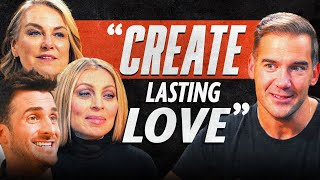
Therapist Esther Perel and relationship coach Matthew Hussey explain why modern partnerships demand constant negotiation. They outline three pillars for lasting love: calibrate expectations, diversify what your partner provides, and introduce novelty. Both warn against expecting one person to be friend, lover, intellectual equal, and co-parent all at once.
Chapters
For a long time we live, and we still, in many parts of the world, live in traditional societies where relationships are clearly codified. There are clear rules, there are roles, there are obligations, there's a tight structure from which you can't get out, but it tells you clearly who you are, where you belong, where you're rooted and what's expected of you.
Why are relationships seemingly so hard for so many people when it's the thing we need the most to feel alive, to feel happy and feel connected?
This is the million dollar question. You know, I'm a relationship therapist. For 35 plus years I work with people in their romantic relationships, family relationships, friendships, co founder, colleagues, co workers. So love and work, the two pillars of our life, as Freud said. And if I could just say, why is the simple feeling of loving or caring not because the entire human drama is really complex. The same way as nature is complex, so is human nature complex. And I spent my whole career studying what is changing in relationships. Are they more complicated today? Are they more painful today? Have our expectations changed? And that I have answers to. I don't have answers to why is it so, you know, but I do.
Is it more complicated now, relationships than 50 or 100 years ago?
Yes, absolutely.
Why is that?
Why? For a very simple reason, for a long time we live, and we still, in many parts of the world live in traditional societies where relationships are clearly codified. There are clear rules. There are rules, there are obligations, there's a tight structure from which you can't get out, but it tells you clearly who you are, where you belong, where you're rooted and what's expected of you. And you don't have too much questions about whose career matters more and who's going to wake up to feed the baby and who has a right to demand for sex. And everybody, every husband knows exactly what they can ask from their wife. And the wife knows exactly what she should not tell her husband. And children know their place and adults can all interact with. All of this was super regulated. You know exactly that on Sunday you go to visit your family and that you have to call your grandma and that and nobody. And you go to church or you go to any other religious institution where you go to pray, to be with the community, etc. And you know what? Nobody needed to explain to you why it's important. You just went because I said so. And because that's what you do. That's what we do and that's what we don't do. Because what will the neighbors say? And there Is a community that looks over you all the time. And the streets are narrow like that. And everybody knows what's going on in the neighbor's house right now. Your best friends could be breaking up and you didn't even see it coming. Nobody knows what goes on in the neighbor's house. That's where should we begin? Became, I think so powerful. It gave you back a sense of what actually goes on in other people's lives so that you're not alone wondering, am I the only one who's going through all of this? This tight structure of our society has moved into what we call today network societies. Network societies is not tight knots. It's loose ends. It's loose threads with commitment that can be revoked at any moment. That's why your women are constantly writing to you. I thought we had something and the next day he disappears. I thought we had to develop the sense of trust, you know, where is the care? Where is the loyalty? Where is the continuity? All things that now are not just set, fixed, they all have to be negotiated. Everything that was a rule is now a negotiation, a conversation. Who is going to go to work? Who is. Are we going to move you to the west coast or are you going to move with me to the east Coast? Are we going to have children? Are we ready to have children? How many children? Do we even want children? You know, on and on and on. Am I happy at work? Oh, I could do better. Should I stay a few more months? Should I leave? Should I, you know, is this what I really want to do? Is this who I really am?
Is this my passion?
Is this my passion? You know, this identity quest the whole time? Is this who I want to be? Is this? And all of these questions are rather new questions. Why? Because in the past or in other parts of the world today, you kind of know who you are. Seriously, you're the son of somebody. Even you're the son of somebody. It starts with that, Ben, you know, and you probably will even do what your father has done if you are a man. And maybe not too much of any of the outside the house, if you are a woman, or you may begin a charting course of working outside the house. And all of these things are very, very normative.
And now it's different.
We don't have any of that at this moment. We basically, I call it the identity economy. We spend our time trying to figure out who am I? We have an enormous industry of self help, you know, with this belief that we are self made, that we can have selfies. That we do self care. It's this self, self, self that is so focused, such the center of everything and so fragile. The frequent self has never been more fragile. We are constantly making sure that it doesn't get overwhelmed, that it doesn't get triggered, that it doesn't get violated, that it doesn't get shattered because it stands there alone like the little Dutchman with his finger trying to hold back the dike, you know, and that is the times I think we are in at this moment. And there, that's the waters I think you swim in.
Sure. Well, I think that's where suffering, inner suffering comes from on the surface is when you obsessively think about yourself, when you're, you're obsessively self centric, thinking all.
The time, trying to improve yourself and feeling not good enough.
Right.
I think it's the combination comparing. Now, I don't know that people didn't compare themselves when they all went to and stood on the steps of the church on a Sunday morning. I think communities, people have always compared themselves. But there was much, there was a different type of social control, the one that we have on social media today. Social control has always existed.
Yeah.
You know, so suffering is part of life, community and not being alone is what helps us with all our experiences. Definitely with suffering. I look at the disappointments of relationships and the struggles that we have. Why are they so challenging? What is the challenge? What can you do about it? When is it you who can do something? And when do you have to realize the limitations that what you will do will not change another necessarily when it does and when it doesn't. And how does this manifest at work and at home? You ask me how relationships have changed. I think we've never had more expectations of love and work than we do today. I think we expect today from love and work many things that we expected before from religion and from community. We want our relationships to be transformative, transcendent, meaningful, spiritual, purposeful, erotic, passionate. And we want it at home and we want it at work.
And we want it at work too.
Oh, because we want work to be purposeful today. We want work to, you know, to give me a sense of identity, of meaning, of self fulfillment, of development. I don't just want to go to work only for the paycheck, I need the paycheck. But I also want the paycheck to be meaningful to me. Work has become an identity economy. It's not just what am I going to do, it's who am I going to be? And it parallels. It parallels. What do we talk about at work? Transparency, belonging, authenticity, trust, psychological safety. I mean, when did the entire emotional vocabulary enter the workplace to such a degree that soft skills, what they used to be called, which are emotional and social skills, relational skills, which used to be seen as feminine skills and feminine skills, you can idealize them in principle, but disregard them in reality. And these soft skills have very quickly become the new heart skills. And that's why I'm working in the workplace. It's not because I have changed and I suddenly am interested in work, it's because work has changed and is suddenly interested in what I have been doing for decades.
I love this. I'm gonna ask you a question that may be hard to answer, maybe it's easy, but you've had, you've seen a lot of intimate relationships work and fail over 35 plus years, right?
Yeah.
How many of the relationships, what's the percentage of people in your mind who are in intimate long term relationships, marriages or not married, but together, are actually happy most of the time, thriving, beautiful. I'm sure there's challenges but like they're able to work through them with semi ease. How many relationships in your mind are super happy and thriving after decades of the changes of the times, society, work, family, all the dynamics that happen in life?
So I have two ways of answering yes. The first one is cultural. Your definition of happy and thriving and fulfilled is probably very different than many other cultures where being healthy, having enough to eat, having children, having grandchildren, having good jobs, being respected in the community is happy and thriving is happy and thriving. It's not about you and I are talking on the couch and I'm pouring my hearts at you and you are telling me I'm the best thing that's ever happened to you in your life and all of that. Okay, so we.
That's one version.
That's one version is you have got to look at the word happiness and thriving really in a cross cultural context because a lot of us, by the way, who have the new definition have parents who think about marriage and what is a happy marriage with the other definition. And I'm wondering, you know, that maybe we are so unhappy because we want so many other things that are maybe not part of marriage.
We have such high expectations.
We have super high expectations. We want everything. We want a partner to be an entire community. My best friend, my trusted confidant, my passionate lover, my intellectual equal, my co parent. And on top of it, I want with you to deal with all the physicutes of the everyday life and all of what we need to get to all of that. And then we should also be passionate, great lovers, fantastic travelers. Exactly. You know, and very few of us dancing every week. So Eli Finkel has the best answer for you on that.
Okay.
He's a researcher on marriage. And basically what he says is that the good relationships of today are better than the relationships of history, but they're very few. Because the good, what you call that happiness, is the top of the Olympus. It's climbing the mountain. And at the top of the mountain, the view is fantastic, but the air is also thinner. And not everybody can climb the mountain. The people who get to the top, their top is probably better than the tops of the past. Now, what is the top? It used to be that marriage was for survival. Then it became a romantic enterprise and it became what I call the service economy. From the production economy to the service economy, you want children, but no longer just eight, so you only want two. So sexuality becomes for pleasure and connection, so it becomes a service economy. It's no longer a production. And then from there you go into identity, which is what I want to become, the best version of myself. And you're going to help me do so. That's the identity story of marriage. And that goes up the Maslow ladder. Now, if I asked a question differently, I actually wanted to write that very article. About 10, 15 years ago, I set out to write a piece. What are creative couples? And do you know, because creative was the word I was interested in. Not so much happy, passionate, but creative, meaning not stable, not solid. But what is this thing creativity, the spark. And I went and I asked almost 100 people, do you know couples that inspire you? Do you know couples that you think have that spark still? And the frightening thing was that the majority of people could sometimes come up with one, maybe two, and that was it. You know, they knew people who were very good at renovations and people who were great parents together and people who were great business partners together. But that hole that you talk about, there were very few. And I thought, that is so sad, because here we are, we want something. I mean, if I say good business partners or business leaders, you would give me 10 people who you think inspire you to run a company or authors or musicians or we all have a long list who can say, what's your favorite musician? I mean, most of us have more than one. When it comes to intimate relationships, people have very few models. Now, maybe it is because what they want is so high that there is very few models Actually, and that's probably the challenge of intimate relationships today.
So how do we, how do we find, how do we create that in an intimate partner? Or is it setting a lower expectation for what we want so that we don't?
It's both. I think sometimes if you lower your expectations, you're much better off. No doubt. Calibrate. So back to Eli Finkel's research. Calibrating expectations is probably one of the most the three main things for he calls successful relationships.
Wow.
And calibrating doesn't mean you lower your expectations necessarily, but you also diversify them. You don't ask one person to give you what a whole village should actually give you.
Right. Okay, that was the first thing. What's the second? You said there's three things.
So one is the calibration of the expectation, two is the diversification. And three, which is the one that very much speaks to me is doing new things with your partner. That if you do the things that you enjoy, that's really nice, that's comfortable, that's cozy, that solidifies the friendship. But if you want to create intensity, it demands risk taking. Doing new things outside of your comfort zone a little bit more on the edge.
How often should we be doing new things with our intimate partner?
I think as often. I mean, look, the answer to this is very simple. Often enough, but not too often that you become chaotic and you disregulate. Right now you're asking me a systemic question. This is true for an individual, a relationship or a company. If you don't change or grow, you fossilize and you die. If you change too much, too fast, no stability. There's no stability. You go chaotic and you dysregulate. So how often it depends on where you are at in your life. Are you, the two of you, do you have kids, do you have little ones, do you have aging parents? Are you taking care of somebody? What else is going on here will tell you if this is a period where you need more stability or if this is a period where it's time to go and be curious and explore and discover and go into the world and launch.
Right. If you're a young 30 something female, I get this all the time from a lot of women who reach out to me who are ending relationships that were really stressful for them or they've been single for years and they're trying to figure out how do they find the right person or how do they create the right relationship for them that's going to be a long term partner. If you're a female in your young 30s, what should they be thinking about? Like, should they be focusing first on themselves, growing themselves, or what are the things they should be looking for in the right partner?
I just wrote my current blog, which is a little bit of a critique of this. Taking care of yourself first.
Okay. Yeah, yeah.
So because you, you learn to love yourself in the context of your relationships with others. You know this idea that you go first to work on yourself here and then you prepare this little nice little package and you bring it to relationships. That's. That is completely off, actually. It's interactive. You do you need a good amount of self awareness, but you also need to be in relationships because it's people who help you become more aware.
Practicing it, practicing it.
But other people let you see who you are. It's by being with others that you get to know who you are. Not just by sitting there alone and say, who am I? Who am I?
Right.
But this is a relational perspective on life and I will stand by that. Read the newsletter. I really poured myself into that one because I'm tired a little bit of this. No, what I will say to you, but I'm tired of the go fix yourself first, first and then go be in a relationship. Relationships help you to become who you are. That's what happens between children and their caregivers. The next thing is, instead of constantly thinking, who's the right person I'm going to find, why don't you ask yourself, who do you want to be? Who should the other one be? No, Maybe it's on occasion ask, who will I be as a partner? Who have I been till now in my relationships? How have I shown up? What is it that I do? Not just, you know, finding the right person. Now, what does it mean to find the right person? And there, I will say the simplest way of looking at it is this. There are many people you will love and they are not necessarily the same people that you will make a life with. Are you looking for a love story or are you looking for a life story?
That's good.
You understand.
Yeah.
There are many people have had love stories. This is a whole different story. I never thought for a minute I would live with these people. Take something else. To have a partner in life with whom you're going to go through the pains, the sufferings, the challenges, the, you know, the. All of that.
Can you have a life partner and still have a love story?
Of course. Of course you want the life partner to be a love story too, but the love stories per se, are not life stories. It's different ingredients. It's different values. There's some things that you don't need in order to have a beautiful love story with someone. It lives in its encapsulated version on its own. You're not thinking, can I do this with you? Can I get old with you? Can I take you to my parents? Do we share similar. It's about values, life, not just about feelings.
Here is a bonus relationship tip, thanks to our sponsor, Regain a couples therapy option offered by better help.
What's the question that's at your heart in terms of setting up intimate relationships for success?
I'm just trying to think about all the things that I did with Martha, my girlfriend, which is essentially the opposite of everything I've ever done before. But the thing that really made me say, oh, this is, this is my partner. Right. And I can really feel safe emotionally, spiritually, physically safe with this person. It's early on, I said, listen, I've made a lot of mistakes in my past relationships, and none of my past relationships have worked. But in each one of them, I wanted to do therapy when they weren't working.
Right.
And the partners that I chose never wanted to do therapy with me. Right. They were resistant. They, it took a year and a half, two years of, like, it not working and me saying, hey, can we do this and find support?
Yeah.
And they never wanted to do it. And I said, listen, this isn't really an ultimatum, but I want to feel emotionally safe. Would you be open to going to therapy in the beginning of the relationship? Not when things have problems in the future, but can we go together now?
Yeah.
She was like, 100%. That'd be amazing. I'm, I'm down for whatever. She was like, I've always wanted to do that too.
Yeah.
I felt like, okay. Just her acknowledging that.
Yeah.
And then us doing it has been a beautiful foundational process. You've heard us talk about better help online therapy. So we also want to share their couples therapy option. Regain visit regain.com greatness couples. It's a powerful tool for any relationship at any stage. What's the biggest mistake people find today when trying to find their love or find someone that they, you know, their soulmate?
God.
What's the biggest mistake? Is it being yourself?
It's, I, I, I think there's a something of a sense of entitlement that most of us have or that most people have when they're going out to date where they somehow feel like they're just owed the love of their life, that it shouldn't be difficult, that. That they don't have to do anything. That it's enough that they are just them. You know, it's the. You know, that there's. I don't know if you've ever seen Bridget Jones, but there's a. There's a line in Bridget Jones where. Forget his name. Colin Firth, I think it is. He's. He's looking at Bridget and he's. I think he says, I love exactly how you are. I love you. Like, no changes, nothing. I love you exactly how you are. And it. Sometimes we feel like we're owed that, and it kind of becomes an excuse again to grow not to. You know, I don't. Frankly, it doesn't really matter what you think you're owed in love. Yeah. No one cares.
I think it's the same thing with work. And, you know, people are entitled and they think they should get a job.
Yeah.
And so the biggest criticism I get all the time, which I'm happy with as a criticism of my advice, is, well, why do you need to do all of this stuff? Why can't you just, you know, go through life and. And, you know, when the time is right, you'll know. Why do you have to do all of these techniques? I'm happy with that criticism. If you. If you. If that's what you think, you're not my audience, because my audience are the same people that go to a business seminar to make more money. They're the same people that say, you know what? If I want to start a business, I might actually need to know what the hell I'm doing. It's not enough to have confidence in life. You have to have competence.
Yeah.
You have to actually know what you're doing. And that's what a lot of people don't know in their love lives. You. If you. For example, there's. There's something I come. I came to understand. I was. I remember once having a breakup. It was the most painful breakup I've ever had. I was really, really in a bad way over it. And a while later, I spoke to this. To this woman on the phone, and I had said to her on the. In a brave moment on the phone, I said, why did. Why did you want to break up? Because, by the way, you talked to.
The woman you were dating.
Yeah. The one that had later on the phone later, like a year or two later, it was less raw. I was feeling a little more.
How long was the relationship for?
A couple of years. Okay.
Wow.
And. And I was. I was pretty caught up about it. Now, the funny thing was, to make a long story short, she had actually done something I didn't like and that I thought was inappropriate and disrespectful. And I remember going to her the next day and saying, I think we need to break up during the relationship.
She did this.
Yeah.
Yeah. And she then said to me, okay, that was when I knew she was breaking up with me. It wasn't. It wasn't. You know when you think you're breaking up with them?
No, no, she was already doing it.
She was breaking up with me. And it was. What was so painful about it is that she was. She didn't mind. I was. I thought she might get upset. I thought, no, she didn't mind. And that was the most painful part about it. And I should even fake it.
You know, most women would have faked that.
They might.
I can't believe this. But they're really.
I know she looked like she was. Okay, this is a good decision. So I. So I remember a while later, we were on the phone and we became. We're friends today. We're very good friends, in fact. And I had said to her on the phone, why did we break up? I said, what. What was it for you that I wasn't doing? And I braced myself for the answer. She said, do you really want to know?
Honest feedback.
And I said, I literally thought to myself, wait, do I really want to know? And I said, I grit my teeth and I went, yeah, I want to know. She said, you were boring. And wow, it was so much worse than I thought it would be. Do you know what I mean? Like, not. Not just like, oh, well, you know, it was just. I was young and I was, you know, wanted to be free.
No, you were boring. It was really cutting.
And I. I remember resisting the urge to bite back. And I said, I wasn't boring. Exactly. I said, no, you're. Shut up, idiot. You asked the question, so now listen. So I said, why was I boring? She said, you. She said, when I first met you, you were the most ambitious person I'd ever met. And she said, I never met someone with such an ability to decide they want something and then get it. And she said, it was so sexy. She said, but as we went into our relationship, the more time went on, the more that was all you were. You were super ambitious. You knew how to get what you want, but you were so one dimensional, you know, it was all you did. Even in our free time, you were just. You're on the phone, you're on your laptop. You would talk about your business, you're always talking shop. There was never anything else you had to talk about. We didn't do anything spontaneous. We never went and had adventures. It was just all one track. And she said it got boring and said, wow, she was right. She was right. There was nothing I could argue with. And I realized something in that moment. The thing that makes that one quality can make you really attractive, right? But it won't keep someone, can make.
You get the person, right.
It can make you sexy, it can make you intriguing, mysterious, right? But it can even for a time, make someone worship or idolize you. One quality. But one quality will not hold someone. Because the reality was there was a flip side to ambition which would have made it eminently more attractive. And there are a few, right. If you pair ambition, say with an ability to enjoy life, now that person is really sexy. Sexy. You, you, you combine ambition with a sense of spontaneity.
For example, adventure.
Very, very sexy.
Yes.
Ambition on its own is, when you look at it from afar, very, very attractive. You go, women will say, I want an ambitious man.
I like that.
But when they get up close, if it's only one side to a coin, it quickly becomes unattractive. Someone I'm a big fan of or unfortunately has passed. But Christopher Hitchens, he, he once said about love that the challenges in not allowing your strengths to negate themselves. And that's very powerful statement because my ambition was my greatest strength. That also had the ability to be the thing that crippled me. Because what happens is when you get good at something and you get validation.
From it, keep doing it and get.
Better at it, and it becomes, if you're not careful, a muscle that you, that you train to the point of mutation and then every other part of you is, is, is not working, is, has atrophied.
Yeah.
So now you have a complete imbalance. It's like, you know, I remember working out at the gym once in my trainer, I was, I was doing pull ups and was trying to work out my back. My back was fine, I could keep going. And then all of a sudden my, my forearms gave up while I was trying to pull myself up. And I said, this is so annoying. We're trying to work my back, but my four and my back's fine, but my forearms have given up.
Right.
He said, you're only as strong as your weakest link. If you're, if your forearms aren't, aren't there, you're not going to be able to train your back as well as you could. Yeah, so. So here's the point about this, which I find very interesting about dating. To your point of what's the biggest mistake people make, apart from, of course, the entitlement. It's over reliance on a key strength that they have come to rely on as their source of validation. Success. Confidence.
Right.
Over reliance on that I had come to over rely on essentially being ahead of the curve for my age. Yeah, that was like the thing that I was always based my confidence on was I am way ahead of the curve for people my age.
My business is going great.
Correct. The people I grew up with in my age group are not where I.
Am, just still living at home.
Guess what? That alone is boring. Yeah, it's boring. And it doesn't make an interesting, rounded, sexy person.
The.
But when you combine it with something else, it becomes what I call unique pairing. It's a bit like if I. If I wanted to really get a woman attracted tonight, not me, but like send a guy out to get a woman attracted, I could literally, if he went in and he was a little cocky and teasing, but in the right way. Not an arrogant obnoxious, but just he knew how to. He knew how to play with her. And then a couple of hours in later, you know, maybe it's getting late.
He comes out of the restroom, and.
After being teasing and playful and silly, he says, you know what? It's getting late. I called you a car. I don't want you walking outside. And he says, I have to go as well. I have to get up early. He takes her outside, he gives her a little kiss. He says, all jokes aside, I've had the best night with you tonight. I'll call you later this week.
Mm.
Puts her in the car, car drives away. That woman will be going, oh, crap, I like this guy. Now, the reason wasn't because he was a gentleman and it wasn't because he was cocky and teasing. It was because he was both. Yeah, it's the.
And if he does just one thing, it's not interesting enough because you can.
Replace the cocky guy like that. Women know that. Yes, they can go out tonight and meet a cocky guy in Hollywood any night of the week. They can go out the next. They don't even have to go out the next night. They can turn to their left and meet another one straight away. By the way, they. Even though people complain about chivalry, is dead. You can go out and meet a gentleman. Lots of nice guys.
That's all they are. Right.
Incredibly boring women will never. They don't hold a woman.
Right.
So. But now you find, like, what seems to be a good man but with an edge. That's a unique pairing.
Yes.
And that's someone that becomes not an attraction, but an addiction. Oh, and there's a. And there's a big, big difference. So I believe that we will actually. I believe these pairings already exist within us. But we've over trained certain muscles. We've over trained certain qualities that we've gotten used to as habit.
Yeah.
For some people, it's being funny. For other people is being intellectual. And they always. They're the person that knows everything about everything. They've read every book. They can always quote something so and so for others, it's being seductive. That's the thing they got really good at. So they're really good at, you know, getting someone into bed or getting someone sexually attracted, but they're never the person you want to eat pizza with the next day, you know, so it's like, it's finding those combinations that make you go, oh, my God. The person I was with last night, they were this. And they were. This is the. And the. And is where.
I wonder what else they could do. Exactly.
And you. And by the way, that's what makes it so, so hard. I. I say this to everybody. If you want to know why you found it so hard to get over a certain ex, look for the unique pairing.
Because they had multiple things. There was.
There was some unique pairing that made you feel like they were difficult to replace.
Oh, and.
And that's what scares us. The more unique pairings you have, the more you become a rare bird in the dating marketplace.
Right, Right. And.
And when you become rare, people get really terrified of losing you. And that's always the case. Whenever you think of someone you've lost and you think, like, your heart aches for having lost them for, like, months and months. Yeah. It's because you go. It's not because you go, they were good in bed. It's because you go, they were good in bed. And they made me laugh. Like, I never find that nice to my parents, and I took them home, and she was a sweetheart to my. Like, there's those moments where you go, God, I can't find this person again. And that terrifies you. So again, to be more positive about it, be the person that has the unique pairings that other people are terrified of losing.
Yeah. You know, I like this because I feel like. Well, I don't feel like. But the statistics show that the divorce rate is up higher than ever right now. Right. Isn't it something like 50%? I don't know.
I hear these. No, I hear 50% banded around how accurate it is, I don't know.
But it seems like people are getting married multiple times and they're easy to get out of relationships. They're, you know, and I'll speak for myself, and I have a lot of fears about long term commitments. You know, most of my relationships are a year, maybe longer, but usually about a year. And then I'm like either bored or I get scared because I have my own walls and I still get to grow and learn for sure. I'm curious, why do you think so many people bail in relationships? And why do you think so many people are getting divorced more than ever now?
Oh, man, that's a big question. I, well, there are, I think there are a number of things I can have a stab at this. I, I think firstly, there is less of a stigma now than there has ever been about divorce.
It's okay now. Right?
Right. No, you know, and certainly there are parts of the world where it's not and there are certain religions and cultures where it's not. But, but certainly less than ever.
Sure. Let's speak in America at least.
Right.
There's less of a stigma.
Yeah.
About divorce. We don't feel like complete failures in the same way that we might once.
Have or we wouldn't have.
There would have been a time where we would have been outcast from society for it. So there's that. I think there's also a great sense of entitlement these days where people feel like they're owed and you know, marriage is, you've met the right person, so it's supposed to all feel great. And when it doesn't feel great and when it's not all working, there must be something wrong with this person. Not with me. Not with the amount of effort I'm investing into this relationship. There must be something wrong with this person. Ah, it turns out they're not the one after all. I thought they were, but they're not. The search continues. So, so the entitlement has people believing that it shouldn't be effort. And, and that's a very dangerous way to think of relationships. It's very. If you really want to see who someone is in their relationship, talk to them about sex and passion and desire in their long term relationship and you'll get some very heated answers because some people will, will, will say it's absolutely paramount we, you know, you have to maintain that passion. You have to find new ways to excite each other. With me and my partner, we're always searching, we're always exploring each other. We're always trying to figure out, like, what's going to turn you on tomorrow. What's that? Like, how do I, how do I do something that's. That you didn't predict, or how do I get you to know me a little less so that you get desire again, you know, whatever it is. Other people, and I've had hosts on tv get very, very uptight and upset over this issue. And it's usually they're overplaying their hand. When they do, they'll say, well, Matt, it's different when you're in a marriage, when you're, when you have kids, when you're in those situations, it's different, right? You, you don't, you, you can't just think of it like that. You don't think other things become more important. And, and I always know who they.
Are in their relationship when those things happen.
Because it, People, I think, don't go into relationships with a healthy view of what is required over the long term.
And what is required.
Well, there's a, there's a, there's a woman who is a great authority on this called Esther Perel, and she talks about the difference between love and desire. And I'm a big fan of her work, and I think she articulates it very, very well that in relationships you have to have both love and desire. Love isn't enough. Love is the thing that makes me want to get close to you when I, when I, when I feel things for you. I want to know your mind. I want to know everything there is to know about you. I want to know what your thoughts, thinking. I want to know what you're doing tonight. I want to know who your friends are. I want to become friends with them. I want to get close to your mom. I want, like it's all these things. That's love, the desire to almost become merged. But desire exists in the space between two people. So you feel desire when there's a void and when there's some mystery and when you're still getting to know someone. So desire, ironically, is the thing that ends up creating love. Because desire is like, I want to get close to you because I don't have you. And then when I get close, we feel feelings of love, but not desire.
Now, before the interview continues, if you feel like you're not living your most authentic life, not leaning into your purpose and not living the life that your future self would be extremely proud of. I've written a new book called the Greatness Mindset and I think you're going to love this. Through a powerful story, stories, science backed strategies and step by step guidance, the Greatness Mindset will help you overcome all the different challenges in your life to design the life of your dreams and then turn it into your reality. Make sure to click the link below in the description to get your copy today. Okay, let's get back to this video. What do you think of the three or five components to a foundation of a relationship that has the potential to really thrive long term committed for decades. What are like it needs to have these three or these five things. Otherwise it's going to be really challenging to be to sustain this type of love and joy and happiness.
I mean a couple of simple ones I guess are I need to show up for my partner in ways that they need me to, not just ways that are comfortable to me. We, in other words, pay attention to what your partner actually needs. Because it's really easy to say, you know, I'm gonna bring them lunch every day. That's, that's like I, I'm a really good cook and I'm really, you know, I want to slave away every morning to bring them lunch every day because, you know, that's me giving.
Maybe they don't care.
Bring lunch every day. Like, maybe they don't care. Maybe what would mean the most to them is you, them getting home and you really being interested in their day.
Mm.
Do you think love languages is an important part of this where it's like understanding someone's love language and giving them their top priorities?
I think it's, I think that it's an interesting framework and it's been for a lot of people, a very successful framework. I think any framework that just allows you to kind of, you know, create a little a structure for things that gives you some simplicity around it is, can be valuable.
Sure.
You know, it doesn't mean it's the only framework you can apply, but it's a valuable model to work from.
So showing up in ways that.
Showing up in ways. Yeah. Not what do I want to give.
But what do they actually need.
And I think that's a lot, that's a lot of conflict in relationships because. And I think you need to understand, do I want to do something that's uncomfortable every day, that it's not foreign to me or that's foreign to me or do I Want to find a partner that enjoys the things that I like to give.
Well, that's, that's, that's an interesting question. You know, any relationship is going to be a bit of both, but sometimes it works even without, like that's a kind of compatibility issue. But I think it even works outside of that in day to day stuff because you might say the thing I want to give to my partner is an awesome, you know, night together. But maybe what they need is an awesome night with their friends. And the, maybe the most loving thing you can do is say, hey, I know you haven't seen this person in a while, you should go and see them. I know that relationship is important to you. Mm, you should go and hang out with your mum tonight. Or you know, recognizing not what's easy for me to give, but what might be less comfortable for me to give, but is actually what would make mean the world to them. And, and I think if you really want to make yourself irreplaceable to someone, it's recognizing that because no one else is going to do that for them. I mean, you know, I mean like it's they some maybe, but it's really rare to find someone who, who is willing to do that for you.
Okay.
So that's number one thing is to work on yourself.
Yep.
And to say I'm responsible for me, my partner isn't responsible all for me. I need to do the work to be the most loving, confident person I can be in this world. One of those fulfilled, has their own purpose, has things that drive them. That to me is very, very important.
If what's the first thing people should do to do work on themselves because you throw a few things out there.
But what's like, I mean firstly, do you have maybe here's an interesting question you can ask yourself. If I had 10 hours free right now, what would I do with them?
Interesting.
If you can't give a good answer to that question, you might already be describing one of the weaknesses of your.
Relationship and been binge watching a series is not the best use of your time.
It's, you know that if the answer is, oh my God, well, I have my purpose, the thing I love getting stuck into. Or it doesn't even have to be some grand purpose. Not everyone has found like their life's calling. But it could be, I really want to learn this language or I really want to see this friend or I really want to go and you know, whatever it is, read this book or learn this thing, take care of my health. Yeah, I want to. I can't wait to get to the gym. If you should be able to answer the question of my partner cancelled on me today, what would I do with that day now? And if you can't that, then you begin to describe the person who's sitting there waiting for their partner to text them, waiting for their partner to make them feel good enough.
That's not attractive.
It's not. And it's not fair to our partners.
It's a lot of pressure.
It's a lot of pressure. And. And by the way, people put a lot of pressure on their partners by expecting their partner to put a band Aid on all sorts of things for them. You know, if they're feeling like. There's a lot of rhetoric about vulnerability right now. Now, I think vulnerability is huge. I think the work that people like Brene Brown are doing and so on is huge. It's massively important. Vulnerability is absolutely an act of courage and we should encourage it more. Both sexes, all the time. But his vulnerability is. Something's making me insecure. And I'm going to share it with you because you're my partner and I love you and I tell you things, right.
But you don't want to do that every day.
Vulnerability.
If an hour from now I tell you I'm feeling insecure again, and then an hour from now that thing's affecting me again and this month, tonight. Because now, in a way, what we're doing is instead of sharing, we're dumping. I'm asking you now to fix it for me, to put a band Aid on it for me.
Feel better.
Yeah, of course. It's part of our partner. A loving partner will support you and will do everything in their power to make you feel loved and to make you feel safe and to make you feel secure. And it's absolutely true that sometimes what we're feeling is insecurity is because our partner isn't doing their job in those things. They're not building, they're not building. They're doing things that are proactively making us feel insecure. There's minor betrayals, minor neglects, all of that. But sometimes we have to say, okay, what part of my. What part of this am I responsible for? And it's my. It's my partner's responsibility. It's our responsibility in life together to share, to share the load, to work towards things together. But it's not your job to carry the load for me, to carry my problems, to put the band aid on everything day.
I need to maybe once In a blue moon.
Yeah, of course. Of course. And we're all going to do that. We're all going to have, like, we're going to have days, weeks, times where we're going through something really serious and our partner's job is to show up.
Yeah.
You know, but a friend of mine who's kind of blunt said to me, some days or weeks you get to be needy and difficult and high maintenance and boring and, you know, insecure. And then you don't. And I thought, yeah, like, we get to be those things for a time until we don't. Until it gets too much for somebody else. Because we need to be. At the very least, we need to show our partner we're committed to our own growth. So the, you know, the first one, what did we have? Show up in ways they need, not just ways you want to show up. Up. The second one's work on yourself. I think, I guess the third one it. To me, teamwork is everything. Like, being a genuine team is huge. Really looking at each other as teammates as opposed to, you're there to meet my needs or I'm competing with you in some way, man.
I've done that before.
Like, we're an actual team. And I saw, you know, one of the things I loved most about Chris Rock's recent stand up tambourine.
I'm a senior.
Such a genius name. The whole concept is, you know, about the idea that he couldn't in his last marriage play the tambourine. He couldn't play the backup instrument.
Right, right.
And. And I thought it was such a great, great metaphor because in a good relationship, in a really genuinely mutually supportive relationship, some days you play tambourine, some days you're their teammate. You can't, you know, the way he says it, her success is your success and vice versa. You're in this together, you. And some days that person's the lead and you're on tambourine. And a lot of people have never learned how to play tambourine. There's the other thing. I don't remember where it comes from, but every relationship has a flower and a gardener.
Right.
Most people don't want to be in a relationship where they're always the gardener, never the flower. Right.
Blooming all the time.
Yes. And sometimes you have to be the gardener no matter how long you've played the flower.
Right, right.
You and I have played flowers a lot in our lives. Right. We've been used to being a certain, you know, having a leader role and having these kind of big Lives and big worlds and whatever. And then you go to a relationship and the relationship doesn't give a fuck. You know what I mean? No.
Yeah.
I don't care. You know that you're the flower out there in the world. Sometimes in our relationship, you have to be the gardener. Sometimes you got to play tambourine. Even if to everyone else, you are the constant flower. Movie reference, constant gardener. Well, you can't. You can't be the constant flower.
Right?
You can't. You might be in your business in.
Some way, but the relationship is different.
You can't. Now you're coming as two equals. And so it's. So much of. It's checking your own damn ego and being like, I'm in this to be with you as a teammate, not this or this. This.
When you know you found your match for life or your potential match for life, or you think this could be the match.
By the way, these are much harder.
Questions than the first interview.
Is it when you see these three things after a period of time and you feel convinced that the bricks are being laid equally in a certain way?
Yeah.
I'm ready to be committed. All in.
I think there are four stages to a relationship.
Stage one.
Stage one is admiration. That's when you don't have a relationship.
With this person you admire. Like, I like you, and I look.
At you and I'm like, this person's hot. They have something about them. I like their qualities. I like their energy.
They have a good potential.
Yeah.
Okay.
And by the way, that doesn't even mean they have good potential for you right now. It just means this is a person of high potential in some way.
You admire them. Yeah.
The second stage is connection. And you could, I think, in that, in a sense, connection and chemistry are both relevant to this stage because you have this person where there's a mutual, like, I like things about you, you like things about me. I think you're attractive. You think I'm attractive. We share some common ideas, common grounds in life, our outlook, whatever.
Beliefs.
Yeah, yeah. That could be found on a great date.
Right.
Doesn't really mean much. Still, this is the plot of Land.
Yeah. You can have great sex. There'd be chemistry. You can make out all night.
None of this means you're going to have a great relationship.
Okay.
The third stage is commitment that says, I want to do this with you. I am committed to building with you, and you are committed to building with me. Right. That's a really great stage to be at. It's very important. Right. It's you can't have a relationship without that. Any relationship without that, or whether that's one sided is unrequired love by definition. And there are a ton of people out there right now who say I'm just, you know, I created a program recently called Attraction to Commitment, which literally dealt with why people keep getting stuck in limbo, why they keep getting stuck in the casual phases, and it never gets to a relationship. One of the things that fascinates me is how long we stay with something that's just casual, that isn't a real relationship, on the hope that it will change. Unrequired love, you know, certainly. Unrequited commitment.
Yeah.
It's a nice time when you're like 23. Right, right.
That's stage three. Stage four is compatibility, man. And the hard thing I think for a lot of people is I used to question this one myself. Like if you know the idea love conquers all.
Right.
It doesn't. It does not.
I wish. I like it. I like that phrase.
It's an amazing.
I love the phrase. I love the sentiment of it.
Amazing bumper sticker, you know, and there's.
Nothing, you know, what is more powerful in the world than love.
And all you need is love. Yeah.
Apparently. Apparently not. We need a little more.
It.
You can have love without commitment, right. And you can have, you can have commitment without compatibility.
Interesting.
And this is where things get. I used to think, well, maybe commitment is enough and maybe issues with compatibility can be overcome as long as two people are truly committed to each other. I don't believe that anymore. I think that it goes beyond commitment. To truly last, you have to have two people who are really compatible. Like, okay, let's say we got commitment. Two people want to be together, they.
Admire each other, they have chemistry.
Right.
They say, I'm committed to you.
But one person's sex drive is here and the other ones is here.
Not compatible.
This is going to be difficult.
One person likes to spend a lot of money. Another person wants to save all the money. Right. One person believes in a certain religion. Another person doesn't believe in that.
One person, you know, wants to spend five days a week together. The other person is happy with one night a week together.
One person wants their family to move in. The other person wants their space. Right.
These are serious, serious issues that often end relationships. And so to me you want to say, what? How do you know when you found your match?
All four.
Four stages. I admire this person. We have connection and chemistry. We have genuine mutual commitment. And we're compatible.
It's the presence to the quality of time. And I'm sure the more time you have, better, but it's got to be quality time. From my personal experience, are you finding that that's what I guess women and men want as well?
When you're coaching people, oh, these issues go both ways. You know, men. Men can have the same insecurities as. As women can in these situations. And it comes down to which partner might feel busier, which one has got more to do right now. It could be like if you're. It's a tough situation. If one person in a relationship right now and they're living under the same roof feels like they've got tons to do and tons of purpose and tons, you know, like, I can lose myself in my mission and what I'm doing right now and their partner and be fine.
And your partner has lost the job or lost this or.
Right. Or. I haven't figured out what my thing is yet. I don't know what. You know, you have your mission. I don't know what, like, what I'm saying.
I do. I'm waiting for you to come home every day.
Yeah, right. Yeah. I'm sitting here picking random hobbies out of thin air because I feel like everyone keeps telling me now's the time to learn a hobby. So I'm like, should I learn guitar?
Right. Or worse. I'm on social media watching everyone else's perfect relationship and everyone else thriving, and I feel less than.
Yeah, exactly. And that, by the way, that's really. We've got to be really careful of that right now. We're used to. We're used to comparing ourselves to others on social media through the lens of, you know, we're seeing their highlight reel of their. Of their life. You know, oh, they're traveling now. Look at them sipping a beach on the cocktail. Look at them doing this skydive. Look at. We're seeing the highlight reel of their life. I think now we're seeing the highlight reel of people's emotions. So in quarantine, people don't have that life. Right. We've not got all of these activities that we could be doing, but we're all of a sudden seeing that moment where someone's just finished their yoga workout and they post and they're like, you know, I got this quarantine. Just did my yoga, blah, blah, blah. And you're like, exactly, But. Exactly. But you're not seeing, like, Matthew Hussey in the moment where he's like, super grumpy and like, irritable and just like today is not. This is not my day and I'm not feeling it today. And I don't want to make a video today. And I've made a point of saying things like that out loud because I think it's important that people get the full spectrum of what other people are going through, because guess what, Other people are going to dark places. Other people are having their freakouts. Other people are having those moments of depression or deep melancholy. People are having those. But it's not necessarily the things that they're posting about. Especially in the worlds that we operate in, Louis, where there's a hell of a lot of people wanting to show how well they're doing under circumstances, how positive they're being and so on.
Yeah. What would. What advice would you give to people that are feeling really lonely because they just went through a breakup? Whether it be the end of the year or month ago or maybe, you know, they just went through a breakup this week in the middle of quarantine, and they're lonely, they're alone, they're emotionally hurt, and they're needing that kind of quick connection again. They're needing. They might go back to the person because they're feeling weak and they miss that feeling of connection or love or intimacy, but they know it's not the right fit for them long term. They know, but this is in a heightened state of vulnerability for them that they go back quicker. What advice do you have to someone like that? Very, very hard.
I have so much. Firstly, a breakup, even under normal circumstances, is a tremendously difficult thing. True, true. I shouldn't say a breakup, because there are many joyous breakups we go through. But truly, when you experience true heartbreak, it is one of the most devastating feelings in the world.
Devastating.
You're a zombie.
You're dead inside.
It's. And. And it's worse than you're dead inside. You act dead to everybody else inside. You feel like you're dying on loop all day.
You can't get out of it. Yeah, yeah.
In a breakup. And this is as true now. Now is no different. People need to. People need to recognize that now is just a difficult breakup on steroids. Right. If you're going through heartbreak right now, you're just doing it on steroids. But it's just the same emotions. So don't fret that. Oh, my God, why did it have to happen now when this was going on? That's. You're giving it a big story. It's still just the same emotions of heartbreak. You're just experiencing them in a very, in a, in a heightened way.
And, you know, and you don't have the ability to rebound physically with that person or a new person, which we.
Could see as a gift.
Right.
Why is that a gift?
Because there are plenty of things, as my brother Stephen Hussey, a wonderful writer for, for our website, as he says, in a breakup, there are two methods of recovery. There's the athlete recovery method and there's the hangover recovery method. You're gonna like this, Louis.
Tell me. I love it.
You haven't heard it before, but you're gonna love it because the analogy is perfect for you.
I love it.
The hangover recovery method. You think about, how do people deal with a hangover? They wake up, they eat greasy foods because they're like, oh, I just need something to make me feel better. They watch crap TV, they lay on the sofa, they wake up at 2pm yeah. All the blinds, don't let any light in. Eat ice cream. Essentially, they do all of these things that are temporary, kind of pleasure and comfort, but ultimately are not nutritional and are not the things that are needed to get, you know what's needed. Massive amounts of hydration, water. Go take a walk, sunshine. Right.
Exercise.
Yeah. Get the metabolism moving again. Get that like, crap out of your system. Like, that's all the stuff that's needed in that moment. But it's can feel harder to do the things that are actually going to get you out of it. Now look at the way an athlete recovers in an injury. Right? You know better than anybody. You, you don't. Firstly, you still train whatever you can train. You don't ignore everything simply because your shoulders injured. You do what you can.
Yeah.
You do some abs, you do some legs, you do something else.
Right.
Let me keep a hand swimming. Yeah, exactly. You eat well, you get tons of rest, as much rest as you possibly can. You do rehab where necessary, but you don't do so much that it injures what you're doing.
Yeah.
You reset your vision. You visualize what you want and start mentally rehearsing the reps, the, the repetition, the action steps. You mental rehearse you. You know all those things, Right?
So now if you apply that to a breakup, the hangover recovery method is let's go and sleep with other people quickly. Just to get my fix. Just to feel connected, just to feel like I'm worth something. Just to feel like I'm still sexy. Let me go out and drink party. Let me eat Ice cream, bad food.
Keep going to the, get on Tinder and all the apps or not.
Or just hide away under the covers, don't engage life, don't. It could be either or. But they're all hangover recovery methods because they don't make you feel better long term, they're just short term pleasure. The athlete recovery method in a breakup is you do the same as an athlete. You say, okay, my heart might be injured right now, right? My heart's offline, so to speak, but I still have everything else. So let me make sure the rest of my life is firing on all cylinders right now. Let me do everything, let me be kind to myself. Let's maybe like put dating aside for the moment or put that. But let me go and make platonic connections. Let me go and build my relationships with my friends and family. Let me eat well, let me sleep well, let me train. Let me go and do all of these things that, that train every other muscle in my life so that when my heart comes back online, every other part of me is ready to go. So you've got one problem right now. You're in pain, right? But if that pain causes you to let every other part of your life go down spiral, now you've got six problems. So that's the part we want to avoid.
Only have one problem, not six.
And you know, look, all of this is easy to say and when you're heartbroken, you just feel like you feel so bad and so sick in your stomach and so nauseated all the time that you even hearing this sounds like a lot of work. And what I would say to people is a really manageable step is there's that quote, emotions are weather. Let them come and go, right? And that's true. Emotions are weather. I used to think that emotions were really important. A friend of mine, Jameson Jordan, who, you know, who shoots my videos, he would always tell me whenever I would be in a real funk, a bad place, whatever. He, I would talk to him about it. He was one of the closest people to me. And I always remember he used to say to me like, I just think you, like think your emotions are more important than I feel like mine are.
You put more emphasis on.
Yeah, you, you like think they're really important.
You think your emotions are you.
Yeah, he would be like you, you just seem to think, like give more weight to your feelings than I do. And I, at the time I didn't quite hear that. And over time I've come to understand what that means. And of course a lot of this is taught in mindfulness training, meditation, and so on. But that idea that just because you have a thought, just because you have an emotion, it doesn't make it important. And in a heartbreak, just because you miss your partner, that doesn't actually make that feeling that important. Just because you feel hurt and you feel like, oh, my God, I'll never find anyone like that again. That's just a thought and an emotion that's attached to that thought, and it doesn't make it that important. And so when I was going through terrible times, when I've gone through heartbreak, one of the key lessons I learned was, okay, there's really cloudy skies right now. That's the weather, right? And it feels like that weather will never pass. But why would begin to pay attention to is. Would realize that I would realize, oh, for the last 20 minutes, I didn't think about my breakup.
Huh.
Small wins.
I'd be like, yeah. And often you only notice it after the fact, because when you're in it, you're just. It could be that you're in a flow state with your work and that's taken you out of it. It could be that you're having a funny moment with a friend. It could be that you lost yourself in a movie. It could be you just had a conversation with your brother, your mother, whoever.
A workout. Yeah.
A few minutes could. Even if it's just five, for five minutes, you noticed I felt better. And maybe I didn't feel amazing, but I just. For five minutes, I didn't feel like I was dying.
I didn't feel suffering.
And when that happens, here's what I would say to myself. I'd be like, well, that's interesting. Notice those things as interesting. And this applies not just to heartbreak, but to depression, to anxiety, to all sorts of different emotions that are undesirable. When you notice that for five minutes of your day, you didn't feel that thing, because what happened? Here's what happens. We have our, like, whatever is our home, whether it's depression, heartbreak, anxiety, sadness. We have our home that we go to. Yeah, 90% of our day. And when we feel that, we focus on it so intensely that it becomes very difficult to get out of it, because we are focused on that 90% the whole time. And what we don't acknowledge is this interesting window in the day where we didn't feel that. And that window has some clues. There's some truth often in that window, that 5% of the day where you felt all right. There's some truth There, that's waiting to be discovered, enlarged, held under a microscope. And what I would do is when I would feel better for five minutes, I'd go, well, okay, so what did that. If nothing else, what did that prove? It proved that it's possible for me to feel better. I had a reference point for the fact that I could feel better. And then you go, well, if I felt better for five minutes, if I even felt better for a minute, let's make more of those. What was happening? How did I do it? I might not be able to get my day to the point where I even feel good for a quarter of the day right now. Right. That might be an unrealistic goal. But if I had one good minute or one good hour, let me make the new goal not to be great or to be happy or to get over this. Just make more of those.
Yeah. And multiply those moments. Multiply Those minutes into 5 and 10 and 20 minutes.
Manageable task. Suddenly getting over your heartbreak. You need to get over it, dude. You know, blah, blah. It's not. This isn't. That's not practical advice for someone who's going through hell, but for someone who realizes that just for five minutes, the clouds parted and they go, oh, my God.
It's like.
It's like.
It's like one of my favorite movies, swingers, where Mikey is always thinking about his ex and who. Who he left, and then now she won't come back to him six months ago or whatever. And he's constantly talking about it, obsessing about it, suffering in pain. And then he finally learns to just put his attention somewhere else for a few minutes and then put it for an hour. And then he goes on a date with someone, and then he forgot he thought about her for a day, and he was like, wow, can you. I didn't talk about it all today.
You know, and here's what's so important about that, because there's a. What's really interesting about that movie is he begins to do these things that slowly start to create more moments of good weather in his day.
He goes salsa dancing. He does this. He does activities. Yeah, right.
But what we have to be aware of, you have to respect whatever is the drug, whether it's your ex, whether it's genuinely a drug or booze, or whether it's a situation that makes you feel bad or whatever. Often when we start to create more good weather, we start to take for granted that the bad weather can't appear. Now it's like, oh, I'm past It.
Yeah, it could come back. A storm could come raging through again.
Someone, your, your ex could text you and if you text back and start engaging, knowing, knowing what happens that you're, when you start in a conversation with that person again, you're going to spiral. You're not respecting the drug you got. You might have been clean for months or years, but you got to respect the drug because don't is when you, when you get cocky and you don't remember that there are rituals and routines and, and practices daily that got you to this good state. You are liable to fall back into that trap because you're, because you're blind. Don't be blind. Don't be afraid. It's not about fear. You're not fearful, you're not worried. Because you know, if I got, if I didn't die at the height of my breakups pain, if I didn't die on day two, I'm not going to die on day 22 or day 52 or day 1002. If I could deal with this at the height of its pain, I'm not going to die now. So I'm not going to be afraid of this. But I'm also going to respect it and know that there are certain things that make me feel better in my day and I have to consciously put them into my day because the moment I take for granted that I just feel better, that's when that thing starts creeping.
Exactly. I'm laughing so hard because we, we have a mutual friend that we've been helping, I won't say his name, but we've been helping navigate certain things in their, you know, their relationship. And you know, it just reminded me of that, of replying to people when they text you when you think you're good. Hey, don't go back into that. Make sure you stay true to what you want, what you're committed to by the athlete mindset of envisioning something that you want for your future and envisioning the right relationship or the better match or you know, how you want to be feeling and all those things.
And by the way, and just remember, and this is true not just for people going through heartbreak right now, but people going through solitude right now. Because, because there's a lot of people who right now are just in solitude. They're not necessarily heartbroken, but they are experiencing a deep kind of existential loneliness. And when we're on our own for long periods of time, many people, not everyone, but many people and perhaps even most have more of a tendency to Go to dark places with their thoughts. And there's a lot of people that are there that are listening to us right now that certainly can't that you know the idea some people might be in a hell with someone in the house, but these people in solitude are looking at that going, I'll take that right now over the hell I'm in of being constantly on my own and going out of my mind. I would say to people that the same weather rule applies that you might feel really kind of dark and lonely at points in your day, but there are other points in your day where you don't notice the good weather and pay attention to the good weather. And what made you feel good. Did you just have a conversation with what one of your siblings? Did you have a little group chat with a bunch of friends? Did you watch a life affirming movie? Did you read a book that made you feel connected to an author from some period in time maybe who was also alone and writing about it? And by reading that author you go, oh my God, I feel, you know, someone else is having the same experience as me. I think that's really important is if you're in solitude right now on your own, you connect to other people who have experienced that. Because some of the greatest figures of all time have spent inordinate amounts of time alone, have experienced the darkness that you're experiencing and you're in good company. You may feel you're alone and oh man, we have this solipsist attitude that only one who's alone, we know it's not rationally true, we know it's not logically true, but we feel it on an emotional level. Those are moments where you have to remind yourself I'm in good company. Not just today, but through throughout time, key figures, brilliant people, people that are far more brilliant than will ever be, have experienced the deepest, darkest existential loneliness. And in a way there is something slightly romantic about that. I always love when I read an author and I hear that author who's brilliant and who I love and I was just reading Bertrand Russell and you. And then you hear about something that someone suffers with or something that they've gone through and you go, oh thank God, this person that I love also, you know, There's that element of it that's really, really powerful. And so I think that you can adopt. Yes, accept that it's difficult. It is difficult. Don't look at other people and think they're handling it so well. It is difficult. I'd call my dad at times when business is hard and business was mess, messy and like, chaotic and I screwed up, or I'd lost money or I'd done something, I'd call my dad and I'd be like, you know, my dad's one of my big mentors. And I'd call him and say, dad, like, I'm just so stressed. I'm so overwhelmed. This is happening, this is going wrong. I got 10 people asking me for this. And he'd say, matt, part of the problem is you don't think that other people's businesses are just as messy. It's almost like you think that you're struggling with all these things other people aren't. He said, matt, I've been in business for, you know, 40 years. Business is messy. That is the nature of it. It is messy. It is chaotic. There are always things going wrong as well as things going right.
Right.
That's the nature. That's how it is supposed to be. And when I, when he would say that to me, I would. It. It didn't take my problems away. But what it made me realize is, oh, it's all right. It's not. This is normal. I'm on top of my problems. I'm beating myself up and taking it personally that I'm doing a horrible job.
Yeah. It's kind of like your dad and Jameson are saying the same thing. Your. Your feelings are more important. Your mess is more important.
It's.
Yeah, I don't give it so much power. And b. And don't give your feelings and emotions so much power. Not every emotion is a cue to do something.
Yeah, yeah.
At the same time, accept that this is your view that, you know. In the Road Less Traveled, M. Scott Peck talked about, I think one of the first line of his book is life is hard. And one of the things that makes life more difficult for us is that we expect it to be easy. Well, that's true of relationships. It's true of business. It's true of everything. And when we have someone close to us who says, you're all right, you're at home on your own right now. And it. And you feel like it's dark and lonely and you're having these kind of existential thoughts and you're welcome. That's normal. That's. Of course you do. You're living at home on your own, in isolation right now. Of course you're feeling these things. You're not a screw up. You're not weak. You're not handling it terribly because you're having these thoughts that is absolutely normal, and that's what makes it heroic. You're having all these thoughts and you're having all these feelings, but you're in the company of wonderful people throughout history who have experienced this, who have had just a bad, just as bad a time, who were dealing with it no better than you. But in that company, you can kind of then assume your hero's journey.
How is. And you've been maybe in an abusive relationship in the past where you were a doormat, you were walked on, you had no control, no authority. The person that you were in a relationship with, with walked over your boundaries, took advantage of all that, and you've had time to heal, and now you're getting back out there.
Yeah.
How can that person create a great dating experience in that first date to put themselves more in the driver's seat with some authority and not a doormat mentality?
All right, so there's two things. I think the first thing is don't take out on that person what was done to you by somebody.
That's the worst.
They're just, you know, because we've all been victims of things to some degree. Right. And let's say even if it was. It was abusive, it was horrible, it was that. It is also not fair to take that out on an innocent person. Like to take your trauma out to someone else. And sometimes we can feel trauma elsewhere and then project it onto someone else who didn't cause that to us. So I would say that's the most important, most important thing because it will allow you to connect. The other thing I will say is the majority of people tend to trust. When we have relationships with people, we tend to go and trust people. So when someone says something to you, you tend to believe it, believe it. The average person. We're just engineered that way. And I don't even know why that is, but we tend to. To. To sway towards trusting the person. In law enforcement, actually, it's the opposite. Law enforcement officials are notorious for thinking people are deceitful. So the average person believes people are honest. Law enforcement believes people are deceitful because they deal with more people who lie. But that causes a problem elsewhere because when you do have innocent people, we're telling the truth, they're telling you the truth. And then you get false confessions, you get problems. You're looking at the wrong person because you're confirmation bias. That's a whole other animal over there. But knowing that we tend to give people. We tend to believe people automatically just hold a little bit of that back.
Don't believe less.
Just be more reserved in how much you trust.
Discerning about it.
Yes. Just don't put it all out on the table. Oh, my God, this guy's great. Or gal's great. I just connected with them. And then what we do, we go nose in. And so you don't want to give unconditional trust. So unconditional trust is like, I give you now trust across the board. I trust you in everything. When you start dating someone or any new relationship, even in business, always conditional trust. I'm not going to trust you all the way. I'm going to trust you part of the way. So now here's the thing. We love to trust unconditionally, which is probably why we tend to just want to give people trust. It's less work. I could just turn my brain off. I can trust you.
Great story.
Yeah, Lewis, ask me anything you want. Because you asked me in the beginning, is there anything off the table? I'm like, no, Lewis, go ahead and ask. But you give that person unconditional trust, and I don't have to think so hard. I don't have to worry if you're going to manipulate me. I don't have to be on my guard. It's easy. It's easier. That relationship, conditional trust means I have to be a bit more careful. So it's like me going to buy a car. I know I'm dealing with a car salesman. I know I should be careful. It's just understood that they try to get you to buy certain things. They use certain language. So when I go in, I go in with conditional trust. And so I'm better protected. That's why there. You're less likely to get hurt. And those situations where you understand, I can't fully give everything to this person, I can't fully trust them. Conditionally, I can. So I. Excuse me. Unconditionally. So I have to just be careful. The thing is, that's work. It's a lot of work. We get tired, we access a specific part of the brain. When we do that, a more complex part of the brain. So that's why unconditional trust, you don't want to give it right away. And that is why when we get betrayed by people close to us, that's why it hurts. It's usually by people who betrayed us, who we give unconditional trust to. Yeah, that's my advice for dating.
That's when it stings. Would you use the same approach if, let's say you're you Know, I haven't been on a first date in forever, but let's say you're on a date, your first date with someone. Would you say, hey, why don't you have some water? Why don't you use the restroom first? Where would you like to sit? Would you do the same approach there?
I would not, because I don't want to establish authority there. That's not. If you're looking to have a relationship, I would not do that. That's not that. That's creepy. That's a controlling, unheard of.
What should you establish?
Trust, I think rapport and trust. And I think probably the best thing you can do is just not talk about yourself and listen to that other person. Just ask about them.
What would be the.
You did that to me when I walked in. Yeah, it was like, Evie, boom, boom, boom, boom.
I was like, what would be the three questions, Three most fascinating questions someone could ask on a first date that would not be interrogational, but be connecting questions.
Ted, tell me. Tell me about yourself. Explain to me what your dreams are. Describe to me what your, you know, what your hopes are. Don't. Don't create a question. Because you may ask a question that you think is fascinating, and they're gonna look at you like, that's the dumbest thing I've ever heard. You don't. Right, because you don't know what they think, like, what their aspirations are, what they're.
We're on a hypothetical first date. What would you say to me using the time?
Tell me about your podcast. I'd love to hear all about it.
Okay.
Explain to me how you got into that. Describe to me like, what it's like when you interview all these different people. I'm gonna shut up and I'm gonna let you go, Lewis, because now I get to hear you. I get to see what you. You're like, your values, your beliefs, what excites you, what doesn't excite you. Excite you. You're going to tell me about why you started it. You're going to tell me about your background, what got you into it, any growing pains or heartaches or how this happened. You're going to tell me about your favorite guests. You're not favorite guests. You're going to tell me about the amazing things you learned or maybe some of the things that you were like, I can't believe I brought this guest on. And so now you just opened up this world and I. I had to do no work, and I can just listen.
These are more indirect questions. Is that right?
Or open ended questions?
So don't ask a direct question. Who is your favorite guest? Don't say that.
I would tell me about. Tell me about your guests. And then I would allow you to naturally tell me on your own because you feel like you're in control and it's more likely that you will tell me on your own. But if I ask you directly and if you want to protect the integrity of the people you interview, because you don't want to say, this is my favorite guest, to make it public, because then that's. It's gonna hurt the people that come on the show, right? Your clientele, so to speak, your guests. So I would. You're not gonna answer it. You're gonna be reluctant. Oh, Evie. I love everybody.
It's like my kids, you know, you can't say you have a favorite kid. It's all your kids.
You're gonna say that. It's like when people ask me, who's your favorite president? I always say, I love them all. They're all. I love protecting all of them. But if somebody says, tell me about the people you protected, or tell me about the presidents you protected. Now I feel comfortable. I'm in control. I'm talking. The more we talk, the more we leak. I'm less guarded. It's less direct. I don't even know you're trying to find that. And I may naturally, on my own, get there.
Tell me about a characteristic of a president that wowed you the most. You know, you like that opener? You like that opener?
Maybe you might use Ted on me.
A characteristic from one of the presidents that you were just like. Obviously they're all inspiring in some way, I'm assuming for you. But tell me about a characteristic or a belief, a mindset, an approach, a strategy that one of them used that wowed you.
I liked. There's a couple. There's like little things. I'll tell you. President, former president George Bush senior, he used to write note cards to everybody. He had a little. He wrote note cards, thank you so much. He would just send little note cards to people. And I saw what an impact that made to people to receive a handwritten note. He hand wrote it from someone saying, thank you, I appreciate you, and to this day I do that.
That.
And I took that. I took that from George, President George Bush, because I saw that and I was like, what a wonderful thing. And I saw how much of an impact that did. It was a very little thing, but I took that from him. So whenever I meet someone or there's an exchange or something. I will write a handwritten note, card. Thank you for your time. I appreciate it and it does a lot.
Did he write you a card?
He did not write me a card. He wasn't my full time protective, but I watched.
Yeah.
You watched him actually write it for other people.
Yeah.
Or you saw other people get it?
Both. You would see them when they would work and you would know what they did or didn't do. But that's what he did. And another characteristics, I think I liked President Obama. I like the way he spoke. And for me, that was very. I appreciated that because I, although I was an agent and an interviewer, I didn't know how to speak for myself. It's weird, right? I could speak on behalf of the government and the law and all that, but I never paid attention to the way I spoke to people and what I loved. You could hear him. You could hear him. Usually you call Renegade. I could say it. It's public. It's. It's in his book Renegade on the move. Right. You could, you could hear the agents say that, but you could hear him. You could hear him. You could. I love the way he echoed his voice and projected his voice and didn't hold it back. And how he took his time to speak where a lot of people speak very fast because we feel that we're not worthy of somebody's time. I don't want to take up too much of your time, so I'm going to speak fast. We do that. We feel like, let me just hurry up and say this. This person's probably busy. They have things to do. And then he really projected his voice like it boomed through the hallways. And that was a person who was not shy of being present, of taking, taking us a space and letting you know, I'm here and my voice is relevant. I like that.
That's powerful.
Yes.
Any other characteristics from anyone else?
There's so many.
The ones that wowed you that they.
All did like, they were all great. George Washington. George Washington.
Oh, my God.
All right, how old are you?
GW President George Bush. He like, I love going to the ranch with him. I'm from New York City. I go to Texas. I was just like, what? You know, it was like we were out in the wild. He's like, we're going what? Kind of make trails. I was like, why are we going to make trails? There's a road right there. You know, we'd cut trails and hike. And he was very authentic who he was on camera. Was who he was off camera and vice versa. He was very. Just real. And so you'd see these qualities with different people. And, you know, it's kind of interesting. I just thought of it. I was almost like in my own school of greatness by being in the White House. And then over all the years of about. You're around all these people, these influential leaders, despite, forget politics, it still takes a person of some.
To get there.
Yes, to get there. And so you watch them. And then not just them, they've got cabinet members, other individuals who, you know, you watch and you listen to, you see how they problem solve. And I was in my own school of greatness where I just. Just get. Got to be front row and you're doing your job at the same time, you're like, you're listening, you're watching, you're absorbing. I loved it.
Were there any strategies you witnessed or watched or observed from them telling you or not telling you on how they commanded respect and authority in just their way of being tonality? Was it touching people, you know, in their hand? Is it, you know, whatever it is, look, eye contact. What were the things that they did or that some of them did that really stood out to you?
So I'll tell you this. They didn't have to work as hard.
Because they're already the authority.
They're already the authority. So you don't. So I want to say that, like, they don't. Person can look at you, be like, hey, how you doing? And then like, blow you off, and you're like, oh, my God, I got like a whole solid second. Whereas when they're talking to me or you, it's just like, you only gave me a second, right? So they don't have to work as hard. So even the little attention they give you lands on you. However, though, eye contact is huge. When you talk to someone and you want to convey, I. You want to convey, hey, trust me and rapport. This is huge. In fact, if you go to the supermarket and you look at cereal boxes, they have cartoon. The characters on the cereal boxes, they're looking at you. You know where a lot of them look down? They're looking down. You know who they're looking down. You'll see cereal boxes where the character.
Looks down at the cereal.
No, I'm a cereal box, right? I'm the Trix rabbit or whatever. Right? Now you go shopping. I'm not looking at you, I'm looking down. Why am I looking down?
The rabbit's looking down, right?
The rabbit's Looking down. Thank you. Wow. Because the kid's the consumer.
Yeah. Not the adult.
No.
Come grab me, Mom.
Buy that for me.
Oh.
So they design them to actually look down, and they also put them at a certain level. And so maybe an adult serial, they'll have the person looking at higher up because they're looking at the adult. Eye contact is huge. It conveys, trust me, talk to me. I'm here. I'm connected with you. Even when you want to listen to people, normally we do break eye contact. But good communicators will lock in. They're not uncomfortable. They're there. I'm with you. I'm connected with you. That is huge. But you touched on literally touching people, and you would see a tactic. I don't want to say a tactic, but. No, it's a tactic.
It's a strategy.
It's a strategy is, you know, hey, you know, Louis, and you know, maybe I like to touch your forearm. Yeah, you can do that. But I will say, today you can't do that. Today is very different. You know, they would teach us that they're like, hey, you can touch the top of a person's knee and just be like, hey. And I could be like, whoa. Unwanted touch. So now I would actually go against that. I would actually encourage people not to do that, just simply because you don't know how it's going to be received. And now today it's. You got to be a little bit less is more with that.
I mean, shaking your hand. Maybe that's it for, I think, a second hand on the top. Like a genuine heartfelt for two seconds and then let it go.
Yeah, I think so. I think so. You want to respect. Respect people's space. It's a little bit different. I think we have more. Well, we do have more social space now. It's interesting how that's going to change the dynamics of how we interact in the future.
Interesting. How do you build that trust without being present and more connected and touching and.
Right.
And you have a mask. You can't even see the lower portion of a person's face, which conceals their expressions, their gestures. So it's even harder to read them.
So how do we read people like that? Is it more body language then of like, shoulders down?
It's harder in person's always better. And obviously, if you're on zoom, you can see the person. But the tone, the inflection of the voice, does it change? Does it not the body posture again? Sometimes it's just as simple as how they Say something. You know, the way they deliver a story. For example, when I worked cases, sometimes I did interviews and interrogations, and I would be asked to help local police departments sometimes. And they'd say, look, we have this case, and it. We've got three suspects, but we can't figure out who it is. And I would. You know, I'd always want to interview the person I thought it was. And so I would say, send me. Do you have statements? And they say, yes. And I say, send me the statements that they wrote.
Written statements. Written statements about what they said. They. Their story is.
Their story is correct. Because these are people typically that had been already interviewed by local police. They got nothing. They have no proof. So they would reach out and they say, look, you guys are polygraph examiners. You're. You have a bit more expertise in this. Will you help us out? It's an important case. And so I say, send me their statements. And so I'd look at their statements, and based on their statements, I would be able sometimes, most of the time, to tell who likely did it. And it was those statements that. And this also happens when we tell a story, when we speak, when you ask somebody, what did you do yesterday? When they deliver. You deliver a beautiful story to you that has a beginning every two minutes.
Yeah.
And an end. It's an arc. When it's a story, it's an arc. It's typically manufactured.
That's a lie. Usually, yes.
Because we don't typically talk about our stuff like that. And so when I would read a story, I would read a statement. And if I read, like, a story, because the person's like, the liar is like, oh, I gotta write a story. I gotta tell them what I did here. Then that. Here they're. They're manufacturing it. A truthful person is going to write how their day went. And a truthful person also makes spontaneous corrections. So it contradicts what a lot of people think in that if I correct myself as I'm telling you something, then.
It looks like I'm hiding something.
And I'm. I'm. I. It looks like I'm. Yes, I'm correcting myself because I'm hiding something. I can't remember my lie, and it's actually not true.
Those are the honest ones.
Yes.
Oh, actually, that was a mistake.
It's a spontaneous correction. When it's unsolicited and somebody you're speaking to or even in writing, you'll see a scribble. It's okay if it's a spontaneous correction. Meaning they're correcting themselves as they're speaking to you. It indicates truthfulness.
That's an interesting little.
Yes. And also too like a little one. When somebody uses quotes when they talk to you, they'll say, oh, he said and quote. You know, they'll tell you something somebody said in quotes. Like, he said, you know, this in quotes. That's also truthful.
The air quotes.
The air quotes.
When someone uses that. Not on the written paper quotes, but.
Oh, even in both.
Yes, someone uses quotes, and I preach this, said this. That means they're telling more likely the truth.
Yes.
Why is that?
Because they're being very specific. We also know, based on the research, people who lie lie vaguely. Remember I said it's work. It's hard work. You're trying to create a lie, tell a lie, remember the lie, listen to the person speaking to you, think about what you want to say. There's so much going on. And so what they do is they lie vaguely because it's too hard for me to remember all these details, create all these details. It's just too much. It's a heavy cognitive load.
And what's happened is the rise of social media and the rise of online dating and the rise of feminism has taught women that they are not to blame for any poor choices. Every poor choice is glamorized. So if you want to be a sex worker, it's great. If you want to post in bikini pictures online, it's fine. If you want to be in.
More from Lewis







Secret Service Agent: Your Neutral Face Is Making People Distrust You (Here's How to Fix It)



